In my experience reading through the existing documents and reviewing relevant literature is a challenging job in the research process. The process of reviewing literature continues from the beginning of thinking about research to finalising a research paper or thesis. I believe that a researcher begins a research right from the beginning to think about what the research problem is and explores relevant information to the research problem. A researcher uses own bank of knowledge and various documents as a reference to define the research problem. However, it is not an easy job for anyone to explore resources and to find relevant information in the resources. Here, the researcher needs to have skills in reading documents and reviewing the literature and most importantly select the right resources from a vast ocean of resources such as the physical library, digital library and websites.
Let me share my experience of exploring resources, finding right documents, reading through lines and picking relevant information from the documents. When I started my second Masters in Education at the University of Bedfordshire in England in 2009, I struggled a lot to understand and learn the way of searching documents in both physical and digital libraries and had to wriggle when I was unable to recognise right information in the available resources. I cannot remember how often the library liaisons and tutors helped me explore digital books, journals and website information. It took a while to recognise the right information in journals, book chapters, newspapers and websites. I believe the way I learnt to read documents and review information relevant to research problems, questions or purposes is a generic skill needed for researchers to review literature. As you read a document, remember what to review.
In the beginning days of my Master’s research, I used to randomly pick information from documents, but gradually my tutors’ support and guidance, and the seminars I attended helped me to improve my way of reading skills and develop skills of reviewing literature. As a result, I was able to review the literature for my research more comfortably and systematically. Moreover, I was able to reflect the skills in my doctoral research activities from the beginning of developing a research proposal to the end of finalising thesis at the University of Canterbury, New Zealand. The following diagram provides a guideline:
The above diagram (Presented by Professor Janinka Greenwood in the Creativity & Change Lab at the University of Canterbury) provides a fundamental guideline for reading documents and reviewing literature. The circles are interconnected in a literature and having the diagram on their mind can help a researcher to explore the right information in the documents and review literature systematically. The Topic in the diagram refers to the research topic. As a researcher or writer one needs to have a clear topic or the area to explore the right documents and the information within the documents. Moreover, the key aspects in the documents need to be relevant to the researcher’s own research area to relate the literature of the document. On the other hand, the Context in the diagram refers to the context of the research that the researcher has focused. When reviewing literature from journal articles, book chapters or other resources, a researcher needs to locate the context of the research information in the documents and provide the context in own review of the literature. The information becomes meaningful only in the contexts, the researcher must consider the context as an important aspect of the literature review process. The next important aspect of the literature review process is the Intention of the researcher which helps to read a wide range of texts in a document and explore the right content s/he wants to draw from the document. Another important aspect is the Criticality. The researcher needs to analyse how the information of the document relates to the topic and interpret it. It is a very important aspect in the process of reviewing information and interpreting in the body of literature because there is always a chance of biases. The researcher needs to reduce prejudices in the reviewed information.
When I started my doctoral research in education at the university, I got a good platform to learn reading skills and the skills of reviewing literature. Regular seminars in our research lab provided me with more opportunities for learning the strict discipline of reviewing literature such as exploring archived documents in a digital repository and printed materials, selecting right documents, scanning and skimming information in the documents. A researcher can use keywords and phrases to explore relevant materials available online from google, google scholar, EBSCOhost, digital library, etc. Similarly, the key terms and ideas of research can be helpful to select relevant books, journals and previous theses in the physical library. Moreover, the key ideas (specific topics) of the research can lead to reading through journal articles, specific chapters of bulky books and other documents. When reviewing literature, the researcher needs to have specific ideas to pick information from the resources such as journal article, book chapter, newspaper or other web pages and to interpret the information without any prejudices. The above diagram gives an idea to follow reading documents and what information to be reviewed from the resources. While reviewing any literature or a journal article, the researcher needs to bear in mind: who the researcher is, when the research was published, what the research is about (topic/ area), where the research took place (context), how the research was conducted (methodology) and what the results are. I believe that these key ideas help the researcher explore relevant information from documents, note key information when reading, interpret the information systematically and save valuable time.
Many formal and informal discussions emphasize that developing EFL reading at public schools of Nepal is challenging. In this narrative writing, I am therefore trying to investigate the existing scenario of EFL reading in our public school, its impact on developing reading habits and some hints for promoting it.
Let me share an incident that took place in my class. I asked a student to read a simple reading text. In the beginning, he was ready but he tried a little and stopped. I asked him why he stopped but he had no answer to it. He felt insulted in front of the class and flushed in anxiety. At first, he thought he could but as he tried he couldn’t because his reading skill did not support him. Majority of the students who belonged to public school had a similar story (perhaps, still have), a sad story of having difficulty in reading an English textbook fluently. This story reminded me to recall my first stumbling days where I put my full effort, mind and heart to memorize those individual letters ABC…XYZ without knowing what reading actually means. So, till the date, I remember the interesting way of our reading. We were taught to read word meaning in such a way, h-o-u-s-e- house mane (means) ‘ghar’ and gradually started to read sentences.
Reflecting back to those days, what I feel now is that our reading in my time was probably focused on developing the ability to read English alphabets. Later, it was associated with the production of words and sentences than context, meaning and many more. So based on my experience as an ELT practitioner, I do not find any significant difference between past and today. No doubt that reading is definitely a skill, an active skill along with other three fundamental skills of language. Some studies (e.g Dabarera et.al, 2014; Ismail, 2015& Lee, 2012) related to reading skill reported that reading is one of the significant skills foreign language students need to learn for academic success in English. . .
Firstly, we were taught in Nepali even in English language class. Our teacher translated English text into learners’ native language (Nepali) as far as possible. As a result, we are compelled to think in Nepali and literally translated the language into English. This process involved the use of grammar-translation method in language learning and we are still practising it (nani dekhi lageko bani). In our English class, our English teachers used to explain the text into Nepali and asked us to memorize the difficult word meaning. When he taught a lesson, he followed the ethics of grammar-translation method. He read the text and translated into Nepali language, so did the students. Thus, we never felt that it was our English class and we were reading in English. On the other hand, we felt bored like my SEE students when their teacher starts giving a lecture in English class. The interesting thing happened in both classes (classes of my time and now) were similar where students requested their teacher to tell the text into Nepali. In this respect, I would like to add a statement of my SEE student.
She shared, “Miss, can you please explain it in Nepali? We did not get you?” (Translated)
This is only the very common example. As we are using the Nepali language in most of the English class, it automatically creates a problem in reading. Throughout the observation, we experienced the same and even understood that students might have felt difficulty in reading due to the deep impact of the dominant method. There is a lack of concern and exposure of English inside the class. The contexts are also limited. It is my experience that the teaching and learning English in public schools is oriented to how to pass the exam.
The students of public schools did not have exposure in reading from English teacher, parents and elders for developing reading skill since the past till now. So, reading becomes a complex process for them. The students do not know what makes them a good reader and what the right way of practice developing reading skills is.
Another reason behind the lack of students’ motivation in reading is due to the lack of additional reading materials. Most of the public schools of Nepal do not have the access to reading room i.e. library in schools. Even though there is a library, students are not trained how to find appropriate books and read fluently. Moreover, lack of trained English teachers, lack of enough teaching aids students of the public school are poor in reading. If we could provide reading related book like English magazine, storybook, poem, drama and so on to our students from the early grades, there might not be seen such problems in the field of English language teaching. So, establishing a resourceful library is essential for the development of students’ better-reading habit.
Similarly, the reason behind our students’ demotivation in reading (mostly in public school) is the teachers’ own reading habit. Therefore, teacher and their reading habit can be one of the sources of inspirations for the learners. I, thus, think that to improve the quality of present government aided education system and more importantly to develop the reading habit to the student, every school should establish a teaching community of practice. McLaughlin and Mitra (2000) emphasize that teachers’ community of practice is an important vehicle for sharing ideas and getting help from each other in their educational practice. I hope schools can be the best model for teachers along with their students for developing reading skill. In my view, only establishing a library is not sufficient to promote reading habit, but there should be an environment for reading community to enhance the better reading of their young learners. It means there should be a practice of taking children to the library, choose appropriate books and read, then share what they read with their friends and others.
Finally, motivation is one of the key strategies a teacher can use to make his/her students sound in reading. Motivation has positive power for transforming individuals towards wellbeing, Therefore, I felt that at the beginning, mostly the students require a great deal of support and guidance from their ELT teachers. If they get the proper guidance and motivation, they can enhance their reading.
Ms Roka is a recent graduate from the Department of English, TU. Her master’s thesis explores identity construction of female EFL teachers in Nepal.
References
Dabarera, C., Renandya, W., & Zhang, L.J. (2014). The impact of meta -cognitive Scaffolding and monitoring on reading comprehension. System, 42,462-473.
Fairbairn, J., & S. (2001). Reading at university. A guide for student. Philadelphia: Open University Press. USA
Harmer, J. (2001). The practice of English language teaching. London: Longman.
Harmer, J. (2007). How to teach English. London: Pearson Longman.
McLaughlin, M. & Mitra, D. (2000). Theory based change and change based theory: going broader. Journal of Educational change, 1(2), 1-24.
Middleton, E (2011). Reading Motivation and Reading Comprehension. An unpublished thesis of Master of Science in Graduate School, Ohio State University.
Richards, J.C., Rodgers, T.S. (1999). Approaches and methods in language teaching. Original (1986), Third Edition, Cambridge: Cambridge University Press.
Wyatt, M. (2012). Issues in supporting the teaching of reading in English as a second language to Arabic speaking children. The reading Matrix.vol. 12, 2.
This paper recounts my professional journey as a university teacher that I started nearly one and a half decade ago. In this narrative account, by exploration I mean textual exploration, experience stands for direct contact with language, working in and through language, and expression has to do with communicating ideas through writing.
Underlying assumptions: i) learning ceases with over-repetition; exploration gives continuity and safeguards against fossilization; ii) language has to enter into and move through the experiential zone; iii) expression is vital for communication; communication failure leads to professional alienation.
First two years and repetition of sickness
When I started teaching at the university, the entry requirement I possessed was the Masters degree. It was the only professional competence I possessed to teach Masters course. I had some level of confidence because I was going to teach the same course I had studied. The campus where I started my university career was like my home. However, I did not have extensive reading and writing experience apart from coursework, particularly the Masters thesis. My knowledge in the subject was limited. I was confined to the given course, but the subject I thought, for example, Translation Studies demanded interdisciplinary readings in Linguistics, Applied Linguistics, contemporary critical theories like post-structuralism. Apart from reading across these different subject courses, the courses also required me to have experience of translation.
When I recall those early days, particularly the first two years or so, I was a course-teller rather than a teacher. Gradually, I felt more comfortable with the course content, since I had repeated the same course. Also, I felt more secure in the class. However, the lack of job satisfaction led to the devoid of academic charm. I was suffering from what Nietzsche has called “repetition sickness” (Myerson, 2001).
My key professional responsibility
What lies at the heart of my profession is teaching the prescribed courses to prospective English teachers. That is, my first and foremost duty is to stand in front of the class and deliver lectures to the students in the classroom. Other professional responsibilities include supervising researchers, training teachers, designing courses, compiling and editing course materials. Again, all these revolve around the key responsibility i.e. teaching.
Classroom teaching has limited reaching
After some years when I started attending the conferences and visiting the academic forums and creative writing workshops, I began to realize that classroom teaching has limited reaching. I was alienated from the broader academic community. It often struck me that only by confining myself to classroom activities, I might not be able to expand my professional presence beyond university premises. Only by teaching one cannot grow professionally. This feeling would often strike me.
I often asked myself:
To what extent can I call myself a professional teacher?
Do I only teach or do I also READ?
Do I only teach and read or do I also WRITE?
Do I only teach, read and write or do I also SHARE?
Do I only teach, read, write and share or do I also CARE the emerging writers?
These questions were in fact inspired by Penny Ur’s (1991) notion of professionalism. The questions like these urged me to set on the journey of exploration, experience and expression by means of reading, writing and translating documents.
Desire for expanding my professional presence
I prefer not to limit myself to the reading and writing within my profession. I love plunging into the open space of reading and writing beyond the given profession so that I can traverse neighbouring disciplines, and bring back insights and information to expand and strengthen my profession. I have sensed that it has helped me expand my core identity as an English teacher. Apart from a teacher, now I can also call myself a writer and translator. Translation and creative writing have connected me to the broader audience.
Reading for exploration and experience
Reading is a process of exploring texts as well as information. I normally explore three zones of texts. I often begin with the core zone i.e. the texts prescribed in the course. It’s vital for my professional survival and success of my students in the examinations. However, reading the course texts is not enough. Then, I explore additional texts related to the core zone. I call them the texts from the peripheral zone. I need to deepen and widen my reading experience. To this end, I site the prescribed topic or text in the neighbouring disciplines like linguistics, literature, philosophy, and also refer students to such disciplines to broaden their understanding. Whenever I have time, I choose one of the areas and take to independent reading. I call this the texts from the outer zone. Let me give an example, poststructuralism and translation, a topic from the course. The course requires me to deal with the topic from the linguistic perspective only. Apart from linguistics, I move to peripheral texts that shed light on the topic from the literary and philosophical perspectives. Later I suggest students to carry out an independent study of poststructuralism when they have time. Thus, as an advanced academic reader, I encourage my students to move to the outer zone from the core.
This exploration helps the reader experience the content and language from different disciplinary perspectives, with varying degrees of intensity. Moreover, it is the process of reading across the disciplines. With such exploration, we become the members of broader academic and creative communities. However, there is a risk involved in such a reading. The reader should not forget to return home i.e. his/her own discipline, say ELT in our case. The only aim of reading beyond the home profession is to enrich one’s professionalism in terms of language and content, not just to become a textual wanderlust.
Writing for exploration, experience and expression
I realized, very late though, that writing is equally intensive and hard to reading, but it is also a source of self-satisfaction. This exploration needs more physical and mental preparedness, more commitment and more motivation than reading. While writing this article, I am exploring my inner and outer worlds simultaneously. Writing requires me to explore my own consciousness by reflecting on professionallywho I am, what I am doing, what my expectations are, what my students expect from me, and how I can contribute to my professional community. In a similar vein, I need to explore relevant information available in the textual world to such questions. Writing is the combination of information that I collect from various sources.
Writing is an event. It is the event that engages the writer in language, in content and in context. For example, I, while writing this article, am experiencing English directly. I am not just thinking about English but thinkingin and doing through English. I am face-to-face with its components ranging from spelling at the lowest level to discourse at the highest.
I always find myself in crisis while writing because every time I am unsure of spelling. I look for suitable words, proper structures, natural flow in the texture, effective rhetorical devices, relevant information and striking insights. Moreover, by writing I am linked with my students beyond the classroom. It has extended my presence beyond the classroom and multiplied the number of my audience. It has also helped me become a producer of knowledge rather than a mere consumer.
Translation for exploration, experience and expression
Translation has been instrumental in shaping and expanding my profession in terms of language, content and my identity. My early inclination to translation was due to my desire to improve my English. Later this inclination morphed into a life-long passion and profession. When I start translating a piece of work, I find my English inadequate. So, I need to search English dictionaries for better words, suitable expressions, natural sentence constructions and effective rhetorical devices. It has compelled me to be a tenacious language learner. Moreover, supplementary reading is a must in translation. In order to translate a Nepali book in English, I need to read peripheral English books. For example, when translating Yasodhara, a poetic play in Nepali by Sharada Subba, I had to explore several books and even movies in Buddhism. That led me to the path to Buddhist literature. Old Path White Clouds is one of them. Apart from being helpful in translation, insights from reading of the books like this have broadened my understanding about life and my relationship with students. This book has changed my attitude to teaching as service rather than merely a means of livelihood.
Moreover, while translating, I am engaged in the double helix of reading and writing. My reading is directed to writing. I need to read the text in the deepest possible level and (re)write it in the most accurate way. In both the cases, I am in intimate contact with language. Drawing on my experience, I agree with Sujeet Mukherjee’s (1981) revelation – Reading for translation is the highest form of reading. This acute process of reading has given me a means of expression. I have been expressing myself through translation for many years by now. I believe that I can contribute to the disciple by translating and writing about translation.
Benefits I have reaped from this triune journey
I have reaped a lot of benefits from this triune journey. Some of them are as follows:
Contribution to university courses: Selecting texts for such courses as Interdisciplinary Readings is next to impossible without wide reading. With this, I have been able to contribute to university reading courses, particularly in the text selection from literature, philosophy and critical theories.
Exposure to language and content across disciplines: I find myself shuttling back and forth across different reading zones. It gives me a sense that I am studying about language, content and its style. This makes my reading interesting and exciting. I can directly experience English used in other disciplines. Such reading exposes me to a variety of language and content. It has helped me guide students, earn their trust. This has improved my English and given me content to contemplate, to teach and to write.
Safeguard againstprofessional lethargy: Constant reading, writing and translating has freed me from professional lethargy.
Knowledge contributor: My role as a teacher is not only the consumer of knowledge but also the producer of knowledge.
Sharing beyond the classroom. I have been able to share my ideas beyond the classroom by means of print and electronic media.
Self-humility: Finally, the journey has taught me self-humility i.e. I don’t know but I try to know.
References:
Mukherjee. S (1981). Translation as discovery. India: Allied Publishers.
Ur. P (1991). A course in language teaching. Cambridge: CUP.
*Mr Adhikari is a lecturer of English Education at Tribhuvan University. Moreover, He is also a translator, editor, poet, and essayist. You can follow him on Twitter @balaramadhika14/bal ram adhikari
“Thesis” this word always had been a matter of mystery for me since I started master level because every senior I talked
Nabina Roka
said that the toughest part of the study was thesis writing. They shared their success, failure, complexities and challenges they faced in terms of writing a thesis. When I approached that level, I was at a loss because I could not find myself more confident. However, I have always been prepared and concerned about this matter and became curious from very beginning. More, I often remembered my sister who used to share her experiences of writing a master thesis and energized me as thesis is ‘something especial’ which requires a lot of patience and handwork. Before approaching this level, I might not be more serious about this matter meanwhile a kind of feeling came in my mind like, oh my god, “it is a tough writing”. Keeping those things in mind, I prepared for it .As a result, I reached at its final result. During this journey of writing a thesis I experienced most suffering and stressful time, I feel like that a woman suffered during in labour pain. It was in the sense that I had no option escaping from it because I spent about a year for preparing this thesis and face several problems, challenges, dilemmas and fear since the early days of preparing proposal to facing thesis viva. These several painful moments during the process however made me strong and leads towards its successful completion.
Early Preparation for Conducting Research
I could visualize my classmates and found the same inherent problem like me in terms of writing a master thesis. At that time our concern was on thesis ‘topic’. Though initially, I have no idea about thesis writing, yes! Of course, I have a desire to carryout out research quite differently than other (to be honest, till that time, I had no vision to carry out the research on totally new area and design, I don’t know why but it can from my inner heart my …..).Therefore, I have always been concerned about this matter with little knowledge about thesis writing since the very beginning of master level. Times flies very fast eventually, I approached to the first rehearsal stage of preparing research proposal for the partial fulfillment of assignment of research methodology subject. For preparing this proposal, like other friends of mine, I visited CRC and read out some theses and prepared proposal without knowing the real essence of writing well proposal. Actually, it was in third semester, without having proper knowledge on it I submitted to the Department. I was curious to know the feedback of my work. It is all because I was thinking that this work would be helpful for my further process of thesis writing. On the contrary, it did not happen to me. I neither got feedback from my teacher (initially he promised to return back with feedback) nor he returned checked copy. Feeling little depressed, immediately, after the completion of this project, I went to one of my senior teacher of our faculty and expressed my research interest. I shared my interest on doing research in new topic. Then, he advised me as, “sounds interesting! I wonder if you find the literature of that topic in our own ELT context.” He further added that he however might not be sure either I can …. Being confused, I remained silent because I had no more option instead of quitting it .Thus, I just quitted it and thinking on doing research in quite easier topic than earlier. Eventually, I appeared final exam and worried thinking about thesis topic. After the completion of exam, I immediately visited CRC and brought some theses and decided to carry out survey design research as others.
The Moment Somewhat I understood Area and Topic
The Department of English Education published the notice of thesis supervisor. I saw my name under the supervision of respected guru Dr. Prem Bahadur Phyak. I heard his name and his contribution in English language teaching. But, before that time, I had no formal visit to him. Some days later, he called a first meeting for a discussion. On that particular day, we gathered and discussed on general matters. My friends were sharing their ideas one by one after introducing themselves. When my turn came, I was really confused whether I could tell. Feeling little comforted I tried, but it went difficult for me to speak over there because before that time I never became serious about “area” and “topic”. Though I became nervous, I successed to speak something about topics, I brought. Meanwhile, he understood my intention, made me feel comforted. After discussing with him, somewhat I understood and got little idea on area and topic. I knew the area ‘gender’ but became confused how to carry out the research on it. I returned back home and laid down restlessly continuously thinking on it. But the question “how to carry” had drawn my attention. After a long debate within, I decided to do it and immediately requested to my supervisor for providing some materials related to gender. He immediately sent me a pile of reviewed works. Next day, I downloaded and printed out all, I had. Then, I started to read. I read and underlined the words which I considered most important. I read each article several times but became tired and frustrated when I understood nothing. However, I kept on reading.
Gradually, we were called for second and third meeting for a discussion. In those productive meeting, I learnt many things but felt little uneasy because I was still in dilemma and not sure how to start and what to do later? Meanwhile, I saw some of my friends were confidently sharing their ideas .On the other hand, I found some of them were in dilemma (still) like me. Although I was in dilemma, I observed them and I felt little comforted. But till that time, I could not dare to speak. To be frank, finally, I tried to express my inner intention with my facilitator, ‘Sir, I went through all but understood nothing’. He simply replied, Nabina, “You show your interest on gender. Your issue is great. So, don’t be afraid. Be positive and just spend some more time on it”. This time, probably I felt little more comforted than earlier meetings. In such way, our last group meeting before preparing proposal was end with the discussion of choosing area, population and selecting research design particularly.
Experience of Preparing the First Draft of Proposal
Once I decided my area typically gender, having little knowledge about that field, I started working on it. As I mentioned earlier section, ‘I read but understood nothing’ later appeared as a milestone for me as it motivated me to do the work quite impressively. Keeping the quotation ‘understood nothing’ in my mind, I started to read. I spent about two and half months for reading and generalizing the ideas in my proposal writing. I had done it with paying full attention. Meanwhile, I found, it was as tougher as I thought. At that time, I encountered with several challenges. So, I had frequent visit with my facilitator and getting constructive suggestions for further improvement.
Finally, I prepared the first draft of proposal and visited to my supervisor with little excitement. I handed this draft piece to him to observe my first attempt of writing a proposal. On the other hand, I noticed that my facilitator focus was on my writing ability than the particular topic (It is because, in our earlier meeting, he used to say that not to worry about topic. It may change according to the demand of the study during any of the phase of working). He spent sometimes observing it and commented on my writing skill. As I remembered his first question as, ‘why did you start with definition in your writing, Nabina….?” however, I did not have answer of it. I was really surprised and suddenly said to him, ‘Sir I found the same writing culture when I observed some theses and I did the same here’. (He laughs).Later, he had kindly awoken me. I got an exposure. During this discussion, I started getting more and more ideas related to language, content, related literature review, organization skill and methodology. It was the time he opened my eyes quite widely. On the other hand, I was embarrassed in front of him it is because I found myself in the very beginning stage of writing. As a result, I had to change my concept paper i.e. proposal for next time.
On that day, our discussion summarized with introducing new word ‘identity’. Though, I fascinated by the word became worried thinking on my investment in preparing earlier proposal. Again I returned back home and stayed restlessly. I was really in dilemma what to do again. I immediately emailed him. He provided pile of articles related to teacher identity. During that time, I faced the same problem as earlier (but not exactly it was) as I did not have many ideas on teacher identity because it was totally new area than earlier for me. Meanwhile, I tried to read quite widely. I spent some weeks, losing my sleep, hunger and ignoring many more. Then, after reading some complex articles (In the sense that, I have not such habit of reading such article by heart, instead I read some just for reading, assignment purpose) about teacher identity, I consulted several times with my facilitator as it was really hard for me to make even a general concept on it. Having discussion with facilitator about the issues related to female English teachers’ professional development and more importantly as being a female ELTpractioners, exposure to the difficulties other working female(teacher) have in their personal and professional life, I started fascinated more by the term “identity”. This time, reading turned out quite enjoyable. But on the way to working, I felt bored and became somewhat redundant as I could not frame my ideas properly. During this phase, I had a several visit with him and expressed my problems as, ‘Sir I went through all articles but could not organize my ideas properly? He kindly advised me ‘you can’ but please does it passionately.
I then determined and followed his suggestion, continuing my job of preparing proposal. Since that day, the word “identity” sounded in my mind (is still). After all, I spent another one and half month for preparing next proposal. During this phase, I worked hard despites the difficulties I faced. As a result, I successed to write all the parts except introduction. Again, I spent some more days for preparing the introduction part. During the whole proposal writing, I found that writing introduction was most challenging and time consuming in comparison to other parts. Finally, after a several draft, it was submitted to proposal defense. After the successful completion of proposal defense I did required correction by following the suggestion provided by the research proposal evaluation committee for further improvement. Since the days of submitting research proposal to the department even today I feel that starting writing had impacted in my several writing draft so it can be appeared as strong basis for writing present proposal for me furthermore, it extends my horizon of knowledge in the interested area and got the chance to be familiar with the recent practices and trends in researching and academic writing.
Journey of Data Collection and Interpretation
My journey of data collection started after the phase of facing proposal viva. Regarding data collection, I was worried thinking on how it would be going on and whether I could find the expected participants. During the phase of proposal writing, I talked with some female ELT teachers whom I knew but later I found them being confused and trying to escape by remarking time limitation. So, I became worried and went to Pokhara .In order to fulfill the requirement for my research, I visited several public schools of valley. I asked help from my family and head of visited school to provide information. After the several days’ attempt, I met participants who were willingly taken part in my study.
After a phase of planning. I provided them a written consent letter for getting ethical approval. Then after having agreement with them, I conducted my first interview in August 2017. I met with my participants individually for narrative session. The interview was conducted in different places, time and context according to their own comfort than mine. At the very beginning, I started the first interview session by asking more open ended questions, to make them feel free with me. So, I started the conversation with more general questions like what are you doing now? How do you feel right now? etc. I was inquiring in such a way for exploring their present experiences and more importantly, I did it for rapport building. Gradually, I entered into their personal and professional life. At the same time, I audio- recorded their each interviews.
A month later, to explore more about them, I again needed their help. So, I had a telephone call with each participant for our second meeting. We again fixed our meeting for follow- up interviews. Gradually, this happened in first week of September 2017. In this session, our visit was on different places like their own home, school’s premise, coffee station and so on. At that time, we largely discussed about their personal and professional life. I mainly focused on the hindering and supporting aspects of their personal and professional life as it was the major objective of this research study. This time, we became more close to each other. So, without hesitation, they openly shared their stories though I noticed, they repeated the past events and even shared the events which they remembered during our ongoing conversation. (Feeling more comforted) In the same way, they even added new stories which they never shared to others. Listening to their unique lived voices, I lost myself with their lived stories and became nervous. At the same time we laughed and cried together. In this way, they not only shared their lived experiences, I also shared my growing interest on carryout out research on this area and growing journey of becoming a teacher. We talked for hours as there were no certain boundaries and fixed time. So, after having the interviews, I provided the question for written narrative. Despite their interviews and written narrative, I have a frequent visit to them on social sites. Furthermore, I observed their activities, facial expression as they were significant factors to explore their hidden reality of becoming an English language teacher. In such way, I collected pile of raw data.
Data Interpretation Stage
Data analysis started after translating (Nepali interview into English) and transcribing lengthy narratives. After two months rigorous hard work, I had prepared myself for data analysis and interpretation. When I stared to analyze raw data, I faced the same problem whether I would go further or escaped from it. Finally, despite the difficulties, I determined and did it. I collected data without having sufficient ideas on how to analyze and interpret them. I again glanced my eyes into the pages of narrative researches which I already have. I turned the pages of these books but could not find anything I needed and again consulted with my supervisor. He suggested me to follow the framework for analyzing narrative data. (To be frank) I actually didn’t know what would be the framework. I consulted several researches and become frustrated. Later, I went through the work of Riesman (2008) for a discussion of thematic approach to narrative analysis and adopted her ideas which I thought more significant for my research study.
Few months later, I informed about my work to my supervisor. Until that time, I just completed fourth chapter of my thesis and visited with him. Few days later, he informed me about my work. On that day, he provided me more valuable suggestions as how to organize the narratives of participants effectively and how to put relevant literature in this part to make the research sound. Although I got the amount of exposure, while preparing this part, I encountered exactly the same condition as I faced during first proposal draft. I know, I am in the journey of research but I become really confused whether I would ‘go’ further or ‘leave’ it. Then, I remained silent for some days and looking for another simple way. However, I could not. I had no more option to quit it because I already spent half year working on it (faced proposal viva before 5 months). I tried numerous times and finally decided to continue. During this phase, I faced several challenges and lived through stressful time. Since interpretation to submission for thesis viva, I had numerous visits with him. Finally, through trial and error, I successed to arrive it’s completion and got its present shape.
Challenging Aspects of My Study in Terms of Preparing Thesis Writing
I discussed about my struggles, dilemmas and challenges I had been facing during this research project in the aforementioned section. More importantly, here I have presented these points as some consideration of my thesis journey. I decided to carry out this research entitled Identity Construction in Female English Language Teachers Professional Development: A Narrative Inquiry without having knowledge on this area, even I did not think that I might to carry out the research on this very topic. However whole thesis journey energized me and finally I arrived to my destination. Though I have no idea originally to this topic, later it went well. As a result, I found the work much more manageable than I thought it would be. However, throughout this thesis journey, I was spending most of my time working on this research project without having proper sleep, hunger, laugh and many more. It was therefore a very challenging (still is) stage and kept me going on and on.
First, I felt quite easy to carry out the research related to female teacher because this research project was partly inspired by my own personal experience as being ELT practioners however researching on female teacher identity construction particularly is challenging issue for me. It was because “identity” itself is a new area and has not been researched in the context of Nepalese ELT scenario. Furthermore, I did not find the large amount of researches on this matter around the world teacher education.Infact, there were comparatively less number of researches, have given due emphasis on female teacher identity construction. So, selecting the area and carrying out research related to identity construction is challenging task.
Second, we know reviewing literature play a significant role to make every research sound and fruitful. However, we did not pay due respect on it. People might say, ‘Once we prepared literature in proposal writing we might think that we need not to review it again’. Even, I heard such argument time and again from my friends and seniors. To be frank, not only them, I was not exceptional in this matter. Before approaching that stage, I have an ideology that it might be true. On the contrary, later, I know the value and its impact throughout whole writing. So, I realized that it is an ongoing process. Meanwhile, another concern of my study was related to proper organization of ideas. It was not only the problem I faced in thesis writing, I am still suffering, writing this reflection.
Third, challenge I faced when I simply could not find the respondents for my research Though I talked earlier( when I was writing proposal)with some female ELT teachers later trying to escape from this research project by pretending for not having time. Then, I became little frustrated and again was searching for required participant for my study. Finally, after my one week hard work, I met some female teachers who were searching a place for sharing their stories. Again, I need to consider other factors like rapport building, conducting interviews, time management, selection of language used for interview and so on.
Fourth idea which I considered is the relationship between researcher and participants throughout the whole thesis process. Throughout this journey, I noticed that in narrative research, the role of researcher is different from other such studies because of the relationship between researcher and participant. As I mentioned in third point, building rapport is the most difficult one in my early days and more concerned with whether I could build better relation to explore their hidden reality. So, I need to view myself both from insider and outsider perspectives. However, I did not forget my role in this thesis writing.
Last but not least, another concern of my study was accurate representation of meaning in terms of what was expressed in Nepali and what resulted from translation into English. Maintaining core meaning and ideas of participants was a central issue for me. Therefore, I was always afraid of possible effect of misleading the interpretation of gathered data. During the whole thesis process, transcribing (took more than 2 month) and translating were most difficult tasks.
In this way, despite the difficulties I encountered, my interactions with participants provided huge insights on exploring female teacher identity construction, their everyday experiences, contradiction, dilemmas, frustration they experienced in their personal and social life. More importantly, I understood the value of shared story in ELT teaching and learning and its impact in educational change throughout this thesis journey.
My Final Thought, Suggestions and Acknowledgement
After all, the final result made me more energetic as I had been working with ignoring many obstacles, challenges and complexities. To be honest, it was not my earlier goal to submit my thesis on this very topic. But, later due to my strong desire and more importantly the part of motivation which I had from my supervisor, I started my journey of the research in May 2017 within four female teachers who are teaching in basic level at different public school of Pokhara Lekhnath-Metropolitan city. Starting from first stage of selecting area, preparing first research proposal draft, facing proposal viva, conducting interviews, analyzing and interpreting data with finding out conclusion, I passed several joyful and painful moments which sometimes motivated and frustrated during the whole process of working. To be honest, most of the time, I experienced the painful situation and no doubt that I was writing from the level of ‘fear and dilemma’. In fact these dilemmas and fear later made me strong and confident. Most importantly, throughout my educational journey, this firsthand experience enabled me to understand the real value of study from school days to graduation.
Next, during my working days, I observed some of mine friends carried out their theses within limited time and even I heard the thesis, “selling and buying” culture. Yes! Honestly, I am not sure about this rumor but was afraid of it. Instead, I want to say to you all that definitely you have to tackle with many ups and down moments like me during thesis process and you may deserve the result of your hardworking. So, I advised to all prospective researchers not to scare about word “thesis”. You must understand the essence of writing thesis before started writing further. If you do that it will be easier for your further steps.
Further, people I met often told that everyone writes thesis but it does not matter how you write, the goal of writing a thesis is just for getting marks than nothing else. Instead, my stressful time provided me an insights on what is thesis writing in real sense, what is my role as a researcher? Somewhat I got the chance to be familiar with little about thesis writing. Thus, I would like to suggest to all fellow students, you must grab thesis writing as a learning opportunity as you will get the chance to enlighten you and your knowledge on your interested area.
Now, I am at the end of this reflection writing, at this journey I highly indebted to those generous souls whose collaboration makes this journey of knowing mine and others’ possible. Most importantly, I would like to extend my sincere gratitude to my respected guru and thesis supervisor Dr.Prem Bahadur Phyak, for his sound professional guidance, full attention, timely advice, expertise and encouragement throughout the whole thesis process in spite of his busy schedules and over whelming responsibilities. I am really grateful to him for everything. More, I have a due respect to all research proposal evaluation and thesis approval evaluation committee for their support and encouragement in completing this research study. I have a due respect to Prof.Dr. Tara Datta Bhatta for his encouragement and enlightening ideas on language .Similarly,I would like to offer my sincere gratitude to Prof. Dr. Bal Mukunda Bhandari for his invaluable suggestion. I would equally offer my sincere gratitude to Mr. Laxmi. Pd Ojha for being there and provided suggestion for further improvement. Further, my entire research would not have been accomplished without the help and support of my participants. So, I have a due respect to them who believed me and enthusiastically taking part in this study.
Ms. Nabina Roka is a recent graduate from the Department of English, TU. Her master’s thesis explores identity construction of female EFL teachers in Nepal.
Writing is a rigorous process. A good writing needs enough practice on the part of the writer. Moreover, academic writing is well organized and needs good effort. As a part of the academic course, I carried out a research on “Feedback in English Language Learning: Teachers’ Practices and Students’ Perceptions”. I went through several hard times during this research. The problem began from the very starting day of the writing process. The foremost problem I faced was to find out the way out for finding out the topic that I was interested in. It was not that easy for me to find out the area of my interest on which I was about to carry out the research. Hardly, I decided to do my research on a given topic. The topic suddenly came in my mind when I reviewed many available literatures related to language teaching and learning. Going through several literatures, I came to know that the role of feedback cannot be neglected, especially, in the process of second language learning. As being a student of semester, I was thinking of the feedback practice at the university. I wanted to find out whether the students are receiving effective feedback in the classroom or not, whether they are satisfied with it or not. What different ways are there to provide feedback to the students? These all led me to choose this topic.
Literature review is the most important aspect in any research. You can guide your research very well if you have good review of literature. Review helps to find out the gap in any area. Moreover, you can come up with the contrasting idea after the review of the literature. Finding out the appropriate area of interest in any research is challenging to any researcher. In the same way, I also went through several sleepless and stressed nights thinking over the area of my interest in carrying out the research. Several nights, I wandered in dream of finding out the suitable topic for my research. I used to dream of the same thing-research topic but forgot after I woke up. I myself didn’t know in which area I was interested in. It took me a couple of weeks to think about the topic. At some point, I thought that I could not do. But then, I gathered the courage to do it. And finally, I decided the topic. The journey of carrying out research did not stop there. It was just the beginning and a lot more was to come.
When the topic suddenly came into my mind, I became so happy. But the happiness did not last for long as I thought of the whole process of writing it. I was like…(कुहिरोको काग). Sometimes, I thought that I took it more seriously than it needed to be. But the other times, I thought that it was ok! At some point, I thought that it was not of my reach.
I thought like I was lost in the ocean. Sometimes, I thought of changing the area of research. But when the whole struggle of coming up to that level came into my mind, I forgot the idea of doing so.
I had my own kind of mental map when I planned for doing my research. I wanted to do it on my own way. But the turmoil came when I asked my supervisor about the topic and he led me to other way. This made me sad again-so sad that I stopped working on it for several days. But ultimately, it was my work and I had to do it at any cost. I started working with the proposal again. I worked to first, second and third draft giving it to the final shape.
During the process of writing these all the drafts, I took support and guidance from my supervisor, teachers and my dear friends. When my proposal got the final shape, I felt like achieving a great victory over the enemies. It was the day I took a step forward. It was half done but there was a long way forward to go. And the paths were not that easy. The paths were not pitched-graveled, sloppy and spiky. I stepped back many times and it took me several weeks to move forward.
Collecting the required data is the next challenge in any research. I wanted to do my research through the questionnaire and classroom observation of the teachers. Collecting the data taught me the next lesson-the lesson of sketching all the possible future before the task begins. A single prediction may not work as a whole. So, what a researcher needs to think is that there are many alternatives way forward and these all should be kept in mind before conducting any research. I wanted to do my research based on the classroom practice of the teachers and simply through the perceptions of the students. But, I failed many times in getting the right idea of doing so as I lacked the prerequisites necessary to it. So, I learnt the lesson of looking out for the multiple possibilities of any result. A single lens does not suffice a good research work. I also thought of changing the whole research work as I was quite unable to collect the required data from the sample. The problem added when I could not collect the data from the respondents. Hardly, the respondents returned back the filled up questionnaire. So, good rapport with the respondents is also a part of survey research. I myself was not satisfied with my work. But then, hardly, I collected the required data from the respondents and the observation of the classes. The data were not of good quality though.
After the collection of the data, I met my supervisor time and again for guidance. I was lost for almost more than a month for the analysis and the interpretation of the data. Looking out the ideas from the teachers and friends, finally, I came up with the first draft. It was very rough and incomplete. With the help of regular guidance and support of the supervisor, I did it. Working with the first, second and third draft, I came to the final version. Even after the final version, I thought that I was missing somewhere.
Doing good research itself is challenging and the tag of good student added more challenge to me. So, what I feel sometimes is being good is always challenging. Everyone has their eyes on you. It adds to your stress-stress not only in your research but in every step of your academic journey, eventually personal! Sorry! Being somebody is always dangerous!
Ms. Tara Rai is a recent graduate from the Department of English Education, TU. Her master’s thesis explores the practices of providing feedback in ELT.
Twenty-four years ago, on a fine morning, my maternal grandfather was having a conversation with one of his friends. He said, “My grandson wrote a letter in English and sent to his uncle in Okhaldhunga“. His friend replied, “It’s amazing. He has done a great job!” My grandfather felt proud of what his grandson (me) had achieved by writing a letter. This was my first piece of creative writing. The others I wrote were what I memorised. I also felt that I had achieved a great feat. I had gone through a book of local writer and followed the pattern of writing a personal letter. I have taught the English language in a community campus affiliated with Tribhuvan University for a decade. I am currently doing MPhil in English language education at Tribhuvan University. In this blog piece, I focus on how I got acquainted with academic writing during the first five months of the MPhil program.
I used to consider that the creative and academic writings are the same. Now I learned that academic writing is different from the creative ones. Academic writing is an activity of academics which requires a standard language. I got an opportunity to read what Greene and Lidinsky (2012) said: “Academic writing is what scholars do to communicate with other scholars in their fields of study, their disciplines (p.1)”. They further added that academic writers or scholars use specialised language to capture the complexity of an issue or to introduce specific ideas from their discipline. I learned that academic writing includes serious thoughts, complex sentences, specialised vocabulary, and variety in construction. Academic writing is thus authentic, objective, unambiguous, systematic and purposeful.
I have experiences of teaching, supervising masters theses and carrying out small-scale researches. I have also published a few journal articles in local journals. However, as a student of MPhil, I felt I have not been much familiar with academic writing. One day our teachers in ‘Advanced Qualitative Research’ asked us a question: “Have you ever written a daily journal in your academic career?” We did not have the answer as many of us do not have the practice of writing even a page every day. They suggested us that novice academics should write a reflective summary of an article or any readings we have gone through on that day. Listening to them what I felt that I had not done what I am supposed to do to be an academic.
After two months, our teachers gave us some assignments to do. The teachers instructed us to write an introductory part of a research-based article on any topic. I was assigned to write a report on a selected topic choosing a research paradigm, an academic article and an experience on the influential professional issue. I found myself comfortable with the first two than writing an experience.
Regarding selecting the research issue and the problem, I had to strive a lot in the beginning. I was instructed to find an important issue, mostly in language education in Nepal in which I am interested in. I was able to choose an issue after going through several books, articles and interaction with teachers. I selected the issue and wrote a concept note on it and submitted to my professors. Then they advised us to link it with a theory, theoretical grounding of the issue. This was the most difficult part for me. I took support from my teachers and I went through many research articles and books. I wrote the theoretical framework of my issues as the second step for my assignment.
In the next step, they told us to collect data selecting appropriate research methodology. I have to mention the details of the methodology part. They made us practice developing themes from the transcription of our data. Finally, as the third assignment, they asked us to prepare a complete research-based article on the issue that we have selected as the first assignment. Doing a lot of practice, visiting different websites, studying research-based journal articles and taking help from teachers I completed my final assignment.
Reflection
The narrative that I mentioned above asserts to me that I am really satisfied with five months of my MPhil class. First of all, I took initiation to write a reflection on different issues that I am interested in and summary of the text that I studied. I learnt to choose the research issues and problems from the practical life for carrying out research. I learned to develop a theoretical framework on an issue of the research. Similarly, I got ideas to collect data using audiovisual devices, transcribe the recorded data in the paper following the rules and criteria of transcription, develop themes from the transcription, analyse and interpret the themes with the voices of my research participants and related literature. In a nutshell, I received a lot of ideas to write a research-based article in the first semester. I believe, it is an example of learning to create an academic writing.
At this point,
I started the journey of my creative writing by composing a personal letter when I was studying in Grade Ten. I have been a teacher in schools and colleges for several years. However, the MPhil program taught me to create an academic article. With this five-month experience, I felt that creating an academic article is different from writing in other forms as it has distinct features to be considered.
Reference
Green, S. & Lidinsky, A. (2012). From Inquiry to Academic Writing: A Text Book and Reader. New york: Bedford/ St. Martin’s.
Mr. Ghimire teaches at Siddhajyoti Education Campus in Sindhuli. He is currently pursuing MPhil in English language education from Graduate School of Education, Tribhuvan University.
We are delighted to present the second quarterly issue (April- June) of ELT Choutari of 2018. Standing at this point and looking back, we have been able to publish 87 issues in the past 10 years, and we believe that it has been a good source of learning and a place for expressing feelings, ideas and professional experiences. This has really encouraged us to keep the ball rolling.
Why skill for doing a job? Whatever we attempt to do, it requires particular skills to accomplish the task successfully. For example, the way of dressing up for a party, driving a car, decorating a room, painting a picture, performing a dance, designing a building, speaking in a conference, writing an essay or doing so and so activities are skills. In a generic sense, skill is an ability to perform an activity systematically. Whether preparing a cup of coffee or writing a thesis for a degree, skills specific to the jobs label the quality and taste of both of them. I believe that a customer enjoys the taste of coffee in a cup but not the cup in a cafeteria. Therefore, the owner of the cafeteria employs professional barista to attract maximum customers and increase the sales. However, customers always talk about the taste of coffee but not the barista who prepares a nice cup of coffee for the customers. Does it make a difference to the barista’s job and skill? Sometimes it does but mostly not.
An academic writer perhaps needs to understand this fact. Although it is not easy to develop academic writing skills, the skills play a vital role to offer a nice piece of writing to readers. It does not matter whoever you are like a barista in a cafeteria kitchen but the taste matters- the taste of your writing matters! I have heard several gossips among teachers and academics that they would like to be an academic writer but I have never heard how they would become a writer. How many postgraduate students internalise the role of a barista? I believe that a barista must have spent a long life preparing the coffee to become a professional barista. S/he might have learned the skills from several mistakes and losses.
This issue offers reading various experiences of several academics who share their struggles, challenges they faced, skills they learned and some degree of academic knowledge. These articles focus on skills of writing an academic paper and suggest that academics learn academic skills from their writing activities similar to a barista who learns skills of preparing coffee from the workplace. I believe that teachers, students and emergent researchers will be benefited reading these writings about “writings”.
In the first post, Thesis Writing: A Hard Nut to Crack, Muna Rai shares her anxiety, process and pain, and pleasure of writing her Master’s thesis.
In the similar second post, Sharing My Experiences of Master’s Thesis Writing, Mamata Bhattarai shares her reflective journey of thesis writing.
Likewise, in our third post, A Teacher’s Journal of Teaching Writing in Community School of Nepal, Bimal Khanal shares his experiences and feeling of teaching writing in the community school and perceptions of students.
Similarly, introducing our one of the popular genres “the interactive blog post”, Ashok Raj Khati weaves the policies, practices, processes and challenges in teaching writing in English Language Education (ELE) Program in Nepali Universities with the collaboration of the faculties of different universities in Nepal.
In the same way, in an exclusive interview with the expert from our thematic area of this issue, Dr Shyam Sharma focuses on the beliefs and assumptions about writing, need of writing today, issues and challenges in our writing education, and some ways forward.
In another post, Thinh Le shares tips for composing an essay and taking academic notes effectively based on his experience.
Finally, in the last post, our Choutari editor, Jeevan Karki presents you the seven special photos from different areas that can be used in teaching language skills especially writing.
I would like to thank my dear friends: Jeevan Karki, Ashok Raj Khati and Praveen Kumar Yadav, the editors of https://eltchoutari.com/ for their support to bring this issue. To be honest, they have done much more than me on this issue and have ever put their greater effort to make this professional online magazine sustainable. The founders of this online magazine always deserve the core place of bigger thank you.
Finally, if you enjoy reading any post, please feel free to share in your circle and of course, drop your comments in the boxes below that will encourage us to keep moving. Similarly, you can send your reflective experiences, journals, best practices, book reviews, case studies, local and global perspectives on ELT, etc. You can email us your post at 2elt.choutari@gmail.com
No doubt writing a thesis is a hard work. But it becomes harder for students like me who have a limited idea about a subject that I am going to study. My study was always focused on ‘how to pass’ the exam. I rarely voyaged beyond the prescribed books and rarely generalised the things in life that I have studied. I always had a due respect to my teachers and their powerpoint slides and I became successful to note and rote them. I was like a ‘broiler kukhura’ (poultry chicken, not free range), who merely depends on others. Since I started writing my Master’s thesis, I realised the real sense of reading and writing. Before that, I might have just read and written the alphabets and words. Having little knowledge of Critical Discourse Analysis I became crazy. This was the time I suffered the most. Those were the days when I lost my hunger, sleep and even I forgot to smile. I used to see my seniors being scared of the word ‘thesis’ like a ghost. They used to say “oh god, how to write a thesis, the most terrible thing while pursuing a master degree”. I could see a thesis phobia in their eyes. And when the time came for me, I was not an exception to it.
Choosing the area of research
Before the notice came out for thesis writing, I started thinking about it. I became so much worried regarding my research topic that I could not sleep properly many nights. I planned to take some steps for selecting a topic, hoping it will help me to lessen my tension. I kept in mind the classes of Mr Ashok Sapkota, my research methodology teacher, and Prof. Dr Anjana Bhattarai, my academic writing teacher. I looked into the previous thesis titles provided by Mrs Madhu Neupane. I went to my friends’ circle and talked to them about the thesis title. They told me to “Take it easy”. Some of them said, “Thesis can be done within a month. You just go to Curriculum Resource Centre (CRC) and choose one best topic, collect two-three theses and copy and paste some portion of each”. How can I do that? I didn’t understand whether my friends were consoling me or consoling themselves.
One evening, I laid down on my bed and started to think about the research topic starring at the ceiling continuously. I recalled all those subjects which I had studied throughout four semesters. Among them, Critical Discourse Analysis (CDA) struck to my attention. I quickly remembered CDA taught by my teachers in the past. And then I became determined that CDA would be my research area. The following day, I went to the department and met my teacher Mr Guru Prasad Poudel to know some possible topics on CDA. To be honest, I was seeking a topic with his help to carry out my research. I said, “Sir, I am planning to do my thesis on CDA, please suggest me one best topic on it?” My question was straightforward. He smiled with anger and said, “How can I provide you a topic, Muna?” and added “In CDA, there are two facets: one is spoken language and the other is written. You can do your thesis on anyone that interests you”. And I choose the second one.
Becoming ‘specific’ – narrowing down the area
I pulled put those bulky photocopy collections on CDA from my bookshelf and read them restlessly focusing on written texts. I became inquisitive and searched CDA in Google and Wikipedia but none of them worked out. Alas! I couldn’t find the topic. After some days the department published the lists of the students’ names and their supervisors. I was under the supervision of Dr Prem Phyak. On the same day, he informed me that he was appointed as my thesis supervisor and he invited me and other friends in the department for the first meeting with him the following day. The following day was concluded with the general idea about the thesis. In the meeting, I expressed my interest in studying in the field of CDA.
I have the habit of reading newspapers and magazines. I used to see so many advertisements. So, at the time I thought of doing my thesis on advertisements. I became so much happy that I was able to find the thesis topic. I felt like I was flying in the sky. Another day, I rushed to the department and met my supervisor. I said, “Sir, my research topic is Critical Discourse Analysis of advertisements, how is it, sir?” Quickly he replied, “Yes you can but what kind of advertisements, Muna?” I said, “Sorry sir”. He replied, “There are different types of advertisements, which are you going to work on? Please be specific, Muna”. Honestly, I didn’t understand what my supervisor was saying. I returned back with the empty heart.
Every second the words ‘be specific, Muna’ sounded in my mind. I became so restless and I could not sleep well. I didn’t like to eat at all. Later on, a day when reading The Himalayan Times, an English newspaper, an advert about Pond’s beauty cream attracted my attention. More than that a beautiful lady’s face scratched my heart. Suddenly, I remembered the time when I was attracted by the beauty product advertisement ‘Fair & Lovely’. When I was in my early twenties, ‘Fair & Lovely’ beauty product was very popular. At that time, I could see the advertisement of ‘Fair & Lovely’ on T.V screen and in different newspapers. I was highly influenced by the language ‘Get moonlight fairness in your face just in seven days’. I even tried that product wishing to be like them but I could not get the result as said. Now I realized I was being manipulated by the language used. So, I decided to do a research on the title ‘Critical Discourse Analysis of beauty product advertisements’.
I went to the department and met my teacher Mrs Madhu Neupane. I asked her whether this topic would be appropriate for my research. The same day I also met Mr Guru Poudel and got some information about Fairclough’s CDA model. And then I met my supervisor and expressed my intended thesis topic. He said, “Great! Muna. It’s a wonderful idea”. But I had no idea about how to make that great, a really great in action. Everyone praised my topic. As I was confirmed to my research topic, stress topped over my head. It was the first time I understood research is done in a very specific area. After that, I talked to my guru Prof. Dr Jai Raj Awasthi and shared my interest and intention of doing research on that particular topic with him. Soon he sent me plenty of books, theses and articles on CDA and advertisements. I downloaded those sources and read them. I just read the title and looked at page numbers. Rests of them were books and international theses above hundred pages. I didn’t dare to open them but kept them safely.
Writing proposal
After some days I along with other friends was called by my supervisor for the discussion for the second time. The night before I opened one short article ‘Beauty product advertisements: A Critical Discourse Analysis’ by Kaur et al. I read it twice because it was short in length as well as it was written in understandable language. The following day we had a discussion on everyone’s topics and objectives in short. The supervisor made us aware by saying “now it’s the time for work” and suggested us to start working on it. I don’t know what my friends did but I started to read. I started reading not because I loved it, but because I had no choice. While reading, I took note that struck my attention. I highlighted those lines which I didn’t understand. I went to CRC and overview the previous thesis. I searched theses related to my area but I didn’t find even one relevant to my interest. Instead, I found almost all theses written from the definition of language and I did the same. I wrote my proposal from the definition ‘Language is a means of communication…’ thinking it might be the best way of writing a thesis.
One day my supervisor asked me “do you have Fairclough’s CDA book?’. I replied “Yes, sir. I do have”. “Which edition?”, he asked. I said, “1998, sir”. He said, “That one is very old; I will give you the latest edition, 2010”. The next day he handed me the book ‘Critical Discourse Analysis: The critical study of language’. My happiness was out of control. I thought I would grab the whole book and make the best out of it. I came back to my room and started to read it. I turned the first page and searched the definition of CDA. I turned the second page, third page, fourth page respectively. Alas! I couldn’t find the thing what I was looking for restlessly. Eventually, I found the book worthless for me. The things I didn’t understand is the book on CDA which consists of above 500 pages did not have the definition of CDA.
I finished writing the introductory part of my proposal in about a month. I sent it to my supervisor for his comments. After some days he called me at the department. The first question he asked me was “why did you start writing your proposal from the definition of language, Muna? Does it make any sense?” I remained silent, as I didn’t have the answer to his question. Then he handed over the corrected section of my writing and asked me to go through it. He also asked me to take out the definition of language. To my astonishment, about 80% of my writing was red marked. I again lost my confidence and thought that I could not cope with CDA. I nearly decided giving up my research on CDA and find another simple topic to carry on. It was only then I realised how weak I was in the English language itself although I was soon going to be an M. Ed graduate. I evaluated myself and felt disheartened.
Facing the viva – proposal
I remained silent for a month as I was looking for another simple topic. During the period, I received a mail from my supervisor who wanted to know about the status of my proposal. I informed him that I could not go further as I found CDA quite tough. I also told him the difficulties on doing a research from the level of knowledge I had on the area I was trying to pursue. He tried to encourage me to do better in my work. He also suggested me to believe in self. His words energised me again. I stood up again. And then I vowed not to let down myself. I started to read the related sources again. I tried to play with the words and thought differently. I went through the corrected part of my introductory portion. I again opened the publications by Fairclough, Foucault, Van Dijk, Wodak and many more and read them line by line. The most painful situation for me was when I went through the bulky books and understood nothing. I felt hard to understand Fairclough’s idea. When I went through his book, I completely understood the first paragraph, but hardly understood the second. When I reached the last part of the book, I even forgot the little idea I had framed. But I had no choice except to read it repeatedly. I kept on reading it even though I didn’t understand. Ultimately, I continued writing my proposal and prepared the first draft in about four months. Then I mailed it to my supervisor and got his suggestions. This process continued thrice. Finally, I survived the viva and got confirmation of my thesis proposal.
And facing the thesis viva
Then I set out for my fieldwork. I visited different publications and stationery shops to know about the local magazines and newspapers. As the objectives of my study were to find out those magazines that contained beauty product advertisements meant for women. I collected magazines and newspaper such as WOW, WAVE, Family, Nari, Nawanari, Himalayan Times and The Kathmandu Post published from 2016 to 2017. From these newspapers and magazines, I collected one hundred beauty product advertisements.
Though I was asked to submit the first draft of my thesis before Dashain (two-months after facing my proposal viva), I couldn’t do it. The whole country was enjoying Dashain and Tihar but I was busy in the collection of data for my study. Finally, I was able to collect data but I did not have any idea of interpreting the data. Again I read Kaur’s article repeatedly and got the basic idea. I followed that article and moved ahead. I made observation guidelines and analysed the language used in beauty product advertisements in terms of their lexical and syntactic features. I also investigated the discursive techniques that represent the identity of women. I completed the fourth chapter of the thesis by the end of Tihar vacation. I sent it to my supervisor and started to work on concluding the chapter.
I went to the department to meet my supervisor to get his feedback on chapter four. I became happy as he said “Good Muna, this time you worked hard”. He also suggested me to put some pictures in the language analysis part and give sub-topics in the discursive techniques part. I made the corrections suggested by him. I also completed the fifth chapter and sent both chapters to my supervisor for the feedback. After some days, I received his feedback and worked on it. After the fourth round of feedback from supervisor, my thesis was finalised. I successfully defended my thesis on 20th March 2018.
My reflection on this one-year journey
Through my research journey, I learnt to be patient. It made me creative. Now I knew that research is a systematic and stepwise procedure. As a researcher, I learnt to think critically, paraphrase idea and construct it by playing with words. I experienced writing a thesis is the most important part of my journey to achieve the Master’s degree. It led me from tension to creation. It ultimately helped me enter the academic world.
We do not have a habit of discussing academic matters with our friends nor do we have time to exchange our idea with them. I understand that a piece of research is a collaborative work. With my experience, I now feel that although thesis writing is a hard nut to crack, as the time passes by with our own efforts we can not only crack it but also chew and digest it with utmost satisfaction. Therefore, I suggest my juniors to make critical comments on their friends’ ideas. For this, the creation of a friendly environment is required in the academic circle to promote collaboration that may yield constructive outcomes. Exchanging of ideas plays a pivotal role in research writing, so we need to go beyond books.
Finally, in this academic journey, I am highly indebted to my supervisor, Dr Phyak, for his constructive suggestions and guidance. I now sincerely believe that the thesis supervisor’s role is to hold our hands so firmly that he/she would never let us tumble down until we are done with our work. Most importantly, I have due respect for all the authors and researchers who indirectly enlightened me to successfully complete my journey. Moreover, I cannot forget to acknowledge the advertisement companies that remained the heart of my entire work.
Muna Rai is the Master’s student at the central department of education, Tribhuvan University, Nepal. She is also a life member of NELTA since 2015.
Talking to my personal experience in thesis writing, I experienced a way of learning when selecting a research topic, planning for data collection and writing process and I learned to struggle and enjoy pleasant moments.
Selection of the topic
Firstly, I had a level of motivation when selecting the topic: “Linguistic Features in English Usage on Commercial Billboards in Kathmandu Valley” and a curiosity to study in an area ‘Linguistic Landscape’ in the context of Nepal. The term relates to language study of signs, texts, symbols and logos, multimodality (the mixture of texts and signs, symbols, scripts, codes, styles, translation and transliteration).
Most importantly, I would like to thank Dr Prem Phyak, my thesis supervisor who supervised my thesis despite his many other academic and professional commitments. I acknowledge his invaluable suggestions and constructive feedback from the very beginning to the end.
Secondly, the selection of the topic came up in my mind as I was attending my ‘ELT Seminar and Report Writing’ class, and there I got to know about ‘Linguistic Landscape’, its introduction to language use on public areas. After that, I started gathering some information about linguistic landscape from various websites. Gradually, the topic was finalised. I intended to study about the way of the language used at public places, the advertisers’ policy of language adaptation and management with multimodality usage on their billboards, the way the shop owners’ display by designing texts, codes, scripts, logos and symbols with the fusion between them.
Planning to Write
I selected the topic of my interest. After that, I followed a framework mentioned by Shohamy and Gorter (2009) to support my study in the specified area of the linguistic landscape. The linguistic landscape framework was applied to structure my study design. Moreover, the plan as a framework was maintained to study on social and cultural aspects, language policy, power and ideology, linguistic features and multilingual meanings of the contents and contexts of languages used on billboards.
The Process of writing the thesis
Firstly, I introduced the topic as termed to linguistic features and linguistic landscape. Then the reason as mentioned for the selection of the topic was introduced. I stated the main objectives of the study. To meet the objectives, I included some research questions. I reviewed the term linguistic landscape, globalisation of English language, areas and features of the linguistic landscape, functions and taxonomy of linguistic landscape, and linguistic features such as code-mixing/ switching, transliteration, stylistics, scripts, and translation. The study also presented empirical review, its implication for the study and conceptual framework of the study.
For the research data, I collected billboards’ photographs about 100 photographs as the sample.
Struggling as well as pleasuring moments in thesis writing
I faced several challenges when collecting research data (100 photographs of various adverts). I visited various shops around Kathmandu valley, selected various adverts and took pictures of them. I had to select different display board which contained various linguistic features. Some of the advertisers let me take their billboards’ photos with curiosity and interest of my study but some others did not allow me to take photos of their display boards. In some places, shop owners permitted me to capture their adverts after my explanation of the purpose of taking photos.
After the data collection, I gradually stepped onto the process of writing the thesis. To be honest, I did not have any idea from where to start my thesis writing. I needed to study more and prepare myself. After that, I had put a lot of efforts on it, I got the way and order of writing. I consulted my supervisor frequently and he directed me to a certain way of structuring and managing the data. In the beginning, I was worried about how to find the way and managing the writing but I read foreign books and journals related to linguistic landscape and started writing. The ideas I learned from publications helped me shape my thesis at the end. After getting motivated each time by the supervisor for my effort to writing, I got the energy to learn more about how to follow the way of writing the thesis.
Personal experience and reflection
When I selected the new topic of my interest in writing the thesis, I got a load of priceless joys at first. Eventually, I thought as a dreamer to be good at my own writing but it did not happen in the process of research what I had thought. I had to tackle lots of challenges during thesis writing. However, thesis writing brought both pleasure and pain throughout the study. The pleasure led me to become more curious towards the interests of study and generated energy to face the pain during the research process. I now feel that I learned a basic process research writing.
As the linguistic landscape is an essential resource to be implemented in the classroom for teaching and learning, due care should be given to make it as a good teaching and learning instrument. The aim of teaching and learning should not be merely limited to the classroom teaching. It should rather equip students with learning beyond the classroom, learning through the language codes, vocabulary, and structures of multilingual language scripts. Similarly, my personal experience targets to teaching through textual signage in the classroom as it comforts the students to learn better, learning through pictures and symbols along with multiple language codes. An English teacher can take the formal features of signage texts like metaphor and transitivity as what ideological value they carry in consideration while teaching. A teacher, as well as students, can make an appropriate choice of textual signage material while teaching and learning. Finally, the study can be equipped with the selection of appropriate features and functions to learn specific aspects and skills of English use as well as greater understanding of how they are reflected in the language use of others.
Mamata Bhattarai is the M. Ed student at the Central Department of Education, Tribhuvan University, Nepal
Dr Sharma is a scholar of Writing and Rhetoric who teaches at the State University of New York in Stony Brook. Recipient of the Nepal Vidya Bhusan (Nepal) and the Cross Award for Future Leaders of Higher Education (USA), Dr. Sharma in his research/publications and teaching focuses on academic writing (especially writing in the disciplines and graduate-level writing education), international education and students, and cross-cultural rhetoric and multilingual/translingual issues in writing. He writes a regular op-ed column in The Republica and writes about “language, literacy, and life” in his personal blog.
Our Choutari editor Jeevan Karki talked to Dr Shyam Sharma about writing education in Nepal, focusing on areas like beliefs and assumptions about writing, need of writing today, issues and challenges in our writing education, and some ways forward. This exclusive interview sheds light on writing in general and teaching writing in particular. We hope you will enjoy it! [Choutari Editors]
1. Whether children or the grown-ups, people are usually not ready to pick a pen/keyboard and start writing. Why are people scared of writing? Is writing a really painful and difficult task?
I am actually not sure I would frame the challenge as people being scared or hating to write, because research done in some countries has shown that people are writing a lot more today than they used to in the past. And that’s likely true in any country, including ours. We should instead ask who writes and who doesn’t, what kinds of writing people do, why they write and why they don’t (whether that is a question of liking or something else). That is, I wouldn’t worry about maybe just a few people not wanting/liking to write at all, or, perhaps, I would try to understand why not; that might have educational implications. In fact, I would go one step further and ask: Why should they? Maybe that’s where we can start a different kind of conversation, especially educational and pedagogical conversations.
That being said, there is such a thing as anxiety (and even fear) of writing, or writer’s block (though systematic teaching of writing seems to have made this largely a non-issue in recent decades), especially when it comes to doing certain types of writing. So, for example, I don’t think we can find a lot of people who are afraid or hate to write text messages to their friends and family. Most people like to do a variety of writing, or just do it (and not have fear or dislike of it). Maybe they struggle because of the screen size of mobile devices, the lack of input application for their language on any device, or the lack of spelling or other writing skills (especially if they’re afraid of being judged). Maybe they dislike having to write because they know that their writing is primarily meant to be judged, and judged negatively–such as when students who haven’t been taught social studies well wouldn’t want to write social studies exams. However, what I just mentioned are “factors” undermining writing, not a matter of dislike of “writing the message” itself, which, in that case, is the objective. And if the purpose and motivation is there, then the negative factors may disappear or diminish. This means that maybe we should as teachers focus on the factors that facilitate writing (trying to mitigate others that undermine writing). Also, finally, if “writing” means the process rather than getting something done (with or through writing), then, yes, there may be resistance or anxiety having to do with challenges related to the amount and types of skills needed for the process of writing, or for producing the desired text.
The educational question, then, is how can we as teachers teach and facilitate writing in ways that our students can develop the skills and confidence about the process of writing, can focus on the purpose of writing, and, indeed, on its joy sometimes? This will require us to break down the meaning of “writing” in ways that our students can focus on not just the act of writing, certain skills and tools they need to master, or the vague ideas and myths about writing. Instead, we should give them purposeful writing tasks (not just any writing tasks) and help them along the way. We should design tasks so that students either have or can discover what to say/write in the first place. We should stop teaching skills through drills and rules, unless we can do so within purposeful and inspiring contexts.
Writing–as in writing in exams, in timed situations, or when it seems to have no purpose other than to do it because you have to–can be painful. Our job as teachers is to make it more pleasant, or at least more purposeful and therefore more motivating, whenever it may not be so pleasant otherwise.
People (including students) are not just going to start “liking” writing — even if there is just one thing we can call writing. Most people already do and like and know how to write, and when we teach new kinds of writing, we can help them overcome any (possibly natural) anxiety by developing our own professional skills and knowledge about writing and writing pedagogy.
We can help students overcome any (possibly natural) anxiety by developing our own professional skills and knowledge about writing and writing pedagogy.
2. Writing is not a cup of tea for everyone and it is also believed that good writers are geniuses. To what extent do you believe this?
This extremely common assumption, honestly, is total nonsense–and I don’t say that to criticize the question, for, in fact, I am glad you asked it. The idea of writers as geniuses comes from literature and creative writing, and there too, it is a rather outdated idea. Modern writing education in many parts of the world is light years ahead of that kind of mythology, so I think it is time for us to do a lot more to ramp up and teach and write and research and publicize more up-to-date ideas about writing as in academic writing, day to day writing, professional communication, writing in social media, and so on. In the North American academic context where I now work, for instance, academic writing is taught by helping students analyze the context, audience, medium, and purpose (CAMP, as I tell my students) or by further using samples or peers’ work to critique and discuss how to write, so students can emulate how more experienced writers write (often learning how they too don’t always write perfectly). It is taught by taking students through the “process” (one of the god terms of modern writing studies), starting with reading or discussion, research or brainstorming, then pre-writing by outlining or mind mapping in a variety of ways, then drafting, then revising and peer reviewing, often rewriting parts of or the entire draft, then editing, and then proofreading. Teachers can teach component skills during the process, including how to read with writing as a purpose in mind, how to use necessary tools effectively, how to do research purposefully and reading strategically, how to turn off the internal editor while reviewing the overall draft, and so on and so forth. The ways in which we design the writing assignment or task makes a big difference, so this is another area where teachers must be educated or trained. I could go on, but here’s the point I’m trying to make: Some people have better aptitude for doing some things than others, and that is certainly true about writing, but the idea that good writers are geniuses is a dangerous mythology that educators need to give up and also teach their students by showing how it is not so.
I think it is time for us to do a lot more to ramp up and teach and write and research and publicize more up-to-date ideas about writing as in academic writing, day to day writing, professional communication, writing in social media, and so on.
3. You pointed out that the writing tasks are not appropriately designed and the teachers are yet to be trained to better facilitate their students in the writing process. In this context, what can we do locally to strengthen the teachers’ skills for teaching writing in the under-resourced context?
First, I think that administrators and leaders of colleges and schools must be trained/educated. This will help to create an environment and culture where the learning of writing is not seen as something that just “happens” when students know what to say/write. Of course, that’s a major component of writing, which is why just teaching writing skills outside of the context of subject/content doesn’t work well. But conventional beliefs and myths about writing like this–or the idea that you mentioned earlier, that good writing requires genius–must be countered at the institutional level. When training teachers, we can focus on particular purposes for which they would be interested in (or already need to) to teach students how to write better. One good place to start is exams; if teachers are provided training and resources for teaching their students how to score higher marks in the exam, then both students would have the incentive to spend time teaching and learning writing skills. Another purpose that might inspire teachers and students (and also institutions) to promote writing education would be professional communication, such as writing effective emails, crafting effective resumes, drafting and revising application letters and personal statements (or any high stakes writing), and using new media for communication (including social media). Teachers could also be provided a database of activities, assignments, assessment methods, and testing tools from which they can adopt and adapt the material for their classes; this may need to be presented with some illustration, such as through in-person or video training material, by experienced teachers/trainers. It takes a lot of time to change assumptions and habits about teaching and learning, and writing is one of the hardest things to integrate as an element of change.
The ways in which we design the writing assignment or task makes a big difference, so this is another area where teachers must be educated or trained.
4. Generally, our university graduates are not confident to compose a simple essay, application or reflection. What’s missing in our writing education? What’s going wrong in our teaching writing process?
Frankly, I don’t think we have a writing education that meets a fair standard yet. Yes, there are really talented instructors within English Education and English Studies departments who teach writing courses and writing skills. But the curriculum and especially the mode of assessment, faculty autonomy, institutional support, professional development opportunities for faculty, and a community of discourse and practice-sharing is limited–not to mention a robust scholarship that is produced by local scholars. Two years ago, in a brief talk that NELTA Central Office invited me to give, I shared a review of Writing Studies in Europe and North America, and highlighting our unique social and academic contexts, suggested that the discipline of ELT could embrace and advance the profession of teaching and researching writing. Other disciplines (English, Nepali, linguistics, journalism, rhetoric, or communication–in whatever form these exist) may also start more systematically and substantially advancing Writing Studies (with whatever name we give it locally). In fact, I strongly believe that it is important to dissociate writing skills and the study and teaching of writing with one language or another–meaning there should be an independent field of Writing Studies so it won’t be overshadowed by English or Nepali for that matter, although a balance of some kind would make sense–but we must also look at it pragmatically. ELT seems best positioned to advance teaching and scholarship of writing in Nepal, and it could help to advance multilingual/translingual writing and communication skills, as well as making writing pedagogy and scholarship adapted to our local realities. Without a strong disciplinary foundation, there won’t be sufficient production of new ideas through research, sharing of practice through professional events, promotion and advocacy of teaching and teachers of writing, and so on. It is time to advance this conversation on a broader, national scale.
Writing should be an independent field of Writing Studies.
5. Comparatively, the spoken skills are more dominant in our day to day life than these academic and professional writing. Why do we need to worry if everyone is not a good writer?
Well, writing serves distinct purposes–or, rather, a variety of purposes that are usually distinct from those that speaking serves. Fortunately or unfortunately, writing has become more and more important and necessary for more and more communicative functions in our lives, society, and professions–not to mention education. That is, everyone has to be a “good writer”–not in the sense of being a genius you mentioned earlier but in the sense being effective in communication using writing–in order to be successful academically and professionally. Information has exploded due to rapidly emerging technologies, not only in terms of its production but also sharing, retrieving, adapting, repurposing, and so on. And while a lot of information is being conveyed in images, sound, animation, and so on, writing continues to dominate and take more complex, often multidimensional forms. Its genres and functions are also rapidly increasing, making generic writing skills insufficient for all but the most basic purposes. This means that we need a lot of “writing education” in Nepal, an education that integrates full-fledged writing courses that are required of all students in schools and colleges, writing major for those who want to specialize at the undergraduate level, and writing degrees for those who want to develop more advanced professional skills or study it to advance the discipline and teach increasingly advanced courses in writing.
Without a strong disciplinary foundation, there won’t be sufficient production of new ideas through research, sharing of practice through professional events, promotion and advocacy of teaching and teachers of writing, and so on.
6. What are your suggestions for teachers to teach writing with ease in schools and colleges?
I would urge all colleagues, in any discipline (including in business and humanities and social and natural sciences) to learn how to integrate writing skills into their courses. That can enhance their students’ academic success and professional growth. To colleagues who are able to teach writing more explicitly and directly, such as within English Studies and English Language Education, I would urge them to study any scholarship (including essays on blogs like this) about writing pedagogy and research, find more to read from other countries, and continue to help advance writing education in any way they can. It seems to me that there is enough interest in the idea of systematically teaching writing that this could start taking the shape of a new discipline, or at least a rich new community of practice and scholarship. There is the tremendous opportunity for those who are paying attention, whether they be individual scholars and teachers or academic institutions.
As I take the trip down memory lane, I vividly behold vistas of years I spent on the teaching career. It’s been more than a decade and a half since I embarked on a journey of teaching in a private school in Jhapa. I was in my late teens when I entered a class as a novice teacher. I have been currently teaching English at the secondary level in a renowned school in Lalitpur for more than a decade.
In this course of teaching, I have used many textbooks of different publications as ELT materials. In this context, this write-up draws on my personal experiences of teaching English to secondary level students in an institutional school and shed some light on the textbook(s) I am using as ELT materials. However, I will focus more on different facets of the government prescribed textbooks while making passing reference to additional books prescribed by the school.
Textbooks and additional materials I’ve been using
In my school, there is a combination of government prescribed textbook, i.e. English and additional books prescribed by the school. The additional books include Tales from Shakespeare (Shakespeare’s plays in story form), Intermediate English Grammar and Friday Afternoon and Composition for class nine. Pride and Prejudice replaces Tales from Shakespeare for class ten.
The additional books have been prescribed to expose students with more engaging reading materials to cater to the needs of reading longer pieces of literature. In the additional section, Murphy’s grammar book is a good resource for students to learn grammar independent of or some guidance from the teacher. Friday Afternoon and Composition offers reading texts for comprehension and composition writing skills.
The government prescribed textbooks for secondary level have recently been updated and revised not only in line with the change in the broader socio-political spectrum in the country and in its implications but also with changing principles of English language teaching and learning in the recent years. The content coverage is more comprehensive and contains more variety of topics and activities compared to the past textbooks.
Books selection in schools and necessity of additional materials
As far as the selection of textbooks in my school is concerned, there is no option in case of government prescribed textbooks as they are mandatory throughout the country. However, there is hardly any binding framework followed for selecting additional textbooks. The selection of books primarily depends on the intent of the school authority than the informed choice and recommendation of concerned subject teachers.
Talking about the necessity of additional materials, I think they are not so necessary because the government textbook itself demands more time if we do the set activities and extended activities properly. Furthermore, I think some room should be given to the teachers to explore and bring the resources as per the objectives and the needs of students rather than prescribing. For example, in place of using the prescribed storybook, the teachers can collect or download the relevant story to their students and work on that. But when the books are prescribed, they are under pressure to finish that and hence there is no room for them to use their creativity. Nevertheless, the prescribed additional textbooks are useful for the novice and lazy teachers as they don’t have to spend time searching and collecting something appropriate for their learners.
Students’ perception of English Textbooks and materials
Perception of students towards a particular subject and its teaching material plays a significant role in the effective implementation of the curriculum. Students of institutional schools tend to pay less heed to English subject as they think they are the students of “boarding schools”. Besides, they are influenced by the grades of their seniors in English in the board examinations such as SEE which tend to be far higher than the scores of community schools. This mentality results in a lax attitude in students. Further, it piles pressure on the language teachers to make their lessons interesting and engaging.
The government textbooks match the level of students in institutional schools as they have a comparatively good base of the English language. The recently revised textbook of grade nine and ten are more enjoyed by students because the content is relevant and appropriate for them. Like, there are texts and activities on, one of the favourite foods of students “mo: mo:” Likewise, in the writing section, sample resources are given to students, which helps them to draw the frame of writing. Thus making the activity inductive. Similarly, there are also project works as the extended activities for students, which helps them to explore their learning themselves. However, some students do not fare well as they concentrate less on English as they think it is easier to get through English compared with other subjects.
Analysis of Government English textbook
As regards the organization of the exercises in the government prescribed textbook English for class ten, each unit is organized under one dominant functional aspect in English language learning. For example, unit one is entitled Giving, Withholding and Reporting Permission. Each unit blends all four language skills. Reading Section is introduced after warm-up exercises on the pertinent issue or theme to be raised in the text. These pre-reading activities are called Engage Yourself and Study Time. The reading is followed by various exercises such as Vocabulary in Use, Question/ Answer, True or False Statements, etc. Each unit contains a section entitled Grammar which employs a three-step approach to a grammar topic. The first step introduces the grammar topic and gets students interested in the topic. The second step focuses on the core area with example and problems, and the last step integrates the grammar item with either speaking or writing exercise. Listening and Speaking Sections follow the same steps. Writing Section begins with a sample writing text, presents the major writing task to the students before relating the writing task to their possible real-life situations. Every unit provides an opportunity for students to do creative work under Project Work Section. Finally, the unit concludes with a relevant fun activity or exercise under Fun Corner.
Overall, some strengths of the exercises include the following of inductive teaching and learning approach, presenting simple to complex ideas, beginning with pre-reading and writing steps, and going beyond the text to explore and relate in real life situations. However, each unit is heavily loaded with exercises, slowing the progression of the course if conducted as per the spirit of the exercises. An endeavor has been made to make the book a complete whole in itself by integrating different aspects of learning English. For example, major reading texts including some good pieces of poetry, short stories, real and context-specific interviews. The interviews with Nepalese doctors Imran Ansari and Rajan Poudel on Bird Flu and Typhoid Fever respectively help students to relate learning to their life. Besides, the textbooks include many practical writing topics such as making posters, drafting an invitation, writing the notice of condolence and congratulation, composing emails, preparing a CV, writing a job application and a letter to the editor, designing an advertisement, preparing leaflets and pamphlets etc. Moreover, it also exposes students to the idea that intelligible pronunciation is a must in spoken English and to achieve this end, class nine English book introduces the basic sounds and their phonemic symbols to the students. An extended glossary at the back of the book is also of a help for students. Major readings and writing part are received well by the students in institutional schools.
One of the challenges using the English textbook is to be able to do the justice to all the activities as per the spirit and demand as there are plenty of activities and exercises to do. Similarly the timely availability of the audio material poses another challenge. Moreover, there are some grammatical lapses which may confuse students. For example, while reporting a question the reporting verb “told” has been used in question no. 2.(f): Navaraj told Saraswati……. . Another blunder creeps in the following short question (2. i. g) where the preposition “to” is not required before the object Tom: What did the angel tell to Tom (p. 147)?
There is no denying the fact that the content of the book is culturally appropriate as it encompasses the texts drawing on culturally relevant and context specific texts. This is expected to foster a sense of mutual respect and tolerance in students and the appreciation of the good in everything. Though the content coverage ranges from local to global issues and texts, more interesting and stimulating texts could have been incorporated.
Available teachers’ resources and capacity building to implement curriculum
For the effective implementation of the textbook, Teacher’s Guide Book plays an important role. However, it is not available yet though I checked on the official website of the Curriculum Development Center and its mobile application. A couple of months ago, I got the opportunity to be familiar with the revised curriculum in a session organized by PABSON, Lalitpur in coordination with the subject expert from CDC, Bhaktapur. More workshops are yet to receive.
However, I am aware of the curriculum set by CDC. This awareness helps me to choose from many options available to achieve the learning competencies in my students. However, candidly speaking, always designing learning activities keeping in mind the set curriculum is a herculean task.
Conclusion
As the textbook is an essential resource to carry out the effective implementation of the curriculum set for a particular level, due care should be taken to make it a good teaching-learning material. The aim of the textbook should not merely be the transmission of knowledge. It should rather equip students with a repertoire of skills for acquiring and building knowledge and instill in them a positive attitude as well as the love for lifelong learning. A textbook should enable students to learn how to make use of different ways of learning. It should also provide an appropriate amount of culturally appropriate and interesting texts. An authentic textbook provides students with opportunities for developing diverse skills of learning according to their interests, needs, and abilities.
On the other hand, teachers also should not merely depend on the textbooks but should adapt them as per the level, interests, and needs of students.
Mr. Prasai is an MA in English Literature from TU. Currently an M Phil scholar in English at KU. He is an English Faculty at Public Youth Campus and GEMS School, Lalitpur.
On the very first day of my teaching career at Shree Bhairab Secondary School, Lamjung where I was appointed as a teacher of English in 1999, I found a book written by Vishnu Singh Rai in the school’s bookshelf. When reading his profile on the cover page, I wished I had had my name as Mr. Rai on the cover page of a textbook. But I had another important responsibility of pursuing Masters Degree and achieving it before starting any other works.
So far I remember the day I found a notice: “call for sample lessons to select grade eight textbook writers” in Gorkhapatra, a national daily newspaper from where my life of writer began. After reading the notice, I contacted my several friends, prepared required documents together and submitted them to Curriculum Development Centre, Sanothimi, Bhaktapur within the notice period. Fortunately, our team was selected to work for Curriculum Development Centre. I still feel how much I was excited to be a part of writers’ team.
We were given a time period of fifteen days to gather necessary materials to develop a textbook. In such a short timeframe, we had to work out of limited sources in rush. As a beginning to develop the textbook framework, the team scheduled a meeting to review national education policy, curriculum and previous textbooks, and in the meeting, the team decided to organize contents into each language skill: reading, writing, listening and speaking. Technically we planned to present contents into three sections based on the framework: Engage yourself-Study-Activate yourself. In the meeting, we distributed tasks of collecting materials to each of us in the team and agreed to meet with assigned works the following week.
Immediately after three weeks of our book development journey, our team briefed our ongoing activities and preparation of the textbook to Curriculum Development Centre. We provided our preliminary drafts of some lessons to CDC. It led us to a meeting with subject committee members in CDC. The committee’s feedback helped us develop a draft of the book. Ultimately we were able to submit our book draft on the 45th day of our book writing journey. Then, we developed a task force including school teachers, collected their feedback and made some changes in the draft of the textbook. The further meeting with subject committee members provided valuable feedback to improve the draft and we included some images and diagrams with their suggestion.
When the final draft was produced as a textbook, it was sent to one hundred government schools for piloting the project. The pilot project provided significant feedbacks and then the comments collected from the school teachers were reviewed subsequently. The feedbacks helped rectify errors in the textbook. Then the textbook was published as a final version and distributed throughout the country.
Main structure of the book
We structured the materials under ESA (Engage -study-activate) lesson sequence in the textbook. Engage activities are presented as motivational activities, study activities as main texts, and activate activities as real-life activities. Reading texts in the textbook provide with opportunities for developing various reading skills such as skimming and scanning, and vocabulary development. Practical activities set in the book provide the students with basic writing skills. Likewise, listening and speaking activities are entirely based on the communicative skills. We also expect that the students enhance grammatical competence through grammatical items presented in each unit. Some project works in the textbook drive teachers and students to field activities such as social events, environmental and community studies which may develop socialisation skills in the learners. Finally, to address the multiple intelligences of the students, fun activities are included in the textbook.
Personal experience in writing textbook
When I was selected and involved in the team of textbook writers, I got a load of priceless joys. Eventually, I started to dream to be a popular writer after being a part of a national level textbook. My dream to publish about my social, cultural and contexts were gradually happening to be actually concrete in real life. This opportunity reminded my teacher, Mr. Kalika Koirala, who encouraged me to study English and start teaching career. Since I became a member of writers’ team of the textbook, I have been popular among many people and my village has been recognised by many.
How I had thought in the beginning of starting to write the textbook did not go easily while gathering materials and working in the textbook. I thought 45 days would be enough for developing a draft of a textbook but actually, it was not. However, it was the allocated time for our team which was a pressure for everyone in the team. I have explained the major difficulties we faced when developing the book draft below:
Word choice: The guidelines for textbook writers had explicitly explained the maximum number of syllables in a word and the number of words in a sentence. We had to follow it strictly. This created problem while selecting the authentic reading texts. We had skipped many interesting texts due to the frequency of sentences consisting of more than twenty-two words and words consisting of many syllables. Therefore, there might not be more interesting reading texts in the book.
Framing the materials within the prescribed number of pages: As per the guidelines, we had to present all the materials within 176 pages. The areas to be addressed were really difficult to squeeze within the prescribed number of pages. To maintain it, we left many interesting texts. Therefore, we had to supply the book with short texts without the careful consideration of the interest of the students.
Searching for texts with prescribed language functions: There were particular language functions to be addressed in the textbook. While selecting the texts for different language functions and aspects, the texts had had at least some language exponents addressing the language functions prescribed in the curriculum. Finding such texts within a limited time was almost impossible. So we wrote some reading texts to address such problems.
Selecting the pictures and drawing in the textbook: When we submitted the draft copy within a given time frame, the textbook designer was handed over the document. The designer was assigned to supply the book with the pictures as per our description. We had no role in drawing pictures. Sometimes we changed the texts due to the lack of some pictures. In some cases, we changed the descriptions too. So we could not present the materials as we wished before.
However, being a textbook writer brought me both pleasure and pain. The pleasure relived the pain and generated more energy to be in the team of Grade 9 and 10 textbook writers. The first writing experience not only strengthened my writing skills but also taught me what the writer should consider while writing a textbook.
* The author is a Lecturer at Sanothimi Campus, Tribuwan University, Nepal and a textbook writer of English textbooks for grade VIII, IX and X (CDC).
Along with the new rising sun, there are new developments in science and technology. More than that in the sector of education, digital technology is being the focus for all the schools. All the students and guardians are attracted toward the school where there is the use of digital technology.
While telling my experience of learning basic letters of English and Nepali, I learned to read and write on ‘Dhulauto’ (a small wooden board with spread dust on it used to write with a little stick, erase and rewrite). My teacher used to catch my hand and get me to write the basic letters on the board. Gradually, I used ‘Kamero’ (made of white mud and water) and then ‘Khari’ (soft white stone) to write on pati (a wooden board). Gradually, I came to use ink that was developed by fermenting locally available particular tree leaves in boiling water and filtering with a piece of cotton cloth. The pen was made of Nigalo (a particular type of bamboo found in the hills and mountains). For writing, I used to use Nepali paper locally made because my father used to develop it at home out of a kind of bush plant to write horoscope of people. Nowadays, these pens and paper are not utilised in the schools.
Those days, students were quite afraid of English teacher with no reason. They used to be rather happy when the English teacher was absent. In English lessons, we used to write the pronunciation of all the words under the line in Nepali so that we could ready easily and correctly. This was the situation and feeling toward English language and English teacher when I was a student in a primary school.
Nowadays, where there is the use of digital technology in English period, it is entirely different than those days. In my own school, OLE Nepal has provided 42 XO-laptops (E-pati) for the students that we use to teach English as well as other subjects. The lessons and activities those are available in E-pati are designed to obtain class-wise and subject-wise goals of education. There are audio-visual materials that help teachers and students in teaching and learning activities.
We have e-library (local server) that contains over six thousand digital books in Nepali and English. Those reference books help the children as well as teachers gain extra knowledge about various local and global activities. Even the high school and campus near the school take advantage of this school e-library. This has developed good habits of reading in the children.
Nowadays, the teachers feel abnormal without digital technology in their teaching and learning in our school. I can say that the schools which have got this technology are lucky. In my case, this has brought a huge difference in teaching English. The technology has cultivated energy in my profession. This has provided more opportunities for the children to practise their lessons and given relief for me in the classroom. When the children have some problems, I facilitate them in their activities. Since we got this technology, this has decreased the burden of gathering several teaching materials and saved teachers’ time as it contains several audio-visual materials for teaching and learning. The animated pictures in e-paath (an application that includes course books) have decreased my unnecessary lecture in the classroom. Various videos about wild animals, the universe, internal body parts, baby growth, development of plan out of the seed, etc. have made classroom teaching and learning very effective. Use of the technology has developed a mind of both the children and the teachers. This has become very supportive in engaging the students in the absence of a teacher in the school.
The technology in the school has gradually made the guardians feel ownership of the school’s property. Their positive response toward the change in teaching and learning with the new technology has made the teachers more responsible. They feel pride that their children are learning with new technology which they had never seen before three years. The digital technology has encouraged them to further develop the school.
The use of new technology has increased the number of students and decreased the drop-outs from the school. The children learn singing, dancing, playing games and other activities by watching videos on the devices. They freely select various digital books like poetry, stories, etc. for reading or drawing pictures. The most important aspect the technology has developed in the children is learning interest.
I wish all other schools will get this technology to bring change in their teaching and learning activities. Otherwise, this will increase digital divide between the schools and children. In the end, the teachers should be well-trained to use such digital technology in their instructional activities to improve teaching and learning and to achieve educational goals.
The author: Ambadatta Joshi teaches at Shree Kalika Primary School, Sunkuda, Bajhang
As ELT Choutari enters into eighth year, Choutari editor Ashok Raj Khati has talked to Dr. Balkrishna Sharma, Narendra Singh Dhami, Praveen Kumar Yadav and Dr. Shyam Sharma, to reflect back its seven years journey. They have put their voices in light with the contribution of ELT Choutari to local and global ELT discourses too.
Dr. Bal Krishna Sharma, a founding member of Choutari
I would like to comment mainly on two points when reflecting back the Choutari’s seven years. First, Choutari has been able to groom a new generation of scholars capable of writing on topics they have read about in others contexts or learned in their university classrooms. We did not have a stronger tradition of academic writing in TESOL and applied linguistics in the context of Nepal in the past. The Journal of NELTA was there, but young Nepali scholars did not consider themselves qualified enough to write for the journal. I had a similar view when I completed my M. Ed. In 2003. There still is a popular assumption that only experienced ‘scholars’ write for the journal, and the younger scholars are positioned in the receiving end of the journal readership. Since the starting of this webzine, this assumption has been questioned, renegotiated and redefined. I can see a whole lot of new scholars turning themselves into academic writers with greater confidence, refined skills, and thoughtful pedagogical tips. Second, the traditional mode of printing and publication in Nepal reached only to a small group of readers, usually with a long time gap. Consider, for example, the NELTA journal we have. It includes a collection of homegrown scholarship, but we have to wait for one year to read about ten or so articles. Webzine like the ELT Choutari has again challenged the tradition, expanding its reach to a wider audience, with a large number of readable articles. This again has promoted a new generation of writers and readers, who necessarily are not the university professors.
Regarding the contribution of Choutari, I was reading the latest issue of Choutari before I wrote this paragraph. This issue largely reflects how Choutari has been able to address both local and global concerns in the field of ELT. Lal Bahadur Bohara, for example, brings voices of English teachers from the far-western region. I was intrigued by Lal Bahadur’s observation that teachers in the region do not only question the Western decontextualized cultural content in English lessons, they also question the so called ‘localized’ content in textbooks and contents written and produced by Nepali writers. This article reminds me of an onion metaphor used in language policy research, highlighting that language policy is like an onion reconciled in several layers, processes and levels. So is the issue of culture: it operates in multiple levels, and national dominant cultures may not serve as a local culture in all the contexts. Lal Bahadur’s blog post is one representative examples from Choutari with regard to how Nepali young scholars have tried to raise and redefine the ‘local’ in language teaching, questioning and challenging some dominant traditions in our field.
Another article from the same issue that connects the local with the global is by Sujit Wasti. Sujit aptly uses the metaphor of McDonaldization by sociologist George Ritzer to take account of the impact of globalization on the local, including language and the environment. This was fascinating for me because ELT has not paid much attention to the discourses and concerns of the environment in pedagogical contexts. It makes sense to address the concerns of climate change and environmental degradation, which are equally local and global, in our policies and practices.
When the local voices and issues are narrated and circulated to a global audience through the internet on ELT topics that matter to people around the world (e.g. critical pedagogy, teaching tips, ELT humor, literacy, and many more), this is as an evidence that Choutari is both local and global.
Narendra Singh Dhami, teacher at Khimti Project school, Kirne, Dolkha
I have been reading the Choutari Khurak since its first issue published in 2009. I found that the blog posts are very useful resources for me and my fellow teachers. As its name suggests, it offers different tastes and colours on teaching strategies and activities as well as theoretical insights for professional development.
We have formed a group of five teachers in our school to discuss on the posts of each new issue of ELT Choutari. We often save the published articles from the website and discuss on each post among us. We also apply the best strategies and current trends of ELT approaches mentioned in our real classroom teaching situation. Some articles are truly inspirational, some are insightful to new teaching strategies and some are really research based too. The Choutari teaches us on how to grow professionally in the remote parts of the country. And, of course, Choutari has broadened the horizon of ELT discourses in such remote area where it is quite difficult to get textbooks in time. The varieties of posts in each issue of Choutari always reenergize me to improve my teaching practices. I shall be much glad to read some posts on child psychology and motivational stories in the days to come. I am so grateful to the editorial board for providing me an opportunity to reflect on ELT Choutari.
Praveen Kumar Yadav, an editor of Choutari
As ELT Choutari enters into 8th year, we would like to thank our valued contributors and readers for their continued support. The ELT journey without their support was never possible to accomplish seven years. The ELT Choutari today has won acclaim for its commitment to contributing to discourses focused on various issues related to English Language Teaching and Education.
Generally speaking, the past causes the present, and so the future. Looking into the origin of Choutari, the web magazine was started as a wiki collaborative project in January 2009 to supplement the ELT conversations that have been going on for many years within the mailing list of NELTA. In order to make accessible to such ELT conversation by the rest of the ELT community outside NELTA (here’s what one member wrote in the original “about” page), ELT Choutari was initiated.
First initiated by Ghanashyam Sharma (Shyam), who was accompanied by Bal Krishna Sharma and Prem Bahadur Phyak, this networking initiative had six core moderators (Sajan Kumar Karn, Kamal Poudel, and Hem Raj Kafle joined later) from 2009-2012. Then, this initiative is being continued by a team of young ELT practitioners and scholars. They believe that we can develop very useful and probably most relevant intellectual/professional resources for the Nepalese ELT community and those interested through a discussion forum like this.
So far, more than 500 posts has been published by ELT Choutari, followed by more than 1000 comments over the past seven years. Our journey over the past seven years did not remain smooth. Our journey began with challenges, continued with the same and they exist even today. For instance, in the beginning of our journey we embraced challenges when internet and blogging was much exposed in Nepal and ELT community. Even today, challenges are ahead as we look for ELT enthusiasts to come and joins us for the mission.
Amid challenges, we chose to remain optimist to see them as the opportunity for us, just like Winston S. Churchill’s saying, “A pessimist sees the difficulty in every opportunity; an optimist sees the opportunity in every difficulty.” We are driven by our courage and willingness to change. We never pretend that nothing has happened or we are not ready to move ahead.
Dr. Shyam Sharma, a founding member of Choutari
I think Choutari has made unique contributions to Nepali ELT discourse. The community had a great journal, and we also had an active listserv; but we wanted to provide colleagues a place to share ideas that was more public/open and interactive, where especially younger colleagues could contribute their ideas and experiences and run conversations. Many scholars who chose to run this blogzine also had the opportunity to practice publication and leadership skills while serving the profession. This publication has slowed down a little bit, but I am confident that new scholars will take the baton forward. In fact, I also hope that more venues like this will emerge and make new kinds of contributions to the field of ELT in Nepal.
The few colleagues who started this journey would have never imagined that hundreds of scholars, including scholars from around the world, would contribute to this venue–nor that new local voices would join and develop like they did. Thinking about how we started the initial conversation (by putting some of our email conversations in the more open platform of a wiki) is just humbling. The first set of editors (Prem Phyak, Bal Krishna Sharma, and me) took a few important steps in the journey, but we never imagined the many new areas that new colleagues would go on to cover, new ideas they would implement. Just the number of posts and comments and the generation of ELT scholars at home who have participated in the conversation through Choutari is truly inspiring.
As a reader, I urge other readers to read and share the good work here, to contribute as writers, and to consider leading the venue. And I thank the colleagues who are running it today and tomorrow.
When I was a cowboy going to high school in the late 1980s, there was no educational mission in my life. Born in a poor economic background, even thinking of high school after primary school (Year Five) was just like imagery. Almost all the primary school graduates used to travel to India for work after primary school education in our locality. This came to me too in the long run of schooling but my illiterate (cannot read and write) mother and two elder brothers (who could not complete even their primary school due to loss of father) insisted me to join high school which was/is at the distance of three and half hour walk from home. After learning English alphabets at grade four and five, my journey to learning English in high school started in the mid-80s. That used to take whole morning to reach the high school after crossing dense forest, river, and walks up and down the hills via three villages. Over three hour walk in the morning and the same distance back home after school every day was more than enough to make me very tired. The dreams might be away from the sleeps but the real dream of life i.e learning English and speaking like professional was alive even in the sleeps, every walk and work throughout the high school.
Although there was no English learning environment in my school, the thought of learning English emerged listening to the rhymes of the kindergarten children of private school and looking at a couple (both teachers) of the school. I wished I could speak English like those couple teachers who were running that kindergarten school. There was no any English language learning centre around the school. Otherwise, I would have possibly joint the class. Gradually, I completed my high school with almost ‘no learning of English language’. I could just read words without understanding what the text meant. However, I passed SLC by memorising the texts, especially teacher’s notes. I must thank those high school teachers for their intensive teaching of English grammar that supported me to learn English in university later. Apparently I could not speak English even if I had every day English class from primary to high school.
This is a common sense – Nepal was/is not a ground of English though the neighbour had been colonial land of English for hundreds of years. I must thank the earlier generation of Nepali who saved Nepal and the diversity of over 125 languages that exist in Nepal even today. Though I could not learn proper English in high school, I learned formal English during my university education. How I learned English is quite interesting to share here. In fact, I learned almost no English from university classes but I learned English speaking and writing from my teaching profession at private schools in Kathmandu. Thank God, I got a job at private primary school where I used to teach kindergarten children. Actually I was learning more than teaching those kids in the school. The English language began with ‘May I come in, sir? May I go to toilet, sir? Come in. Go…’ Wow! How lovely the children were, who taught me English speaking and writing which was really helpful to study English on campus. I could speak general English in the very first year of my teaching profession. That teaching was reflected in the result of my I. Ed. English papers when I got very good marks. Therefore, I always thank those kids who taught me English language.
Let me continue the issue of professionalism in English language. Since 1995, the beginning of my university education and teaching profession excluding high school, I have been learning English. When I was almost at the scratch level even after SLC, I thought of developing English in me. I could develop English to some extent from my teaching profession as well as university education. I was always keen to develop my academic English proficiency throughout I.Ed, B.Ed and M.Ed. That was the main reason I selected English as major subject in the university. Sometimes I used to feel wretched when I could not understand native speakers’ English on TV or movies. Of course I had been teaching English at different English medium schools and community campus in Kathmandu for about eighteen years before travelling to the United Kingdom for my second Masters in September 2009. However, language is observed in communication and academic arts. One of the reasons behind going to study MA in Education in the UK was the same to develop English language in me.
Let me tell my real story in the UK. I could mostly understand the people in the university but it was quite different when I had to communicate with customers at my work. I used to work in service oriented company where I had to speak over the phones and face-to-face with local English people. I don’t know how many mistakes I might have done in the very first month due to misunderstanding of people’s language. There I realised what the real English is. This reminded my linguistic theory that I learned in B.Ed and M.Ed classes in Nepal ‘Language is human specific.’
I believe this reflective story is worth sharing with teachers, policy makers and English language learners. Only running after English language may be killing our innovative and productive life. At the same time, it should be understood that language is/not universal phenomenon and it should be realised in the education policies of the nation. As an emerging researcher, I have been reading education policy of Nepal and other countries, there is a gap between socio-cultural values and English language education in Nepal. As I said earlier Nepal was/is not the land of English where over 125 languages still exist with their socio-cultural diversities. Quite significant, most of the developed countries are gradually adopting migrant languages to reflect their diversity, inclusion and preserve their socio-cultural values. When we lose our languages, our socio-cultural values also die with the language. One reality that we have to understand is that language is not solely education. This is just the vehicle of education.
Lastly, I am writing this from the land of English (i.e. New Zealand). Just a reminder, I have realised very lately that English is just a language for communication that anyone can learn from the environment. This is similar to one of the 125 languages in Nepal. Now I speak and write English but I wasted my valuable time of life just running after English language and ignoring life skills. Now I think, I should have learned how to cultivate a beautiful flower in a pot that would give me handsome earning in any part of the world.
Mr. Rana is a PhD Candidate in the School of Teacher Education, College of Education, Health and Human Development, University of Canterbury, Christchurch, New Zealand
Society of Translators Nepal has recently organized the first ever translation conference in Nepal. The conference served as a forum for translators, researchers, linguists and translation enthusiasts to share their knowledge, experiences and construct new knowledge. The conference also explored the issue of the use of translation in ELT. Although translation method has been severely criticized in ELT pedagogy, the latest approaches and methods entertain judicious use of translation. In this context, Choutari editor Jeevan Karki has spoken to Bal Ram Adhikari (Vice- president of the Society, Translator and Faculty, Department of English, TU) to explore more about translation, the conference and translation in ELT.
Q: Welcome to ELT Choutari! What are you doing these days?
Thank you for this sharing opportunity! Apart from writing essays in Nepali, I’m busy in different translation projects. I’m giving the final touch to NepaliAnubad Sahitya-ko Itihas (History of Nepali Translation Literature), a research-based book to be published from Jagadamba Prakashan. A Grammar of Contemporary Nepali is ready for the press, which is going to be published from Nepal Academy. I’ve just finished the translation and editing of sixteen English short stories into Nepali. I’m also fine-tuning my previous research report Anubad Siddhanta (Translation Theories) for Nepal Academy.
Q: When you look back, how long is the history of translation in Nepal and what is the scope of translation in Nepal?
Let’s look at the first part of your question— History. Nepalese translation has a short history with a long tradition. Tradition is what we do and history is the documentation of what we have done so far.
As a tradition, the translation activity in Nepal is as old as the languages like Nepali, Newari and Maithili. Translation has remained an integral part of this multilingual landscape. Documentation of this age-old activity has begun now. Translation in Nepal is believed to be more than 850 years old. However, the early translation was confined to such writings as royal inscriptions, and records of donations and deeds. To talk of literary translation, it is believed to have begun with the translation of Shakti Ballav Arjyal’s translation of Mahabharat Virat Parva in 1771 from Sanskrit. In my research, I have divided the duration of eight and a half century into four periods, namely the early period, the developmental period, the modern period and the contemporary age.
As to English-Nepali translation, it’s almost a century-old phenomenon. Nepali-English translation, on the other hand, has only crossed five decades. Shyam Das Vaisnav’s collection of poems Upahar is the first Nepali literary writing to be translated into English. Laxmi Prasad Devkota translated it under the Present in 1963.
Now, let’s turn to the second part of your question— its scope. Translation is growing as a widening gyre in Nepal. Academically, all Nepalese universities have recognized it as a distinct discipline. Literature, linguistics and language education departments have a separate course on translation in their master’s programmes. In practice, translation has been lifeblood of all forms of news media. Now the success or failure of our multilingual information marketplace depends largely on our ability to translate into and from the dominant languages like English. Similarly, publishing houses in Nepal are heavily relying on the translation business. Look at the books translated from English and Hindi floating in the book bazaar. Professionally, some daring bilinguals are coming to the front, who proudly call themselves translators. It indicates that translation in Nepal is moving in the direction of professionalism. There is also an organization of translators ‘Society of Translators Nepal’. Similarly, Nepal Academy has established a separate department of translation.
Q: It sounds encouraging. Let’s relate this to the recent fervour created by the Society of Translators Nepal. Last month, the Society organized the first ever conference on translation in Nepal. What was the aim of it and how do you evaluate the conference?
The Society organized a two-day conference and a three-day exhibition of translated books. It was our effort to put our motto into action: Sharing, Caring and Daring in Translation. That is to say, the aim of the conference was to create a platform where translators, translation researchers, theorists, and translation enthusiasts could come and share their experiences, practical insights and theoretical information. This is what happened in the conference. They came. They shared their experiences and insights. They cared each others’ views. They dared to admit their own limitations and weaknesses as translators.
Success! This conference has created academic and professional discourse on translation in Nepal. We translators are in a position to claim our academic and professional visibility. We had 18 paper presenters and more than 100 participants, including professors and university students. One of the goals was to bridge the gap between translation academicians and translation practitioners. I think we have been successful to some extent achieving this goal.
Q: What is the role of translation (process) in the language development of an individual?
It’s an issue under the perpetual debate. Translation is a bilingual process- a mental process which connects one language with the other. Such a connection can take place at different levels of languages ranging from words through sentences to discourse and pragmatics. Now let’s turn to the second part i.e. language development, which implies the growth of an individual’s verbal and syntactic repertoire, and their contextual use. The question is– how does translation contribute to an individual’s language development?
The role of translation in language learning is always positive! Sure enough! But the condition is its cautious handling. It should be used as a technique of teaching and learning a second language rather than as a method. In the past translation as a method was overused. As a result its impact on language development was negative.
The impact of translation on a person’s language development can be explicit as well as implicit. We can see its explicit impact on learning vocabulary. It is direct. The use of a bilingual word list to expand word power in the second language is pervasive. So is case in learning grammar structures. However, in the case of language skills, its role is not as dominant as in learning vocabulary and grammar. Its impact is implicit. Moreover, we should not confine translation only to word-to-word and sentence-to-sentence rendering. It’s also the mental transfer of first language awareness to second language learning. Mental translation is always at work in the mind of a second language learner. From our own experiences, we second language learners can tell how valuable translation has been in our overall language learning process.
The translator is in direct encounter with two languages at the same time. The translator enters not only into the mechanism of language but also experiences its inner spirit. From my own experience as a translator, I can say that it is probably the best way of developing language sensitivity and sensibility.
A communication crisis is another important factor that pushes our language ahead. During the work, translators find themselves in a communication crisis. The crisis is that they always struggle for words, expressions and structures while communicating the source writer’s message to the audience of a different language. They become untiring researchers in search of proper expressions. They are in the choiceless situation- they have no choice but to find out expressions in the target language to communicate with their readers. They often come face-to-face with their own ignorance i.e. limited knowledge of language. The very realization of ignorance forces them to read more, write more and contemplate more. This ultimately develops their language knowledge, and reading and writing skills both. .
Q: What is the state of translation in second language pedagogy, ELT in particular?
Translation is a reality of the second language teaching. Translation is not something from outside that we are imposing on second language learners. In the context like ours where English is being learned as an additional language, we cannot skip translation. Our learning setting is bi-/multilingual; our students are aspiring bilinguals in English; English teachers are bilinguals; the goal of teaching English itself is to make our students bilingual in English. And translation, be it textual or mental, is a route along which our students and teachers shuttle back and forth between their mother tongue and English. I think, to negate translation and advocate monolingual practice (i.e. English-only) is to negate all these bilingual realities.
Contemporary second language theories and practitioners are awakened to such realities. Most of the second language teaching approaches and methods have recognized the intrinsic value of translation in language teaching and learning. However, by this I am not saying Grammar Translation Method has made its comeback to second language pedagogy. Here my focus is on translation as one of the several techniques of language teaching and learning.
Let’s name some of the teaching methods that candidly cherish translation as a teaching technique. Communicative Language Teaching is one of them. In the early 1970s, CLT gave space for the judicious use of the mother tongue in the second language classroom. Other contemporary methods, namely Task-based Language Teaching, Participatory Approach, and Content-based Instruction all have regarded translation as a technique that can be used in different stages of a lesson with the varying degrees of intensity for various purposes. It means the question is not whether to use translation or not but how to use translation for effective teaching.
At this point I am reminded of David Graddol’s book English Next. In the book Graddol has clearly stated that translation and interpretation are two dominant skills to be developed in users of Global English. Its implication is that translation is not only the means, it is also being one of the goals of English Language Education.
But I am disappointed to see how translation is perceived, treated and used in our context. English teachers, educators and trainers are still oblivious to the changing perspectives towards translation. In private schools translation is still a taboo as it was in the early and mid 20th century. They are practicing their ignorance. They are swayed by the fallacy that the use of the mother tongue and translation hamper the learning of English. On the other hand, in the public schools, translation is either overused or wrongly used.
I hope that English teachers trained in the contemporary language teaching methods will find respectful space for translation in the days to come and will use it in a balanced way.
Q: The quantity of translated books (both in English and Nepali) is increasing in Nepal. How is their quality?
It’s good to see the increasing number of translated books in the market. It’s not only the books, with the books is increasing the transfer of ideas and literary crafts across the languages. With the transfer is increasing cross-cultural awareness. Also with the growth of translation is expanding our publishing industry and translation is on the way to becoming a profession. However the worry is that quantity is waxing and quality is waning. Obviously, when there is a race for quantity, quality is often left behind. Most of the translations are poor in quality i.e. clumsy and stilted language, misinterpretation of the source text and its distorted presentation. But we should not forget that some translations are exemplary. I hope such translations will inspire the new translators.
Q: Whose role is it to ensure the quality of translated literature and other materials? What is the role of Society of Translators Nepal to improve their quality?
It’s the translator who becomes the target of criticism when the text fails to come up to certain standards. Undoubtedly, quality is subject to translator’s art and skills, sincerity and sensibility. It means the translator’s role is the key to good translation. However, there are a myriad of other factors at play in translation. First, we should understand that translation is not everyone’s cup of tea. There is a widespread misconception that any good bilingual can be a good translator. Translation is a distinct area of creative writing which calls for rigorous practice, study and training. Moreover, policy and investment of the publishing houses are of paramount importance. Most of the publishers offer a meagre amount to the translator. Even worse, they make no provision for editing. Likewise, the readers’ role also cannot be overlooked. Quality conscious readers can contribute to the publishing of good translations.
Society of Translators Nepal is not the organization to make a direct intervention in quality enhancement. All it can do and has been doing is raise awareness of translation through informal interactions, talks and seminars, and conferences. We invite translators to our talk programme to share their experiences. We have been organizing a seminar to mark the International Translation Day on 30th September. This year we organized the first national conference.
Q: What are the further plans of the Society?
Apart from the annual conference, the Society (http://translators.org.np/) is going to publish its first journal within a couple of months. We are midway through editing of A Bilingual Glossary of Terms. Similarly, we have planned to run some small-scale translation workshops.
Q: What do say to the budding translators and the translation enthusiasts?
First and foremost, we should understand that translation is a distinct field of study and practice. It has its own charms and challenges. No suggestion works unless we sit down and translate. When we start translating, our own experience will guide us. What I say is that those who do not love language should not come to this field. Fall in love with language; be the explorer of meanings; be ready to be an unsatiated leaner of language; be ready to fail and learn from your own failure. Be a voracious reader and be an everyday writer. Be the part of the shangha of translators. Share your experiences and listen to others. Translate something every day.
In community schools, teaching and learning of English has always been taken as a ‘difficult’ task. Teachers and students confess that it is a difficult subject to teach and learn respectively. As a teacher, do we reflect on our own classes? Do we ask ourselves how are our classes going? Reflection upon our own classrooms certainly assists us to improve our pedagogical practices.
In this connection, our Choutari editor, Ashok Raj Khati has asked to five English teachers to reflect on their own English classrooms from different regions of Nepal. In the context of English language teaching, they briefly express their ideas in relation to resources, participation of students, use of English and L1, their best practices in English classroom and challenges they face.The five secondary level English teachers are: Babu Ram Basnet (Solukhumbu) Chandra Singh Dhami (Ramechhap), Kamal Raj Basyal (Palpa), Durga Prasad Pandey (Dang) and Khagendra Nath ‘Biyogi’ (Bajhang).
Teaching English is not always a fun but it is a very tough job in this part of country. We do not have enough resources, like the internet and other supportive materials, to facilitate English language teaching. Therefore, students do not get enough and authentic exposure in English. I have to read out listening text myself as we do not receive cassettes in time. There are 65 students in grade 10, which is a large classroom in our context. In the same way, the large classrooms are a barrier to many participatory activities. There are many activities to be done and performed by students such as drama, simulation, games and role plays. I am not able to do all these in such a large class which ultimately affect their learning achievement.
Students come from different socio- cultural and economic backgrounds, they usually speak in Nepali language among them. They are generally good in writing but hesitate to speak in English. They have fear to lose face among their friends if they commit any mistakes. So that, I am not satisfied with their fluency in English. To some extent, I am applying traditional method while teaching English. It is often challenging to correct their home assignments in a class of 45 minutes. I use group and peer correction technique several times. I conduct class test in regular interval to know how they are doing. The most challenging part of my teaching is developing speaking skill on the part of students.
My classroom in tenth and ninth grades are large, which contains the students with mixed ability. Likewise, students come from diverse socio-cultural and linguistic backgrounds. We have a ‘media’ hall equipped with different facilities such as internet, speakers, tape recorder, dictionary and projector. I often make them watch movies, biographies of poets, popular TV show and show activities related to English language learning. For instance, while teaching English sounds, I often download native speakers’ accent for them to practice. I regularly conduct unit and monthly test. It provides me timely feedback on the areas to improve. We have cassette players, charts and other daily use materials. Students sometimes prepare charts in different lessons.
Majority of students try to speak in English in the classroom. I often use group work and drilling. I make them write in group as a process writing. Students also speak in Nepali language particularly when they do not understand reading texts. I encourage them to speak in English even outside the classroom. Students also take part in speech and debate competitions. I use shorter expression. Even if, students have positive motivational orientation towards English, I am still not satisfied with the progress. Many students do not have same pace in learning English and it can’t be. However, the challenge for me is to cope the students with different levels of English language proficiency.
Kamal Raj Basyal Krishna secondary school, Peepaldada-Jheskang, Palpa
There are 56 students at grade 10 in my school which accommodates 29 girls, 26 students from Magar community and 5 from Dalits. Three language use can be observed there in the classroom – Magar, Nepali and English. They are from low income and mostly from middle class families. Their socio-cultural background is not much trouble for me while teaching English as they have positive motivational orientation toward learning English. Likewise, we have whiteboards, electricity, audio-tape/cassette players and necessary charts in English in the classroom. But, we do not have the internet facility in school.
I have found that my students are active in different learning activities in English class where I try my best to use English only and inspire them to use it. I believe it maximizes exposure in English. Next I have generated weekly discussion on certain topics related to the course. In regular interval, I conduct several contests like debate, spelling and quiz in English. Regarding teaching technique, I generally use group and pair work and role plays to facilitate English language learning. I also encourage them to go to library and read books. Therefore, teaching English has always been a fun for me. I am satisfied with their progress. I specially enjoy teaching grammar and vocabularies. However, I often find myself challenged while teaching listening and free writing. So I need to be well prepared to deal with listening and writing activities.
Durga Prasad Pandeya Padmodaya Public Model Secondary School, Ghorahi, Dang
I work in a government funded school having the classes from grade 1 to 12. It has around 87 classes and 5, 000 students. Generally, the student- teacher ratio is one to 50-78 students. Therefore, we teach in large classes. We have irregular internet access and the multimedia projector is only in the audio visual room and students have very less access to them. We also have a smart board but there is no skilled man power to operate it but white boards are available in each room. Teachers make charts and posters for the upper classes and use printed charts the lower/primary classes.
When I reflect on my English classes, my students work very happily in pair and groups particularly to practice speaking skills and some project based tasks. Many of them are found excited and interested to work in group or pair but a few are found reluctant to do all these activities and they prefer individual tasks. I instruct them both in English and Nepali languages. I particularly need to use Nepali as they understand me and are unable to respond in English. They are also not encouraged to converse in English. Another challenge of teaching English is being unable to create English speaking environment in school, which is the result of the low exposure of English in lower classes. It eventually affects their performance in upper classes.
I as an English teacher in this rural area, find myself encouraged in the recent years. Although the classroom is large, we have some minimum resources to facilitate English language class such as tape recorders, computers and other necessary materials. They are taken to computer room to play various language games. Similarly, I make use of laptop and the internet in the classroom. Students prepare charts of CVs, wild life reserve, language functions and so on inside the classroom. There are many different charts in schools, student make use of them in English class in different ways. Many of them use Nepali language inside the classroom. However, I inspire them to speak English. Every day, I ask them a question (as a part of general knowledge), related to English and they enjoy it very much. (For instance, how many words can you make from the word ‘examination’?). I also conduct quiz, debate and speech competition. Regarding the participation of students, they normally work in group and pair. Students are always invited to the front of the classroom to work or present the task assigned. Few students also feel shy to do so.
In the same way, I am selective on using methods and techniques in my ELT classes. Most importantly, I reflect back on my classroom activities to figure out what is working and what is not. Students are found improving the skills of English language these days. It might be the result of increased exposure of English through technology and social media. Another important activity that I do is to visit students’ parents (nearby school) once a week. I talk to them about their children’s progress. While talking with them, I figure out four types of students – outstanding, excellent, good/average and low achiever. The most challenging task for me is to teach and work with the low achievers. Some of them cannot read and write properly. Therefore, it is always challenging to find the strategies to support them.
Choutari team sincerely acknowledge teachers who shared their valuable reflections in this interactive article. They have particularly highlighted the diverse pedagogical practices and issues while teaching English in peripheral parts of Nepal. Now, we request you to feel free to share your thoughts and reflections after reading these reflections here.
I was grown in a hill district (Bajhang) of far western region. I completed my masters from Tribhuwan University. When I joined a TU affiliated campus in Bajhang, I had some different experiences in teaching English and working with students there. Students’ perspectives toward English language learning, their expectations and efforts made me rethink about my way of teaching and working with students. It made me further investigate the perceptions of ELT professionals and challenges they are facing in far-west region. In this blog post, I am presenting the voices of ELT professionals from this region. It is just a presentation of preliminary data for my paper in Kathmandu University.
Introduction
I taught English in rural areas of far western Nepal for a decade. I think teacher is an only source of motivation for students to learn English in our context. In my case, the way I deal my students sometime motivate them and some other time demotivate. The experience of teaching English in this region, made me further investigate in the area of ELT. This piece primarily discloses the perspectives of English teachers in relation to prescribed English courses in B.Ed. level, common strategies teachers employ in the classroom and challenges they face while teaching English. I had a talk (not structured one) with five English teachers teaching in B.Ed. level in far western region – they were from Bajhang, Bajura, Kanchanpur, Achham and Dadeldhura. They were teaching English in different campuses under the affiliation of Tribhuvan University.
Now, I present the preliminary findings of my study on four major themes. I shall be analyzing the findings and share in future issues.
Gap in contents
I found that academic courses are de-contextualized in relation to contents and culture. In other words, it is found that the contents at bachelor level are de-contextualized with particular reference to the respect to society, culture, age and prior knowledge of learners. Hence, there is a gap between the local reality and the contents in the syllabus. In this regard, a participant put his voice this way:
The prescribed courses are not harmonized with the level of prior knowledge of students in bachelor level. Further, the prescribed books do not incorporate the culture of far western region, even if they were written by Nepali scholars.
Most of the academic contents were from other culture which does not appropriate the socio-cultural background of students in the far western region.
Increasing use of technology
I found that English teachers make of use of the internet, Google and several ELT Webpages. The trend is increasing in urban areas. A teacher mentioned that:
I use Facebook and make use of several ELT groups and pages. The discussions over these venues assist me to facilitate teaching of English and keep me up to date in the area. Similarly, webpages such as Learn and Teach English of British Council and other ELT resource sites are quite helpful for me. Certain mobile applications have also been supportive to me.
It shows that increasing use of technology has added advantages to teach English at tertiary level and the trend is growing in this region.
Teacher centered strategies
Except in a few cases, all participants agree that teachers basically follow lecture method, the conventional method of teaching English. A participant states that:
Without using translation method, the students do not understand the contents. They seem to be happy with translation in Nepali and local dialect. In the classroom of compulsory English (language subject), the number of students is large and teacher primarily depend on lecturing and GT method. In compulsory English classes, some students are from poor language background.
The study shows that in urban areas teachers are, to some extent, more resourceful and innovative than in rural areas. They also agree that students join the English stream with inadequate basic standard in English. However, a participant reports that he sometimes uses project work, group work and problem solving techniques while teaching English.
Use of L1
Next revealing phenomenon is that teachers and students use maximum Nepali and local languages in English classroom in this region. Another participant articulates this practice this way:
Without using local and Nepali language, students can understand nothing. During the lesson, Nepali is a medium of instruction. I often try to use English but students just listen to me, they don’t respond or interact. Then I have to immediately switch to L1.
Participation of students
It also shows that learners’ participation in classroom is very low. Most classrooms are heterogeneous in terms of socio-economic, linguistic, and cultural backgrounds of students. Therefore, the one prescribed curriculum from the top does not capture their interests and different motivational orientations. Here is what a participant expresses:
Majority of students neither complete their assignments nor actively participate in classroom activities like pair work, group work, and dramatization. Most importantly, they tend to be highly absent in classes.
Therefore, the study shows that multi- level classroom, students’ irregularity and hesitation to speak English are few reasons to mention for the low participation of students in teaching-learning activities. Likewise, many classrooms do not have sufficient teaching materials which better facilitate language learning. The study also reveals that teachers mostly depend on the textbook. They do not have any internet access.
Conclusions
Teaching English language in non-native context is a challenge for several reasons. Most academic contents were from ‘the other’ culture which may not be suitable for the students in the context of far western region of Nepal. Teachers basically follow the same route, an easy job – lecturing in the classroom. Maximum use of Nepali and local languages can be observed on the part of both teachers and students. Classrooms are heterogeneous in terms of socio-economic, linguistic, and cultural backgrounds of students. Students generally expect class notes from teachers and there is low participation of students in teaching learning processes of ELT in the classrooms. In the same way, classrooms are under-resourced, except a few classrooms in urban areas like Dhangadhi and Mahendranagar. However, increasing use of technology by teachers could be an additional advantage to teach English at this level in various ways. Preliminary findings show that the situation of English language teaching is not so encouraging in this part of country.
Mr. Bohara teaches English at Jaya Prithivi Multiple Campus, Bajhang. He is currently pursuing his MPhil in ELE from Kathmandu University.
During my recent visit and involvement with teacher training programs throughout some rural parts of Nepal, I did a lesson on writing, both in schools and during training sessions. Writing about Writing illustrates the process I go through when I teach writing. In this article, I have tried to outline the steps I take while teaching writing for both younger developing writers and older more experienced emergent writers.
When I teach writing, I teach it as a process because that is the way that I view it. Writing involves planning, writing a draft, editing and revising and publishing. It takes practice to develop your skills as a writer; it just doesn’t happen overnight.
To begin with, when I work with students, I do several things that vary only with the age and skills that my students have. First, I activate prior knowledge by having students brainstorm the different ways that they use writing. Younger students generally talk about the notes they write their moms or the handwriting practice they do while older students talk about lists, taking notes, writing letters or now-a-days, texts, and writing stories. Activating prior knowledge is important because students need to become aware that we use writing in many ways and for many different purposes.
After brainstorming about how we use writing, I model my own writing so that my students see me as a writer. For example, if I am asking students to write about themselves then I share with them the process that I go through when I am writing about me. It is important that students watch the process of writing so that they know that this is a process that all writers go through. Again, this process is planning, draft writing, editing and revising, and then publishing.
Let’s say that it is the beginning of the school year, and I am asking my students to write about themselves. If I am working with younger students or developing writers, I will first model a picture plan by drawing a picture of myself, my family, my house and a few other interesting details. Then I would orally go through my picture and describe it while at the same time labeling key pictures, (myself, my husband, my dog, cat, house, ect.)
By orally describing my picture and labeling, I am showing my students the picture/word association and also giving them some ideas about how they can do their own picture plan. I would also include some discussion with my students about their own families, who is in it, where they live, what they like to do, ect. Before letting students go off and do their plans, again, giving some guidance for their plans. Then I would set them free to draw their picture plans about themselves, their families, where they live, the things they like, and any other details that they might like to add. Picture plans work well for kindergarteners, first graders, and other developing writers.
Older students generally have more language and can use a different type of plan. Generally, for older students I use a circle map, which is a type of thinking map; thinkingmaps.org. A circle map has a frame around it that guides the writer’s ideas. The frame is usually divided into four sections which can vary dependent on the topic you are writing about. A beginning piece about themselves might be framed with things like: Facts: name, age, family members, where I live; Things I like; My Favorites; and My Goals or things I’d like to get better at this year. Using a plan like this allows students to jot down their ideas before they begin writing. Students then list the answers for these questions or topics in the different areas of the circle. I try to remind them not to write out complete sentences in their circles because this is just a plan and that draft writing is when they put their ideas into complete sentences. Just as I did with younger students, I model my own plan and go over it with them and then show the students how I moved from my plan to my piece of writing. For this assignment, I give the direction that they are to write at least one paragraph about themselves using information from their plans.
As students finish their plans, my job as a teacher would be to go around and have them describe their picture plan to me so that I could help them label it. I would encourage students to label what they could beforehand and share their plan with their neighbor, but I would try to get around to all the students to help them label and add any extra details. Planning might take a whole class for some students but for others, it might be quick and they might be able to continue on to the next step- draft writing. My directions for younger students might vary dependent on the age and development of their skills as a writer but usually I would give a direction for students to write 1-3 sentences about their picture. My goals for younger students are to get them to write so I accept invented spelling and look to see that they are generating some sentences that give me information about their picture.
Conferencing with students, I might point out spacing issues, handwriting difficulties, but primarily I am focusing on their ideas. “Wow, I see you wrote that you like to play with your dog. What is your dog’s name? Can we add that to your sentence? Good job.” I like to think of a “Star and a Wish” when I am giving feedback. Writing takes practice and it is important to praise what a student is doing well rather than focusing on the things they need to correct. If I see many students having the same errors or difficulties, then I use that as a teaching point and do a mini lesson the following day about whatever the issue was, or I say, “Today I am going to be looking for good spacing between your words as you write” to draw their attention to something I noticed was an issue previously. If my students need more support to generate their ideas then I will use some patterned sentence starters to help them. For example, I might put on the board the following pattern: My name is ____. I live with _____. I like to_____. I might also have a mind map that I’ve done previously with students to list things they like to do; again, the idea being that they have a list of words already generated that they can use for their own labeling or to add additional information to their sentences.
When I model my paragraph, I point out that I didn’t use all my details to make my paragraph, but if I wanted to use all the information then I share with them how I could write a multi-paragraph piece of writing that included all the information from the plan. I show students both models of writing, (one paragraph and multi-paragraph) and then provide them with models of patterned sentences/paragraphs that they can use for either writing one paragraph or multi-paragraphs. These are written out on charts and hung on the wall, or they are written on sentence strips and put in a pocket chart for students to see. I also talk about topic sentences, (main idea sentences) that begin a paragraph and let the reader know what my writing is about. Then I talk about closing sentences that end my paragraph by summing things up or by adding an emotion to it. I add this in the form of a sentence starter and label it with either topic sentence or closing sentence. We also spend some time brainstorming aloud some other ideas for topic sentences and closing sentences and if needed, this is organized as a mind map for students to see and choose from.
Now, my students are ready to begin the process of writing at least one paragraph about themselves. First, they plan and I go around and comment on their details and ask a few open-ended questions where necessary to encourage them to add to their ideas. I also might make my own connections to their ideas to reinforce to them that I’m interested in them. For example, one student writes that purple is her favorite color, and I say, “Oh, purple is my favorite color too; how cool is that!” As the purpose of this writing activity is to help me get to know my students, it’s important to connect with them about common or shared interests when and where I can.
After students finish their plans, they can begin their draft writing and can use either the patterned sentences model for one paragraph or the multi-paragraph model to help them write, if needed. Again, I rove and comment here and there on something they’ve written, but I don’t use this time to correct, unless a student is asking me something specific. When their drafts are done, then I set up a writing conference with them, and that is the time to point out some things that might need fixing up or to emphasis some details that might be needed to strengthen their writing. I still use the idea of a star and a wish to guide my conferencing, and I don’t overcorrect. By pointing out something that they are doing well with their writing before adding a constructive point for them to think about, I help my students recognize their strengths in their own writing while also encouraging them to look more critically at how they can strengthen their writing. I also try to get students to read back over their writing first before coming to me or to share their writing with a neighbor or a friend first. I want to be able to help them self edit and do revisions on their own. I also look for common errors and use them as a teaching point for a mini lesson the following day.
If I have students who are more proficient with their writing skills, then I use my conferencing time to extend their writing. Some things I might do are to to ask them to select at least two sentences to revise by adding more details using adjectives, adverbs, or other figurative language such as metaphors or similes. I might also ask students to select a few sentences and add more details by adding the word, “because” to let their readers know why they like something or like to do something. Combining ideas and varying their sentence structures so that they start their sentences in different ways to improve the fluency of their writing might also be something to conference about. How I use my conferencing time with students is dependent on their skills and needs. As with writing, everyone is different; however, taking the time to conference with students isn’t. It is an important part of the process. It takes time, but it is important for students to get that one on one time with you to look more critically at their own writing.
When conferencing is done, students go back and revise their writing to produce a final draft, which is their published piece. Whenever possible, I encourage them to word process this or to hand write it neatly and if time, to add an illustration to it. We share our published pieces with the rest of the class, so students know that their work is valued and then it is posted in our Writer’s Corner for others to see. Celebrating their work helps students see that writing is important and something to be proud of. A saying I like is, “Writing is Power.” If you can write well, you can do anything.
Teaching writing is something I’ve done for many younger and older students. While the topics and content may vary, the process for teaching writing is generally the same. Planning, developing their ideas, drafting, and then revising and editing before publishing are steps that all writers take with their own writing. By modeling and providing structure and guidance, students of all ages learn how to develop their own skills as writers. They also learn to appreciate that writing is a process and an important one.
The Author: Doreen Richmond has taught at all grade levels in the USA. She was a Special Education teacher for many years and currently teaches Reading and Writing in the Transitional Learning Department at Whatcom Community College in Bellingham, Washington. Recently, she has been involved in a teacher training program in Solukhumbu, coordinated by REED Nepal.
I was a bit concerned when my friend Shyam advised me to write about my PhD experiences for this month’s Choutari. Would it be worth a read? But, then, I remembered reading Philip Guo’s PhD Grind with my exhausted, empty mind post-defense. This little book, an account of a computer scientist’s six-year engagement in Stanford University PhD, had nearly inspired a memoir of my own six years in Kathmandu University.
I remember reading a line from the acknowledgements page of a graduate thesis written for an American university. The author, with a visible sigh of relief, writes something like this: I thank my wife [Name] for not eloping with someone while I remained either engrossed in the writing or absent for library or field work. This is perhaps an ‘extreme’ feeling for a culture like ours, where you do not need to fear polygamy or elopement to result from such a pious mission as the PhD. But how you miss the family joy, and remain apprehensive of having become a nuisance to your own dear ones!
I began one of my post-PhD talks with this quote I happened to read on Facebook, “Long time ago, people who sacrificed their sleep, family, food, laughter and other joys of life were called saints. Now they are called PhD students.” Someone asked me right away how I had grown through that supposed phase of sainthood. I said I had come out of a very ungenerous conviction that my own family was the biggest hurdle to my growth and that I sometimes felt like dumping everything away and starting the life of an ascetic. This is another extreme feeling one could ever speak to an eager audience.
Yet, I do not aim to present a very personal experience, which might rather take the form of a grumble than a celebration of success. This is the real danger of post-defense rambling. I would rather love to foreground the aspect of learning and personal growth. People think PhD must have made me wiser. I have no desire to deny this. I take this opportunity to share what I consider worth sharing from my six-year engagement.
PhD is an adventure marked with meeting many people – interested, disinterested, uninterested – and talking about your research. It is an anxious journey from the known to the unknown and back to the known. In such a process, I travelled to India five times. I presented papers at four international conferences. A couple of these travels were planned for meeting with Prof. Raman, my Supervisor from BITS-Pilani Goa. I travelled alone, with friends, with my better-half. Each travel involved some confusion, some excitement, some irritation, but gave enough impetus for further work.
I spoke to international audiences half a dozen times, a different work and perspective in each presentation while rhetorical theories, Nepalese history and newspaper editorials featured in each discussion. Inside Nepal, I would explore possibility of integrating rhetoric in English teaching and present in NELTA conferences, and grasp any aspect of editorial discourse and present in the conferences of Literary Association of Nepal. In the process, I collected dozens of books in Nepali. I would in fact pick up anything from Kathmandu streets if it spoke of media, movement, contemporary politics, and any stuff from the internet that had a key ‘editorial’, ‘rhetoric’ or ‘fantasy theme criticism.’
In the university, I taught English and communication skills integrating elements of classical rhetoric wherever possible. I made and taught syllabi for the courses in media studies and communication ensuring the inclusion of some useful aspects of rhetoric and discourse. I encouraged undergraduates to take up projects in rhetorical studies, and got about a dozen reports produced on representational themes.
I spent hours downloading YouTube video lectures on communication, rhetoric, discourse, and critical discourse analysis. I spent hours on Facebook gossiping with friends about my progress, crafting statuses and posting notes. I ran at least five blogs, writing, editing and publishing diverse contents. I wrote poems, essays, memoirs and newspaper articles. When I look back at the bulk of the dissertation, its accompanying raw materials, the blog entries and the collection of poems and essays in English and Nepali, I feel that the six years with PhD were my life’s most creative period.
PhD is a phase that comes to your life only when you choose to bring it because you must. Once it comes and you enter a process, it shakes your life to the core. What you have to learn and practice does not necessarily come from your earlier learning, nor from your regular work. Circumstances teach you how to put aside all the previous pomp and baggage. I name this a compulsion of “ruthless submission of adult arrogance to childish ignorance.”
PhD makes you develop a passion for listening and making others listen. My own main temptation was to talk if someone was there to put up with me. Dr. Adhikari, my supervisor from Nepal, would spend hours with me listening and talking things. Each time after I parted from him, I felt reinvigorated. A lot of new ideas would surge up and I would ramble a dozen pages forward no matter whether they made it to the dissertation or not. Then I would talk with my wife about my current epiphanies and progresses. I would explain to anyone my project if they showed a little curiosity to know how I was faring.
There is greater pressure in the share of a scholar in English. You have the burden of the virtue of not committing grammatical and stylistic errors. Most often, you are others’ guru and friend so far as teaching these vital aspects of dissertation is considered your own pious, universal responsibility. You are your own guru and enemy. You know how to tutor yourself, and at the same time keep on accumulating pressure in the name of ensuring quality.
I would take to my undergraduate and graduate classes any theory, method, tips on writing or speaking. That’s how the concept would matter to others and get registered and matured as valuable knowledge for myself. I must have scribbled the largest number of junks during the formative years. The junks were the most original things about my learning and experiences. They still look dearer than the 351-page ‘final’ dissertation.
PhD gave me many good things, especially the readings that were useful to life if not to the dissertation and degree. The materials wait to be revisited, helped to mature and brought to their actual discourse community. They continue to claim to have been the degree’s legitimate offspring.
I understand that the product of PhD (dissertation/thesis) is specific for a small discourse community. Not many people will and have to understand the work. Parts of it may come to a wider network of readers only if the writer opts to work beyond the degree either into a book or a journal article if only he or she is in or joins a university teaching position.
Once your work is brought to the public, every literate person appears to believe and may sometimes brag that they could have done as good or even better if they had thought about doing what you have done. But you are the only person who did it. The work is unique. And you are your own reader. Your supervisor has read it, plus a few people in the evaluation committee. Except for five or six persons, the product may have only a very small audience in the future. I am sure not more than half a dozen people have read my thesis. I only hope some people will read part of it if they happen to work on an identical topic. Else, as far as the saying of many goes, it will remain proudly at a corner accumulating dust – for ages.
What do you find out, or develop out of half-a-dozen years’ straining? Perhaps, you create knowledge, or a perspective. Or you have uttered a popular idea in a more interesting and philosophical way. Someone else can give equal scholarly hue and worth to similar task later. But for the moment yours has got qualified, it is the only work on earth that can claim novelty if it is novel.
Nevertheless, the dissertation is not out to change the world, neither the degree it brings, but you are. You are at least expected to initiate some kind of change.
The people from your scholarly network may read you and try to make a difference. You have not closed the lid for new perspectives. You cannot do so. You only transfer one perspective to your community and hint at new avenues of reflection. If one PhD ended all possibilities, we would have been mugging up stale thoughts and moth-eaten books and none would ever think of sweating for three to six years.
The hard-bound black book is only a signifier that a section of the work in continuum has taken a tangible shape. Every dissertation is in the making. It is just a beginning. A ‘finalized’ work has several other works ingrained in it. Only some curious and profoundly informed scholar can interpret the text and nourish its discursive embryo into one or more useful births later. The continuum exists. A scholar in discourse lives in this continuum.
The author: Dr. Kafle is an assistant professor and coordinator at humanities and management unit, school of engineering, Kathmandu University Nepal.

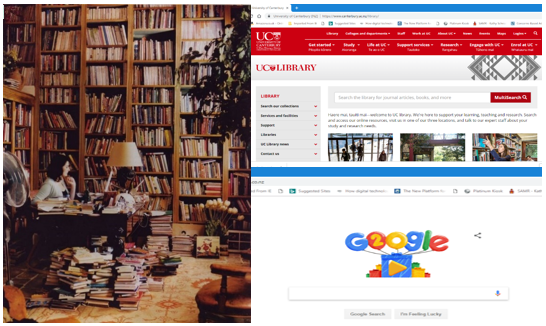
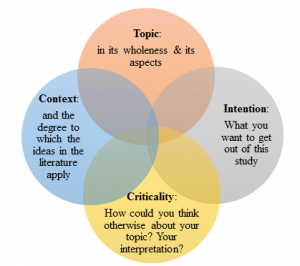



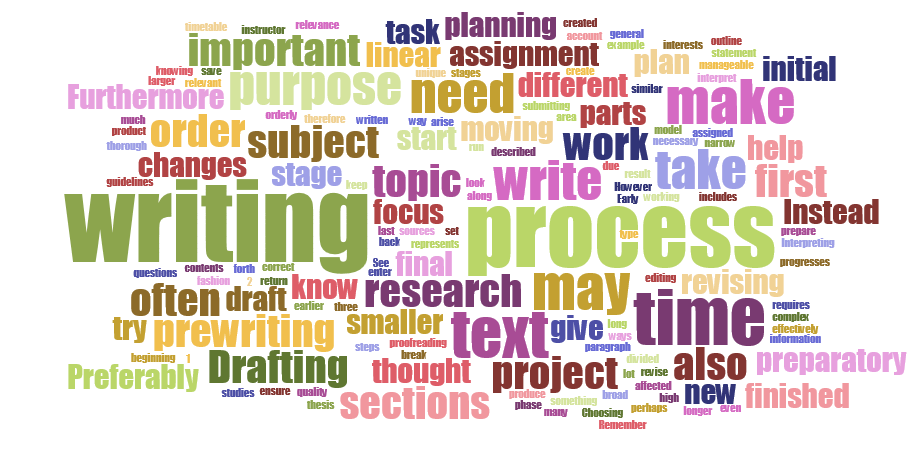




 I would like to comment mainly on two points when reflecting back the Choutari’s seven years. First, Choutari has been able to groom a new generation of scholars capable of writing on topics they have read about in others contexts or learned in their university classrooms. We did not have a stronger tradition of academic writing in TESOL and applied linguistics in the context of Nepal in the past. The Journal of NELTA was there, but young Nepali scholars did not consider themselves qualified enough to write for the journal. I had a similar view when I completed my M. Ed. In 2003. There still is a popular assumption that only experienced ‘scholars’ write for the journal, and the younger scholars are positioned in the receiving end of the journal readership. Since the starting of this webzine, this assumption has been questioned, renegotiated and redefined. I can see a whole lot of new scholars turning themselves into academic writers with greater confidence, refined skills, and thoughtful pedagogical tips. Second, the traditional mode of printing and publication in Nepal reached only to a small group of readers, usually with a long time gap. Consider, for example, the NELTA journal we have. It includes a collection of homegrown scholarship, but we have to wait for one year to read about ten or so articles. Webzine like the ELT Choutari has again challenged the tradition, expanding its reach to a wider audience, with a large number of readable articles. This again has promoted a new generation of writers and readers, who necessarily are not the university professors.
 As ELT Choutari enters into 8th year, we would like to thank our valued contributors and readers for their continued support. The ELT journey without their support was never possible to accomplish seven years. The ELT Choutari today has won acclaim for its commitment to contributing to discourses focused on various issues related to English Language Teaching and Education.
 I think Choutari has made unique contributions to Nepali ELT discourse. The community had a great journal, and we also had an active listserv; but we wanted to provide colleagues a place to share ideas that was more public/open and interactive, where especially younger colleagues could contribute their ideas and experiences and run conversations. Many scholars who chose to run this blogzine also had the opportunity to practice publication and leadership skills while serving the profession. This publication has slowed down a little bit, but I am confident that new scholars will take the baton forward. In fact, I also hope that more venues like this will emerge and make new kinds of contributions to the field of ELT in Nepal.
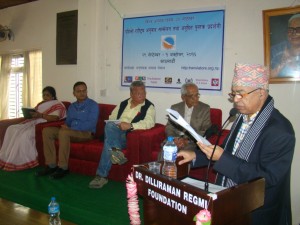 Q: It sounds encouraging. Let’s relate this to the recent fervour created by the Society of Translators Nepal. Last month, the Society organized the first ever conference on translation in Nepal. What was the aim of it and how do you evaluate the conference?
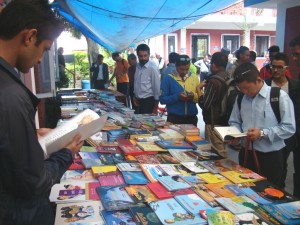 Q: The quantity of translated books (both in English and Nepali) is increasing in Nepal. How is their quality?
 Babu Ram Basnet Mahendrodaya Secondary School, Salyan, Solukhumbu
 Chandra Singh Dhami Manthali Higher Secondary School, Manthali, Ramechhap
 Kamal Raj Basyal Krishna secondary school, Peepaldada-Jheskang, Palpa
  Durga Prasad Pandeya Padmodaya Public Model Secondary School, Ghorahi, Dang
 Khagendra Nath ‘Biyogi’ Bhairab Higher Secondary School, Jhota, Bajhang