I came from a small village to pursue an M.Phil. degree at a well-known university in Nepal. This journey has profoundly transformed my life. It has been marked by numerous challenges, an enduring quest for knowledge, and the courage to embrace opportunities that once seemed beyond my reach. My story is not merely about academic achievement; it is also a reflection of perseverance, personal growth, and a deep sense of purpose that has shaped my identity as a lifelong learner.
The Humble Beginnings
I was born in a remote village in Nepal, where access to schools and other essential services was limited due to the distance from major settlements. When I was a kid, a lot of families in our town did not think school was important. There were few schools, and the streets were filthy. Almost all children, particularly girls, were expected to toil in the fields or around the house rather than going to school. My parents, however, never went to school themselves, but they knew how important it was to learn, and always told me to study. My parents always pushed education but did not have much money or options. And my farmer father used to keep saying, “there is an entire world outside our village”. Learning will help you. These are the words that sustained me in the beginning. I didn’t have a lot of options or friends who leaned into my hopes for education, so my own resolve was my closest friend.
The Struggle and Spark of Early Education
The schools in my village were far from ideal. They faced persistent challenges, including a lack of qualified teachers, overcrowded classrooms, and outdated teaching materials. Despite these limitations, my desire to learn remained strong and motivated me to pursue education with determination. I sometimes had trouble understanding ideas that seemed hard at first, especially since I did not have a focused academic environment that would encourage me to ask questions and learn more. I stayed focused on my schoolwork even though these things were hard. In fourth grade, I learned new ways to learn from a teacher who had just started at the school. For example, she encouraged me to ask questions and think for myself. At this point, I wanted to know more. I began to view school not as a tedious obligation, but as an opportunity to transform my life. Even though a lot of my friends dropped out of school to help their families, this new excitement kept me going on my path to study more. I discovered during these critical years that school was not only about getting good grades but also learning to change both my life and other people’s. After that, I thought about school differently, and although it was a long way off, I knew if I wanted to get out of my neighbourhood, then I was going to have to work harder than everyone else.
A Turning Point in Secondary Education
When I moved up to high school, it was a big deal. My family did not have enough money to send me to a high school in the nearby town, so I had to go to school by myself. I had to walk for kilometres every day to get there. At that point, I started realizing how difficult it was for so many kids in rural Nepal to pull themselves out of their circumstances because of the social and economic obstacles they faced. Yet I did well in school and got good enough grades to allow me to apply for scholarships. When I received a scholarship to attend a school that was actually good and nearby, it felt like such a huge step in the right direction for me. For the first time, I was in a room with other students who wanted to learn the same things as I did, and it was a better place to be educated. Better teachers, more subjects, higher standards – it is hard but inspiring. I just really loved the environment of research and learning. At that time, I did a lot of academic competitions, science fairs and debates. They helped me get better at thinking critically, talking to people, and solving problems. These things I did outside of school not only helped me do better in school, but they also helped me become a better leader, which was important for my future studies.
University Life: The Beginning of a Scholar
I moved to the capital city after high school to go to college. I grew up in a village that did not have libraries, journals, or seminars, so this was a big change for me. The change was scary because it meant moving from the country to the city, which was a big change in culture and school. It was hard for me to get used to the city because it was so big, the pace of life was so fast, and the schools were so good. I got used to it quickly, and the university gave me more than I could have ever hoped for. This is when my love of research really started to grow. I pushed myself to the limit with the hard work of college life, but I liked the challenge. I learned that education isn’t just about memorizing facts; it is also about coming up with new ideas, testing what you already know, and helping to make discoveries. While I was in college, I took classes in the humanities, social sciences, and how to do research methods. These classes helped me understand how society changes and how education is a part of that. These years helped me figure out what I wanted to do with my M.Phil. because I became more and more interested in going back to school and doing research in the academic world.
The M. Phil. Journey: Getting Good Grades in School
The decision to pursue an M.Phil. stemmed from years of diligent effort, introspection, and a profound aspiration to effect change through research. M. Phil. has been a blend of scholastic hurdles, personal development and career progression. Amid the city’s clamour, a riot of noises fills the air, many of them clashing like squabbling musicians. Giant skyscrapers lit up with fluorescent neon light sparkle, stabbing into the night sky and casting long winter shadows. This bizarre glow blankets the city below them. A numbing crowd for pedestrian movement. In firecracker-like succession, the smell of grilling food on the street side mixes with the fumes of gaseous states. This is all a sort of overdose from the saffron aroma that lingers for plenty long time afterwards. For all this mayhem, there’s an unmistakable vitality that flows through the city. It’s a relentless heartbeat that pushes things into the night.
Thinking about the Past and the Future
I can see how far I’ve come since I went to a small village school that didn’t have many resources. I am now an M.Phil. student at a well-known school. My story demonstrates that education can change lives and the importance of continuing to push forward when things are tough. I am proud I have come this far, but I also recognize that this is not the end of the road. I will endeavour to apply what I learn from my country and community as I work through more studies. I also want to inspire others, who may be people of colour, to follow their dreams and complete their education. There are many stories like mine about students from rural Nepal who work hard and stay focused to get to the top. I am the living evidence that knowledge is power and holds the key to a brighter future. I am not even close to the end of my journey, and every new thing I learn and can do makes me feel like the quest for knowledge is an infinite process that I will continue as long as possible and it’s worth all of the struggles I encounter along the way.
Author’s Bio: Mr Arjun Jung Rayamajhi is an MPhil scholar in English Language Education at Kathmandu University. He is a secondary-level English language teacher at a community school in Nepal, where he has been actively engaged in classroom teaching, academic mentorship, workshops, and training. His research areas are ICT and ICT-based teaching. He can be reached at arayamajhi16@gmail.com.
Language is the main means of communication, and the goal of English language instruction is to provide pupils with the ability to understand and use the language orally and in writing. It also bridges the ideas and emotions of communicators. This study focuses on the difficulties Bachelor Level students at the Aadikavi Bhanubhakta Campus, Damauli, Tanahun encounter when learning English as a foreign language (EFL) in the classroom, with a particular emphasis on their reluctance to speak the language fluently. The study investigates the causes of this reluctance, including the impact of mother tongue and culture, deficiency of motivation, conventional teaching methods, and an unbalanced emphasis on particular language abilities. In-depth interviews with four bachelor-level students from various language and cultural backgrounds are conducted as part of the research’s qualitative design. The results show that the student’s reluctance to talk in English is caused by various factors, including the prevalence of their mother tongue, cultural norms at home, a lack of drive, and conventional teaching approaches that place a higher value on written than oral fluency. The participants offer strategies to deal with these issues, highlighting the necessity of peer group discussions, interactive and communicative teaching methods, and activities encouraging student autonomy. They support an adaptable method that lets students from multicultural and multilingual backgrounds express themselves freely without worrying about making grammatical or pronunciation mistakes. The study highlights how crucial it is to establish a welcoming and inclusive learning atmosphere to improve.
Language helps to exchange information, news, feelings and many more between or among conservationists. It also helps share fears, tears and cheers among speakers and listeners.Nepal is a country of cultural, religious and linguistic diversity. After the implementation of the Interim constitution in 2007 AD, the dawn of multilingualism and multiculturalism was heralded in Nepal. It states that Nepal is a secular, multilingual and multicultural country.
The constitution has stated that receiving a basic education in one’s mother tongue is a fundamental right. Subsequently, the Ministry of Education (MOE) in its 2007 National Curriculum Framework for School Education stated the need for acknowledging local knowledge, cultures, and languages in schools. According to the current Constitution, Nepal is a secular, inclusive, democratic, socialism-oriented state where we can perceive that “All the Nepalese people, with multiethnic, multilingual, multireligious, multicultural characteristics” (Part 1, Article 4). “Every Nepalese community residing in Nepal shall have the right to get education in its mother tongue and, for that purpose, to open and operate schools and educational institutes, by law.” (Article 31).
The purpose of English language education is to provide students with the capabilities to understand the language appropriately and to have good ability in written and oral (Richard, 2008). Since English is an international and global language, it works as a passport for the conversation. It bridges between or among interlocutors. Listening, speaking, reading and writing are four language skills which are divided into two skills receptive and productive. Listening and reading fall under the category of receptive skills and speaking and writing are productive skills (Saraswathi, 2004). Speaking is the primary means of communication. Speaking skills are a must at any place at any time. It enables conversational partners to express inner feelings. It also fosters the analytical, interpretive, synthetic, evaluative, creative, and critical power of the speakers and listeners. In addition, it generates, articulates, fosters, convinces, persuades and sometimes distracts the conversational partners too. In the context of Nepal, it has been geographically and administratively or politically divided into different factors. Geographically or naturally, it has been divided into the Himalayan region, the Mountainous region and the Tarai region. The majority of people from Thakali, Tamang, Lama, Gurung etc live in the Himalayan religion, Magar, Gurung, Brahmin, Chhetri and other castes live here. In addition, Danuwaar, Rai, Limbu, Lepchaa, Waaiabaa, Shah etc live in the Tarai region. They have their typical language and culture. National Education Policy 2019 states “management of multilingual education based on mother tongue, Nepali and English as a medium of instruction in addition to the mother tongue according to the linguistic diversity of Nepal, children’s interests and needs.” (Policy 10.8).
As a faculty member in the English Department, at the same aforementioned college, i.e. Aadikavi Bhnubhakta Campus , Quality Assurance and Accreditation (QAA) -certified affiliated college of Tribhuvan University, I have been teaching English to undergraduate students mainly from the Humanities and Social Science Faculty, Management and Education Faculty for 5 years. Nestled in the western part of Nepal, the campus has been the intellectual hub of English education for mainly the students of Tanahun, Lamjung, Gorkha, Nawalpur and other adjoining districts. English has been a charming subject for many aspiring students mainly female, ethnic, indigenous, Dalit and many more who are planning to go abroad and who long to be English teachers. One interesting point is they are from different linguistic, cultural and socio-economic backgrounds and abilities and have their own peculiar speaking English experience. An individual owns his/her language and culture. (Chand, 2020) stated, “Our community is mixed up with people from these diverse cultures.” So are in the classroom. Previously, i.e. before conducting this research, I guessed that there was variety and prosperity in speaking English in such a multilingual and multicultural class but it was beyond my expectations when I talked with them so I had a keen desire to research it.
However, most of them belong to lower socio-economic families and they do not have good skills in English because of their origin, i.e. the influence of mother tongue, lack of confidence, practice interaction, home environment, community school background, lack of exposure, fear, lack of motivation and feedback, teachers’ interference, fear of making mistake and poor English background. When it comes to speaking skills in English in different contexts such as delivering a speech, participating in speech contests, individual presentations and interaction, I particularly found students from bachelor-level students even who are majoring in English at the campus are unable to properly speak English fluently, and unhesitatingly communicate in different contexts. Students even majoring in English who hesitate to communicate properly in English without hesitation seem to be challenging not only for students but also for me as long as I have been teaching English over the last twenty years from the grassroots level to the Bachelors’ level in different public and private schools and colleges of Nepal.
Purpose of the Study
This research paper, ‘Learners Hesitation in Speaking English in the English Classroom in Multicultural and Multilingual Context ‘ aims to diagnose critically the scenario of English language skills mainly speaking skills from different perspectives in the aforesaid campus. The chief purpose of this research was to find out the main components that have obstructed Bachelor Level students of the aforementioned college in English EFL classrooms. The main target of this research paper was to investigate the main causes of hesitation and suitable alternatives to solve them.
In addition, it aims to explore why the students are lagging in nurturing their speaking power and how this problem can be sorted out with specific strategies or solutions with the interconnection of existing policies of multilingualism and multiculturalism. The final motto of this research is to enable students to separate whether nurture or nature is more important in speaking English. Eventually, it targets to chase perfection and pleasure in speech. If not, they are received, they are likely to bring excellence and hope. This results in a win-win situation.
Research Questions
The undivided purpose of this research is to find out the situations, components and appropriate solutions hesitation of students while communicating in an EFL classroom and outside its periphery. I designed research questions clinging or sticking to my objectives. My research purpose bound me to design my main question in the given ways:
How is the speaking scenario of their college and how do they feel while teaching or learning to speak English in multicultural and multilingual contexts?
To ease, lead, further my research and reach the knowledge construction level with step by step-by-step procedure, I designed the auxiliary questions which are listed below:
What are the problems they are facing in such a context?
How can we solve these problems?
Theories Implied
Nepal cherishes the diversity of its languages, cultures, and religions. Nepal’s Constitution has acknowledged the value of multilingualism and multiculturalism in the nation. Every Nepalese community living in Nepal is also guaranteed by the Constitution the right to receive an education in their mother tongue and the right to establish and run schools and other educational facilities for that purpose.
For pupils to have effective written and spoken communication skills, as well as proper language comprehension, English language instruction, is essential. The two categories of language skills—receptive and productive—are speaking, listening, reading, and writing. Speaking is the most important form of communication and is necessary everywhere, at all times.
In this research, I have used Constructivist and Communicative constructivism theory. Constructivist theory is a post-structuralist theory of evolution and development that deals with knowledge construction and learning. It explains how structures, language activity, and meaning are developed. According to Burleson (2007), constructivism is a general theory of communication skills that examines skilled behaviour concerning three major communication processes: social perception, message production, and message reception. The author describes some of the background factors that lead some people to emerge as highly skilful communicators and others as less skilled.
Communicative constructivism elaborates on social constructivism and links it to Habermas’ theory of communicative action. It considers knowledge, body, performance, and objects as part of communicative action. The CLT approach allows both teachers and students to transfer their traditional teaching and learning beliefs into an innovative teaching and learning approach. For example, a well-known educator (Dos Santos, 2019a; Dos Santos, 2019b) in language learning advocated that today’s students like to use technological-assisted materials and tools for language learning, such as social media platforms and internet chat groups. To meet the needs of these students, such visual and interpersonal communicative tools must be created and employed.
Methodology
I chose an interpretive research paradigm for the study. This is a qualitative research design study. Narrative inquiry is a qualitative methodology of studying the experiences of participants through a recollection and spontaneous narrative of lived stories and events. (Clandinin and Huber,2010). For this purpose, four bachelor-level students of the aforenamed campus from different language and cultural backgrounds were interviewed and information was collected. Among them, one of them was from the Muslim community, next from the Magar community, another from the Gurung community and the final one was the student who was reared in India with a different culture where Panjaabi was used as the main language. The selection of the students itself was diverse and inclusive by nature so I expected unique output or results too. For that purpose, I interviewed them in depth and collected the data. Next, I used a mobile phone and recorded the audio interview. Being an interviewer and researcher, I filtered, evaluated and analyzed the transcription. Finally, I drew out the conclusion. Besides, different sources, I visited and surfed various research sites, blogs, and websites as secondary sources for this research.
Every individual has the right to secrecy. Even the constitution of Nepal has such provision for the right to privacy. Article 28 of the Constitution of Nepal, 2072 BS, explicitly outlines the right to privacy. It stipulates that the privacy of an individual’s life, residence, property, documents, statistics, correspondence, and character-related matters shall be inviolable, except when constrained by the law. Confidentiality and ethical issues are utmost in any research. For that motto, the names of the participants are changed into pseudo-names to preserve anonymity. Among them, the first participant is named Mr A, the second one is Ms B, the third participant is Ms C and the fourth or final one is Ms D. Likewise, the original words of the participants are written to maintain the trust and originality of the research.
Discussion and Findings
Speaking skill is the buzzword and popularly demanded practical skill in today’s world. However, it has been just like a fishbone stung in the throat to those who are studying English as a second, third or fourth language in multilingual and multicultural contexts. There are reasons behind it though it needs one and all. Hesitation has been a chief hindrance to sharing inner feelings because of which the voice that is supposed to be expressed or heard always remains in a vacuum. For that, they express their problems being hesitated and have come up with specific measurements too which work as a catalyst to boost their speaking skill. With the in-depth interview of four bachelor-level students, the interpretations are made here.
Theme 1 : Influence of Mother Tongue and Culture
Home is the first school of the child because either civilized or educated culture and language or barbarous or know-nothing culture begins from home. The child learns the first language at home. The ability to communicate effectively in English exemplifies the correctness of pronunciation and intonation and directly affects the appropriate communication in conversation (Zhang & Yin, 2009). Mr A, Ms B and C belonged to Muslim, Magar and Gurung communities respectively. According to them, they were highly influenced and dominated by their mother – tongue, culture from home and dominance of teachers. Mr. A said, “I could not speak English unhesitatingly because of the influence of culture. I had to recite Quaran and Namaz instead of reading and speaking English. Not only that, they spoke Arabic, and Urdu at home instead of Nepali. When I joined in school it was too difficult to learn Nepali and English simultaneously so I was lagging in English because they were his third and fourth languages instead. Further, he added his anecdote when he was in school. He said, ” My school used to call every student one by one to deliver the speech in the class in English period but I was almost hopeless and my mind went blank. The teachers were nitpickers and only criticised grammatical errors, pronunciation, and tone. I was almost paralysed and could not express my view in the way that I expected and speak nothing due to the interference of my mother tongue and culture.” But what he now opines is that he is a little bit improving due to peer talk at college and school since he is a teacher too. He also added that the memories of those days sometimes haunt his college, and professional life.
Similarly, Ms B and C were dominated more than Mr A due to the excessive use of their mother tongue at home and even at school. Ms B said, ” I was reared in a monolingual and monocultural society where all the neighbours belong to the Magar community who only use their mother tongue and culture. When she went to school too, she found almost the same environment because more than 90 % of students and personnel of the school belonged to her community. When I was called to speak last year in the class, I was almost dumb and could speak nothing due to hesitation that was because of the interference of my mother tongue. The reason behind it was that we hardly practised English so I felt hesitant while speaking in college and public. Now I had a little bit of improvement in speaking when I started interacting with my teachers and began working as an English teacher in a private school in my locality.” The story of Ms C was also interesting who belonged to the Gurung community. She said, “Our English teacher learnt the Gurung language and taught us to translate in that language when we did not understand English. How could we speak English in school when we could not understand and speak Nepali either? It has hindered me in my college too. Now I have started teaching in public schools where English is used as the medium of instruction so I should say there is a green signal of change in my speaking ability. ” Likewise, the fourth one Ms D said,” I was reared in India. Though people thought I had good English speaking power it was not in the past and is not at present either due to the influence of Hindi and Punjabi. Our neighbors and schools focused on those languages, nevertheless English. I hesitated due to distinct accent, tone, and pronunciation in my college since Punjabi and Hindi have dominated my English”
Theme 2: Lack of Motivation
Motivation is a state of cognitive arousal or internal drive that pushes someone to do things to do something. It is the heart of learning. It reduces tension, energizes and activates the students. But the participants are far-flung which is one of the core causes of hesitation of motivation. It is mentioned in the literature that motivation is a key to students’ learning success (Chinmoy, 2007). In this sense, motivation is a key consideration in determining the preparedness of learners to communicate. Zua (2008) further adds that motivation is an inner energy. She says that no matter what kinds of motivation the learners possess it will enhance their study interest. However, I have found distinct data in this research. This is the case with one of the participants Mr. A expressed that his orthodox and strict father never allowed him to read loudly nor speak English at home, though he was too willing to learn, talk, and lead ahead. He added, ‘My family environment discouraged, demoted, and hesitated me to speak and improve my English.’ Another participant Ms B had a different version in this case. She said, “My family, school, and surroundings had hegemony of the Magar language and culture. I should say my luck was fifty-fifty and I enjoyed listening to English speaking mainly during festivals and holidays when my neighboring brothers and sisters who came to the village from the town had gone for study purposes and foreign countries for studies and jobs and conversed in English with their fellow friends. Sometimes I used to add ‘yes or no in the middle. That was that .”
Similarly, another participant, Ms C responded that teachers always used dogmatic and authoritarian styles since her school education till this date. She responded, “We were always criticized, ignored, and harassed while speaking English by our colleagues and teachers. The teachers only focused on grammar and pronunciation rather than fluency and content.” Similarly, the next participant Ms. D expressed that they never got an opportunity to share their inner feelings and opined that speaking English was a far cry from what she along with her colleagues had expected because the teachers used only teacher-centered lecture methods while teaching and they were never motivated to speak and use their feelings without hesitation. This shows that too much correction and interruption by the teacher discouraged learners and hesitation reigned over them.
Theme 3: Use of Traditional Teaching style
Teaching is an art which is to be updated according to time and situation. While doing research, I found that students hesitate to speak English because of the outdated monotonous teaching style. Mostly pedagogy is based on grammar translation and outdated theories and methods in remote areas to date. One of the participants Mr A said, “Our teachers rarely use interactive and communicative approach or true learning style to teach where students never shared their opinions because they only used chalk and talk principle though the projectors, smart TVs and multimedia devices availed in the college. It would add a cherry on the cake and we would be encouraged to express our inner desires and feelings with their proper use.” Though it is said that students are not empty pots waiting to be poured knowledge delivered by the teachers nor passive listeners rather they are to participate in the teaching and learning activities of the classroom, the teachers are still using deductive and teacher-centred lecture methods in the classroom where students can act nothing except yawning, moving limbs nonetheless uttering any English words in the forty-five-minute classroom. What can be more than this for the hesitation among students? Poorman (2002) observes that ” true learning cannot take place when students are passive observers of the process”. In addition, another participant Ms.D responded that our teachers only wrote notes on the whiteboard, which we copied and they used the grammar-translation method to make us understand but never asked us to discuss, analyse, comment, evaluate and interact on it which made us lag on speaking. This shows that students are presented as silent dummies or empty pots waiting to be filled by teacherly knowledge who do not act anything rather than considered bright sparks waiting to be ignited.
Theme 4: Biased Use of Language Skills
A vivid and effective communicative class is supposed to be the integration of the four language skills training, in which the teacher needs to establish a positive atmosphere, plan appropriate activities, encourage learners and deal with problems sensitively (Davies & Pearse, 2000; Jing, 2006). Although all four language skills, i.e. listening, speaking, reading and writing are equivalent. After researching, I found the reality a bit different. Participant Mr. A reported, “We faced hesitation to speak English because the teachers only focused on writing and reading skills nevertheless speaking and listening. We were rarely allowed to participate in peer group discussion, interaction, demonstration, speeching, even drilling, presentation, elocution, extempore, or group work which would comfort, ease, confide, explore, enrich, and ultimately enable us to express our feelings.”
Similarly, the next participant Ms. D stated, “Our exam system also has weakened and made us hesitate to speak English because it is based only on written skill. Even practical marks are often given according to written exams or class performance. The teachers also never let us involved in oral practical skills like speaking, listening, interacting and other works. To a great surprise even though all the language skills are intertwined and function like connecting the dots or chain of a bicycle, we practiced little reading. We buried our feelings deep in our hearts but never thought as potential seeds which are likely to germinate and quickly waited for the time when we could speak and express ideas but those days did not occur according to our expectations. We were instructed to write and reading as ivory tower and speaking as step- mother or sisters. We sometimes watched English movies or speaking videos on TV, YouTube etc in the classroom which was not adequate. ” This speaks that speaking classroom should never be under the teacher’s strict control where s/he uses chauvinistic dogmatism. S/he is to be dependent on what learners act or do, what they say or opine and what they realize or feel. The students deconstruct, reconstruct, reflect, experience, learn, unlearn and relearn more than tutored by the teacher.
Theme 5: Irrelevant Evaluation of Speaking Skill
Though speaking skills are the primary and productive skill of learning a language, participants B and C responded that it is illogical, irregular and irrelevant in their context. It is managed either before the annual exam once or practical marks are mostly given on a random basis where the halo effect and horn effect are likely to be practised. This sort of practice sometimes resorts to inviting dubious to find who are the goodies and who are the baddies in language skills. National Curriculum of English (2007) clearly states that all four language skills should be tested in the SLC exam. The school should conduct listening and speaking tests internally regularly, keep the records and send them to the concerned authority but it is not strictly practised from the grassroots, tertiary and upper,i.e. college or university level so that students can develop proficiency and confidence in language learning mainly speaking. Students require proper and regular feedback so they are to be given it from time to time. In a more recent study, Akter (2010) proved that giving feedback to the learner on their performance was an important aspect of effective teaching. To fulfil this purpose, a continuous speaking and listening evaluation system along with immediate and essential feedback is a must.
Solutions of Hesitation
There are no problems sans solutions. Every problem has its solutions and hesitation in speaking is no exception. Participant Mr A asserted, “Students with multilingual and multicultural knowledge should be motivated to use English easily where the language teachers are to be flexible, liberal in the class and outside.” In addition, it adds a few more stones to the foundation of speaking skills when teachers and guardians adopt a laissez-faire approach to practising English speaking because motivation triggers and inspires speakers to imagine and explore their creativity and imaginary power and speak since speaking is a production if they have nothing too in the minds. When interactive and communicative approaches based on discussion, interaction, debate, peer review, group work, speech, open free talks, elocution, and extemporisation are organised, they are bound to solve the hesitation problem of speaking English in class. Group or teamwork dramatically increases the number of talking opportunities for individual students. It is effective and achievement is more when they work together. In teamwork, the students can decentralize their work and can share views which is very interesting and full of curiosity about what will come after that. It develops the ability of patience, both hearing and sharing culture along with deep reverence for the co-conversationalist because every neighbour has a good story to tell, share, write or hear.
It also promotes learners’ autonomy by allowing students to make their own decisions in the group without being told what to do by the teacher (Harmer, 2007, P.166) His solution is when the teachers use these kinds of interactive modes, students slowly foster their speaking skills. Similarly, another participant Ms. C said, “Students from multilingual and multicultural backgrounds should be motivated to use English by applying flexible policy by the teacher rather than pointing and complaining about the small grammatical and pronunciation errors.” The unheard and untold contents, subject matters or stories from the students come on the floor if students feel comfortable and give an unhesitating ‘yes’ when they are told to speak or when they get an opportunity. Other suggestions to increase students’ motivation are shared by Liu and Huang (2010). They say that to overcome students’ lack of motivation, teachers can do activities like promoting students’ awareness of the importance of English, enhancing students’ interest in English, and developing their self-confidence They should be allowed to express the content unhesitatingly, nonetheless they are to be hurt. If so, they continue to suffer and deteriorate their speaking skill.
This shows that students feel at ease and enthused over speaking when they are free from personal, collegial, teacherly and public criticism and they have peace, energy and impulse in their minds and hearts when everybody appreciates them and their speech. As a result, students always feel completely at ease and are eager to throw their hearts and souls into the ocean of speech, speak and share ideas eventually.
Conclusions
In-depth interviews with four bachelor-level students from various language and cultural backgrounds are conducted as part of the research’s qualitative design. The results show that the student’s reluctance to talk in English is caused by a variety of factors, including the prevalence of their mother tongue, cultural norms at home, a lack of drive, conventional teaching approaches, irrelevant examination systems that place a higher value on written than oral fluency.
The participants provide solutions to these problems by emphasizing the value of peer-group conversations, communicative and interactive teaching techniques, and activities that promote student autonomy. They advocate for a flexible approach that allows kids from multiracial and multilingual backgrounds to freely express themselves without being constrained by concerns about spelling or grammar. The study emphasizes how important it is to create a friendly and inclusive learning environment to advance. The topics that arose from in-depth interviews with students are examined in the discussion section, with particular attention paid to the imbalance in language skill focus, the demotivating impacts of some educational philosophies, and the pervasive influence of mother tongue and culture. The investigation concludes with recommendations for resolving the issues that were discovered. The participants argue for a change in teaching techniques by highlighting interactive and communicative teaching approaches, stimulating peer group discussions, and fostering a flexible environment. To improve students’ speaking abilities and reduce reluctance, the need to establish a welcoming and inclusive learning atmosphere is emphasized. This adds to a thorough comprehension of the obstacles preventing pupils from speaking English successfully.
The study suggests a shift in teaching techniques, emphasizing interactive methods, peer group discussions, and a flexible environment. It emphasizes the importance of a welcoming, inclusive learning atmosphere to improve students’ speaking abilities and reduce reluctance to English language education. For that, teachers are the epitome and real leaders who are to know the route, show the route and go the route. The reason behind it is that one who always falls probably fails to tell others how to rise permanently. It strives its best to bring complete happiness and perfection. If not, it is, conversely bound to be hopeful and excellent in speaking.
Author’s Bio: Tirtha Raj Ranabhat is an MA/B.Ed. graduate from Tribhuvan University and is an M.Phil. thesis running learner in ELE at Kathmandu University. He is a life member of the Nepal English Language Teachers’ Association (NELTA) and also an assistant secretary of NELTA, Tanahun chapter. He has a wide experience of teaching English, from grassroots level to college level. Currently, he is working as an assistant lecturer at Aadikavi Bhanubhakta Campus Damauli, Tanahun which is a two-time QAA certified campus granted by UGC Nepal . He is also working as an assistant headmaster at Aadikavi Bhanubhakta Secondary School , Damauli, Tanahun , a sister institution of Aadikavi Bhanubhakta Campus Damauli, Tanahun.
References
Akter , L.(2010).Teacher talk time in ESL classroom in Bangladesh.Published M.Ed Thesis, BRAC University, Dhaka.
Chinmoy, Sri, (2007), How to Overcome Shyness. [Online] Available: http://www.srichinmoybio.co.uk/2007/07/how-to-overcomeshyness.html. (February 17, 2011)
Clandinin, D. J., & Huber, J. (2010). Narrative Inquiry. In International Encyclopedia of Education (pp. 436-441).
Constitution of Nepal (2015). Nepal Government, Nepal.
Curriculum Development Centre (CDC), Nepal. (2007).Grade 10 English curriculum Sanothimi: Author.
Davies, P. and Pearse, E. (2000). Success in English Teaching, OUP Oxford.
Dos Santos, L. M. (2019a). English language learning for engineering students: Application of a visual-only video teaching strategy. Global Journal of Engineering Education, 21(1), 37-44.
Dos Santos.., L. M. (2019b). Science lessons for non-science university undergraduate students: An application of visual-only video teaching strategy. Journal of Engineering and Applied Sciences, 14(1), 308–311.Available at: https://doi.org/10.36478/jeasci.2019.308.311.
Government of Nepal. (2019). Ministry of Education: National Education Policy, Nepal.
Harmer, J. (2007) The Purpose of English Language Teaching (4th edition).London: Pearson Longman.
Jing, W.U. (2006). Integrating skills for teaching EFL—Activity design for the communicative classroom. Sino-US English Teaching, 3(12).
Liu, Meihua., & Huang, Wenhong. (2010). An Exploration of Foreign Language Anxiety and English Learning Motivation. Education Research International, Volume 2011, Article ID 4931
Poorman, P.B. (2020). Biographyand role-playing: fostering empathy in abnormal psychology. Teaching of Psychology 29(12)
Richards, J. C. (2008). Teaching Listening and Speaking From Theory Practice. New York: Cambridge University Press.
Saraswathi, V. (2004). English language Teaching: Principle and Practice. Chennai: Orient Longman.
Zhang, F., & Yin, P. (2009). A Study of Pronunciation Problems of English Learners in China. Asian Social Science, 5(6). doi: http://dx.doi.org/10.5539/ass.v5n6p141
Zua, Li. (2008). Exploring the Affective Factors Influencing Teaching of Spoken English.[Online] Available: http://okarticle.com/html/Thesis/20080104/26.html (February)
We are pleased to announce the release of the Anniversary Issue of ELT Choutari (March- May 2025). This issue presents a collection of reflective accounts from English language teachers and practitioners, offering diverse perspectives on teaching, learning, and research. The contributions explore the transformative power of reading, the evolution of pedagogical practices, the integration of AI tools in academic writing, and the application of the 7E instructional model in the language classroom. Collectively, these reflections underscore the significance of innovation, adaptability, and critical reflection in enhancing educational practices and learner engagement.
As language teachers, we devote a large portion of our time to planning lessons, designing material, evaluating students’ progress, and attending to the various needs of our pupils. However, writing, a critical tool for our personal and professional development, frequently remains overlooked during these hectic routines. For educators, writing is more than just a scholarly endeavour. It serves as a tool for reflection, professional growth, and engagement in the broader discourse outside classrooms. It is because we are documenting our experiences and making sense of our pedagogical decisions, our classroom difficulties, and our evolving identities.
Unlike previous issues, this is a generic issue which features reflections by influential ELT experts, researchers. and teachers. We hope their experiences and anecdotes will benefit our esteemed readers.
In a conversation with Chandra Bhadur Lama, Dr. Bal Ram Adhikari sketches out how reading was important in his personal and professional growth. Connecting his personal experiences, he highlights the importance and benefits of reading for a language learner. Building on his reflections, he argues that viewing reading solely as a receptive skill is a limited and often misguided perception. He emphasises the importance of redefining reading as an active, interpretive process. Furthermore, he advocates for a shift from explanatory to explorative reading, proposing several strategies to foster deeper engagement and critical thinking in the reading process.
Dr. Narendra Raj Paneru, in his article, reflects on his English language teaching and learning journey. He reveals his memories of learning English in three phases: learning shaped by memorisation and punishment during schooling, mechanical learning in higher education, and eventually the realisation that teaching is not merely conveying information but rather communicating the essence of a topic in the language that resonates with students. Reflecting on his personal and professional experiences, he sketches out a picture of a paradigm shift from chalkboards to clicks.
Similarly, Saban Kumar K.C. highlights the importance of AI tools in research and academic writing. Drawing instances from his thesis-writing journey, he sketches out how AI tools like ChatGPT, QuillBot, and Grammarly prove to be good research assistants in various phases of research planning, execution, and reporting. He also points to the pros and cons of using AI and recommends the way forward.
Likewise, Mr. Sagar Parajuli reflects on the 7E instructional model while teaching the story Treasure in the Forest, highlighting how it enhanced student engagement, critical thinking, and creativity in the English language classroom. Despite challenges like time constraints, linguistic barriers, and evaluation misalignment, the model fostered a more inclusive and student-centred learning environment. The experience reaffirmed the importance of reflective teaching and adaptive lesson planning for meaningful language learning.
For your convenience, here are the hyperlinks to the blog posts:
Lastly, we extend heartfelt gratitude to our co-editor, Ganesh Kumar Bastola, and all our editors and reviewers—Jeevan Karki, Mohan Singh Saud, Dr. Nani Babu Ghimire, Dr. Jnanu Raj Poudel, Sagar Poudel, Binod Duwadi, Puskar Chaudhary, Yadu Gnawali, and Dasharath Rai—for their dedicated efforts in bringing this issue to completion.
ELT Choutari is a platform for researchers, scholars, educators, and practitioners to share insights, practices, and narratives from classrooms and communities. We invite you to contribute to our upcoming first quarterly issue (June-August 2025) by submitting your articles and blogs to 2elt.choutari@gmail.com.
If you find value in the interviews, articles, and reflective pieces, please share them within your circles and feel free to leave your comments below each piece.
Prologue: In this reflective note, I have attempted to explore three key themes: how I learned English for communication, how I have grown as an English teacher, and how the teaching paradigm has shifted from chalkboards to clicks. The evolution from chalk to clicks has reshaped my teaching style and my perspective on both learning and teaching English. My journey with English teaching began as a tool for communication, guided by the inspiration of great teachers. As I stepped into teaching, I realised that it was not just about transferring knowledge—it was/is about connecting with students and understanding their needs. This personal growth mirrors the broader shift in education, where traditional chalkboards are now complemented (and usually replaced) by digital tools. The shift from chalk to clicks has not just changed the way I teach; it’s transformed how I view teaching and learning itself.
My Journey of Learning English: From Mud Plates to Meaningful Conversations
Reflecting on my journey of learning English feels like flipping through the pages of a long, extraordinary story. I was born and brought up in the remote hills of far-western Nepal—so remote, they say, even the sun only comes to set in the west. As I was raised in a modest middle-class family, I lived the life of a part-time student and a full-time farmer, herding animals, toiling in fields, and sneaking into classrooms whenever work at home allowed.
My earliest memories of schooling were far from the polished preschool classrooms of today. There were no “nursery,” “LKG,” or “UKG” classes. Instead, I learned ka, kha, ga by tracing letters with my fingers in soil spread across wooden plates (pati), then graduated to slates made of stone. School was a privilege—an hour’s uphill walk to a place where memorisation was education, and Nepali language and mathematics were the core of our educational world. In our peasant-class village, most parents were clueless about the curriculum and pedagogy. Formal Nepali was itself a second language for most of us, learned only after starting school. Home languages were local dialects, i.e., Dotyali; media exposure was not available and prohibited (children should not be exposed to media, i.e., radio). Television was unnoticed by all of us. Computers and other smart devices/phones are the property of only Gen Z and later. Standard Nepali and, even more so, English, were alien tongues. Thus, I began my educational journey in a landscape strangely distant from the languages I was expected to master.
When I passed Grade 3, I moved to a “bigger” school—nearly two hours away at the top of a mountain. Ironically, it was a school where no student had ever passed the School Leaving Certificate (SLC) exams. It was here that I first stumbled upon the English alphabet: a, b, c, d… not on the wings of curiosity, but under the shadow of fear—fear of slaps and sticks for failing to memorise the sequence. I did not notice the English alphabet before grade four. The English teacher taught us this alphabet, which was meaningless until formal instruction began. The real ordeal began when I actually had to learn English—an utterly foreign, disconnected language.
My experience of English was rote memorisation. My initial strategy was avoidance—memorising answers without understanding them to avoid failure and the stick from the teachers. Exposure to English was not found, and classroom time was spent mostly copying or memorising the text. Literacy was taught conventionally and mechanically without real comprehension. Very interesting, English was taught in Nepali (it is still popular in Nepal); it was a subject to pass, not a language to live.
Our first and only encounter with an English speaker, a Peace Corps volunteer from the USA, was both exciting and humbling. My attempt to ask her about the population of her country—the question straight out of our textbook—was met with confusion and a polite “Pardon?” (due to my unaspirated /p/ pronunciation). Despite trying several times with different tones, I failed. Only after showing her the question from the textbook, she understood my question and laugh kindly. It was my first real attempt at communication—and my first big failure.
In those years, “learning English” meant memorising English words, grammar rules, and entire paragraphs or texts without understanding or speaking a word of it. English classrooms were silent spaces filled only with choral reading and rote learning. In our school, teachers of difficult subjects (English, Science, and Mathematics) were imported from India. They were brought to “improve” our results for SLC (School Leaving Certificate, now SEE), teaching English through Hindi translation. Oddly enough, I picked up Hindi during the English teaching and became more fluent in Hindi along with my community language, Dotyali. Sometimes, we get punished without knowing the reason. I still remember one incident:
During one leisure period, most of my friends were outside the classroom—some getting water, resting under a tree, or wandering around the playground. One of my friends, however, peeked through the window of another class, where our English teacher from India was teaching/ translating an English text into Hindi. Suddenly, the teacher noticed him, stepped outside, and harshly punished him with a wooden stick, asking, “Khidkise jhakta hei?” (Do you watch through the window?). In a matter of seconds, my friend was marked by several blows from the stick, though he couldn’t understand why he had been punished. The entire situation baffled us, until one of our teachers kindly translated “Khidkise jhakta hei” into Nepali as, “Jhyaalbat herne ho?” (Why did you watch through the window?).
It was a moment and usual for all from parents to teachers, students to communities perhaps because our education system was deeply shaped by a culture of corporal punishment—a legacy from ancient philosophies like Chanakya’s and behavioristic theories like Skinner’s—where mistakes were “sins” that had to be punished out of children. Five sticks for a mistake in mathematics was a common rule. Wooden sticks for not memorising English texts. Such harshness disciplined us, but also suppressed our creativity, curiosity, and confidence. Despite this, I was the first boy in my school, not just in my class, but the hope for the school and the community. Passing the SLC exam was crucial for me for the school’s funding, and I was the hope for them. Furthermore, I, as a top student, supported my classmates, helping them along the way. In a way, this was the beginning of my journey into teaching, rooted in a sense of responsibility and a desire to lift others. It was the first step that unintentionally laid the foundation for my future in the teaching profession.
When I reflect deeper, my learning process remained mechanical even during my higher studies. In school and then at I.Com. (Intermediate in Commerce/Management), English learning was still all about teachers giving notes and students memorising them. Our approach to exams was simple—study half the book and attempt half the questions, since we had to attempt only five questions (i.e., 50 per cent) out of ten questions in the final examinations (no other examinations and assessments during the class). There was no focus on understanding, communication, or critical thinking.
However, during my I.Com., I witnessed a new possibility: my English teacher sometimes spoke English instead of just reading texts. Hearing him speak sparked a realisation in me—English wasn’t just a written code; it was a living, breathing language. This realisation planted a deep desire in me to learn English, not just for exams, but for expression.
This desire led me to practice English. I tried to build my skills further by joining a local language institute where we drilled English structures and practised speaking, but it lasted only three weeks before the institute shut down. Yet, even that brief experience showed me that English could be learned through communication, not just memorisation. Around the same time, I realised another truth—studying management felt hollow when I was calculating millions without even a single rupee in my pocket. It was a clear sign that my heart—and future—belonged elsewhere.
After I.Com., I switched streams and joined B.Ed. Specialising in English major, fueled by my growing passion to master the English language. Even in B.Ed., the methods didn’t change much—lecture, note-taking, and memorisation—but exposure to English-speaking teachers increased. Slowly, English began to move from my memory to my mouth, from textbooks to tentative conversations. Yet, truthfully, I wasn’t charting a career path or chasing a dream; I was simply moving forward, carving a rough road with bare hands, facing whatever life placed before me. There was no mentor to guide me, no strength to chase distant dreams—poverty kept my feet on the ground and my hands busy with survival. Plans grow where there is food on the table and clothes on the body; for me, survival came first, and dreams had to wait. I did not shape my life out of choice but out of sheer necessity.
From Survival to Service: My Journey of Learning to Teach English
Hailing from a humble, lower-middle-class farming family in Ganeshpur, Dadeldhura, I never imagined myself standing in front of classrooms, teaching English to university students. Education was not a priority where I grew up — earning a living was. Most families, including mine, believed that the surest path to a better life was not higher education, but increasing the property, i.e., land, and accumulating wealth via even labouring in India. Yet, somewhere deep within, a stubborn flame of learning burned.
Initially, teaching was not a dream I pursued; it was a necessity for survival. As a top student in school, I often found myself helping friends untangle English grammar rules and solve math equations. Later, as an intermediate student (I.Com.) in Kailali, I lived with a family who, in return for food and shelter, asked me to help their children academically. It was here, in small rooms with flickering lamps, that I first discovered the seeds of teaching — supporting them with homework, solving their mathematical problems, and explaining concepts I had only just mastered myself. Yet, necessity is often the mother of invention.
During my B.Ed. studies, I took up home tuition at an elite family in Kathmandu, struggling with economic hardship, social insecurity, and a fragile command of English. Every evening, I had to visit their home to teach their children with a lot of uncertainty and discomfort, as my modest appearance, pastoral background, and shaky English often made me feel out of place. Yet, that hour each day, spent guiding young minds, solving their small problems, and enjoying a rare, hearty tiffin, became a lifeline. It covered my expenses and gave me a quiet dignity in a bustling city. During the final year of my B.Ed. classes, I found myself stepping into private school classrooms. In the beginning, I was more of a survivalist than a teacher, struggling to speak English fluently, clinging to textbooks, and painstakingly translating/ paraphrasing line by line. Every new word was a small battlefield; every grammar rule, a mountain to climb. Paradoxically, it was my students who became my greatest teachers—their innocent questions challenged me, their elite accents helped me improve my pastoral pronunciation, and their curiosity lit a fire that pushed me to learn deeper, teach better, and dream bigger.
Teaching, I realised, was the best way to learn. Students can teach the teacher.
My journey was not linear. After attempting my B.Ed. exams, I returned home for Dashain and had to wait there for my results. During this uncertain pause, my friend, Dr. Tara Datta Joshi, requested me to go to Aalital, Dadeldhura, to teach English since he wanted to quit the teaching profession and engage in political activities. I was assigned to teach grades six to ten under the position of a lower secondary-level English teacher. However, fate took a sharp turn—the chairman of the school management committee was seriously injured in a bus accident and taken to India for treatment. Without his presence, I couldn’t obtain an official appointment letter and found myself working voluntarily for nearly three months.
During this time, I experienced the true nature of English teaching in rural Nepal. One incident I still remember is that English was taught in Nepali at that time, and the grammar translation method was the only pedagogical option available. I had to teach topics like sentence transformation, reported speech, and many others of similar types. I explained that when there is a third-person singular subject in a simple present sentence, it requires ‘doesn’t’ to form the negative, and the sentence starts with ‘Does’ to create an interrogative. The next day, I asked students to change “Ram plays volleyball” into the negative, and most students who even wrote the correct responses but pronounced ‘does’ as [du:s]’ (perhaps due to the ‘do [du]- does [du:s] and [s] instead of [z] due to /s/ in ‘works’. During these days, what I found most interesting was that many students who appeared quiet (in English) in the classroom became talkative and expressive when speaking to Dotyali outside the class. I also noticed that several students seemed to forget what had been taught (in English) as soon as they left the classroom. It shows a disconnect between classroom learning and their everyday communication. Life there was simple but strange. I shared a common room with Dr. Joshi and the chairman of the village development committee. One night, alone in the room, I had a haunting experience that shook me. When I hesitantly spoke about it at a local teashop the next morning, the villagers’ reactions confirmed my fears. Though it sounds surreal now, the fear, combined with the uncertainty of a volunteer job, drove me away from the hills to seek opportunities elsewhere.
Opportunity soon came knocking in Tikapur, where I was appointed as the Principal of a primary school. Drawing from my meagre six months’ experience of private schooling in Kathmandu, I brought sweeping changes: enforcing an English-speaking zone, instituting neat uniforms, and instilling discipline. Watching the students adapt and thrive gave me immense satisfaction — proof that even small efforts could yield visible transformation.
Yet the desire for further study remained fierce. After the result of my B. Ed, I moved back to Kathmandu to pursue an M.Ed. I got admission and waited for classes. During this time, I was looking for a job that would help me continue my studies in Kathmandu. I got an opportunity for a Resource Person (RP) for the Kailali district. I got confused, but went there since it was just before the Dashain. I thought I would earn some money during the college vacation, i.e. Dashain-Tihar and would quit the job and resume my class after Tihar if my transfer was not made near Kathmandu. I bought the books according to the prescribed book list and went to Kailali, near my home in the terrain. As I went through the books, I could not understand anything and got confused about the books that I had bought. I again checked the syllabus and found the books were okay. The syllabus was not designed from the titles of the course contents, but from the contents inside the books. It was the most difficult time for me. The government was changed, and all Resource Persons appointed by the previous government had been terminated. The set of district education offices was changed. Expressing my apathy towards such realities, I came to Kathmandu for my studies. As I worked for nearly three months, I witnessed the schools’ realities, students’ level, teachers’ activities, communities’ expectations, and bureaucratic hurdles and ineptitude.
When I first arrived in Kathmandu to pursue my studies, my journey took an unexpected turn. Owing to a prolonged absence while serving as a Resource Person (RP) in the remote schools of Kailali, the Department of Education, first and last time in its history, cancelled long-time-absentees’ enrollment, including mine. It was a bitter pill to swallow. Yet, after a few months, I could get my name re-registered after continuous endeavour. Determined not to waste a moment, I threw myself into full-time study, from dawn till dusk.
One day, during a course on Learning Theories, our teacher assigned a group presentation. I hadn’t prepared much, thinking the others would take the lead. But when the time came, no one from my group stepped forward. The teacher called me up alone. Thankfully, I had scribbled some rough notes—just in case. When other friends from the group refused to present, I delivered my presentation swiftly, drawing on my strength in Nepali. Afterwards, the teacher chuckled and asked, “Is your train about to leave?” I smiled and said, “No, sir.” Then, he again asked: “Why so fast?” I was dumb. He appreciated my spirit and even thanked me, while critiquing others for their lack of preparation or just presenting in points.
That moment opened unexpected doors. Friends began sharing their books with me, asking me to read and summarise them. In return, I gained access to resources I could not afford. Later, after completing my M.Ed. first year, Basant and Kishor from TU Photocopy Centre asked for my notes on phonetics and phonology. They later published it as a textbook, A Course in Phonetics and Phonology, giving me the identity of a textbook writer while still a student. Despite setbacks, I kept finding hidden paths forward—summarising, teaching, writing, and growing. What started as a struggle for survival slowly transformed into a journey of mastery, brick by brick, book by book.
After earning my M.Ed., I returned to classroom teaching in Kathmandu, stepping into a reputed high school where I taught English across various levels—pre-primary, primary, lower secondary, secondary and university. Each level brought its own set of challenges, from the excitement of teaching tiny hands their first English words to the complexity of helping adolescents grasp intricate grammar and communication skills. As I navigated these different levels, I continuously adapted my methods, refined my craft, and deepened my understanding of pedagogy.
In the early days, my teaching felt mechanical—read, translate, paraphrase, explain. Over time, it transformed into something much more relational—understand, engage, inspire. My students became my greatest teachers, helping me grasp child psychology, learning theories, and the true essence of communicative language teaching, which had once been a theoretical concept for me in university. I still remember I once moved from reading Nepali newspapers to immersing myself in English journals and news (to develop my proficiency in English), fully embracing the language I had once struggled to speak. Stupidly, I promised my friends not to speak in Nepali with me so that I can speak English with them and learn it to communicate. Reflecting on my journey, it’s clear that it wasn’t one of smooth paths or grand plans. It was a story of persistence, hard work, and constant learning. I didn’t just learn to teach English; I taught myself to become an English teacher. Most of the teachers of my time and before might have the same stories.
Today, if someone asks me how to truly learn English, I tell them: Teach. Teaching is, without a doubt, the most powerful form of learning. This realisation didn’t come from textbooks or lectures. It emerged from my own winding, rugged journey with English—a path filled with challenges, failures, and fleeting moments of inspiration. Along the way, I learned that education thrives not on uniformity, but on variety, localisation, and personalisation. I discovered that teaching must evolve as a dynamic, organic response to students’ needs, aspirations, and realities.
Of course, it wasn’t always easy. We had to make mistakes—face struggles, humiliations, and setbacks—before arriving where we are today. In this sense, my learning journey with English wasn’t a smooth one. It was a rough trail of soil, stone slates, rote memorisation, translations, and precious moments of clarity. But these hardships have become vital layers of understanding. The rigid, rote-driven practices, the lack of soft skills in the education system, and the harsh discipline I endured didn’t break me—they shaped my sensitivity toward what true education should be. They instilled in me a lifelong commitment to promoting an education that values communication, creativity, empathy, and critical thinking—the very skills I once lacked.
Now, as a teacher educator, textbook writer and researcher, I carry these lessons not as burdens but as beacons. They guide me toward a more humane path for others, where learning English—or any subject—is about living it, not just memorising it. Teaching is not just a profession for me; it is a passionate, often painful calling. The challenges embedded within the teaching profession are multifaceted, and both new and experienced teachers often find themselves caught in dilemmas over the right pedagogy. For me, teaching is nothing, just beautiful communication—effective communication on the topic. In Nepal, these struggles are compounded by limited resources, rote-centred traditions, and large, diverse classrooms. These challenges resonate deeply with my journey, one that began not with clear intent but with the struggles of a rural, middle-class upbringing in a society on the cusp of modernity.
One of the greatest challenges in education today is how previous generations (Gen X or Y) teach and train newer generations (Gen Z, Alpha, or even Beta), each of which comes with distinct psychology, learning attitudes, personalities, lifestyles, and evolving needs. For example, how did the Silent Generation (1928-1945), Baby Boomers (1946-1964), and Generation X (1965-1980) impart knowledge to Millennials (1980-1996), Generation Z (1997-2012), and the upcoming Generation Alpha (2013-2025)? And what about the future, with Generation Beta (2025-?) on the horizon? The way these different generations learn, interact with technology, and perceive the world around them presents a unique mystery in educational pedagogy. As each new generation brings with it a fresh set of demands and expectations, the question becomes: how can we adapt our teaching methods to ensure relevance, engagement, and effectiveness across these shifting landscapes? This ongoing paradigm shift in education challenges us to rethink traditional practices and develop more dynamic, responsive, and innovative approaches that align with the needs of future learners.
In the later stages of my career, I realised that teaching, at its core, is not about delivering information, but about effectively communicating the essence of a topic—communicating in the language that resonates with our students. The key is meeting them at their level, speaking their language, and guiding them to elevate their communication skills. It’s about creating a space where learning, unlearning, and relearning can flourish. As educators, our role is to facilitate this process, ensuring that our students don’t just absorb knowledge but actively engage, grow, and connect with the world around them in meaningful ways.
Author’s Bio: Narendra Raj Paneru, PhD, is the Head of the Department of English Education at Sanothimi Campus, Tribhuvan University (TU), and an Assistant Professor at the Faculty of Education, TU, Nepal. With over two decades of experience in English language education, he holds a Ph.D. in the use of soft skills in ELT and an M.Phil. in educational leadership. Dr. Paneru serves as a member of the Subject Committee for English and Other Foreign Languages (FOE, TU) and contributes extensively to curriculum design, teacher development, and academic research. He has published widely on soft skills, phonetics, globalisation, and language pedagogy, and actively engages as a resource person and academic advisor in the education field and syllabus development initiatives.
ELT Choutari is pleased to present an intellectually stimulating dialogue between Mr. Chandra Lama, an emerging scholar and dedicated educator, and Dr. Bal Ram Adhikari, a prolific poet, critic, translator, essayist, and Assistant Professor of English Education at Tribhuvan University (Mahendra Ratna Campus, Tahachal).
Dr. Adhikari’s scholarly and literary contributions have significantly enriched Nepali academia, particularly in the domains of translation studies, literary criticism, and the pedagogy of reading. His reflections in this interview offer critical insights into the role of reading skills in language education, their theoretical underpinnings, and their practical applications in the classroom. These perspectives hold immense value for teachers, researchers, and learners invested in refining their approaches to English language teaching and literary engagement.
Beyond his academic work, Dr. Adhikari is an award-winning translator and writer, with numerous publications in national and international journals. His accolades include the Nepal Academy Translation Prize (2025) and the Nepali Talent Prize, England (2018), underscoring his profound influence on Nepali-English literary discourse. A passionate advocate for reading culture, he consistently bridges theory and practice through his research, teaching, and creative writing.
This interview, titled “Reading as a Log in the Ocean: A Life Shaped by Words,” not only illuminates Dr. Adhikari’s intellectual journey but also catalyses deeper reflection on pedagogical practices in ELT. We invite readers to engage with this thought-provoking exchange and explore its implications for their own professional and academic endeavours. The full extract of an interview about reading is presented below.
Let’s begin with something close to your heart. You’ve often told us in class how deeply reading has shaped your life. Could you share why reading matters so much to you as a student and now as an English language educator?”
I see the world in words and words in the world. Reading has always been something that shaped how I think, feel, and connect with life around me. I had an early infatuation with literature, especially through Hindi and Nepali magazines. As a child, I grew up reading Hindi literary and semi-literary magazines like Saras Salil, and Nepali ones like Garima and Madhupark. English literature came into my life much later, around my intermediate level. At first, I read it through translations. Only in my bachelor’s did I start reading English texts in their original form.
So, for me, reading multilingual literature has been a part of both my academic path and my personal identity. It’s never been a luxury but a necessity. I remember asking myself years ago, “Why do I spend so much time reading?” And the answer that echoed from deep within me was:
“When my life was fraught with frustration,
When my inner world was sinking into the ocean of depression,
The only log I found in that fathomless ocean was the book to which I was clinging.”
That’s what reading meant to me as a student.
And now, as an English language educator, reading matters to me professionally as well. I read to explore other perspectives, to experience diverse lives and thoughts, and to better express myself through writing and speech. In essence, reading is how I connect with the world and help my students do the same.
That’s deeply moving, sir. I still remember in your class, you often reminded us that reading is seeing. Given your own experience, how do you view the place of reading in the University English language curricula?
The English education program, under the Faculty of Education at Tribhuvan University, has mainly focused on producing professional English teachers and teacher educators. For a long time, the curriculum was more theoretical with its prime focus on linguistics, applied linguistics and language pedagogy, giving limited space to reading-focused courses. Until around 2010, students were learning about English rather than exploring and experiencing English through authentic readings. But after the political changes in the country, education reforms followed, and the B.Ed. English curriculum was revised. A big change was the inclusion of reading as a core component, to expose future English teachers to authentic literary and non-literary texts. Current B.Ed. and M.Ed. English curricula are rich in readings across disciplines and genres.
In our reading classes, I recall you used to say reading is more than just “finishing a chapter.” You often taught us specific strategies for reading, like underlining difficult words, trying to guess their meaning, jotting down our understanding in the margins and even encouraging us to ‘talk’ to the characters in the text, among other things. What, in your view, does teaching reading really involve?
That’s exactly it. Reading is so much more than just “finishing a chapter,” and those strategies you remember are a big part of a much larger picture. Teaching reading is a layered process. It’s not just about recognising words or finishing a chapter. It’s about helping students understand why reading matters for learning, thinking and developing their language skills. It’s about guiding students to become thoughtful, strategic and curious readers. Let me break it down:
a) Orient students to the importance of reading
Reading isn’t just for passing exams. It builds language, sharpens thinking and opens up new ideas and worlds. Once students realise this, they enjoy it and make it a habit.
b) Open up linguistic, contextual, cultural and basic content information
Sometimes students struggle with a text not because it’s hard but because they don’t understand the context: the culture, setting or certain vocabulary. So, we need to unpack that before they start reading.
c) Train students in reading strategies and demonstrate them
We need to train students in strategies like skimming, scanning, predicting or guessing meanings from context. And we should model these strategies for them: show, not tell.
d). Connect reading with other productive skills: writing, speaking and translating
What they read can inspire writing, spark discussions or even lead to translation tasks. This makes reading more purposeful and connects it to real communication.
e) Inculcate the habit of reading through extensive reading
And finally, let students choose what they want to read, like stories, comics, articles, anything they enjoy. Reading widely and for pleasure is what really helps them grow as readers, thinkers and individuals.
What stayed with me was the way you made silence a part of the reading process, letting us sit with words before rushing to analysis. In your view, why does reading matter, particularly in our ESL/EFL context of Nepal?
I’m really glad that the practice of silence resonated with you deeply. Before rushing into analysis, I believe it’s important to sit with the words for a while—to contemplate them, to absorb their essence, and to give them time to speak to us.
Now, coming back to your question: why reading matters.
To begin with, if we talk about Academic Communicative Competence, reading is irreplaceable. It’s central not just to language learning but to students’ daily lives and academic performance.
There’s a mountain of research in second-language reading that shows how important reading is. Scholars like Carrell, Grabe and Krashen have pointed out that reading isn’t just about decoding words. It’s become a survival skill in today’s world. It touches almost everything: our education, employment, daily tasks, even how we participate in politics and social life.
Reading affects a person’s ability to access knowledge, grow economically and socially. It builds imagination and creativity. Many researchers have said that good reading and writing skills open doors to better life opportunities. It’s been said that literacy, especially through reading, reduces poverty, lowers crime rates and even shapes a person’s moral compass.
One of the strongest advocates of reading, Stephen Krashen who says that reading is the only real path to literacy. In his studies, he shows how free voluntary reading, like just picking up books out of interest, can have a profound effect on language acquisition. It not only improves reading but also enhances writing, grammar, vocabulary, and even overall cognitive development. He asserts that it gives students the content, style and motivation they need for writing too.
Interestingly, the U.S. Department of Education has concluded that avid, independent reading leads to better skills, higher academic achievement and more desirable outcomes in terms of income and professional life.
Other educators like Brozo and Guthrie have also said that students who read widely perform much better academically than those who don’t. Reading exposes learners to new vocabulary, sentence structures, and fresh ideas. It fuels their imagination, motivates them, and helps them shape their perspectives and worldview. Although reading is often treated as the third skill after listening and speaking, in reality, especially in the educational context, it’s a primary skill, absolutely crucial. Richards and Renandya, two respected names in this field, have pointed out why reading is so central in ESL/EFL settings. First, many learners learn English mainly to be able to read English texts and get information. Second, written texts are their main sources of input for both in terms of language and content. These texts also serve as good models for their writing.
In countries like Nepal, where English is not used much in daily oral communication, either in or outside the classroom, reading becomes even more important. Students get exposed to written English much earlier and far more often than spoken English. So, written texts don’t just help. They compensate for the lack of spoken input.
If we believe in Krashen’s idea of comprehensible input, accessible written texts are the tools for language learning. A researcher from Nepal, Dr. Vishnu S. Rai, surveyed Asian universities and found that most students in Asia learn English through reading. Based on this, he recommends more space for reading in our classrooms.
Our education system also supports this. If we look at our secondary level English curriculum, reading has the highest weightage, i.e., 40%, compared to writing, listening and speaking. At the university level, reading is gaining more importance.
So, in short, reading isn’t just another language skill in Nepal’s ESL/EFL context; it’s the main gateway through which students learn, grow and access opportunities.
That gives a whole new weight to the term “reading culture.” But I’m curious – what are some common misconceptions about reading that you’ve encountered?
A major misconception is that reading is often understood as a third skill, secondary to listening and speaking. This is especially flawed in contexts like ours, where English is primarily learned through reading, particularly in academic or instructional settings.
People tend to see reading as merely a receptive skill, but it’s much more than that in reality. In academic contexts, reading becomes highly productive because the reader isn’t just absorbing information but is actively constructing his/her meaning from the text. Reading is not a passive activity. It’s an active, dynamic process. The reader engages with the text, questions it, and reflects on it. There’s an ongoing interaction. I would even say it’s a critical engagement. Readers must maintain a certain distance to interpret, evaluate, and negotiate meaning.
This reminds me of Hans-Georg Gadamer’s Truth and Method. He talks about how reading involves a twin process: prediction and post-diction. Prediction means the reader is constantly looking ahead, anticipating what might come next based on the cues in the text, whether it’s the title, the context, or the structure. It’s a forward-looking process that activates the reader’s expectations and imagination. On the other hand, post-diction involves looking back, revisiting what has already been read in light of new information. It’s a process of reevaluation and reinterpretation. As we read more, earlier parts of the text may take on new meanings. This continuous back-and-forth is what makes reading deeply interactive and thoughtful. So, the reader is not a passive recipient, but an active meaning-maker. The agency of the reader is very high in this process. Reading, then, is a creative, critical and reflective process.
In your opinion, how can we expand the students’ reading process?
I see the reading process in three levels: reading the lines, reading between the lines, and reading beyond the lines. Most students tend to stop at the first level – just understanding the literal meaning. It’s essential, but not enough. The second level, reading between the lines, is about interpreting what’s implied, grasping the author’s intent, connecting ideas, and uncovering hidden meanings. The third level, which is reading beyond the lines, is even more crucial. Here, readers connect the text to its wider socio-cultural or historical context, think critically, question the author’s purpose, and assess bias or credibility.
Unfortunately, what I often see is that reading remains sub-standard, inadequate, or even defective. We must help students move beyond just decoding words and support them in engaging deeply with what they read, both intellectually and emotionally.
Over the years, you’ve worked with diverse groups of learners and experimented with different approaches to reading. Drawing from all that, what do you think makes for an ideal pedagogy for reading?
That’s a thoughtful question. I believe the pedagogy for reading should involve three concentric zones, what I like to call the core, peripheral, and expanding zones of reading.
Could you explain what the core zone includes?
The core zone of reading primarily refers to intensive classroom reading, especially reading of the prescribed textbooks. This kind of reading is essential as it directly impacts students’ academic performance and also serves as a foundation for deeper learning. But here’s a problem: the way we usually conduct classroom reading often kills students’ interest. It becomes boring, repetitive, and demotivating. As Lewis Thomas once said, “Science is an adventure within, a wilderness of mystery,” yet so many science classes are dull. This happens across subjects. Most of our teaching and students’ reading get stuck in this core zone. But we need to remind ourselves: textbooks are not end books; they are means. They should open doors to further reading and exploration.
So, are you suggesting that we need to move beyond the core zone?
Exactly. That brings us to the peripheral zone of reading. This involves connecting the classroom reading to related materials- maybe an article, a story, a biography, or even a visual text. It’s about taking the topic one step further, making the reading experience freer, more student-centred, and creative. In essence, this means we shift from purely explanatory reading to exploratory reading. Students start seeing the broader context of a topic, and reading becomes a discovery rather than a duty.
And what about the expanding zone?
Ah, that’s my favourite part. The expanding zone of reading is about cultivating a lifelong habit of reading. It’s not just for exams, but for information, pleasure, and vision. Here, students might read for facts or fantasy, explore different genres, or dive into books that awaken both sensitivity and sensibility. Sensitivity means the ability to feel and sense the world through words. And, sensibility is the ability to make meaning out of what they read.
To support this, schools and teachers can take many steps, like starting book reading clubs, discussion groups, or inviting local writers and journalists to share their reading journeys. Even something as simple as teachers sharing the books they love, or celebrating a book-giving day, can create an inspiring culture around reading.
Finally, looking back on your years of teaching reading, what is one lesson or insight you wish you had learned earlier?
I wish I had been trained on how to read rather than just explaining the content of the text. During our time, texts were mostly explained, summarised, or interpreted for us. The entire approach was exam-oriented. We were taught what to remember, not how to explore or question what we read. Now, I realise that if students are guided through the actual process of reading, developing skills like critical thinking, engaging with the text emotionally and intellectually, asking questions, making connections, then they not only understand better, but they also become more independent, reflective readers. That kind of reading stays with them for life.
Interviewee’s Bio: Bal Ram Adhikari, PhD, is a lecturer in English Education at Tribhuvan University, Nepal. An award-winning translator and writer, Dr. Adhikari has more than a dozen translations and numerous scholarly articles published in national and international
journals. His contributions to Nepali-English translation and Nepali literature have
earned him several honours, including the Nepal Academy Translation Prize (2025)
and the Nepali Talent Prize, England (2018). Apart from teaching, training,
researching and translating, Dr. Adhikari loves writing poems in English and essays
in Nepali.
Interviewer’s Bio: Chandra Bahadur Lama is an emerging and active writer, poet, and translator in the field of Nepali literature and translation. In addition to teaching English, he is also actively involved as an executive member of the Nepal Translators’ Society. His poems, essays, translations, and articles have been published in various literary and online magazines. His deep love for literature and passion for travel have shaped a profound philosophical perspective in his creations. Recently, his English translation of the anthology of poetry Premko Aadim Geet has been published, further establishing his contribution to the field of literary translation.
Writing a thesis has always been a difficult and involved undertaking, especially for someone with a technical background like me. As an Electronics and Communication Engineer with further degrees in Technology and Innovation Management, and now concentrating in Information System Engineering, I frequently found communicating complicated technical thoughts in written academic form difficult. During my first master’s degree, I depended extensively on a friend with an English degree to help me polish my assignments. However, the development of artificial intelligence (AI) applications such as ChatGPT, QuillBot, and Grammarly transformed my academic path. These tools not only helped me write, but also gave me the confidence and inventiveness to handle the difficulties of thesis writing on my own. In this paper I reflect on my academic writing during thesis journey and explore how AI tools have influenced my experience and approach throughout the process.
What and Why AI in Academic Writing
Historically, academic writing relied mainly on human editors and static grammar tools. Today, AI has progressed into interactive and sophisticated writing assistants. In addition to thesis writing, AI techniques are now being used in language schools (Li, Xu, Li, and Shi , 2025). They help students with vocabulary development, grammatical checking, real-time feedback, and even conversation practice. This democratization of AI tools enables students from all language origins to confidently participate in academic writing and communication.
Artificial intelligence (AI), a dynamic subject of computer science, is intended to mimic human intelligence in activities such as problem solving, language understanding, and decision making (Russell & Norvig, 2016). With the advancement of advanced natural language processing (NLP) models, AI is becoming more integrated into academic writing. Tools like OpenAI’s GPT models have transformed the way scholars create, refine, and polish academic articles. The application of AI in academic writing increases productivity, ensures clarity, and assists writers with varied levels of linguistic proficiency.
AI as a Tool to Enhance Creativity in Academic Writing
AI has played an important role in improving the quality and clarity of my work. For example, ChatGPT helped me analyze data and draft complex thoughts. It guided me throughout the process of researching, writing, and publishing. To be specific, I used it to identify research gaps, decide on research design, review relevant literature and develop research tools, analyze data, and sharpen my language. While engaging in this prompt engineering, creating detailed and unambiguous instructions was critical to achieving the best outcomes. That is to say, making prompts with unambiguous instructions would allow getting an accurate result. A prompt like “Continue writing in a formal tone, maintaining coherence with the previous paragraphs” ensured that my writing style remained consistent throughout.
I used QuillBot, a paraphrasing tool, to reorganize and enhance my phrases. It ensured that my ideas remained original and well-articulated, which considerably improved the fluency and coherence of my arguments. . Its contribution to my thesis writing journey was critical in achieving clarity, coherence, and originality. The ability of QuillBot to improve the fluidity of my arguments while maintaining the integrity of my ideas has significantly improved the quality of my thesis content. It’s worth noting that, in some cases, I used ChatGPT to help with initial drafts, and QuillBot was invaluable in paraphrasing and fine-tuning the text. The seamless collaboration between ChatGPT and QuillBot ensured that the ideas generated by ChatGPT were refined and tailored to meet the desired excellence in academic writing. This collaboration produced a thesis that not only reflects my original ideas but also demonstrates a refined and coherent presentation of ideas, demonstrating the complementary nature of these AI tools in writing.
Grammarly provided linguistic precision by correcting grammar, punctuation, and stylistic problems in real time. The tool’s real-time suggestions and in-depth analysis not only saved my time, but also improved my document’s overall language proficiency, resulting in a polished and professional academic work.
As I progressed through the thesis writing process, a critical checkpoint for a plagiarism test held at Tribhuvan University’s Central Library. The researcher meticulously examined the document for any potential instances of plagiarism using the iThenticate software. The software revealed a commendable similarity index of 4%, which is significantly lower than the acceptable threshold of 20%. This success highlighted the prudent use of AI tools in ensuring the research’s originality and authenticity.
Apart from these, various AI- powered tools have emerged recently. These AI assistants ; Jenni (assists to devise precise heading and outlines for your research, Paperpal ( gives real time academic writing feedback and while Brainstorming, creating headings paraphrasing and proofreading ) ChatPDF( supports in literature review by summarizing the content), Research Rabbit (helps to review related literature by visualizing research networks), Zotero( manages references and generates notes) and many others have been widely used to reduce human effort and bring efficacy in writing.
Strengths and Challenges of AI in the 21st Century
AI tools can be used as a good research assistant from brainstorming to writing journal articles. Khalifa and Albadawy (2024) outline nine dimensions of using AI in research. They are: Idea development and research design, content development and structuring, literature review and synthesis, data management and analysis, editing, review and publishing support, communication, outreach, and ethical compliance. It increases creativity via idea generation and vocabulary development which in turn helps to enhance autonomy and fluency in writing process. AI has also been supportive to maintain accuracy in research reports and develop readability and refining language.
However, it is to be noted that AI tools are not fault –free. They occasionally generate inaccurate, biased or irrelevant content. Similarly, over-reliance on AI tools may hinder original thinking. It is risky that the author may skip the processes of analyzing, interpreting and evaluating ideas themselves which eventually curtail the skill of independent judgment. Moreover, relaying on the tools and their prompt results may keep the readers’ way from deep reading, reflecting and synthesizing ideas on their own. Moving forward with the advancement of AI tools there is a big question regarding the issues of ethical consideration around authorship and plagiarism. Khalifa and Albadawy (2024) conclude that a careful balance between utilization of AI and human insight is recommended to ensure that while AI invites efficiency and analytical power, the creativity and critical thinking inherent in human intelligence is not overshadowed. Hence, it is recommended that AI should be viewed as a complement to, rather than a replacement for, human critical thinking or intellectual endeavor. Otherwise it is possible that academic works turns into a mechanical exercise hindering in the development of high order skills like critical thinking, and criticizing.
Conclusion
With the proliferation of various advanced AI tools academic research and writing has been simplified, enhanced, efficient, and less labour- intensive. But too much reliance can stifle originality and critical thought. Challenges lies in balancing the benefits of AI with the need to uphold academic integrity. Therefore, it is imperative that they be used critically and ethically. AI tools should be used as a complement to rather than a substitute to academic rigor.
References
Khalifa, M., & Albadawy, M. (2024). Using artificial intelligence in academic writing and research: An essential productivity tool. Computer Methods and Programs in Biomedicine Update, 100145.
Li X, Xu Y, Li P, Shi Y. Application of artificial intelligence in English teaching content innovation and teaching method optimization. Journal of Computational Methods in Sciences and Engineering. 2025;25(3):2745-2755. doi:10.1177/14727978251321645
Russell, S., & Norvig, P. (2016). Artificial Intelligence: A Modern Approach (3rd ed.). Pearson.
Author’s Bio: Saban Kumar K.C. is a Senior Lecturer at Kathford International College (Affiliated to Tribhuvan University, Nepal), with a focus on Electronics, Communication, and Information Engineering. His research interests include deep learning, blockchain technology, IoT applications, and engineering education. He has published peer-reviewed papers and actively supervises undergraduate research and innovation projects. He is passionate about bridging technology with local development needs and promoting interdisciplinary approaches in engineering.

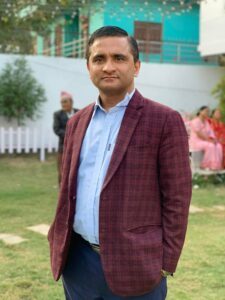



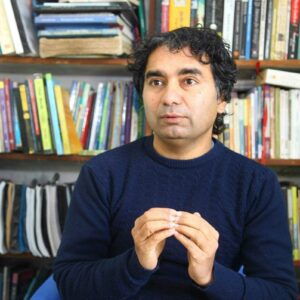
 translator in the field of Nepali literature and translation. In addition to teaching English, he is also actively involved as an executive member of the Nepal Translators’ Society. His poems, essays, translations, and articles have been published in various literary and online magazines. His deep love for literature and passion for travel have shaped a profound philosophical perspective in his creations. Recently, his English translation of the anthology of poetry Premko Aadim Geet has been published, further establishing his contribution to the field of literary translation.