It is always important for the teachers and parents to read children’s literature themselves, understand the effectiveness of extensive reading and create an appropriate environment for children to read books. This article presents the existing teaching reading culture to young learners in Nepal and ideas for teachers and parents to provide opportunities to read and support their children’s learning.
The Context
Several studies have been done globally in the field of language teaching regarding the importance of the use of children’s literature for their learning. However, in the context of Nepal’s public primary schools, this is a very rare practice. (Koirala & Bird, 2004: 128). Koirala and Bird (2004) mentioned that the culture of reading for pleasure is very limited in the context of Nepal. It does not mean that people do not read books or other publications.
The government has invested a large amount of money in primary education and showed a willingness to reform the education system. However, the education system is conventional, and it needs to be transformed to meet contemporary global education. For instance, the government provides textbooks for the school children and the children follow the texts and instructions of the textbooks which they have to do for getting promoted to the upper grade every year. There is a rare access to the library of reference books and additional reading materials for the children in schools, and neither the schools (excluding few schools, having managed fund for the library), have managed resources to develop a library in their schools. Although some international organizations such as Room to Read and Nepal Library Foundation have been working to enhance educational opportunities through public libraries by donating English as well as Nepali story books in rural communities, their work in limited areas is unlikely to reach every corner of the country and most of the children in Nepal are still far away from such opportunities. Unless the government invests massively in education particularly in providing learning resources, the current support for the schools by a limited number of non-governmental organisations may not result in the immediate change in the traditional culture of reading. In addition to this, a lack of awareness among teachers and parents is another obstacle to foster a reading culture of children. For instance, when a question is raised about reading culture at home and at school, the majority of Nepali people consider reading means reading prescribed textbooks and understanding a text refers to enabling children to answer the questions based on the text. Moreover, it is a general tendency of the people that they tend to treat their children in the same way once they were treated.
In addition to this, the education system in Nepal lacks a holistic approach to teaching and learning a language and it is focused on teaching one aspect of language at a time in isolation entirely based on textbooks in general. For instance, the students are taught Nepali or English alphabet in preschool which can take over a year as it has no meaning for the children. Similarly, the students may know prepositions, but they have no idea of presenting it in context and it takes many years for them to internalize and use language in their everyday life. Beard’s (1991) study in children developing literacy found that a fundamental support of parents and teachers can help children set up their learning goals. Therefore, parents and teachers need to feel that young learners need exposure to develop their reading habit which serves as a vehicle to make a tremendous difference in their language development, intercultural understanding.
My Experience as a Teacher Trainer
When I was a teacher trainer at one of the organizations at Kathmandu, I worked in a training project ‘Bringing English to Classrooms’. During that training period, I conducted some story-based activities to provide the teachers with hands-on knowledge regarding the effectiveness of using literature throughout the curriculum. Teachers also wrote stories themselves for their students and made books using the local materials available. The teachers enjoyed a lot in my sessions and seemed to believe that stories can play a powerful role in language learning. However, in the beginning, many of them were not sure if they could take what they learned in the training centre. They came up with questions such as ‘how is extra reading possible while both teachers and students are busy completing the course syllabus fixed by the school administration and preparing for exams?’ So, it was still challenging to persuade the teachers that reading widely does not mean it has to be separated from their everyday task based on the syllabus but the two can be integrated. During our monitoring phase, I found some of my trainee teachers who implemented what they had learned and some of them were still not sure how it would exactly work in their school where they still lacked enough books, time and concrete ideas. From the training programme, I learned that some teachers could not transfer the skills they had learned from the training to their classrooms. And the limited time the project had did not allow me to go for regular mentoring. Had I got further opportunities to follow those teachers, the result would have been far better than what our project really achieved. On the other hand, the teachers who were aware and who could internalize the process succeeded in implementing what they learned. It made me believe that it is possible for the teachers to establish a new culture if the teachers are aware, self-motivated and are mentored carefully.
Why is child literature important?
Literature not only helps children learn to read but also helps them develop an appreciation for reading as a pleasurable aesthetic experience. Likewise, a team of researchers (as cited in Pantaleo, 2002) claimed that “literature entertains, stretches imagination, elicits a wealth of emotions, and develops compassion.” (pp. 211). A piece of story stimulates readers to generate questions, can give new knowledge and provides encounters with different beliefs and values. Good stories can work as a powerful device to show children right direction, help them make decisions, learn to empathize and become good humans. It can change their perception and attitude towards certain things. For instance, from the story ‘The Grouchy Ladybug’ written by Eric Carle, children learn the importance of being friendly and interacting politely with others in the community. Literature also opens the springboard for discussions. For instance, after reading ‘The Giving Tree’ children can discuss for hours regarding human development, their behaviour, selfishness and so many other issues. Thus, using literature is a natural medium of teaching children a second language, developing a love for literature in the learners and motivating them to read and grow as a ‘human’.
Why extensive reading across the curriculum and what teachers can do?
An act of reading extensively is likely to produce positive attitudes and interest towards reading. Materials, which are interesting at the appropriate linguistic level, always motivate students positively. Such materials give pleasure and generate interest in reading and support language learners to develop their overall language skills and progress academically. Day (1997) compares the pleasure and achievement the students get from extensive reading with a garden where it is always spring. Children’s literature or real books used in language classrooms and across the curriculum also contributes to foster their lifelong reading habits, good problem solving as well as decision-making skills (Ghosn, 2013). The more children get to read books, the better speaking and writing competence they acquire. In this regard, Harmer (2001:251) argues that “what we write often depend upon what we read” and so do the children as they draw attention to the structure of written language and begin to internalize its distinctive features of language when they read or listen to stories. Thus, they also learn to speak simultaneously when they get to participate in the activities where they require speaking skills such as dramatization and making predictions. Therefore, it is very important for the teachers to read books, promote reading and give children enough opportunity to interact with books by surrounding them with good texts in the school.
It becomes easier for the students to understand the concept of the curriculum content and it broadens the horizon of their understanding if they get to participate in such activities based on stories. For instance, children have fun by listening to the story; ‘The Very Hungry Caterpillar’ and simultaneously they get the concept of the lifecycle of a butterfly. Thus, through the practice of reading extensively across the curriculum, teachers can encourage young learners to read and have the love for literature. This way, the teachers can scaffold them to acquire competence in language as well as the subject content.
Conclusion
Teachers can start collecting reading materials through various sources or develop stories themselves working collaboratively in co-ordination with the headteacher despite the difficult circumstances with lack of resources. Most importantly they should be aware and make themselves familiar with child literature. Teachers can make a difference in the language classrooms for young learners if they have a good selection of stories with beautiful pictures, various sentence structures and repetitive patterns and stories that represent a various culture of Nepal. Therefore, the teachers need to realize it is important to maximize reading opportunities in school and encourage parents to read to and/or with their children at home.
*Ms Chapagain is working as a freelancer teacher educator. She earned her Master’s degree in English Language Teaching (ELT) from Kathmandu University. She has also completed MA in ELT (with specialization in Young Learners) from the University of Warwick, the UK as a Hornby Scholar 2014/2015.
References
Beard, R. (1991). International perspectives on children’s developing literacy. In C. Brumfit, J. Moon and R. Tongue (Eds.), Teaching English to Children: From Practice to Principle. Collins ELT.
Day, R.R., & Bamford, J. (1997). Extensive reading in the second language classroom. New York: Cambridge University Press.
Ghosn, I. (2013). Humanizing teaching English to young learners with children’s literature. CLELE journal, Volume 1, Issue 1, 39-57
Harmer, J. (2001). The Practice of English Language Teaching. (3rd Ed.) Longman: Pearson Education Limited. Longman: Essex England.
Koirala, N. & Bird, P. (2004). Library Development in Nepal: Problems and prospects. EBHR-38, 128
Pantaleo, S. ( 2002). Children’s literature across the curriculum: An Ontario survey. Canadian Journal Of Education, 27, 2 & 3: 211–230
In my experience reading through the existing documents and reviewing relevant literature is a challenging job in the research process. The process of reviewing literature continues from the beginning of thinking about research to finalising a research paper or thesis. I believe that a researcher begins a research right from the beginning to think about what the research problem is and explores relevant information to the research problem. A researcher uses own bank of knowledge and various documents as a reference to define the research problem. However, it is not an easy job for anyone to explore resources and to find relevant information in the resources. Here, the researcher needs to have skills in reading documents and reviewing the literature and most importantly select the right resources from a vast ocean of resources such as the physical library, digital library and websites.
Let me share my experience of exploring resources, finding right documents, reading through lines and picking relevant information from the documents. When I started my second Masters in Education at the University of Bedfordshire in England in 2009, I struggled a lot to understand and learn the way of searching documents in both physical and digital libraries and had to wriggle when I was unable to recognise right information in the available resources. I cannot remember how often the library liaisons and tutors helped me explore digital books, journals and website information. It took a while to recognise the right information in journals, book chapters, newspapers and websites. I believe the way I learnt to read documents and review information relevant to research problems, questions or purposes is a generic skill needed for researchers to review literature. As you read a document, remember what to review.
In the beginning days of my Master’s research, I used to randomly pick information from documents, but gradually my tutors’ support and guidance, and the seminars I attended helped me to improve my way of reading skills and develop skills of reviewing literature. As a result, I was able to review the literature for my research more comfortably and systematically. Moreover, I was able to reflect the skills in my doctoral research activities from the beginning of developing a research proposal to the end of finalising thesis at the University of Canterbury, New Zealand. The following diagram provides a guideline:
The above diagram (Presented by Professor Janinka Greenwood in the Creativity & Change Lab at the University of Canterbury) provides a fundamental guideline for reading documents and reviewing literature. The circles are interconnected in a literature and having the diagram on their mind can help a researcher to explore the right information in the documents and review literature systematically. The Topic in the diagram refers to the research topic. As a researcher or writer one needs to have a clear topic or the area to explore the right documents and the information within the documents. Moreover, the key aspects in the documents need to be relevant to the researcher’s own research area to relate the literature of the document. On the other hand, the Context in the diagram refers to the context of the research that the researcher has focused. When reviewing literature from journal articles, book chapters or other resources, a researcher needs to locate the context of the research information in the documents and provide the context in own review of the literature. The information becomes meaningful only in the contexts, the researcher must consider the context as an important aspect of the literature review process. The next important aspect of the literature review process is the Intention of the researcher which helps to read a wide range of texts in a document and explore the right content s/he wants to draw from the document. Another important aspect is the Criticality. The researcher needs to analyse how the information of the document relates to the topic and interpret it. It is a very important aspect in the process of reviewing information and interpreting in the body of literature because there is always a chance of biases. The researcher needs to reduce prejudices in the reviewed information.
When I started my doctoral research in education at the university, I got a good platform to learn reading skills and the skills of reviewing literature. Regular seminars in our research lab provided me with more opportunities for learning the strict discipline of reviewing literature such as exploring archived documents in a digital repository and printed materials, selecting right documents, scanning and skimming information in the documents. A researcher can use keywords and phrases to explore relevant materials available online from google, google scholar, EBSCOhost, digital library, etc. Similarly, the key terms and ideas of research can be helpful to select relevant books, journals and previous theses in the physical library. Moreover, the key ideas (specific topics) of the research can lead to reading through journal articles, specific chapters of bulky books and other documents. When reviewing literature, the researcher needs to have specific ideas to pick information from the resources such as journal article, book chapter, newspaper or other web pages and to interpret the information without any prejudices. The above diagram gives an idea to follow reading documents and what information to be reviewed from the resources. While reviewing any literature or a journal article, the researcher needs to bear in mind: who the researcher is, when the research was published, what the research is about (topic/ area), where the research took place (context), how the research was conducted (methodology) and what the results are. I believe that these key ideas help the researcher explore relevant information from documents, note key information when reading, interpret the information systematically and save valuable time.
Many formal and informal discussions emphasize that developing EFL reading at public schools of Nepal is challenging. In this narrative writing, I am therefore trying to investigate the existing scenario of EFL reading in our public school, its impact on developing reading habits and some hints for promoting it.
Let me share an incident that took place in my class. I asked a student to read a simple reading text. In the beginning, he was ready but he tried a little and stopped. I asked him why he stopped but he had no answer to it. He felt insulted in front of the class and flushed in anxiety. At first, he thought he could but as he tried he couldn’t because his reading skill did not support him. Majority of the students who belonged to public school had a similar story (perhaps, still have), a sad story of having difficulty in reading an English textbook fluently. This story reminded me to recall my first stumbling days where I put my full effort, mind and heart to memorize those individual letters ABC…XYZ without knowing what reading actually means. So, till the date, I remember the interesting way of our reading. We were taught to read word meaning in such a way, h-o-u-s-e- house mane (means) ‘ghar’ and gradually started to read sentences.
Reflecting back to those days, what I feel now is that our reading in my time was probably focused on developing the ability to read English alphabets. Later, it was associated with the production of words and sentences than context, meaning and many more. So based on my experience as an ELT practitioner, I do not find any significant difference between past and today. No doubt that reading is definitely a skill, an active skill along with other three fundamental skills of language. Some studies (e.g Dabarera et.al, 2014; Ismail, 2015& Lee, 2012) related to reading skill reported that reading is one of the significant skills foreign language students need to learn for academic success in English. . .
Firstly, we were taught in Nepali even in English language class. Our teacher translated English text into learners’ native language (Nepali) as far as possible. As a result, we are compelled to think in Nepali and literally translated the language into English. This process involved the use of grammar-translation method in language learning and we are still practising it (nani dekhi lageko bani). In our English class, our English teachers used to explain the text into Nepali and asked us to memorize the difficult word meaning. When he taught a lesson, he followed the ethics of grammar-translation method. He read the text and translated into Nepali language, so did the students. Thus, we never felt that it was our English class and we were reading in English. On the other hand, we felt bored like my SEE students when their teacher starts giving a lecture in English class. The interesting thing happened in both classes (classes of my time and now) were similar where students requested their teacher to tell the text into Nepali. In this respect, I would like to add a statement of my SEE student.
She shared, “Miss, can you please explain it in Nepali? We did not get you?” (Translated)
This is only the very common example. As we are using the Nepali language in most of the English class, it automatically creates a problem in reading. Throughout the observation, we experienced the same and even understood that students might have felt difficulty in reading due to the deep impact of the dominant method. There is a lack of concern and exposure of English inside the class. The contexts are also limited. It is my experience that the teaching and learning English in public schools is oriented to how to pass the exam.
The students of public schools did not have exposure in reading from English teacher, parents and elders for developing reading skill since the past till now. So, reading becomes a complex process for them. The students do not know what makes them a good reader and what the right way of practice developing reading skills is.
Another reason behind the lack of students’ motivation in reading is due to the lack of additional reading materials. Most of the public schools of Nepal do not have the access to reading room i.e. library in schools. Even though there is a library, students are not trained how to find appropriate books and read fluently. Moreover, lack of trained English teachers, lack of enough teaching aids students of the public school are poor in reading. If we could provide reading related book like English magazine, storybook, poem, drama and so on to our students from the early grades, there might not be seen such problems in the field of English language teaching. So, establishing a resourceful library is essential for the development of students’ better-reading habit.
Similarly, the reason behind our students’ demotivation in reading (mostly in public school) is the teachers’ own reading habit. Therefore, teacher and their reading habit can be one of the sources of inspirations for the learners. I, thus, think that to improve the quality of present government aided education system and more importantly to develop the reading habit to the student, every school should establish a teaching community of practice. McLaughlin and Mitra (2000) emphasize that teachers’ community of practice is an important vehicle for sharing ideas and getting help from each other in their educational practice. I hope schools can be the best model for teachers along with their students for developing reading skill. In my view, only establishing a library is not sufficient to promote reading habit, but there should be an environment for reading community to enhance the better reading of their young learners. It means there should be a practice of taking children to the library, choose appropriate books and read, then share what they read with their friends and others.
Finally, motivation is one of the key strategies a teacher can use to make his/her students sound in reading. Motivation has positive power for transforming individuals towards wellbeing, Therefore, I felt that at the beginning, mostly the students require a great deal of support and guidance from their ELT teachers. If they get the proper guidance and motivation, they can enhance their reading.
Ms Roka is a recent graduate from the Department of English, TU. Her master’s thesis explores identity construction of female EFL teachers in Nepal.
References
Dabarera, C., Renandya, W., & Zhang, L.J. (2014). The impact of meta -cognitive Scaffolding and monitoring on reading comprehension. System, 42,462-473.
Fairbairn, J., & S. (2001). Reading at university. A guide for student. Philadelphia: Open University Press. USA
Harmer, J. (2001). The practice of English language teaching. London: Longman.
Harmer, J. (2007). How to teach English. London: Pearson Longman.
McLaughlin, M. & Mitra, D. (2000). Theory based change and change based theory: going broader. Journal of Educational change, 1(2), 1-24.
Middleton, E (2011). Reading Motivation and Reading Comprehension. An unpublished thesis of Master of Science in Graduate School, Ohio State University.
Richards, J.C., Rodgers, T.S. (1999). Approaches and methods in language teaching. Original (1986), Third Edition, Cambridge: Cambridge University Press.
Wyatt, M. (2012). Issues in supporting the teaching of reading in English as a second language to Arabic speaking children. The reading Matrix.vol. 12, 2.
I began teaching English some eight years ago in a way that I could not help commencing it as the profession. One of my friends requested me to take classes on her behalf when she was not able to continue teaching in the middle of the academic session. When I recall the first day, I was really nervous standing in front of the staring eyes of several students, though it was my luck that I was appreciated by them. The appreciation from the students and my own rewarding experience during this period motivated and encouraged me to take teaching as the career. In the beginning, I found many reading texts quite difficult to interpret to the students. I had had many sleepless nights to prepare those texts. In this short blog post, I share my experience of teaching reading texts in post-secondary level in far-western part of Nepal.
Experience
During these eight years, I taught English in a few community and private English medium schools from secondary to university levels. I mainly collected experiences at the post-secondary level i.e. grade 11 and 12. I facilitated both compulsory and major courses of English which contain various genres of literature such as poem, story, essay, drama, novel and so on. While teaching these genres, I have gained some inspiring experiences.
When I was teaching reading an essay “Look At A Teacup’, the girls of grade 11 hid their heads. Furthermore, they were seen absent the next day. I learned that the reason of their absence was the sexual context in the text. They did not feel comfortable with the content. I consoled them separately and made them feel comfortable. And I also adopted a rapid reading strategy for that particular text. However, I have had quite contradictory experience of teaching a story i.e. “About love” to the students of grade 12. The students were too curious to listen to me. I observed that they were found excited to listen to the story. They paid full attention with no hesitation and wanted me to translate the story in the Nepali language. I realized that the content about love attracts those teenagers.
Another different experience was teaching a dramatic story “The Three Day Blow”. Students became quite passive and felt bored while reading the text thoroughly as it is too lengthy. They reported me that it has some unnecessary conversations. I made a summary of this particular reading. Then I realized that they made meaning in a way that love is like ‘The Three Day Blow’ at the present-day world.
One different situation that I had gone through was while teaching a poem entitled “My Heart Leaps Up When I behold”. Even though it was simple and short, students became quite confused with this paradoxical line: The child is the father of Man. Later on, I changed the strategy to impart the meaning showing a chart to make the meaning clear and they received the hidden meaning of the paradox. I felt quite happy when they comprehend the figurative meaning and internalized it.
I love reading poems but it is hard to deliver the underlying meaning of those poems to students in some cases. Most of the students prefer reading stories and novels to other readings as it has denotative meaning, whereas poem has connotative meaning. One of the girls from grade 11 said, “reading novels and stories interest me because it is easy to grasp the meaning of reading and provide us pleasure.” And a boy also said, “Novels are real-life based, and the stories reflect our characters and lives.”
Challenges and my Strategies
Like other teachers in this region, I also faced a lot of challenges to teach reading texts regarding the contents, students’ behaviour, learning environment and teaching techniques. At first, I used to apply the lecture method. Later students’ progress and my deep engagement motivated me to use student-centred techniques to make students more active and engaged in their classroom and improve their reading ability.
While teaching reading in one of the government schools of a remote area in the region, I had to face a lot of challenges because students were very weak in reading and writing in English. So, I used the Nepali language for every English words and sentence. When I read in English, they were startled and had no responses in the beginning. However, while I was reading something in Nepali, they were quite happy as they found the texts easier to comprehend and grasp the meaning of them. In that situation, I had to take extra (out of office hours) classes to facilitate reading and focus on simple grammar rules, structures, vocabularies and pronunciation of the new words.
As English is a foreign language in my context, there is no doubt that everybody feels some difficulty to master over it. Children in the school coming from different linguistic and social background also feel hesitation and difficulty to speak English. Practice makes man perfect. In earlier days, I used to stay the whole night for reading, underlining the words and write down their meaning. I constantly scanned my own comprehension. This is not something happens at the end of every page but this happens at the end of every sentence. I was scared of thinking that what I should do if I do not understand what I am reading. So reading helped me to deliver the content confidently. I was particularly inspired to see my students’ progress in reading and I think, reading never ends.
Therefore,
I feel that students need to be engaged in reading books of their interests, magazines, newspapers, stories, novels, comics and so on in Nepali, English and the languages they feel comfortable to enrich their reading habit. During these eight years, I find that reading allowed me to expand my knowledge, explore and understand my own identity and made my mind creative and critical.
Ms. Yashoda Bam is a post graduate teacher (PGT) at Sainik Awasiya Mahavidyalaya, Teghari Kailali.
This paper recounts my professional journey as a university teacher that I started nearly one and a half decade ago. In this narrative account, by exploration I mean textual exploration, experience stands for direct contact with language, working in and through language, and expression has to do with communicating ideas through writing.
Underlying assumptions: i) learning ceases with over-repetition; exploration gives continuity and safeguards against fossilization; ii) language has to enter into and move through the experiential zone; iii) expression is vital for communication; communication failure leads to professional alienation.
First two years and repetition of sickness
When I started teaching at the university, the entry requirement I possessed was the Masters degree. It was the only professional competence I possessed to teach Masters course. I had some level of confidence because I was going to teach the same course I had studied. The campus where I started my university career was like my home. However, I did not have extensive reading and writing experience apart from coursework, particularly the Masters thesis. My knowledge in the subject was limited. I was confined to the given course, but the subject I thought, for example, Translation Studies demanded interdisciplinary readings in Linguistics, Applied Linguistics, contemporary critical theories like post-structuralism. Apart from reading across these different subject courses, the courses also required me to have experience of translation.
When I recall those early days, particularly the first two years or so, I was a course-teller rather than a teacher. Gradually, I felt more comfortable with the course content, since I had repeated the same course. Also, I felt more secure in the class. However, the lack of job satisfaction led to the devoid of academic charm. I was suffering from what Nietzsche has called “repetition sickness” (Myerson, 2001).
My key professional responsibility
What lies at the heart of my profession is teaching the prescribed courses to prospective English teachers. That is, my first and foremost duty is to stand in front of the class and deliver lectures to the students in the classroom. Other professional responsibilities include supervising researchers, training teachers, designing courses, compiling and editing course materials. Again, all these revolve around the key responsibility i.e. teaching.
Classroom teaching has limited reaching
After some years when I started attending the conferences and visiting the academic forums and creative writing workshops, I began to realize that classroom teaching has limited reaching. I was alienated from the broader academic community. It often struck me that only by confining myself to classroom activities, I might not be able to expand my professional presence beyond university premises. Only by teaching one cannot grow professionally. This feeling would often strike me.
I often asked myself:
To what extent can I call myself a professional teacher?
Do I only teach or do I also READ?
Do I only teach and read or do I also WRITE?
Do I only teach, read and write or do I also SHARE?
Do I only teach, read, write and share or do I also CARE the emerging writers?
These questions were in fact inspired by Penny Ur’s (1991) notion of professionalism. The questions like these urged me to set on the journey of exploration, experience and expression by means of reading, writing and translating documents.
Desire for expanding my professional presence
I prefer not to limit myself to the reading and writing within my profession. I love plunging into the open space of reading and writing beyond the given profession so that I can traverse neighbouring disciplines, and bring back insights and information to expand and strengthen my profession. I have sensed that it has helped me expand my core identity as an English teacher. Apart from a teacher, now I can also call myself a writer and translator. Translation and creative writing have connected me to the broader audience.
Reading for exploration and experience
Reading is a process of exploring texts as well as information. I normally explore three zones of texts. I often begin with the core zone i.e. the texts prescribed in the course. It’s vital for my professional survival and success of my students in the examinations. However, reading the course texts is not enough. Then, I explore additional texts related to the core zone. I call them the texts from the peripheral zone. I need to deepen and widen my reading experience. To this end, I site the prescribed topic or text in the neighbouring disciplines like linguistics, literature, philosophy, and also refer students to such disciplines to broaden their understanding. Whenever I have time, I choose one of the areas and take to independent reading. I call this the texts from the outer zone. Let me give an example, poststructuralism and translation, a topic from the course. The course requires me to deal with the topic from the linguistic perspective only. Apart from linguistics, I move to peripheral texts that shed light on the topic from the literary and philosophical perspectives. Later I suggest students to carry out an independent study of poststructuralism when they have time. Thus, as an advanced academic reader, I encourage my students to move to the outer zone from the core.
This exploration helps the reader experience the content and language from different disciplinary perspectives, with varying degrees of intensity. Moreover, it is the process of reading across the disciplines. With such exploration, we become the members of broader academic and creative communities. However, there is a risk involved in such a reading. The reader should not forget to return home i.e. his/her own discipline, say ELT in our case. The only aim of reading beyond the home profession is to enrich one’s professionalism in terms of language and content, not just to become a textual wanderlust.
Writing for exploration, experience and expression
I realized, very late though, that writing is equally intensive and hard to reading, but it is also a source of self-satisfaction. This exploration needs more physical and mental preparedness, more commitment and more motivation than reading. While writing this article, I am exploring my inner and outer worlds simultaneously. Writing requires me to explore my own consciousness by reflecting on professionallywho I am, what I am doing, what my expectations are, what my students expect from me, and how I can contribute to my professional community. In a similar vein, I need to explore relevant information available in the textual world to such questions. Writing is the combination of information that I collect from various sources.
Writing is an event. It is the event that engages the writer in language, in content and in context. For example, I, while writing this article, am experiencing English directly. I am not just thinking about English but thinkingin and doing through English. I am face-to-face with its components ranging from spelling at the lowest level to discourse at the highest.
I always find myself in crisis while writing because every time I am unsure of spelling. I look for suitable words, proper structures, natural flow in the texture, effective rhetorical devices, relevant information and striking insights. Moreover, by writing I am linked with my students beyond the classroom. It has extended my presence beyond the classroom and multiplied the number of my audience. It has also helped me become a producer of knowledge rather than a mere consumer.
Translation for exploration, experience and expression
Translation has been instrumental in shaping and expanding my profession in terms of language, content and my identity. My early inclination to translation was due to my desire to improve my English. Later this inclination morphed into a life-long passion and profession. When I start translating a piece of work, I find my English inadequate. So, I need to search English dictionaries for better words, suitable expressions, natural sentence constructions and effective rhetorical devices. It has compelled me to be a tenacious language learner. Moreover, supplementary reading is a must in translation. In order to translate a Nepali book in English, I need to read peripheral English books. For example, when translating Yasodhara, a poetic play in Nepali by Sharada Subba, I had to explore several books and even movies in Buddhism. That led me to the path to Buddhist literature. Old Path White Clouds is one of them. Apart from being helpful in translation, insights from reading of the books like this have broadened my understanding about life and my relationship with students. This book has changed my attitude to teaching as service rather than merely a means of livelihood.
Moreover, while translating, I am engaged in the double helix of reading and writing. My reading is directed to writing. I need to read the text in the deepest possible level and (re)write it in the most accurate way. In both the cases, I am in intimate contact with language. Drawing on my experience, I agree with Sujeet Mukherjee’s (1981) revelation – Reading for translation is the highest form of reading. This acute process of reading has given me a means of expression. I have been expressing myself through translation for many years by now. I believe that I can contribute to the disciple by translating and writing about translation.
Benefits I have reaped from this triune journey
I have reaped a lot of benefits from this triune journey. Some of them are as follows:
Contribution to university courses: Selecting texts for such courses as Interdisciplinary Readings is next to impossible without wide reading. With this, I have been able to contribute to university reading courses, particularly in the text selection from literature, philosophy and critical theories.
Exposure to language and content across disciplines: I find myself shuttling back and forth across different reading zones. It gives me a sense that I am studying about language, content and its style. This makes my reading interesting and exciting. I can directly experience English used in other disciplines. Such reading exposes me to a variety of language and content. It has helped me guide students, earn their trust. This has improved my English and given me content to contemplate, to teach and to write.
Safeguard againstprofessional lethargy: Constant reading, writing and translating has freed me from professional lethargy.
Knowledge contributor: My role as a teacher is not only the consumer of knowledge but also the producer of knowledge.
Sharing beyond the classroom. I have been able to share my ideas beyond the classroom by means of print and electronic media.
Self-humility: Finally, the journey has taught me self-humility i.e. I don’t know but I try to know.
References:
Mukherjee. S (1981). Translation as discovery. India: Allied Publishers.
Ur. P (1991). A course in language teaching. Cambridge: CUP.
*Mr Adhikari is a lecturer of English Education at Tribhuvan University. Moreover, He is also a translator, editor, poet, and essayist. You can follow him on Twitter @balaramadhika14/bal ram adhikari
A teacher providing feedback on her students’ writing (www.alamy.com)
Editorial
We are delighted to present the third quarterly issue (July- September) of ELT Choutari of 2018, the 88th issue. The issue focuses on writing education in Nepali schools and universities.
We, the teachers of English in schools and universities teach about writing not writing itself. For instance, students are made to memorise what a paragraph means rather than making them write a paragraph on different topics. In the university, many students strive to create original pieces of writing. To meet the dates for submitting assignments, students ‘copy and paste’ in rush. They do not receive enough opportunity to practice writing in the classrooms. On the other hand, in schools, teachers generally write paragraphs, letters and essays on the board and students just copy them. They even memorise those notes including essays for the examination. Furthermore, there are ‘ready-made’ paragraphs, letters, job applications and essays in the markets; the “Bazaar Notes”. In a way, these notes make the teachers’ lives go easy. Of course, there are few teachers and students who invest their sufficient effort to practice writing processes in schools and universities. Interestingly, it has also been observed that the teachers and university faculties who have never produced a single piece of original writing in their career grade the students’ papers for their creativity and originality in writing. I mean, do we have experience of the process of writing? We need to rethink and revise the practice of teaching writing in our academic institutions.
In this connection, this 88th issue of ELT Choutari offers a wide range of writing practices, experiences and analysis of scholars. I believe that teachers, students and researchers will be benefited from reading these writings.
I would like to thank Choutari editors Dr. Karna Rana, Jeevan Karki, Praveen Kumar Yadav and a learning editor Narendra Airi for their reviews to release this issue. Finally, if you enjoy reading the blog posts, please feel free to share in your circle and of course, drop your comments in the boxes below. Likewise, please write your teaching-learning experiences and send us. We will give a space at Choutari. Our email is 2elt.choutari@gmail.com.
“Thesis” this word always had been a matter of mystery for me since I started master level because every senior I talked
Nabina Roka
said that the toughest part of the study was thesis writing. They shared their success, failure, complexities and challenges they faced in terms of writing a thesis. When I approached that level, I was at a loss because I could not find myself more confident. However, I have always been prepared and concerned about this matter and became curious from very beginning. More, I often remembered my sister who used to share her experiences of writing a master thesis and energized me as thesis is ‘something especial’ which requires a lot of patience and handwork. Before approaching this level, I might not be more serious about this matter meanwhile a kind of feeling came in my mind like, oh my god, “it is a tough writing”. Keeping those things in mind, I prepared for it .As a result, I reached at its final result. During this journey of writing a thesis I experienced most suffering and stressful time, I feel like that a woman suffered during in labour pain. It was in the sense that I had no option escaping from it because I spent about a year for preparing this thesis and face several problems, challenges, dilemmas and fear since the early days of preparing proposal to facing thesis viva. These several painful moments during the process however made me strong and leads towards its successful completion.
Early Preparation for Conducting Research
I could visualize my classmates and found the same inherent problem like me in terms of writing a master thesis. At that time our concern was on thesis ‘topic’. Though initially, I have no idea about thesis writing, yes! Of course, I have a desire to carryout out research quite differently than other (to be honest, till that time, I had no vision to carry out the research on totally new area and design, I don’t know why but it can from my inner heart my …..).Therefore, I have always been concerned about this matter with little knowledge about thesis writing since the very beginning of master level. Times flies very fast eventually, I approached to the first rehearsal stage of preparing research proposal for the partial fulfillment of assignment of research methodology subject. For preparing this proposal, like other friends of mine, I visited CRC and read out some theses and prepared proposal without knowing the real essence of writing well proposal. Actually, it was in third semester, without having proper knowledge on it I submitted to the Department. I was curious to know the feedback of my work. It is all because I was thinking that this work would be helpful for my further process of thesis writing. On the contrary, it did not happen to me. I neither got feedback from my teacher (initially he promised to return back with feedback) nor he returned checked copy. Feeling little depressed, immediately, after the completion of this project, I went to one of my senior teacher of our faculty and expressed my research interest. I shared my interest on doing research in new topic. Then, he advised me as, “sounds interesting! I wonder if you find the literature of that topic in our own ELT context.” He further added that he however might not be sure either I can …. Being confused, I remained silent because I had no more option instead of quitting it .Thus, I just quitted it and thinking on doing research in quite easier topic than earlier. Eventually, I appeared final exam and worried thinking about thesis topic. After the completion of exam, I immediately visited CRC and brought some theses and decided to carry out survey design research as others.
The Moment Somewhat I understood Area and Topic
The Department of English Education published the notice of thesis supervisor. I saw my name under the supervision of respected guru Dr. Prem Bahadur Phyak. I heard his name and his contribution in English language teaching. But, before that time, I had no formal visit to him. Some days later, he called a first meeting for a discussion. On that particular day, we gathered and discussed on general matters. My friends were sharing their ideas one by one after introducing themselves. When my turn came, I was really confused whether I could tell. Feeling little comforted I tried, but it went difficult for me to speak over there because before that time I never became serious about “area” and “topic”. Though I became nervous, I successed to speak something about topics, I brought. Meanwhile, he understood my intention, made me feel comforted. After discussing with him, somewhat I understood and got little idea on area and topic. I knew the area ‘gender’ but became confused how to carry out the research on it. I returned back home and laid down restlessly continuously thinking on it. But the question “how to carry” had drawn my attention. After a long debate within, I decided to do it and immediately requested to my supervisor for providing some materials related to gender. He immediately sent me a pile of reviewed works. Next day, I downloaded and printed out all, I had. Then, I started to read. I read and underlined the words which I considered most important. I read each article several times but became tired and frustrated when I understood nothing. However, I kept on reading.
Gradually, we were called for second and third meeting for a discussion. In those productive meeting, I learnt many things but felt little uneasy because I was still in dilemma and not sure how to start and what to do later? Meanwhile, I saw some of my friends were confidently sharing their ideas .On the other hand, I found some of them were in dilemma (still) like me. Although I was in dilemma, I observed them and I felt little comforted. But till that time, I could not dare to speak. To be frank, finally, I tried to express my inner intention with my facilitator, ‘Sir, I went through all but understood nothing’. He simply replied, Nabina, “You show your interest on gender. Your issue is great. So, don’t be afraid. Be positive and just spend some more time on it”. This time, probably I felt little more comforted than earlier meetings. In such way, our last group meeting before preparing proposal was end with the discussion of choosing area, population and selecting research design particularly.
Experience of Preparing the First Draft of Proposal
Once I decided my area typically gender, having little knowledge about that field, I started working on it. As I mentioned earlier section, ‘I read but understood nothing’ later appeared as a milestone for me as it motivated me to do the work quite impressively. Keeping the quotation ‘understood nothing’ in my mind, I started to read. I spent about two and half months for reading and generalizing the ideas in my proposal writing. I had done it with paying full attention. Meanwhile, I found, it was as tougher as I thought. At that time, I encountered with several challenges. So, I had frequent visit with my facilitator and getting constructive suggestions for further improvement.
Finally, I prepared the first draft of proposal and visited to my supervisor with little excitement. I handed this draft piece to him to observe my first attempt of writing a proposal. On the other hand, I noticed that my facilitator focus was on my writing ability than the particular topic (It is because, in our earlier meeting, he used to say that not to worry about topic. It may change according to the demand of the study during any of the phase of working). He spent sometimes observing it and commented on my writing skill. As I remembered his first question as, ‘why did you start with definition in your writing, Nabina….?” however, I did not have answer of it. I was really surprised and suddenly said to him, ‘Sir I found the same writing culture when I observed some theses and I did the same here’. (He laughs).Later, he had kindly awoken me. I got an exposure. During this discussion, I started getting more and more ideas related to language, content, related literature review, organization skill and methodology. It was the time he opened my eyes quite widely. On the other hand, I was embarrassed in front of him it is because I found myself in the very beginning stage of writing. As a result, I had to change my concept paper i.e. proposal for next time.
On that day, our discussion summarized with introducing new word ‘identity’. Though, I fascinated by the word became worried thinking on my investment in preparing earlier proposal. Again I returned back home and stayed restlessly. I was really in dilemma what to do again. I immediately emailed him. He provided pile of articles related to teacher identity. During that time, I faced the same problem as earlier (but not exactly it was) as I did not have many ideas on teacher identity because it was totally new area than earlier for me. Meanwhile, I tried to read quite widely. I spent some weeks, losing my sleep, hunger and ignoring many more. Then, after reading some complex articles (In the sense that, I have not such habit of reading such article by heart, instead I read some just for reading, assignment purpose) about teacher identity, I consulted several times with my facilitator as it was really hard for me to make even a general concept on it. Having discussion with facilitator about the issues related to female English teachers’ professional development and more importantly as being a female ELTpractioners, exposure to the difficulties other working female(teacher) have in their personal and professional life, I started fascinated more by the term “identity”. This time, reading turned out quite enjoyable. But on the way to working, I felt bored and became somewhat redundant as I could not frame my ideas properly. During this phase, I had a several visit with him and expressed my problems as, ‘Sir I went through all articles but could not organize my ideas properly? He kindly advised me ‘you can’ but please does it passionately.
I then determined and followed his suggestion, continuing my job of preparing proposal. Since that day, the word “identity” sounded in my mind (is still). After all, I spent another one and half month for preparing next proposal. During this phase, I worked hard despites the difficulties I faced. As a result, I successed to write all the parts except introduction. Again, I spent some more days for preparing the introduction part. During the whole proposal writing, I found that writing introduction was most challenging and time consuming in comparison to other parts. Finally, after a several draft, it was submitted to proposal defense. After the successful completion of proposal defense I did required correction by following the suggestion provided by the research proposal evaluation committee for further improvement. Since the days of submitting research proposal to the department even today I feel that starting writing had impacted in my several writing draft so it can be appeared as strong basis for writing present proposal for me furthermore, it extends my horizon of knowledge in the interested area and got the chance to be familiar with the recent practices and trends in researching and academic writing.
Journey of Data Collection and Interpretation
My journey of data collection started after the phase of facing proposal viva. Regarding data collection, I was worried thinking on how it would be going on and whether I could find the expected participants. During the phase of proposal writing, I talked with some female ELT teachers whom I knew but later I found them being confused and trying to escape by remarking time limitation. So, I became worried and went to Pokhara .In order to fulfill the requirement for my research, I visited several public schools of valley. I asked help from my family and head of visited school to provide information. After the several days’ attempt, I met participants who were willingly taken part in my study.
After a phase of planning. I provided them a written consent letter for getting ethical approval. Then after having agreement with them, I conducted my first interview in August 2017. I met with my participants individually for narrative session. The interview was conducted in different places, time and context according to their own comfort than mine. At the very beginning, I started the first interview session by asking more open ended questions, to make them feel free with me. So, I started the conversation with more general questions like what are you doing now? How do you feel right now? etc. I was inquiring in such a way for exploring their present experiences and more importantly, I did it for rapport building. Gradually, I entered into their personal and professional life. At the same time, I audio- recorded their each interviews.
A month later, to explore more about them, I again needed their help. So, I had a telephone call with each participant for our second meeting. We again fixed our meeting for follow- up interviews. Gradually, this happened in first week of September 2017. In this session, our visit was on different places like their own home, school’s premise, coffee station and so on. At that time, we largely discussed about their personal and professional life. I mainly focused on the hindering and supporting aspects of their personal and professional life as it was the major objective of this research study. This time, we became more close to each other. So, without hesitation, they openly shared their stories though I noticed, they repeated the past events and even shared the events which they remembered during our ongoing conversation. (Feeling more comforted) In the same way, they even added new stories which they never shared to others. Listening to their unique lived voices, I lost myself with their lived stories and became nervous. At the same time we laughed and cried together. In this way, they not only shared their lived experiences, I also shared my growing interest on carryout out research on this area and growing journey of becoming a teacher. We talked for hours as there were no certain boundaries and fixed time. So, after having the interviews, I provided the question for written narrative. Despite their interviews and written narrative, I have a frequent visit to them on social sites. Furthermore, I observed their activities, facial expression as they were significant factors to explore their hidden reality of becoming an English language teacher. In such way, I collected pile of raw data.
Data Interpretation Stage
Data analysis started after translating (Nepali interview into English) and transcribing lengthy narratives. After two months rigorous hard work, I had prepared myself for data analysis and interpretation. When I stared to analyze raw data, I faced the same problem whether I would go further or escaped from it. Finally, despite the difficulties, I determined and did it. I collected data without having sufficient ideas on how to analyze and interpret them. I again glanced my eyes into the pages of narrative researches which I already have. I turned the pages of these books but could not find anything I needed and again consulted with my supervisor. He suggested me to follow the framework for analyzing narrative data. (To be frank) I actually didn’t know what would be the framework. I consulted several researches and become frustrated. Later, I went through the work of Riesman (2008) for a discussion of thematic approach to narrative analysis and adopted her ideas which I thought more significant for my research study.
Few months later, I informed about my work to my supervisor. Until that time, I just completed fourth chapter of my thesis and visited with him. Few days later, he informed me about my work. On that day, he provided me more valuable suggestions as how to organize the narratives of participants effectively and how to put relevant literature in this part to make the research sound. Although I got the amount of exposure, while preparing this part, I encountered exactly the same condition as I faced during first proposal draft. I know, I am in the journey of research but I become really confused whether I would ‘go’ further or ‘leave’ it. Then, I remained silent for some days and looking for another simple way. However, I could not. I had no more option to quit it because I already spent half year working on it (faced proposal viva before 5 months). I tried numerous times and finally decided to continue. During this phase, I faced several challenges and lived through stressful time. Since interpretation to submission for thesis viva, I had numerous visits with him. Finally, through trial and error, I successed to arrive it’s completion and got its present shape.
Challenging Aspects of My Study in Terms of Preparing Thesis Writing
I discussed about my struggles, dilemmas and challenges I had been facing during this research project in the aforementioned section. More importantly, here I have presented these points as some consideration of my thesis journey. I decided to carry out this research entitled Identity Construction in Female English Language Teachers Professional Development: A Narrative Inquiry without having knowledge on this area, even I did not think that I might to carry out the research on this very topic. However whole thesis journey energized me and finally I arrived to my destination. Though I have no idea originally to this topic, later it went well. As a result, I found the work much more manageable than I thought it would be. However, throughout this thesis journey, I was spending most of my time working on this research project without having proper sleep, hunger, laugh and many more. It was therefore a very challenging (still is) stage and kept me going on and on.
First, I felt quite easy to carry out the research related to female teacher because this research project was partly inspired by my own personal experience as being ELT practioners however researching on female teacher identity construction particularly is challenging issue for me. It was because “identity” itself is a new area and has not been researched in the context of Nepalese ELT scenario. Furthermore, I did not find the large amount of researches on this matter around the world teacher education.Infact, there were comparatively less number of researches, have given due emphasis on female teacher identity construction. So, selecting the area and carrying out research related to identity construction is challenging task.
Second, we know reviewing literature play a significant role to make every research sound and fruitful. However, we did not pay due respect on it. People might say, ‘Once we prepared literature in proposal writing we might think that we need not to review it again’. Even, I heard such argument time and again from my friends and seniors. To be frank, not only them, I was not exceptional in this matter. Before approaching that stage, I have an ideology that it might be true. On the contrary, later, I know the value and its impact throughout whole writing. So, I realized that it is an ongoing process. Meanwhile, another concern of my study was related to proper organization of ideas. It was not only the problem I faced in thesis writing, I am still suffering, writing this reflection.
Third, challenge I faced when I simply could not find the respondents for my research Though I talked earlier( when I was writing proposal)with some female ELT teachers later trying to escape from this research project by pretending for not having time. Then, I became little frustrated and again was searching for required participant for my study. Finally, after my one week hard work, I met some female teachers who were searching a place for sharing their stories. Again, I need to consider other factors like rapport building, conducting interviews, time management, selection of language used for interview and so on.
Fourth idea which I considered is the relationship between researcher and participants throughout the whole thesis process. Throughout this journey, I noticed that in narrative research, the role of researcher is different from other such studies because of the relationship between researcher and participant. As I mentioned in third point, building rapport is the most difficult one in my early days and more concerned with whether I could build better relation to explore their hidden reality. So, I need to view myself both from insider and outsider perspectives. However, I did not forget my role in this thesis writing.
Last but not least, another concern of my study was accurate representation of meaning in terms of what was expressed in Nepali and what resulted from translation into English. Maintaining core meaning and ideas of participants was a central issue for me. Therefore, I was always afraid of possible effect of misleading the interpretation of gathered data. During the whole thesis process, transcribing (took more than 2 month) and translating were most difficult tasks.
In this way, despite the difficulties I encountered, my interactions with participants provided huge insights on exploring female teacher identity construction, their everyday experiences, contradiction, dilemmas, frustration they experienced in their personal and social life. More importantly, I understood the value of shared story in ELT teaching and learning and its impact in educational change throughout this thesis journey.
My Final Thought, Suggestions and Acknowledgement
After all, the final result made me more energetic as I had been working with ignoring many obstacles, challenges and complexities. To be honest, it was not my earlier goal to submit my thesis on this very topic. But, later due to my strong desire and more importantly the part of motivation which I had from my supervisor, I started my journey of the research in May 2017 within four female teachers who are teaching in basic level at different public school of Pokhara Lekhnath-Metropolitan city. Starting from first stage of selecting area, preparing first research proposal draft, facing proposal viva, conducting interviews, analyzing and interpreting data with finding out conclusion, I passed several joyful and painful moments which sometimes motivated and frustrated during the whole process of working. To be honest, most of the time, I experienced the painful situation and no doubt that I was writing from the level of ‘fear and dilemma’. In fact these dilemmas and fear later made me strong and confident. Most importantly, throughout my educational journey, this firsthand experience enabled me to understand the real value of study from school days to graduation.
Next, during my working days, I observed some of mine friends carried out their theses within limited time and even I heard the thesis, “selling and buying” culture. Yes! Honestly, I am not sure about this rumor but was afraid of it. Instead, I want to say to you all that definitely you have to tackle with many ups and down moments like me during thesis process and you may deserve the result of your hardworking. So, I advised to all prospective researchers not to scare about word “thesis”. You must understand the essence of writing thesis before started writing further. If you do that it will be easier for your further steps.
Further, people I met often told that everyone writes thesis but it does not matter how you write, the goal of writing a thesis is just for getting marks than nothing else. Instead, my stressful time provided me an insights on what is thesis writing in real sense, what is my role as a researcher? Somewhat I got the chance to be familiar with little about thesis writing. Thus, I would like to suggest to all fellow students, you must grab thesis writing as a learning opportunity as you will get the chance to enlighten you and your knowledge on your interested area.
Now, I am at the end of this reflection writing, at this journey I highly indebted to those generous souls whose collaboration makes this journey of knowing mine and others’ possible. Most importantly, I would like to extend my sincere gratitude to my respected guru and thesis supervisor Dr.Prem Bahadur Phyak, for his sound professional guidance, full attention, timely advice, expertise and encouragement throughout the whole thesis process in spite of his busy schedules and over whelming responsibilities. I am really grateful to him for everything. More, I have a due respect to all research proposal evaluation and thesis approval evaluation committee for their support and encouragement in completing this research study. I have a due respect to Prof.Dr. Tara Datta Bhatta for his encouragement and enlightening ideas on language .Similarly,I would like to offer my sincere gratitude to Prof. Dr. Bal Mukunda Bhandari for his invaluable suggestion. I would equally offer my sincere gratitude to Mr. Laxmi. Pd Ojha for being there and provided suggestion for further improvement. Further, my entire research would not have been accomplished without the help and support of my participants. So, I have a due respect to them who believed me and enthusiastically taking part in this study.
Ms. Nabina Roka is a recent graduate from the Department of English, TU. Her master’s thesis explores identity construction of female EFL teachers in Nepal.
British Council has recently published a book titled “English Language Teaching in Nepal: Research, Reflection and Practice” (2018). This volume is edited by Dr David Hayes. He is an associate professor at Brock University, Canada and an independent education consultant.
This volume is a collection of 14 research papers including a majority of voices of Nepalese ELT practitioners focusing on ELT and critical analysis of the role of English in Nepal. On his remarks on its publication, Dr Lava D Awasthi, the chairperson of the Language Commission of Nepal states, “…it will serve as a resource kit for language planners, policymakers, practitioners and stakeholders.” He further adds, “…it is groundbreaking… drawing on national and international perspectives and practices, theorizing the issues generated from practical experiences and research-based empirical evidence.” On his foreword, Alison Barrett, the director, Education and society, East Asia (British Council) mentions, “…this volume will stimulate considered debate around the role and position of English within the education system in Nepal, and will enable agents of change… to make informed choices… on the quality of English language teaching, learning and assessment in Nepal…”
This book is divided into three sections. First, international perspectives (on ELT), which includes the papers of Rhona Brown, Pritivi N. Shrestha and Amol Padwad. Second, Sponsored research studies, which covers the other three papers of Min Bahadur Ranabhat and Subodh Babu Chiluwal, with Richard Thompson. Finally, the third section- Case studies includes the eight case studies of Ushakiran Wagle, Eak Prasad Duwadi, Laxmi Prasad Ojha, Jeevan Karki, Gopal Prasad Bashyal, Ashok Raj Khati, Laxman Gnawali and Vaishali Pradhan.
Karki with Dr Hayes
As the volume is out in the market, we thought of sharing the thoughts and reflection of the editor in editing the valuable volume. I managed to briefly talk with Dr. Hayes.
Jeevan: Dr. Hayes, you have recently edited a volume “English Language Teaching in Nepal: Research, Reflection and Practice”, which includes 14 chapters. Based on this valuable experience, what is your reflection on the writing of Nepalese ELT practitioners? What are the strengths in their writing and what could be done to make their writing even stronger and better?
Dr. Hayes: Nepalese practitioners are experts in their contexts and my job was just to help them to clarify their ideas and put everything together in a way which allowed them to make their contributions to the book the best that they could be. The strength in the writing generally was in bringing the Nepali school contexts to life so that readers elsewhere could see what was positive about teaching and learning English in Nepal, what the challenges were and where improvements could be made. Good writing is really all about practice and knowing the requirements of the publication you are writing for and its readership. Nepalese practitioners just need opportunities to be given- opportunities to write and to publish for both local and international audience. The more they write, and the more editors (of journals and, I hope, more books like ‘English Language Teaching in Nepal: Research, Reflection and Practice’) help them, the more proficient they will become.
Jeevan: Having gone through the research and practices in Nepalese ELT, where do you locate the ELT practices in Nepal in relation to the trends and practices in the world?
Dr Hayes: I think it’s always best to look at ELT practice in terms of how appropriate it is to the local context. However, there are clear trends which are present in Nepal just as in other countries worldwide. The most obvious of these is the expansion of English-medium education, even at the primary level. Personally, I don’t think this serves the interests of the majority of children well. International research shows that children are most successful educationally when they are taught in their first language and become literate in that language in the early years of schooling. Of course, this is a challenge for multilingual societies like Nepal but experience elsewhere shows that primary education in the first language can be achieved and, not only that, children are often more successful at learning another language such as English in later years too. The danger of English-medium education when the language is not available and regularly used in the local environment is that children often end up not learning anything very well. The work of the Language Commission in Nepal is extremely important in this respect. There is, of course, still a place for English language teaching but I think there needs to be some serious reflection about its place in the overall education system in Nepal. The educational interests of the children must come first.
Writing is a rigorous process. A good writing needs enough practice on the part of the writer. Moreover, academic writing is well organized and needs good effort. As a part of the academic course, I carried out a research on “Feedback in English Language Learning: Teachers’ Practices and Students’ Perceptions”. I went through several hard times during this research. The problem began from the very starting day of the writing process. The foremost problem I faced was to find out the way out for finding out the topic that I was interested in. It was not that easy for me to find out the area of my interest on which I was about to carry out the research. Hardly, I decided to do my research on a given topic. The topic suddenly came in my mind when I reviewed many available literatures related to language teaching and learning. Going through several literatures, I came to know that the role of feedback cannot be neglected, especially, in the process of second language learning. As being a student of semester, I was thinking of the feedback practice at the university. I wanted to find out whether the students are receiving effective feedback in the classroom or not, whether they are satisfied with it or not. What different ways are there to provide feedback to the students? These all led me to choose this topic.
Literature review is the most important aspect in any research. You can guide your research very well if you have good review of literature. Review helps to find out the gap in any area. Moreover, you can come up with the contrasting idea after the review of the literature. Finding out the appropriate area of interest in any research is challenging to any researcher. In the same way, I also went through several sleepless and stressed nights thinking over the area of my interest in carrying out the research. Several nights, I wandered in dream of finding out the suitable topic for my research. I used to dream of the same thing-research topic but forgot after I woke up. I myself didn’t know in which area I was interested in. It took me a couple of weeks to think about the topic. At some point, I thought that I could not do. But then, I gathered the courage to do it. And finally, I decided the topic. The journey of carrying out research did not stop there. It was just the beginning and a lot more was to come.
When the topic suddenly came into my mind, I became so happy. But the happiness did not last for long as I thought of the whole process of writing it. I was like…(कुहिरोको काग). Sometimes, I thought that I took it more seriously than it needed to be. But the other times, I thought that it was ok! At some point, I thought that it was not of my reach.
I thought like I was lost in the ocean. Sometimes, I thought of changing the area of research. But when the whole struggle of coming up to that level came into my mind, I forgot the idea of doing so.
I had my own kind of mental map when I planned for doing my research. I wanted to do it on my own way. But the turmoil came when I asked my supervisor about the topic and he led me to other way. This made me sad again-so sad that I stopped working on it for several days. But ultimately, it was my work and I had to do it at any cost. I started working with the proposal again. I worked to first, second and third draft giving it to the final shape.
During the process of writing these all the drafts, I took support and guidance from my supervisor, teachers and my dear friends. When my proposal got the final shape, I felt like achieving a great victory over the enemies. It was the day I took a step forward. It was half done but there was a long way forward to go. And the paths were not that easy. The paths were not pitched-graveled, sloppy and spiky. I stepped back many times and it took me several weeks to move forward.
Collecting the required data is the next challenge in any research. I wanted to do my research through the questionnaire and classroom observation of the teachers. Collecting the data taught me the next lesson-the lesson of sketching all the possible future before the task begins. A single prediction may not work as a whole. So, what a researcher needs to think is that there are many alternatives way forward and these all should be kept in mind before conducting any research. I wanted to do my research based on the classroom practice of the teachers and simply through the perceptions of the students. But, I failed many times in getting the right idea of doing so as I lacked the prerequisites necessary to it. So, I learnt the lesson of looking out for the multiple possibilities of any result. A single lens does not suffice a good research work. I also thought of changing the whole research work as I was quite unable to collect the required data from the sample. The problem added when I could not collect the data from the respondents. Hardly, the respondents returned back the filled up questionnaire. So, good rapport with the respondents is also a part of survey research. I myself was not satisfied with my work. But then, hardly, I collected the required data from the respondents and the observation of the classes. The data were not of good quality though.
After the collection of the data, I met my supervisor time and again for guidance. I was lost for almost more than a month for the analysis and the interpretation of the data. Looking out the ideas from the teachers and friends, finally, I came up with the first draft. It was very rough and incomplete. With the help of regular guidance and support of the supervisor, I did it. Working with the first, second and third draft, I came to the final version. Even after the final version, I thought that I was missing somewhere.
Doing good research itself is challenging and the tag of good student added more challenge to me. So, what I feel sometimes is being good is always challenging. Everyone has their eyes on you. It adds to your stress-stress not only in your research but in every step of your academic journey, eventually personal! Sorry! Being somebody is always dangerous!
Ms. Tara Rai is a recent graduate from the Department of English Education, TU. Her master’s thesis explores the practices of providing feedback in ELT.
One of the most common activities that we do on a daily basis, and do it in increasingly more ways for more purposes, is writing. But writing for us is also like water for fish. “What water?” one fish might ask another fish that starts talking about water, unless the latter has been thinking about or deliberately observing water surrounding it. Likewise, most of us don’t pause to think and talk about writing. It is just what people do, and they have habituated, often fossilized, thoughts about it or have nothing to say. That means it’s important for us as educators to think about how we are going to meet the increasing academic, professional, and social demands of writing in Nepal.
In this post, I’d like to share some thoughts and experiences, and a particular vision, about how Nepalese academe could adopt and advance writing as a discipline and pedagogy, as a profession and vocation within the academic context. I am not thinking about creative writing, the writing done by the special “writers” within the humanities, or the writing done by a few “scholars” in other disciplines. Nor am I thinking about writing done by journalists or other kinds of professionals who write for a living. I am thinking about writing as a subject, like social studies or math in secondary school, and like compulsory English or particle physics in college. How can we advance writing as an independent subject that is taught by academic scholars or teachers who have studied it as a subject? How can we advance scholarly conversation and research about writing, in its academic and professional forms, for improving its social and economic applications? How can we develop writing as a field of study and practice, as a matter of curriculum and policy, as an issue of public awareness and demand? How can we help our schools and universities adopt systematic teaching, research, and training of teachers and other professionals around writing as a foundational part of secondary and higher education, as a vehicle for professional development? How can we write a writing education of our own?
We do currently have a writing education of sorts. It exists in many forms, many contexts, many manifestations. It is not a separate subject/curriculum taught to students across the board; there are only a course or two within disciplines like English Education. Writing should be a distinct subject, or at least a part of “writing, research, and communication” skills course. Instead of considering writing as one of four language skills and taught within English or Nepali language courses, we must add academic writing as a foundational course in high school and college. We must offer specialized and/or discipline-specific writing courses, such as professional writing to help college and university students prepare for different professions, scientific writing and technical writing to help students write well in STEM (Science, Technology, Engineering and Mathematics) and engineering, and writing courses for students who want to pursue academic careers in social science and humanistic fields. We also need academic and professional writing as a set of courses that form undergraduate writing major. And in order to produce writing teachers and scholars/researchers, we need writing degrees at the Master’s, MPhil, and Doctoral levels. We need departments of writing. We need conferences, journals and professional organizations for writing teachers and scholars.
One key question is what discipline is going to adopt writing, whether a new group of scholars are going to emerge and advance writing as an independent discipline, what shape our version of the discipline and profession of academic writing is going to take? Indeed, how do we characterize the courses/curricula and professional expertise in writing that we already have? Are the writing teachers, most of whom do not have specialized degrees or extensive training in the teaching and research of writing, going to lead this charge? Should they be connected to the broader community of writing scholars in the outside world? Are they and their new discipline and professional community–if such things are emerging or emerge in the future–going to be housed within another discipline, such as English Studies, English Education, or Applied Linguistics? Should a discipline and pedagogy of academic writing be limited within the context of English or Nepali for that matter? If so, what do the disciplinarity and linguistic identity of those other disciplines mean to the advancement of writing as a (sub)discipline and to the development of scholars/teachers with a distinct professional identity?
While putting in writing the chain of thoughts above, I was also thinking that we are yet to develop a significant understanding about writing–whether in our conferences and journals, blogs and other professional discussions or through curriculum change and teaching practices. As I indicated at the beginning of this post, Nepalese academe seems generally vague about academic writing, perhaps because it is not interested in this subject and only pay attention to it when there is a crisis. Writing is like a machine that people only talk about when it breaks down. Teachers talk about students “poor writing” when students fail in exams i.e. if they don’t assume that the students would have written perfectly if they knew what to write but writing mediates and can make or mar both the process and product of learning and assessment. It can open or close doors to the profession and often social success. Writing is not only a means of assessment in our education system–in fact, too much so–but also plays increasingly important professional functions. It is a means of democratic deliberation and participation, playing increasingly important roles there as well in a young democracy. And writing goes beyond professional application and social/civic action to empowering the individual in an era of rapid technological advancement and globalization where we conduct more work and communication through writing. So, it is time to challenge and reject problematic beliefs about writing in their place, teach and advance better understanding about the roles that writing plays in practice in today’s society (as well as academe). For instance, if we look at the so-called “genius” students, it is often because they know how to express and organize well what they know, through writing. They have a better grasp of the connection between reading or research and writing. They read and write rhetorically consciously. But these facts are lost on teachers and institutions alike because of the prevalence of many myths about writing.
Writing, many assume, comes naturally to individuals with a creative bent of mind. In reality, scientists who publish the results of their systematic research aren’t creative writers; nor are economists, journalists, or historians who are prolific writers. Writing is also often seen as an unteachable skill, one that must naturally emerge from regular reading, sustained practice, or just waiting until one has to do different kinds of writing in the “real world.” Learning to write happens, that is; there’s no need to teach writing. These assumptions and myths about writing take us back to understanding the nature and function of writing that we do or need. They prompt us to study the writing that our students must do, identify their struggles and failures and strengths, develop curricular and pedagogical strategies of intervention, put pressure on curricular and educational policies to recognize and integrate and support the teaching and study of writing. We must develop curricular models that will fit our own national and local contexts and needs. But we must also advance advocacy and education about writing–and that is what I mean by “writing” a writing education.
There is a need for those of us who are interested in making Nepal’s writing education visible, in promoting it professionalizing it, to come together and share our experiences and visions. There is a need for us to develop selling points, to show the exigency, to demonstrate the benefits of a more systematic and advanced writing education in secondary and tertiary education. It may not be the same discipline that we see in North America or Europe, or even in the rest of South Asia. It has to be built upon the expertise and resources we currently have, the demands and needs we can identify through research and exchange of ideas and practices. It is high time that we bring together those who are interested in and invested in teaching and advancing writing otherwise into a professional network or organization. This can help us educate other stakeholders about the benefits of teaching/learning writing more substantively, more systematically, more purposefully. It can help us show its applications that already exist, the gaps and pitfalls of how the teaching/learning of writing is currently done. We are yet to demonstrate to academe and the professions alike the importance and needs of well-developed writing skills in our students and our professionals.
It is time for Nepal’s writing teachers and scholars, in whatever proportion they would assume this academic/professional identity, to study and write the history of writing education in Nepal. We must understand and communicate what we have done well and what we haven’t. Collective action and ongoing conversation about academic and other forms of writing can also help us develop the arguments, the curriculum, the pedagogy, the practice, and the advocacy that we need for engaging other stakeholders. Together we can understand the uptakes, identify and try to overcome the obstacles. It is high time.
This review is based on the interview which was published in April 2018 issue of ELTChoutari. Ashok Raj Khati, one of the editors of https://eltchoutari.com/ has explored significant ideas on academic writing from the interaction with scholars working in different universities of Nepal. The structured interview is centred on the university programmes which provide students with opportunities for learning skills of academic writing. It also highlights research and writing culture in the universities and publication habit of academics in their profession. The interview also raises the issue of plagiarism in Nepali academia.
The majority of academics in this interview emphasise that the formal courses they have in their universities can develop students’ academic writing skills. However, Khadka, Chairperson of English Subject Committee at Mid-Western University, Nepal, values the ELT club of students, which is a community of learning, to develop their writing skills. Students’ participation and presentation of their writing in seminars and conferences are highly focused by Gnawali and Ojha. Teachers’ feedback on students’ writing is focused to improve writing skills. However, developing students’ academic writing skills is a challenging job of university teachers in Nepali universities where the majority of students enrolled in English education come from government high schools. The students learn the English language in their schools as a subject among other subjects. Nevertheless, Negi doubts the scholarly qualification of university teachers and their learning and teaching habits who lack broad academic knowledge and extensively use diary notes to deliver lectures instead of teaching skills. Gaulee criticises university teachers for not providing feedback on students’ writing. He suggests the teachers need to value their salary for teaching life skills for students but not just for grading their level.
The academics in the interview highlight plagiarism in the works of academics and postgraduate students as a serious concern and a major issue in academic discussions in universities. Gnawali presumes that scholars plagiarise in their scholarly writing generally for two reasons: an intention to get quick promotion and lack of knowledge about how to acknowledge the sources. And the lack of enforcement of the law against the academic crime seems to be a loophole to allow the growth of plagiarism. Negi suggests the use of software to prevent plagiarism and discourage such activities in the authorship of academic publications. I believe that the academics’ arguments, ideas and suggestions signpost the demand for reformation in Nepali university programmes, the need for international standard academic writing and the development of research culture and publication.
The issues raised in the interview and the suggestions made to improve academic writings and publications in Nepal are genuine and significant if academics realise these in their professional activities. I reiterate the ideas of Gnawali and Gaulee that the honesty in knowledge and fair in sharing ideas in all kinds of academic publications should come first before thinking about earning money. However, the academic practice in Nepali universities is still based on Gurukul tradition, where chela (learners) just follow what their Guru (teacher) says. This culture is well maintained in academic writing and publications too. University lecturers and even professors compile contents from several sources based on the syllabus to prepare a book, author the book and insist undergraduate and postgraduate students to purchase their publications. None of such publications is ethical as the authors copy and paste contents without acknowledging the sources. Such publications are not standard because the information gathered in them is neither genuine nor authentic.
So far I know that the majority of standard journal articles and books in international academia are voluntarily written, reviewed and published, although few publishers charge little amount of money to cover the cost of press and distribution. Academics in Nepal need to learn about it and transform themselves before thinking to bring change in academic activities. Except rare recent graduates from local and international universities, who have been working hard to transform piracy academic culture to research-based original publication system in Nepali academia, the majority of university academics need to learn tangible academic skills and reflect their both soft and hard academic skills. Soft skills refer to social skills such as honesty in acknowledgement, fairness in information and unbiased criticality and hard skills refer to writing skills such as selection of academic language, organisation of ideas and presentation of information in an article or a book chapter.
Dr. Rana is associated with School of Teacher Education, College of Education, Health and Human Development, University of Canterbury, Christchurch, New Zealand
I have been teaching English for a decade and a half. I started teaching English from a private English medium school in Kailali. As a novice teacher, I had an energy and ideas to teach.
Later I got a mentor; a head teacher of a reputed school in the region. She was quite inspiring for teachers. It was a turning point in my career. I found myself motivated to make changes in the classroom as I learned many things from her.
Chalk-and-talk method was the main teaching way in this part of the country in those days. It does not promote student-centred activities nor does it enhance their creativity. Many English teachers wish to improve students’ writing skills. However, it is not an easy job. Writing skill receives less attention in my context although it is well specified in our school curriculum. It has been evident that writing plays a significant role in improving overall English language proficiency.
Writing practices
I teach the English language to the upper primary and secondary level students. Writing is an expressive skill and it is felt one of the most challenging language skills to be taught and learnt in my context. I believe writing is not merely a transfer of ideas from one’s brain to paper; it involves organising and structuring ideas. Writing skill begins with copying the given text and ends with free writing provided that students have mastered the skill of combining letters into words and basic vocabulary. Learners have to learn vocabulary and a pattern of writing. Likewise, they need to generate ideas to be organised and a point to be developed; the theme to be explained in the piece. Many students are fluent and coherent in speech but they do not produce coherent pieces in writing of the same speech.
Students do the writing tasks both as homework and classwork. These kinds of writing tasks they do are completing exercises given in textbooks or practice books, answering comprehension questions, filling in the blanks and so on. They are also required to write short paragraphs and essays on different familiar topics.
Here is an example of a paragraph on the topic ‘library’ written by a student of upper primary level:
One of the other examples are writing is book reviews. The following is the book review on ‘The Alchemist’, an international bestseller written by one of my students:
In general, one of the objectives of teaching writing at the upper primary level is to develop skills in students’ to express their personal thoughts, insights, feelings and ideas. Teachers assign various activities depending upon the level of students and objectives of the lessons in this level. Some writing exercises aim to develop the ability of students to think independently giving them room for innovation. Students generate ideas on paper, construct paragraph and develop abilities to use grammar, vocabulary and punctuation marks properly.
My Experiences
Students usually answer questions, write paragraphs and essays. Most of the exercises are based on textbooks. I follow learner-centred activities to develop writing skills rather than writing on the board and making students copy it. Learners go through different stages of writing and they learn to write by doing. Furthermore, I provide maximum opportunity for them to think on the related topics, generate ideas and make notes of them. Then they are encouraged to organise those ideas.
In my experience, my students show a positive attitude towards writing. They pay attention to writing, describe the surrounding nearby them and try to get the meaning from what they write. They practise reading out what they write. They are careful of their spellings. Some of them also summarise the written texts in some instances.
However, it is not always easy for my learners to write as they lack confidence in it but I feel happy with them when they try improving the use of new vocabulary and sentence structures and make a flow of writing. My students commonly make errors in writing but for me, the errors are of great interest and usefulness. I collect the errors, study them, classify them in various ways and implement different ways to tackle them. The learners primarily commit errors in grammar, punctuation marks, contextual vocabulary and parts of speech. I have experienced that the more exposure they receive in the English language, the less error they commit. Therefore, I recommend teachers to provide maximum exposure in English and provide specific feedback to their errors rather than saying good, excellent or try again, improve your writing etc.
Conclusion
Students frequently write answers of short and long questions, write paragraphs and essays. Most of the exercises are text book focused. I employ learner centered activities to develop writing skills excluding write on the board and make student copy it. I attempt to provide maximum opportunity to think related ideas and make notes of them. Then they are encouraged to organize those ideas.
Ms. Shanti Upreti teaches English at upper primary and secondary level in Sainik Awasiya Mahavidyalaya, Teghari-Kailali.
Twenty-four years ago, on a fine morning, my maternal grandfather was having a conversation with one of his friends. He said, “My grandson wrote a letter in English and sent to his uncle in Okhaldhunga“. His friend replied, “It’s amazing. He has done a great job!” My grandfather felt proud of what his grandson (me) had achieved by writing a letter. This was my first piece of creative writing. The others I wrote were what I memorised. I also felt that I had achieved a great feat. I had gone through a book of local writer and followed the pattern of writing a personal letter. I have taught the English language in a community campus affiliated with Tribhuvan University for a decade. I am currently doing MPhil in English language education at Tribhuvan University. In this blog piece, I focus on how I got acquainted with academic writing during the first five months of the MPhil program.
I used to consider that the creative and academic writings are the same. Now I learned that academic writing is different from the creative ones. Academic writing is an activity of academics which requires a standard language. I got an opportunity to read what Greene and Lidinsky (2012) said: “Academic writing is what scholars do to communicate with other scholars in their fields of study, their disciplines (p.1)”. They further added that academic writers or scholars use specialised language to capture the complexity of an issue or to introduce specific ideas from their discipline. I learned that academic writing includes serious thoughts, complex sentences, specialised vocabulary, and variety in construction. Academic writing is thus authentic, objective, unambiguous, systematic and purposeful.
I have experiences of teaching, supervising masters theses and carrying out small-scale researches. I have also published a few journal articles in local journals. However, as a student of MPhil, I felt I have not been much familiar with academic writing. One day our teachers in ‘Advanced Qualitative Research’ asked us a question: “Have you ever written a daily journal in your academic career?” We did not have the answer as many of us do not have the practice of writing even a page every day. They suggested us that novice academics should write a reflective summary of an article or any readings we have gone through on that day. Listening to them what I felt that I had not done what I am supposed to do to be an academic.
After two months, our teachers gave us some assignments to do. The teachers instructed us to write an introductory part of a research-based article on any topic. I was assigned to write a report on a selected topic choosing a research paradigm, an academic article and an experience on the influential professional issue. I found myself comfortable with the first two than writing an experience.
Regarding selecting the research issue and the problem, I had to strive a lot in the beginning. I was instructed to find an important issue, mostly in language education in Nepal in which I am interested in. I was able to choose an issue after going through several books, articles and interaction with teachers. I selected the issue and wrote a concept note on it and submitted to my professors. Then they advised us to link it with a theory, theoretical grounding of the issue. This was the most difficult part for me. I took support from my teachers and I went through many research articles and books. I wrote the theoretical framework of my issues as the second step for my assignment.
In the next step, they told us to collect data selecting appropriate research methodology. I have to mention the details of the methodology part. They made us practice developing themes from the transcription of our data. Finally, as the third assignment, they asked us to prepare a complete research-based article on the issue that we have selected as the first assignment. Doing a lot of practice, visiting different websites, studying research-based journal articles and taking help from teachers I completed my final assignment.
Reflection
The narrative that I mentioned above asserts to me that I am really satisfied with five months of my MPhil class. First of all, I took initiation to write a reflection on different issues that I am interested in and summary of the text that I studied. I learnt to choose the research issues and problems from the practical life for carrying out research. I learned to develop a theoretical framework on an issue of the research. Similarly, I got ideas to collect data using audiovisual devices, transcribe the recorded data in the paper following the rules and criteria of transcription, develop themes from the transcription, analyse and interpret the themes with the voices of my research participants and related literature. In a nutshell, I received a lot of ideas to write a research-based article in the first semester. I believe, it is an example of learning to create an academic writing.
At this point,
I started the journey of my creative writing by composing a personal letter when I was studying in Grade Ten. I have been a teacher in schools and colleges for several years. However, the MPhil program taught me to create an academic article. With this five-month experience, I felt that creating an academic article is different from writing in other forms as it has distinct features to be considered.
Reference
Green, S. & Lidinsky, A. (2012). From Inquiry to Academic Writing: A Text Book and Reader. New york: Bedford/ St. Martin’s.
Mr. Ghimire teaches at Siddhajyoti Education Campus in Sindhuli. He is currently pursuing MPhil in English language education from Graduate School of Education, Tribhuvan University.
In this interactive blog post, we present a scenario regarding writing practices at university level, particularly at bachelors and masters levels. The interaction focuses on the current practices, challenges and future prospects of developing writing skills on the part of students. The participants of this interaction are three young emerging scholars in English language education:
Jagadish Paudel: Former lecturer at Department of English education, Dadeldhura Shiksha Campus, Dadeldhura (Currently a lecturer in University Campus, Kirtipur, TU)
Mohan Singh Saud: Lecturer at Department of English education, Kailali Multiple Campus, Dhangadhi (currently a student of MPhil leading to PhD program at Graduate School of Education, TU)
Jnanu Raj Paudel: Assistant professor at Tikapur Multiple Campus, Kailali (currently pursuing PhD from Graduate School of Education, Tribhuvan University).
Ashok: Based on your experience in the far west, when did/do your students write? I mean could you tell me some examples of what they write?
Jagadish Paudel: Leaving a few exceptions, students only write in the examination, I mean they only write for the exam. They only learn to write for examination. They usually pass the exam without enough practice of academic writing. They just read bazaar notes and pass the exam by writing what they memorise from those notes.
Mohan Singh Saud: Wow! This is really a thought-provoking question to be considered. What I can say about it is that I see students rarely involve in writing activities except at the time of examination. It’s really a pitiable condition in the region. The trend of writing is very low, almost at zero level. Though there are many things to be written for improving writing such as diary writing, writing about experiences and so on, students do not seem to be involved in developing writing skills. Majority of students are not found highly interested in writing activities.
Jnanu Raj Paudel: Students only write when they cannot avoid the situation of writing. As I have experienced in my work place and other institutions, they write only in their final examination paper. Teachers often provide them notes on the contents and students copy them in their note books. When teachers ask them to be prepared for classroom writing, they remain absent in the class. When they are asked to write, they copy from bazaar notes, they do not make attempt of their own. They fear of being commented upon their writing. Teachers also do not encourage students to write. Teachers are mostly found writing in social media about the contemporary issues but academic writing is most neglected area in this region.
Ashok: You have a long experience of working in this region and visited several campuses particularly in affiliated with Tribhuvan University. Could you please tell us what are the current practices regarding developing writing skill of the students at the university level?
Jagadish Paudel: I do not see any practices for developing writing in most colleges I visited. Some courses have been designed for developing students’ writing skills; however, both the teachers and students, not all, do not practise the given exercises. It’s shame both the teachers and students enjoy if they are not required to write. But, students compulsorily require writing a paper or doing an assignment for a few courses. Even for such courses, the students copy from the students of previous years, or they copy from their friends who seem to be high achievers in the class.
Mohan Singh Saud: Of course, I have some experiences regarding the practices in writing. TU has designed really a very good curriculum for the development of writing skills in bachelor and master level. We can see different writing activities and tasks to be carried out by the students. But the reality is that our students are quite indifferent about writing. Teachers teach theories of writing but they do not involve students in writing activities. Students are also not interested in writing. For instance, in one of the classes, three students out of around sixty students did when I asked to write an essay. Therefore, the practical aspect of teaching and learning is missing though the curriculum has provided high priority. Teachers need to ‘complete’ (in fact the oral delivery) their courses and they think if students are involved in writing tasks in the classroom, they will be unable to complete those courses in time. So the trend of writing has been ignored.
Jnanu Raj Paudel: The syllabus for the university level has abundant strategies for developing writing skill of the students. However, it has not brought any fundamental changes in developing writing skill of the students. Academic writing course in BEd, Effective academic writing for BBS, critical writing course for BA are very resourceful for developing writing skill, but the way courses need to be handled by the teachers does not seem to be satisfactory.
Both teachers and students are exam oriented. They present the lesson in the way, it will be asked in the examination. They are asked to practice how to write topic sentence, thesis statement, supporting detail and so on while teaching paragraph. They are theoretically oriented. Moreover, the students also avoid practicing writing activities. The teacher who tries to encourage classroom practice is criticized for not being exam oriented. Therefore, the teachers also do not take much risk on adopting innovative ideas to develop writing skill. The method of writing teaching is entirely localized in wrong way and determined by the exam models. The students do not enjoy going out of exam model. Furthermore, the teachers are not interested in student centered pedagogy (practice based) and they are habituated using ready-made notes which they have prepared in advance. The syllabus is fine and I see there is a lot to do in instruction and the students’ culture of avoiding writing, but the trend has been very difficult to break.
Ashok: What are the major challenges in fostering writing culture, an essential part of the university curriculum, in this region in terms of management, teachers’ writing culture, plagiarism, bazaar notes and so on?
Jagadish Paudel: The curriculum is good for enhancing students writing culture; there are courses which foster writing. I see the problem of developing writing culture; here I do not see writing culture in students, with an exception. Similarly, most students are unaware of plagiarism. The bazaar notes are the problems for developing writing culture. Most students rely on bazaar notes for passing the exam.
Mohan Singh Saud: You raised a good question. Most examinations are especially based on reading and writing. Students read for examination and write in the examination. But in the classroom, we are not able to foster writing culture. Teaching and learning activities have become examination-oriented. I could see the harmful washback effect of testing on students’ learning. If there is any writing task in the course, students generally ask teachers “Sir, is it asked in the examination?”. If the teachers say, ”Yes”, students notice it and mark with ‘important’. I do not see any support from the campus management side to enhance writing culture. Teachers are just worried about finishing their courses, but they do not try to write anything creative. Regarding plagiarism, students just copy without any citations and referencing. They are not aware of plagiarism in several cases. Likewise, students mostly depend on bazaar notes and solution of old questions available in the market. The trend of buying books is very low. Only a few students buy prescribed textbooks. Most of the students have no books in the class. When the final examination is nearer, they search where the exam guides are found and buy the same for the exam. Nowadays students have become mechanical rather than creative. They prefer a kind of readymade answer to be studied only for the exam. So our teaching-learning trend has become spoon feeding kind of learning. The academic market is occupied with cheap low-quality bazaar notes.
Jnanu Raj Paudel: The most striking challenge in fostering writing is developing writing and sharing culture. A few teachers from this region have been writing for the newspapers and academic journals. Teachers’ writings and publications also encourage students to write. When the student is asked to write a project report, they generally expect a sample of writing the report from their teachers. They are told to visit local bookshop, a photocopy center nearby. Here, we have a loophole. These profit-making centers have soft copies of previous reports. They reproduce them again with minor modifications. For instance, some reports as the requirements for practicum (Practice teaching) are copied and pasted from previous reports with minor changes. They are not aware of the issue of plagiarism. Reproduction without acknowledgement is very common among students and teachers. As a result the students have developed an ideology that reproduction is socially accepted. The bazaar notes are models for their writings. The students are not exposed to authentic writing resources. Consequently, they have very poor writing proficiency.
Ashok: Do you see any future prospects to foster writing culture in the region?
Jagadish Paudel: I see prospects of developing writing culture in the region. For this, teachers themselves need to develop their writing habit. And this will motivate students to write something regularly. That is, teachers should not only impose the theory, but they should demonstrate their own writing. After that, students can be asked to write. Teachers must provide feedback to the students in their writing. Similarly, management of the colleges must encourage and support to the students and teachers to develop a writing culture in their campuses.
Mohan Singh Saud: Yeah, I am quite hopeful that writing skill of our students at university level can be fostered in this region. Students need to be encouraged to write anything they like such as a daily journal, narratives, paragraph, poems and essays. And teachers need to provide them with specific feedback on them.
Jnanu Raj Paudel: The universities in developed countries have shifted their focus on writing at present. Teachers in this region need to be aware of this shift. The writing can only be enhanced when writing and sharing culture is developed. Sharing the piece of writing among experts and peers helps to improve further. Reading culture is another aspect to be developed among the teachers and students. Both teachers and students are to be encouraged to involve in academic writing. The university should adopt mechanism to check plagiarism.
ELT Choutari thanks our valued participants for their ideas and it opens the forum for you to share your thoughts in the comment boxes below.
I have been teaching English for more than a decade in English medium schools in the far western region. During my teaching, I found some students actively participating in classroom activities, whereas others have a slow pace in their learning. Students are found to be enjoying the reading sections and listening to their teachers, while they fear to make mistakes in other skills, like listening and speaking (Bohara, 2016). They do writing exercises every day like copying and answering questions given in the textbook but they are not yet able to produce an original and coherent piece of writing. The present curriculum of school level (secondary) has set a goal of achieving the students’ ability to produce a variety of written texts through controlled (guided) to free writing, allocating 35% of weight on it.
Challenges
English teachers, however, face several challenges to enhance the writing skills of students. I have collected the views of five English language teachers from the far western part of Nepal, especially the challenges they face while teaching writing to their students. I met two of them and telephoned the rest. Regarding challenges in developing writing, one of the teachers said:
I find difficulty in teaching writing skills than teaching other skills as my classroom is a multilingual one. I don’t understand their mother tongues except for Nepali but they take help of mother tongues to think first and express ideas on the papers. Students commonly commit errors in grammatical patterns and fail to use the punctuation marks.
The view of this teacher reveals the process the students undergo to come up with a writing piece in the English language. Likewise, it also shows how students commit errors in their writing due to the influence of their mother tongues. Another participant of my study shared his challenge this way:
My students understand the given questions but they are unable to write down the answers as they don’t have a sound vocabulary. They find difficulty in organizing sentences. They don’t use appropriate vocabulary. But I find that students can do better in guided writing and it’s easier to work because they make fewer mistakes on them.
Using appropriate vocabulary in writing answers of the questions and maintaining coherence in different pieces of writing is another challenge mentioned above. However, the teacher finds comfortable to work with students in guided writing practice than to move on a free writing (Tamang, 2018). One of the teachers from rural parts of the region said:
Mixed level of students’ English language proficiency is a challenge in my class. In the case of free writing, the students make more mistakes in terms of accuracy and organizing the ideas.
It shows that heterogeneous class is another challenge for teachers to enhance the writing skills. Likewise, a teacher teaching at English medium school explains her experiences this way:
The students can produce good paragraphs when they are provided with some clues-ideas to include in the paragraph, the sentence structures and vocabulary. Otherwise, their sentences are grammatically incorrect. They don’t even use the correct punctuation marks.
It indicates that the teachers need to provide a framework for writing a paragraph along with sentence structure and key vocabulary to use. Similar is the challenge of the following teacher, who uses the translation method to make things easier.
Students commit mistakes in spellings, sentence structure and organizing sentences. I find it easy to assign guided writing to the students. There is less exposure of the English language to students in my school. Therefore, I have to translate the written text into the Nepali language. Then it helps them to understand ideas and they can think of additional ideas to write.
Major Challenges Observed
Based on the views of the teachers, the following are the major challenges of the teachers
Lack of vocabulary: students lack sufficient vocabulary to compose their writing. In fact, the vocabulary is the prerequisite for any types of writing.
Incorrect grammatical pattern: use of the incorrect grammatical structure is another common challenge. One of the reasons behind this, as shared by the teachers, is the influence of their mother tongue.
Less exposure in English: In many of our teaching-learning contexts, students do not get enough exposure in the English language- in terms of listening, reading, writing or speaking.
Large multilevel classes: Having different levels of students in English language proficiency in a large English classroom is an another challenge for teachers’ resourcefulness.
Some Strategies to Overcome the Challenges
These teachers use different strategies to overcome the challenges in teaching writing. One of the teachers presents some samples of writing before students generate their own writing. While another teacher reported of discussing the topic and providing some clues to further elaborate them. It could help students to think about the pattern and organize ideas in the given piece of writing (Dewan, 2018). Likewise, another teacher brings some authentic pieces of writing to the classroom. He asserted, “I bring teaching materials like the brochure, invitation card, notices and so on to show them in the classroom. It helps them to be familiar with the authentic pieces of writing.” Similarly, the next teacher explains the pattern to be followed while writing essays and paragraphs and reward students for their good effort. Likewise, another teacher provides the framework of writing on the topic, guide them in organizing the sentences and use the correct grammatical pattern. He further said: “I tell them to use simpler and shorter sentences in writing. I even make my students go to the library so that they can read short stories and other forms of writing.” This practice maximizes their exposure in the English language. The teachers’ experiences and practice show that the guided-writing practices are helpful in the initial stages to develop writing in my context.
Conclusion
I believe that EFL learners need to pay attention in planning and organizing the ideas in before producing a piece of writing. Similarly, the writing should not be taught separately but should be integrated with other language skills. Developing writing skills in students is not an easy job in rural parts of the region. Therefore, more exposure in English, use of supplementary materials, presenting model writing, sufficient practices in vocabulary and sentence structures could help in the initial stages of writing practices.
References:
Bohara, L.B. (2016). ELT at tertiary level: Perspectives from far west Nepal. ELT Choutari, December Issue, 2016.
Dewan, S. (2017). High expectations, low product: Why is writing scary ghost among our students? NELTA ELT Forum, 2017.
Tamang, BL. (2018). Paragraph writing: A process-based model. Journal of NELTA, vol-22.
(Ms. Januka Bhatta teaches English at secondary level in Sainik Awasiya Mahavidyalaya, Teghari-Kailali.)
We are delighted to present the second quarterly issue (April- June) of ELT Choutari of 2018. Standing at this point and looking back, we have been able to publish 87 issues in the past 10 years, and we believe that it has been a good source of learning and a place for expressing feelings, ideas and professional experiences. This has really encouraged us to keep the ball rolling.
Why skill for doing a job? Whatever we attempt to do, it requires particular skills to accomplish the task successfully. For example, the way of dressing up for a party, driving a car, decorating a room, painting a picture, performing a dance, designing a building, speaking in a conference, writing an essay or doing so and so activities are skills. In a generic sense, skill is an ability to perform an activity systematically. Whether preparing a cup of coffee or writing a thesis for a degree, skills specific to the jobs label the quality and taste of both of them. I believe that a customer enjoys the taste of coffee in a cup but not the cup in a cafeteria. Therefore, the owner of the cafeteria employs professional barista to attract maximum customers and increase the sales. However, customers always talk about the taste of coffee but not the barista who prepares a nice cup of coffee for the customers. Does it make a difference to the barista’s job and skill? Sometimes it does but mostly not.
An academic writer perhaps needs to understand this fact. Although it is not easy to develop academic writing skills, the skills play a vital role to offer a nice piece of writing to readers. It does not matter whoever you are like a barista in a cafeteria kitchen but the taste matters- the taste of your writing matters! I have heard several gossips among teachers and academics that they would like to be an academic writer but I have never heard how they would become a writer. How many postgraduate students internalise the role of a barista? I believe that a barista must have spent a long life preparing the coffee to become a professional barista. S/he might have learned the skills from several mistakes and losses.
This issue offers reading various experiences of several academics who share their struggles, challenges they faced, skills they learned and some degree of academic knowledge. These articles focus on skills of writing an academic paper and suggest that academics learn academic skills from their writing activities similar to a barista who learns skills of preparing coffee from the workplace. I believe that teachers, students and emergent researchers will be benefited reading these writings about “writings”.
In the first post, Thesis Writing: A Hard Nut to Crack, Muna Rai shares her anxiety, process and pain, and pleasure of writing her Master’s thesis.
In the similar second post, Sharing My Experiences of Master’s Thesis Writing, Mamata Bhattarai shares her reflective journey of thesis writing.
Likewise, in our third post, A Teacher’s Journal of Teaching Writing in Community School of Nepal, Bimal Khanal shares his experiences and feeling of teaching writing in the community school and perceptions of students.
Similarly, introducing our one of the popular genres “the interactive blog post”, Ashok Raj Khati weaves the policies, practices, processes and challenges in teaching writing in English Language Education (ELE) Program in Nepali Universities with the collaboration of the faculties of different universities in Nepal.
In the same way, in an exclusive interview with the expert from our thematic area of this issue, Dr Shyam Sharma focuses on the beliefs and assumptions about writing, need of writing today, issues and challenges in our writing education, and some ways forward.
In another post, Thinh Le shares tips for composing an essay and taking academic notes effectively based on his experience.
Finally, in the last post, our Choutari editor, Jeevan Karki presents you the seven special photos from different areas that can be used in teaching language skills especially writing.
I would like to thank my dear friends: Jeevan Karki, Ashok Raj Khati and Praveen Kumar Yadav, the editors of https://eltchoutari.com/ for their support to bring this issue. To be honest, they have done much more than me on this issue and have ever put their greater effort to make this professional online magazine sustainable. The founders of this online magazine always deserve the core place of bigger thank you.
Finally, if you enjoy reading any post, please feel free to share in your circle and of course, drop your comments in the boxes below that will encourage us to keep moving. Similarly, you can send your reflective experiences, journals, best practices, book reviews, case studies, local and global perspectives on ELT, etc. You can email us your post at 2elt.choutari@gmail.com
No doubt writing a thesis is a hard work. But it becomes harder for students like me who have a limited idea about a subject that I am going to study. My study was always focused on ‘how to pass’ the exam. I rarely voyaged beyond the prescribed books and rarely generalised the things in life that I have studied. I always had a due respect to my teachers and their powerpoint slides and I became successful to note and rote them. I was like a ‘broiler kukhura’ (poultry chicken, not free range), who merely depends on others. Since I started writing my Master’s thesis, I realised the real sense of reading and writing. Before that, I might have just read and written the alphabets and words. Having little knowledge of Critical Discourse Analysis I became crazy. This was the time I suffered the most. Those were the days when I lost my hunger, sleep and even I forgot to smile. I used to see my seniors being scared of the word ‘thesis’ like a ghost. They used to say “oh god, how to write a thesis, the most terrible thing while pursuing a master degree”. I could see a thesis phobia in their eyes. And when the time came for me, I was not an exception to it.
Choosing the area of research
Before the notice came out for thesis writing, I started thinking about it. I became so much worried regarding my research topic that I could not sleep properly many nights. I planned to take some steps for selecting a topic, hoping it will help me to lessen my tension. I kept in mind the classes of Mr Ashok Sapkota, my research methodology teacher, and Prof. Dr Anjana Bhattarai, my academic writing teacher. I looked into the previous thesis titles provided by Mrs Madhu Neupane. I went to my friends’ circle and talked to them about the thesis title. They told me to “Take it easy”. Some of them said, “Thesis can be done within a month. You just go to Curriculum Resource Centre (CRC) and choose one best topic, collect two-three theses and copy and paste some portion of each”. How can I do that? I didn’t understand whether my friends were consoling me or consoling themselves.
One evening, I laid down on my bed and started to think about the research topic starring at the ceiling continuously. I recalled all those subjects which I had studied throughout four semesters. Among them, Critical Discourse Analysis (CDA) struck to my attention. I quickly remembered CDA taught by my teachers in the past. And then I became determined that CDA would be my research area. The following day, I went to the department and met my teacher Mr Guru Prasad Poudel to know some possible topics on CDA. To be honest, I was seeking a topic with his help to carry out my research. I said, “Sir, I am planning to do my thesis on CDA, please suggest me one best topic on it?” My question was straightforward. He smiled with anger and said, “How can I provide you a topic, Muna?” and added “In CDA, there are two facets: one is spoken language and the other is written. You can do your thesis on anyone that interests you”. And I choose the second one.
Becoming ‘specific’ – narrowing down the area
I pulled put those bulky photocopy collections on CDA from my bookshelf and read them restlessly focusing on written texts. I became inquisitive and searched CDA in Google and Wikipedia but none of them worked out. Alas! I couldn’t find the topic. After some days the department published the lists of the students’ names and their supervisors. I was under the supervision of Dr Prem Phyak. On the same day, he informed me that he was appointed as my thesis supervisor and he invited me and other friends in the department for the first meeting with him the following day. The following day was concluded with the general idea about the thesis. In the meeting, I expressed my interest in studying in the field of CDA.
I have the habit of reading newspapers and magazines. I used to see so many advertisements. So, at the time I thought of doing my thesis on advertisements. I became so much happy that I was able to find the thesis topic. I felt like I was flying in the sky. Another day, I rushed to the department and met my supervisor. I said, “Sir, my research topic is Critical Discourse Analysis of advertisements, how is it, sir?” Quickly he replied, “Yes you can but what kind of advertisements, Muna?” I said, “Sorry sir”. He replied, “There are different types of advertisements, which are you going to work on? Please be specific, Muna”. Honestly, I didn’t understand what my supervisor was saying. I returned back with the empty heart.
Every second the words ‘be specific, Muna’ sounded in my mind. I became so restless and I could not sleep well. I didn’t like to eat at all. Later on, a day when reading The Himalayan Times, an English newspaper, an advert about Pond’s beauty cream attracted my attention. More than that a beautiful lady’s face scratched my heart. Suddenly, I remembered the time when I was attracted by the beauty product advertisement ‘Fair & Lovely’. When I was in my early twenties, ‘Fair & Lovely’ beauty product was very popular. At that time, I could see the advertisement of ‘Fair & Lovely’ on T.V screen and in different newspapers. I was highly influenced by the language ‘Get moonlight fairness in your face just in seven days’. I even tried that product wishing to be like them but I could not get the result as said. Now I realized I was being manipulated by the language used. So, I decided to do a research on the title ‘Critical Discourse Analysis of beauty product advertisements’.
I went to the department and met my teacher Mrs Madhu Neupane. I asked her whether this topic would be appropriate for my research. The same day I also met Mr Guru Poudel and got some information about Fairclough’s CDA model. And then I met my supervisor and expressed my intended thesis topic. He said, “Great! Muna. It’s a wonderful idea”. But I had no idea about how to make that great, a really great in action. Everyone praised my topic. As I was confirmed to my research topic, stress topped over my head. It was the first time I understood research is done in a very specific area. After that, I talked to my guru Prof. Dr Jai Raj Awasthi and shared my interest and intention of doing research on that particular topic with him. Soon he sent me plenty of books, theses and articles on CDA and advertisements. I downloaded those sources and read them. I just read the title and looked at page numbers. Rests of them were books and international theses above hundred pages. I didn’t dare to open them but kept them safely.
Writing proposal
After some days I along with other friends was called by my supervisor for the discussion for the second time. The night before I opened one short article ‘Beauty product advertisements: A Critical Discourse Analysis’ by Kaur et al. I read it twice because it was short in length as well as it was written in understandable language. The following day we had a discussion on everyone’s topics and objectives in short. The supervisor made us aware by saying “now it’s the time for work” and suggested us to start working on it. I don’t know what my friends did but I started to read. I started reading not because I loved it, but because I had no choice. While reading, I took note that struck my attention. I highlighted those lines which I didn’t understand. I went to CRC and overview the previous thesis. I searched theses related to my area but I didn’t find even one relevant to my interest. Instead, I found almost all theses written from the definition of language and I did the same. I wrote my proposal from the definition ‘Language is a means of communication…’ thinking it might be the best way of writing a thesis.
One day my supervisor asked me “do you have Fairclough’s CDA book?’. I replied “Yes, sir. I do have”. “Which edition?”, he asked. I said, “1998, sir”. He said, “That one is very old; I will give you the latest edition, 2010”. The next day he handed me the book ‘Critical Discourse Analysis: The critical study of language’. My happiness was out of control. I thought I would grab the whole book and make the best out of it. I came back to my room and started to read it. I turned the first page and searched the definition of CDA. I turned the second page, third page, fourth page respectively. Alas! I couldn’t find the thing what I was looking for restlessly. Eventually, I found the book worthless for me. The things I didn’t understand is the book on CDA which consists of above 500 pages did not have the definition of CDA.
I finished writing the introductory part of my proposal in about a month. I sent it to my supervisor for his comments. After some days he called me at the department. The first question he asked me was “why did you start writing your proposal from the definition of language, Muna? Does it make any sense?” I remained silent, as I didn’t have the answer to his question. Then he handed over the corrected section of my writing and asked me to go through it. He also asked me to take out the definition of language. To my astonishment, about 80% of my writing was red marked. I again lost my confidence and thought that I could not cope with CDA. I nearly decided giving up my research on CDA and find another simple topic to carry on. It was only then I realised how weak I was in the English language itself although I was soon going to be an M. Ed graduate. I evaluated myself and felt disheartened.
Facing the viva – proposal
I remained silent for a month as I was looking for another simple topic. During the period, I received a mail from my supervisor who wanted to know about the status of my proposal. I informed him that I could not go further as I found CDA quite tough. I also told him the difficulties on doing a research from the level of knowledge I had on the area I was trying to pursue. He tried to encourage me to do better in my work. He also suggested me to believe in self. His words energised me again. I stood up again. And then I vowed not to let down myself. I started to read the related sources again. I tried to play with the words and thought differently. I went through the corrected part of my introductory portion. I again opened the publications by Fairclough, Foucault, Van Dijk, Wodak and many more and read them line by line. The most painful situation for me was when I went through the bulky books and understood nothing. I felt hard to understand Fairclough’s idea. When I went through his book, I completely understood the first paragraph, but hardly understood the second. When I reached the last part of the book, I even forgot the little idea I had framed. But I had no choice except to read it repeatedly. I kept on reading it even though I didn’t understand. Ultimately, I continued writing my proposal and prepared the first draft in about four months. Then I mailed it to my supervisor and got his suggestions. This process continued thrice. Finally, I survived the viva and got confirmation of my thesis proposal.
And facing the thesis viva
Then I set out for my fieldwork. I visited different publications and stationery shops to know about the local magazines and newspapers. As the objectives of my study were to find out those magazines that contained beauty product advertisements meant for women. I collected magazines and newspaper such as WOW, WAVE, Family, Nari, Nawanari, Himalayan Times and The Kathmandu Post published from 2016 to 2017. From these newspapers and magazines, I collected one hundred beauty product advertisements.
Though I was asked to submit the first draft of my thesis before Dashain (two-months after facing my proposal viva), I couldn’t do it. The whole country was enjoying Dashain and Tihar but I was busy in the collection of data for my study. Finally, I was able to collect data but I did not have any idea of interpreting the data. Again I read Kaur’s article repeatedly and got the basic idea. I followed that article and moved ahead. I made observation guidelines and analysed the language used in beauty product advertisements in terms of their lexical and syntactic features. I also investigated the discursive techniques that represent the identity of women. I completed the fourth chapter of the thesis by the end of Tihar vacation. I sent it to my supervisor and started to work on concluding the chapter.
I went to the department to meet my supervisor to get his feedback on chapter four. I became happy as he said “Good Muna, this time you worked hard”. He also suggested me to put some pictures in the language analysis part and give sub-topics in the discursive techniques part. I made the corrections suggested by him. I also completed the fifth chapter and sent both chapters to my supervisor for the feedback. After some days, I received his feedback and worked on it. After the fourth round of feedback from supervisor, my thesis was finalised. I successfully defended my thesis on 20th March 2018.
My reflection on this one-year journey
Through my research journey, I learnt to be patient. It made me creative. Now I knew that research is a systematic and stepwise procedure. As a researcher, I learnt to think critically, paraphrase idea and construct it by playing with words. I experienced writing a thesis is the most important part of my journey to achieve the Master’s degree. It led me from tension to creation. It ultimately helped me enter the academic world.
We do not have a habit of discussing academic matters with our friends nor do we have time to exchange our idea with them. I understand that a piece of research is a collaborative work. With my experience, I now feel that although thesis writing is a hard nut to crack, as the time passes by with our own efforts we can not only crack it but also chew and digest it with utmost satisfaction. Therefore, I suggest my juniors to make critical comments on their friends’ ideas. For this, the creation of a friendly environment is required in the academic circle to promote collaboration that may yield constructive outcomes. Exchanging of ideas plays a pivotal role in research writing, so we need to go beyond books.
Finally, in this academic journey, I am highly indebted to my supervisor, Dr Phyak, for his constructive suggestions and guidance. I now sincerely believe that the thesis supervisor’s role is to hold our hands so firmly that he/she would never let us tumble down until we are done with our work. Most importantly, I have due respect for all the authors and researchers who indirectly enlightened me to successfully complete my journey. Moreover, I cannot forget to acknowledge the advertisement companies that remained the heart of my entire work.
Muna Rai is the Master’s student at the central department of education, Tribhuvan University, Nepal. She is also a life member of NELTA since 2015.
Talking to my personal experience in thesis writing, I experienced a way of learning when selecting a research topic, planning for data collection and writing process and I learned to struggle and enjoy pleasant moments.
Selection of the topic
Firstly, I had a level of motivation when selecting the topic: “Linguistic Features in English Usage on Commercial Billboards in Kathmandu Valley” and a curiosity to study in an area ‘Linguistic Landscape’ in the context of Nepal. The term relates to language study of signs, texts, symbols and logos, multimodality (the mixture of texts and signs, symbols, scripts, codes, styles, translation and transliteration).
Most importantly, I would like to thank Dr Prem Phyak, my thesis supervisor who supervised my thesis despite his many other academic and professional commitments. I acknowledge his invaluable suggestions and constructive feedback from the very beginning to the end.
Secondly, the selection of the topic came up in my mind as I was attending my ‘ELT Seminar and Report Writing’ class, and there I got to know about ‘Linguistic Landscape’, its introduction to language use on public areas. After that, I started gathering some information about linguistic landscape from various websites. Gradually, the topic was finalised. I intended to study about the way of the language used at public places, the advertisers’ policy of language adaptation and management with multimodality usage on their billboards, the way the shop owners’ display by designing texts, codes, scripts, logos and symbols with the fusion between them.
Planning to Write
I selected the topic of my interest. After that, I followed a framework mentioned by Shohamy and Gorter (2009) to support my study in the specified area of the linguistic landscape. The linguistic landscape framework was applied to structure my study design. Moreover, the plan as a framework was maintained to study on social and cultural aspects, language policy, power and ideology, linguistic features and multilingual meanings of the contents and contexts of languages used on billboards.
The Process of writing the thesis
Firstly, I introduced the topic as termed to linguistic features and linguistic landscape. Then the reason as mentioned for the selection of the topic was introduced. I stated the main objectives of the study. To meet the objectives, I included some research questions. I reviewed the term linguistic landscape, globalisation of English language, areas and features of the linguistic landscape, functions and taxonomy of linguistic landscape, and linguistic features such as code-mixing/ switching, transliteration, stylistics, scripts, and translation. The study also presented empirical review, its implication for the study and conceptual framework of the study.
For the research data, I collected billboards’ photographs about 100 photographs as the sample.
Struggling as well as pleasuring moments in thesis writing
I faced several challenges when collecting research data (100 photographs of various adverts). I visited various shops around Kathmandu valley, selected various adverts and took pictures of them. I had to select different display board which contained various linguistic features. Some of the advertisers let me take their billboards’ photos with curiosity and interest of my study but some others did not allow me to take photos of their display boards. In some places, shop owners permitted me to capture their adverts after my explanation of the purpose of taking photos.
After the data collection, I gradually stepped onto the process of writing the thesis. To be honest, I did not have any idea from where to start my thesis writing. I needed to study more and prepare myself. After that, I had put a lot of efforts on it, I got the way and order of writing. I consulted my supervisor frequently and he directed me to a certain way of structuring and managing the data. In the beginning, I was worried about how to find the way and managing the writing but I read foreign books and journals related to linguistic landscape and started writing. The ideas I learned from publications helped me shape my thesis at the end. After getting motivated each time by the supervisor for my effort to writing, I got the energy to learn more about how to follow the way of writing the thesis.
Personal experience and reflection
When I selected the new topic of my interest in writing the thesis, I got a load of priceless joys at first. Eventually, I thought as a dreamer to be good at my own writing but it did not happen in the process of research what I had thought. I had to tackle lots of challenges during thesis writing. However, thesis writing brought both pleasure and pain throughout the study. The pleasure led me to become more curious towards the interests of study and generated energy to face the pain during the research process. I now feel that I learned a basic process research writing.
As the linguistic landscape is an essential resource to be implemented in the classroom for teaching and learning, due care should be given to make it as a good teaching and learning instrument. The aim of teaching and learning should not be merely limited to the classroom teaching. It should rather equip students with learning beyond the classroom, learning through the language codes, vocabulary, and structures of multilingual language scripts. Similarly, my personal experience targets to teaching through textual signage in the classroom as it comforts the students to learn better, learning through pictures and symbols along with multiple language codes. An English teacher can take the formal features of signage texts like metaphor and transitivity as what ideological value they carry in consideration while teaching. A teacher, as well as students, can make an appropriate choice of textual signage material while teaching and learning. Finally, the study can be equipped with the selection of appropriate features and functions to learn specific aspects and skills of English use as well as greater understanding of how they are reflected in the language use of others.
Mamata Bhattarai is the M. Ed student at the Central Department of Education, Tribhuvan University, Nepal
Writing is one of the important language skills. A piece of writing communicates our feelings, emotions and ideas. In order to develop the writing skills of our students, we can ask them to take notes, summarize and answer questions given in the textbooks. Likewise, dairy maintaining, writing travelogues, reflection, and journals improve their writing skills and helps them build confidence to express their feelings and ideas. Particularly students can perform their language ability, record their critical moments. As a teacher, we can motivate our students to do these writing activities.
My experiences and feelings
In my experience, teachers and students in Nepal, particularly from government schools, hesitate to write an academic piece in the English language. It is perhaps because of not having enough grammar skills and having the limited vocabulary. I believe that the grammar skills and vocabulary in any language are fundamental to compose a piece of writing in that language.
I am aware of the school and community environment where the Nepali language is the major language leaving many other indigenous languages in different ethnic communities. I rarely encounter someone speaking English on my way around the school and community. However, the current generation of children in Nepal would like to learn English and develop skills of the English. But there are so many issues behind it. I have tried to collect some information from students about current challenge of teaching writing skills in community schools. One of my students said, “I can’t write what I feel. I feel writing in English is hard, how to start to answer questions. I don’t get an idea how to start.” The English language is not a common language of conversation Nepal. Around 123 languages are spoken Nepali being the national language in this multilingual country. The English language is learned in the classroom and is limited in the classroom. Hence, it is obviously challenging for children to attain the advanced skills in the English language including the writing skills. However, teachers can try out some ways of teaching writing skills in their classrooms. The teachers can start with asking students to copy something with good handwriting, then gradually assign them some guided writing practice. Once they are confident with guided writing and able to compose appropriate and accurate sentences structures, now we can slowly introduce creative writing to them. Perhaps creative writing helps strengthen their writing skills. Teachers can provide their students with various writing opportunities in different fields like essays, letters, story development, paragraph writing, dairy writing, travel journal writing.
One of my students expressed the difficulty of writing in English, “I can’t write properly because I don’t understand many types of word meaning. How to find out the difficult word meaning?” As a teacher, we always have pressure to complete the curriculum in each academic session. I repeat the same book in the classes each year. There is no provision of additional books to enlarge the vocabulary of students. Extracurricular activities are also conducted for the formality only. English subject related activities such as essay writing, story writing, English debate competition, word meaning, spelling context, etc. get less priority. I think the school administration should manage extra classes for writing after the consultation with parents. Sometimes, guest resource persons of writing should be haired for inspiring the students for experience sharing and writing. On the other hand, the teachers also can do some activities to encourage students like diary or journal writing competition. Then, the good writings can be displayed on the school notice board or wall magazine. Likewise, the teachers must be update-to-date with the new trends of teaching writing effectively to the students.
After the students write, the teachers must read and offer feedback for rewriting if necessary. Generally, the writing process of our students never goes around another cycle. They just write once. Teachers mark the writing and what. Nothing. The process stops there. Actually, teachers must orient their students about the writing process and cycle. The first writing is the first draft and it should be rewritten if necessary. The role of teachers is very vital in reading the composition, offering the feedback and encouraging them to rewrite.
Most of the students are eager to learn the English language. They know the importance and scope of the English language but their foundation is very weak. One of the reasons behind this is the teachers’ own proficiency in English language. Some teachers (of course not all) have problem in composing a good paragraph and conversing in English with their students and colleagues. One of my colleagues expressed that, “There is no English environment in community school. All the students should speak English in their school premises.” It made me think further about learning and teaching the English language. I would imagine that my colleague has an overwhelming concept of educating children, but his expression reflects that he needs to differentiate between the English language and education. If he is teaching the English to his students in the classroom, he has to focus on the language. The increasing shift to English medium instruction from Nepali in the classroom has rather influenced the students’ Nepali language learning and learning of other subjects such as Science, Mathematics, Social Studies and History. The strategy of imposing the English as a medium of instruction in the classroom raised a question: are we teaching the English language? On the other hand, despite using English as a medium instruction, the writing of students is not satisfactory. And it is obvious that the demand of writing composition is going to be increased with the introduction of English medium instruction. Therefore, we need to review and rethink our method of teaching writing to the children.
Bimal Khanal is an English teacher in a community school in Kathmandu. He is also a freelance researcher.
In this blog post, we have attempted to present a broader picture of writing practice in English Language Education (ELE) programs in Nepali universities. The interaction is focused on how the ELE/ELT (English Language Teaching) programs in Nepali universities are guided by the policy provision and the initiations that have been taken to boost up writing skills of the students. The interaction incorporates the current practices as well as the challenges to develop academic writing of the students. Furthermore, the participants opine in relation to the publication practices of the faculty members and the issue of plagiarism in relation to their ELE/ELT programs of the university.
Let me introduce the participants of this interaction.:
Laxman Gnawali, PhD– Associate Professor and the coordinator of ELE/ELT program, school of education, Kathmandu University Nepal.
Laxmi Prasad Ojha– Lecturer at the department of English education, faculty of education, Tribhuvan University Nepal.
Bishnu Kumar Khadka- the chairperson of English subject committee, faculty of education, Mid-Western University Nepal.
Janak Singh Negi- Lecturer at Manilek Multiple Campus, a proposed constituent campus, Far Western University Nepal.
Uttam Gaulee, PhD– Assistant Professor at Morgan State University, Baltimore, Maryland Area, the USA.
Dr. Gaulee provides his opinions concerning Nepali Universities based on his long experience of working in Nepal, general observation and his academic collaborations with these universities in different ways.
Can you please share any good initiations to develop writing skills of students in ELE/ELT program in the University you are involved?
Dr Laxman Gnawali: We have a strong focus on academic writing development in the graduate programs. For both MEd and MPhil programs, we have formal credit courses. These courses give theoretical understanding as well as practical exposure to develop students’ writing skills. We start with the basics such as paragraph writing, move on to a five-paragraph essay, and later to thematic paper as well as research paper writing. The culmination is the thesis writing in which they fully actualize their academic writing skills.
Mr Laxmi Prasad Ojha: I have seen a positive sign by including research and writing as the integral part of the curricula in my university. This is encouraging step towards developing students with reading, writing and critical thinking abilities. Most courses in Bachelor’s and Master’s degree includes writing as an essential part of curricula and evaluation system. Students are supposed to write essays, narratives, reflections, research reports, research papers, book reviews, analytical writing at graduate and undergraduate levels and the thesis writing in the graduate level despite the fact that we have not been able to deliver the courses very well.
Mr Bishnu Kumar Khadka: We formed an ELT club of the students studying in English language education with the support of some international scholars. The journey of writing begins with writing meeting minutes which generally includes the name of the attendees, agenda, discussion and decisions in English. Furthermore, members of the club write and share their experiences and new insights they found during the study. In our semester-based system in Mid-Western University, students write assignments, project-based reports, review reports and research reports. The system generates the writing as a process during the whole semester as well as a part of the evaluation. When we felt a few challenges to gear up writing on the part of students, we established the Writing Center in the University with support of some international scholars. The center started webinar, training of teachers facilitated by scholars from the USA. It is really an inspiring move for us to develop writing in the English language.
Mr Janak Singh Negi: Apparently, there are some good initiations. It is because writing courses have been taught at the university level. I know these courses touch some practical aspects of academic writing, but most of the students do not seem practicing writing except writing Master’s thesis at the end of the program in this region.
Dr Uttam Gaulee: In the USA, there is a saying, “put your money where your mouth is.” In Nepali universities, teachers are given money to grade student papers but not for providing feedback. Providing incentives for students to write and for teachers to provide feedback more frequently would help. I see that Mid-Western University has now established a writing center. I think this is a good beginning.
What are the best practices for developing writing skills of students?
Dr Gnawali: Formal lessons in which students get engaged in writing and peer feedback followed by tutor feedback are common practices. Our process is from simple to complex. We encourage students not only to write papers as assignments but also to restructure, if needed, the same and submit to the national and international journals. Many papers get published in peer reviewed journals. We also encourage students to present the same papers in the conferences. The conference presentation itself may not help writing but as the students work harder when they plan for the conferences, their papers get better. In order to inject the latest development in academic writing, we organize academic writing workshops led by international facilitators having expertise in academic writing.
Mr Ojha: After the introduction of the semester system, we have been able to engage our students in various writing projects such as book reviews, reflective essays, narrative reports which helped the students develop writing skills. The effort gradually enabled students to develop writing academic and research papers. Some students pursuing their Master’s in ELT program at Tribhuvan University can produce some coherent pieces of academic papers. We have regular conferences with students, we organize seminars and workshops in academic writing, we provide focus on giving feedback to students’ write-ups and encourage them to attend conferences and present there. We also encourage and help them to write for different ELT related magazine and journals. These days, they are able to write theses with better academic writing and research skills due to the constant feedback they receive from their tutors while writing the assignments for various courses.
Mr Khadka: To encourage the writing of students, I created a Facebook group for them to raise questions, generate discussion, and write on different academic issues. Students actively participate in the discussion and they write reflective notes on their experiences which I found very effective both for classroom purposes and developing writing skill.
Mr Negi: Regarding the best practices, I think, it depends on whether you are talking about theoretical or practical aspects. If we look at the theoretical aspects, over the last few years there is drastic change in the university course; some course on academic/creative writing e.g. Academic Writing, Creative Writing in ELT, Advance Academic Writing to name only a few have been introduced in Bachelor’s and Master’s programs, where students get the opportunities to enhance their academic and creative writing skills. But, if we look at the practice side of these skills, rather different scenario comes in the mind i.e. some students know about academic/creative writing. However, most of them cannot write academically and creatively.
Dr Gaulee: Apart from sporadic one or two-day workshops, etc., I am not aware of a good writing development program functioning in a Nepali university so far. I wish I am wrong. I think writing is probably not yet understood as a process that can be developed with the continuous effort with proper feedback. I think there is an opportunity in the universities to make students aware of writing steps and allow them to practice pre-writing, drafting, revising, editing, and publishing. Teachers need to provide appropriate feedback to students depending on where they are struggling. Students typically are not given a proper reason to write other than to sit for the nightmarish high-stake year-end exams.
What are the challenges to enhance writing practices of the students?
Dr Gnawali: The major challenge is that the most students join the program with no experience of writing anything except in the examination. They have issues with the grammar, vocabulary and generating ideas. So, starting from the scratch is very challenging. As they have not had any experiences in sustained writing, it’s challenging to get them to write longer texts in the beginning.
Mr Ojha: I think the most important challenges are a large number of students (large class size) in my department. It is really challenging to support, mentor and provide feedback at the personal level to help them develop writing skill. The knowledge and skill of the faculty members involved in higher education is another real challenge as most of them are involved in teaching without any prior academic and professional background or training on academic writing. Therefore, if we want to introduce research and academic writing in our higher education, we have to groom our teachers to be able to mentor their students.
Mr Khadka: In my experience, writing, either in mother tongues or any other languages, is considered as a tough and the most reluctant task in our context for the beginners or advanced level language learners. Students do not feel comfortable in writing. I have experienced that many students‘copy and paste’ from the internet-based resources to complete the assignments and meet the deadlines in the university. Therefore, it is highly challenging to foster the culture of original, cohesive and purely academic writing in our cases.
Mr Negi: This is really an interesting question. The big challenge is to put theory into practice i.e. making students write academically or creatively instead of knowing or writing about academic or creative writing. Most of the students spend their time preparing for the examination and in the examination, they are asked questions like these: “What are the 5R techniques for summarizing the paragraph?” instead of “Read the following paragraph and summarize it”. “What do you mean by invention techniques for generating ideas?” instead of “Generate the ideas for writing an essay on the following topic/s…”. “What are the characteristics of poetry?” instead of “Write a poem (for example, a sonnet, a free verse, Gajal, haiku…). I mean the evaluation system, in general, itself is a challenge for better learning output. If students are taught, for example, to summarize or to write a poem they should be able to do so and the same should be tested in the examination. If not, they know/memorize few lines about academic or creative writing but will not be able to write academically or creatively.
Dr Gaulee: I think one of the major challenges is large classes. The teachers should be able to coach a student to develop writing skills. The second major challenge is the lack of teacher training on how to successfully serve as a coach for their students toward developing writing.
What about the publications practices of faculty members involved in the program?
Dr Gnawali: Publication is a regular feature of the faculty here at Kathmandu University. Every faculty publishes at least one paper each year in national or international journals. We also have our own journal, Journal of Education and Research which is edited by the faculties. They develop their own expertise in course of editing and publishing process. Some senior faculties are editors and reviewers for the peer reviewed journals.
Mr Ojha: In general, we have been doing fairly well in research and publication in the recent times. Some of the faculty members (for example the Head of Department, Dr Prem Phyak) have really been inspirational both in terms of number and quality of publications in high standard journals. The faculty members are collaborating with each other to research, write and deliver presentations in the seminars and conferences. This is certainly a good indication of collaborative academic and professional growth. We are also planning to publish a journal on ELT and Applied Linguistics from our department so that the faculty members from various institutions can get support and space for the publication of their research works. Some senior colleagues are also mentoring the young faculty through collaboration, review and resources.
Mr Khadka: Regarding the publication of the academic journal, I coordinated the publication of ‘Journal of Education Science’ (JOES) in the capacity of Editor-in-chief, the first volume in the university in 2012. In the volume, there are contributions of faculty members and students. We are planning to publish another volume very soon. Likewise, we encourage the students to publish the journal with their own initiation. Faculty members and students are also collaborating with the Journal of NELTA Surkhet in term of participating in the workshop in writing and contributing to the volume.
Mr Negi: Currently the interest in publishing academic work in academic or research journals is growing very fast. Most of the colleges and departments have started publishing some academic journals and Souvenir in the region where both students and teachers have opportunities to publish their academic and creative works. Some ELT professionals have started writing for national and international academic journals and are really engaged in academic publications. However, it is yet to meet the standards as the most articles by the faculty members seem a mere elaboration of the classroom notes. They lack a broad study on academic and ELT related issues.
Dr Gaulee: While writing has always been encouraged – probably ideally, it is only recently that universities are giving more emphasis in publications, which is certainly a good sign. Research, writing, and publications have been more of an exception than the norm so far, which needs to be changed with the recent growth of publication avenues, access to resources and networks of professionals via scholarly societies and conferences.
What are your thoughts on plagiarism- an issue in the Nepali higher education?
Dr Gnawali: There have been publicly discussed issues on plagiarism in higher education. University Grants Commission has had some cases of plagiarism with the University faculties. Colleges that run foreign University programs have faced the issues with their students for plagiarizing papers/assignments. I believe that there are some major reasons for scholars to plagiarize. There are some cases that authors have intentionally plagiarized with an intention to get a quick promotion. The key reason is that there is no proper training and awareness raising on how not to plagiarize. Authors refer but either they do not know how to properly give credit to the original author. Likewise, the regulations are not fully enforced, and when someone is found guilty, they are not penalized.
Mr Ojha: Plagiarism is a serious issue in Nepali academia. The motivation of the students to pursue higher education is an important factor to influence how they write their papers and theses. Many of them are not even aware of the issues related to plagiarism. Moreover, we do not have any system (e.g. digital repository of the theses submitted and the software) to track malpractices like plagiarism. It is not possible for a professor to track the plagiarized papers, assignments and theses of the student/s. Hence, it is important to develop awareness on maintaining ethics in research and writing through training and other possible ways.
Mr Khadka: It is a serious issue in the higher education in Nepal – very difficult to speak out for me. So, there is a blaming culture in our context regarding plagiarism. The writers in this university are not the exception. Students often submit highly plagiarized papers and research reports, not intentionally, but because they do not know how to avoid plagiarism. However, in Nepali universities, few so-called academicians, writers and researchers do it deliberately for different purposes. Therefore, it is a high time to be well informed by ourselves (faculty members) and guide our students in the university accordingly to avoid plagiarism.
Mr Negi: Oh! This is the most interesting query above all! Ashok Ji, if you read the course books on academic writing itself written by some Nepali authors, the definition of plagiarism itself is plagiarized. Very honestly, this is not my criticism to particular authors but it is the ground reality. The plagiarized case of Master’s thesis has already been disclosed in various print media. So, I do not need to elaborate it further. It means we know plagiarism. However, some of us still plagiarize and our plagiarized work is accepted; nobody (even some academicians in authority) raises questions on it seriously, so we (some academic practitioners) neither realize nor make somebody realize the impacts of plagiarism. Therefore, to control and check plagiarism to some extent, we need to have at least a plagiarism checking software in our colleges or departments. My point is plagiarism should be avoided at any cost.
Dr Gaulee: In the lack of proper writing development in place, plagiarism in Nepali higher education is still a “white crime.” It sometimes serves as a fodder for blame game or even political ammunition. Either way, it has not been addressed in a way that it should.
Would you like to add anything about the writing practices at the end?
Dr Gnawali: To be honest, academic writing has not been established as a culture in Nepalese education scenario. Therefore, we need to revamp academic writing practices from the school level to the university.
Mr Ojha: We still lack adequate research and writing culture in Nepali academia which negatively affects the students and faculties in a long run. To be frank, we have not been able to give enough space to write in our university courses especially the academic writing skills. I think it is high time to introduce academic writing as a compulsory course in all disciplines including ELT program and deliver them following mentoring model. The university department and colleges can also establish writing centers where students can receive support from the mentors.
Mr Khadka: In my view, we must discourage ‘copy and paste’ culture. Hence, there is much to do in academic writing in the university.
Mr Negi: In fact, we are floating on the surface with motionless motion, we are not anchored academically; we are more formal and still practicing much with formality. Let’s try to be more practical and realistic.
Dr Gaulee: Status quo needs to change. In universities, writing centers need to be established, an intensive educational plan should be implemented, which may need a great deal of willpower on the part of leadership to facilitate awareness, planning, and implementation, which will involve expertise, training, money and patience.
We thank our valued participants for generating this ELT Choutari interaction. We will come up with the further discussion and writings on the “Writing” based on these valuable ideas and opinions in our upcoming issues. For now, ELT Choutari opens the discussion forum for you to share your thoughts after reading the ideas of our contributors. Please share your thoughts in the comment boxes below.
Ashok Raj Khati is one of the editors of ELT Choutari. He writes for academic journals, ELT blogs and Nepali national dailies.
 Why is child literature important?
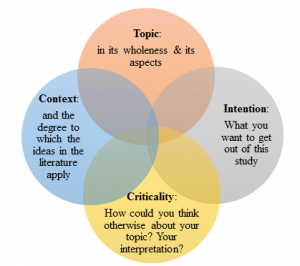




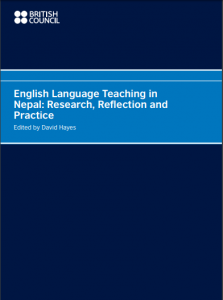
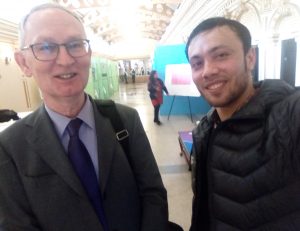



 examination paper. Teachers often provide them notes on the contents and students copy them in their note books. When teachers ask them to be prepared for classroom writing, they remain absent in the class. When they are asked to write, they copy from bazaar notes, they do not make attempt of their own. They fear of being commented upon their writing. Teachers also do not encourage students to write. Teachers are mostly found writing in social media about the contemporary issues but academic writing is most neglected area in this region.
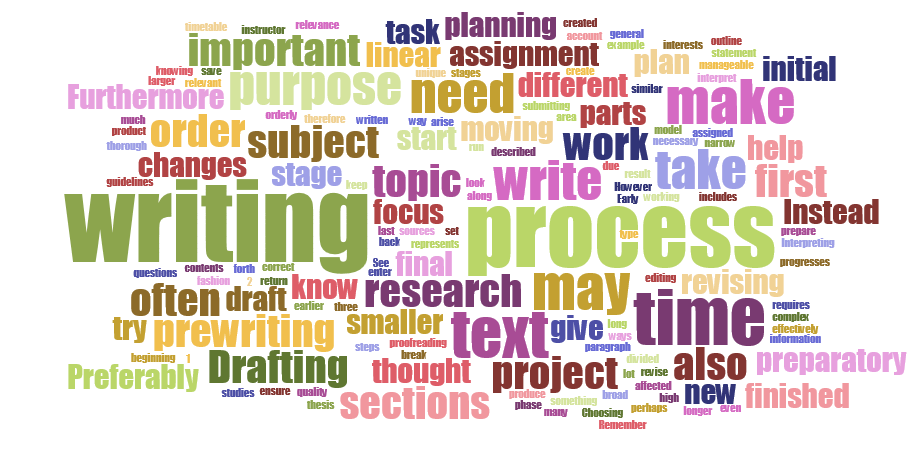


 Dr Laxman Gnawali: We have a strong focus on academic writing development in the graduate programs. For both MEd and MPhil programs, we have formal credit courses. These courses give theoretical understanding as well as practical exposure to develop students’ writing skills. We start with the basics such as paragraph writing, move on to a five-paragraph essay, and later to thematic paper as well as research paper writing. The culmination is the thesis writing in which they fully actualize their academic writing skills.
 Mr Laxmi Prasad Ojha: I have seen a positive sign by including research and writing as the integral part of the curricula in my university. This is encouraging step towards developing students with reading, writing and critical thinking abilities. Most courses in Bachelor’s and Master’s degree includes writing as an essential part of curricula and evaluation system. Students are supposed to write essays, narratives, reflections, research reports, research papers, book reviews, analytical writing at graduate and undergraduate levels and the thesis writing in the graduate level despite the fact that we have not been able to deliver the courses very well.
 Mr Bishnu Kumar Khadka: We formed an ELT club of the students studying in English language education with the support of some international scholars. The journey of writing begins with writing meeting minutes which generally includes the name of the attendees, agenda, discussion and decisions in English. Furthermore, members of the club write and share their experiences and new insights they found during the study. In our semester-based system in Mid-Western University, students write assignments, project-based reports, review reports and research reports. The system generates the writing as a process during the whole semester as well as a part of the evaluation. When we felt a few challenges to gear up writing on the part of students, we established the Writing Center in the University with support of some international scholars. The center started webinar, training of teachers facilitated by scholars from the USA. It is really an inspiring move for us to develop writing in the English language.
 Mr Janak Singh Negi: Apparently, there are some good initiations. It is because writing courses have been taught at the university level. I know these courses touch some practical aspects of academic writing, but most of the students do not seem practicing writing except writing Master’s thesis at the end of the program in this region.
 Dr Uttam Gaulee: