All posts by admin

Peripheral Classrooms: Reflections of English Teachers in Nepal

In community schools, teaching and learning of English has always been taken as a ‘difficult’ task. Teachers and students confess that it is a difficult subject to teach and learn respectively.  As a teacher, do we reflect on our own classes? Do we ask ourselves how are our classes going? Reflection upon our own classrooms certainly assists us to improve our pedagogical practices.

In this connection, our Choutari editor, Ashok Raj Khati has asked to five English teachers to reflect on their own English classrooms from different regions of Nepal. In the context of English language teaching, they briefly express their ideas in relation to resources, participation of students, use of English and L1, their best practices in English classroom and challenges they face.The five secondary level English teachers are: Babu Ram Basnet (Solukhumbu) Chandra Singh Dhami (Ramechhap), Kamal Raj Basyal (Palpa),  Durga Prasad Pandey (Dang) and Khagendra Nath ‘Biyogi’ (Bajhang).

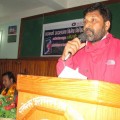
562665_685671534783323_943408360_nBabu Ram Basnet                                                     Mahendrodaya Secondary School, Salyan, Solukhumbu

Teaching English is not always a fun but it is a very tough job in this part of country. We do not have enough resources, like the internet and other supportive materials, to facilitate English language teaching. Therefore, students do not get enough and authentic exposure in English. I have to read out listening text myself as we do not receive cassettes in time. There are 65 students in grade 10, which is a large classroom in our context. In the same way, the large classrooms are a barrier to many participatory activities. There are many activities to be done and performed by students such as drama, simulation, games and role plays. I am not able to do all these in such a large class which ultimately affect their learning achievement.

Students come from different socio- cultural and economic backgrounds, they usually speak in Nepali language among them. They are generally good in writing but hesitate to speak in English. They have fear to lose face among their friends if they commit any mistakes. So that, I am not satisfied with their fluency in English. To some extent, I am applying traditional method while teaching English. It is often challenging to correct their home assignments in a class of 45 minutes. I use group and peer correction technique several times. I conduct class test in regular interval to know how they are doing. The most challenging part of my teaching is developing speaking skill on the part of students.

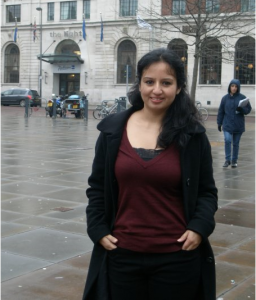
15174624_1208623562564901_1405021138_nChandra Singh Dhami                                                       Manthali Higher Secondary School, Manthali, Ramechhap

My classroom in tenth and ninth grades are large, which contains the students with mixed ability. Likewise, students come from diverse socio-cultural and linguistic backgrounds. We have a ‘media’ hall equipped with different facilities such as internet, speakers, tape recorder, dictionary and projector. I often make them watch movies, biographies of poets, popular TV show and show activities related to English language learning. For instance, while teaching English sounds, I often download native speakers’ accent for them to practice. I regularly conduct unit and monthly test. It provides me timely feedback on the areas to improve. We have cassette players, charts and other daily use materials. Students sometimes prepare charts in different lessons.

Majority of students try to speak in English in the classroom. I often use group work and drilling. I make them write in group as a process writing. Students also speak in Nepali language particularly when they do not understand reading texts. I encourage them to speak in English even outside the classroom. Students also take part in speech and debate competitions. I use shorter expression. Even if, students have positive motivational orientation towards English, I am still not satisfied with the progress. Many students do not have same pace in learning English and it can’t be. However, the challenge for me is to cope the students with different levels of English language proficiency.

15239253_735504923267147_1974166001_nKamal Raj Basyal                                                                 Krishna secondary school, Peepaldada-Jheskang, Palpa

There are 56 students at grade 10 in my school which accommodates 29 girls, 26 students from Magar community and 5 from Dalits. Three language use can be observed there in the classroom – Magar, Nepali and English. They are from low income and mostly from middle class families. Their socio-cultural background is not much trouble for me while teaching English as they have positive motivational orientation toward learning English. Likewise, we have whiteboards, electricity, audio-tape/cassette players and necessary charts in English in the classroom. But, we do not have the internet facility in school.

I have found that my students are active in different learning activities in English class where I try my best to use English only and inspire them to use it. I believe it maximizes exposure in English. Next I have generated weekly discussion on certain topics related to the course. In regular interval, I conduct several contests like debate, spelling and quiz in English. Regarding teaching technique, I generally use group and pair work and role plays to facilitate English language learning. I also encourage them to go to library and read books. Therefore, teaching English has always been a fun for me. I am satisfied with their progress. I specially enjoy teaching grammar and vocabularies. However, I often find myself challenged while teaching listening and free writing. So I need to be well prepared to deal with listening and writing activities.

1931541_925213197563390_775367134454601593_nDurga Prasad Pandeya                                               Padmodaya Public Model Secondary School, Ghorahi, Dang

I work in a government funded school having the classes from grade 1 to 12. It has around 87 classes and 5, 000 students. Generally, the student- teacher ratio is one to 50-78 students. Therefore, we teach in large classes. We have irregular internet access and the multimedia projector is only in the audio visual room and students have very less access to them. We also have a smart board but there is no skilled man power to operate it but white boards are available in each room. Teachers make charts and posters for the upper classes and use printed charts the lower/primary classes.

When I reflect on my English classes, my students work very happily in pair and groups particularly to practice speaking skills and some project based tasks. Many of them are found excited and interested to work in group or pair but a few are found reluctant to do all these activities and they prefer individual tasks. I instruct them both in English and Nepali languages. I particularly need to use Nepali as they understand me and are unable to respond in English. They are also not encouraged to converse in English. Another challenge of teaching English is being unable to create English speaking environment in school, which is the result of the low exposure of English in lower classes. It eventually affects their performance in upper classes.

11178286_1427707574212674_9151478527758031773_nKhagendra Nath ‘Biyogi’                                                   Bhairab Higher Secondary School, Jhota, Bajhang

I as an English teacher in this rural area, find myself encouraged in the recent years. Although the classroom is large, we have some minimum resources to facilitate English language class such as tape recorders, computers and other necessary materials. They are taken to computer room to play various language games. Similarly, I make use of laptop and the internet in the classroom. Students prepare charts of CVs, wild life reserve, language functions and so on inside the classroom. There are many different charts in schools, student make use of them in English class in different ways. Many of them use Nepali language inside the classroom. However, I inspire them to speak English. Every day, I ask them a question (as a part of general knowledge), related to English and they enjoy it very much. (For instance, how many words can you make from the word ‘examination’?). I also conduct quiz, debate and speech competition. Regarding the participation of students, they normally work in group and pair. Students are always invited to the front of the classroom to work or present the task assigned. Few students also feel shy to do so.

In the same way, I am selective on using methods and techniques in my ELT classes. Most importantly, I reflect back on my classroom activities to figure out what is working and what is not. Students are found improving the skills of English language these days. It might be the result of increased exposure of English through technology and social media. Another important activity that I do is to visit students’ parents (nearby school) once a week. I talk to them about their children’s progress. While talking with them, I figure out four types of students – outstanding, excellent, good/average and low achiever. The most challenging task for me is to teach and work with the low achievers. Some of them cannot read and write properly. Therefore, it is always challenging to find the strategies to support them.

Choutari team sincerely acknowledge teachers who shared their valuable reflections in this interactive article. They have particularly highlighted the diverse pedagogical practices and issues while teaching English in peripheral parts of Nepal. Now, we request you to feel free to share your thoughts and reflections after reading these reflections here.


Are we at the Verge of Collapse?

377867_10150419906957721_553891651_n
Sujit Wasti

In this blog post, I attempt to examine the role of globalization in relation to the economy, language and natural environment.

Civilized man was nearly always able to become master of his environment temporarily. His chief troubles came from his delusions that his temporary mastership was permanent. He thought of himself as “master of the world, while fully failing to understand the laws of nature. Tom Dale and Vernon Gill Carter has mentioned in ‘Topsoil and Civilization’ – man whether civilized or savage, is a child of nature- he is not the master of nature. He must conform his actions to certain natural laws if he is to maintain his dominance over his environment. When he tries to circumvent the laws of nature, he usually destroys the natural environment that sustains him. And when his environment deteriorates rapidly, his civilization declines.

With this backdrop, I first attempt to examine the globalization with Gross Domestic Product (GDP) based economic growth in the light of its aberrations and practical consequences. Let me begin with an example. We are trying to purify the Bagmati River in Kathmandu which was once a natural source of water for people dwelling in this valley. Over the years, population swelled in multifold along with the drive for urbanization, with the capital and technology – the drivers of globalization. Then water shortages ensued. Now, we are trying to turn the natural course of Melamchi River in order to fulfill the need of drinking water in Kathmandu. I have three unanswered questions in this process – first, isn’t it something like robbing Paul to pay Peter? Second, do we know the long-term impact of changing natural course of a river? Third, Kathmandu Upatyaka Khanepani Limited (KUKL) is the water distributing company in Kathmandu. Is it profitable for it to take care of the drinking need of other species in the valley because the river accessible to them is completely destroyed by human beings? If we extend the above example in international context we get the clear picture of what globalization is.

The present economic model is the more we consume, the more it helps to increase the GDP.   Cyclical consumption model is threatened by its negative impacts in the society such as resource depletion, water and air pollution, and destruction of natural habitat. At the one hand, this economic model has completely overlooked the impacts on other species (other than human beings) and natural environment around us. On the other hand, this model ends up storing or developing weapons of mass destruction as the result of so-called economic success because we are obsessed with power. Furthermore, the growing inequality created by the competitive model of business has no human face (Economic Development for general people is not only for the owners-inequalities produced by current economic model). For instance, the unemployment generated by automation which contributes to continuous wastages of natural resources. Throughout the human history we have never been out of war and natural calamities aggravated by human beings. I wonder why this so-called intelligent specie is always the source of destruction and I think we are at the tipping point once again.

The second example I am citing here shows the flip side of specialization. Nepal Government is developing a few eastern districts as a bucket area for the cultivation of cardamom. The farmers are being lured to planting cardamom replacing their regular food products in those remote areas. They have cash from sales of high value crops, but they have to depend on transportation (one of the main sources of globalization) of foods from other areas for their regular diet. It shows the flip side of specialization as there are two problems associated with specialization of agriculture sectors. The first is the issue of food security as it destroys the local food chain and the second is the value gap created by the change of consumption pattern as they have no local food. Further, the consumption of products of multinationals is normally known as increasing living standards or modernization.

When we turn into language and culture, MCDonaldization and mass productions are replacing local cultures and languages leading to acute poverty because the most local businesses depend on local culture. The rhetoric behind skill gap is clearly intended to further destroy the local and traditional businesses. The English speaking local students are being turned into international labor completely ignoring their need and contributions to the development of local society. English as a foreign language should be taught in the schools and colleges but, is it necessary to replace the native languages from schools in the name of English medium only? This one-sided language domination is clearly a long –term burden to the western societies because sooner or later they would realize that these half-caste (new breeds having desire to live in two worlds i.e. Anglicized vs. localized) English speaking generation cannot get jobs in western societies in the name of globalization.

The theoretical impossibility of globalization lies in its illogic that we have to create a global market. That means every country has power or right over the resources of the whole planet in order to supply stuffs all over the world. For example, As Nepal is known as a suitable tourist spot she has to build infrastructures to accommodate tourists of the whole world by being competitive. However the question that remains unanswered is – how much is adequate?

The whole concept of state welfare function is built on false premises which started after the French Revolution with enlightenment or rational thinking as means of modernization. But it ignored the relationship between human being and the natural environment and led people to believe that man can be independent of the plants and food or the nature. Diamond Jared in his book ‘Collapse: How Societies Choose to Fail or Succeed’ mentioned that the climate change is not a new phenomenon and lists out the eight factors (deforestation and habitat destruction, soil problems, water management, overhunting, overfishing, effects of introduced species on native, overpopulation, and increased per-capita impact of people) that led to the collapse of past societies. He further added four other factors (anthropogenic climate change, buildup of toxins, energy shortages, and full human use of earth’s photosynthetic capacity) which may contribute to the collapse of present and future societies. All factors are the roots of destruction of natural environment.

We have had enough experiences that the apogee of highly industrialized state is to start decaying. We have observed the pre-eminent symptoms of collapsing civilization. None of the governments has choices to take unpopular decisions such as developing its own economic systems or to choose only those technologies which are sustainable considering its local economic, social and cultural environment. Climate change and inequalities are major concerns of almost all countries but we have not been able to address it in its entirety.

Mr. Wasti  works for Rural Education and Environment Development Center (REED Nepal), Pulchock Lalitpur in the capacity of the finance manager.

ELT at Tertiary level: Perspectives from Far-West Nepal

14925264_721645791318453_3766757234139576756_n
Lal Bahadur Bohara

Background

I was grown in a hill district (Bajhang) of far western region. I completed my masters from Tribhuwan University. When I joined a TU affiliated campus in Bajhang, I had some different experiences in teaching English and working with students there. Students’ perspectives toward English language learning, their expectations and efforts made me rethink about my way of teaching and working with students. It made me further investigate the perceptions of ELT professionals and challenges they are facing in far-west region. In this blog post, I am presenting the voices of ELT professionals from this region. It is just a presentation of preliminary data for my paper in Kathmandu University.

Introduction

I taught English in rural areas of far western Nepal for a decade. I think teacher is an only source of motivation for students to learn English in our context. In my case, the way I deal my students sometime motivate them and some other time demotivate. The experience of teaching English in this region, made me further investigate in the area of ELT. This piece primarily discloses the perspectives of English teachers in relation to prescribed English courses in B.Ed. level, common strategies teachers employ in the classroom and challenges they face while teaching English. I had a talk (not structured one) with five English teachers teaching in B.Ed. level in far western region – they were from Bajhang, Bajura, Kanchanpur, Achham and Dadeldhura. They were teaching English in different campuses under the affiliation of Tribhuvan University.

Now, I present the preliminary findings of my study on four major themes. I shall be analyzing the findings and share in future issues.

Gap in contents

I found that academic courses are de-contextualized in relation to contents and culture. In other words, it is found that the contents at bachelor level are de-contextualized with particular reference to the respect to society, culture, age and prior knowledge of learners. Hence, there is a gap between the local reality and the contents in the syllabus. In this regard, a participant put his voice this way:

The prescribed courses are not harmonized with the level of prior knowledge of students in bachelor level. Further, the prescribed books do not incorporate the culture of far western region, even if they were written by Nepali scholars.

Most of the academic contents were from other culture which does not appropriate the socio-cultural background of students in the far western region.

Increasing use of technology

I found that English teachers make of use of the internet, Google and several ELT Webpages. The trend is increasing in urban areas. A teacher mentioned that:

               I use Facebook and make use of several ELT groups and pages. The                               discussions over these venues assist me to facilitate teaching of English                             and keep me up to date in the area. Similarly, webpages such as Learn                           and Teach English of British Council and other ELT resource sites are                             quite helpful for me. Certain mobile applications have also been                                       supportive to me.

It shows that increasing use of technology has added advantages to teach English at tertiary level and the trend is growing in this region.

Teacher centered strategies

Except in a few cases, all participants agree that teachers basically follow lecture method, the conventional method of teaching English. A participant states that:

Without using translation method, the students do not understand the contents. They seem to be happy with translation in Nepali and local dialect. In the classroom of compulsory English (language subject), the number of students is large and teacher primarily depend on lecturing and GT method. In compulsory English classes, some students are from poor language background.

The study shows that in urban areas teachers are, to some extent, more resourceful and innovative than in rural areas. They also agree that students join the English stream with inadequate basic standard in English. However, a participant reports that he sometimes uses project work, group work and problem solving techniques while teaching English.

Use of L1

Next revealing phenomenon is that teachers and students use maximum Nepali and local languages in English classroom in this region. Another participant articulates this practice this way:

Without using local and Nepali language, students can understand nothing. During the lesson, Nepali is a medium of instruction. I often try to use English but students just listen to me, they don’t respond or interact. Then I have to immediately switch to L1.

Participation of students

It also shows that learners’ participation in classroom is very low. Most classrooms are heterogeneous in terms of socio-economic, linguistic, and cultural backgrounds of students. Therefore, the one prescribed curriculum from the top does not capture their interests and different motivational orientations. Here is what a participant expresses:

Majority of students neither complete their assignments nor actively participate in classroom activities like pair work, group work, and dramatization. Most importantly, they tend to be highly absent in classes.

Therefore, the study shows that multi- level classroom, students’ irregularity and hesitation to speak English are few reasons to mention for the low participation of students in teaching-learning activities. Likewise, many classrooms do not have sufficient teaching materials which better facilitate language learning. The study also reveals that teachers mostly depend on the textbook. They do not have any internet access.

Conclusions

Teaching English language in non-native context is a challenge for several reasons. Most academic contents were from ‘the other’ culture which may not be suitable for the students in the context of far western region of Nepal. Teachers basically follow the same route, an easy job – lecturing in the classroom. Maximum use of Nepali and local languages can be observed on the part of both teachers and students. Classrooms are heterogeneous in terms of socio-economic, linguistic, and cultural backgrounds of students. Students generally expect class notes from teachers and there is low participation of students in teaching learning processes of ELT in the classrooms. In the same way, classrooms are under-resourced, except a few classrooms in urban areas like Dhangadhi and Mahendranagar. However, increasing use of technology by teachers could be an additional advantage to teach English at this level in various ways. Preliminary findings show that the situation of English language teaching is not so encouraging in this part of country.

Mr. Bohara teaches English at Jaya Prithivi Multiple Campus, Bajhang. He is currently pursuing his MPhil in ELE from Kathmandu University.

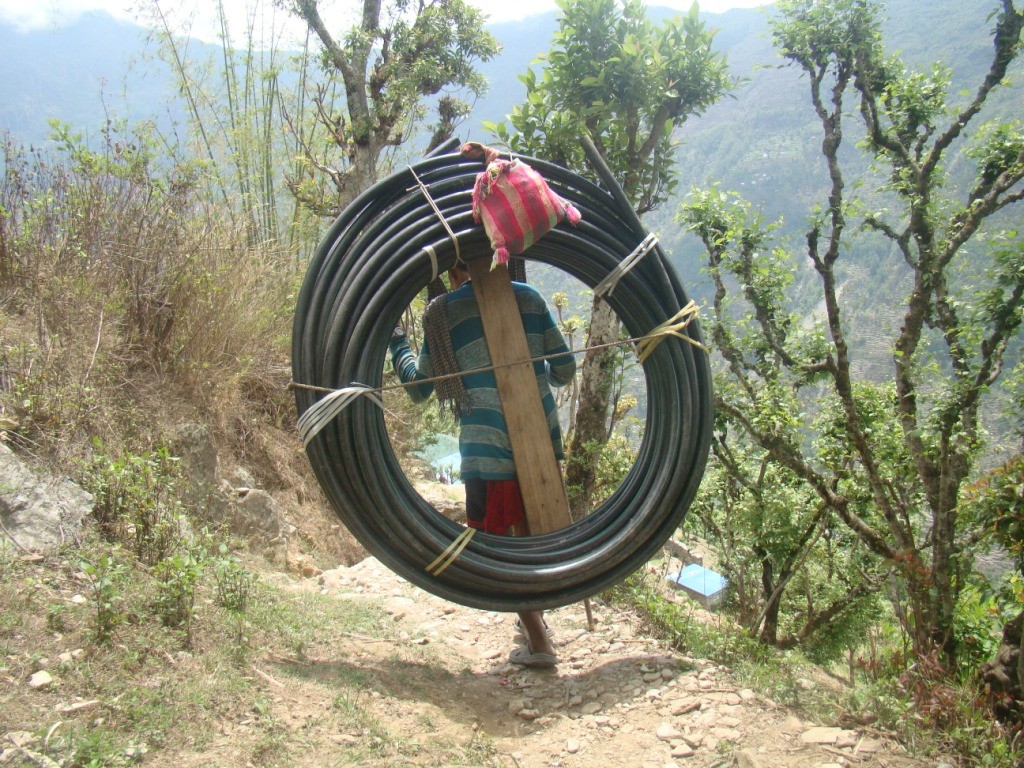
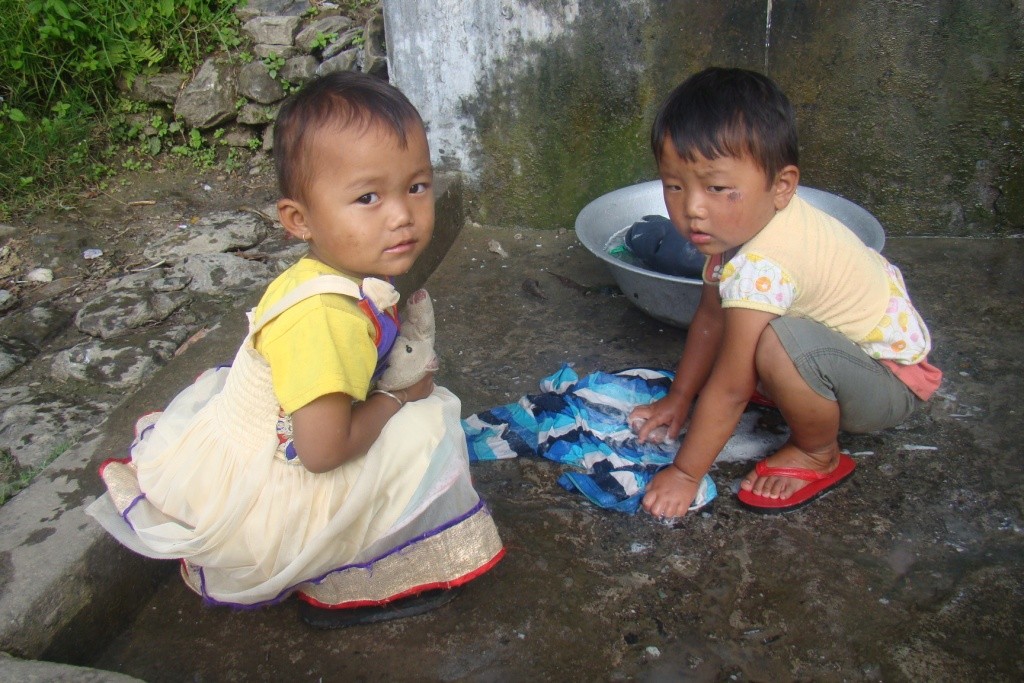
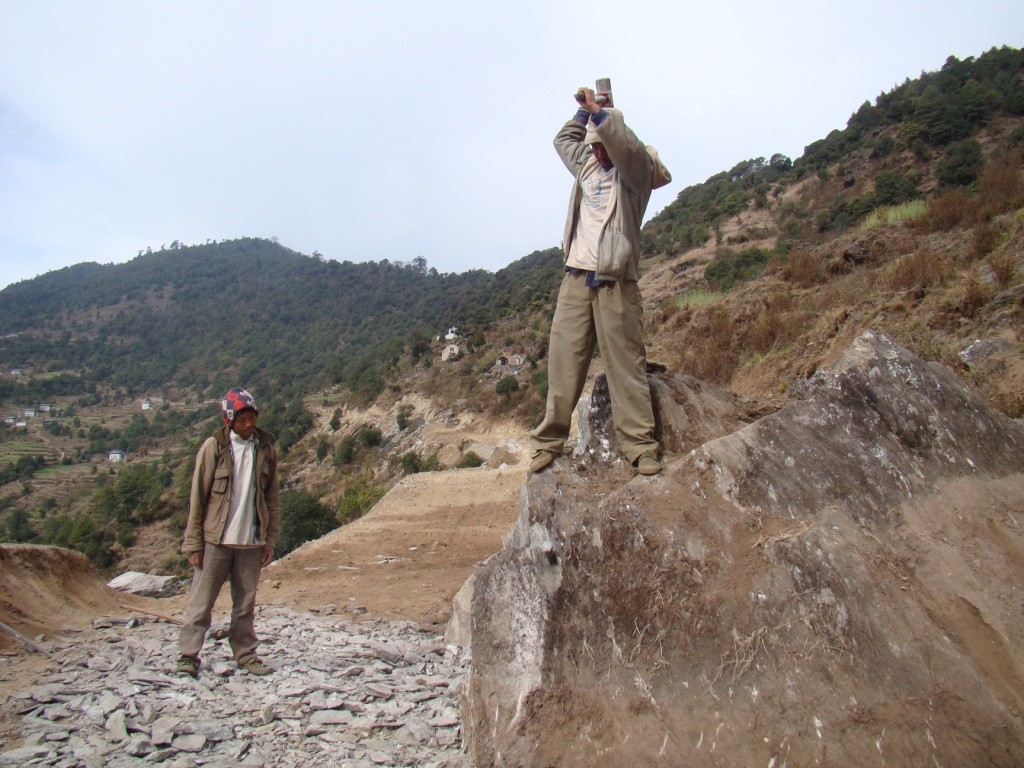
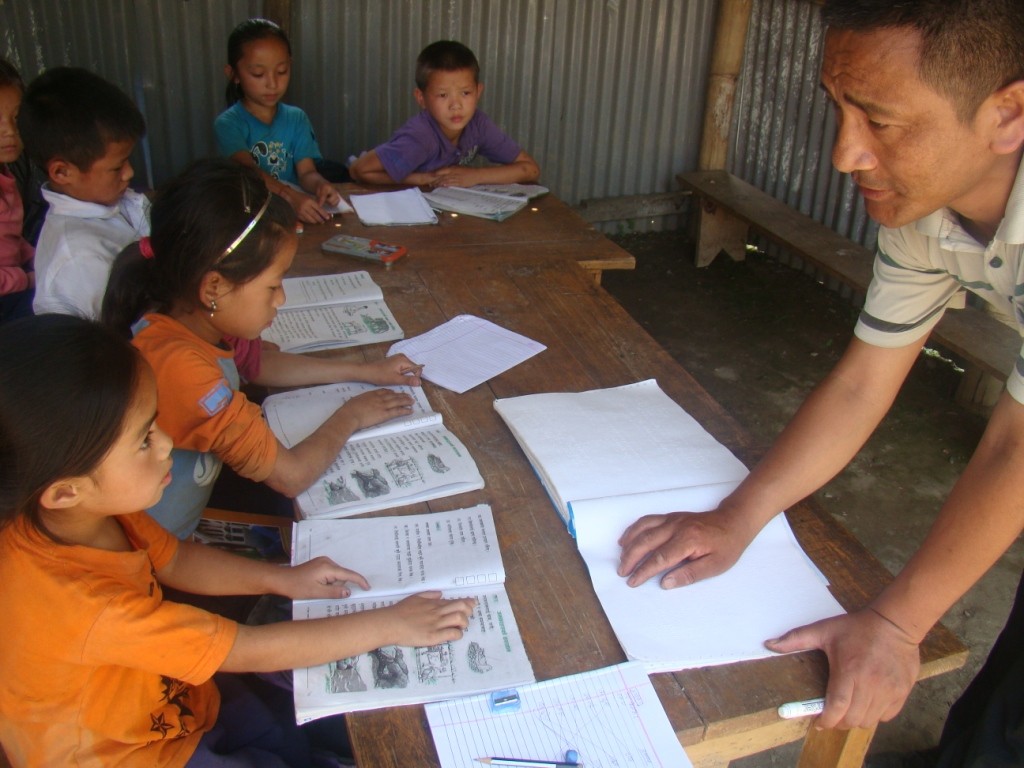
Photography Project III: People at work

It is the third post of its kind, which aims to promote the use of photos in ELT. The photos can serve the multiple uses in our classes such as writing (paragraph/essay writing, story writing etc.), speaking (conversation, describing photos etc.) and other kinds of group/ peer works. In this project III, we share the photos of Choutari editor Jeevan Karki taken during his visits in different parts of the country.

Man carrying loads
People in Development: People in Solukhumbu carry the materials for development themselves as their no road access in majority of the areas. © Jeevan Karki
Vendors selling
Hope after destruction: Vendors selling the goods besides the debris of the destruction caused by the earthquake at Kathmandu Durbar Square. © Jeevan Karki
Children at fun
We Can: A child washes his clothes at a tap, while the next watches curiously. © Jeevan Karki
People at work
Man Made Road: People making a motor road through the hills of Solukhumbu with the help of local tools only. No excavators or other heavy equipment was used to construct the 10 KM long road. © Jeevan Karki
Differently abled at work
I’ve the third eye: A visually impaired teacher teaching children using Braille Books in a school in Solukhumbu. © Jeevan Karki
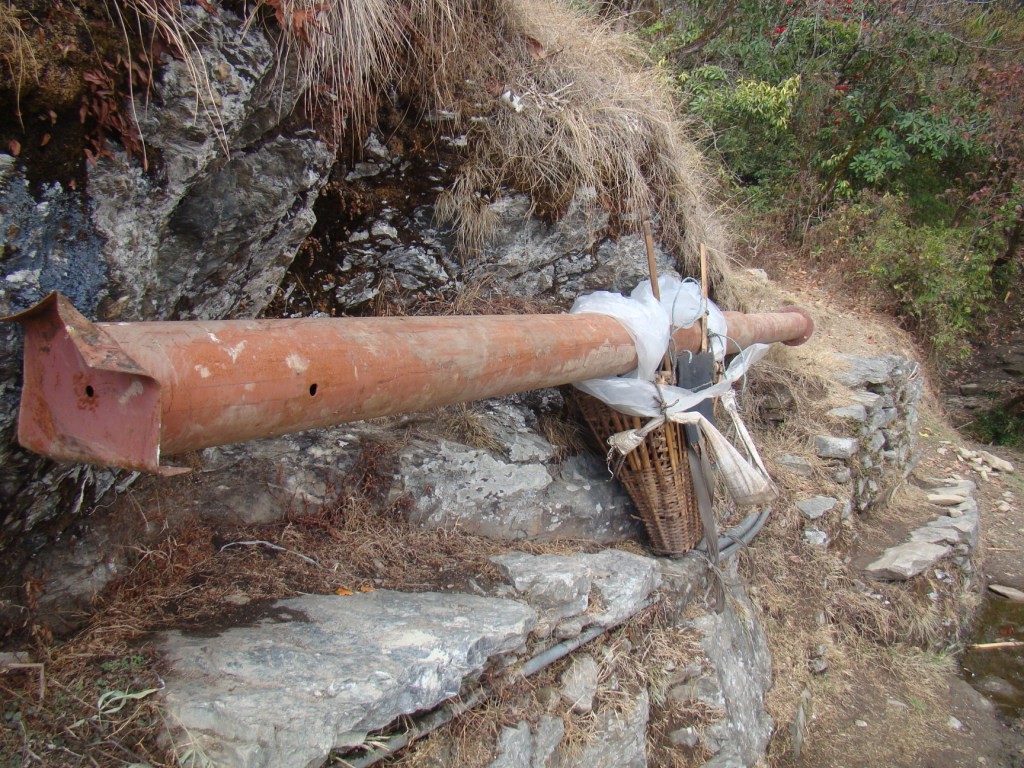
Development in Basket: A doko basket being used to transport the huge poles for electricity transmission lines in the rural hills of Solukhumbu. © Jeevan Karki
Give me your hand
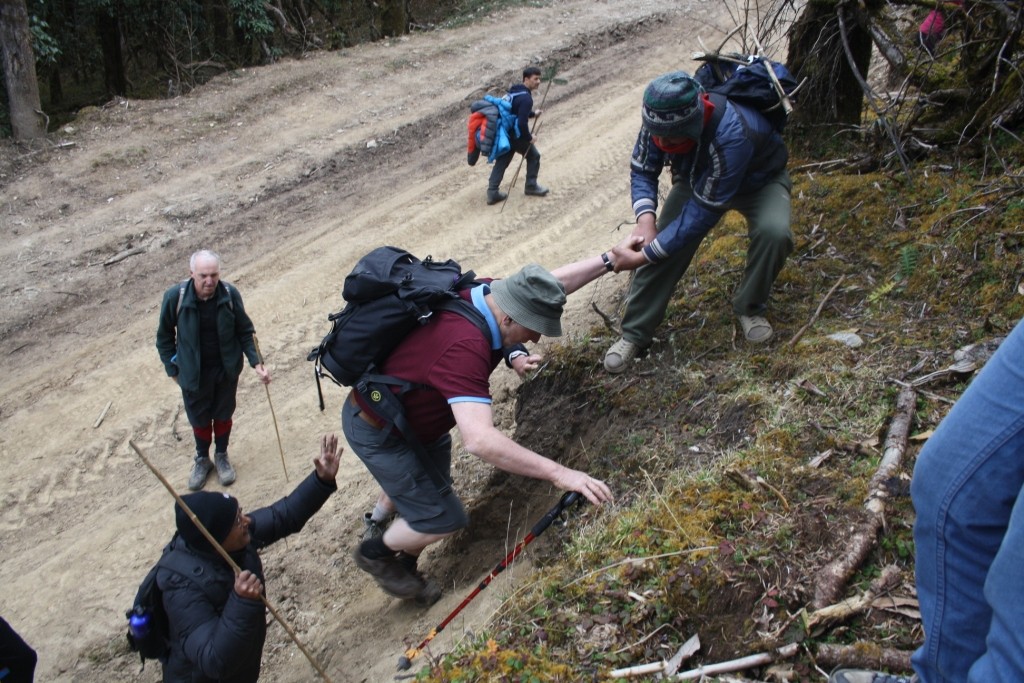
Lend me your hand please: A young man helping an aged trekker to cover the way in the hills of Solukhumbu © Jeevan Karki

Teacher, Teacher Education and ELT: Changing with the Time

?

Dear Choutari readers,

In the midst of long silence because of technical and other issues, we are back with the special issue of ELT Choutari. This is the second issue of this year which focuses on several aspects of ELT. Before listing out the blog entries of this issue, let me reflect on my experience and observation on some aspects of ELT.

I am fortunate to observe hundreds of English lessons in the past two years in rural parts of Nepal. My experience of working with teachers in schools and training venues in diverse topography and culture in Nepal has shown that many teachers are still facing challenges in lesson delivery process. ‘Fresh’ university graduates who have ‘successfully’ completed pre-service teacher education program have been unable to deliver English lesson really effectively though having authorized license to teach.

Then where is the problem? In my opinion, the problem lies in the way we perceive a language, our profession (ELT) and the meaning of language teaching. The problem lies on how we make sense of a language to be taught as a course, the language to be used as a medium of instruction and the content to be taught (if it should be).

Every human being makes sense of the world differently. They obviously have their own ideas, concepts and perceptions towards overall meaning of language teaching. In this light, I have similar observations as Rebecca Reymann, a contributor of this issue has, in many parts of the country. We as teachers are investing our effort in memorization. I agree with her in a way ‘language is a beautiful tool for expression’. It has to be taught in a context differently in different grades but not through memorization. Every child is unique and he/she does not get success in language learning through the same route. The children have their own perspectives toward the language, language learning process and the world. In the same way, they have their own ability to grasp language.

So far we talk about ELT as a teaching profession, many of us might have different explanations for this choice. Samita Magar, another contributor, decided to pick ELT simply because she is influenced by her teacher when she was in school. She finds this profession more creative and respectable than others. It shows that the identity of English teacher is perceived differently by different people. In the past, to some extent teachers had an uniform identity. They were considered priests, the messenger of Gods and the personalities with high morale. In the east, this sort of identity is still in existence to some extent. However, the overall observation of English teachers’ identity has been changing with time. It is witnessed at present that there is no uniform opinions and beliefs why a person chooses ELT as a profession.

Likewise, as the time has changed in the way we teach children, the way teacher educators and trainers facilitate training sessions has been changing. The focus has been shifted to the achievements of the students along with the teacher learning. Ekraj Koirala, a teacher trainer, recently experienced a better way through school based teacher training modality in Nepal. Teachers have different expectations and challenges in their own contexts. In this regard, the same cascade model may not be appropriate in all cases.

At the same time, the approaches of teacher education in universities and academic institutions have been changed. Distance and open learning system have been introduced by several universities to prepare teachers. Similarly, private schools have different requirements for recruiting teachers and government has its own. Kiran Thapa, a scholar from Kathmandu University, discusses issue of certification and licensing of English teachers in Nepal. She highlights the significance of certification and licensing to maintain minimum standards and add quality in education.

Another changing dimension in public education is the shift towards English medium instruction from Nepali. Choutari editor Jeevan Karki has spoken with Juliet Fry, a teacher educator, who emphasized the continuity of multilingual approach in Nepal. She has strongly articulated her voice over the significance of Nepali, English and other local languages to generate economy, and to preserve the identity and culture of Nepal, which calls for a balanced approach and multilingual education.

Similarly, there has been a great shift in testing system.  From this year, the government has introduced letter grading system to assess SLC graduates and different forms of letter grading system was already in practice in school education. With reference to testing of English language, Shyam Sharma in a blog piece, states that monolingual tests don’t predict overall academic performance by multilingual students.

To sum up, the perceptions and practices in teaching profession, teacher education and ELT pedagogy have been changing with time. Here is the list of posts in this issue:

  1. School Based Teachers Training: My Experience in Khumbu Region- Ekraj Koirala (Siddhartha)
  2. Why I Chose ELT as a Profession: Samita Magar
  3. Certification and Licensing of English Teachers in Nepal: Kiran Thapa
  4. Throwing the Baby Out of the Bath Water: the Context of EMI in Nepal- Juliet Fry
  5. Multilingual Testing in Monolingual Regimes: Dr. Shyam Sharma
  6. Language Teaching is not Memorization: Rebecca Raymann

On behalf of ELT Choutari Team, I would like to express my sincere thanks to all team members, contributors and reviewers of this issue. As the commitment to our valued readers, we are investing our effort to release ELT Choutari as quarterly publication. At this hour, two new members have joined our team to continue this professional legacy of local and global ELT discourse through this platform. Juliet Fry, a national director of professional learning of secondary teachers’ of English language in New Zealand will be supporting us in the capacity of the guest editor. Likewise, Karna Rana, a PhD candidate from University of Canterbury New Zealand will be contributing Choutari in the capacity of editor.

Special thanks to Jeevan Karki, Karna Rana and KP Ghimire for their support to bring out this issue. Hope you will enjoy the readings. We will be grateful for your ideas and comments on the blog posts.

Ashok-photo
Ashok Raj Khati Editor of the Issue

School Based Teacher Training: My Experience in the Khumbu Region

Ekraj Koirala (Siddhartha)

Background

I have been working in the mountainous regions for four years in the capacity of teacher trainer for REED (Rural Education and Environment Development Centre) Nepal. It is a national level non-governmental organization, primarily working in the field of teacher training in rural areas of the country for one and a half decade. The organization has been implementing whole school modality where all teachers gather at a venue. This year, I got an opportunity to coordinate a school-based teacher training program in Kharikhola of Solukhumbu district. This model is a new intervention of our organization and a new approach in Nepali context.  In this brief essay, I discuss the steps of implementation and my observations toward the training model.

At the initial phase, we had an intensive discussion among teacher trainers, representatives from Ministry of Education (MoE), and experts from other parts of the world. The discussion highlighted the needs to focus on students’ progress through training rather than teachers’ attractive presentation in a simulated environment. The training has been divided into three phases: pre-training, while-training and post-training stages.

Pre-training stage (Preparation)

This is a preparation phase. In the first place, we invited a meeting of the head teachers from 17 schools in Kharikhola area. It was a very good discussion over the basic principles, processes and preparation for the training. I found myself excited as the head teachers were positive toward this model.  Then, teachers from 17 schools were invited in three venues, the leader schools in the area. Therefore, the venues were the schools, not the teacher training centers nor were they resource centers. Teachers from two to three academic subjects attended at the assigned venues; other teachers continued teaching in their schools. In this regard, trainers worked with a small number of teachers at a time; it was all six times we worked in these three different venues. A teacher had to work at the venue for three days.

 While Training Phase (Operational)

This phase is more collaborative in nature and a real operational phase. Once the teachers attended at the venue, they had to be present in the Morning Prayer with students. Then, they worked with trainers to prepare lesson plans for presentation. The lesson plans were based on learning outcomes specified by the curriculum and followed in Continuous Assessment System (CAS). All the lesson plans were done in terms of identified and analyzed needs. While developing the lesson plan, there was a good discussion among teachers and trainers over learning outcomes, teaching strategies and activities.  The trainees also developed necessary teaching materials and set time for each activity of the lesson plan with the help of trainers and fellow trainees.  Then, the trainers and teachers in each subject group went to the real classroom. One of the teachers led the lesson in the classroom and rest of them including trainer observed the classroom teaching. In some cases, they assisted teacher and students in various activities. During observation, students’ involvement and learning were the key elements to be considered. No matter how efficient and excellent lesson delivery took place, the key part of observation was to diagnose the learning of students. Mostly, students’ eagerness in learning, their participation in different activities, creativity and engagement in all sorts of learning processes were the major elements of observation in relation with the objectives set in the lesson plan.

Post Training Phase (Reflection)

The third phase was the reflective one. We discussed over the delivered lesson. Firstly, the teacher, who led the lesson, shared his/her feeling on the lesson. Then, every trainee was invited to put their views over the lesson on the basis of observation checklists. If the lesson objectives were not fulfilled, the lesson needed to go for revision, re-plan and deliver next day. Again, the revision went in collaboration with facilitator and fellow participants in some cases. In other cases, participants needed to plan for new lesson.

Major Characteristics

I was involved in this training program in all phases. In my observation, I have found five major features:

Training in real situation: We organized most of the face-to-face training programs and practised teaching skills in artificial settings in previous years. This time the training was organized in a natural situation i.e. in the real classroom. Teachers and trainers got opportunity to work in schools with students.

Focus on students’ progress: How teachers presented lesson does matter little but what learning outcome was seen on students is a major focus of this school-based teacher training model.

Lesson plan: Trainees worked on lesson plans instead of session plans.

CollaborativeThe model is highly collaborative in nature as trainees received a lot of opportunities to work and collaborate with fellow trainees and trainers in different phases of the training.

Focus on local context: It is obvious that facilitators and participants work in a specific context in this training model so that it could be more effective and teaching skills are transferable. Sometimes, training received in a different context may not be applicable in other contexts.

Conclusion

The school-based teacher training model we implemented is definitely time consuming than previous face-to-face model.  It took twelve days to cover a six-day previous training model. However, the model provided an ample opportunity to teachers to improve their teaching. It is participatory and student-centred as it involved students within the framework. In addition, the training was more economic in terms of money we expended there than previous models. Therefore, school-based teacher training approach could be replicated in other contexts. However, further researches need to be carried out in its theoretical and practical aspects.

Mr. Koirala is an MA in English and an LLB from Tribhuvan University. He has been working in the capacity of a senior teacher trainer of English for REED Nepal. His area of interest also includes writing, theatre performance and art.

Why I Chose ELT as a Profession?

Samita Magar
Samita Magar

This brief blog piece speaks my personal experience as an English language teacher. The reflective journal mainly tries to disseminate why I have chosen teaching profession and how someone can be benefited by being a teacher. Besides, there are significant positions of a teacher in the society that encourages growing generation to choose teaching profession. 

Introduction

When I was a high school student, most of the students were satisfied with the teaching of an English teacher. He ever suggested the students reading more than prescribed textbooks. His inspiration led them to be curious and enthusiastic learners. I was one of them wishing to be such a respected teacher. His positive attitude encouraged the students to prepare well and participate every curricular activity. His gentle personality could be easily observed on his smiles at the success of his students. His friendly and cooperative manner provided a space to share our feelings and problems that led us to achieve our success. I believe that his intellect and passion made me choose his profession in my life.

However, the statistics shows that majority of recent school graduates choose science and business studies to go to medical field, technical field and business field. In my case, I have seen my future in teaching profession. I believe that teaching profession is considered as prestigious as other professions. Ayers (1994) stated that teaching is more than transmitting skills; it is living act and involves preference and value, obligation and choice, trust and care, commitment and justification.

This reflects my social values, ethics, responsibilities and determination. I believe that these features pulled me in teaching profession. In my perspective, the good teachers listen to their students, care their daily activities, desires, wishes, interests and problems. The responsible teachers always perform their duties well. Their consistent care for students produces various professionals. In this regard, teaching profession can be considered as the base of all other professions.

I choose this profession mainly because of three reasons: 1) respected profession 2) highly creative 3) role model

Respected profession

The great philosopher, Aristotle has stated that “those, who educate children well, are to be honored than those who produce them”. The case of Helen Keller for instance. She is a famous writer because of her teacher. The credit goes to her teachers than to her parents. Teachers encourage, guide and teach students to learn the beautiful art of living a life. In the east, Guru is the God. There is a verse in Sanskrit ‘Guru Brahma, Guru Vishnu, Guru Maheshwor’. It says that teacher is an incarnation of God. A teacher affects eternity. He or she can never tell where his influence stops.  So it is the reality in the sense that what a teacher writes on the board of students’ life stays lifelong in their memory. One of my school experience also reveals the same dignity of a teacher. When I was a third grade student, all the people in my village used to greet teachers, consult them for information and invite them on all kinds of occasions. They used to be lawyer in our village in need. The respect they used to get inspired me to think about being a teacher.

Highly Creative

Information and communication technologies have shifted the teaching and learning ways in this world. These technologies have provided wider range of learning opportunities for the learners. The learners have access to unlimited information in this digital age that assures creativity in their learning. On the other hand, the virtual environment has generated more opportunities as well as challenges for the teachers. Teachers need to be informed of daily information, and be prepared to tackle the challenges and to survive into the classroom. It is worth quoting Lewis that the task of modern teacher is not to cut down the jungles, but to irrigate deserts. Thus what I believe that teaching is creative profession. Great teachers mentor, stimulate, provoke, engage the students through several creations inside and outside the classroom.

Role Model

Teachers in the east has always been model for the growing generation. For instance, my English teacher in school was my inspirer, motivator or director who ever stood a figure for me. However, the students in this fast growing world may have different perceptions toward teacher. It is because of the changing roles of teachers as the facilitator, guide and manager. Towne (2012) stated that a good teacher is like a candle; it consumes itself to light the way for others. Similarly, Dey (2013) suggested that the teachers to become models for their learners, so that they can develop into disciplined, hardworking and successful person.

Conclusion

In a nutshell, teaching profession is full of respect, responsibilities, creativity and also challenges. Whatsoever, this profession is socially prestigious because of its leadership nature among other professions. They are found to have a high level of autonomy as a lifelong learner.  This made me think about being a teacher when I was in school.

Samita Magar teaches English at Omega international higher secondary school in Lalitpur. She is pursuing her masters in ELT from School of education, Kathmandu University.

References

Dey, S.K. (2013). Teaching of English. India: Dorling Kindersley.

Towne, D. (2012). Home thoughts. Mustafa Kemal (Atatuk Trans.) Home thoughts. (originally published in 1991).

Certification and Licensing of English Teachers in Nepal

Kiran Thapa
Kiran Thapa

Late in the Saturday evening, I received a call from my colleague who happily announced that her eldest son had passed the exam of Nepal Medical Council. Now with this license he can freely practice medicine in Nepal.

License!

A month ago in this summer, I had my other colleague who received a message from her husband. Her husband had failed the exam of Nepal Bar Association. He needs to wait for few more months before he could start his law practice.

Again License!

These two encounters with ‘License’ made me look into the issue of licensing and certification from a different perspective. Even after a rigorous study for four to five years, the doctors and lawyers need to have a license to work in their respective areas.  Because licensing ensures that they have demonstrated minimum standards of skills and are now recognized by laws. Likewise, we need driving license, pilot license and so on. All these are highly skill oriented works too. This made me wonder why we, as teachers, do not need a license before entering into the field of English language teaching.

Language Teaching as a Skill

Before I discuss on this question, let me first quote Johnson (1996) on what a skill is. Skills are goal directed hierarchically organized, non-stereotyped behaviors. From the environment, the performer receives information along various parameters. The performer’s response is selected from a large repertoire of possible responses. It must be appropriate along all the relevant parameters (hence exhibiting considerable combinatorial skill), and in many cases must be executed speedily (Johnson, 1996).

Now the question is- does English language learning fall into the skill category? Definitely yes, Johnson (1996) further mentioned that a language fulfills the entire requirement to be a skill, what is said about the skills can be equally applied to language and those who use it. He further added that second language acquisition has much in common with other forms of skill learning and that there is much to be learned about the business of language teaching. Thus if learning a second language  or foreign language like English in our context is a skill learning, then definitely a teacher teaching this second language must be skilled. In this light, incensing and certification of teacher is the must as to control over the entrance of incompetent English teachers to school education, be it a private school or government-funded one.

Certification in Nepal

Licensing and certification of teachers in the UK, the USA, Australia and many other countries are the requirement to get entry into teaching profession like in Nepal. In Nepal many universities are offering teacher education courses who educate their graduates and certify them. Tribhuvan University, Kathmandu University and many other newly established universities offer teacher education courses. They have B.Ed. M.Ed. MPhil degrees in English language education to prepare teachers and teacher educators. These degrees allows the graduates to get entry into English language teaching in Nepal. Besides these universities, British Council Nepal, TEFL international and some other globally recognized organizations have introduced courses like CELTA, TESOL and TEFL.  Several non-governmental and teachers’ professional organizations are also involved in teacher preparation program. Universities and these organizations provide certificates after the successful completion of their training and makes the candidates be eligible to teach in schools and colleges.

Licensing

Regarding the licensing of the English teachers, Teacher Service Commission (TSC), an independent body under Ministry of Education is authorized for all sorts of licensing processes of teachers. To get a teaching license, a candidate need to sit for a written examination. To be eligible for this examination, the candidate must be graduate from education stream or have gone through minimum ten months teaching training courses of Ministry of Education (MoE). The government of Nepal has made teacher license mandatory for every teacher in order to continue teaching across the country. However, it has been optional in large number of private English medium schools, nor it has been mandatory for all teachers recruited in community schools.  It has only been obligatory to be qualified for government quotas (government paid quotas) in government-funded schools.

Significance

I believe, the provision of certification and licensing to get entry into teaching is indispensable in Nepali setting as it allows qualified candidates enter into teaching profession. In several cases, if someone gets him or her jobless and failure in other professions, then he or she is expected to join teaching in our context. Therefore, it is more significant. Certification and licensing system is more important as they bring professionalism and minimum standards into teaching profession. In addition, the provision assists to filter qualified and trained teachers to come into this profession. In Nepal a few years ago, there was a strong belief that one who can speak English fluently can teach English. So many private English medium schools used to hire teachers from India, especially from Darjeeling. Now the trend has been changed. The focus has been provided on pre-service teacher education and training the candidates have received.  It definitely helps to improve quality of education.

In a nutshell, teaching English in Nepali context or elsewhere demands demonstration of teaching skill and ability as per the demand of curriculum and context. Certification to teach English language in Nepal and India like countries has not been taken seriously. To ensure the quality of teaching, certification and licensing system need to be mandatory.

Conclusion

In Nepal, MoE seemed to be flexible for not making license compulsory for all teachers in both types of schools. For instance, licensing is not compulsory for teachers in private English medium schools. Nor these schools provide focus on the pre-service teacher education program. For instance, there are several teachers working without prior pedagogical knowledge and skills. It shows University degrees holders from any streams could join teaching in those schools. It might underrate the ethics and standards of professionalism. Nor it would help to improve the learning achievement of students.

Furthermore, TSC conducts examination and is providing the license to all candidates from different academic subjects.  There is no doubt that one needs have a particular knowledge and skill to teach a language like English. The provision of examination is appreciative to get license but government needs to think over the implementation of licensing system. Therefore, MoE needs to implement the policy of certification and licensing effectively in the education sector and it further has to improve the existing policies, plans and the strategies of TSC to make licensing provision more prestigious and practical.

Ms. Thapa teaches English at Little Angel’s School in Lalitpur. She is in her dissertation phase of MPhil in English language education at school of education, Kathamndu University.

References

Johnson, K. (1996). Language teaching and skill learning. Oxford: Blackwell Publishers Ltd.

Multilingual Testing in Monolingual Regimes

Shyam Sharma
Shyam Sharma

A few months ago, while attending a talk on campus (at Stony Brook University) one afternoon, given by Elana Sohamy, an Israeli scholar, I had a moment of despair.

The title of her talk was “multilingual testing” and the backdrop of her presentation was the monolingual regime of language testing and its effects on multilingual language users across the world.

As teachers of language and writing/communication, we keep saying in theory that language learners take 3-5 or even 9-11 years to be fluent and accurate in a new language, depending on where and how they learn. But in practice, we continue to resort, very quickly and thoughtlessly, to the logic of pragmatism, of institutional policy, of the need to make sure that our multilingual students can perform in English.

Here’s the problem with our dead habits and thoughtless embracing of the current monolingual testing regime: Usually, monolingual tests don’t predict overall academic performance by multilingual students, simply because the tests confuse language proficiency as a predictor of a lot more than just language proficiency that academic transition and success involve. It would be nice if, for instance, a TOEFL score of x predicted whether a graduate student is able to listen, read, speak, and write well enough to be a successful graduate student in, say, a graduate program in ecology. But it doesn’t.

Two students with the same TOEFL score (even with similar academic records from the same education system) regularly perform significantly differently, and often, students with much lower TOEFL scores perform better than with much higher scores. Why? Because academic performance is a matter of process involving a lot of factors–grit, support, psychology, personality, content knowledge, and a lot more.

While TOEFL is not as bad as GRE, I must add, the company selling this product back-peddled a few years ago when it ignored that adding the spoken test (as it is administered by using an underdeveloped technology of speech and accent recognition) makes the test even less valid. TOEFL’s test of writing skills is as much of a joke as SAT writing test is: it rewards certain semantic, syntactic, and rhetorical tricks that do not constitute good writing in college/university. And while its listening and reading passages are based on quite authentic classroom situations, the validity of the overall score is significantly hampered by the outdated view of language proficiency that the test is based on. Those who make these tests are still unable to understand how multilingual English speakers around the world perform sociolinguistically in academic and other contexts.

I heard today that ETS is starting to respond to the basic idea that multilingual English speakers should be assessed in terms of how they draw on more than one language to achieve communicative goals. But the company’s primary goal of efficiency for itself trumps the principles of validity and effectiveness. And this is to say nothing about the blatant lie about universality of the content on which the tests are based, the egregious amount of money the test fee translates from US dollars to some of the local currencies, the intellectual insult for students with learning disabilities, and many more issues.

Sohamy showed that immigrant students scoring in the 60th percentile when tested in L2 only were able to score in the upper 80s when the questions were provided in both L1 and L2. This means that when educators allow learners to start academically succeeding while still having some “issues” with their language, they learn English much more effectively in the process. This is a no brainer: when I start a semester, I tell my nonnative English speaking students in class that they “shouldn’t worry about [their] language” and instead “focus on doing the research, coming prepared to actively participate in class, drawing on [their] prior knowledge, being excited about learning and sharing ideas.” To teachers, it is really a no brainer: It is possible not to put the cart of language learning in front of the horse of the process of education. It is possible not to follow the backward logic of ETS — of treating language as something that you learn “before” you join the learning party!

Gatekeeping is necessary but it doesn’t need to be so outdated and invalid. Assessment is necessary but it doesn’t need to be decoupled from learning and teaching.

Now, some readers may object: “I have to make sure that students I admit have a certain level of language proficiency.” Well, there are two significant problems in that “pragmatic” stance. First, someone who scored well on the TOEFL may have been linguistically privileged and proficient, but there is no guarantee that he/she is academically capable or committed. TOEFL doesn’t measure subject knowledge, and, again, it doesn’t measure grit. Second, one could say that admission officers look at academic transcripts in order to review the applicant’s academic caliber. Guess what? Academic transcripts from different countries (and even from different academic systems from the same country) cannot be compared–which is one of the reasons people turn to TOEFL in the first place. Back to square fifteen.

We’re confusing pedagogy with policy, process with desirable proficiency, outcome with entry level proficiency, and our own bias with the need to rely on a system that we admit is flawed but seemingly without good alternatives. What if start by thinking outside of these easy frameworks? What if we start by embracing what Elana Sohamy called “critical language testing”–testing based on skepticism toward established regime that are not in the business of fairness and sophisticated thinking. What if we can adopt parallel regimes, including ad hoc approaches, that we can use in order to challenge ourselves?

What if we can ask all the ten students whom we want to admit to our doctoral program to call us on Skype, Hangout, Viber, or Facebook phone and have a twenty minute conversation each, in order to use our own conscientious judgment, instead of a TOEFL score?

What if?

 Shyam Sharma is, PhD in rhetoric and composition from University of Louisville, is assistant professor of writing and rhetoric at State University of New York, Stony Brook.  

Throwing the Baby Out of the Bath Water: the Context of EMI in Nepal

Juliet Fry
Juliet Fry

 Juliet Fry is a national director of professional learning of secondary teachers’ of English language in New Zealand. She works for the Ministry of Education. Recently, she had been to Nepal in order to support a teachers’ training program in Khumbu region voluntarily. There is a practice of English Medium Instruction (EMI) for last six years. Our Choutari editor, Jeevan Karki, who is carrying out a research on English medium instruction (EMI) in Nepal, has managed to talk with her in relation to EMI in community schools of Nepal.

You have delivered English Medium training and interacted with teachers recently in Khumbu region. What’s your observation and evaluation on EMI in this region?

Well, I was encouraged by finding the high level of English, of may be one-third of the teachers. It was good to find that some of the teachers have a really very good English and would be capable of delivering the curriculum in English medium but I still have concerns about the fact that some of them are not really strong enough to deliver the curriculum really effectively in English medium.

So why do you think there is such a craze for English?

You know I’ve read quite a lot why there is such a craze. In my view it is because of the international opportunity and also the fact that private schools are delivering education in English and get high SLC score. So other schools (community schools) want to deliver education in English in order to retain students. There is also one benefit of English medium as it can keep the children in the region as they actually get to experience local culture, and they grow and learn with their home languages. Therefore, somewhere it is good that they are attracted to English language and stay in their own community. So they learn Sherpa at home and English at school. Then I’m worried about their Nepali language. So my concern is that they grow without having any language really strong.

What is the medium of the instruction in the sate-owned schools in New Zealand?

Well, I’ve been fortunate to work with the people who’ve come through the New Zealand education system in English medium. But the case of Maori is different. Their parents were also not allowed to speak Maori at schools, they had to speak English. Consequently, the generation lost Maori language. Now adults have decided to learn Maori language as a second language. On the other hand, the people who are now teachers, let’s say younger teachers, some of them learnt Maori as a second language and now they are working hard to bring out their children speak in Maori because in south island they’ve lost the native speakers of Maori language. All the adults have learnt Maori as the second language and their children are now at Maori medium schools.

Are there separate Maori medium schools?

Yes, there are separate Maori medium schools and so they are really working hard to regain the language which was nearly lost. And I’m worried that will happen here as well because the English is such a dominant language that it has the effect where after one or two generations the children most speak English and they won’t speak the home language.

How many local languages are there in New Zealand?

Only one, but there are different dialects. The south island dialect nearly died out and they are trying to regain but the other dialects are also fragile in all the areas. The language is quite endangered.

What is the official language in New Zealand?

Both Maori and English.

But in the context of Nepal, the official language is Nepali and we’ve got more than 100 other languages.

Yes. It’s quite different here. Nepali is lingua-franca, which is different from English as well. So it makes so complex because I can see that Nepali isn’t the native language of people in this region (Khumbu region). So, what I am trying to think as the solution is you can have multilingual education system which can really foster students’ learning in several languages.

What challenges do you see in implementing English medium instruction in the community schools in Nepal?

Well, one challenge is that not all people are fluent in English. Another challenge is that the measure of the success of schools seems to be SLC exam. That means quite a long time to actually know whether English Medium (EM) has been successful or not. It could be another challenge that you could be putting students in danger of not being successful without really knowing the result of EM until several years down the track. I think the process is too long leading the children vulnerable.

In the school system, what do you think is more important- the contents we are delivering or medium of language?

The purpose of education is not necessarily contents or language. Actually, language is means for gaining and I think obviously you need to have contents. But they are the part of developing curricula. Wonderful students would come out of the schools whims. So I think both contents and language are means for building strong students.

You said that in multilingual countries, the teachers also are not strong in English and children are from different linguistic background. In that context, what would be outcome of such practice?

Perhaps, the best thing is to have Nepali for the first few years, which is the lingua franca, the language that the most teachers would be competent in. Then to build with the teachers, who are competent in English to build from subject to English as they go through using the competency of other teachers in the schools like if the Mathematics teacher is not competent in English. Could they do Mathematics in Nepali and Social Studies in English? I don’t know if that would be possible. But I know in Europe at the moment that is one kind of idea of developing that you might do one subject in one language and other subject in the other language. Just for that you’ve the opportunity to develop academic language well that may be in one subject area.

What impacts could EMI bring in the children’s mother tongue or others language?

Another aspect I think is having a policy to incorporate useful mother tongue especially in early childhood situation, where you might have community members being involved in early childhood using those mother tongue languages. Similarly, it could be something that I’m thinking about New Zealand schools as well because we have many different students from different languages, who come as migrant to New Zealand. How do we support them within an English medium context and how do we really value their languages is very significant. I don’t think we do it very well. So here I’m talking about doing it better in Nepal and I don’t think we have got it well sorted in New Zealand. What I’m trying to put across is to demonstrate those languages are valued in classes, for instance, you can have students to write up their languages on the wall, so you can identify the existing languages in your class. Then you can positively say that they can discuss in their languages, come up with ideas and bring it back in English for discussion. It shows that you’re deliberately valuing those languages and allowing students to get success in those languages in the national assessment because that is the battle. The government has to try everything and I think there should be assessment, which allows students through many languages to do something, which might be giving the texts in different languages and answering in English or something. You can’t do everything but it’s something trying to value those languages inside the education system. And our curriculum by the principle talks about valuing the languages at the top level but it’s not clearly articulated in detail, so I think there is a bit of struggle.

English is a global language and there is a craze of English everywhere. If you have good English, you are saleable in global market. In this context, what about having one global language like English or something? Is it really necessary to have other languages, when you have one global language?

We’ve seen in New Zealand, some problems that come with colonization, where the people’s language and identity is disregarded. Some franchises have lack of power and also associated with loss of land and other things. So, it’s a complex issue that comes about possibly through colonization. However, Nepal is in a different situation, which has never been colonized. It means there is not loss of power that comes with the loss of language but then there is this kind of neo- colonization in a way that English has become a language of commerce. And are we selling ourselves or the power of our country to other countries? Like there is a big drive of going and having job in another country but what about building up Nepal itself? This whole globalization, workforce and everything, I’m not sure where it’s going! But are those people who go away to other countries to work then come back to Nepal? Is that the way the economy wants to build in long run or does it want to build in another way. English is obviously tied up with that the opportunity to work. And the important question is does Nepal want grow its economy by drawing income from other countries? Nepal is in between two growing world economy i.e. China and India. So is it better to learn Mandarin or Hindi in future?

The teachers in schools are very much convinced by the power of English and are practicing EM in community schools, what could be the role of organization working for professional development of teachers?

That’s a good question. I think it is important to deliver the teachers’ training in English so that their English reaches up to the level, where they will be able to deliver curriculum in English. I think, alongside the teachers’ training, there should be some researches on how are the students of year 3 and year 5 in English medium comparing with the students of same grades in Nepali medium schools? What is the level of students in this region comparing with the students in another region studying in Nepali medium? Is there equal level of students being able to articulate and understand ideas? That would one interesting thing to look at and I also think it would be interesting to look at the impact of two dominant languages Nepali or English language. Or if you are learning in English language, what’s happening to local languages? Are there any different impacts on local languages, when students learn in Nepali comparing with English?

What could be the better way of practicing EMI in the context of Nepal?

I still think that multi-lingual approach would be a better way because you have Nepal as a country and language is a part of identity. If you bring up a whole population without culturally located and linguistically connected then what will be the situation of children when they grow as adult like who haven’t got feet on the ground but you can still have roots in English. Therefore, in the early grades, there should be more than one language, where you have multi-lingual education. I think that would be wise. There is a phrase, “throwing the baby out of the bath water.” You don’t want to throw away all the learning and knowledge that teachers have in Nepali and respect English. So I think the wise way is to look at multi- lingual education.

Thank you so much for you valuable time, ideas and sharing experiences around the world!

It’s my pleasure!

Juliet has also taught in Auckland secondary schools-in several learning areas, as well as being an ESOL specialist and coordinator. She has also been an ESOL and Literacy advisor in the top half of the South Island for several years. She has had advisory roles with Ministry of Education.

Language Teaching is not Memorization

Rebecca Reymann
Rebecca Reymann

‘Hello, how are you?’ ‘I am fine, thank you, and how about you?’ The expected mechanical response that I usually get when greeting the children of rural Nepal. The memorized responses of students as taught by teachers. Adult says X, child responds with Y. Check plus.

As teachers, do we recognize the importance of the way that we are teaching language? Is this mechanical question and answer pattern the way that we will be able to communicate love? Is this the way of communication needed to let go of prejudice and bias that are deeply engrained by years and years of tradition? Are we solely teaching mechanical repetition? Or are we teaching the most beautiful tool for expression?

These questions need to be reexamined. Teachers, ask yourselves: what is the practicality of my teaching? When we ask students how they are doing, do we really want to know how they are? Or are we simply satisfied to hear the textbook response that they have memorized in classroom?

I am currently teaching English at an English medium school in the lower Solukhumbu district of Nepal. As an American who was trained as a teacher in the United States, studied in New Zealand, and has spent the last three years traveling, I have formed my own biases and perspective regarding education. However, I can say with great confidence that I believe that we are all striving toward the same overall goal; to better ourselves in some way. One way that we can achieve this goal is through the gift of language.

Language is the freedom to express how we feel. The freedom to share what we experience from moment to moment. The ability to communicate and understand others. This ability to communicate is what makes us such a unique species. But we need to use this communication in an effective and realistic manner. We need to let go of the old school style of textbook teaching and evolve with the times to give our children the ability to communicate in a real world setting. We cannot continue limiting them solely to their ability of properly filling in blanks and matching words with the correct definitions, while we look over their shoulder with a red pen.

We are human beings, not robots. We learn by doing. Why do we forget this when we walk into a classroom? ‘Okay kids, please open up to lesson two and finish activity three from yesterday.’ Is this exciting? No, in fact, it is absolutely dreadful.  So why go on with this mundane style of teaching? One external reason is the parents. The parents are the real challenge, not the children.

The majority of these parents do not speak English, nor do many of them have any formal education at all. They want better for their children than what they had, so they have provided the gift of education- what an opportunity! Little do these parents know- they are the main obstacle standing in the way of the very opportunities that they are trying to provide. The parents are only worried about the tangibles. Does my child have homework? What grade did they get? Are they in the grade level that suites their age? The parents are stuck in the past, even if the teachers are looking toward the future. They question the teachers blindly, pushing their child helplessly into places that they should not be pushed. For example, I have a grade 6 student who should be studying in grade 1 (just one case of many). She is eager to learn English, but cannot understand the language of this strange Western woman standing at the front of her classroom. In the initial weeks, she would even be brought to tears out of complete frustration. When I ask why such a situation has become reality, the answer is- the parents.

How can a tree grow when a seed has not yet been planted? How can a 13-year-old write an essay, when she cannot even respond beyond ‘Hello, how are you?’ The parents are having the final say in their children’s English education, when they themselves do not even speak the language. The child leaves school, goes home, and justifies their English education to their non-English speaking parents by the homework that they have completed in front of them. Does this make any sense?

We cannot let this habitual cycle continue. The teachers are the people who spend the time with the students, the teachers are the people who speak the language, and the teachers are the people who know what is in the child’s best interest. As teachers, it is our responsibility to ensure that no child is left behind. This can be done only with confidence and perseverance. The current reality is that there is a distinct separation between the parents and the teachers, and the parents are winning. This is only creating a long trail of students suffocating somewhere in the trail of dust that their fellow students leave behind. This is unfair. We must merge this gap immediately. Parents need to be willing to trust the teachers and let them make decisions about what is best for the child. Parents and teachers need to collaborate. The child needs to be put first.

So as teachers, we are the internal challenge- our own worst enemies in some cases. We have created our own major roadblocks along the way. Because of the old school style of teaching, we now have serious obstacles in cultivating genuine learning.

What students truly need is practicality and life skills. One of the most critical life skills of the 21st century is indeed communication. As teachers, it is our job to give students this tool by changing our teaching to a kinesthetic style. Make learning fun, memorable, and cognitive. Stop taking ourselves so seriously with box ticking, textbooks, and red pens. What about games and creativity? What about getting outside of the classroom into a real life setting? Let’s give the kids the freedom to learn in a sustainable way that will allow them to express through the gift of English language, opening nothing but doors for in the future.

At the start of each class we can give children two minutes to practice their conversational skills, building upon what is discussed each day. What about rather than textbook blank filling, we have them write letters to the United States or Australia? What about making them a tour guide, where they get to pick an area of significance and give the class a tour in English? What about engaging their senses- writing it all down in English, and then sharing. What do you see? What do you feel? What do you smell? What do you taste? What do you hear? Let the children express their own personal experiences, which are all so incredibly unique. This is why we use language. This is practicality. If we spend a year teaching like this, not only will students be much more interested in learning, but will also be able to confidently communicate with people from all around the world.

As teachers, we must value the students and understand them as human beings so that we can teach them in a way that resonates. Value the child’s experiences and opinions. Let them share. Put the child first. What is their experience like at home? What is their family background- caste, religion, occupation? Do they have to go home to milk the buffalo and work in the field after school? Are their parents abroad? What sort of support are they getting outside of the classroom? The responsibilities of most of these children at home are extensive. This will absolutely play a role in the child’s interest, attention span, and attendance at school. We must tend to the child with great care and compassion before they can possibly blossom.

Once we know the child we need to assess their prior knowledge. What do they already know? What sort of foundation do we have to build on? It doesn’t make any sense to teach sentence structure when a child doesn’t know the letters of the alphabet. It is our responsibility to bridge the gap between understanding and misunderstanding. We do this by giving the child connectors, one step at a time, meticulously building on their foundation of previous knowledge- not leaving any piece behind.

Next, what does the child WANT to learn? What does the child care about? What are they interested in? How can I relate this material to their prior knowledge AND interests? Usually we do this by allowing them to talk about themselves. In English- tell me about your family, where you are from, what you do in your free time, what do you like to eat, what sports do you play, what do you want to be when you grow up? Once we show the students that we are interested in them, they then become interested in the material that we have to teach.

Teaching is an exchange. We must show the child that we genuinely care in order to gain their interest. Allow them to express by asking them questions, not repress by preaching at them with meaningless information. Language is communication- communication is a two way street. We cannot forget the importance of the child’s role in this process. Allow them to free themselves through expression right from the beginning. This gives them confidence to build on. Value their ideas. Listen. Value the communication with them, inside and outside of the classroom.

Language is the power to express. It is not memorization. Sure, we cannot let the parents limit our creativity. But before we even think about the parents, we need to reevaluate ourselves as teachers, and give significant value to the young people that we are teaching. We need to stop setting our own limitations to the endless creativity and empowerment found within education of the English language. In order for students to think outside of the box, we as teachers must first get out of the boxes that we have created for ourselves. It is time to free our children through changing with the times.

Rebecca Reymann is a 26-year-old traveler from Baltimore, Maryland in the United States. Her background is in Education and Tourism Management. She has spent the last three months teaching English in the lower Solukhumbu district of Nepal. Rebecca plans to continue pursuing work in the outdoors, education, and healing practices between America and Nepal. 

English in Nepal: From colonial legacy to professionalism

Tikaram Poudel
Tikaram Poudel

Nepal has never been a colony of another country, so its people here have not been imposed English in any way, as the case was in neighboring India during the British rule. However, English has strong influence on Nepalese elites (Kerr, 1999) ever since the British had contact with Nepalese people in the second half of the 18th century. This post examines the texts relevant to influence of English on Nepalese society within the theoretical framework of POWER theory described by Guha (1997). It intends to provide a fresh perspective for looking at the socio-educational issues of Nepal in relation to English language in education.

Power theory

Guha (1997, p. 20) argues that power is a relational notion. For power to work in a society, there needs to be a dominant group and a subordinate one. The dominant group can exercise its power either by coercion or by persuasion. The subordinate group either resists or collaborates with the dominant group. If the sub-ordinate group resists, it takes the power or gets isolated. If it collaborates, it gets integrated with the dominant group.

In the case of English, power exercises dominance through persuasion and it does so in a variety of ways, such as by developing a favorable consciousness, legitimizing as right and just, and creating dominance through consent.

English in Nepal

In Nepal, the influence of English can be seen as having three historical eras: Era of colonial influence from 1767 -1850, Era of English education expansion from 1851-1990, and Era of English professionalism from 1990 to present. We can observe the different kinds of power that the English language has exerted in Nepal by analyzing its roles in different historical conditions, focusing on what the rulers tried to achieve by adopting and using English in education and society.

The era of colonial influence

English first entered into Nepal through the contact (both conflict and alliances) with the British people who colonized India. Nepal’s rulers quickly understood that they could educate their own children to create a special privilege and perhaps use the language to ensure their continued rule into the distant future. When Prithvi Narayan Shah, the king of Gorkha, attacked the Valley of Kathmandu in 1767, King Jaya Prakash Malla of Kathmandu asked the East India Company to support him to resist the aggression of Prithvi Narayan Saha. Responding to Jaya Prakash Malla, Captain Kinloch with a British troop (Levi, 1952) arrived in Kathmandu. That was the first contact of English-speaking people with Nepalese elites. When Nepalese army was defeated in Tibet in 1792, the Nepali king appealed the British in India to mediate with Chinese. Then, Kirkpatrick arrived in Kathmandu as special British envoy to Nepal (Bell 2014).Kirkpatrick’s arrival and his mediation started influencing Nepali politics. The East India Company signed a treaty with Nepali king Rana Bahadur Shah in 1801. This treaty allowed the British to have a permanent residence in Kathmandu. In 1802, Captain Knox took the office as a first British resident in Kathmandu (Bell 2014). The establishment of British residence in Kathmandu influenced the rulers of Kathmandu. The British residence also opened the way to western scholars, particularly British, to study the people of Nepal, which was not known to the west before.Some remarkable studies on this subject are Kirkpatrick(1811), Hodgson (1880) and Hamilton(1891).

After the Kot Massacre in 1846, Janga Bahadur Rana seized the power and became Prime-minister subjugating the power of king. Rana understood the power of British and maintained cordial relations with the southern power. He signed an agreement with the British in India. After the agreement, Nepali youths were recruited in British army to fight for the British Empire. He supplied soldiers to British Empire. These youths had formal education in English for eight years (Kerr 1999).In return he got many medals and a trip to London. (Levi, 1952). Back to Nepal, Rana established a school to educate the children of Ranas in English in 1853/54 (L.Stiller, 1993).He brought teachers both from England and Bengal. Hence, the first school of Nepal was an English medium school (Levi, 1952).The Ranas established school to impart western system of education in English because they felt access to English education would secure their elite position by providing their offspring with access to knowledge of English language and Western ways (Vir, 1988).They believed they could maintain the status quo and strengthen their own power base (Vir, 1988) in the future.

The era of English education expansion

When the Nepalese soldiers in British Army returned home, they were exposed to the life outside their national borders. This exposure made them aware of the power of western education, inspiring them to adopt it for their own families. Vir (1988) argues three factors contributed to this expansion. 1. After the twenty years service in the British Army, many of these soldiers tutored the youths of their villages. 2. The British Residents in Kathmandu Valley influenced the rulers and elite groups in Nepal. 3. The establishment of Durbar School in 1853/4 was a shift to modern system of education from traditional one. This school with its British and Indian teachers had impacts on the elite class of Nepal. Consequently, this class began to question the traditional values of society and began to accept western way of thoughts.

Gradually, this class constituted a power structure of Nepalese society and became the model for subsequent generations. After the Revolution of 1951, when Nepal had to modernize and formalize its education system, the planners of Nepalese governments based their recommendations on this model (Wood, 1977, p. 155).The Ranas preferred English education for their children because it enabled them to maintain their superiority. However, Chandra Shamsher modified the educational system as the British in India made basic education mandatory for the recruitment in British army 1912.In 1918, Tri-Chandra College was established to keep Nepali youth in the country and control exposure to superior Western ideas and technology (Vir, 1988). In this sense the establishment of Tri-Chandra College was to resist the western influence (Kerr, 1999).Tri-Chandra college was affiliated to Patna University, India

Consequently, Nepalese higher education was heavily influenced by Indian system of British India because the syllabus was directly borrowed from India and same assessment system was implemented.

As in course of time, higher education was expanded, more teachers educated in Indian universities were hired. This situation created a kind of feeling among the people that to be educated means to be fluent in English, the knowledge of vernacular languages was considered inferior to English and English was taken as a superior formal school education (Wood, 1977). This craze for English led to the popularity of English medium schools run by private sectors. This preference to English was because of the pro-British sentiment in post Rana-era (Shrestha 1993 as cited in Kerr 1998). However, Bista (1991) argues English was preferred because competence in English was seen as the passport to administrative positions in government. Pro-British sentiment was so strong that the removal of English from school curriculum (The All-round National Education Committee 1961-62) was criticized. By the early 1960s, English was able to influence the common middle class, beyond the elite as earlier (Wood, 1977).

All the factors mentioned by Crystal (1997) were at work for the hegemonic supremacy of English in Nepalese society. Crystal’s (1997) factors arehistorical tradition, political expediency, and the desire for commercial, cultural or technological contact when the public schools, which were modeled on the basis of schools in British India, did not meet the growing demand of English education. Kerr (1998) argues the model of a single system of vernacular schools did not meet the desired standard and quality of education of Nepali elite and as a result a separate system of private English medium schools developed. The massive proliferation of English through private English medium schools is the evidence of the strength of British influence in Nepal between1950 and 1970.

When Tribhuvan University was established in 1959, the notice of Nepal Gazette said, Nepali would replace English by 1974 as the medium of instruction in University (Malla, 1977).However, the importance of English in higher education is increasing and Nepali or any other languages of Nepal do not seem to dislodge English from Nepali academia.

The era of English professionalism

There are several factors that led to English professionalism. Malla (1977) mentions the following factors led to English professionalism in Nepal: the acquisition and transmission of scientific and technological knowledge, international communication, the acquisition of ideas and values necessary for accelerating the modernization process, reference language, library language and regional lingua franca. The Central Department of English (CDE) at Tribhuvan University played an important role for English professionalism. Policies of CDE, to a great extent, determines English professionalism in Nepal even today which are, in many respects, influenced by the experts e.g., the visit of Allan Davies in 1969 and Hugh D. Purcell in 1971. In most of the cases, these experts were made available by British Council and American Embassy. Hence, their service was in line with the ideology of these organizations. The course of English professionalism is also determined by the scholars who studied in the US or the UK under different scholarships. More recently, professional organizations like Nepal English Language Teachers Association (NELTA) and Linguistic Society of Nepal (LSN) have created similarly far-reaching influences on the English professionalism in Nepal.

Conclusion

In the history of English in Nepal, in the early stage, English was the source of power for the rulers. The Nepali elites collaborated with the British to gain power, and English was more symbolic than a real vehicle of power. In course of time, as the elite became powerful, it also adopted the western ideology through western education, hoping to maintain its power structure. In the next stage, the expansion of English education alongside technological advancement and globalization created a class, which could use English and western education in order to compete with the superiority of the elites. In fact, this new class eventually overthrew the earlier elites and continued to build on the power of English. So, the language and education of the west have been relatively politically neutral as far as direct outside influence are concerned. External forces have certainly played a role but the power of English—especially in more modern times—lies largely in the internal power structure that uses it for creating and advancing its advantages. As a whole, the role of English in Nepalese society is certainly in line with the universal hegemonic supremacy of English identified by Crystal (1997): historical tradition, political expediency, and the desire for commercial, cultural or technological contact. But the biggest role is played by those who can use English to support their political domination, to create a better education for themselves, and to take cream out of professional opportunities.

The author: Dr. Poudel is an assistant professor at school of education, Kathmandu University Nepal. (trpoudels@yahoo.com)

 References

Bista, D. B. (1991). Fatalism amd development: Nepal’s struggle for modernization. Hydrabad: Orient Longman.

Crystal, D. (1997). English as a global langauge. Cambridge: Cambridge University Press.

Guha, R. (1997). Dominance without hegemony: History and power in colonial India. Cambridge: Harvard University Press.

Hamilton, F. B. (1891). An account of the kingdom of Nepal.

Hodgson, B. H. (1880). Miscellaneous essays relating to Indian subjects. London: Truebner & Co.

Kerr, R. (1999). Planning and Practice: Factors impacting on the development of initial education in Nepal, with special reference to English language teaching, 1950-1995. Doctoral dissertation, Victoria University of Technology, Melbourne.

Kirkpatrick, W. (1811). Account of the kingdom of Nepal. London: William Miller.

L.Stiller. (1993). Nepal: Growth of a Nation. Kathmandu: Human Resource Development (HRD) Research Center.

Levi, W. (1952, December 17). Government and politics in Nepal: I. Far Eastern Survey , 185-191.

Malla, K. P. (1977). English language teaching Tribhuvan University. Vasudha, 16 (1).

Vir, D. (1988). Education and polity in Nepal: An Asian experiment. New Delhi: Northern Book Center.

Wood, H. B. (1977). Agents of education and development in Nepal. In C. J. Calhoun, & F. A. Ianni (Eds.), The anthropological study of education. London: Walter de Gruyter.


Writing about Writing

945898_1202990733047887_8117992688148518405_n
Doreen Richmond

During my recent visit and involvement with teacher training programs throughout some rural parts of Nepal, I did a lesson on writing, both in schools and during training sessions. Writing about Writing illustrates the process I go through when I teach writing. In this article, I have tried to outline the steps I take while teaching writing for both younger developing writers and older more experienced emergent writers.

When I teach writing, I teach it as a process because that is the way that I view it. Writing involves planning, writing a draft, editing and revising and publishing. It takes practice to develop your skills as a writer; it just doesn’t happen overnight.

To begin with, when I work with students, I do several things that vary only with the age and skills that my students have. First, I activate prior knowledge by having students brainstorm the different ways that they use writing. Younger students generally talk about the notes they write their moms or the handwriting practice they do while older students talk about lists, taking notes, writing letters or now-a-days, texts, and writing stories. Activating prior knowledge is important because students need to become aware that we use writing in many ways and for many different purposes.

After brainstorming about how we use writing, I model my own writing so that my students see me as a writer. For example, if I am asking students to write about themselves then I share with them the process that I go through when I am writing about me. It is important that students watch the process of writing so that they know that this is a process that all writers go through. Again, this process is planning, draft writing, editing and revising, and then publishing.

Let’s say that it is the beginning of the school year, and I am asking my students to write about themselves. If I am working with younger students or developing writers, I will first model a picture plan by drawing a picture of myself, my family, my house and a few other interesting details. Then I would orally go through my picture and describe it while at the same time labeling key pictures, (myself, my husband, my dog, cat, house, ect.)

By orally describing my picture and labeling, I am showing my students the picture/word association and also giving them some ideas about how they can do their own picture plan. I would also include some discussion with my students about their own families, who is in it, where they live, what they like to do, ect. Before letting students go off and do their plans, again, giving some guidance for their plans. Then I would set them free to draw their picture plans about themselves, their families, where they live, the things they like, and any other details that they might like to add. Picture plans work well for kindergarteners, first graders, and other developing writers.

Older students generally have more language and can use a different type of plan.  Generally, for older students I use a circle map, which is a type of thinking map; thinkingmaps.org. A circle map has a frame around it that guides the writer’s ideas. The frame is usually divided into four sections which can vary dependent on the topic you are writing about. A beginning piece about themselves might be framed with things like:  Facts: name, age, family members, where I live; Things I like; My Favorites; and My Goals or things I’d like to get better at this year. Using a plan like this allows students to jot down their ideas before they begin writing.  Students then list the answers for these questions or topics in the different areas of the circle. I try to remind them not to write out complete sentences in their circles because this is just a plan and that draft writing is when they put their ideas into complete sentences. Just as I did with younger students, I model my own plan and go over it with them and then show the students how I moved from my plan to my piece of writing. For this assignment, I give the direction that they are to write at least one paragraph about themselves using information from their plans.

As students finish their plans, my job as a teacher would be to go around and have them describe their picture plan to me so that I could help them label it. I would encourage students to label what they could beforehand and share their plan with their neighbor, but I would try to get around to all the students to help them label and add any extra details. Planning might take a whole class for some students but for others, it might be quick and they might be able to continue on to the next step- draft writing. My directions for younger students might vary dependent on the age and development of their skills as a writer but usually I would give a direction for students to write 1-3 sentences about their picture. My goals for younger students are to get them to write so I accept invented spelling and look to see that they are generating some sentences that give me information about their picture.

Conferencing with students, I might point out spacing issues, handwriting difficulties, but primarily I am focusing on their ideas. “Wow, I see you wrote that you like to play with your dog. What is your dog’s name? Can we add that to your sentence? Good job.” I like to think of a “Star and a Wish” when I am giving feedback. Writing takes practice and it is important to praise what a student is doing well rather than focusing on the things they need to correct. If I see many students having the same errors or difficulties, then I use that as a teaching point and do a mini lesson the following day about whatever the issue was, or I say, “Today I am going to be looking for good spacing between your words as you write” to draw their attention to something I noticed was an issue previously. If my students need more support to generate their ideas then I will use some patterned sentence starters to help them. For example, I might put on the board the following pattern: My name is ____. I live with _____. I like to_____. I might also have a mind map that I’ve done previously with students to list things they like to do; again, the idea being that they have a list of words already generated that they can use for their own labeling or to add additional information to their sentences.

When I model my paragraph, I point out that I didn’t use all my details to make my paragraph, but if I wanted to use all the information then I share with them how I could write a multi-paragraph piece of writing that included all the information from the plan. I show students both models of writing, (one paragraph and multi-paragraph) and then provide them with models of patterned sentences/paragraphs that they can use for either writing one paragraph or multi-paragraphs. These are written out on charts and hung on the wall, or they are written on sentence strips and put in a pocket chart for students to see.  I also talk about topic sentences, (main idea sentences) that begin a paragraph and let the reader know what my writing is about.  Then I talk about closing sentences that end my paragraph by summing things up or by adding an emotion to it.  I add this in the form of a sentence starter and label it with either topic sentence or closing sentence.  We also spend some time brainstorming aloud some other ideas for topic sentences and closing sentences and if needed, this is organized as a mind map for students to see and choose from.

Now, my students are ready to begin the process of writing at least one paragraph about themselves.  First, they plan and I go around and comment on their details and ask a few open-ended questions where necessary to encourage them to add to their ideas.  I also might make my own connections to their ideas to reinforce to them that I’m interested in them.  For example, one student writes that purple is her favorite color, and I say, “Oh, purple is my favorite color too; how cool is that!”  As the purpose of this writing activity is to help me get to know my students, it’s important to connect with them about common or shared interests when and where I can.

After students finish their plans, they can begin their draft writing and can use either the patterned sentences model for one paragraph or the multi-paragraph model to help them write, if needed.  Again, I rove and comment here and there on something they’ve written, but I don’t use this time to correct, unless a student is asking me something specific.  When their drafts are done, then I set up a writing conference with them, and that is the time to point out some things that might need fixing up or to emphasis some details that might be needed to strengthen their writing.  I still use the idea of a star and a wish to guide my conferencing, and I don’t overcorrect. By pointing out something that they are doing well with their writing before adding a constructive point for them to think about, I help my students recognize their strengths in their own writing while also encouraging them to look more critically at how they can strengthen their writing. I also try to get  students to read back over their writing first before coming to me or to share their writing with a neighbor or a friend first.  I want to be able to help them self edit and do revisions on their own.  I also look for common errors and use them as a teaching point for a mini lesson the following day.

If I have students who are more proficient with their writing skills, then I use my conferencing time to extend their writing.  Some things I might do are to to ask them to select at least two sentences to revise by adding more details using adjectives, adverbs, or other figurative language such as metaphors or similes.  I might also ask students to select a few sentences and add more details by adding the word, “because” to let their readers know why they like something or like to do something.  Combining ideas and varying their sentence structures so that they start their sentences in different ways to improve the fluency of their writing might also be something to conference about.  How I use my conferencing time with students is dependent on their skills and needs.  As with writing, everyone is different; however, taking the time to conference with students isn’t.  It is an important part of the process.  It takes time, but it is important for students to get that one on one time with you to look more critically at their own writing.

When conferencing is done, students go back and revise their writing to produce a final draft, which is their published piece.  Whenever possible, I encourage them to word process this or to hand write it neatly and if time, to add an illustration to it.  We share our published pieces with the rest of the class, so students know that their work is valued and then it is posted in our Writer’s Corner for others to see.  Celebrating their work helps students see that writing is important and something to be proud of.  A saying I like is, “Writing is Power.”  If you can write well, you can do anything.

Teaching writing is something I’ve done for many younger and older students.  While the topics and content may vary, the process for teaching writing is generally the same.  Planning, developing their ideas, drafting, and then revising and editing before publishing are steps that all writers take with their own writing.  By modeling and providing structure and guidance, students of all ages learn how to develop their own skills as writers.  They also learn to appreciate that writing is a process and an important one.

The Author: Doreen Richmond has taught at all grade levels in the USA. She was a Special Education teacher for many years and currently teaches Reading and Writing in the Transitional Learning Department at Whatcom Community College in Bellingham, Washington.  Recently, she has been involved in a teacher training program in Solukhumbu, coordinated by REED Nepal.

Post-PhD Ramblings: What Is There to Remember?

Hem Raj Kafle
Hem Raj Kafle

I was a bit concerned when my friend Shyam advised me to write about my PhD experiences for this month’s Choutari. Would it be worth a read? But, then, I remembered reading Philip Guo’s PhD Grind with my exhausted, empty mind post-defense. This little book, an account of a computer scientist’s six-year engagement in Stanford University PhD, had nearly inspired a memoir of my own six years in Kathmandu University.

I remember reading a line from the acknowledgements page of a graduate thesis written for an American university. The author, with a visible sigh of relief, writes something like this: I thank my wife [Name] for not eloping with someone while I remained either engrossed in the writing or absent for library or field work. This is perhaps an ‘extreme’ feeling for a culture like ours, where you do not need to fear polygamy or elopement to result from such a pious mission as the PhD. But how you miss the family joy, and remain apprehensive of having become a nuisance to your own dear ones!

I began one of my post-PhD talks with this quote I happened to read on Facebook, “Long time ago, people who sacrificed their sleep, family, food, laughter and other joys of life were called saints. Now they are called PhD students.” Someone asked me right away how I had grown through that supposed phase of sainthood. I said I had come out of a very ungenerous conviction that my own family was the biggest hurdle to my growth and that I sometimes felt like dumping everything away and starting the life of an ascetic. This is another extreme feeling one could ever speak to an eager audience.

Yet, I do not aim to present a very personal experience, which might rather take the form of a grumble than a celebration of success. This is the real danger of post-defense rambling. I would rather love to foreground the aspect of learning and personal growth. People think PhD must have made me wiser. I have no desire to deny this. I take this opportunity to share what I consider worth sharing from my six-year engagement.

 PhD is an adventure marked with meeting many people – interested, disinterested, uninterested – and talking about your research. It is an anxious journey from the known to the unknown and back to the known. In such a process, I travelled to India five times. I presented papers at four international conferences. A couple of these travels were planned for meeting with Prof. Raman, my Supervisor from BITS-Pilani Goa. I travelled alone, with friends, with my better-half. Each travel involved some confusion, some excitement, some irritation, but gave enough impetus for further work.

I spoke to international audiences half a dozen times, a different work and perspective in each presentation while rhetorical theories, Nepalese history and newspaper editorials featured in each discussion. Inside Nepal, I would explore possibility of integrating rhetoric in English teaching and present in NELTA conferences, and grasp any aspect of editorial discourse and present in the conferences of Literary Association of Nepal. In the process, I collected dozens of books in Nepali. I would in fact pick up anything from Kathmandu streets if it spoke of media, movement, contemporary politics, and any stuff from the internet that had a key ‘editorial’, ‘rhetoric’ or ‘fantasy theme criticism.’

In the university, I taught English and communication skills integrating elements of classical rhetoric wherever possible. I made and taught syllabi for the courses in media studies and communication ensuring the inclusion of some useful aspects of rhetoric and discourse. I encouraged undergraduates to take up projects in rhetorical studies, and got about a dozen reports produced on representational themes.

I spent hours downloading YouTube video lectures on communication, rhetoric, discourse, and critical discourse analysis. I spent hours on Facebook gossiping with friends about my progress, crafting statuses and posting notes. I ran at least five blogs, writing, editing and publishing diverse contents. I wrote poems, essays, memoirs and newspaper articles. When I look back at the bulk of the dissertation, its accompanying raw materials, the blog entries and the collection of poems and essays in English and Nepali, I feel that the six years with PhD were my life’s most creative period.

PhD is a phase that comes to your life only when you choose to bring it because you must. Once it comes and you enter a process, it shakes your life to the core. What you have to learn and practice does not necessarily come from your earlier learning, nor from your regular work. Circumstances teach you how to put aside all the previous pomp and baggage. I name this a compulsion of “ruthless submission of adult arrogance to childish ignorance.”

PhD makes you develop a passion for listening and making others listen. My own main temptation was to talk if someone was there to put up with me. Dr. Adhikari, my supervisor from Nepal, would spend hours with me listening and talking things. Each time after I parted from him, I felt reinvigorated. A lot of new ideas would surge up and I would ramble a dozen pages forward no matter whether they made it to the dissertation or not. Then I would talk with my wife about my current epiphanies and progresses. I would explain to anyone my project if they showed a little curiosity to know how I was faring.

There is greater pressure in the share of a scholar in English. You have the burden of the virtue of not committing grammatical and stylistic errors. Most often, you are others’ guru and friend so far as teaching these vital aspects of dissertation is considered your own pious, universal responsibility. You are your own guru and enemy. You know how to tutor yourself, and at the same time keep on accumulating pressure in the name of ensuring quality.

I would take to my undergraduate and graduate classes any theory, method, tips on writing or speaking. That’s how the concept would matter to others and get registered and matured as valuable knowledge for myself. I must have scribbled the largest number of junks during the formative years. The junks were the most original things about my learning and experiences. They still look dearer than the 351-page ‘final’ dissertation.

PhD gave me many good things, especially the readings that were useful to life if not to the dissertation and degree. The materials wait to be revisited, helped to mature and brought to their actual discourse community. They continue to claim to have been the degree’s legitimate offspring.

I understand that the product of PhD (dissertation/thesis) is specific for a small discourse community. Not many people will and have to understand the work. Parts of it may come to a wider network of readers only if the writer opts to work beyond the degree either into a book or a journal article if only he or she is in or joins a university teaching position.

Once your work is brought to the public, every literate person appears to believe and may sometimes brag that they could have done as good or even better if they had thought about doing what you have done. But you are the only person who did it. The work is unique. And you are your own reader. Your supervisor has read it, plus a few people in the evaluation committee. Except for five or six persons, the product may have only a very small audience in the future. I am sure not more than half a dozen people have read my thesis. I only hope some people will read part of it if they happen to work on an identical topic. Else, as far as the saying of many goes, it will remain proudly at a corner accumulating dust – for ages.

What do you find out, or develop out of half-a-dozen years’ straining? Perhaps, you create knowledge, or a perspective. Or you have uttered a popular idea in a more interesting and philosophical way. Someone else can give equal scholarly hue and worth to similar task later. But for the moment yours has got qualified, it is the only work on earth that can claim novelty if it is novel.

Nevertheless, the dissertation is not out to change the world, neither the degree it brings, but you are. You are at least expected to initiate some kind of change.

The people from your scholarly network may read you and try to make a difference. You have not closed the lid for new perspectives. You cannot do so. You only transfer one perspective to your community and hint at new avenues of reflection. If one PhD ended all possibilities, we would have been mugging up stale thoughts and moth-eaten books and none would ever think of sweating for three to six years.

The hard-bound black book is only a signifier that a section of the work in continuum has taken a tangible shape. Every dissertation is in the making. It is just a beginning. A ‘finalized’ work has several other works ingrained in it. Only some curious and profoundly informed scholar can interpret the text and nourish its discursive embryo into one or more useful births later. The continuum exists. A scholar in discourse lives in this continuum.

The author: Dr. Kafle is an assistant professor and coordinator at humanities and management unit, school of engineering, Kathmandu University Nepal.


Project NIITE: Developing Better Teachers for Implementing EMI

Ishwor Kadel
Ishwor P. Kadel

English as a medium of instruction (EMI) has been a burning issue  in community schools in Nepal these days. Nepali language has been the medium of instruction for the academic subjects like mathematics, science, social studies and so on. Although English is said to be taught in the same language, it is also not found to be fully implemented. In this backdrop, some community schools in Nepal have initiated the practice of EMI for teaching-learning. To support and enhance EMI, NCED has  recently launched a project called National Initiative to Improve Teaching in English , known as Project NIITE. The project has made many teachers, academicians and administrators aware of implementing EMI in classrooms. Yet, some regard that content knowledge that students learn is more important than the medium of its delivery.

After the completion of secondary or higher secondary school education, students have to face colleges and universities in English medium. Those  students, who want to go abroad for further study need to  sit for English language tests  like IELTS, TOEFL, SAT and GRE. This is  when they realize the importance of English language and feel inferior  before their competitors. Students with higher academic scores also cannot meet the entry requirement in language tests and get deprived of international academic opportunities.  It is not the knowledge that stops them from such opportunities but the language.

On the other hand, students from English medium private schools find these tests easier in comparison to the students from  community schools. The textbooks of community schools do not go any changes and revisions for long, whereas they are  modified each year with up- to- date information in private schools.

The policy of the government has given freedom to schools to use either Nepali or English as a medium of instruction. Basically, private boarding schools practice EMI and government public schools use Nepali language. They use Nepali language to teach subjects like English, mathematics, science and social studies. They have limited resources and the teachers ignore their everyday tasks before, while and after they are in their classrooms. The students, though they learn English language from primary level cannot communicate in English and they do not easily comprehend the texts they use. The students and most of the teachers in primary level do not have good command over English language. But many public schools have started introducing English language as a medium of instruction. This has made EMI training to public school teachers a must.

The recently launched project i.e. Project NIITE by NCED  with support from British Council has a main objective to enable primary level teachers from all over the nation to use English as a medium of instruction. The EMI training also follows the same modality of TPD training of NCED except for its focus on developing English language proficiency to deliver classes in English language.

The developing craze for English language among students and parents brought most of the students from community schools to private boarding schools. The number of students in public schools has been decreasing gradually in Nepal. According to the latest data, 417 public schools were merged because of having less students than supposed to be. It has also shown the importance of English language and its craze  in a developing country like Nepal. It is because of this, most of the community schools not only  decided to shift the medium of instruction but also managed school uniform that look similar to English medium private schools. However, implementing EMI has not become comfortable for teachers and the students at once. Therefore, the government decided to run EMI training for primary level teachers as EMI begins from primary.

In Primary level, students cannot understand and use English properly. The teachers know English but they have not used it as a medium of instruction. As they have been using Nepali language, which has lowered  their confidence in using English language. The teachers are hesitant to communicate among themselves and in the classrooms. Now, EMI training supports primary school teachers to use English in a simple and clear way. It teaches them how to maximize students’ participation and minimize teachers talking time in class. EMI gives them skills to maximize students talking time and minimize teachers talking time. It helps them better understand that the role of a teacher in classroom is to demonstrate, give clear instructions and engage all  students through pair work, small group work or whole class activities. In my experience as a teacher trainer in Nawalparasi and Gulmi districts of Nepal, the EMI training was much favored by the primary level teachers and they looked very much excited after six-days training was over. From the third day onwards, they communicated among themselves in English and used English language to talk with the trainers. The trainee teachers learnt how to use English rhymes and language games in classroom. They learnt to make useful classroom materials and became eager to go to school and implement what they had learnt in the raining. In the last two days of the first phase of the EMI training, they were also involved in a short micro teaching. This micro teaching and the feedback from fellow teachers and the trainers made them confident in six days.

EMI training under Project NIITE  lasts at least for three years and a master trainer from NCED and one from British Council work together to train teachers effectively. This project has its own training manual having 12 main units and many sub units under them. EMI  covers all the subjects except Nepali. This training mainly focuses on how to give clear, short and simple instruction to the students in English. It focuses on learner-centered classroom where students take active participation in classroom activities. The training focuses on the use of English language as a means of communication between teacher and  students, and students and students. EMI focuses on the use of four skills in every class. After the completion of EMI training, the trained teachers can use English as a medium of instruction, plan their own lessons, prepare teaching materials, train other teachers and become more creative.

A good lesson plan with specific objectives, teaching materials, time management of a teacher in classroom, use of classroom language by teacher and students, and the use of language skills are the highlights of EMI training. In the same way, involvement of students in learning activities such as a pair work, small group and whole class work, feedback and error correction, better monitoring, building good rapport between students -students and students -teacher and reflection are also the contents of  EMI training. The main focus of the training is the use of  classroom language, language for instruction,  and evaluation. EMI also focuses on child friendly, anti- racist and gender equality in classroom.

The schools which are willing to shift their medium of instruction must provide EMI training to their teachers so that it equips them with skills to teach subjects like English, mathematics, social studies and science through EMI. This is a pilot project in Nepal aiming to provide training to seven thousand basic level teachers in the country within three years.

Some people think that it makes no difference whether schools use English or Nepali as a medium of instruction but what matters most is the transfer of content knowledge. This is is right but EMI is a demand of school teachers  in community schools to stop the huge transfer of  students to  private English medium schools. EMI is not against using mother language in classroom. It does not promote ‘only-English’ policy in classrooms. However, a teacher can use mother language to help students comprehend the texts and contexts.

Finally, under the project NIITE, EMI training is  aiming to make teaching-learning effective basically in primary level in Nepal. The increasing curiosity among teachers regarding EMI training, and their motivation and active participation during the first phase of training has made us optimistic of its upcoming success. It seems to me that, EMI will surely help community schools to minimize the gap noticed in education between private schools and community schools.

The author is Master Trainer (Project NIITE) British Council, Nepal.

English Medium Instruction (EMI) in Nepalese Education:Potential or Problem?

Can be cited as: 
Sah, P.K. (2015, August). English medium instruction (EMI) in Nepalese education: potential or problem? [Blog article]. ELT CHOUTARI. Retrieved from<https://eltchoutari.com/2015/08/english-medium-instruction-emi-in-nepalese-educationpotential-or-problem/>.

Introduction

Pramod Kumar Sah
Pramod Kumar Sah

Many non-native English speaking countries have taken on English as a Medium of Instruction (EMI) owing to the growing need for developing communicative competence in English that may fulfill  the increasing demand for English language in order for socioeconomic and sociopolitical development . The rise of English as a global lingua franca seems to be further forcing non-native speakers to learn English and many countries are trying to drastically overhaul their education system in favour of English in order to meet the challenge of global integration.  The rapid change to EMI in developing countries, for example Ghana and Rwanda, unprepared for such a vast change is causing havoc in some educational systems.  EMI, therefore, has become a much-hyped issue today and it attracts a wide range of studies globally.

Nepal, one of the developing countries, that has not yet been able to sustain a single educational policy with full effects is now implementing EMI education in public schools.  The decision of introducing this huge change is made with no proper plans; however, some mere studies are on track. It has been evident that some countries, such as Ghana, Turkey and Rwanda, have failed to continue EMI education because of the lack of educational infrastructure, teachers’ proficiency in English, proper teacher education programmes, and in-service professional development (Tylor, 2010). If we have a close look at the present Nepalese situations, the Ministry of Education (MOE) does not seem to be well prepared to meet the basic requirements for the successful implementation of EMI. Questions would thereby arise as to why the MOE has opted for EMI education over Mother-tongue based multilingual education.

EMI policy has also benefited many contexts, namely India, Pakistan and Spain, with suitable outcomes. They, however, used appropriate plans and principles (Marsh, 2006). Some countries initially failed to receive the set objectives and further developed plans that could lead to a successful implementation of EMI education. One of such contexts is a Ghanaian context where they introduced ‘bilingual transitional literacy programme’ and ‘Bridge to English’ in order to build up suitable situations for the implementation of EMI education.

EMI is therefore an interesting topic to discuss and is consequently receiving a huge attention from language policy researchers.  This article draws on global issues in terms of the adaptation of EMI education. It also attempts to discuss whether EMI is a radical need for Nepalese education, or it may pose further problems. The issues related to possible effects of EMI in Nepalese public schools are further accounted for with some recommendations for a successful execution of EMI.

Do we need EMI education?

The switch to English medium education is a subject of considerable debate internationally because it impacts the acquisition of young people’s national language and the future development of the national language itself. Nepal is a home of 123 indigenous languages, and unfortunately a large number of these languages are dying. It was 1990 when the constitution outlined the provision for mother-tongue education in primary level, following of which Curriculum Development Centre (CDC) produced textbooks in 18 different local languages. This had showed some possibilities for promoting local languages and creating more opportunities for cognitive development in children through L1, on the other hand. There is evidence that some countries rejected EMI policy in order to protect home language such as Bangladesh, Israel, Senegal and Venezuela (Dearden, 2014). Moreover, SLA studies show that learners benefit from using their home language in education especially in early grade years. Thus, would it be advisable to protect home languages and ensure children’s effective learning through L1 instruction? Multilingual education, in addition, was launched in 2007 and studies claimed it to be effective in terms of language and content learning. However, with the termination of Finnish Government’s technical assistance, the programme could not sustain. This thereby questions why the concerned authority did not choose to continue multilingual education with their own sources of funding and resources rather than seeking to implement new programmes, namely EMI.

The MOE is implementing EMI policy to ensure quality education in public schools and increase the number of students by considering Nepalese parents’ perception of having of their children’s better future. Sultan (2012) drew on national examinations in Indonesia that children from English medium schools outperformed, which can also reflect Nepalese situation, and they proactively involved in learning English. Paulsrud (2014), in the similar vein, revealed from a Swedish context that the EMI learners were more motivated and confident academically. It is a common perception among Nepalese people that children will have better future prospects if they have English medium schooling (Aryal, 2013). A similar context was also realized in Pakistan (Khan, 2013). There is no doubt that EMI is associated with socio-economic realities that English is largely needed for global employment and higher studies. The need for English can thereby not be ignored; however, questions arise whether English medium education enhances quality education and performs a pathway out of poverty in developing countries like Nepal.

Wagle (2015) argues that if about 150 Nepali medium schools could outperform in School Leaving Examination (SLC), the medium of instruction may not be responsible for poor quality education in public schools.  The MOE can advisably look at other aspects such as quality teachers, teaching materials and resources, curriculum and syllabus, and school management.

There may not be much harm to go for EMI education provided that the MOE can ensure the availability of qualified and proficient English speaking teachers, in-service professional development courses, teaching materials and resources, technical support to schools, and proper plans and principles. If teachers do not have high level proficiency in English and a lack of suitable materials, general education can be detrimentally affected. Poor educational quality will adversely affect all national indicators including health, social wellbeing and economic performance. Such a scenario would be a tragedy in Nepal, one of the developing countries in the world, and suffering the after effects of a catastrophic earthquake. It can hence be suggested to teach English merely as a subject rather than implementing a bad EMI.

What if EMI is preferred?

The implementation of EMI education can be welcomed if the MOE intends to bridge the gap between private and public schools in terms of ensuring quality education and addressing the perception that English is needed for better future prospects.  This may increase the number of students in public schools and provide with an opportunity for children from lower economic status to be educated in English medium- so called a ‘standard education’.  However, it is primarily important for the MOE to develop plans for successful implementation of EMI.  It is equally necessary for them to identify the conditions that can lead to success. The attention of the MOE, concerned teachers and institutions should be drawn to the following issues:

  • Inquiry from the existing EMI situations

Before EMI is executed in schools, there requires inquiries to be focused on collecting information on different facets of EMI, for example  potential challenges, effects , attitudes  towards EMI, from the schools that have already adopted EMI.  The information can be from the policy level to implementation level.

  • Programmes in conjunction to EMI

The unplanned change in educational policy is likely to receive a number of unforeseen problems, and it may lead to failure. It is thus necessary to develop small scale programmes in relation to EMI. For example, a ‘Bridge to English’ programme can be developed that would help learners and teachers enhance the communicative competence in English. A type of complementary education programmes can be taken on in order to boost EMI education.

  • Teachers’ proficiency in English:

It is, by no means, a good idea to implement EMI unless the teachers are competent users of English language since exposing children to erroneous form of English would develop inaccurate and inappropriate English language proficiency. This would even develop frustration among children that they do not understand the medium of instruction, and eventually do not stay in schools (Cummings, 2009). This is, however, going to be a huge challenge for the MOE to ensure all the teachers have the level of competence in English language. To meet this challenge, the MOE has started intensive training for teachers from primary schools across the county (Kantipur, 2015). It is aimed that the teachers will be provided with ten-day training for all subjects, and one month training for general English. This seems to me near to impossible to develop English language proficiency and content teaching skills with these short periods of trainings. There would also be questions in the quality and ability of teacher trainers. It is suspected whether the MOE has teacher trainers who are experienced with EMI teaching principles and practices, or they are the means to read out handouts developed in other contexts. Primarily, it is of high importance to develop a set of well qualified teacher trainers, who have native level of proficiency in English language. It would also be unwise if they are recruited without a formal certification in the domain and a level of scores in English language proficiency tests such as IELTS, TOEFL, and PTE.

  • Developing appropriate instruction materials

Availability of appropriate teaching resources further plays a determining role whether EMI would be successfully implemented. Tamtom et al (2012), in a comparative study of the implementation of EMI, found the lack of appropriate instructional materials as a prominent barrier to the success of EMI in almost all contexts. Hence, the concerned authority needs to develop instructional materials for both learners and teachers keeping the unique Nepalese context in loop. This may have concern about the variety of English that the curriculum is based on, and whether it would be a partial or total immersion into EMI. By the variety of English, I refer to the issue of World Englishes- whether the curriculum focuses on a local variety or inner circle variety. Moreover, a decision needs to be made over the type of EMI immersion it required to be used in curriculum.

Can we also think of ‘translanguaging’ and ‘plurilingual’?

 Translanguaging is an approach to bilingual education that facilitates accessing different linguistics features of autonomous languages in order to maximize communication competence. In other words, learners receive input in one language and produce output in other language. For example, a learner reads a story in English and summarizes it in Nepali. It is argued that it facilities a deeper understanding of the subjects taught since if a learner can understand contents in one language and discuses it in other language, it requires a deep metal mechanism.

In Nepalese context, we experience students from Nepali medium schools often face difficulties to express the content in English although they have good knowledge on the topic because they are exposed to two different individual languages rather than mixing the two languages in a single lesson. Recently I met an Indian lady who was taught in English from her primary level. She hardly got any opportunity to learn and mediate her knowledge in Hindi, her mother tongue. Consequently, she struggles to communicate in Hindi, and therefore faces challenges to communicate with her own people who share Hindi as a common language. Translanguaging therefore can be an effective approach to content teaching and learning in Nepalese context where learners can develop Nepali and English language concurrently. However, looking at the linguistic background of Nepalese classrooms, we can find students who already know two or more languages, for example Newari and Nepali, before they start receiving instruction in English. In addition, there is another group that has an L1 such as Bhojpuri, Maithali, Gurung and Awadhi, and Nepali as an L2 that they start learning in schools along with English as a third language. Literally, the majority of Nepalese classrooms are multilingual. In this case, I doubt whether translanguaging can a better option; this can a subject of further research. Nevertheless, ‘plurilingual’- a condition in which a learner who has competence in more than one languages can switch between the languages- can be another effective approach in Nepalese context as the majority of learners are bilinguals. This does not only help learners develop their overall learning but also preserves and promotes other indigenous languages.

Conclusion

With the increasing demand of English language for global integration, the choice of schooling children in English has been given a major priority in developing countries including Nepal. And, in fact, we cannot ignore the need for English as a global lingua franca. However, there are very limited success stories of EMI, and the successful countries evidently based the policy on appropriate educational principles. The ad hoc implementations are very likely to be counterproductive. The overall goal of EMI is to help children acquire English language that enable them to cope up with globalization. However, a concern remains as what if other languages will replace English in future, for example Mandarin (Chinese) or French, as China is growing as the most hegemonic country in global corporate world that is obliging even English people to learn Mandarin. Moreover, a total adaptation of EMI will keep children deprived of their local languages making them lost citizens of the word that they do not have linguistic identification. Therefore, would it not be a good idea to adopt or develop an educational policy that can account for developing English language and local languages simultaneously? Translanguaging and plurilingualism are one of the other options that Nepal can opt for instead of implementing EMI on an ad hoc.

References

Aryal, M. (2013) Nepal scores low on quality education. Global Issue. [blog] 09 July. Available at:  <http://www.globalissues.org/news/2013/07/09/17013> [Accessed 22 February 2015].

Cummins, J. (2009) Transformative multiliteracies pedagogy: School-based strategies for closing the achievement gap. Multiple Voices, 11(2), pp. 1-19.

Dearden, J. (2014) English as a medium of instruction- a growing global phenomenon, Department of Education, University of Oxford.

Kantipur, (2015) Government plans teacher training for English medium classes, ekantipur.com, [online] 30 Jan. Available at: <http://www.ekantipur.com/2015/01/30/national/govt-plans-teacher-training-for-english-medium-classes/401034.html> [Accessed 16 February 2015].

Khan, H. I. (2013) An investigation of two universities’ postgraduate students and their teachers’ perceptions of policy and practice of English medium of instruction in Pakistan universities. Unpublished thesis PhD, The University of Glasgow.

Marsh, D. (2006) English as medium of instruction in the new global linguistic order: Global characteristics, local consequence, METSMaC,  2006

Paulsrud, B. Y. (2014) English medium instruction in Sweden: Perspectives and practices in two upper secondary schools. Stockholm: Stockholm University

Sultan, S. (2012) ACTA International TESOL Conference, Victoria University. Available at:<http://www.tesol.org.au/files/files/224_Sultan_ACTA_TESOL_CONF_2012.pdf > [Accessed 19 February 2015].

Tamtam, A. G., Gallagher, F., Olabi, A.G., and Naher, S. (2012) A comparative study of the implementation of EMI in Europe, Asia and Africa, ELSEVIER, 27 (2012), pp. 1417-1425.

Taylor, S. K. (2010) MLE policy and practice in Nepal: identifying the glitches and making it work. In K. Heugh, & T. Skutnabb-Kangas (Eds.), Multilingual education works: From the periphery to the centre (pp. 204-223). New Delhi: Orient Black Swan.

Wagle, M. P. (2015) Incorrect English or correct Nepali?, Kantipur, [online]. Available at:  <http://www.ekantipur.com/np/2070/10/22/full-story/383691.html#sthash.ys92vFIZ.gbpl> [Accessed 12 February 2015]. 


The author is one of the editors of ELT Choutari. He holds an MA TESOL with Applied Linguistics from the University of Central Lancashire, UK and M. Ed ELT from Tribhuvan University, Nepal.

Welcome to the June Issue: Education in Emergencies

Education is children’s basic human right; we need to ensure it even in  emergencies.

The ‘April 25’, the day of 7.9 magnitude earthquake, which can be marked a black day for Nepalese people, has not only caused loss of thousands of lives, but also pushed the country years behind in terms of development. This has, no doubt, affected every sector, including education. Schools across the nation have resumed now, but are the children already out of the trauma? This is something that the primary attention of concerned stakeholders have to be paid for.  The traumatic reminders may still bring on distressing physical and mental reactions among children. It, therefore, challenges teachers for dealing with students’ psychology, safety measures, classroom management, and continuing the syllabus at the same time.

Children can be more reactive than adults owing to their less ability to anticipate danger and to voice how they feel. It is consequently important to assure that the children are orientated against false assumptions. They need emotional support and bereavement briefings-dealing with death experience.  This requires teachers- they may have however been traumatized- to be strong and bring in positive activities in their lessons, for example telling a story of positive recovery after disasters rather than telling about the loss. Parents should also have a significant part to play while letting their children recover from this trauma. They should try keeping the children away from horrific exposures, primarily from the sad news stories on mass media.

ELT Chautari has accordingly come up with a special issue that focuses on education in the aftermath of the earthquake.

The first post by Rojita Adhikari’, a multimedia journalist, is a feature story of an undergraduate student who lost her house and the only source of income, shop, in the April 25 earthquake. Adhikari narrates how quake survivor Sarita chose teaching to heal her pains and the pains of survivor children.

In the second post, Ms Charlotte Benham, a former Fulbright English Teaching Assistant in Nepal, has put her ideas forward on ‘Lessons in Language: What EFL Teachers Can Learn from Earthquake Relief Efforts’. This article accounts for enabling students to communicate in the post-earthquake world and integrating social issues, that have been explored during relief and rebuilding process, into language lessons.

Prem Phyak, one of the founders of Choutari, in his article ‘language matters in the post-disaster discourses’ arguably advocates that the use of certain terms in the post-disaster discourse in Nepal are disempowering earthquake survivors. His analysis implies that teachers should refrain from using the terms that disempower the survivors while talking about the disaster in classroom and school.

Anuradha Sharma through her post shares her experience and efforts to helping the quake survivor children overcome their psychosocial problems.

Ms Neha Shah, a grade teacher from Ideal Model School, Kathmandu has produced encouraging ideas how she managed to cope up with small kids while taking the syllabus further. She has carefully noted the psychology of her children, and acted accordingly. Her article entails the strategies the schools outlined and how they were implemented successfully.

Mr Chetan K Timilsina, an English language teacher from Kathmandu, has shared a story of his classroom experience with traumatized children of different age groups.His account for planning lessons and putting into effect in accordance to the psychology of the children is worth reading.

In the last post by Jeevan Karki, one of the Choutari editors and a teacher trainer with REED Nepal, shares his perspective to what and how to teach students at post earthquake situations.

Here is the list of hyperlinked write ups included for June Issue.

  1. Teaching helps forget quake victim Sarita’s pains, by Rojita Adhikari
  2. Lessons in Language: What EFL Teachers Can Learn from Earthquake Relief Efforts, by Charlotte Benham
  3. Language matters in post-disaster discourses, by Prem Phyak
  4. Helping children overcome quake trauma, by Anuradha Sharma
  5. Facilitating School Children at Post Earthquake Classroom, by Neha Shah
  6. Teacher’s Anecdote: Teaching Children at Post Earthquake Situation, by Chetan K Timilsina
  7. Rethinking what to teach in the aftermath of disaster, by Jeevan Karki

Last but not the least, I would like to thank our valued readers and contributors for their continued support and urge them to join the conversation through comments on the blog entries and sharing on social media (facebook, twitter, etc.).


Pramod K Sah
Editor
June Issue

Lessons in Language: What EFL Teachers Can Learn from Earthquake Relief Efforts

Charlotte
Charlotte Benham

I am an ESL/EFL teacher with four years of experience teaching in various contexts in Nepal, but these days I am also an academic observing the online organization of earthquake relief efforts. After several weeks of reading, posting, sharing, messaging, and tweeting, I believe that the relief and rebuilding process has uncovered social issues and brought about changes that EFL teachers can play a role in exploring with their students and school communities. As Phyak wrote in a recently published op-ed, “This disaster is no longer just a ‘natural’ phenomenon; it has deep socio-political, cultural, and economic meanings.” (2015) The meanings that he refers to have their source and are reflected in language in ways that can shape what we teach in the post-earthquake classroom. Here, I cite some examples of language choice to highlight what is being said and being left unsaid in order to contextualize some practical pedagogical goals that can be integrated into the EFL curriculum.

Be concerned if someone doesn’t ask your name: Whilst conducting voluntary relief work in Gorkha, a British tourism company owner took a picture of an older gentleman wearing a hardhat sorting rubble into usable and unusable material. She later posted it on Facebook, not indicating the place or the man’s name. One of her contacts asked her if she had been there to take the picture and knew where she had taken it, to which she replied “Yes.” The contact then explained that he was from that village and knew the man in the picture. The company owner could have made the choice to ask the man’s name, and thus give him credit for his work. Instead, her only comment was that “He is a strong man.”

As teachers, we should be aware that this type of carefully selected anonymity allows others to label and define our communities, schools, and students (and even ourselves when fulfilling the public role of “teacher”). What if the photographer had asked the gentleman at least for his name, if not about his own perception about his work of separating out the rubble? The richness and complexity of his life and experience during the earthquake would add value to the photo and appreciation for the individual in it. What we should take away from this is that instead of permitting the photographer telling their story, we can prepare students to tell their own.

Working through the storytelling process with students in EFL classrooms has both pedagogical and social benefits. On the broadest level, integrating storytelling into second language instruction fits in nicely with other components of communicative language teaching and reinforces the premise of this method of instruction – that it brings in authentic language and increases personal motivation. Within the sphere of authentic language, the stories that students develop can be used to engage all four language skills of reading, writing, listening, and speaking. (Atta-Alla, 2012)  For example, when simultaneously read out loud and contextualized by illustrations and props, storytelling can help with word recall and be followed-up with further activities to support reading skill development. (Huang, 2006, p. 53) These extra components of the story are all things that students can create in preparation for telling them. Indeed, students are already being prepared for this kind of work through the programs designed to address students’ mental health needs. What occurs during playing, drawing, singing, and dancing now can be revisited with a pedagogical purpose over the coming weeks.

Storytelling also goes beyond simple personal motivation to enabling students to develop an identity within English as their foreign language by giving them to opportunity to communicate with a social purpose. Conversely, students can be made aware of how English can be used to describe their social lives outside of textbooks, exams, and classrooms. There are initiatives already working on eliciting and publishing personal stories, such as Stories of Nepal (www.storiesofnepal.com) and the Book Bus, which is sponsored by the American Embassy. These efforts can serve as a way to publicize selected individual’s stories, yet again the content of what is selected as important is put in the hands of the outside observer. They cannot bring communities together to develop a “whole” story and offer relevant reflection. This type of work can only be done in locally-based social institutions, such as schools.

There are many forms of knowledge: Two recent posts from one of the most vocal Nepali online organizers of volunteer relief efforts have highlighted the further divisions that those providing relief make when deciding what to offer those in need. In one post, he commented that “villagers” are only concerned with food because that is “all they know,” and as such, made the recommendation that volunteer groups should limit the amount of food they provide and instead focus on household, hygiene, and rebuilding supplies. In the second post, which was in reference to the status in Gorkha, Sindhupalchok, Dolakha, and Dhading, the writer reiterated his belief that food supplies should be restricted, this time insisting that only psychological, medical, and educational relief should be provided under the threat that he would take personal action against those who did not follow his advice.

The foundation on which he built his argument was the idea that “local villagers” are those who are uneducated and are thus unreliable sources of information. “Educated people are updating me that local people are being more dependent on to the aid and not doing regular activities like making shelter, agriculture, handicrafts, etc… Note: we are going to develop our country not making rich in slum-dog areas.” The perspective from which these comments come again seeks to lump those in need into one anonymous category – this time, as those with little education. The writer equates this lack of formal education with limited knowledge of survival and planning skills. It is also underpinned by biases against low-income communities who may not have previously been living in conventional housing by labelling them as “slum-dog areas” and implying that they are undeveloped eyesores.

Teachers in any educational context cannot avoid being aware of their students’ lives outside the school gates, even if they do not live in the same locality. After all, we are social creatures interacting in a social institution. We should not, however, allow others to put us in the position of speaking for our students or community members simply because we are affiliated with the field of education, which in turn is affiliated with the notion of being “developed”. If we work in a school in a city where most of the students’ families run businesses or a school in a rural village where everyone is involved in agriculture, we see that schooling is only one form knowledge. It does not give us the experience to know who to hire for a position or how to take care of a pregnant buffalo. Just as we hope to have every student speak up in class, we should hope to create the space for every community member to also speak. Similarly, we are driven by the desire to have every student take in the material that we teach and are disappointed when we don’t reach this goal. Within the community, we should also maintain this type of persistence.

What we say reflects what we believe: The story above highlights the importance of being aware of the words we teach to our students and their meaning. Similarly, another post on Facebook from a young Nepali woman in Kathmandu reported her volunteer trip to a marginalized community. She did not give the exact location, but focused readers’ attention on the social status of the community by commenting, “I don’t know why people call […] people uncivilized. I found they behave so nicely, better than [list of different castes]. They are true Nepalese.” (paraphrased and edited) Personally, it is my sincere hope that the writer could only express her beliefs in this way because of her EFL skills, and not because this is how her worldview has been shaped.

In order to address situations like these, we can explore the suitability of the target language in different social contexts when using English as a Foreign Language in addition to teaching meaning and form (Nagy, p. 8). We can engage students in projects to map out synonyms and antonyms based not only on the target language’s definition, but also their correlating contexts. This can facilitate clearer communication in storytelling and also broaden students’ emotional expressiveness in English. They can be empowered to create language that is not only factual, but also reflects their underlying beliefs.

Two Nepali academics have published op-eds related to language choice in media and public discourse with regards to post-earthquake Nepal. Tamang warns that by describing Nepali citizens as “resilient,” the onus is put on volunteers and those in need to rebuild. This leaves the government unaccountable for its part in relief efforts (Tamang, 2015) Phyak, a NELTA member, highlights the socio-cultural and political effects that words like “victim,” “poor,” and “helpless” can have, cutting those who are in need down into “beggars.” (Phyak, 2015). Just as we can conscious about when we speak and who we speak for, we can also model for our students various choices in what to speak.

A recent post from a friend described how when he was a student, he learned about the unification of Nepal, the geography of the country, and its natural resources. What was missing from his textbook was the history of earthquakes in the country. Similarly, students have not been prepared to talk to INGO workers, volunteers, engineering assessors, or local government officials. Just as social science classes will integrate the history of Nepal’s earthquakes, science classes will discuss tectonic plates. Health classes will reaffirm the need to run or drop, hide, and hold. To do our part as ELF teachers, we must prepare our students to communicate in the post-earthquake world.

Charlotte ‘Sangita’ Benham recently received her M.S.Ed. in TESOL from the University of Pennsylvania. Prior to her graduate-level work, she taught Academic English and essay writing to high school and graduate students in Kathmandu, Nepal for three years. She also served as a Fulbright English Teaching Assistant in Nepal, working with local English teachers to provide EFL lessons at a rural, government-funded secondary school in Kavre District. Charlotte received her B.A. in History from Brandeis University in 2007 after writing her thesis on the historical roots of the political ideology of the Maoist insurgency in Nepal. She grew up in Massachusetts and is now based in Philadelphia

References

Atta-Alla, M. (2012). Integrating Language Skills through Storytelling. English Language Teaching, 5(12).

Huang, H. (2006). The Effects of Storytelling on EFL Young Learners’ Reading Comprehension and Word Recall. English Teaching & Learning, 30(3), 51-74.

Nagy, W. (1995). On the Role of Context in First- and Second-Language Vocabulary Learning. Champaign, Illinois: Center for the Study of Reading, University of Illinois at Urbana-Champaign.

Phyak, P. (4 June, 2015). Survivors, not victims. The Kathmandu Post. Retrieved on 7 June, 2015 from: http://www.ekantipur.com/the-kathmandu-post/2015/06/04/oped/survivors-not-victims/276991.html.

Tamang, S. (25 May, 2015) Dangers of Resilience. eKantipur.com. Retrieved on 7 June, 2015 from: http://www.ekantipur.com/2015/05/25/oped/dangers-of-resilience/405651.html.

Language matters in the post-disaster discourses

  • The use of certain terms in the post-disaster discourse seems to be disempowering earthquake survivors

This write up was originally published in The Kathmandu Post. Click here to see the source or read it below.

Prem Phyak
Prem Phyak

The recent 7.9 magnitude earthquake and its over 200 aftershocks, not only took the lives of about 9000 people and destroyed thousands of houses, including major world heritage sites, but also generated some fresh discourses on nationalism, politics, and nation-building. This disaster is no longer just a ‘natural’ phenomenon; it has deep socio-political, cultural, and economic meanings. This disaster is reflective of Nepal’s stratified social structure in which rural people, farmers, women, indigenous nationalities and Dalits lack access to economic and political resources.

As a result, criticism of the government’s uncoordinated rescue, relief and recovery efforts has already dominated the public sphere. The role of the government is no doubt central to nation-rebuilding process. Even so, every individual, including the media, has to maintain some ethical considerations in the recovery and rebuilding processes.

Language matters

Language is not only key to effective communication, but also a sociocultural construct that indicates our perspectives and views towards others. It creates discourses that reproduce particular worldviews about people, society, and the ways of doing things. Language includes the selection of particular words/phrases and tones, and gesture (body language).

The language we use has the ability to empower or disempower the people. In all the stages of disaster—rescue, relief, recovery and rebuilding—it is necessary to embrace the use of local languages to reach out to and effectively communicate with the local communities. For example, the use of Tamang in Sindhupalchok/Rasuwa, Thangmi in Dolakha, and Gurung in Gorkha should not be ignored by all the individuals and organisations that work with these communities. People in these communities cannot effectively communicate in Nepali, and forcing them to speak Nepali may not be the best way of represent their needs and concerns.

Language also creates categories that might be disempowering. Here I cite a few examples based on my close observation of media discourses. The disempowering ways in which language is used include the way both the local and global media are describing the earthquake ‘survivors’ as ‘victims’ (pidit in Nepali). Here are some examples: ‘Nepal earthquake: Victims treated on hospital floor’ (BBC), ‘Nepal earthquake victims overwhelm’ (CNN), ‘Admire Nepal to help earthquake victims’ (TKP), and ‘Global effort to help Nepal earthquake victims intensifies’ (Republica). Social media platforms such as Twitter, Facebook and YouTube constantly reproduce this term. And most importantly, NGOs/INGos and volunteer groups raising funds to support the recovery and relief operations further highlight this term. While the word, in simple terms, refers to the people who are suffering from the disaster, it represents survivors as ‘passive’ and  ‘helpless’. The term ‘victim’ ignores the lessons we can learn from these survivors. We should not forget the fact that they have witnessed and experienced a massive disaster, and their stories can serve as a resource for rebuilding the country.

Another troubling discourse that is being reproduced on social media is that of poverty. For example, in the headline ‘Nepal earthquake: what the thousands of victims share is that they are poor’, the survivors are simultaneously labelled as ‘victims’ and ‘poor’. The discourses on poverty in Nepal and in other Third World contexts are largely shaped by the Western ideology of market-based economy, which largely makes invisible  the economic activities of women, farmers, indigenous communities, and Dalits. The current recovery and rebuilding discourses are reproducing the same ideology. For example, the government has recently decided to provide Rs 15-25 lakhs loan to the survivors. The decision was based upon the assumption that people who live in cities are rich and the value of their houses is higher than that of the villagers’. This kind of language is very discriminatory and disempowering for the people in Langtang, for example, who have lost their hotels in a major tourist destination. Such categorisation of people in terms of their geographical background creates a hierarchy among survivors and devalues the contribution of rural farmers, among others, to the nation’s economy.

Likewise, the term ‘donor’ has also become very popular these days. The government has recently unveiled plans to organise a donor’s meeting in Kathmandu to seek more support from the international community. The term valorises the power and role of the international community and diminishes Nepal’s own role, ability, and resources to rebuild the country.

Not beggars

Now let me discuss some other scenarios that can be observed on social media. There are many people, particularly those belonging to volunteer groups, who are working really hard and helping survivors. Some of them don’t care about the documentation, dissemination, and recognition of their works, so they don’t even make their efforts public. On the other hand, we get to see the so-called ‘generous supporters’ collecting some boxes of Wai-Wai, mineral water bottles and chiura and driving  their vehicles loaded with the supplies till where they can travel to. There, they gather and line up some survivors (mainly women, the elderly and children), take pictures and distribute their ‘relief’ goods. The scene, as circulated on social media, projects survivors as ‘beggars’ and volunteers as erstwhile ‘landlords’. It is quite ridiculous to observe some so-called relief providers carrying fancy cameras on one hand while handing out a tarp to survivors with the another.

New ways

The use of certain terms in the post-disaster discourse seems to be disempowering earthquake survivors. While both the government and non-governmental organisations are busy making plans and policies to rebuild the country, the engagement of survivors in this process has not received adequate attention. International experience shows that the participation of disaster survivors during the planning phase not only empowers them, but also ensures their ownership in the recovery and rebuilding process. This disaster has given us an opportunity to develop and implement an inclusive, empowering and bottom-up approach to nation-building. We just need to reframe our use of languages/discourses and policies from the ‘what-we-have’ perspective and not ‘what-we-do-not-have’. We should embrace the non-negotiable principle that survivors are not beggars; they are key agents in recovery and rebuilding processes.

—-

Phyak is a PhD candidate at the Department of Second Language Studies, University of Hawaii, the US

Helping children overcome quake trauma

I was worried about the thousands of children who no longer have the protection of their parents and comfort of life after the historic disaster. And as someone who has been advocating for increasing opportunities for Nepalese children to read, I was now left with an almost debilitating set of questions: read what? read how? read when and where? When food and shelter, pain and fear, and the care and perhaps presence of parents have disappeared for so many children across the country, how can I talk about reading and writing? And to add to the misery, we hear cases of rape, sexual harassment and theft. I may only be able to add a drop in the bucket, but I wanted to add that drop. I could not stay in my tent while it shook and return to my house when it stopped. I wanted to go where homes had collapsed, lives were shattered, children’s tender minds were shaken.

Anuradha
Anuradha Sharma

‘Finish your food, or I will call the police,” said a mother in our neighborhood to her four-year-old son on the first night in the shelter after the first earthquake. In the next couple of days, the traditional bogeyman of police, ghost, and teacher would be replaced by ‘earthquake’!

While my knowledge of child psychology is only based on experience and interest, I could see a contradiction in this situation. We were faced with the most traumatizing situation of our lifetime, but our society doesn’t seem to have a culture, tradition, of profession for dealing with psychological trauma and stress. What if we have a generation of psychologically impacted children? How is the disaster going to affect the education and careers of the next generation? What are the local resources and practices that we can build upon in order to mitigate trauma in children? How can we turn the disaster into a turning point, to recover and rebuild, and to inspire this traumatized generation to do great things?

I was worried about the thousands of children who no longer have the protection of their parents and comfort of life after the historic disaster. And as someone who has been advocating for increasing opportunities for Nepalese children to read, I was now left with an almost debilitating set of questions: read what? read how? read when and where? When food and shelter, pain and fear, and the care and perhaps presence of parents have disappeared for so many children across the country, how can I talk about reading and writing? And to add to the misery, we hear cases of rape, sexual harassment and theft. I may only be able to add a drop in the bucket, but I wanted to add that drop. I could not stay in my tent while it shook and return to my house when it stopped. I wanted to go where homes had collapsed, lives were shattered, children’s tender minds were shaken.

So, as soon as I had access to the internet and after informing friends and families about my safety, I set about researching material on what I believed was a blind spot in my society, the Post Traumatic Stress Disorder (PTSD). Meanwhile, I also wrote to friends in my close network, and shared some preliminary ideas for a possible project. I spent the first week finding out what organizations, experts and resources are available and who I could partner with. Also, with the help of my teacher/ friend/ mentor Shyam Sharma, who is currently a professor at an American university, I started a Facebook page named Saarathi (connotation: friend, from Sanskrit “charioteer”). Saarathi was able to successfully raise close to $1500 (our current goal is $2000) in less than a week!

After the Nepal government announced that all schools should resume from the first week of June, the schools were anxious about how to deal with students once they come back to school and how to deal with the questions that the students are likely to ask. Over 16,000 schools have been impacted. Save the Children estimates that 90% of schools have been flattened to the ground in Gorkha (the epicenter of the quake). The Government of Nepal mandated that schools reopen on May 30, 2015. There was an immediate need to train teachers and provide them with earthquake focused lesson plans to address the trauma that teachers and students carry into the classrooms before regular lessons resume. Therefore, Naulo Margha prepared a package of lesson plans that help schools ease students back into regular activities even as they resource them to cope with the inevitable trauma resulting from the earthquake. Around 100 trainers were trained to train another 2400 teachers in Kathmandu valley in just a week. Under the project, ‘Post Earthquake Relief Through Education: Training of Teachers’, we were then able to provide one day training to teachers and equip them with a five days’ lesson plan that they could use in their classes. It is wonderful to see many of the schools around Nepal have resumed and children are going to school even though they have to sit under tents all day since the school buildings no more exist.

This is challenging work but I feel very strongly that it must be done — children deserve to be brought back to normal routine life and they must be protected.

I am hopeful. I am already smiling with the children day after day.

—-

About the Author:

Anuradha Sharma, a graduate from the University of Central Lancashire, UK in Intercultural Business Communications, is a children’s story writer, and is currently working towards helping mitigate psychological trauma in children.