Category Archives: Teacher’s Experience/anecdotes

Thesis Writing: A Hard Nut to Crack (A Student’s Experience)

Muna Rai

Background

No doubt writing a thesis is a hard work. But it becomes harder for students like me who have a limited idea about a subject that I am going to study. My study was always focused on ‘how to pass’ the exam. I rarely voyaged beyond the prescribed books and rarely generalised the things in life that I have studied. I always had a due respect to my teachers and their powerpoint slides and I became successful to note and rote them. I was like a ‘broiler kukhura’ (poultry chicken, not free range), who merely depends on others. Since I started writing my Master’s thesis, I realised the real sense of reading and writing. Before that, I might have just read and written the alphabets and words. Having little knowledge of Critical Discourse Analysis I became crazy. This was the time I suffered the most. Those were the days when I lost my hunger, sleep and even I forgot to smile. I used to see my seniors being scared of the word ‘thesis’ like a ghost. They used to say “oh god, how to write a thesis, the most terrible thing while pursuing a master degree”. I could see a thesis phobia in their eyes. And when the time came for me, I was not an exception to it.

Choosing the area of research

Before the notice came out for thesis writing, I started thinking about it. I became so much worried regarding my research topic that I could not sleep properly many nights. I planned to take some steps for selecting a topic, hoping it will help me to lessen my tension. I kept in mind the classes of Mr Ashok Sapkota, my research methodology teacher, and Prof. Dr Anjana Bhattarai, my academic writing teacher. I looked into the previous thesis titles provided by Mrs Madhu Neupane. I went to my friends’ circle and talked to them about the thesis title. They told me to “Take it easy”. Some of them said, “Thesis can be done within a month. You just go to Curriculum Resource Centre (CRC) and choose one best topic, collect two-three theses and copy and paste some portion of each”. How can I do that? I didn’t understand whether my friends were consoling me or consoling themselves.

One evening, I laid down on my bed and started to think about the research topic starring at the ceiling continuously. I recalled all those subjects which I had studied throughout four semesters. Among them, Critical Discourse Analysis (CDA) struck to my attention. I quickly remembered CDA taught by my teachers in the past. And then I became determined that CDA would be my research area. The following day, I went to the department and met my teacher Mr Guru Prasad Poudel to know some possible topics on CDA. To be honest, I was seeking a topic with his help to carry out my research. I said, “Sir, I am planning to do my thesis on CDA, please suggest me one best topic on it?” My question was straightforward. He smiled with anger and said, “How can I provide you a topic, Muna?” and added “In CDA, there are two facets: one is spoken language and the other is written. You can do your thesis on anyone that interests you”. And I choose the second one.

Becoming ‘specific’ – narrowing down the area

I pulled put those bulky photocopy collections on CDA from my bookshelf and read them restlessly focusing on written texts. I became inquisitive and searched CDA in Google and Wikipedia but none of them worked out. Alas! I couldn’t find the topic. After some days the department published the lists of the students’ names and their supervisors. I was under the supervision of Dr Prem Phyak.  On the same day, he informed me that he was appointed as my thesis supervisor and he invited me and other friends in the department for the first meeting with him the following day. The following day was concluded with the general idea about the thesis. In the meeting, I expressed my interest in studying in the field of CDA.

I have the habit of reading newspapers and magazines. I used to see so many advertisements. So, at the time I thought of doing my thesis on advertisements. I became so much happy that I was able to find the thesis topic. I felt like I was flying in the sky. Another day, I rushed to the department and met my supervisor. I said, “Sir, my research topic is Critical Discourse Analysis of advertisements, how is it, sir?” Quickly he replied, “Yes you can but what kind of advertisements, Muna?” I said, “Sorry sir”. He replied, “There are different types of advertisements, which are you going to work on? Please be specific, Muna”. Honestly, I didn’t understand what my supervisor was saying. I returned back with the empty heart.

Every second the words ‘be specific, Muna’ sounded in my mind. I became so restless and I could not sleep well. I didn’t like to eat at all. Later on, a day when reading The Himalayan Times, an English newspaper, an advert about Pond’s beauty cream attracted my attention. More than that a beautiful lady’s face scratched my heart. Suddenly, I remembered the time when I was attracted by the beauty product advertisement ‘Fair & Lovely’. When I was in my early twenties, ‘Fair & Lovely’ beauty product was very popular. At that time, I could see the advertisement of ‘Fair & Lovely’ on T.V screen and in different newspapers. I was highly influenced by the language ‘Get moonlight fairness in your face just in seven days’. I even tried that product wishing to be like them but I could not get the result as said. Now I realized I was being manipulated by the language used. So, I decided to do a research on the title ‘Critical Discourse Analysis of beauty product advertisements’.

I went to the department and met my teacher Mrs Madhu Neupane. I asked her whether this topic would be appropriate for my research. The same day I also met Mr Guru Poudel and got some information about Fairclough’s CDA model. And then I met my supervisor and expressed my intended thesis topic. He said, “Great! Muna. It’s a wonderful idea”. But I had no idea about how to make that great, a really great in action. Everyone praised my topic. As I was confirmed to my research topic, stress topped over my head. It was the first time I understood research is done in a very specific area. After that, I talked to my guru Prof. Dr Jai Raj Awasthi and shared my interest and intention of doing research on that particular topic with him. Soon he sent me plenty of books, theses and articles on CDA and advertisements. I downloaded those sources and read them.  I just read the title and looked at page numbers. Rests of them were books and international theses above hundred pages. I didn’t dare to open them but kept them safely.

Writing proposal

After some days I along with other friends was called by my supervisor for the discussion for the second time. The night before I opened one short article ‘Beauty product advertisements: A Critical Discourse Analysis’ by Kaur et al. I read it twice because it was short in length as well as it was written in understandable language. The following day we had a discussion on everyone’s topics and objectives in short. The supervisor made us aware by saying “now it’s the time for work” and suggested us to start working on it. I don’t know what my friends did but I started to read. I started reading not because I loved it, but because I had no choice. While reading, I took note that struck my attention. I highlighted those lines which I didn’t understand. I went to CRC and overview the previous thesis. I searched theses related to my area but I didn’t find even one relevant to my interest.  Instead, I found almost all theses written from the definition of language and I did the same. I wrote my proposal from the definition ‘Language is a means of communication…’ thinking it might be the best way of writing a thesis.

One day my supervisor asked me “do you have Fairclough’s CDA book?’. I replied “Yes, sir. I do have”. “Which edition?”, he asked. I said, “1998, sir”. He said, “That one is very old; I will give you the latest edition, 2010”. The next day he handed me the book ‘Critical Discourse Analysis: The critical study of language’. My happiness was out of control. I thought I would grab the whole book and make the best out of it. I came back to my room and started to read it. I turned the first page and searched the definition of CDA. I turned the second page, third page, fourth page respectively. Alas! I couldn’t find the thing what I was looking for restlessly. Eventually, I found the book worthless for me. The things I didn’t understand is the book on CDA which consists of above 500 pages did not have the definition of CDA.

I finished writing the introductory part of my proposal in about a month. I sent it to my supervisor for his comments. After some days he called me at the department. The first question he asked me was “why did you start writing your proposal from the definition of language, Muna? Does it make any sense?” I remained silent, as I didn’t have the answer to his question. Then he handed over the corrected section of my writing and asked me to go through it. He also asked me to take out the definition of language. To my astonishment, about 80% of my writing was red marked. I again lost my confidence and thought that I could not cope with CDA. I nearly decided giving up my research on CDA and find another simple topic to carry on. It was only then I realised how weak I was in the English language itself although I was soon going to be an M. Ed graduate. I evaluated myself and felt disheartened.

Facing the viva – proposal

I remained silent for a month as I was looking for another simple topic. During the period, I received a mail from my supervisor who wanted to know about the status of my proposal. I informed him that I could not go further as I found CDA quite tough. I also told him the difficulties on doing a research from the level of knowledge I had on the area I was trying to pursue. He tried to encourage me to do better in my work. He also suggested me to believe in self. His words energised me again. I stood up again. And then I vowed not to let down myself. I started to read the related sources again. I tried to play with the words and thought differently. I went through the corrected part of my introductory portion. I again opened the publications by Fairclough, Foucault, Van Dijk, Wodak and many more and read them line by line. The most painful situation for me was when I went through the bulky books and understood nothing. I felt hard to understand Fairclough’s idea. When I went through his book, I completely understood the first paragraph, but hardly understood the second. When I reached the last part of the book, I even forgot the little idea I had framed. But I had no choice except to read it repeatedly. I kept on reading it even though I didn’t understand.  Ultimately, I continued writing my proposal and prepared the first draft in about four months. Then I mailed it to my supervisor and got his suggestions. This process continued thrice.  Finally, I survived the viva and got confirmation of my thesis proposal.

And facing the thesis viva

Then I set out for my fieldwork. I visited different publications and stationery shops to know about the local magazines and newspapers. As the objectives of my study were to find out those magazines that contained beauty product advertisements meant for women. I collected magazines and newspaper such as WOW, WAVE, Family, Nari, Nawanari, Himalayan Times and The Kathmandu Post published from 2016 to 2017. From these newspapers and magazines, I collected one hundred beauty product advertisements.

Though I was asked to submit the first draft of my thesis before Dashain (two-months after facing my proposal viva), I couldn’t do it. The whole country was enjoying Dashain and Tihar but I was busy in the collection of data for my study. Finally, I was able to collect data but I did not have any idea of interpreting the data.  Again I read Kaur’s article repeatedly and got the basic idea. I followed that article and moved ahead. I made observation guidelines and analysed the language used in beauty product advertisements in terms of their lexical and syntactic features. I also investigated the discursive techniques that represent the identity of women.  I completed the fourth chapter of the thesis by the end of Tihar vacation. I sent it to my supervisor and started to work on concluding the chapter.

I went to the department to meet my supervisor to get his feedback on chapter four. I became happy as he said “Good Muna, this time you worked hard”. He also suggested me to put some pictures in the language analysis part and give sub-topics in the discursive techniques part. I made the corrections suggested by him. I also completed the fifth chapter and sent both chapters to my supervisor for the feedback. After some days, I received his feedback and worked on it. After the fourth round of feedback from supervisor, my thesis was finalised. I successfully defended my thesis on 20th March 2018.

My reflection on this one-year journey

Through my research journey, I learnt to be patient. It made me creative. Now I knew that research is a systematic and stepwise procedure. As a researcher, I learnt to think critically, paraphrase idea and construct it by playing with words. I experienced writing a thesis is the most important part of my journey to achieve the Master’s degree. It led me from tension to creation. It ultimately helped me enter the academic world.

We do not have a habit of discussing academic matters with our friends nor do we have time to exchange our idea with them. I understand that a piece of research is a collaborative work. With my experience, I now feel that although thesis writing is a hard nut to crack, as the time passes by with our own efforts we can not only crack it but also chew and digest it with utmost satisfaction. Therefore, I suggest my juniors to make critical comments on their friends’ ideas. For this, the creation of a friendly environment is required in the academic circle to promote collaboration that may yield constructive outcomes. Exchanging of ideas plays a pivotal role in research writing, so we need to go beyond books.

Finally, in this academic journey, I am highly indebted to my supervisor, Dr Phyak, for his constructive suggestions and guidance. I now sincerely believe that the thesis supervisor’s role is to hold our hands so firmly that he/she would never let us tumble down until we are done with our work. Most importantly, I have due respect for all the authors and researchers who indirectly enlightened me to successfully complete my journey. Moreover, I cannot forget to acknowledge the advertisement companies that remained the heart of my entire work.

Muna Rai is the Master’s student at the central department of education, Tribhuvan University, Nepal. She is also a life member of NELTA since 2015.

A relevant post from our past issue by Dr Bal Krishna Sharma: Writing thesis or academic papers? Read this…

Sharing My Experiences of Masters Thesis Writing

Mamata Bhattarai

Talking to my personal experience in thesis writing, I experienced a way of learning when selecting a research topic, planning for data collection and writing process and I learned to struggle and enjoy pleasant moments.

Selection of the topic

Firstly, I had a level of motivation when selecting the topic: “Linguistic Features in English Usage on Commercial Billboards in Kathmandu Valley” and a curiosity to study in an area ‘Linguistic Landscape’ in the context of Nepal. The term relates to language study of signs, texts, symbols and logos, multimodality (the mixture of texts and signs, symbols, scripts, codes, styles, translation and transliteration).

Most importantly, I would like to thank Dr Prem Phyak, my thesis supervisor who supervised my thesis despite his many other academic and professional commitments. I acknowledge his invaluable suggestions and constructive feedback from the very beginning to the end.

Secondly, the selection of the topic came up in my mind as I was attending my ‘ELT Seminar and Report Writing’ class, and there I got to know about ‘Linguistic Landscape’, its introduction to language use on public areas. After that, I started gathering some information about linguistic landscape from various websites. Gradually, the topic was finalised. I intended to study about the way of the language used at public places, the advertisers’ policy of language adaptation and management with multimodality usage on their billboards, the way the shop owners’ display by designing texts, codes, scripts, logos and symbols with the fusion between them.

Planning to Write

I selected the topic of my interest. After that, I followed a framework mentioned by Shohamy and Gorter (2009) to support my study in the specified area of the linguistic landscape. The linguistic landscape framework was applied to structure my study design. Moreover, the plan as a framework was maintained to study on social and cultural aspects, language policy, power and ideology, linguistic features and multilingual meanings of the contents and contexts of languages used on billboards.

The Process of writing the thesis

Firstly, I introduced the topic as termed to linguistic features and linguistic landscape. Then the reason as mentioned for the selection of the topic was introduced. I stated the main objectives of the study. To meet the objectives, I included some research questions. I reviewed the term linguistic landscape, globalisation of English language, areas and features of the linguistic landscape, functions and taxonomy of linguistic landscape, and linguistic features such as code-mixing/ switching, transliteration, stylistics, scripts, and translation. The study also presented empirical review, its implication for the study and conceptual framework of the study.

For the research data, I collected billboards’ photographs about 100 photographs as the sample.

Struggling as well as pleasuring moments in thesis writing

I faced several challenges when collecting research data (100 photographs of various adverts). I visited various shops around Kathmandu valley, selected various adverts and took pictures of them. I had to select different display board which contained various linguistic features. Some of the advertisers let me take their billboards’ photos with curiosity and interest of my study but some others did not allow me to take photos of their display boards. In some places, shop owners permitted me to capture their adverts after my explanation of the purpose of taking photos.

After the data collection, I gradually stepped onto the process of writing the thesis. To be honest, I did not have any idea from where to start my thesis writing. I needed to study more and prepare myself. After that, I had put a lot of efforts on it, I got the way and order of writing. I consulted my supervisor frequently and he directed me to a certain way of structuring and managing the data. In the beginning, I was worried about how to find the way and managing the writing but I read foreign books and journals related to linguistic landscape and started writing. The ideas I learned from publications helped me shape my thesis at the end. After getting motivated each time by the supervisor for my effort to writing, I got the energy to learn more about how to follow the way of writing the thesis.

Personal experience and reflection

When I selected the new topic of my interest in writing the thesis, I got a load of priceless joys at first. Eventually, I thought as a dreamer to be good at my own writing but it did not happen in the process of research what I had thought. I had to tackle lots of challenges during thesis writing. However, thesis writing brought both pleasure and pain throughout the study. The pleasure led me to become more curious towards the interests of study and generated energy to face the pain during the research process. I now feel that I learned a basic process research writing.

As the linguistic landscape is an essential resource to be implemented in the classroom for teaching and learning, due care should be given to make it as a good teaching and learning instrument. The aim of teaching and learning should not be merely limited to the classroom teaching. It should rather equip students with learning beyond the classroom, learning through the language codes, vocabulary, and structures of multilingual language scripts. Similarly, my personal experience targets to teaching through textual signage in the classroom as it comforts the students to learn better, learning through pictures and symbols along with multiple language codes. An English teacher can take the formal features of signage texts like metaphor and transitivity as what ideological value they carry in consideration while teaching. A teacher, as well as students, can make an appropriate choice of textual signage material while teaching and learning. Finally, the study can be equipped with the selection of appropriate features and functions to learn specific aspects and skills of English use as well as greater understanding of how they are reflected in the language use of others.

Mamata Bhattarai is the M. Ed student at the Central Department of Education, Tribhuvan University, Nepal

A Teacher’s Journal of Teaching Writing in Community School in Nepal

Bimal Khanal

Writing is one of the important language skills. A piece of writing communicates our feelings, emotions and ideas. In order to develop the writing skills of our students, we can ask them to take notes, summarize and answer questions given in the textbooks. Likewise, dairy maintaining, writing travelogues, reflection, and journals improve their writing skills and helps them build confidence to express their feelings and ideas. Particularly students can perform their language ability, record their critical moments. As a teacher, we can motivate our students to do these writing activities.

My experiences and feelings

In my experience, teachers and students in Nepal, particularly from government schools, hesitate to write an academic piece in the English language. It is perhaps because of not having enough grammar skills and having the limited vocabulary. I believe that the grammar skills and vocabulary in any language are fundamental to compose a piece of writing in that language.

I am aware of the school and community environment where the Nepali language is the major language leaving many other indigenous languages in different ethnic communities. I rarely encounter someone speaking English on my way around the school and community. However, the current generation of children in Nepal would like to learn English and develop skills of the English. But there are so many issues behind it. I have tried to collect some information from students about current challenge of teaching writing skills in community schools. One of my students said, “I can’t write what I feel. I feel writing in English is hard, how to start to answer questions. I don’t get an idea how to start.” The English language is not a common language of conversation Nepal. Around 123 languages are spoken Nepali being the national language in this multilingual country. The English language is learned in the classroom and is limited in the classroom. Hence, it is obviously challenging for children to attain the advanced skills in the English language including the writing skills. However, teachers can try out some ways of teaching writing skills in their classrooms. The teachers can start with asking students to copy something with good handwriting, then gradually assign them some guided writing practice. Once they are confident with guided writing and able to compose appropriate and accurate sentences structures, now we can slowly introduce creative writing to them. Perhaps creative writing helps strengthen their writing skills. Teachers can provide their students with various writing opportunities in different fields like essays, letters, story development, paragraph writing, dairy writing, travel journal writing.

One of my students expressed the difficulty of writing in English, “I can’t write properly because I don’t understand many types of word meaning. How to find out the difficult word meaning?” As a teacher, we always have pressure to complete the curriculum in each academic session. I repeat the same book in the classes each year. There is no provision of additional books to enlarge the vocabulary of students. Extracurricular activities are also conducted for the formality only. English subject related activities such as essay writing, story writing, English debate competition, word meaning, spelling context, etc. get less priority. I think the school administration should manage extra classes for writing after the consultation with parents. Sometimes, guest resource persons of writing should be haired for inspiring the students for experience sharing and writing. On the other hand, the teachers also can do some activities to encourage students like diary or journal writing competition. Then, the good writings can be displayed on the school notice board or wall magazine. Likewise, the teachers must be update-to-date with the new trends of teaching writing effectively to the students.

After the students write, the teachers must read and offer feedback for rewriting if necessary. Generally, the writing process of our students never goes around another cycle. They just write once. Teachers mark the writing and what. Nothing. The process stops there. Actually, teachers must orient their students about the writing process and cycle. The first writing is the first draft and it should be rewritten if necessary. The role of teachers is very vital in reading the composition, offering the feedback and encouraging them to rewrite.

Most of the students are eager to learn the English language. They know the importance and scope of the English language but their foundation is very weak. One of the reasons behind this is the teachers’ own proficiency in English language. Some teachers (of course not all) have problem in composing a good paragraph and conversing in English with their students and colleagues. One of my colleagues expressed that, “There is no English environment in community school. All the students should speak English in their school premises.” It made me think further about learning and teaching the English language. I would imagine that my colleague has an overwhelming concept of educating children, but his expression reflects that he needs to differentiate between the English language and education. If he is teaching the English to his students in the classroom, he has to focus on the language. The increasing shift to English medium instruction from Nepali in the classroom has rather influenced the students’ Nepali language learning and learning of other subjects such as Science, Mathematics, Social Studies and History. The strategy of imposing the English as a medium of instruction in the classroom raised a question: are we teaching the English language? On the other hand, despite using English as a medium instruction, the writing of students is not satisfactory. And it is obvious that the demand of writing composition is going to be increased with the introduction of English medium instruction. Therefore, we need to review and rethink our method of teaching writing to the children.

Bimal Khanal is an English teacher in a community school in Kathmandu. He is also a freelance researcher. 

A Teacher’s Practice and Perception on English Language Textbook of Secondary Level

Prem Prasai

As I take the trip down memory lane, I vividly behold vistas of years I spent on the teaching career. It’s been more than a decade and a half since I embarked on a journey of teaching in a private school in Jhapa. I was in my late teens when I entered a class as a novice teacher. I have been currently teaching English at the secondary level in a renowned school in Lalitpur for more than a decade.

In this course of teaching, I have used many textbooks of different publications as ELT materials. In this context, this write-up draws on my personal experiences of teaching English to secondary level students in an institutional school and shed some light on the textbook(s) I am using as ELT materials. However, I will focus more on different facets of the government prescribed textbooks while making passing reference to additional books prescribed by the school.

Textbooks and additional materials I’ve been using

In my school, there is a combination of government prescribed textbook, i.e. English and additional books prescribed by the school. The additional books include Tales from Shakespeare (Shakespeare’s plays in story form), Intermediate English Grammar and Friday Afternoon and Composition for class nine. Pride and Prejudice replaces Tales from Shakespeare for class ten.

The additional books have been prescribed to expose students with more engaging reading materials to cater to the needs of reading longer pieces of literature. In the additional section, Murphy’s grammar book is a good resource for students to learn grammar independent of or some guidance from the teacher. Friday Afternoon and Composition offers reading texts for comprehension and composition writing skills.

The government prescribed textbooks for secondary level have recently been updated and revised not only in line with the change in the broader socio-political spectrum in the country and in its implications but also with changing principles of English language teaching and learning in the recent years. The content coverage is more comprehensive and contains more variety of topics and activities compared to the past textbooks.

Books selection in schools and necessity of additional materials

As far as the selection of textbooks in my school is concerned, there is no option in case of government prescribed textbooks as they are mandatory throughout the country. However, there is hardly any binding framework followed for selecting additional textbooks. The selection of books primarily depends on the intent of the school authority than the informed choice and recommendation of concerned subject teachers.

Talking about the necessity of additional materials, I think they are not so necessary because the government textbook itself demands more time if we do the set activities and extended activities properly. Furthermore, I think some room should be given to the teachers to explore and bring the resources as per the objectives and the needs of students rather than prescribing. For example, in place of using the prescribed storybook, the teachers can collect or download the relevant story to their students and work on that. But when the books are prescribed, they are under pressure to finish that and hence there is no room for them to use their creativity. Nevertheless, the prescribed additional textbooks are useful for the novice and lazy teachers as they don’t have to spend time searching and collecting something appropriate for their learners.

Students’ perception of English Textbooks and materials

Perception of students towards a particular subject and its teaching material plays a significant role in the effective implementation of the curriculum. Students of institutional schools tend to pay less heed to English subject as they think they are the students of “boarding schools”. Besides, they are influenced by the grades of their seniors in English in the board examinations such as SEE which tend to be far higher than the scores of community schools. This mentality results in a lax attitude in students. Further, it piles pressure on the language teachers to make their lessons interesting and engaging.

The government textbooks match the level of students in institutional schools as they have a comparatively good base of the English language. The recently revised textbook of grade nine and ten are more enjoyed by students because the content is relevant and appropriate for them. Like, there are texts and activities on, one of the favourite foods of students “mo: mo:” Likewise, in the writing section, sample resources are given to students, which helps them to draw the frame of writing. Thus making the activity inductive. Similarly, there are also project works as the extended activities for students, which helps them to explore their learning themselves.  However, some students do not fare well as they concentrate less on English as they think it is easier to get through English compared with other subjects.

Analysis of Government English textbook

As regards the organization of the exercises in the government prescribed textbook English for class ten, each unit is organized under one dominant functional aspect in English language learning. For example, unit one is entitled Giving, Withholding and Reporting Permission. Each unit blends all four language skills. Reading Section is introduced after warm-up exercises on the pertinent issue or theme to be raised in the text. These pre-reading activities are called Engage Yourself and Study Time. The reading is followed by various exercises such as Vocabulary in Use, Question/ Answer, True or False Statements, etc. Each unit contains a section entitled Grammar which employs a three-step approach to a grammar topic. The first step introduces the grammar topic and gets students interested in the topic. The second step focuses on the core area with example and problems, and the last step integrates the grammar item with either speaking or writing exercise. Listening and Speaking Sections follow the same steps. Writing Section begins with a sample writing text, presents the major writing task to the students before relating the writing task to their possible real-life situations. Every unit provides an opportunity for students to do creative work under Project Work Section. Finally, the unit concludes with a relevant fun activity or exercise under Fun Corner.

Overall, some strengths of the exercises include the following of inductive teaching and learning approach, presenting simple to complex ideas, beginning with pre-reading and writing steps, and going beyond the text to explore and relate in real life situations. However, each unit is heavily loaded with exercises, slowing the progression of the course if conducted as per the spirit of the exercises.  An endeavor has been made to make the book a complete whole in itself by integrating different aspects of learning English. For example, major reading texts including some good pieces of poetry, short stories, real and context-specific interviews. The interviews with Nepalese doctors Imran Ansari and Rajan Poudel on Bird Flu and Typhoid Fever respectively help students to relate learning to their life. Besides, the textbooks include many practical writing topics such as making posters, drafting an invitation, writing the notice of condolence and congratulation, composing emails, preparing a CV, writing a job application and a letter to the editor, designing an advertisement, preparing leaflets and pamphlets etc. Moreover, it also exposes students to the idea that intelligible pronunciation is a must in spoken English and to achieve this end, class nine English book introduces the basic sounds and their phonemic symbols to the students. An extended glossary at the back of the book is also of a help for students. Major readings and writing part are received well by the students in institutional schools.

One of the challenges using the English textbook is to be able to do the justice to all the activities as per the spirit and demand as there are plenty of activities and exercises to do. Similarly the timely availability of the audio material poses another challenge. Moreover, there are some grammatical lapses which may confuse students. For example, while reporting a question the reporting verb “told” has been used in question no. 2.(f): Navaraj told Saraswati……. . Another blunder creeps in the following short question (2. i. g) where the preposition “to” is not required before the object Tom:  What did the angel tell to Tom (p. 147)?

There is no denying the fact that the content of the book is culturally appropriate as it encompasses the texts drawing on culturally relevant and context specific texts. This is expected to foster a sense of mutual respect and tolerance in students and the appreciation of the good in everything. Though the content coverage ranges from local to global issues and texts, more interesting and stimulating texts could have been incorporated.

Available teachers’ resources and capacity building to implement curriculum

For the effective implementation of the textbook, Teacher’s Guide Book plays an important role. However, it is not available yet though I checked on the official website of the Curriculum Development Center and its mobile application. A couple of months ago, I got the opportunity to be familiar with the revised curriculum in a session organized by PABSON, Lalitpur in coordination with the subject expert from CDC, Bhaktapur. More workshops are yet to receive.

However, I am aware of the curriculum set by CDC. This awareness helps me to choose from many options available to achieve the learning competencies in my students. However, candidly speaking, always designing learning activities keeping in mind the set curriculum is a herculean task.

Conclusion

As the textbook is an essential resource to carry out the effective implementation of the curriculum set for a particular level, due care should be taken to make it a good teaching-learning material. The aim of the textbook should not merely be the transmission of knowledge. It should rather equip students with a repertoire of skills for acquiring and building knowledge and instill in them a positive attitude as well as the love for lifelong learning. A textbook should enable students to learn how to make use of different ways of learning. It should also provide an appropriate amount of culturally appropriate and interesting texts. An authentic textbook provides students with opportunities for developing diverse skills of learning according to their interests, needs, and abilities.

On the other hand, teachers also should not merely depend on the textbooks but should adapt them as per the level, interests, and needs of students.

Mr. Prasai is an MA in English Literature from TU. Currently an M Phil scholar in English at KU. He is an English Faculty at Public Youth Campus and GEMS School, Lalitpur.  

We’re Still Toddlers in Designing Materials for University Level: Bal Ram Adhikari

Bal Ram Adhikari is a Lecturer of English Education at Tribhuvan University. Mr. Adhikari is a translator, editor, poet, and essayist. He is involved in designing ELT courses and course-books for universities. He is an editor of NELTA Journal (2015-2016) and a country editor of SAARC Poems (2012 & 2013). Our Choutari editor Jeevan Karki has managed to talk with him on the course development process in higher education, trends, his observations on the available courses and his experiences as a whole.

1. What was your expectation as a university student about the curriculum & materials and how it turned up as a contributor to courses and course books for higher education? Can you share your experiences?

As a university student, I belong to the generation of the 2050s. This generation of students of English education was exposed to English mainly as a system. Our exposure to English was mainly confined to pronunciation, vocabulary, and grammar. Our obsession was with accuracy in pronunciation and grammar. We rarely experienced English as discourse, art, and ideology. With these components of English, the courses also offered methods and techniques to open up linguistic resources to the students. What we were studying was the abstraction about English rather than actually experiencing the language as a whole. As a student I wanted to read English; I wanted to write; I wanted to speak. There was no any reading-based course for English students save one compulsory literature course in B. Ed. and the elective in M. Ed. Our English reading was scanty so was writing. The courses were encumbered with definitions, phonetic symbols, phonological and grammatical analysis on the one hand and methods and techniques of transferring them to the classroom on the other. Such division and analysis have their own merits but they mar aesthetics of language and its generative power. Consequently, we suffered from deprivation of content, for content we needed exposure to authentic texts in English. I would read the texts prescribed for the Humanities of English in order to supply myself with necessary nutrients of English. I wanted to see English at work.

I started my teaching career at University in the early 2060s. Our professors had felt the necessity of introducing content-based courses apart from giving continuity to the courses on linguistics, applied linguistics and pedagogy. It was the year 2012, I got a chance to work in the team of Prof. Dr. Jai Raj Awasthi in his capacity as the chairperson of Subject Committee. Prof. Govinda Raj Bhattarai had a crucial role in framing out these courses and selecting the texts for them. Since then I have contributed to different courses and course books.

2. What’s the process of designing and developing course books at the university level?

I can only talk about the reading courses and course books I am involved in. For such courses, authentic texts are selected from diverse disciplines and geographical locations. Mostly the texts are prescribed from books, magazines, and newspapers. For the convenience of students and teachers, such texts, which are widely scattered across disciplines, geographies, and sources, are to be compiled and accompanied by appropriate reading and writing tasks. Rather than writing, this is the process of compiling and editing the text and developing the tasks in congruence with the course objectives and levels of students. To my knowledge, there are no specific guidelines as such for developing course books in our university. Nor is there any workshop, seminar, and orientation for this. Normally, the course of study itself serves as the guidelines for compilers, editors and task developers. It means we are mostly guided by our own experience as students and teachers of English, the theoretical knowledge we have garnered over the years, our intuition that might tell what fits and what doesn’t in our context, and our interaction with the teachers who handle such courses.

3. What new trends do you experience in the process of designing courses and materials in the university?

Current global ELT trends have some bearing on our university courses and materials. The global trends such as content-based instruction, technology-based/-supported instruction, inter-disciplinarity, context-sensitive and context-responsive pedagogy, and blending of the global and the local have begun to appear in our courses too with varying degrees of intensity. There is a growing trend in valuing the role of content for the balanced development of English. We are slowly getting out of our age-long obsession with formal components of ‘container’ i.e. teaching English primarily as a system. What is being prioritized in the courses is the content that fills in the container. Lately, Department of English Education has adopted a content-based approach to teaching reading and writing for academic purposes. Similarly, the content-based courses are open to global and local experiences and expertise. If you go through the courses such as General English, Expanding Horizons, and Interdisciplinary Readings there you can see the presence of creative and academic writings by Nepali writers too. We are on the way to claim with pride that we are not only the consumer of knowledge/information but also its producer. This, in the long run, will dilute native speaker hegemony in our English courses. We are not only ‘downloading’ global texts but also ‘uploading’ our local texts for our courses. This will strike a balance between globalization and localization and might result in glocalized version of English education.

Another emerging trend is the inclination towards strategy-based instruction. The guiding assumption is that to teach is to equip trainee teachers with different strategies so that they can learn in their own way and continue their learning even in the absence of the instructor. This will contribute to learner autonomy. Technology-based/-supported instruction is also making its way into the courses. Recently, the B. Ed. curriculum has included a course on technology and ELT. I should also mention here the revival of translation and the space it has gained in English curricula. ELT curricula of Tribhuvan University, Far Western University, and Mid-Western University have prescribed a separate course on translation theory and practice. It means translation has come back to second language pedagogy after a long banishment. Now the courses have realized it as a reality of ESL/EFL contexts. In the pedagogical framework of World English, for instance, David Graddol identifies translation as one of the skills needed on the part of teachers. Translation has also played a key role in engaging students in (re)generating Nepali texts in English.

As to designing materials, we should accept that we are still toddlers. Not many courses contain the materials developed by our university teachers. The general tendency is to prescribe books published by multinational publishers and articles published in international and national journals.

4. How do you evaluate the available English language curriculum and materials for higher education?

My observation on the courses and materials will be primarily holistic, experiential and impressionistic. I will also draw on some empirical information from my own research work. Overall, the English curricula of Faculty of Education have outgrown the yard of linguistics, their parental discipline. With the inclusion of the courses like Expanding Horizons in English, Critical Readings in English, Mass Communication, Translation Studies, Literature for Language Development to name but a few, the curricula of B. Ed. and M. Ed. are being more interdisciplinary. There is a growing realization among course designers that apart from linguistics and applied linguistics, the neighboring disciplines such as literature, critical thinking, mass communication, and science and technology have much to offer to the English language curriculum. The curricula rate is high in terms of knowledge and skill components they impart to trainee teachers. By and large the curricula aim at exposing trainee teachers to a) subject matter (knowledge about language in general and the English language in particular), b) pedagogical content and skills (knowledge about how to teach and skills of translating knowledge into practice), c) general and academic communicative competence in English d) experiential knowledge of professional action (actual act of teaching) e) knowledge and skills in carrying our research,  and f) subsidiary skills for teachers (translation and mass communication).

Integration of knowledge and skill components is one of the strengths of the courses.  As to organization, the curricula have adopted a mixed-approach of syllabus designing i.e. process and product approach and analytic and synthetic.

I sense that our curricula rate low in terms of the curriculum development process. Theories and principles of curriculum development say that we should make informed-decision about all aspects ranging from policy to classroom pedagogy and assessment scheme. Our curricula are not firmly based on the information collected from research. Its consequence is the disparity between course objectives and students’ expectations as well as classroom reality. It means we are heavily inclined to and probably satisfied with the top-down approach.

In the year 2012, I carried out a research funded by the University Grants to find out student teachers’ views on the grammar course offered to them. They viewed that the course and reading materials both were silent about the reality of our ELT context and it was theoretically loaded. These two major findings of this course can be generalized to other course and materials too. All courses are prone to such weakness where there is lack of needs analysis. In the absence of needs analysis and the analysis of the situations, courses and materials might fail to achieve ecological validity. The courses are ecologically valid when they take into account of contextual factors and underscore their roles while setting goals and objectives, and selecting materials, and designing assessment schemes and tasks.

There is the poor transfer of knowledge into skills, owing to lack of adequate space for action and reflection in the everyday teaching-learning process. The curricula are yet to adopt a model that calls for theory followed by action and reflection. In the absence of action-cum-reflection, the theoretical knowledge imparted to students will only remain information. As you know, information is important but not sufficient for transformation. The English curriculum has recently included a course on technology at Bachelor’s level. However, my impression of the overall courses is that the course designers still think that technology in education is a luxury, not a necessity.

Even from the cursory survey of the prescribed course materials, you can sense that there pervasive dominance of global reading materials. Few courses contain the materials embedded in the Nepalese context that address our issues. That is, our English curricula have to respect and capitalize on our own professional experience and expertise. This is necessary to actualize principles of post-method pedagogy that advocate particularity, practicality, and possibility.

Nonetheless, the course designers seem to be aware of this fact and they have worked in this direction. Some of the courses, for example, have allocated a separate block for Nepali writings under the headings such as “Reading our Own Context”. The initiative like is praiseworthy and commendable.  But the problem is the lack of sufficient English texts by Nepali writers. We need more and more creative and issue-based academic as well as nonacademic writings related to the Nepalese context.  Such writings should emanate from diverse areas such as education, literature, culture, science and technology, and entertainment, to name but a few. Given the proliferation of English texts by Nepali writers, we will have sufficient texts from which we can select those appropriate for our students. At present, we are resorting to Nepali literary texts in English translation to fulfill the demand such texts. However, translation might supply creative writings, not the academic and issue-based.

You might raise a question. Why are we lagging behind in quantity and quality of English writing? The problem lies with our courses in higher education. The space they allocate for generation of ideas and creative expression is scanty. Apart from pedagogy, the courses should also teach the students how to appropriate English to express their general views and creative urge through this language. To this end, we should shift from mechanistic framework of teaching methodology to what Prof. Bhattarai in 2015 NELTA Conference said “Teaching of English as Art”. To this, I add, the teaching of English as Art and Ideology.

5. We develop and prescribe the curriculum and course book/textbook for university students but in the other part of the world universities develop curriculum & materials in collaboration with students? This is of course high sounding. But can we not start including students (to some extent) in the process of making the decision about what they would like to study?

In principle, collaboration with such key players as students, teachers, and administrators is integral to curriculum development and course books writing. Students are obviously the most important of all. They are key agents. All materials and human resources outlined in the curriculum are geared towards linguistic, psychological and content needs of students. Collaboration is instrumental in diagnosing their needs, expectations, and limitations. Based on the diagnosis we can design effective pedagogical intervention and realistic mode of assessment. We know that students are active agents in shaping teaching-learning process as well as the learning outcome. Very often, experiences they bring into the learning community and expectations they have from the courses are key to their success. Moreover, by collaborating with them, we can generate relevant teaching materials from themselves. In our context, the irony is that we ‘prescribe’ knowledge and skills to our students in the package of courses and course books without consulting them, let alone collaboration. Whenever the issue of collaboration, or say consultation at the very least, with students and teachers crop up, it’s dismissed something as ‘high sounding’, ‘impractical’ or ‘ideal’. Sure enough, something is high sounding so long as it is confined to ‘words’ not extended to ‘work’; it is ‘impractical’, so long as we do not put into practice; it is ideal so long as we lack the willpower to actualize it.

As to “can we not start including students” (to some extent)? Sure, we can. For this, first we need to shift from product-based approach to the process-based to designing courses and course materials. Second, we need to train teachers for collaboration with their students. It’s the teachers, not a small group of curriculum developers and course designers, who are in everyday interaction with students. Moreover, we should change our views that teachers are not ‘implementation agents’ nor are students ‘mere consumers’ of what is prescribed to them. The outcome of teacher-students collaboration can be shared with the curriculum developers, course designers and material compilers/editors/writers in seminars and workshops. For the fruitful outcome, I envisage two levels of collaboration: collaboration between teachers and students, and collaboration between teachers and curriculum developers.

6. What challenges do you see in designing English courses for the higher level?

For want of research, it would be difficult to pinpoint the challenges. ELT in Nepal is in a state of flux. English is gradually taking in Nepalese culture and losing its traditional status of a foreign language. However, it is not a second language either. It means we need to rethink the status of English in relation to other languages and its role in our context.  ELT has morphed into the most rapidly spreading educational and academic enterprise. With this has cropped up a myriad of challenges at all levels of curriculum development and course designing. Drawing on my own experience, I see the following as some of the challenges: redefining the goal of teaching English, striking balance between forces of globalization and ethos of localization, extending the range of English use respecting students’ first languages, incorporating local practices and expertise, making the courses diagnosis-based, practice-oriented and reducing the disparity between course objectives and classroom reality, and creating sensible space for technology in the courses.

It’s high time that we redefined the goal of teaching English in the multilingual communities like ours and its role and position in relation to other languages. We should clearly define in the policy the type of communicative competence (apart from the professional competence) we aim to develop in the prospective teachers. Now the time has come to shift from the monolingual notion of communicative competence to what Cook calls “multivalence??”

How to incorporate technologies is being a pertinent challenge. No need to reiterate that presence and dominance of the internet technology is pervasive in all walks of our life. With the entry of WIFI-connected mobile phones into the classroom, there is the influx of information. With this, each student is carrying a learning resource in his/her pocket beyond imagination. Gone are the days when the students had to rely on the scanty notes and hands-outs given by the teacher. I mean, resources and information are flooding in our classrooms. Thanks to technologies but, there is lack of knowledge and skills for their exploitation to support teaching, to enhance learning and to maximize the outcome. Let’s take M. Ed. English curriculum as an example here. Even a cursory glance at the courses reveals a fact that few of them have made scanty reference to online resources. I sense that the internet, which lies at the heart of our everyday life, still lies at the fringe of the courses. The sooner our courses embrace technology-enhanced and –supported learning the better the result.

Related to the global spread of and easy access to technologies, particularly the internet, is the tension between forces of globalization and ethos of localization. The courses cannot prioritize one at the expense of the other. See the tension. On the one hand, we want to produce English students/teachers who are not only globally aware but also can sell their knowledge and skills in the global market. To this end, our courses need to expose them to global issues, methodology, and materials. On the other hand, we are advocating national, ethnic and even geographical identities in the medium (English), the message (content) and methodology. We wish to see our own geographical colors in English, and we are claiming ‘our own variety’ of English called ‘Nelglish’. Looking for the balance between these two forces is likened to treading a tightrope.

More to ELT: Two Books on Language Education and Communication

Balkrishna Sharma*

In our last conversation, Praveen asked me to offer some recommendations for some recent “good” books on ELT for our English teachers in Nepal. I, promptly, but hesitatingly said ‘yes’. I was hesitant mainly for two reasons: reflecting on what I read last year, it was hard for me to remember the names of the books I read; I found that my teaching and research is largely shaped by journals articles in applied linguistics these days. Second, on topics of ELT- and this was mainly due to the reason that English education has been historically equated with ELT, which again is largely confined to teaching methodologies, four-skills, and evaluation.

However, my interest in recent years again has to do with larger social and political forces that shape language education and language teaching, e.g. politics, culture, society, policy and so on. Developing knowledge and awareness on these broader issues is as important as, and sometimes, more important than, the practical skills that teachers need in teaching English. Language teaching is more than ‘language’ teaching; it encompasses larger socio-political-cultural issues that impact teachers’ and students’ lives.

From my hard-to-remember book list, here are two texts that are tremendously useful for our English teachers in Nepal. If you tell the whole narrative of what you think is a good movie to your friend, chances are that your friend may not want to watch the movie anymore because s/he knows the plot and the characters already. Applying the same logic, if I give you a run-down of everything in the books, I may kill your interest to read the books. Therefore, I am giving only a few words on what aspects of the texts have impressed me.

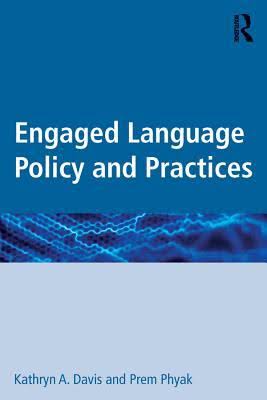
1. Engaged Language Policy and Practice

Year of publication: 2017

Authors: Kathryn Davis and Prem Phyak

Year of publication: 2017

This book situates language policy and practice as a form of social activism and transformation. Rather than conceptualizing language policy as a form of government document or a constitutional manifesto, the authors conceptualize it as enacted by various social members in different levels. English language teachers and learners, for examples, are agentive individuals who have the power and awareness to resist dominant ideologies and practices, and bring about social changes through multilingual practices. The authors argue that an engaged approach to policy and practice pays attention to raising individuals’ “awareness of the conditions of their own oppression” (p. 30). By reading the books, language teachers have a chance to learn and critically think about some broader issues of multilingualism, language ideology, neoliberalism/capitalism, critical language awareness, and critical pedagogy. And these are the issues that impact language teachers’ lives, directly or indirectly.

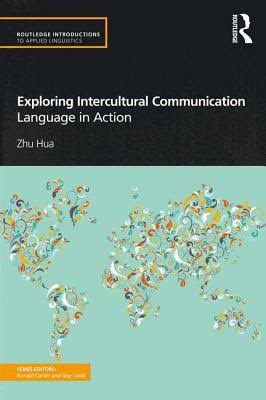
2. Exploring Intercultural Communication: Language in Action

Author: Zhu Hua

Year of Publication: 2014

This book addresses concerns of contemporary globalization, diversity, and the intercultural nature of communication today. With the rapid flows of peoples, cultures and media across national borders, many social settings have become linguistically and culturally diverse. As people from such diverse backgrounds meet face-to-face or in online contexts, their meeting becomes a site for an intercultural encounter where they negotiate meanings, social identities, and power relations. The field of language education in particular is impacted by this diversity in a number of ways. For example, second language teacher education courses inevitably must deal with new notions of culture as well as which cultures to teach and how to teach them. Language professionals in particular should seriously reconsider how the issues of culture are represented in teaching materials and addressed in classroom practices. Keeping this in mind, the book approaches the notion of intercultural communication primarily as a communicative practice. The chapters present theoretical concepts and empirical cases of intercultural communication from a wide range of social contexts such as family, workplace, business, and education. This then naturally leads English teachers to ask questions about the role of culture in language teaching. Questions such as these are of paramount importance: how to teach culture in second language classrooms, how cultures of the self and others are represented in teaching materials such as textbooks, and how they are addressed in classroom practices, and how intercultural learning is assessed by second language teachers.



[Announcement] First Annual ELT& Applied Linguistics Conference 2018

Department of English Education, Tribhuvan University (TU), Nepal calls for abstracts for its 1st Annual ELT and Applied Linguistics Conference. Acknowledging teachers as key actors for educational reforms, this conference aims at providing teachers, teacher educators, researchers and students with a space for engaging in critical discussions on a wide range of issues in ELT and Applied Linguistics.

The theme of this year’s conference is Teachers as Change Actors: Learning from Teaching, Research and Collaboration.

Researchers, teachers, and students are invited for the proposals for panels, workshops, individual presentations/talks and posters. For details, click here.

Language Practices and Food for Thought for Language Policy Makers

Gyanendra Kumar Yadav

The debates over the use of mother tongue and English as medium of instructions in the schools of Nepal have often led to the question whether the discussion on the status of English is considered while making policies in this regard. This blog post mainly attempts at exploring the issues related to language policy and English language teaching (ELT) in Nepal.

I divide this blog into three different sections. The first section deals with my

own experience of leaning different languages as a multilingual speaker. In the second section, I draw on the insights from making language policy before I conclude with a proposal of three languages policy as used in developing countries for an option of language policy in Nepal.

My Journey of Multilingual Speaker

I was born and brought up in a rural village of Terai region of Nepal. It is a monolingual community of Maithili speakers. When I reflect on my journey as a multilingual speaker, I find that I have never realized the need of learning language until I got enrolled in school. By then, I had already acquired my mother tongue without being aware of it. Then, I realized that my mother tongue was not sufficient to pursue formal education since Nepali was the medium of instruction (MOI) in the school. Consequently, I learnt Nepali language throughout schooling. Besides being the MOI, Nepali is a compulsory subject which is prescribed in the school curriculum with a view to develop knowledge and skills in Nepali language among the students. Yet, I admit that I have not been able to develop my proficiency in Nepali language despite a decade of learning language.

On the other hand, my nephew and niece were taken by maternal uncle at Hetauda in Makwanpur district for their schooling. Unlike my home town, Hetauda is a community of Nepali speakers. Just after a couple of years, they became fluent speakers of Nepali. They speak Nepali better than me even though both of my school and college taught me Nepali. Their accent is similar that of native speakers. I have a kind of Maithilized accent while speaking Nepali while they have developed mastery over it.

As far as my journey of learning English language is concerned, it appears to be more difficult than learning Nepali. In fact, I started learning English when I was a fourth grader. There was a limited exposure and practice in English classroom. Even as a school graduate, I was unable to express myself in English. I could not write a couple of paragraphs effectively. Later, after I decided to pursue English language as major subject at intermediate level, I worked hard to improve my English language proficiency. Despite the hard work, I failed to secure good score. Nevertheless, it boosted my confidence and I started teaching English in an English medium private school. The experience of teaching English proved to be significant in enhancing speaking skill in English.

Reflecting on the experience of learning language

Reflecting on the experience of language learning would be worthwhile for further discussion. As a student of Second Language Acquisition (SLA), I find these reflections quite useful in terms of learning language or to ignite the discussion.

First, the exposure and opportunity to practice plays a key role in learning a language. My nephew and niece got sufficient language exposure and opportunity to practice the language in and outside classroom. They got authentic language exposure from native-speakers of Nepali, whereas I got limited exposure and most often from non-native speakers of Nepali in formal settings.

Next, the duration of formal instruction does not matter most in language learning. Although I spent longer duration in learning Nepali language, I could not get mastery over it. However, my nephew and niece became proficient speakers within a short period of time. The third important factor in learning language is the need to speak target language. In case of learning Nepali, I, as someone from a monolingual Maithili speaking community, did not feel the need of using it outside classroom throughout my school and college level.

Finally, acculturation equally seems to be the most important factor in learning a language. My nephew and niece were benefited in learning Nepali since they lived in the target language community and have adopted the target culture.

Language Policy and ELT

For a multilingual country, making language policy has always become a debatable issue, and Nepal cannot remain apart. It is more than a linguistic discourse since it is also associated with culture and identity. In that sense, language becomes a political issue. A single or monolingual language policy may have significant impact on many of the indigenous languages. That is to say, an appropriate language policy can determine the fate of 123 languages spoken in the country. Hence, there must be a comprehensive language policy that can preserve local languages, respect national language and incorporate English as a global language.

Before discussing on a possible language policy in Nepal, looking into four different aspects of ELT — status of English in Nepal, English as medium of instruction, the level to introduce English language and indigenous languages, culture and identity will be noteworthy.

1. Status of English in Nepal

The status of English seems to have influence on language policy. Sometimes, English is taken as a library language, generally used for academic purpose (Poudel, 2016) but other times, English is claimed to have multi faces as it serves multiple functions like instrumental, regulative, interpersonal and creative (Giri, 2014). This shows that there is lack of consensus on whether English is used as a second or foreign language in Nepal.

Furthermore, it also leads to the further question where Nepal lies in ‘Three Concentric Circles of Asian English: The Inner Circle, The Outer Circle, and The Expanding Circle’ (Kachru, 2006). Can we claim for own variety of the English, often termed as Nengish instead of trying to fit in the above category? As he suggests, the pluralistic nature of English might bring numerous possibilities in our context. Thus, it is necessary to decide the status of English and make English language policy and implement it accordingly. For instance, if we limit English for academic purpose, the present notional-functional syllabus used at school level may not work. Instead, we need to bring reading and writing skills in the light.

2. English as a Medium of Instruction

When we look at the language policy at regional level, it is found that English is used as the medium of instruction in non-language classes across school levels in four Asian nations (Malaysia, the Philippines, Singapore, and Sri Lanka) where English is used a second language (Choi & Lee, 2008). It can be noticed that English is used as the MOI only in those countries where English is spoken as a second language. However, it cannot be taken as second language in Nepal. Arguably, it would not be justifiable to use English as MOI in the schools of Nepal. This can be used in the tertiary level but not right from primary level.

3. Appropriate level to Introduce English Language Teaching 

In neighboring countries, there are differences in the level/grade of introducing English language teaching. English is taught from grade one in most of these countries such as Bangladesh, India, Pakistan, Sri Lanka, the UAE, Taipei in Taiwan, Malaysia, the Philippines, Singapore, Hong Kong and Thailand. Similarly, Korea and China begin teaching English from grade three, Israel from grade four, Iran and Vietnam from six, and Japan and Indonesia from grade seven (Choi & Lee, 2008).

In Nepal, English in now taught from first grade (even in pre-school) in community schools and from kindergarten in private schools. The decision to use English from grade one lacks any substantive researches. Interestingly, many argue that a handful of non- academic people made the decision based on their own judgments. This suggests that the issue of appropriate level of introducing English language teaching needs to be explored, analyzed and discussed as a part of ELT research.

4. Indigenous Languages Culture and Identity

The growing demand of English has significant impact on indigenous languages. Philipson (1992) considers global English as a medium of linguistic imperialism stating that the spread of English is one of the many factors contributing to the tragic loss of indigenous languages around the world. Nepal cannot be an exception. Many of the languages here are found being extinct or not given due attention to preserve it due to the dominance of English language. This, furthermore, has also effect on the local culture and identity. Speakers of such languages find loss of identity and recognition. Thus, there is a growing concern to give due respect to local culture and indigenous languages. This can be done by bringing such a language policy that can balance the role of international, national and local languages in multi-lingual community like ours.

Possible Language Policy in Nepal

From the discussion above, it seems to be clear that making language policy is a serious and delicate issue as it is also related to culture and identity of the language speakers. Hence, it would be better to look at the language policy of multilingual countries. From a close study, we can find that mostly the developing countries across the world seem to have used three languages policy. Regarding this, Keeves and Darmawan (2007) state that it is necessary for young people to learn at least three languages, namely their mother tongue (L1), the national language (NL), and a foreign language (FL), that is rapidly becoming English in non-English speaking countries. In case of Nepal, the policy includes mother tongues, like Maithili, Newari, Bhojpuri, etc. as L1, Nepali, as the NL and English as an FL. This would give students from developing countries like ours an opportunity to obtain the benefits of globalization and engagement in trade.

Yet, challenges ahead are to implement such a policy since there are 123 languages in the country. The effective implementation of this policy needs proper curriculum design and preparation of teaching materials and trained language teachers.

About the Author  

Gyanendra Kumar Yadav is a lecturer of English at a community college in Lalitpur. Recently, he is pursuing his M. Phil in English Language Education from Kathmandu University School of Education. He is also a life member of NELTA (Nepal English Language Teachers’ Association) and has presented papers in NELTA conferences. His areas of interest include teaching English through literature and teachers’ professional development, and critical pedagogy. 

References

Choi, Y. H., & Lee, H. W. (2008). Current trends and issues in English language education in Asia. The Journal of AsiaTEFL5(2), 1-34.

Giri, R. A. (2014). Changing faces of English: why English is not a foreign in Nepal. Journal of World Languages1(3), 192-209. 

Kachru, Y., & Nelson, C. L. (2006). World Englishes in Asian Contexts. Hong Kong

University Press.

Keeves, J. P., & Darmawan, I. (2007). Issues in Language Learning. International Education Journal8(2), 16-26.

Phillipson, R. (1992). Linguistic Imperialism. Oxford, Oxford University Press.

Poudel, T. (2016). English in Nepal from colonial legacy to professionalism. ELT Chaoutari.

retrieved from https://eltchoutari.com/2016/01/english-in-nepal-from-colonial-legacy-to

professionalism/

ICT/Digital Technology in Ghana


dr-kofi-ayebi-arthur
Dr Kofi Ayebi-Arthur

Globalisation and rapid technological advancement have created a new economy, which is driven by knowledge. In this regard, Information and Communication Technology (ICT) has become undoubtedly the critical enabler of a knowledge-based economy for many nations. It is acknowledged that for Ghana to make any appreciable progress in its socio-economic development efforts, substantial resources will need to be directed at improving educational delivery.  The key role that Information and Communication Technologies (ICTs) can play in widening access to and improving the quality of education at all levels in Ghana continues to be recognised as a key priority area. Essential elements include literacy education, facilitating education delivery and training at all levels, opening opportunities for content creation and open sharing to expand knowledge resources.

For many years, the Government of Ghana has been a signatory to a number of reports, policies and initiatives (international, regional, national and sector). The policies have a  bearing on ICT use within the education sector and have also broadly emphasised the role of education and training in achieving the wider development goals and agenda of the country. The country, therefore,  is implementing an  ICT  in  Education  Policy as a guide to which  ICTs can be exploited under the guidance of the Ministry of Education and its sector stakeholders, in an efficient and coordinated effort to support the education sector’s own goals and operations. As well as, within the framework of the national development agenda, the Ministry of Education has implemented a number of policy and programme interventions that aimed at increasing access and equity and improving the quality of education. That includes, such as the integration of ICT in education to facilitate effective teaching, learning and management through the provision of computer labs, the internet and network connectivity to schools, the supply of laptops to teachers and students, and capacity development of teachers.

The Ghana ICT for Accelerated Development (ICT4AD) Policy has one of the aims to transform the educational system to provide the necessary educational and training services, an environment capable of producing the right types of skills and human resources required for developing and driving Ghana’s information, and knowledge-based economy and society. Thus, the Government of Ghana is committed to a comprehensive programme of rapid development, utilisation and exploitation of ICTs within the educational system from primary school upwards. A strategy implemented as the introduction of computers into all primary, secondary, vocational and technical schools as a result of the educational reforms in 2007. The ICT4AD also seeks to promote electronic distance education, training and virtual learning systems to complement and supplement face-to-face campus-based educational and training systems.

The latest Education Reform 2007 highlights ICTs as an important cross-cutting issue in the sector and seeks to address this through several strategies. The policy initially aims to equip all educational institutions with computer equipment and ICT tools in a prioritised manner and then to implement ICT programmes at the pre-tertiary level in a phased approach. The strategy makes the schools already possessing 15 adequate laboratories and teachers as a base to gradually expand to other schools when ICT equipment and teachers become available.  For this, the policy priorities adequately resourcing computer science and  IT  departments in public tertiary institutions to enable them to produce skilled human capital to meet the requirements of the industry. Within these reforms, it is also expected that the introduction of ICT into schools should cover the teaching of ICT skills to all students, preparing students for the ICT professions and enhancing teaching and learning through ICTs.

ICT & COMPUTER SCIENCE IN SCHOOLS

To facilitate the sustenance of ICT and to create a critical mass of interest in the subject as an important subject in Ghana’s education curriculum, the treatment of ICT at all levels of the school system is of prime significance. To this end, the following policy prescription was proposed under this framework:

  1. a) A subject labelled, as Information & Communication Technology (ICT) shall become a primary subject to be taught from basic to senior high schools in the country. The content of this course shall range from basic appreciation, and hands-on experience from the primary schools to computer literacy and applications use at the senior high school level.
  2. b) For those learners desirous of pursuing further studies at the tertiary level or in specialised professional schools, an elective “Information & Communication Technology” course shall be offered at the Senior High Schools.
  3. c) The content of the ICT general courses at all levels and the Information & Communication Technology course at the Senior High School shall be determined by the Curriculum Research and Development Division, in collaboration with the requisite accreditation bodies including the Universities and Polytechnics to ensure acceptability and admission at the requisite
  4. d) The reclassification of the ICT as core and elective subjects would also need to be discussed with the West African Examinations Council for a suitable timetable to be planned for the conduct of the first examination within an agreed timeframe.
  5. e) There must be a strong teacher development programme instituted to create the mass of professionals to handle the programme. Granted that the ICT field is a high yield area. Teacher retention is expected to be a major challenge because of the generic value of such skills and the high level of expected turnover and migration. It might be especially in the private sector and industry unless specific retention incentives are planned and programmed for those teachers who would be recruited or trained to teach the subjects mainly elective.

ICT has become an important medium for communication and work in a variety of areas. Knowledge of ICT has, therefore, become a prerequisite for learning in schools in the current world. The syllabus for ICT in the primary education (PRIMARY 1 – 6) is designed to predispose primary school students to basic skills in Information and Communication Technology (ICT) so as for building the foundation for further learning in the subject as they move into second cycle education and beyond. The syllabus covers basic topics in ICT and offers hands-on activities and keyboarding skills to build the required ICT foundation. The teaching syllabus for introductory ICT (Junior High School) is designed to provide basic skills in Information and Communication Technology syllabus covers basic topics in ICT and offers hands-on activities that will help students acquire basic skills in ICT. The syllabus is designed to help the pupil learn basic ICT literacy, develop interest and use ICT in learning other subjects, use the Internet effectively for information, follow basic ethics in the use of ICT and acquire keyboarding skills. The syllabus for Information and Communication Technology (CORE) is designed to provide basic skills in Information and Communication Technology (ICT) for Senior High School (SHS) students. It is expected that the knowledge and skills gained in this course will help students use ICT in almost all their courses at school. The syllabus covers selected basic topics in ICT which offer hands-on activities to help students acquire the required ICT skills for the job market and social interaction in the global village. The students will also apply the skills in solving everyday problems in their academic and social life. The teaching syllabus for Information and Communication Technology (ELECTIVE) is designed to provide advanced skills in Information and Communication Technology (ICT) for Senior High School (SHS) students. This syllabus has been planned at a higher content level than the ICT content at the Core ICT level. This has been done to equip students with the necessary knowledge and skills for the job market and for pursuing further ICT course.

To give meaning and effect to the stated desire of the Ministry and the Ghana Education Service, Ghana becomes a solid member of the community of nations that have embraced ICT as an integral resource in its educational system. The Ministry shall invest in the effort to ensure that attitudinal deficiencies and non-progressive handling of the ICT phenomenon by persons in authority who (in reality) have no understanding of the subject are highly discouraged. School leaders, teachers, learners and parents alike must be groomed to appreciate the contemporary surge in ICT usage and applications and appropriately groomed to harness the power of ICT for the better and positive advancement of education in Ghana rather than put impediments via uninformed or ill-thought-out regulations. Ghana cannot be a country that claims or intends to compete on an equal footing with others (even if it is a small measure of handicap) if its response strategies to ICT issues end up ultimately creating chasms in knowledge to the detriment of the country.  The teaching of ICT in Ghanaian schools has come to stay, and examinations in the subject are examined at the Basic Education Certificate Examination and at the West African Senior School Certificate Examination.

 Bibliography

Ghana for ICT Accelerated Development (ICTAD) policy June 2003

Ministry of Education ICT IN EDUCATION POLICY, August 2015

 The author: Kofi Ayebi-Arthur is a PhD in e-learning and Digital Technologies. He is a Senior Lecturer in Computer Science Education and Head of Department of Mathematics and ICT Education at the University of Cape Coast, Ghana. He teaches both undergraduate and postgraduate courses and supervises undergraduate and postgraduate students’ project work and thesis.

ICT in Bangladesh: A potential tool to promote language education

s-m-akramul-kabir
S M Akramul Kabir

ICT (Information and Communication Technology) is basically an overarching term for all communication technologies that encompasses the internet, web 2.0 tools, wireless networks such as Wi-Fi and Bluetooth, mobile phones, broadcast devices, and satellite communications. The National information and communication technology (ICT) policy-2009 of Bangladesh affirms ICT as a mandatory means to develop the country economically and socially (Ministry of science and information and communication technology of Bangladesh [MOSICTBD], 2009). The National Education Policy 2010 of Bangladesh also recommended ICT based education for its secondary, higher secondary, and tertiary education to make a uniform platform and to minimise the gap between rural, suburban, and urban students.

The inception of ICT-based education system in Bangladesh will not only hone classroom teaching and learning activities but also will make teaching and learning process happen beyond the classroom, especially, English language learning.  Power and Shrestha (2010) stated that “there is an inter-relationship between English language literacies and ICT literacies” (p.4). To facilitate this process, laptops and multimedia projectors have been subsidised by the present government to 20,500 public and private educational institutions ranging from high school to tertiary level under the project named EFA (Education for all) (Chandan,2014) and all other institutions are in the queue to be subsidised. Eventually, by the end of the year 2021, under the project named “Vision 2021”, the government of Bangladesh has taken the agenda to integrate ICT into all its educational institutes. Among all other foci, the prime objective of the implementation of ICT through this project is to facilitate the teaching and learning process to increase the efficiency of both teachers and learners in the country (Khan, Hasan, & Clement, 2012).

As far as the language teaching and learning are concerned in Bangladesh, integration of ICT can transform dynamism in language education as it has the capacity to improve teachers’ work-design and to increase the engagement of learners and teachers in the learning process by generating a collaborative learning environment. It can facilitate language learning not only in the classroom but also beyond the classroom. It can provide learners with the freedom of place, situation, and time for their learning. Moreover, an ICT-based education system will ensure Bangladesh to face the challenges of this century by equipping its citizen with technical skills for relevant qualifications as well as English language skills for communication competence.

In this connection, to ameliorate its language education through integrating ICTs, the government of Bangladesh has been carrying out a nine-year (2008-1017) project named as English in Action (EIA) funded jointly by UKAID and the government. The primary aims of this project are to make the existing Communicative method efficient for language learning and to improve teaching qualities in the classroom by developing teachers’ pedagogical capacity through the usage of mobile technologies. The government also formulated school-based professional development training for both primary and secondary language teachers using ICTs. According to Shohel and Banks (2010), this sort of training contributed to both communicative English learning and teachers’ professional improvement. English language teachers were provided with media players, preloaded with video and audio language learning resources, along with battery- powered speakers for the use in a classroom. The authors claim that “materials on the iPod touch, especially audios and videos, are impacting on teachers’ personal and professional development” (Shohel & Banks, 2010, p. 5489).

Although the advancement of information and communication technologies (ICTs) has challenged the traditional notion of teaching and learning process, the use of ICTs does not automatically guarantee to ensure quality language teaching and to improve students’ language learning. Bangladesh has both technical and pedagogical challenges to implementing ICT in the language classroom. Although the government is supplying all the technical equipment such as computer, Overhead projectors, and the related accessories, there are still some technical problems that are yet to be addressed to expedite the teaching and learning process through ICT integration. The technical issues include insufficient trouble-shooters for the academic institutions across the country, lack of high-speed internet connection, and frequent power cut problem in rural and suburban areas. The pedagogical challenges in teaching and learning process of language are also significant in number. Firstly, there is a scarcity of teacher-educators with proper pedagogical as well as technological knowledge in the country to train and create tech-savvy teachers for primary, secondary, higher secondary, and tertiary language education. This problem leads to the insufficient influx of technically-sound language teachers to teach the English language with technology in the classroom. Consequently, most of the English teachers in Bangladesh have neither sufficient training on the pedagogy of language (Ali & Walker, 2014) nor training on technology for the teaching of English. However, there are some teachers interested in integrating ICT into their language teaching. It is apparent that they are not attuned to different theoretical frameworks of teaching with technologies, such as SAMR Model or TPACK model to interweave the three essential sources of knowledge – technology, pedagogy and content to an active environment.

Therefore, to get the maximum output of the ICT in the language classroom, Bangladesh has to address both these above mentioned technical and pedagogical issues simultaneously. If the country can sort out these problems, the synergistic effect of ICT and English education will promote its learners to deal with social, economic, and linguistic challenges both at home and abroad where English is a barrier to achieving something.

References

Ali, Md. Maksud & Walker, Ann L. (2014). ‘Bogged down’ ELT in Bangladesh: Problems and policy. English Today, 30 (2), 33-38.

Chandan, Md. S. K. (2014, March 28). A New Bangladesh. The daily Star. Retrieved from http://www.thedailystar.net/a-new-bangladesh-17482.

Khan, Md. S. H., Hasan, M., & Clement, C. K. (2012). Barriers to the introduction of ICT into Education in developing countries: the example of Bangladesh. International Journal of Instruction, 5 (2), 61- 80.

Ministry of science and information and communication technology, Bangladesh. (2009). The National information and communication technology (ICT) policy-2009. Retrieved from http://www.btrc.gov.bd on 03 January, 2016.

Power, T. & Shrestha, P. (2010). Mobile technologies for (English) language learning: An exploration in the context of Bangladesh, presented at IADIS International Conference: mobile learning 2010, 19-21 March, Porto, Portugal. Retrieved from http://oro.open.ac.uk/20800/1/IADIS_Conference_Mobile_Language_Learning_Power_&_Shrestha_2010.pdf

Shohel, M. M. C. & Banks, F. (2010). Teachers’ professional development through the English in Action secondary teaching and learning programme in Bangladesh: Experience from the UCEP schools. Procedia Social and Behavioral Sciences, 2, 5483–5494.

The author: Mr. S M Akramul Kabir is an Assistant Professor of English, Directorate of Secondary and Higher Education, Ministry of Education in Bangladesh. He is also a PhD Candidate in the College of Education, Health and Human Development, University of Canterbury, Christchurch, New Zealand

My Experience Using Digital Technology in Primary School

ambadatta-joshi
Ambadatta Joshi

Along with the new rising sun, there are new developments in science and technology. More than that in the sector of education, digital technology is being the focus for all the schools. All the students and guardians are attracted toward the school where there is the use of digital technology.

While telling my experience of learning basic letters of English and Nepali, I learned to read and write on ‘Dhulauto’ (a small wooden board with spread dust on it used to write with a little stick, erase and rewrite). My teacher used to catch my hand and get me to write the basic letters on the board. Gradually, I used ‘Kamero’ (made of white mud and water) and then ‘Khari’ (soft white stone) to write on pati (a wooden board). Gradually, I came to use ink that was developed by fermenting locally available particular tree leaves in boiling water and filtering with a piece of cotton cloth. The pen was made of Nigalo (a particular type of bamboo found in the hills and mountains). For writing, I used to use Nepali paper locally made because my father used to develop it at home out of a kind of bush plant to write horoscope of people. Nowadays, these pens and paper are not utilised in the schools.

Those days, students were quite afraid of English teacher with no reason. They used to be rather happy when the English teacher was absent. In English lessons, we used to write the pronunciation of all the words under the line in Nepali so that we could ready easily and correctly. This was the situation and feeling toward English language and English teacher when I was a student in a primary school.

Nowadays, where there is the use of digital technology in English period, it is entirely different than those days. In my own school, OLE Nepal has provided 42 XO-laptops (E-pati) for the students that we use to teach English as well as other subjects. The lessons and activities those are available in E-pati are designed to obtain class-wise and subject-wise goals of education. There are audio-visual materials that help teachers and students in teaching and learning activities.

We have e-library (local server) that contains over six thousand digital books in Nepali and English. Those reference books help the children as well as teachers gain extra knowledge about various local and global activities. Even the high school and campus near the school take advantage of this school e-library. This has developed good habits of reading in the children.

Nowadays, the teachers feel abnormal without digital technology in their teaching and learning in our school. I can say that the schools which have got this technology are lucky. In my case, this has brought a huge difference in teaching English. The technology has cultivated energy in my profession. This has provided more opportunities for the children to practise their lessons and given relief for me in the classroom. When the children have some problems, I facilitate them in their activities. Since we got this technology, this has decreased the burden of gathering several teaching materials and saved teachers’ time as it contains several audio-visual materials for teaching and learning. The animated pictures in e-paath (an application that includes course books) have decreased my unnecessary lecture in the classroom. Various videos about wild animals, the universe, internal body parts, baby growth, development of plan out of the seed, etc. have made classroom teaching and learning very effective. Use of the technology has developed a mind of both the children and the teachers. This has become very supportive in engaging the students in the absence of a teacher in the school.

The technology in the school has gradually made the guardians feel ownership of the school’s property. Their positive response toward the change in teaching and learning with the new technology has made the teachers more responsible. They feel pride that their children are learning with new technology which they had never seen before three years. The digital technology has encouraged them to further develop the school.

The use of new technology has increased the number of students and decreased the drop-outs from the school. The children learn singing, dancing, playing games and other activities by watching videos on the devices. They freely select various digital books like poetry, stories, etc. for reading or drawing pictures. The most important aspect the technology has developed in the children is learning interest.

I wish all other schools will get this technology to bring change in their teaching and learning activities. Otherwise, this will increase digital divide between the schools and children. In the end, the teachers should be well-trained to use such digital technology in their instructional activities to improve teaching and learning and to achieve educational goals.

The author: Ambadatta Joshi teaches at Shree Kalika Primary School, Sunkuda, Bajhang

ICT in English Language Teaching and Learning: South-East Asia

In this blog piece, Upendra Ghimire from Nepal discusses on the some practical ideas of using mobile in English language learning whereas Thinh Le from Vietnam shares his teaching experiences in using technology from blended learning to fully online.

Mobile in English language learning

Upendra Ghimire

The new millennium has come up with various scientific inventions and technological developments. As soon as the 21st century began, the world experienced the rapid evolution of information and communication technologies (ICTs) and the maximum use of those technologies in business, education and other fields. The various information technologies such as computer, tablet, mobile, television and other smart devices have been fundamental things in academic, business and personal life of growing generation people. More than just the digital devices, web 2.0 technologies have shifted the way of communicating information with each other from one part of the world to another. Nepal is also one of the fast-developing countries in ICTs. Among different smart devices, the mobile phone is the most portable digital device readily available for reasonable prices in Nepal. The early August 2016 record shows that 95 percent of the total population of the country have telecommunication access. The number of internet subscribers crossed 50.11 percent of the total population. Mobiles have gradual influence in English language development in Nepal. The use of English language to access and record the information on the devices has continuous influence in English language development in Nepal. Thus, the mobile can be a potential digital device to teach and learn English. In this article, I am trying to suggest some advantages of mobile in English language learning.

Mobile assisted language learning (MALL): There are several pedagogical reasons of considering the mobile in second language classroom. Kukulska-Hulme and Traxler (2005) elucidate why smart mobiles are comparatively more useful devices to learn the English language. They explain that these smart devices are relatively cheap in price and increasingly powerful to support teaching and learning the English language.

Nowadays the children are familiar with various types of smart mobiles. They use the devices, play with them and enjoy playing with different apps on the devices. The technology has provided them with an opportunity of learning several things beyond the classroom teaching and learning.

Some practical ideas to use mobile phones:

  1. Pronunciation practice: Pronunciation is the beauty of speaking and one of the aspects of language. Therefore, we focus on this aspect of language in language teaching classroom to develop communicative competency. The smart features of mobile can be supportive to develop pronunciation skills of English language. The learners can record their voice, listen to their record and native speaker’s voice, and practise consistently to improve their pronunciation. The English language learners can use English dictionary app to practice vocabulary, open YouTube to watch English language videos and practice English speaking. Besides, the students can watch television channels such as BBC, CNN and more on their mobile sets to improve English pronunciation.
  2. Capturing class notes by using the mobile camera: The learners can use mobiles to capture the pictures and record the audio-visual materials. These features can support English language learners to develop their listening, speaking, reading and writing skills.
  3. Downloading Materials: Smart mobiles can work like computers to download digital files, save web information and read them in flexible time. For instance, mobile with internet access provides an opportunity for downloading e-books, journals, software, games and useful apps for learning English.
  4. Using note features: Note application on smart mobiles can be helpful to write various notes of meetings, classroom lecture, textbook or personal interaction.
  5. Using mobile games to develop critical thinking skills: Various mobile games such as crossword puzzle, Scrabble, hanging man, vocabulary and so on can support the English language learners to improve their English with entertainment.

Problems encountered by ELT practitioners while using mobile:

  • Lack of internet access
  • Privacy issue
  • Noisy classroom
  • Monitoring individual students
  • Requirement of highly-skilled teachers

Conclusion

Mobile as a portable smart device can support English language learners to improve their English and the teachers to involve students in language practice. It is a relatively cheap and powerful digital tool useful to practice the English language in the classroom as well as personal life. However, it requires the teachers to have high-level skills to purposefully use in classroom teaching.

Reference

Kukulskal- Hulme, A, & J. Traxler eds.2005. Mobile Learning : A hand book for educators and trainers. London: Routledge.

 Introduction to Digital Tools for Teaching and Learning Online

thinh-le
Thinh Le

In this entry, some digital tools are introduced first. Then I will share my teaching experiences in using technology from blended learning to fully online.

There are a variety of digital tools that you can use to teach English. Here are some digital tools that I have experienced and found them quite convenient and effective to use.  First, it is important to set up a learning management system where you can stimulate your students’ interactions with you and their peers. This can be closed Facebook group or Edmodo. Then questions relating to your post can motivate students’ interaction online. If you want to make videos explaining the lesson, PowerPoint can be a useful tool because it is very easy to use and you can have good quality videos. After that, these videos should be uploaded to the learning management systems with guided questions for students to watch and do their work before the online interaction. To have online interactions with students, Zoom and Skype can be very useful tools for you. Both of them allow group call in which you can have interactions with many students at the same time. Besides, you can share your screen while you are calling your students, so you can explain the lessons easily. It enables you to do all kinds of teaching. For collaborative writing, I think Google Docs is magnificent. Just create a link to a Gmail account and let your students join in the game page so that they can write together under your supervisions and their peers.

I would like to share my experiences about using technology from blended learning to fully online class. I used to teach a group of students in Vietnam. They are hard-working, active and highly motived to learn English for communication.  They were in grade 10 and lived in the remote area where there was no linguistic environment outside the classroom. Besides, it was really hard for them to find a good language centre to study English. In addition, high school teachers in Vietnam mainly focused on grammar. Therefore, these students were unable to communicate after 8 years learning English at school. They wished to learn English for communication, so I opened tutorial classes for them. However, we did not have enough time in the class, so I decided to set up a closed Facebook group to give them some extensive practices especially listening and speaking. I used all authentic materials from YouTube or British Council Broadcast to upload on the closed Facebook group and designed some tasks for them to do online. When one student uploaded his/her work in the group, other students started commenting, which created many discussions and stimulated their critical thinking. In the class, I gave them feedback about the homework they did. That saved us a lot of time in the class, so we could have more discussions in the class. Unfortunately, I had to go to New Zealand to do my PhD, and I could not help them anymore. However, they still wished me to help them improve English. That motivates me to carry out fully online teaching.

Here are my experiences in teaching online classes. My students and I have great online discussions. I set up a group of students on Edmodo by inviting them through emails. Then I post the tasks which can be written, audio, video posts. I can create these materials, or I sometimes use authentic materials online. More importantly, I create activities with the tasks so that my students can do when they watch the videos or read the post. The tasks can be multiple choice questions, open-ended questions, or free writing. Through Edmodo, I just set up a deadline so that my students know when they have to finish their tasks. For multiple questions, Edmodo even marks my students’ work, and I can see the results easily. To engage more students to have more discussions online, I ask my students to comment on at least two other people’s posts. Therefore, after the post, it is really interesting with all asynchronous discussions online. During the online meeting with my students, I can give them some feedback and have more conversations with them via Skype. If I have my students’ works, I usually put them on Google Docs and give them feedback so that all my students can see them carefully. Please try all these digital tools for your teaching and share your experiences.

The authors:

Upendra Ghimire teaches English at Gramin Adarsha Multiple campus, Nepaltar, Kathamndu.

Thinh Le is a lecturer of English at Vietnam Banking Academy, Phu Yen Branch, Vietnam and he is also a PhD Candidate in College of Education, Health and Human Development, University of Canterbury, New Zealand.

The Seven Years Journey of ELT Choutari: Reflections

As ELT Choutari enters into eighth year, Choutari editor Ashok Raj Khati has talked to Dr. Balkrishna Sharma, Narendra Singh Dhami, Praveen Kumar Yadav and Dr. Shyam Sharma, to reflect back its seven years journey. They have  put their voices in light with the contribution of ELT Choutari to local and global ELT discourses too.

Dr. Bal Krishna Sharma, a founding member of Choutari

13173997_10209640185584950_7635820056705789107_nI would like to comment mainly on two points when reflecting back the Choutari’s seven years. First, Choutari has been able to groom a new generation of scholars capable of writing on topics they have read about in others contexts or learned in their university classrooms. We did not have a stronger tradition of academic writing in TESOL and applied linguistics in the context of Nepal in the past. The Journal of NELTA was there, but young Nepali scholars did not consider themselves qualified enough to write for the journal. I had a similar view when I completed my M. Ed. In 2003. There still is a popular assumption that only experienced ‘scholars’ write for the journal, and the younger scholars are positioned in the receiving end of the journal readership. Since the starting of this webzine, this assumption has been questioned, renegotiated and redefined. I can see a whole lot of new scholars turning themselves into academic writers with greater confidence, refined skills, and thoughtful pedagogical tips. Second, the traditional mode of printing and publication in Nepal reached only to a small group of readers, usually with a long time gap. Consider, for example, the NELTA journal we have. It includes a collection of homegrown scholarship, but we have to wait for one year to read about ten or so articles. Webzine like the ELT Choutari has again challenged the tradition, expanding its reach to a wider audience, with a large number of readable articles. This again has promoted a new generation of writers and readers, who necessarily are not the university professors.


Regarding the contribution of Choutari, I was reading the latest issue of Choutari before I wrote this paragraph. This issue largely reflects how Choutari has been able to address both local and global concerns in the field of ELT. Lal Bahadur Bohara, for example, brings voices of English teachers from the far-western region. I was intrigued by Lal Bahadur’s observation that teachers in the region do not only question the Western decontextualized cultural content in English lessons, they also question the so called ‘localized’ content in textbooks and contents written and produced by Nepali writers. This article reminds me of an onion metaphor used in language policy research, highlighting that language policy is like an onion reconciled in several layers, processes and levels. So is the issue of culture: it operates in multiple levels, and national dominant cultures may not serve as a local culture in all the contexts. Lal Bahadur’s blog post is one representative examples from Choutari with regard to how Nepali young scholars have tried to raise and redefine the ‘local’ in language teaching, questioning and challenging some dominant traditions in our field.

Another article from the same issue that connects the local with the global is by Sujit Wasti. Sujit aptly uses the metaphor of McDonaldization by sociologist George Ritzer to take account of the impact of globalization on the local, including language and the environment. This was fascinating for me because ELT has not paid much attention to the discourses and concerns of the environment in pedagogical contexts. It makes sense to address the concerns of climate change and environmental degradation, which are equally local and global, in our policies and practices.

When the local voices and issues are narrated and circulated to a global audience through the internet on ELT topics that matter to people around the world (e.g. critical pedagogy, teaching tips, ELT humor, literacy, and many more), this is as an evidence that Choutari is both local and global.

Narendra Singh Dhami, teacher at Khimti Project school, Kirne, Dolkha

I have been reading the Choutari Khurak since its first issue published in 2009. I found that the blog posts are very useful resources for me and my fellow teachers. As its name suggests, it offers different tastes and colours on teaching strategies and activities as well as theoretical insights for professional development.

We have formed a group of five teachers in our school to discuss on the posts of each new issue of ELT Choutari. We often save the published articles from the website and discuss on each post among us. We also apply the best strategies and current trends of ELT approaches mentioned in our real classroom teaching situation. Some articles are truly inspirational, some are insightful to new teaching strategies and some are really research based too. The Choutari teaches us on how to grow  professionally in the remote parts of the country. And, of course, Choutari has broadened the horizon of ELT discourses in such remote area where it is quite difficult to get textbooks in time. The varieties of posts in each issue of Choutari always reenergize me to improve my teaching practices. I shall be much glad to read some posts on child psychology and motivational stories in the days to come. I am so grateful to the editorial board for providing me an opportunity to reflect on ELT Choutari.

Praveen Kumar Yadav, an editor of Choutari

As ELT Choutari enters into 8th year, we would like to thank our valued contributors and readers for their continued support. The ELT journey without their support was never possible to accomplish seven years. The ELT Choutari today has won acclaim for its commitment to contributing to discourses focused on various issues related to English Language Teaching and Education.

Generally speaking, the past causes the present, and so the future. Looking into the origin of Choutari, the web magazine was started as a wiki collaborative project in January 2009 to supplement the ELT conversations that have been going on for many years within the mailing list of NELTA. In order to make accessible to such ELT conversation by the rest of the ELT community outside NELTA (here’s what one member wrote in the original “about” page), ELT Choutari was initiated.

First initiated by Ghanashyam Sharma (Shyam), who was accompanied by Bal Krishna Sharma and Prem Bahadur Phyak, this networking initiative had six core moderators (Sajan Kumar Karn, Kamal Poudel, and Hem Raj Kafle joined later) from 2009-2012. Then, this initiative is being continued by a team of young ELT practitioners and scholars. They believe that we can develop very useful and probably most relevant intellectual/professional resources for the Nepalese ELT community and those interested through a discussion forum like this.

So far, more than 500 posts has been published by ELT Choutari, followed by more than 1000 comments over the past seven years. Our journey over the past seven years did not remain smooth. Our journey began with challenges, continued with the same and they exist even today. For instance, in the beginning of our journey we embraced challenges when internet and blogging was much exposed in Nepal and ELT community. Even today, challenges are ahead as we look for ELT enthusiasts to come and joins us for the mission.

Amid challenges, we chose to remain optimist to see them as the opportunity for us, just like Winston S. Churchill’s saying, “A pessimist sees the difficulty in every opportunity; an optimist sees the opportunity in every difficulty.” We are driven by our courage and willingness to change. We never pretend that nothing has happened or we are not ready to move ahead.

Dr. Shyam Sharma, a founding member of Choutari

I think Choutari has made unique contributions to Nepali ELT discourse. The community had a great journal, and we also had an active listserv; but we wanted to provide colleagues a place to share ideas that was more public/open and interactive, where especially younger colleagues could contribute their ideas and experiences and run conversations. Many scholars who chose to run this blogzine also had the opportunity to practice publication and leadership skills while serving the profession. This publication has slowed down a little bit, but I am confident that new scholars will take the baton forward. In fact, I also hope that more venues like this will emerge and make new kinds of contributions to the field of ELT in Nepal.

The few colleagues who started this journey would have never imagined that hundreds of scholars, including scholars from around the world, would contribute to this venue–nor that new local voices would join and develop like they did. Thinking about how we started the initial conversation (by putting some of our email conversations in the more open platform of a wiki) is just humbling. The first set of editors (Prem Phyak, Bal Krishna Sharma, and me) took a few important steps in the journey, but we never imagined the many new areas that new colleagues would go on to cover, new ideas they would implement. Just the number of posts and comments and the generation of ELT scholars at home who have participated in the conversation through Choutari is truly inspiring.

As a reader, I urge other readers to read and share the good work here, to contribute as writers, and to consider leading the venue. And I thank the colleagues who are running it today and tomorrow.  ​

Peripheral Classrooms: Reflections of English Teachers in Nepal

In community schools, teaching and learning of English has always been taken as a ‘difficult’ task. Teachers and students confess that it is a difficult subject to teach and learn respectively.  As a teacher, do we reflect on our own classes? Do we ask ourselves how are our classes going? Reflection upon our own classrooms certainly assists us to improve our pedagogical practices.

In this connection, our Choutari editor, Ashok Raj Khati has asked to five English teachers to reflect on their own English classrooms from different regions of Nepal. In the context of English language teaching, they briefly express their ideas in relation to resources, participation of students, use of English and L1, their best practices in English classroom and challenges they face.The five secondary level English teachers are: Babu Ram Basnet (Solukhumbu) Chandra Singh Dhami (Ramechhap), Kamal Raj Basyal (Palpa),  Durga Prasad Pandey (Dang) and Khagendra Nath ‘Biyogi’ (Bajhang).

562665_685671534783323_943408360_nBabu Ram Basnet                                                     Mahendrodaya Secondary School, Salyan, Solukhumbu

Teaching English is not always a fun but it is a very tough job in this part of country. We do not have enough resources, like the internet and other supportive materials, to facilitate English language teaching. Therefore, students do not get enough and authentic exposure in English. I have to read out listening text myself as we do not receive cassettes in time. There are 65 students in grade 10, which is a large classroom in our context. In the same way, the large classrooms are a barrier to many participatory activities. There are many activities to be done and performed by students such as drama, simulation, games and role plays. I am not able to do all these in such a large class which ultimately affect their learning achievement.

Students come from different socio- cultural and economic backgrounds, they usually speak in Nepali language among them. They are generally good in writing but hesitate to speak in English. They have fear to lose face among their friends if they commit any mistakes. So that, I am not satisfied with their fluency in English. To some extent, I am applying traditional method while teaching English. It is often challenging to correct their home assignments in a class of 45 minutes. I use group and peer correction technique several times. I conduct class test in regular interval to know how they are doing. The most challenging part of my teaching is developing speaking skill on the part of students.

15174624_1208623562564901_1405021138_nChandra Singh Dhami                                                       Manthali Higher Secondary School, Manthali, Ramechhap

My classroom in tenth and ninth grades are large, which contains the students with mixed ability. Likewise, students come from diverse socio-cultural and linguistic backgrounds. We have a ‘media’ hall equipped with different facilities such as internet, speakers, tape recorder, dictionary and projector. I often make them watch movies, biographies of poets, popular TV show and show activities related to English language learning. For instance, while teaching English sounds, I often download native speakers’ accent for them to practice. I regularly conduct unit and monthly test. It provides me timely feedback on the areas to improve. We have cassette players, charts and other daily use materials. Students sometimes prepare charts in different lessons.

Majority of students try to speak in English in the classroom. I often use group work and drilling. I make them write in group as a process writing. Students also speak in Nepali language particularly when they do not understand reading texts. I encourage them to speak in English even outside the classroom. Students also take part in speech and debate competitions. I use shorter expression. Even if, students have positive motivational orientation towards English, I am still not satisfied with the progress. Many students do not have same pace in learning English and it can’t be. However, the challenge for me is to cope the students with different levels of English language proficiency.

15239253_735504923267147_1974166001_nKamal Raj Basyal                                                                 Krishna secondary school, Peepaldada-Jheskang, Palpa

There are 56 students at grade 10 in my school which accommodates 29 girls, 26 students from Magar community and 5 from Dalits. Three language use can be observed there in the classroom – Magar, Nepali and English. They are from low income and mostly from middle class families. Their socio-cultural background is not much trouble for me while teaching English as they have positive motivational orientation toward learning English. Likewise, we have whiteboards, electricity, audio-tape/cassette players and necessary charts in English in the classroom. But, we do not have the internet facility in school.

I have found that my students are active in different learning activities in English class where I try my best to use English only and inspire them to use it. I believe it maximizes exposure in English. Next I have generated weekly discussion on certain topics related to the course. In regular interval, I conduct several contests like debate, spelling and quiz in English. Regarding teaching technique, I generally use group and pair work and role plays to facilitate English language learning. I also encourage them to go to library and read books. Therefore, teaching English has always been a fun for me. I am satisfied with their progress. I specially enjoy teaching grammar and vocabularies. However, I often find myself challenged while teaching listening and free writing. So I need to be well prepared to deal with listening and writing activities.

1931541_925213197563390_775367134454601593_nDurga Prasad Pandeya                                               Padmodaya Public Model Secondary School, Ghorahi, Dang

I work in a government funded school having the classes from grade 1 to 12. It has around 87 classes and 5, 000 students. Generally, the student- teacher ratio is one to 50-78 students. Therefore, we teach in large classes. We have irregular internet access and the multimedia projector is only in the audio visual room and students have very less access to them. We also have a smart board but there is no skilled man power to operate it but white boards are available in each room. Teachers make charts and posters for the upper classes and use printed charts the lower/primary classes.

When I reflect on my English classes, my students work very happily in pair and groups particularly to practice speaking skills and some project based tasks. Many of them are found excited and interested to work in group or pair but a few are found reluctant to do all these activities and they prefer individual tasks. I instruct them both in English and Nepali languages. I particularly need to use Nepali as they understand me and are unable to respond in English. They are also not encouraged to converse in English. Another challenge of teaching English is being unable to create English speaking environment in school, which is the result of the low exposure of English in lower classes. It eventually affects their performance in upper classes.

11178286_1427707574212674_9151478527758031773_nKhagendra Nath ‘Biyogi’                                                   Bhairab Higher Secondary School, Jhota, Bajhang

I as an English teacher in this rural area, find myself encouraged in the recent years. Although the classroom is large, we have some minimum resources to facilitate English language class such as tape recorders, computers and other necessary materials. They are taken to computer room to play various language games. Similarly, I make use of laptop and the internet in the classroom. Students prepare charts of CVs, wild life reserve, language functions and so on inside the classroom. There are many different charts in schools, student make use of them in English class in different ways. Many of them use Nepali language inside the classroom. However, I inspire them to speak English. Every day, I ask them a question (as a part of general knowledge), related to English and they enjoy it very much. (For instance, how many words can you make from the word ‘examination’?). I also conduct quiz, debate and speech competition. Regarding the participation of students, they normally work in group and pair. Students are always invited to the front of the classroom to work or present the task assigned. Few students also feel shy to do so.

In the same way, I am selective on using methods and techniques in my ELT classes. Most importantly, I reflect back on my classroom activities to figure out what is working and what is not. Students are found improving the skills of English language these days. It might be the result of increased exposure of English through technology and social media. Another important activity that I do is to visit students’ parents (nearby school) once a week. I talk to them about their children’s progress. While talking with them, I figure out four types of students – outstanding, excellent, good/average and low achiever. The most challenging task for me is to teach and work with the low achievers. Some of them cannot read and write properly. Therefore, it is always challenging to find the strategies to support them.

Choutari team sincerely acknowledge teachers who shared their valuable reflections in this interactive article. They have particularly highlighted the diverse pedagogical practices and issues while teaching English in peripheral parts of Nepal. Now, we request you to feel free to share your thoughts and reflections after reading these reflections here.

Are we at the Verge of Collapse?

377867_10150419906957721_553891651_n
Sujit Wasti

In this blog post, I attempt to examine the role of globalization in relation to the economy, language and natural environment.

Civilized man was nearly always able to become master of his environment temporarily. His chief troubles came from his delusions that his temporary mastership was permanent. He thought of himself as “master of the world, while fully failing to understand the laws of nature. Tom Dale and Vernon Gill Carter has mentioned in ‘Topsoil and Civilization’ – man whether civilized or savage, is a child of nature- he is not the master of nature. He must conform his actions to certain natural laws if he is to maintain his dominance over his environment. When he tries to circumvent the laws of nature, he usually destroys the natural environment that sustains him. And when his environment deteriorates rapidly, his civilization declines.

With this backdrop, I first attempt to examine the globalization with Gross Domestic Product (GDP) based economic growth in the light of its aberrations and practical consequences. Let me begin with an example. We are trying to purify the Bagmati River in Kathmandu which was once a natural source of water for people dwelling in this valley. Over the years, population swelled in multifold along with the drive for urbanization, with the capital and technology – the drivers of globalization. Then water shortages ensued. Now, we are trying to turn the natural course of Melamchi River in order to fulfill the need of drinking water in Kathmandu. I have three unanswered questions in this process – first, isn’t it something like robbing Paul to pay Peter? Second, do we know the long-term impact of changing natural course of a river? Third, Kathmandu Upatyaka Khanepani Limited (KUKL) is the water distributing company in Kathmandu. Is it profitable for it to take care of the drinking need of other species in the valley because the river accessible to them is completely destroyed by human beings? If we extend the above example in international context we get the clear picture of what globalization is.

The present economic model is the more we consume, the more it helps to increase the GDP.   Cyclical consumption model is threatened by its negative impacts in the society such as resource depletion, water and air pollution, and destruction of natural habitat. At the one hand, this economic model has completely overlooked the impacts on other species (other than human beings) and natural environment around us. On the other hand, this model ends up storing or developing weapons of mass destruction as the result of so-called economic success because we are obsessed with power. Furthermore, the growing inequality created by the competitive model of business has no human face (Economic Development for general people is not only for the owners-inequalities produced by current economic model). For instance, the unemployment generated by automation which contributes to continuous wastages of natural resources. Throughout the human history we have never been out of war and natural calamities aggravated by human beings. I wonder why this so-called intelligent specie is always the source of destruction and I think we are at the tipping point once again.

The second example I am citing here shows the flip side of specialization. Nepal Government is developing a few eastern districts as a bucket area for the cultivation of cardamom. The farmers are being lured to planting cardamom replacing their regular food products in those remote areas. They have cash from sales of high value crops, but they have to depend on transportation (one of the main sources of globalization) of foods from other areas for their regular diet. It shows the flip side of specialization as there are two problems associated with specialization of agriculture sectors. The first is the issue of food security as it destroys the local food chain and the second is the value gap created by the change of consumption pattern as they have no local food. Further, the consumption of products of multinationals is normally known as increasing living standards or modernization.

When we turn into language and culture, MCDonaldization and mass productions are replacing local cultures and languages leading to acute poverty because the most local businesses depend on local culture. The rhetoric behind skill gap is clearly intended to further destroy the local and traditional businesses. The English speaking local students are being turned into international labor completely ignoring their need and contributions to the development of local society. English as a foreign language should be taught in the schools and colleges but, is it necessary to replace the native languages from schools in the name of English medium only? This one-sided language domination is clearly a long –term burden to the western societies because sooner or later they would realize that these half-caste (new breeds having desire to live in two worlds i.e. Anglicized vs. localized) English speaking generation cannot get jobs in western societies in the name of globalization.

The theoretical impossibility of globalization lies in its illogic that we have to create a global market. That means every country has power or right over the resources of the whole planet in order to supply stuffs all over the world. For example, As Nepal is known as a suitable tourist spot she has to build infrastructures to accommodate tourists of the whole world by being competitive. However the question that remains unanswered is – how much is adequate?

The whole concept of state welfare function is built on false premises which started after the French Revolution with enlightenment or rational thinking as means of modernization. But it ignored the relationship between human being and the natural environment and led people to believe that man can be independent of the plants and food or the nature. Diamond Jared in his book ‘Collapse: How Societies Choose to Fail or Succeed’ mentioned that the climate change is not a new phenomenon and lists out the eight factors (deforestation and habitat destruction, soil problems, water management, overhunting, overfishing, effects of introduced species on native, overpopulation, and increased per-capita impact of people) that led to the collapse of past societies. He further added four other factors (anthropogenic climate change, buildup of toxins, energy shortages, and full human use of earth’s photosynthetic capacity) which may contribute to the collapse of present and future societies. All factors are the roots of destruction of natural environment.

We have had enough experiences that the apogee of highly industrialized state is to start decaying. We have observed the pre-eminent symptoms of collapsing civilization. None of the governments has choices to take unpopular decisions such as developing its own economic systems or to choose only those technologies which are sustainable considering its local economic, social and cultural environment. Climate change and inequalities are major concerns of almost all countries but we have not been able to address it in its entirety.

Mr. Wasti  works for Rural Education and Environment Development Center (REED Nepal), Pulchock Lalitpur in the capacity of the finance manager.

Teacher, Teacher Education and ELT: Changing with the Time

?

Dear Choutari readers,

In the midst of long silence because of technical and other issues, we are back with the special issue of ELT Choutari. This is the second issue of this year which focuses on several aspects of ELT. Before listing out the blog entries of this issue, let me reflect on my experience and observation on some aspects of ELT.

I am fortunate to observe hundreds of English lessons in the past two years in rural parts of Nepal. My experience of working with teachers in schools and training venues in diverse topography and culture in Nepal has shown that many teachers are still facing challenges in lesson delivery process. ‘Fresh’ university graduates who have ‘successfully’ completed pre-service teacher education program have been unable to deliver English lesson really effectively though having authorized license to teach.

Then where is the problem? In my opinion, the problem lies in the way we perceive a language, our profession (ELT) and the meaning of language teaching. The problem lies on how we make sense of a language to be taught as a course, the language to be used as a medium of instruction and the content to be taught (if it should be).

Every human being makes sense of the world differently. They obviously have their own ideas, concepts and perceptions towards overall meaning of language teaching. In this light, I have similar observations as Rebecca Reymann, a contributor of this issue has, in many parts of the country. We as teachers are investing our effort in memorization. I agree with her in a way ‘language is a beautiful tool for expression’. It has to be taught in a context differently in different grades but not through memorization. Every child is unique and he/she does not get success in language learning through the same route. The children have their own perspectives toward the language, language learning process and the world. In the same way, they have their own ability to grasp language.

So far we talk about ELT as a teaching profession, many of us might have different explanations for this choice. Samita Magar, another contributor, decided to pick ELT simply because she is influenced by her teacher when she was in school. She finds this profession more creative and respectable than others. It shows that the identity of English teacher is perceived differently by different people. In the past, to some extent teachers had an uniform identity. They were considered priests, the messenger of Gods and the personalities with high morale. In the east, this sort of identity is still in existence to some extent. However, the overall observation of English teachers’ identity has been changing with time. It is witnessed at present that there is no uniform opinions and beliefs why a person chooses ELT as a profession.

Likewise, as the time has changed in the way we teach children, the way teacher educators and trainers facilitate training sessions has been changing. The focus has been shifted to the achievements of the students along with the teacher learning. Ekraj Koirala, a teacher trainer, recently experienced a better way through school based teacher training modality in Nepal. Teachers have different expectations and challenges in their own contexts. In this regard, the same cascade model may not be appropriate in all cases.

At the same time, the approaches of teacher education in universities and academic institutions have been changed. Distance and open learning system have been introduced by several universities to prepare teachers. Similarly, private schools have different requirements for recruiting teachers and government has its own. Kiran Thapa, a scholar from Kathmandu University, discusses issue of certification and licensing of English teachers in Nepal. She highlights the significance of certification and licensing to maintain minimum standards and add quality in education.

Another changing dimension in public education is the shift towards English medium instruction from Nepali. Choutari editor Jeevan Karki has spoken with Juliet Fry, a teacher educator, who emphasized the continuity of multilingual approach in Nepal. She has strongly articulated her voice over the significance of Nepali, English and other local languages to generate economy, and to preserve the identity and culture of Nepal, which calls for a balanced approach and multilingual education.

Similarly, there has been a great shift in testing system.  From this year, the government has introduced letter grading system to assess SLC graduates and different forms of letter grading system was already in practice in school education. With reference to testing of English language, Shyam Sharma in a blog piece, states that monolingual tests don’t predict overall academic performance by multilingual students.

To sum up, the perceptions and practices in teaching profession, teacher education and ELT pedagogy have been changing with time. Here is the list of posts in this issue:

  1. School Based Teachers Training: My Experience in Khumbu Region- Ekraj Koirala (Siddhartha)
  2. Why I Chose ELT as a Profession: Samita Magar
  3. Certification and Licensing of English Teachers in Nepal: Kiran Thapa
  4. Throwing the Baby Out of the Bath Water: the Context of EMI in Nepal- Juliet Fry
  5. Multilingual Testing in Monolingual Regimes: Dr. Shyam Sharma
  6. Language Teaching is not Memorization: Rebecca Raymann

On behalf of ELT Choutari Team, I would like to express my sincere thanks to all team members, contributors and reviewers of this issue. As the commitment to our valued readers, we are investing our effort to release ELT Choutari as quarterly publication. At this hour, two new members have joined our team to continue this professional legacy of local and global ELT discourse through this platform. Juliet Fry, a national director of professional learning of secondary teachers’ of English language in New Zealand will be supporting us in the capacity of the guest editor. Likewise, Karna Rana, a PhD candidate from University of Canterbury New Zealand will be contributing Choutari in the capacity of editor.

Special thanks to Jeevan Karki, Karna Rana and KP Ghimire for their support to bring out this issue. Hope you will enjoy the readings. We will be grateful for your ideas and comments on the blog posts.

Ashok-photo
Ashok Raj Khati Editor of the Issue

Why I Chose ELT as a Profession?

Samita Magar
Samita Magar

This brief blog piece speaks my personal experience as an English language teacher. The reflective journal mainly tries to disseminate why I have chosen teaching profession and how someone can be benefited by being a teacher. Besides, there are significant positions of a teacher in the society that encourages growing generation to choose teaching profession. 

Introduction

When I was a high school student, most of the students were satisfied with the teaching of an English teacher. He ever suggested the students reading more than prescribed textbooks. His inspiration led them to be curious and enthusiastic learners. I was one of them wishing to be such a respected teacher. His positive attitude encouraged the students to prepare well and participate every curricular activity. His gentle personality could be easily observed on his smiles at the success of his students. His friendly and cooperative manner provided a space to share our feelings and problems that led us to achieve our success. I believe that his intellect and passion made me choose his profession in my life.

However, the statistics shows that majority of recent school graduates choose science and business studies to go to medical field, technical field and business field. In my case, I have seen my future in teaching profession. I believe that teaching profession is considered as prestigious as other professions. Ayers (1994) stated that teaching is more than transmitting skills; it is living act and involves preference and value, obligation and choice, trust and care, commitment and justification.

This reflects my social values, ethics, responsibilities and determination. I believe that these features pulled me in teaching profession. In my perspective, the good teachers listen to their students, care their daily activities, desires, wishes, interests and problems. The responsible teachers always perform their duties well. Their consistent care for students produces various professionals. In this regard, teaching profession can be considered as the base of all other professions.

I choose this profession mainly because of three reasons: 1) respected profession 2) highly creative 3) role model

Respected profession

The great philosopher, Aristotle has stated that “those, who educate children well, are to be honored than those who produce them”. The case of Helen Keller for instance. She is a famous writer because of her teacher. The credit goes to her teachers than to her parents. Teachers encourage, guide and teach students to learn the beautiful art of living a life. In the east, Guru is the God. There is a verse in Sanskrit ‘Guru Brahma, Guru Vishnu, Guru Maheshwor’. It says that teacher is an incarnation of God. A teacher affects eternity. He or she can never tell where his influence stops.  So it is the reality in the sense that what a teacher writes on the board of students’ life stays lifelong in their memory. One of my school experience also reveals the same dignity of a teacher. When I was a third grade student, all the people in my village used to greet teachers, consult them for information and invite them on all kinds of occasions. They used to be lawyer in our village in need. The respect they used to get inspired me to think about being a teacher.

Highly Creative

Information and communication technologies have shifted the teaching and learning ways in this world. These technologies have provided wider range of learning opportunities for the learners. The learners have access to unlimited information in this digital age that assures creativity in their learning. On the other hand, the virtual environment has generated more opportunities as well as challenges for the teachers. Teachers need to be informed of daily information, and be prepared to tackle the challenges and to survive into the classroom. It is worth quoting Lewis that the task of modern teacher is not to cut down the jungles, but to irrigate deserts. Thus what I believe that teaching is creative profession. Great teachers mentor, stimulate, provoke, engage the students through several creations inside and outside the classroom.

Role Model

Teachers in the east has always been model for the growing generation. For instance, my English teacher in school was my inspirer, motivator or director who ever stood a figure for me. However, the students in this fast growing world may have different perceptions toward teacher. It is because of the changing roles of teachers as the facilitator, guide and manager. Towne (2012) stated that a good teacher is like a candle; it consumes itself to light the way for others. Similarly, Dey (2013) suggested that the teachers to become models for their learners, so that they can develop into disciplined, hardworking and successful person.

Conclusion

In a nutshell, teaching profession is full of respect, responsibilities, creativity and also challenges. Whatsoever, this profession is socially prestigious because of its leadership nature among other professions. They are found to have a high level of autonomy as a lifelong learner.  This made me think about being a teacher when I was in school.

Samita Magar teaches English at Omega international higher secondary school in Lalitpur. She is pursuing her masters in ELT from School of education, Kathmandu University.

References

Dey, S.K. (2013). Teaching of English. India: Dorling Kindersley.

Towne, D. (2012). Home thoughts. Mustafa Kemal (Atatuk Trans.) Home thoughts. (originally published in 1991).

Language Teaching is not Memorization

Rebecca Reymann
Rebecca Reymann

‘Hello, how are you?’ ‘I am fine, thank you, and how about you?’ The expected mechanical response that I usually get when greeting the children of rural Nepal. The memorized responses of students as taught by teachers. Adult says X, child responds with Y. Check plus.

As teachers, do we recognize the importance of the way that we are teaching language? Is this mechanical question and answer pattern the way that we will be able to communicate love? Is this the way of communication needed to let go of prejudice and bias that are deeply engrained by years and years of tradition? Are we solely teaching mechanical repetition? Or are we teaching the most beautiful tool for expression?

These questions need to be reexamined. Teachers, ask yourselves: what is the practicality of my teaching? When we ask students how they are doing, do we really want to know how they are? Or are we simply satisfied to hear the textbook response that they have memorized in classroom?

I am currently teaching English at an English medium school in the lower Solukhumbu district of Nepal. As an American who was trained as a teacher in the United States, studied in New Zealand, and has spent the last three years traveling, I have formed my own biases and perspective regarding education. However, I can say with great confidence that I believe that we are all striving toward the same overall goal; to better ourselves in some way. One way that we can achieve this goal is through the gift of language.

Language is the freedom to express how we feel. The freedom to share what we experience from moment to moment. The ability to communicate and understand others. This ability to communicate is what makes us such a unique species. But we need to use this communication in an effective and realistic manner. We need to let go of the old school style of textbook teaching and evolve with the times to give our children the ability to communicate in a real world setting. We cannot continue limiting them solely to their ability of properly filling in blanks and matching words with the correct definitions, while we look over their shoulder with a red pen.

We are human beings, not robots. We learn by doing. Why do we forget this when we walk into a classroom? ‘Okay kids, please open up to lesson two and finish activity three from yesterday.’ Is this exciting? No, in fact, it is absolutely dreadful.  So why go on with this mundane style of teaching? One external reason is the parents. The parents are the real challenge, not the children.

The majority of these parents do not speak English, nor do many of them have any formal education at all. They want better for their children than what they had, so they have provided the gift of education- what an opportunity! Little do these parents know- they are the main obstacle standing in the way of the very opportunities that they are trying to provide. The parents are only worried about the tangibles. Does my child have homework? What grade did they get? Are they in the grade level that suites their age? The parents are stuck in the past, even if the teachers are looking toward the future. They question the teachers blindly, pushing their child helplessly into places that they should not be pushed. For example, I have a grade 6 student who should be studying in grade 1 (just one case of many). She is eager to learn English, but cannot understand the language of this strange Western woman standing at the front of her classroom. In the initial weeks, she would even be brought to tears out of complete frustration. When I ask why such a situation has become reality, the answer is- the parents.

How can a tree grow when a seed has not yet been planted? How can a 13-year-old write an essay, when she cannot even respond beyond ‘Hello, how are you?’ The parents are having the final say in their children’s English education, when they themselves do not even speak the language. The child leaves school, goes home, and justifies their English education to their non-English speaking parents by the homework that they have completed in front of them. Does this make any sense?

We cannot let this habitual cycle continue. The teachers are the people who spend the time with the students, the teachers are the people who speak the language, and the teachers are the people who know what is in the child’s best interest. As teachers, it is our responsibility to ensure that no child is left behind. This can be done only with confidence and perseverance. The current reality is that there is a distinct separation between the parents and the teachers, and the parents are winning. This is only creating a long trail of students suffocating somewhere in the trail of dust that their fellow students leave behind. This is unfair. We must merge this gap immediately. Parents need to be willing to trust the teachers and let them make decisions about what is best for the child. Parents and teachers need to collaborate. The child needs to be put first.

So as teachers, we are the internal challenge- our own worst enemies in some cases. We have created our own major roadblocks along the way. Because of the old school style of teaching, we now have serious obstacles in cultivating genuine learning.

What students truly need is practicality and life skills. One of the most critical life skills of the 21st century is indeed communication. As teachers, it is our job to give students this tool by changing our teaching to a kinesthetic style. Make learning fun, memorable, and cognitive. Stop taking ourselves so seriously with box ticking, textbooks, and red pens. What about games and creativity? What about getting outside of the classroom into a real life setting? Let’s give the kids the freedom to learn in a sustainable way that will allow them to express through the gift of English language, opening nothing but doors for in the future.

At the start of each class we can give children two minutes to practice their conversational skills, building upon what is discussed each day. What about rather than textbook blank filling, we have them write letters to the United States or Australia? What about making them a tour guide, where they get to pick an area of significance and give the class a tour in English? What about engaging their senses- writing it all down in English, and then sharing. What do you see? What do you feel? What do you smell? What do you taste? What do you hear? Let the children express their own personal experiences, which are all so incredibly unique. This is why we use language. This is practicality. If we spend a year teaching like this, not only will students be much more interested in learning, but will also be able to confidently communicate with people from all around the world.

As teachers, we must value the students and understand them as human beings so that we can teach them in a way that resonates. Value the child’s experiences and opinions. Let them share. Put the child first. What is their experience like at home? What is their family background- caste, religion, occupation? Do they have to go home to milk the buffalo and work in the field after school? Are their parents abroad? What sort of support are they getting outside of the classroom? The responsibilities of most of these children at home are extensive. This will absolutely play a role in the child’s interest, attention span, and attendance at school. We must tend to the child with great care and compassion before they can possibly blossom.

Once we know the child we need to assess their prior knowledge. What do they already know? What sort of foundation do we have to build on? It doesn’t make any sense to teach sentence structure when a child doesn’t know the letters of the alphabet. It is our responsibility to bridge the gap between understanding and misunderstanding. We do this by giving the child connectors, one step at a time, meticulously building on their foundation of previous knowledge- not leaving any piece behind.

Next, what does the child WANT to learn? What does the child care about? What are they interested in? How can I relate this material to their prior knowledge AND interests? Usually we do this by allowing them to talk about themselves. In English- tell me about your family, where you are from, what you do in your free time, what do you like to eat, what sports do you play, what do you want to be when you grow up? Once we show the students that we are interested in them, they then become interested in the material that we have to teach.

Teaching is an exchange. We must show the child that we genuinely care in order to gain their interest. Allow them to express by asking them questions, not repress by preaching at them with meaningless information. Language is communication- communication is a two way street. We cannot forget the importance of the child’s role in this process. Allow them to free themselves through expression right from the beginning. This gives them confidence to build on. Value their ideas. Listen. Value the communication with them, inside and outside of the classroom.

Language is the power to express. It is not memorization. Sure, we cannot let the parents limit our creativity. But before we even think about the parents, we need to reevaluate ourselves as teachers, and give significant value to the young people that we are teaching. We need to stop setting our own limitations to the endless creativity and empowerment found within education of the English language. In order for students to think outside of the box, we as teachers must first get out of the boxes that we have created for ourselves. It is time to free our children through changing with the times.

Rebecca Reymann is a 26-year-old traveler from Baltimore, Maryland in the United States. Her background is in Education and Tourism Management. She has spent the last three months teaching English in the lower Solukhumbu district of Nepal. Rebecca plans to continue pursuing work in the outdoors, education, and healing practices between America and Nepal. 

Welcome to Seventh Anniversary Issue of Choutari: January 2016

On behalf of the ELT Choutari team, I would like to wish everyone a slightly belated Happy New Year 2016! And welcome to a special Anniversary issue once again!!

This is the eighth year of our blogging about ELT. We are grateful to you for reading and promoting the ELT khurak we provide here. And we are grateful to those who have contributed to this issue. Your contribution to professional conversations here is invaluable, as always.

The last year 2015 remained the year of despairs in Nepal especially due to destructive earthquake and five-month-long crisis resulted due to discontented voices of communities especially Madhesi, Tharu and Janjatis following the country’s new constitution. It has affected all walks of life, and education and ELT in Nepal have been impacted as well. But we also believe that as educators we can play a role: we can understand and communicate issues, we can rethink education at all levels, and we can even improve our day to day teaching. It is not just a coincidence, therefore, that the writings in this issue address difficult issues of power and struggle, opportunity and justice to the general masses.

Bearing the responsibility of representation of the Nepali people, the Constituent Assembly (CA) presented a constitution for the first time in Nepal’s history. The constitution has ensured Nepal as Federal Democratic Republican state with three-tier government (federal, provincial, and local), competitive multi-party democratic system, secularism, inclusion and policy of proportional representation, president as ceremonial head-of-the-state, people’s sovereignty and fundamental rights including economic, social and cultural rights. It is for professionals and educators in all fields to help realize the aspiration of the people by contributing through the means at their disposal. Education is arguably the most powerful means for social transformation. We will welcome fellow educators to share ideas with broad social vision through this venue.

We are yet to understand how the sociopolitical changes above will affect education, but as educators, it is our role to make sense of the change, to shape it, to give it meaning. It is for us to make the best contribution we can to the education of the future generations of Nepalis. We certainly cannot continue to do whatever we have been doing; we can and must invite others, ignite ideas, and involve ourselves in conversations about change, about where and what and how we can be most productive and professional in the new contexts.

At Choutari, we plan to produce new issues on special themes and issues. While we are likely to publish on longer time intervals than before (most likely quarterly instead of monthly), we will remain the open space run by independent volunteers, continuing a tradition and adding a necessary dimension to professional conversation.

Here we reflect on the past, present, and future of our work. We would like to invite you to consider joining us and contributing as directly as you can. If you can spare the time and have new ideas, please contact us; this could be your means of impacting the professional lives of English language teachers across the country (and also across the world). We have thrived on the power of volunteerism, volunteers with knowledge and experience, passion and energy, technological skills, and a desire for collaboration and networking. If you have any of these to contribute to the community, or have questions before you join, please do not hesitate to send them at eltchoutari at gmail.com.

Thanking you again for your continued readership and your support, and wishing you a great year ahead again.

In this anniversary issue, Prem Phyak, a PhD scholar in University of Hawaii, dedicates a blog post to the legacy of a famous applied linguist, Professor Alan Davies. In the context of sad demise (in September 2015) of Professor Alan Davies, the author shares some of his major contributions in relation to teaching, discourse, ELT policy and Applied Linguistics in Nepal. In the second post, Tikaram Poudel, assistant professor in Kathmandu University, examines the texts relevant to influence of English on Nepalese society and provides a fresh perspective for looking at the socio-educational issues of Nepal in relation to English language in education.

In the third post, Shyam Sharma, assistant Professor in Stony Brook University, New York, appreciates and analyses the benefits of multilingualism in relation to Nepal’s multilingual context and education. In another post, Uttam Gaulee, a PhD scholar in University of Florida, recalls the days of his principalship in an English-medium school in Nepal, and provides the perspective on harsh socio-economic inequality and division created by public and private (English-medium) education.

Likewise, in another post, Doreen Richmond, a teacher educator in the USA, who did writing lessons in some classrooms and training sessions in rural parts of Nepal, shares her experience of teaching writing as a process to younger and older students. In another blog post, Hem Raj Kafle, assistant Professor in Kathmandu University writes on his PhD experiences, a thoughtful memoir of his six years engagement in Kathmandu University. In this blog post, Dr. Kafle provides deep thoughts on the process of pursuing PhD and the product of it.

Here is the list of posts in this issue:

  1. Prem Phyak: Local Contributions of a Global Applied Linguist: A Tribute to Professor Alan Davies
  2. Tikaram Poudel: English in Nepal: From Colonial Legacy to Professionalism
  3. Shyam Sharma: The Beauty and Power of Multilingualism
  4. Uttam Gaulee: Boarding the Illusory Train
  5. Doreen Richmond: Writing about Writing
  6. Hem Raj Kafle: Post-PhD Ramblings: What is There to Remember?

On behalf of ELT Choutari Team, I would like to express my sincere acknowledgement to former team members, contributors, and readers for continuing this professional legacy of local and global ELT discourse. Hope you will enjoy the readings. We will be grateful if you could share your thoughts and comments on the blog posts and also share them with your networks.

Ashok Raj Khati Coordinator Anniversary Issue
Ashok Raj Khati
Coordinator
Anniversary Issue

English in Nepal: From colonial legacy to professionalism

Tikaram Poudel
Tikaram Poudel

Nepal has never been a colony of another country, so its people here have not been imposed English in any way, as the case was in neighboring India during the British rule. However, English has strong influence on Nepalese elites (Kerr, 1999) ever since the British had contact with Nepalese people in the second half of the 18th century. This post examines the texts relevant to influence of English on Nepalese society within the theoretical framework of POWER theory described by Guha (1997). It intends to provide a fresh perspective for looking at the socio-educational issues of Nepal in relation to English language in education.

Power theory

Guha (1997, p. 20) argues that power is a relational notion. For power to work in a society, there needs to be a dominant group and a subordinate one. The dominant group can exercise its power either by coercion or by persuasion. The subordinate group either resists or collaborates with the dominant group. If the sub-ordinate group resists, it takes the power or gets isolated. If it collaborates, it gets integrated with the dominant group.

In the case of English, power exercises dominance through persuasion and it does so in a variety of ways, such as by developing a favorable consciousness, legitimizing as right and just, and creating dominance through consent.

English in Nepal

In Nepal, the influence of English can be seen as having three historical eras: Era of colonial influence from 1767 -1850, Era of English education expansion from 1851-1990, and Era of English professionalism from 1990 to present. We can observe the different kinds of power that the English language has exerted in Nepal by analyzing its roles in different historical conditions, focusing on what the rulers tried to achieve by adopting and using English in education and society.

The era of colonial influence

English first entered into Nepal through the contact (both conflict and alliances) with the British people who colonized India. Nepal’s rulers quickly understood that they could educate their own children to create a special privilege and perhaps use the language to ensure their continued rule into the distant future. When Prithvi Narayan Shah, the king of Gorkha, attacked the Valley of Kathmandu in 1767, King Jaya Prakash Malla of Kathmandu asked the East India Company to support him to resist the aggression of Prithvi Narayan Saha. Responding to Jaya Prakash Malla, Captain Kinloch with a British troop (Levi, 1952) arrived in Kathmandu. That was the first contact of English-speaking people with Nepalese elites. When Nepalese army was defeated in Tibet in 1792, the Nepali king appealed the British in India to mediate with Chinese. Then, Kirkpatrick arrived in Kathmandu as special British envoy to Nepal (Bell 2014).Kirkpatrick’s arrival and his mediation started influencing Nepali politics. The East India Company signed a treaty with Nepali king Rana Bahadur Shah in 1801. This treaty allowed the British to have a permanent residence in Kathmandu. In 1802, Captain Knox took the office as a first British resident in Kathmandu (Bell 2014). The establishment of British residence in Kathmandu influenced the rulers of Kathmandu. The British residence also opened the way to western scholars, particularly British, to study the people of Nepal, which was not known to the west before.Some remarkable studies on this subject are Kirkpatrick(1811), Hodgson (1880) and Hamilton(1891).

After the Kot Massacre in 1846, Janga Bahadur Rana seized the power and became Prime-minister subjugating the power of king. Rana understood the power of British and maintained cordial relations with the southern power. He signed an agreement with the British in India. After the agreement, Nepali youths were recruited in British army to fight for the British Empire. He supplied soldiers to British Empire. These youths had formal education in English for eight years (Kerr 1999).In return he got many medals and a trip to London. (Levi, 1952). Back to Nepal, Rana established a school to educate the children of Ranas in English in 1853/54 (L.Stiller, 1993).He brought teachers both from England and Bengal. Hence, the first school of Nepal was an English medium school (Levi, 1952).The Ranas established school to impart western system of education in English because they felt access to English education would secure their elite position by providing their offspring with access to knowledge of English language and Western ways (Vir, 1988).They believed they could maintain the status quo and strengthen their own power base (Vir, 1988) in the future.

The era of English education expansion

When the Nepalese soldiers in British Army returned home, they were exposed to the life outside their national borders. This exposure made them aware of the power of western education, inspiring them to adopt it for their own families. Vir (1988) argues three factors contributed to this expansion. 1. After the twenty years service in the British Army, many of these soldiers tutored the youths of their villages. 2. The British Residents in Kathmandu Valley influenced the rulers and elite groups in Nepal. 3. The establishment of Durbar School in 1853/4 was a shift to modern system of education from traditional one. This school with its British and Indian teachers had impacts on the elite class of Nepal. Consequently, this class began to question the traditional values of society and began to accept western way of thoughts.

Gradually, this class constituted a power structure of Nepalese society and became the model for subsequent generations. After the Revolution of 1951, when Nepal had to modernize and formalize its education system, the planners of Nepalese governments based their recommendations on this model (Wood, 1977, p. 155).The Ranas preferred English education for their children because it enabled them to maintain their superiority. However, Chandra Shamsher modified the educational system as the British in India made basic education mandatory for the recruitment in British army 1912.In 1918, Tri-Chandra College was established to keep Nepali youth in the country and control exposure to superior Western ideas and technology (Vir, 1988). In this sense the establishment of Tri-Chandra College was to resist the western influence (Kerr, 1999).Tri-Chandra college was affiliated to Patna University, India

Consequently, Nepalese higher education was heavily influenced by Indian system of British India because the syllabus was directly borrowed from India and same assessment system was implemented.

As in course of time, higher education was expanded, more teachers educated in Indian universities were hired. This situation created a kind of feeling among the people that to be educated means to be fluent in English, the knowledge of vernacular languages was considered inferior to English and English was taken as a superior formal school education (Wood, 1977). This craze for English led to the popularity of English medium schools run by private sectors. This preference to English was because of the pro-British sentiment in post Rana-era (Shrestha 1993 as cited in Kerr 1998). However, Bista (1991) argues English was preferred because competence in English was seen as the passport to administrative positions in government. Pro-British sentiment was so strong that the removal of English from school curriculum (The All-round National Education Committee 1961-62) was criticized. By the early 1960s, English was able to influence the common middle class, beyond the elite as earlier (Wood, 1977).

All the factors mentioned by Crystal (1997) were at work for the hegemonic supremacy of English in Nepalese society. Crystal’s (1997) factors arehistorical tradition, political expediency, and the desire for commercial, cultural or technological contact when the public schools, which were modeled on the basis of schools in British India, did not meet the growing demand of English education. Kerr (1998) argues the model of a single system of vernacular schools did not meet the desired standard and quality of education of Nepali elite and as a result a separate system of private English medium schools developed. The massive proliferation of English through private English medium schools is the evidence of the strength of British influence in Nepal between1950 and 1970.

When Tribhuvan University was established in 1959, the notice of Nepal Gazette said, Nepali would replace English by 1974 as the medium of instruction in University (Malla, 1977).However, the importance of English in higher education is increasing and Nepali or any other languages of Nepal do not seem to dislodge English from Nepali academia.

The era of English professionalism

There are several factors that led to English professionalism. Malla (1977) mentions the following factors led to English professionalism in Nepal: the acquisition and transmission of scientific and technological knowledge, international communication, the acquisition of ideas and values necessary for accelerating the modernization process, reference language, library language and regional lingua franca. The Central Department of English (CDE) at Tribhuvan University played an important role for English professionalism. Policies of CDE, to a great extent, determines English professionalism in Nepal even today which are, in many respects, influenced by the experts e.g., the visit of Allan Davies in 1969 and Hugh D. Purcell in 1971. In most of the cases, these experts were made available by British Council and American Embassy. Hence, their service was in line with the ideology of these organizations. The course of English professionalism is also determined by the scholars who studied in the US or the UK under different scholarships. More recently, professional organizations like Nepal English Language Teachers Association (NELTA) and Linguistic Society of Nepal (LSN) have created similarly far-reaching influences on the English professionalism in Nepal.

Conclusion

In the history of English in Nepal, in the early stage, English was the source of power for the rulers. The Nepali elites collaborated with the British to gain power, and English was more symbolic than a real vehicle of power. In course of time, as the elite became powerful, it also adopted the western ideology through western education, hoping to maintain its power structure. In the next stage, the expansion of English education alongside technological advancement and globalization created a class, which could use English and western education in order to compete with the superiority of the elites. In fact, this new class eventually overthrew the earlier elites and continued to build on the power of English. So, the language and education of the west have been relatively politically neutral as far as direct outside influence are concerned. External forces have certainly played a role but the power of English—especially in more modern times—lies largely in the internal power structure that uses it for creating and advancing its advantages. As a whole, the role of English in Nepalese society is certainly in line with the universal hegemonic supremacy of English identified by Crystal (1997): historical tradition, political expediency, and the desire for commercial, cultural or technological contact. But the biggest role is played by those who can use English to support their political domination, to create a better education for themselves, and to take cream out of professional opportunities.

The author: Dr. Poudel is an assistant professor at school of education, Kathmandu University Nepal. (trpoudels@yahoo.com)

 References

Bista, D. B. (1991). Fatalism amd development: Nepal’s struggle for modernization. Hydrabad: Orient Longman.

Crystal, D. (1997). English as a global langauge. Cambridge: Cambridge University Press.

Guha, R. (1997). Dominance without hegemony: History and power in colonial India. Cambridge: Harvard University Press.

Hamilton, F. B. (1891). An account of the kingdom of Nepal.

Hodgson, B. H. (1880). Miscellaneous essays relating to Indian subjects. London: Truebner & Co.

Kerr, R. (1999). Planning and Practice: Factors impacting on the development of initial education in Nepal, with special reference to English language teaching, 1950-1995. Doctoral dissertation, Victoria University of Technology, Melbourne.

Kirkpatrick, W. (1811). Account of the kingdom of Nepal. London: William Miller.

L.Stiller. (1993). Nepal: Growth of a Nation. Kathmandu: Human Resource Development (HRD) Research Center.

Levi, W. (1952, December 17). Government and politics in Nepal: I. Far Eastern Survey , 185-191.

Malla, K. P. (1977). English language teaching Tribhuvan University. Vasudha, 16 (1).

Vir, D. (1988). Education and polity in Nepal: An Asian experiment. New Delhi: Northern Book Center.

Wood, H. B. (1977). Agents of education and development in Nepal. In C. J. Calhoun, & F. A. Ianni (Eds.), The anthropological study of education. London: Walter de Gruyter.