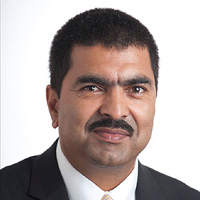
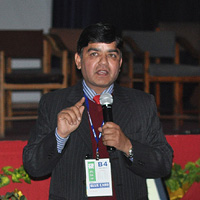
Along with my fellow editors for February, I am honored to greet our Choutari audience with the first issue on behalf of the expanded team of editors (added a new member again this month–see his bio below). When it comes to professional networking and contributing to a network, bigger is better! Let me start by saying that I am excited because I believe that our big new team will serve you even better ELT khurak in the days to come. Thank you for being here!
As you may have noticed, the quality of materials that we have been publishing has (naturally) varied, and this is because we have not yet implemented a rigorous enough peer-review mechanism. To be realistic, we won’t implement anything like what conventional journals do–and indeed, we don’t want to. A blogzine needs to remain flexible, as well as doable within the limits of the monthly cycles and our volunteer work. However, starting this month, we will be implementing some wonderful new ideas. And we need your support as writers and mentors (if you are able to the give a little time to help the Nepalese ELT community).
Just to give you a sense about what happens in Choutari before the sun rises every beginning of the month, both the editors and the respective authors generally engage in a conversation for reviewing and editing process. More than half of the entries published here required not only substantial feedback and comments but also guidance on proper language pitch and cohesion. The team has been providing such supports to the contributors by connecting them with the team members and the experts beyond the team.
The concept of supporting the emerging writers to bring an impact in the long run was further refined when I joined the team and pitched my idea. To put it in another way, behind the monthly issues of the blogzine ‘NeltaChoutari’ is a great community, and that community is characterized by intellectually invigorating discussions, collaborative work for collecting and producing quality materials, and efforts to support and mentor emerging writers in the Nepalese ELT community. It led to the new initiative Choutari Mentorship Project (CMP), which I would like to formally announce through this editorial. The links to mentor and mentee survey forms are provided at the footnote section of this blog post. Thank you in advance for your response.
The CMP is an attempt to make the process of mentoring more organized, more broad-based, and more productive. From our own experience, we editors have realised that the concept is very powerful and could help support the larger audience toward improving their writing skills (specifically) and engagement in professional conversation through networking (more generally). The project is also an attempt to make visible what goes behind among a friendly and informal group of active and productive scholars. We are directed by a strong belief that having a mentor tremendously increases possibilities of ‘growing’ as a successful writer. Thus, we are developing a simple mechanism for tapping into the expertise and encouragement of a more experienced colleague for anyone who wants to contribute to Choutari.
Going through the process mentioned above, I along with my fellow editors for February have come up with a variety of good materials for this month. In the light of her own personal upbringing as a female in Nepalese society and then in the academia, Sweta Baniya discusses the social constructions of gender and gender roles. In her post, titled “Gender through Socio-behavioural and Academic Perspective,” she presents gender identity through social and intellectual lenses. She also appeals the audience to share their views and thoughts about gender and gender role particularly in the context of ELT and their professions in general.
In the second entry, Using Corpora in English Language Teaching, Hima Rawal argues that using corpora could be one of the most efficient ways to teach language. Inviting English language teachers, textbook writers and researchers to use corpora to add value to their works, she presents some of the most prevalent corpora in the field of ELT, briefly discussing how to use them in the ELT classroom.
Based on the personal experience, the third entry (Storytelling for Learning Language with Fun) by our colleague Santona Neupane argues that we should tap into the power of storytelling to improve and develop language skills and creative thinking while making lessons fun and engaging for our students.
The fourth blog entry contributed by Pramod Kumar Sah is a continuity and response to highly thought-provoking ideas presented by Prem Phyak, Bal Krishna Sharma and Shyam Sharma in the post titled Shifting Focus: Building ELT Practices and Scholarship from the Ground Up written last month. The entry had presented a broad and powerful proposal for reinvention of Nepalese ELT from the ground up. Shah’s entry takes their ideas one step further by situating them in the context of classroom, textbooks, and such other specifics of ELT practice in Nepal today.
The fifth entry titled Five Books That ‘Changed’ My Life is our Choutari colleague Umes Shrestha’s unique initiative for Choutari to offer the audience not only a list of inspirational books but also how they contributed in changing someone’s life. For the same, Hem Raj Kafle shares with the readers how the five books that he read have shaped his writing and added value to his life and career. It is an insightful account of his personal journey growing as a scholar, a writer, and a critical thinker.
In the final entry, An Access Teacher’s Reflection on ELT Training, Mandira Adhikari, a teacher from Microscholarship English Access project implemented by NELTA in partnership with the US Department of State/US Embassy Kathmandu reflects on a two-day training and how the series of training sessions delivered have been effective for her classroom.
As usual, here is the full list of ELT khuraks for the month of February:
We invite you to join the conversation again by sharing your responses as comments under any posts, by liking and sharing them with your network, by contributing your own posts for future issues, and by encouraging other colleagues to do the same.
Uttam Gaulee
Editor
– – – – – –
If you’d like to be a part of the Choutari Mentoring Project, please take the survey(s) below.
Mentors: If you would like to help out other writers, please share a few things about that interest through this survey.
Writers: If you’d like to be connected to experienced mentors for improving your blog posts for Choutari, please let us know a few things throughthis survey.
In this blog entry, I attempt to present my experience of gender from two different points of view in my life: one through social and behavioral norms while growing up as a girl in my family and society, and another through academic and professional perspectives while learning complex intellectual issues about gender in the university. At the end of the post, I ask readers to share their thoughts about gender and gender role in the context of their profession.
My mother still recalls the discouraging reaction of my family when she gave the birth to me, a daughter, as her first child, at Patan Hospital in Lalitpur one chilly morning in February 1988. She felt bad because everyone including her had expected a son. A few years later, she was, however, compensated by the arrival of my brother in the family. But that did not change the dynamics of how a daughter and son were viewed and treated in the family and society at large. Two different boxes, one for a daughter and another for a son, were created at the time our birth. My being was regarded as a daughter and my brother as a son, and everything in life and society seemed to be determined within these boxes.
The first time I realised myself as feminine was when I received the toys different from my brother’s. My brother was given cars and guns while I received teapot set. I played with it pouring hot tea and serving to him; that was my favorite game. I never knew the game I used to play during my childhood would turn out to be my stereotypical gender role today.
My mother always used to say “Chori manche bhaneko mato ko bhada ho ra chora manche bhaneko tama ko bhada” (Girls are clay pots and boys are copper pots). The binary comparison of daughters as ‘fragile’ ceramic products and sons as ‘strong’ metal ones governed my life and sensitized me about morality. As a girl, it was of utmost importance that I become a good woman without any stains in my character. So, from childhood, I internalized gender primarily in terms of how important character and morality was for a person of a particular gender.
However, when I entered academia and pursued gender studies, my viewpoint for gender which I learned through social and behavioural norms since my childhood got a radical change. When I stumbled into feminism for the first time, I turned into a rebel. I think I acted like a radical feminist until I came across the study of masculinity, which changed my stance again.
My mother’s quotation about ceramic pots and girls still deeply influences how I conceptualize and experience my own gender and gender roles in general. But beyond the personal experience, when thinking about gender in the world of the academia, my intellectual comprehension about the specific gender roles, ideas and ideologies of gender all become very complex and dynamic. The definition of Gender, the understanding of it and reaction to it have undergone a constant change. I have started rethinking what shapes one’s understanding of gender in terms of personal experience and as well as when one is academically sound, how difficult it is for one to comprehend the issue of gender after having different outlook for it breaking away the stereotypical boundary.
Reading the academic discourse makes me look for a middle ground between the rather discriminatory treatment of girls/women in traditional societies and the more complex academic discourse of gender. Indeed, even in the definition of gender by the World Health Organization, “The word gender is used to describe the characteristics, roles and responsibilities of women and men, boys and girls that are socially constructed.” The definition is elaborated as “Gender is related to how we are perceived and expected to think and act as women and men because of the way society is organized, not because of our biological differences.” Of course, the binary opposition that has been the part of society for ages has its roots very deep and this middle-ground understanding of gender and gender roles in the world. However, it seems necessary to also look at more complex dynamics of gender even in our own society.
If I ask question of gender to a hardcore science student like my brother, he has nothing to answer. But on the other hand, the liberality that is given by social science and the enrichment of my capacity has made me able to think in other, very different ways as well. So, I realize that thinking about gender through academic and theoretical lenses can help us develop a balanced and complex view of gender.
Academic studies of Feminism made me think about the role of women in and beyond my community. In the first stage, Feminism made me think of how marginalize my female community was or how marginalized I was. My birth was firstly gendered as it made many people sad. Secondly the teapot given to me as a toy was my marginalization of my own qualities. Peter Berry in his book “Beginning Theory” defines Feminist Criticism as “the movement was in important ways, literary from the start, in the sense that it realized the significance of the images of women promulgated by literature, and saw it as vital to combat them and question their authority and their coherence” (116). The question the then female feminist critics started with was in academic or in the literary sense; it later went to the personal domains.
The introduction of the book, Feminisms says, “Feminist theory is also traditionally characterized by its interdisciplinary –its transgression of the usual subject divides (e.g. literary, historical, philosophical, psychological, anthropological and sociological). A lot of countries including Nepal took the way of transgression. But transgression without an in-depth understanding of the state of female or even feminism is worthless. There were movements and happenings in Nepal and I can interpret those events I could interpret through feminism, for instance, through the issue or property or the issue of citizenship. However, the recent “Occupy Baluwatar” movement that was led by some group of people gave me epiphany again. Those who don’t even know about the rights of female, those who have not understand the sociological, psychological burden of being a female in a country like Nepal were demanding rights for women. That made me think how Feminism could also be turned into a political football for anyone to play their own game. It certainly raised many issues, including the issues of hypocrisy and publicity campaign.
The second stage, when I started learning about the limitations and complexities in Feminist theories, was even more fascinating. I now started asking: Does Feminism speak about both genders? Is the discourse of Masculinity necessary? After I started exploring questions like this, I did not completely agree with many feminist scholars, as feminism seems to have its own limits as well. In particular, many feminists blamed the social structure and the opposite sex only and rigorously fought for the representation. But the blame-game never became fruitful. The emergence of Masculinity ideology was also purported by the Feminist ideology. As females went on to vie for their rights, males also felt it necessary to maintain their own space.
And thus a space for masculinity emerged out of crisis, as Debby Phillips quotes Kimmel, who said that
These crises usually involve radical questioning of the meaning of masculinity, and they occur during periods of significant ideological, economic, and social tensions. It is during periods of upheaval and changes in social values that “old definitions [of masculinity] no longer work, and new definitions are yet to be firmly established” (405).
Certainly, masculinity needs a redefinition, as scholars of gender suggest. In fact, both Feminism and Masculinity need to undergo timely redefinitions. If academia is to shape one’s perception towards gender, these two domains need to move side by side and the redefinitions must be accepted.
These academic and/or public discourses certainly help us to understand more about gender, but what about personal life, socio-cultural life that first shapes one’s mind? Doesn’t academia and personal life come in contrast while one discourses about the gender keeping knowledge and experience side by side? I think that both academia and personal life shapes one’s comprehension of gender.
The concept of gender depends upon many things, including one’s upbringing, one’s culture, society, and one’s academic study and professional experience. As scholars, we should allow the broader and more complex perspectives and issues about gender to shape our understanding of gender. We should allow different perspectives, as well as our personal and professional experiences, to take us into various levels of thoughts, to inquire and seek the best understanding for ourselves. Through this blog entry, I wanted to share my thought that there is much to be gained if we try to understand gender by viewing our personal space through academic lenses.
As a practitioner of English Language Teaching, what are the issues of gender that you find worth discussing? What are the obstacles for female colleagues in our society and our time? Are there limitations for men as well? How can we address the challenges while cultivating realistic and complex views about gender and gender roles in our professions? I would love to hear the views of Choutari readers.
References
Barry, P. (2010) Beginning Theory. New Delhi. Viva Books Pvt. Ltd. Phillips, D.A. (2006) Masculinity, Male Development, Gender and Identity: Modern and Postmodern meanings. USA: Seattle University.
————————————————————————————
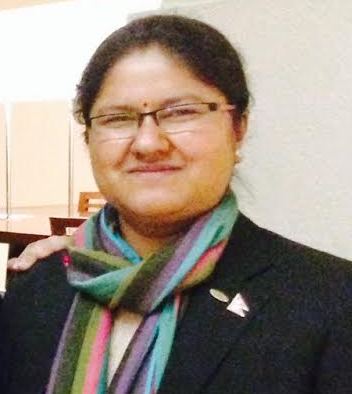
Sweta Baniya works as a Communication Associate at UN Habitat and is a student of MPHIL, Baniya’s interest lies in writing and expressing herself in words when something touches her deeply or hurts her so much. She also runs her personal blog – www.swetabaniya.wordpress.com
English language teachers throughout the world are always in search of a theory or method of language teaching that helps them resolve all the language teaching problems they face. However, there has never been such a method which can do so because of the varied nature of language teaching situations, unavailability of resources, issues about the relevance and applicability of a method in all contexts. Experts in the ELT field try to come up with some tools that can enhance language teaching to some extent. Corpus based language teaching is one of those convenient ways language teachers have been using because this presents an opportunity to teach authentic and contextualized language usage as a readymade tool. In this post, I present a brief introduction to some of the most prevalent corpora in the field of ELT.
Corpus is a collection of natural data from several different fields from which we can draw the materials for teaching, conducting research and so on. It is “a large, principled collection of naturally occurring texts (written or spoken) stored electronically” Reppen (2010, p. 2). Naturally occurring text means language from “actual language situations, such as friends chatting, meeting, letters, classroom assignments, and books, rather than from surveys, questionnaires, or just made-up language’ (p. 2). It includes both qualitative and quantitative data to draw from.
The most widely used corpus is COCA (Corpus of Contemporary American English). It is an online and searchable corpus consisting of 450+ million American English words and is arranged by different fields and registers. We can search the words from different disciplines, compare words, and find out collocations. The words can be searched in terms of time frame, frequency, relevance, alphabetic order and so on. It can be accessed through this link click and also click here.
Let’s look at some of the examples of how we could use COCA. Once we enter the site, we can see four options of display>>list>>chart>> KWIC (Key Work in Context), and>> compare.
If we choose the list option, type the word we are looking for (e.g. proficiency) and it will show us all the contexts in which the word has been found. The contexts will be exhibited from five different sections: spoken, magazine, fiction, newspaper, and academic language. Since the corpus will show thousands of examples of the word in all the contexts in which it appears, we can limit our search by selecting a specific time frame or a specific area, for example, how the word has been used in the academic field between 2005 and 2009. We can also find out the word with which it collocates the most by finding the words that mostly precede and/or follow it.
If we choose the option ‘compare’ and type two words that we want to compare (e.g. proficiency and achievement), the corpus will exhibit both the words appearing in different contexts from which we can draw a conclusion. Likewise, if we search a word (e. g. validity) through KWIC, we can see the contexts in which it appears (e.g. construct validity, discriminant validity, face validity, predictive validity, convergent validity, concurrent validity, diagnostic validity, consequential validity and so on). These combinations will appear in and/or across sentences.
Including corpus data in textbooks is relatively a new concept; however, we are familiar with the concept in the form of corpus-based ESL and EFL dictionaries like Cambridge Dictionary of American English, Longman’s Dictionary of Contemporary English, Cambridge Academic Content Dictionary, etc. Examples of corpus based textbooks are Basic Vocabulary in Use by McCarthy and O’Dell (2010) and Touchstone by McCarthy, McCarten and Sandiford (2004). Basically, corpora provide ready resources for teachers. They are natural and authentic. They can be used for language learning, teaching and testing purposes. They can also be used for research purposes. Language textbook writers can use the data from corpora to include the teaching materials in the textbooks.
The word lists from the corpora can serve different functions: finding words in terms of frequency; finding content vs function words; finding related word forms (abandoned, abandonment); examining the role of prefixes and suffixes, finding the collocation of words (Reppen, 2010, p. 8) and so on. Some words can have different grammatical roles. The corpora provide us with information about those grammatical roles, the parts of speech and grammatical categories of the words as well. We can also find KWIC (key word in context) through which we get the information about the context in which a particular word is used.
One of the widely used applications of a corpus is to teach academic vocabulary to learners of English as a second or a foreign language. The learners in a particular field need to be familiar with the highly frequent academic words in their field. Teachers can use corpus such as Coxhead’s (2000) Academic Word List (AWL). It is a compilation of academic words consisting of 3.3 million words representing 570 word families from different genres. Within this corpus, we can search through different subcorpora since the collection is from different academic disciplines. By doing so, one can find out the most frequent academic words used in a particular genre and teach them to the learners to equip them to raise their level of comprehension and production in the respective genre. For example, one of the most frequent academic words found in the list is ‘analyse’ and this word appears along with all the related words such as “analysed, analyser, analysers, analyses, analyzing, analysis, analyst, analysts, analytic, analytical, analytically, analyzed.”
However, the problem with AWL is that it just provides the list of frequent words in an academic field and not the context in which they appear. Similarly, it is self-evident that learning a language also includes formulaic expressions to a great extent. On the basis of corpus research, Martinez and Schmitt (2012) have produced a PHRASal Expressions List (PHRASE List), which consists of 505 most frequently used phrasal expressions functioning as formulaic language. If teachers could select from and teach the expressions in the list, it can help English language learners comprehend naturally occurring conversations and texts.
Another very useful corpus site is Michigan Corpus Linguistics which links the users to different corpora and can be accessed through www.elicorpora.info. Two of the valuable corpus sites it links the users to are MICASE (Michigan Corpus of Academic Spoken English) and MICUSP (Michigan Corpus of Upper Level Student Papers). MICASE is a free and searchable corpus site which is very helpful for teaching and carrying out research on academic spoken language. MICUSP is a site where we can find papers from different disciplines. We can search the papers focusing on different genres, different types of writing (e.g. argumentative, creative writing, critique/evaluation, proposal, reports, research paper, response paper) or even different parts of writing (e.g. abstract, introduction, literature review, methodology, conclusion, citation, etc). Along with these two sites, Michigan Corpus Linguistics also includes a corpus of conference presentations.
Similarly, Time Corpus (corpus.byu.edu/time/) is another useful site which is the online corpus of Time Magazine and helps us see how language changes over time. There are three other very useful and user-friendly corpus based concordancing programs: AntConc, MonoConc, and Wordsmith. These programs help us find word frequency lists, concordances, key words and so on. AntConc(www.antlab.sci.waseda.ac.jp/software.html) and Wordsmith (www.lexically.net/wordsmith/) are free programs while MonoConc (www.athelstan.com/mono.html) is an affordable one.
The use from the websites in most of the corpora is free. The teachers can use them for: selecting and teaching academic words frequently found in authentic use in both written and spoken modes; using the contexts to help learners induce the real application of the English language. Corpora like MICUSP also enhance teacher professional development by providing teachers with the collection of conference presentation samples and valuable guidelines to develop different forms of writing. The data in the corpus can be utilized in devising research tools as well. Therefore, I suggest that English language teachers, textbook writers and researchers use some of these corpus sites, play with them and invest some time to see what small changes can be brought.
References
Coxhead, A. (2000). A new academic word list. TESOL Quarterly, 34, 213-238. Martinez, R. and Schmitt, N. (2012). A phrasal expressions list. Applied Linguistics, 33(3), 299-320. Reppen, R. (2010). Using corpora in the language classroom. Cambridge: CUP.
————————————————————————————
Hima Rawal is currently a Fulbright Scholar doing her masters in TESOL at Michigan State University, Michigan, USA. She is a lecturer at the Department of English Education, Central Campus, T.U. She is a life member of NELTA and editor of the Journal of NELTA.
As teachers, we often ask ourselves, “How can we develop creative thinking of our students? How can we ensure that our lessons are fun making and useful for them?” We, the teachers today always seek to find new ways to help the learners unleash their creativity. In this post, I share with you some thoughts about how we can use storytelling to help our students learn language in effective and enjoyable ways.
When I was a young, my sister used to fascinate me and the rest of the family because she had a very captivating way of unfolding events that kept the audience glued to their seats. I remember getting so engrossed in the story that I fell off the stool. Stories, and creative and effective expression still fascinate me, because stories not only made my childhood fun but they also greatly enhanced my language development. As the old Nepali saying goes, those who can tell good stories are worth adorning with garlands of flowers and . Hearing a story is heartwarming and a storyteller can make the world come alive for the listener. The power of storytelling is attested by sayings like this in many cultures. And as language teachers, we all know that power. When telling stories, speakers develop language skills, as well as build confidence for communicating their ideas.
Storytelling in the Context of Teaching/Learning Language
In the context of learning language, storytelling allows learners to learn and express new ideas, use new vocabulary and grammatical structures, and put such language skills to use within the broader context of events and ideas in the story. Storytelling gives learners the opportunity to use language in a holistic way.
Highlighting how the use of story in language classroom is a powerful tool in the language learning process, Jones (2012) argues that “Once learners get into conversational storytelling, it is an enjoyable experience for both them and the teacher.” There’s no doubt that stories can be fun and also there is more to storytelling than it meets the eye. One has to ensure successful learning of language as well. According to Morgan & Rinvoulcri (2003), successful second language learning is “far more a matter of unconscious acquisition than of conscious, systematic study.” The stories could be such method of unconscious input that can ensure creative output. Stories unconsciously draw a learner towards them. “They capture and hold the imagination of learners; they create empathy as children identify with characters and situations in the stories; they present language in authentic contexts, thus promoting both grammatical and vocabulary development; they facilitate acquisition through multiple repetition (both of the language in the story, and as the story is told over and again)” (Maley, 2008, p. 4).
Hence, storytelling can be a powerful tool for teaching language. Stories also help students to be expressive, imaginative and capable of using language naturally in real context. Telling stories is a natural way of engaging students to communicate complex ideas. Stories when used in classroom help students practice communication and expression. If we as a teacher can help students love stories, we will pave way for them to be extensive readers in the future.
It is worth noting at this point that storytelling is more than just reading aloud. Actually it is NOT reading out loud. When a story is told live, the teller can engage listeners and can create an intimate bond through his/her voice and eye contact. Another obvious benefit of storytelling over reading aloud is improvisation through the use of mimes, gestures and body language.
What Type of Stories?
It is not enough for us as a language teacher to go to a class with any story. If you plan to tell a story to a class full of eager minds, there are two questions to consider first.
Is this the story I enjoy telling?
Is this the story my students would find entertaining or thought provoking?
The stories that you choose to present in the class should touch you and your students should be able to relate to it the way you relate to it. Your reaction to the story and your enthusiasm can really ignite a desire in your students to be better recipient and eager participants. Choosing a good story is a crucial part of storytelling. Don’t tell a story just for the sake of storytelling. Let the story be a part of you. Know your students well and choose a story that might easily be their story.
For my English lesson, one day, I chose a fairly easy story about a tortoise, having a bad day, decides to run away from home. I planned my lesson around it and decided to use this story in two different levels: one primary and another secondary. I chose grade 5 in the primary level and grade 10 in the secondary level. I told the same story to the classes, improvising and detailing the story as per their level. After an initial round of storytelling, I got the students talking about their feelings. I asked them if they could relate to the character and if they have ever in their life felt like running away. All the students responded with “Yes”. When I asked them to write down a similar story, I saw them eagerly opening their notebooks and writing energetically. In the story, the main character returns home after learning the value of his family and friends. The story not only helped them in their language learning process, it also helped them to meditate on their lives by relating themselves to.
Stories are everywhere; in fact stories are our way of life. “Stories are central to what it means to be human. The human mind seems to be hardwired for the creation and reception of narratives. It is even true to say that we are the stories that make us up: stories we have heard, we have told, we enact daily” (Maley, 2008, p.4). There are lots of sources of story. We can choose our stories from fairy tales, traditional folklores, culture, proverbs, pictures, newspaper clippings, films, personal anecdotes, rumors, imagination etc.
Who can Benefit?
As a teacher of language, I have found storytelling very helpful. However we should not just limit its use in language classroom. Stories can be used in a math, science and social studies classes as well. Stories are not limited to kindergarten only but can be useful for secondary classes as well. Stories can be told to any level of learner. Beginners can benefit through it and it will aid their literacy and language learning. Even advanced learners are benefited through storytelling; they can refine their already learnt language skills and polish their ideas. Stories give them opportunity to be creative with what they have already learnt.
Classroom Activities
Storytelling is an effective alternative to traditional language teaching activities. There are a lot of ways through which we can use storytelling in our classroom. As stated by Morgan & Rinvoulcri (2003), storytelling activities range from introspective to interactive, beginner to advance, written to oral, individual to group. Stories can be planned and delivered in such a way that it achieves its objectives. If our objective is to help students with grammar, then we can choose a story with recursive pattern of words and phrases. Our telling can give them exposure to the target language. Apart from grammar, we can focus on vocabulary, intonations and phonetics to help them acquire English language easily and successfully.
Choosing a good story is a crucial part of storytelling. The main part is storytelling itself. Your relation and attitude towards the story matters a lot. Once the story has been delivered you need to plan various activities to help the students contemplate the impact. Group discussion based on various probing question can help the students relate to the story. You can prepare the questions beforehand and have the students talk about it with each other. The questions can range from their reaction to various elements or aspect of the story. If your students are advanced learner you can have them discuss the literary aspect of the story. Have the students paraphrase the story individually and they can even write a reflection on it. Another activity would be to write a similar story on a totally new context.
Dramatizing the story is another method of exploiting stories. Either you dramatize the storytelling itself or have your students retell it in a form of drama. Role playing and role taking helps the students with revision and in doing so they get familiarized with the grammatical, semantic, structural aspect thus unconsciously learning language. Retelling a story is fun and enjoyable. Getting the students to narrate their story in the class often creates a receptive environment in the classroom where more than one student will be willing to share similar experience. Tannen (1984) has stated that one person’s narrative may often be taken up by one or more of the listeners who will add similar narratives of their own to create what she refers to as a “story chain”.
Apart from storytelling, creating similar stories through parallel writing helps them a lot. Get the students create a story with the help of theme words either individually or in a group. Instead of the teacher telling the story, students can also do the telling. This will help in a successful two way communication in a language classroom while giving an opportunity to the teacher to evaluate the learner.
Using pictures and shapes, together the teachers and students can create a new story to tell. Sometimes we can tell an incomplete story and have the students complete it and tell it. Taking an event from a newspaper clipping and telling it in a form of story can also help the students.
Conclusion
Storytelling, which is an integral part of human life, can be vital in language teaching. Basing the language lessons on stories have creative impact on the students. If we cultivate a love of stories in our students through storytelling, we can help them learn without giving them the monotonous drill and bland role play. Stories add a humanistic element in teaching making it quite effective. Various classroom activities based on stories not just make your lesson comprehensible and useful, it also adds fun to your teaching.
References
Jones, R. (2012). Creating a storytelling classroom for a storytelling world. English Teaching Forum, 2-9.
Maley, A. (n.d.). From story literacy to reading literacy. Literacy in the language classroom, 4-7.
Morgan, J. & Rinvoulcri, M. (2004). Once upon a time: Using stories in language classroom. Cambridge: CUP.
Tannen, D. (1984). Conversational Style: Analyzing talk among friends. Norwood, NJ: Ablex.
Wright, A. (n.d.). Creating stories. Literacy in the language classroom, 23-34.
————————————————————————————
Santona Neupane is a scholar pursuing her M. Ed. in ELT at Kathmandu University, School of Education. She is an English teacher in a private school in Kathmandu. She has recently joined the editorial team of Choutari.
In countries where English is used as a second or a foreign language, teachers have already started grounding their ELT practices on their locally available resources as well as locally viable methods and approaches of teaching English as a lingua franca language. In Nepal, where English is used as a foreign language, it is evidently urgent that we develop our own ELT practices. In a post written last month’s issue In their highly thought-provoking essay, “Shifting Focus: Building ELT Practices and Scholarship from the Ground Up” Prem Phyak, Bal Krishna Sharma and Shyam Sharma have presented a broad and powerful proposal for a reinvention of Nepalese ELT from the ground up. This blog entry takes Phyak, Sharma, and Sharma’s ideas one step further by situating them in the context of classroom, textbooks, and such other specifics of ELT practice in Nepal today.
Methodology: Prescription or Formation?
Allow me to first briefly describe my stance on ELT/EFL/ TESOL methodology in Nepalese context today. As Phyak, Sharma and Sharma have indicated in their recent article, I strongly believe that there is an urgent need of realizing own potential in language teaching, rather than seeking for solutions to the different classroom problems from in the ideas and experiences from contexts unlike our own. In this post, I intend to add that the “formation” of ELT methods and resources from the ground up may never happen unless our teachers, as the ultimate practitioners, do not see how they can practically do so. I would like to add some more specifics ways to achieve the goal to the many concrete examples and practical suggestions that the authors have provided in their post.
Since the advent of language learning as an academic discipline, there have been gradual shifts in language teaching methodology from Grammar Translation, to Audiolingualism, and those applied in more recent and well known Communicative Language Teaching. However, ELT practitioners have put forward an array of opinions, arguments and concerns over the issue that which of the suggested methodologies works best in language teaching. But, a variety of factors, such as official language policies, the role of L2 in a distinct speech community, learners’ need and their linguistic background, cultural and economical state of the institutions, teachers’ background, students’ previous linguistic competence, etc. affect the selection of methodology – this is why a single methodology was not effective enough to quench the thirst of language learning of all the time and circumstances.
For me, the most relevant experience is that a method should no longer be a prescription made from a linguist; rather it should be a pattern of activities made by a distinct language teacher accounting for his/her classroom scenario. Moreover, all the methods are best for their corresponding situations, as Prabhu (1990, p.161) states ‘…..different methods are best for different teaching contexts; that all methods are partially true or valid; and that the notion of good and bad methods is itself misguided’. In the meantime, it is very significant for a language teacher to remain aware of scientific principles of language learning or acquisition, they are more importantly free to make their own personal methodology based on their distinct context, which Prabhu (1990) calls as teachers’ ‘sense of plausibility’. It is also worth suggesting that a language teacher needs to choose various activities or techniques from a certain method, not because of the faith in the underlying method but because that is suitable in their own unique contexts.
Thus, I assume, it’s high time we should start framing our own method that can best fit in our unique classroom rather than following sets of prescriptions.
Need of Teachers’ Authority for Syllabus Design
The reason I focus on teacher-driven syllabus is again based on so-called ‘teacher sense of plausibility’. I have been motivated to develop my own personal teaching methodology for my unique class, that requires me to set my own syllabus rather than following syllabus set somewhere else. Put it other way, considering learners’ need, cultural background, age group, etc., teaches should be authorized to frame his syllabus against marketed textbooks. Furthermore, prescription of a methodology, syllabus, course, materials, activities, techniques, and an assessment procedure does not support the views, such as every class is unique. The teachers should be authorized to make decision on aforementioned aspects of teaching.
A Dark Practice and Ways out
There are a few dark practices in Nepalese ELT that seem to be in high need of evolution, out of which Teaching a subject vs. language skills is one.
Teaching English is merely a subject to pass in the examination in our concern, rather than developing our students’ language skills. It might be my overgeneralization but this as a consequence of my teaching experience and observation in some leading educational establishments in Nepal. We rely on ‘a’ textbook and we teach them page-by-page and finally, test them if they have comprehended what mentioned in the textbook. But, in fact it works for no good. Using textbooks is necessary, but what seems irrelevant is just to interpret what are printed on textbook pages. The situation not only exists in school teaching but has been the same in university level; for example, the General English for B. Ed. under Tribhuvan University has recommended three textbooks; (a) New Generation in English, that is a collection of exciting and helpful reading texts including some literary pieces written in Nepali contexts- but, what we do is to render the meaning of the texts in Nepali with near comprehension (that helps for nothing) rather than getting out students to read them extensively to develop reading skills and intensively to do the tasks set; (b) Exploring Grammar in context, indeed a good textbook that is based on Hallidayan approach and contains grammar for written and spoken discourse – in this concern as well, we just try to teach them rules of grammar, practice only the exercises and prepare them for examination instead of having them explore meaning of the grammatical items for natural communication; and (c) Academic vocabulary, at this point, we just teach them the meaning of words in isolation and the students hardly keep those in their head – the best thing we can do is to teach them ‘lexical chunks’ in contexts with the help of ‘corpus’ grounding our teaching on Michel Lewis ‘Lexical Approach’, so the students will be able to make use of those vocabulary in their real academic writing. Additionally, this gap is the consequence of our examination system, especially question pattern that contains questions from the textbook exercises itself without a word alteration, normally. The textbooks are to be used as reference, rather than a subject to have students’ mastery over. Teaching English means teaching language skills that help students expose themselves in English speech community. Moreover, as Phyak, Sharma and Sharma show, there is an urgent need to realize our own potential and bring our local resources to support our students develop their language skills rather than grounding our teaching on mere textbooks.
Making Our Own Ground
Firstly, as Phyak, Sharma and Sharma emphasize, our focus has to be on practice instead of discussing the problems; teaches should build confidence in themselves and use approaches and resources that are readily available to them.
Secondly, where there are potential teachers equipped with the knowledge of different paradigms in our society, we should no longer be reading literature and theory developed in different contexts somewhere else in the world with an aim of implementing those theories and methods in our classrooms—even though ideas from anywhere are good for expanding our knowledge. Instead, we must frame a plot of our own stories, to shape our own educational future.
Thirdly, to develop and implement any approaches, methods, and syllabus, we need to figure out what we can do even within the material and technological limitations in our classroom. Thus, instead of being demotivated, we can attempt to let the things go with what available to us in a best way. In Phyak, Sharma and Sharma’s words, we have to shift our belief from what we do not have to what we can do well and with what we do have.
Conclusion
To say in a nutshell, since English is no longer the only language of English, we have freedom to teach and learn it in ways that fit our needs and interests, and it is high time we stopped searching for methods originated in some other situations. It is time that we explore and understand our own teaching scenarios in order to form whatever methods and whatever blends of methods we find good for us. For this to happen, it is necessary to authorize our teachers and allow them to develop their own syllabi and their own materials, however impossible or difficult it may seem at first. Without more independence for our teachers, it may never be easier for teachers to teach language skills, instead of textbooks. And if we are to move beyond complaining about what we do not have and what we cannot do, we must start using readily available resources as well as use available opportunities for teaching language as it is used in life and work, instead of just whatever the textbooks includes.
————————————————————————————
Pramod Kumar Sah is an M. Ed. in English from Tribhuvan University, Nepal. He is currently pursuing his MA in TESOL with Applied Linguistics at University of Central Lancashire, UK.
‘Change’ is not my word in the title above, but I agree to use it. Do books change our lives? Someone said it is the reader who has the potential to change; the book only triggers that potential. And one who does not have that potential does not respond to the trigger. I agree to this, too.
But I am not here to present a thorough appreciation of ‘five classics’. Not that I avoid reading classics, but I am willing to write about those books that have told me their actual worth. Each of the five books came to me almost ‘out of nowhere’ and left a lasting message. Not that any of them should ever satisfy your intellectual need if you someday decide to read. I write here simply because I have deemed them contributory to my own growth as a teacher. An English teacher.
I was delighted when the Choutari Team asked me to write on five books that ‘changed’ my life. I decided to speak up: I have already read a book with the same title and loved it so much. It is The Book That Changed My Life (2006) by Roxanne J Coady and Joy Johannessen. A book about books, and about how books change one’s life – I had loved this idea long ago. The Book indeed was a reward, such as Coady herself would like to regard as a gift “from heaven”.
I bought it in the summer of 2008 at Books and Books, Coral Gables, Florida, only as a memento of my US visit. And, because it was a casual pick, my interest in it turned into epiphany as I read through the short essays inside. This was an opportunity to peek into seventy one writers’ celebration of “the books that matter most to them.” These seventy one people gave credit to certain books and their writers as their life’s important change agents. So, the writers’ appreciation of their favourites helped confirm that none of my previous and recent cravings for ‘good books’ were without meaning. Anyone, even you, will subscribe to Coady’s prefatory justification for publishing this book, so will I.
Reading is a way to live more lives, to experience more worlds, to meet people we care about and want to know more about, to understand others and develop a compassion for what they confront and endure. It is a way to learn how to knit or build a house or solve an equation, a way to be moved to laughter and wonder and to learn how to live.
One book that has made great sense to me as a teacher of English is The Elements of Style, the tiny work of William Strunk Jr. and E. B White. You may wonder why such commonplace as ‘elements of style’ would strike anyone who boasts of degrees in English and years of teaching in a reputed University’s central department. But I realized, after having gone through the authors’ terse admonitions against verbosity and carelessness, that degrees and years of teaching do not make one a writer and a teacher of effective communication. The actual prerequisite of being a writer is not only the mastery in grammar and vocabulary, but craftsmanship in stylistic and rhetorical choices.
The Elements offers an extremely concise treatment on style. I have nurtured the following assertion more than anything in life and, of course, for writing in Nepali as well:
Vigorous writing is concise. A sentence should contain no unnecessary words, a paragraph no unnecessary sentences, for the same reason that a drawing should have no unnecessary lines and a machine no unnecessary parts. This requires not that the writer make all sentences short or avoid all detail and treat subjects only in outline, but that every word tell.
Strunk and White made me aware of the beauty of brevity in writing. Then Writing Tools by Roy Peter Clark, a writing instructor at Poynter Institute, Florida, helped polish this awareness. The “50 essential strategies,” more as rich illustrations of good and bad samples from various established sources than commonplace imperatives, have best corresponded with my zeal for learning rhetorical styles. Clark taught me writing as an artful yet serious activity and knowledge of grammar a means to shape the artistry of expression.
Assuming the role of highly active, playful teacher along the “strategies,” Clark encourages every aspiring and established writer to become an entertainer, a performer. He likes to take writing for carpentry, and then has this to say: “You can borrow a writing tool at any time. And here’s a secret: Unlike hammers, chisels, and rakes, writing tools never have to be returned. They can be cleaned, sharpened, and passed on.”
Clark’s metaphors of gold coins, ladder of abstraction, internal cliffhangers, X-ray reading etc. will surely tickle one’s sense of sufficiency as a writer and editor. Initially, he makes you skeptic about every sentence you write yourself and read from others. As you move on, because Clark will not allow you to drop midway, you become a better writer, better reader, better editor. Clark follows you directly into your profession. He is with me – in lectures, in instructions, in formal presentations – and now as I write these lines.
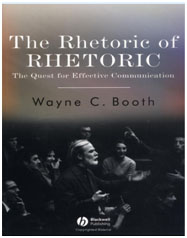
I got Wayne Booth’s famous book The Rhetoric of Rhetoric at a time I was trying to get clear knack on rhetoric in scholarly, philosophical and practical terms. Booth proved a rescuer, and a guide to the fact that rhetoric is a vastly developed academic discipline way beyond its everyday currency as a signifier of a cheap lie or a political bombast.
Booth observes rhetoric’s relevance as much in persuasive communication and study of such communication as in the resolution of conflicts, teaching of science and general upbringing of people. Of special value to me has been his idea of “rhetorology” defined as a “deepest form of listening rhetoric: the systematic probing for ‘common ground’”, which in other words involves a practice of paying attention to opponent views during a conflict situation.
Booth emphasizes that rhetoric is simply the way we think and communicate in the process of creating a better life, and eliminating slippery situations. So, I believe, after Booth, that “the quality of our lives, moment by moment, depends on the quality of our rhetoric.” Isn’t it then even more appropriate to say that the kind of political system and social structure we see/experience “depends on the rhetoric of our leaders and our responses to them”? Booth is equally true in his belief that “our children’s future depends on how they are taught rhetoric.” That is, by us.
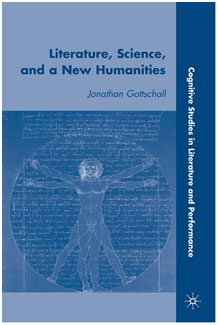
Literature, Science and a New Humanities by Jonathan Gottschall is one of my recent readings. It has made much sense in my decision to work across humanities and other disciplines in Kathmandu University. It has reshaped my understanding of the common tension of where humanities needed proper overhaul.
Gottschall makes readers aware of three main fault lines of the current humanities scholarship. The first includes the excessive use of jargons and “theories of human nature that are defunct.” The second is a methodological problem involving the impossibility of getting tangible evidences unlike in science because the “theory-generated hypotheses” in humanities are not “closer to truth.” The third problem involves attitudinal dilemmas where the dismissal of the “possibility of generating reliable knowledge” is critical among humanities scholars.
Reading Gottschall coincides with two very important contexts of my academic life. The first involves a larger concern of the humanities ‘fraternity’, to which I belong. This is the concern for the visible decline of interest and intake in certain traditional university programmes like geography, history, political science, psychology and philosophy. That some people still desired to study English literature or journalism is nothing of a solace to a career-ambitious young man in that it is gradually subjected to preparing ‘service’ writers or higher-secondary teachers. Personally, working in an institution heavily focused to profession-specific academic programmes in science and engineering, I have always felt the need of reconfiguring my disciplinary orientation to more goal- or job-centric terrains. The second context has to with the recent shift in my disciplinary priorities. I moved from where I liked to work (social sciences) to where I loved to belong and contribute (humanities and sciences). The move has also added a challenge of helping to interface the mutually complementary facets of communication, teaching, management, entrepreneurship, and economics in the promotion of engineering and science education.
I feel now that Gottschall’s book endorses my decision to work across these terrains. It lends adequate confidence in the goal “to establish a new humanities on surer foundations.” The foundations would then take more conciliatory yet “diverse and sophisticated methodological toolkit, and the pursuit of disinterested inquiry.” I have subscribed to Gottschall’s “call to move closer to the sciences in theory, method, and ethos.” I have accepted this mandatory, though difficult, challenge to “participate more fully in revealing the ultimate subject of the humanities: humans.” To this my life is directed with tenacity. To reiterate, I have set conciliatory, empathetic performance in scholarship to be the main motto of my further scholarly priorities.
Finally, books do not respond to the extent of leading to change unless you approach them with love and passion. Love for books comes with birth. This love becomes passion when books become a part of your upbringing. Books shape our thoughts which shape our actions. Thoughtful actions are change agents. A book’s contribution to change lies here. With this belief I seek to read good books, more and more.
————————————————————————————
Hem Raj Kafle is one of the senior editors of NELTA Choutari. He is an Assistant Professor of English at the Humanities and Management Unit, School of Engineering, Kathmandu University. For more of his literary writings and works at his personal blog: http://kaflehem.wordpress.com/
I have attended a number of training sessions on English language teaching facilitated by both national and international trainers. And I have conducted some training sessions myself. Whenever I attend or conduct such sessions, I ask this question about their significance: Will I be able to translate (transfer) the ideas into my classroom? If such session doesn’t seem relevant to my classroom setting, I return with a sad face, thinking that the time, money and resources invested in that session went in vain. However, I returned home with a happy face from a recent training organized by NELTA in Kathmandu on 20th and 21st December, 2013. Access teachers from the different parts of Nepal participated in the two-day English teachers’ training. I found it very effective for my classroom and I learned several new ideas and concepts to implement in my classroom. In this blog entry, I am going to reflect on my experiences.
FIRST DAY
Following the introduction of the participants, the first day of the training began with ‘Gallery Walk’ and concluded with two different sessions ‘Songs in Access Classroom’ and ‘Co-Teaching’.
Gallery Walk
Through a gallery walk, we reflected on our success stories from Access Program being implemented at different district branches of NELTA. I found the activities of the Access Centers unique, fascinating and different from one another.
Let me begin with GorakhaCenter. The teachers had their students engage into convening an educational fair and they learnt that the students could learn different things when they are engaged in organizing such programs. Similarly, they had organized a literacy campaign targeting the illiterate people of their community with a view to raise awareness, motivate, and encourage them to be literate by joining literacy classes.
Kathmandu Centers had done something remarkable. They had taken the Access Students to the US Embassy, Kathmandu, where the participant students observed various equipments operated with the help of solar power. And the painting titled ‘Wall of Hopes’ highlighted violence against women. On the International Human Rights Day, they showed a movie related to human rights. They also made their students participate in ‘English by Radio‘ program, which is aired through radio stations in partnership of NELTA and the US Embassy.
Unlike Gorkha and KathmanduCenters, PokharaCenter had facilitated their students to prepare and perform a ‘Drama’ on the occasion of ‘Thanks Giving Day’. I like the concept of students’ engagement in the drama as it helps them to be confident, creative and to improve their speaking skills.
BirgunjCenter had their own uniqueness, in celebrating ‘Raksha Bandhan’—a popular Hindu festival of the love between brothers and sisters celebrated in Terai, southern part of Nepal and also in many parts of India and Mauritius. In this festival, sisters tie the thread and attractive rakhi (simple, woven and colorful thread or may be intricate with amulets and decoration on top of it) on wrist of their brothers for their long life, welfare and protection. Other remarkable activities in Birgunj —Traffic Week and Ocean Day—impressed me. Students’ engagement in traffic management over a week has not only helped traffic police but also they have learnt traffic rules. Considering busy traffic in Kathmandu and need of traffic knowledge in our students, I wish I could replicate such activity for LalitpurCenter where I am an Access teacher. I think that the celebration of Ocean Day could be adapted in the context of our Access Centers too.
I was fascinated by the special idea of developing reading skills among our students from KanchanpurCenter. They have formed a readers’ group and a book reviewers’ group. We had conducted classes on ‘Book Review’, students, however, have not been confident enough to write the book reviews. I think the idea of forming of groups of readers and reviewers would help me further building on their confidence.
Songs in Access Classroom
Following Gallery Walk Session, Suman Laudari, former Access teacher facilitated a session on ‘Songs in Access Classroom’. Based on his own experience as an Access teacher, he highlighted on the effectiveness of the use of songs for language learning. Songs are the great exposure to our students and using songs is one of the best ways to teach pronunciation with a fun. We can also develop classroom test activities such as gap filling, match the words with their meaning, and put the shuffled stanzas of the song in order. Through this way, language learning can be a fun making for them. On the other side, while using songs in the classroom, some possible challenges such as offensive words and deviated forms were explored in our discussions. However, the learners should be pre informed not to use offensive words and consider deviated forms because they are more often used in songs.
Co-teaching
Access Program has a salient feature of co-teaching at its Centers. As an assessment for such a feature, Ganga Ram Gautam and Miriam Corneli jointly facilitated co-teaching. During the facilitation, they introduced ‘Tree Metaphor’, as a tool for effectively analysing our co-teaching. Using tree metaphor, the assessment and analysis of co-teaching was carried out by participants from different Centers in terms of fruits, shoots, seeds and roots. We found our analysis of co-teaching almost similar. For instance, when I and my co-teacher analyzed our co-teaching classes, the fruits of our co–teaching –making classroom a fun zone, our shoots –utilizing our experience to make our classes effective by discussing with each other, the seeds—about five hours’ discussion to prepare a lesson plan and though we haven’t been successful in executing it yet to and the roots—we both are from education background and quite familiar with different methodologies. We both are co-operative and flexible. As a result, our co-teaching has always been successful.
The co-teachers at Access Centers are co-operative and they have been successful in making their classes effective, applying a variety of teaching methods. Before both the facilitators concluded the session, they provided us the effective model of co-teaching, which further helped us to improve our co-teaching further. Our co-teaching would have been more successful and we would not have faced challenges in managing the roles while implying this concept if the training on ‘co-teaching’ was provided before the Access classes started.
SECOND DAY
The second day of training consisted of four different sessions; ABCD model of lesson planning, public speaking, group discussions and American culture.
ABCD Model of Lesson Planning
Upon the presentations of the lesson plans made by respective Centers, Hemant Raj Dahal, president of NELTA made comments on them. Based on his observation and experience, he shared that most of the teachers usually miss the important parts ‘context’ and ‘expectation’ of our learners while planning their lessons. The discussion became livelier when Access teachers shared their challenges for preparing an effective lesson plan. To address those challenges, facilitator Dahal concluded the session with the introduction and use ABCD model of lesson planning for preparing effective lesson plans.
Public Speaking
The second session ‘Public Speaking’ facilitated by Motikala Subba Dewan was worth effective as it provided us the ideas of public speaking in various contexts. During the session, we were divided into different groups and each group was assigned a topic to prepare a speech. After the group leaders delivered their respective speeches, they were analyzed in terms of both strong areas and the areas to improve. I found the session constructive for not only for speaking in public but also for facilitating students to present their ideas in our regular classroom instruction.
Group Discussions
In the third session, Sara Denne Boltan facilitated us how to conduct group works effectively in our classrooms. She presented to the idea of evaluating the involvement of group members with the help of questionnaire. It can be an effective tool to actively involve all our students in a group work. The handouts and materials provided by her were helpful for our Access classes while organizing group discussions. She also facilitated us with how to play ‘Dice Game’, which can act as an important catalyst to energize our students for developing speaking skills.
U.S. Values and Culture
Besides improving English language skills, Access Program aims to impart the knowledge of the U.S. values and culture to the participant students and sensitize them about cultural differences. The session facilitated by Sara helped us better understand the American culture that students are expected to learn. Her presentation included contextual conversational patterns, different meaning of facial expressions, and notion of leadership, concept of ‘self’ and other different American cultures. She further clarified that Access students are expected to learn visible parts of American culture such as the food Americans eat in different festivals, their language and music.
Acknowledgements:
As an Access teacher, I got this wonderful opportunity to attend the training I have reflected above. For this, I am grateful to ‘English Access Microscholarship Program (Access Program)’ implemented by Nepal English Language Teachers’ Association (NELTA) with sponsorship and support of the U.S. Embassy Kathmandu/the US Department of State.
————————————————————————————
Mandira Adhikari is currently working as a teacher for the Access Program in Lalitpur. She has completed her M.Ed in ELT from Kathmandu University. She is also a life member of NELTA.
It is said that five years is a century in internet time! But this is not always true in every country and context. Due to never-ending political gridlock, our society is not making the type of progress that the discourse of the internet assumes. We have slightly better bandwidth for internet access itself today than we had five years ago; but we don’t have better environments for academic and professional progress today than we did when monarchy was replaced by an interim constitution toward the transition to full democracy.
However–and this is a big however–we are also defined by who we envision we can be, who we strive to be, where we want to reach in another five or ten years. In spite of the hurdles in our social, political, and economic lives, we should do what we can to connect more members of our community, to engage them, and to provide opportunities for professional development. Accordingly, at Choutari, we are trying our best to engage our community in professional discourse here at home and around the world. We believe that if we desire, we can turn our conversations into useful resource for our professional work and our professional development.
Those of us who are running NeltaChoutari are optimistic. We believe that in spite of all the challenges in our society, we can and should give back our best to our profession and community. We want to serve as a bridge between a generation of scholars and teachers who have built our professional community from scratch. We also want to be a vehicle of transformation by creating a venue where the ideas and experiences of our professional colleagues across the country can be shared. We are dedicated to the idea that small acts for helping to transmit knowledge, skills and resources between scholarship and classrooms, trainings and publications, and conversations offline and online can make a huge impact in our field.
Our readers don’t need to be told that blogging is a powerful means of professional development. We believe that Choutari is perhaps the first and the most popular blog in the country; but our mission is to promote blogging and other emerging modes of professional conversations among individuals and groups who are seeking to share their voices. We are also eager to help promote the professional activities–training and conferences, local events and conversations, and other professional updates–across the country. We encourage our colleagues to share any professional updates through Choutari.
Choutari is also a place for mentorship. We do not just accept and reject submissions when our colleagues want to share their ideas through Choutari; we try to provide resources/guidelines (please see “join the conversation” tab), and we try our best to help the writers on a one-to-one basis through a review process as best as we can.
With the expansion of our team, we are truly excited and eager to serve the community even better than we have done so far. But for our efforts to be most fruitful, we need your support through promotion, contribution, and feedback.
Let us start another wonderful year together. Happy New Year, 2014 to all our readers, contributors, and well-wishers!!!
We urge you to join us again by sharing your responses as comments under any posts, by liking and sharing them, by contributing your own posts for future issues, and by encouraging other colleagues to do the same.
We log on to Facebook–or at least many of us do–when we want to find out what member of our social network are doing. But how do we learn about what the most experienced Nepali scholars and emerging professionals in our field at home and abroad are doing? One of the things we’ve always tried to do in Choutari is to invite experienced colleagues to stop by in order to share their stories and tell us about their current engagements. Especially in the special anniversary issues, we also ask veterans of our field–or our “agrajs” as we call them around here–to share their time with us. We believe that even simply listening to their stories of struggle/success and learning what they are currently doing can have tremendous impact on younger members of the community. In this post, we have tried to present golden nuggets from their experience with the help of three simple questions. We are grateful to our guests for stopping by at the Choutari as they went about their very busy work and lives!
Without further ado, then– we present the voices of six personalities:
—
Choutari: What is the current project or responsibility that you are engaged with in the field of ELT? As an ELT scholar, our audience would be inspired to learn about it.
Dr. Jai Raj Awasthi, the Vice Chancellor at the Far-Western University and Former President of NELTA
After teaching English for over thirty-six years at Tribhuvan University (TU), the government of Nepal gave me a responsibility of starting a new university at Mahendranagar … since 2011. As a Vice Chancellor, I had to start everything from a scratch. … For the first time in my life I felt alone and helpless. However, my colleagues from TU helped me out to design new syllabi and we started the ELT courses at the undergraduate level from December 2012 along with other 13 undergraduate courses. For the first time in the history of Nepalese education, we made all our undergraduate programs of four years duration in line with the international parameters. This year we have launched the M Ed TESOL program for the first time in Nepal. While designing the courses, we have kept the international standard in mind. Since we have started a four- year undergraduate and two year graduate courses under the semester system, we have from the inception of the university proved that we can follow the calendar operation and run classes uninterruptedly. Our aim is to go for M Phil leading to Ph D in TESOL soon.
Dr. Anjana Bhattarai, Reader at Tribhuvan University, Nepal
Currently from the year 2070 B.S, Tribhuvan University decided to implement the semester system at the University Campuses. The big challenge for us is the preparation of courses for the new program. Not only me but also all the teachers are busy in rounds of meeting for devising new courses so that the new system will be delivered through two different modes: face-to-face and online. Online delivery will start from 2015 AD but the preparation has already on the way.
Mr. Ganga Ram Gautam, Associate Professor at TU and Former President of NELTA
Besides my regular service at TU, I’m contributing to government established Far-western University and Mid-western University in the year 2011. I feel fortunate that I have been currently involved in developing the ELT/TESOL/EFL curricula of the undergraduate and graduate programs of these two universities. With the support of the colleagues and the experts involved in this field, we have been able to introduce some of the new courses for the first time in Nepal. Such courses include Nepalese English and Nepalese ELT, Critical Discourse Analysis, Bilingualism and Multilingualism, World Englishes, EFL Seminars, etc.
Mr. Laxman Gnawali, Associate Professor at Kathmandu University and Former Senior Vice President of NELTA
I have my hands on several ELT initiatives at the moment but I would like to mention the English grammar series writing project which is in progress. Why I picked this project to share is that the team is working with the principle of the Presentation-Practice-Production (PPP) model in actual sense. When we surveyed the grammar books produced and/or being used in Nepal, we saw that they include only the first two components and fail to continue with the third. If the learners have no opportunity to produce language chunks with the grammatical items they just learnt, the retention is very low, let alone the proper contextualization. The series in progress follows the inductive approach and the PPP model which I believe will not only be meaningful for the learners but also a principled resource for the teachers in the classroom.
Mr. Kashi Raj Pandey, Assistant Professor at KU & Member of NELTA
I am planning to publish a book on creative writing; a collection of my poems and stories that links with the narratives of journey of language learning.
Dr Prithvi N. Shrestha, Lecturer in ELT, Department of Languages, Faculty of Education and Language Studies, The Open University and Chief-Editor, Journal of NELTA
As a Lecturer in English Language Teaching at the Department of Languages, The Open University, UK where I have been working since January 2006, I am currently involved in a number of ELT projects both in the UK and abroad. My projects have two broad strands which include research as well: UK-based and international development. In terms of the UK projects, I chair an English for Academic Purposes (EAP) module which has about 1,400 students. I oversee 42 tutors tutoring on this module. In addition, I supervise two PhD students (one Greek and one Indian). I have just completed a UK Higher Education Academy funded project which investigated formative writing assessment at the Open University. In terms of my international development projects, until recently I worked as an English language specialist for the £50-million project (UKAid funded) called English in Action in Bangladesh for over five years. It involved both designing mobile technology enhanced teacher professional development materials and research on their use. Since November 2012, I have been working as the academic lead for the mother tongue education strand of the Teacher Education through School-based Support project (£15 million, UKAid funded)) in India (TESS-India). I have been working very closely with Indian colleagues to produce open educational resources (OERs) for elementary mother tongue teachers in seven states of India (Assam, Bihar, Karnatak, Madhya Pradesh, Paschhim Bangal, Odisha, and Uttar Pradesh). In addition, I currently lead, as the principal investigator on an IELTS research project funded by the British Council (BC). The project runs in Bangladesh and Nepal, examining the impact of the use of IELTS test in these two countries. Another BC project that I work on is INSPIRE in Bangladesh in which we explore the use of ICT with ELT in government secondary schools.
Choutari: Please consider sharing about any challenges and/or opportunities that you see for ELT in Nepal? It could be about present or future.
Dr. Awasthi:
Teaching of the English language is both a challenge and opportunity in Nepal. We can easily see the increasing craze of the people toward the English language. A recent study reveals the fact that many more people are attracted toward it and they are ready to sacrifice the MLE at the cost of it, though I don’t think it’s a positive sign for the initial literacy years. The challenges we face here are both methods and materials suitable to our children and the teachers who can handle them efficiently to yield the desired results. The studies carried out in the past have shown a very gloomy picture of the achievement in English at all levels of examinations, claiming a big loss of the stakeholders. On the one hand, the status of teaching English in Nepal is changing drastically and heading toward a second language and on the other we are not yet prepared to take this challenge. We have to address different EL related issues in time to facilitate its teaching so that we can minimize the loss.
Dr. Bhattarai: English Language Teaching, a global profession, opens many doors to the opportunities. Take for example, being a translator we can contribute to the exchange of ideas, opinions, views and also earn our livelihoods. Similarly, a lexicographer can contribute to the preparation of bilingual dictionaries for the users of different languages. Most importantly, we are teachers dedicated in producing the new generation that can use English as a second language for multiple purposes. I take it as one of the most challenging fields, for we, teachers, must change the attitudes of our students. We should encourage them to review themselves and their views critically, to exchange those views among themselves by creating blogs, to read online books and articles. Moreover, the major challenge is making our students aware of online resources so that they can be intrinsically motivated.
Mr. Gautam:
The key issue that remains at the forefront regarding the role and position of the English language in the forthcoming new constitution of Nepal. It is urgent that discussion should be initiated in this regard and we need to redefine the role of the English language in the country. In case of teaching and learning, English is still taught in the formal education merely as a content area subject, not as a language. Systemic interventions and collaborative approach is needed to make English teaching an experiential experience for its learners.
Mr. Gnawali:
The biggest challenge in the Nepalese ELT has been, is and is perhaps going to be, the English language proficiency of the teachers. Most English teachers lack the basic of the English language teaching: the proficiency to communicate in English, written and oral. Without the command over the language one is supposed to teach, one cannot do justice with the other nuances of the teaching of this foreign language. I believe this problem is going to stay for quite some time as the problem persists not just in the lower level but in the teacher educators’ level. Unless the English teacher education programmes stress on the language development component, the learners will be exposed to English that will not provide adequate exposure to the target language that they are supposed to learn, if not acquire. When the teachers have the “what”, the “how” will be less worrying.
Mr. Pandey:
Students from Government schools still feel that they are poor in English compared to other “smart” students in the classroom. Why is this? However, I see a great opportunity in language learning all around, even outside the classroom. If one has passion, No one is poor in the beginning, nor are we born with perfection in mastering the fluency of any language. It’s all about the part of our determination to learn a new language. So modern technology has made English a fun, convenient and practical part of your daily life, may it be through mobile phones, TV or other social media, students can connect their learning to the things they enjoy, and English learning becomes a real life experience. This may demand a lot of patience, but it gets easier and easier as our students advance and get engaged.
Dr. Shrestha:
As a professional who has been away for many years from the reality of the ELT situation in Nepal, I can only say what I have observed from a distance and what I have read. To me, with regard to opportunities, ELT would highly benefit from exploiting already existing technologies used by learners and English teachers. As far as I know, mobile devices such as mobile phones are ubiquitous in Nepal and they are not exploited enough. NELTA can surely push government agencies and its own members towards this direction. In terms of challenges, I want to mention only two things though there are many: a clear national policy on language education and strategies of its implementation, and making improvements to English language assessment both in schools and higher education. To me, English language education in higher education seems to be an area that has not received much attention. Therefore, NELTA in collaboration with universities and international bodies such as the British Council could help to ameliorate the existing situation.
Choutari: Please consider sharing an incident/story from your early years (or even recent past) as an ELT scholar and leading figure. We’re trying to add something light and fun but thought-provoking for our readers.
Dr. Awasthi:
If I flash back my memory of learning English and the journey that I took to become an ELT lover, I cannot believe myself. I studied English in Hindi from the Gurus who came to teach us from the neighboring country. I even studied Nepali in Hindi. When I started teaching it, I did not have a pedagogical degree. I learned to pronounce English sounds while I was doing my Master’s degree at TU. It was only then I came to know that English has 20 vowel sounds. I still remember my teacher, Ms Susan Fortescue at the master’s level, who made me pronounce the word ‘vocabulary’ 15 times in the classroom because I could not pronounce it the way the British people pronounced it. I did not feel otherwise. Since then I have developed a feeling that every moment is a learning moment for us and learning does not have an end in itself. It is a lifelong process. If we work hard we can achieve our goals.
Dr. Bhattarai: I completed my education up to B Ed in a small town of the Eastern Nepal, Dhankuta. After completing IA in political science I did B Ed in English. I was the only female student in the class. You can imagine the situation! With the limited exposure to English, my B ED degree came to completion. Then I decided to do MA in English at Kirtipur. The challenge was immense. After completing MA in 2042 BS, I decided to go for M Ed in 2047. The completion of M Ed paved the way for M Phil and PhD which I completed in 2058. English language learners in education think that completing Master’s degree is enough. Contrary to this, I think that it works only as a foundation. They need to construct the whole building of their career by doing many other supporting courses. At present, many online courses available have made it easier.
Mr. Gautam:
I finished my high school from Baglung and joined Butwal Campus for further study. When I attended the English class, I realized that I had very little English. I could not speak English at all and writing in English was even more difficult. I could hardly write a paragraph. When my English teacher asked me a very simple question in English and I could not respond to it, there was a big laughter in my class. Feeling a bit frustrated and embarrassed, I decided to choose English as my major and worked extremely hard since then. When I found myself as one of the top ten candidates to pass the English subject in the annual exam, I learned that it is never too late to learn anything. It is the dedication and commitment that takes you to your destination.
Mr. Gnawali:
Let me share an incident that took place in 2001. I was doing my Masters course at the College of St Mark and St John (www.marjon.ac.uk) in Plymouth, England. On a sunny Sunday in June, the college organised a bus trip to Bath for international students. We left early. We had a beautiful view of the English countryside on the way. Next to me was sitting an officer of the college chapel. We were talking about the weather and the scenery. I wanted to talk to her about something related to the Bible.
I started, “Jenny, I have a question related to the Bible. Can I ask?”
“Go ahead,” she said.
I asked elaborately, “According to the Bible, when Adam and Eve disobeyed God, He punished them by expelling them from the paradise. They were thrown down to the earth. Can you tell which country they came down to?”
She said she had never thought about it.
I said I knew the answer. I drew my answer from the story “The Apple” by H G Wells.
“Which country?” she was curious.
I said, “Armenia”
She said, “Which country?”
“Armenia.”
“Say that again!”
“Armenia.”
“Can you spell that to me?”
I spelt it, “A-R-M-E-N-I-A”
“Oh, Armenia.” She was putting stress on the second syllable. I heard that very clearly. I had put it on the first syllable. I saw the value of the word stress for the first time. I tried to pronounce it the way she had, but it was difficult. I knew the stress shift made a difference in meaning, but only theoretically. I had never had an experience of mis-communication just due to the stress shift even when the correct phonemes were uttered.
I asked her what she had heard when I said “Armenia.”
She said “Harmony.”
After that, I always tried to imitate the stress pattern when I talked to the local people at the college. When I left England, I felt that I was less misunderstood than when I travelled to Bath.
Mr. Pandey:
Those were the days (a part of my upcoming autoethnographic research textbook, in print): Our class teacher at Niranjana High School, “Y sir” was a kind of strict man, yet nice to good students like “me”, of course a hard master for others. Go – went – gone = “Janu” – “gayo” – “gayako” a method of direct meaning making was his approach, or recite the whole text in whatever way it was given in the classroom, were several of the approaches we practiced during the initial years of my learning English. Teachers would come to the classrooms and ask us to read the text, making sure we were able to re-tell it — the complete literal comprehension approach.
The success was even measured how we all could write the answers in final exams at the end of every academic year. All we did was prepare ourselves overnight for the tests and write it as a summary, not bothering much on the question pattern. If something was already asked in the previous years, the students would simply escape from it thinking that was dim-witted idea to prepare for what would not come as a question that year.
Dr. Shrestha:
I remember one incident which I can never forget. It was in the summer of 2004 when I was appointed as a pre-sessional EAP tutor at the School of Oriental and African Studies (SOAS), University of London. A pre-sessional EAP course is offered to international students (below IELTS band 5.5) who are offered a place at a UK university provisionally. It was my first pre-sessional EAP job in the UK and so I was very much looking forward to it. On the day of our induction, there were about 15 tutors including myself. Except the line manager, I had not met anyone else before. After we had our first few induction sessions, we were at a lunch break. I was sitting next to a female tutor (short, brunette hair). She looked towards me and said, ‘So you are from Nepal! And you teach English here?’ I had already heard some rumours that some people were making fuss about me being from Nepal. The lady’s comment confirmed what I had heard. I said, ‘Yes, indeed. I am from Nepal. And I have been teaching English here for a year now.’ The lady realized that she asked the wrong question or made inappropriate comments and said, ‘I was just curious, but don’t take me wrong!’. I said, ‘No, worries at all. I can understand!’. This incident keeps reminding me of the professional journey I have travelled, and linked with this thought in my mind is my current line manager’s touching comment referring to Braj Kachru’s three circles of countries where English is used ‘you came from an outer circle country (Nepal) to the inner circle country (UK). It is such an achievement.’ So all I can say to all readers of this forum is: however challenging your situation may be, you can do it if I can!
Compiled and Edited by Ushakiran Wagle and Lal Bahadur Rana
The value of a venue like this lies in the conversation that follows the publication of the community’s ideas. Just imagine that no one responds to what we publish! Fortunately for us, in the last one year, we have had a lot of new conversation, and we hope it will keep coming.
As the current team enters its second year, we are aiming to further increase the amount of discussions among our readers and contributors. We are also grateful to members of the community who have read the blog but didn’t find the chance to leave comments–hoping that more of us will be able to join the conversation this year.
Here are some excerpts of the brief survey among some of the most active commenters:
1. When and how did you come to learn about the blog? What is your impression of it?
Our readers learnt about the blog from different sources. Jeevan Karki came to know about NeltaChoutari two years ago while googling in course of doing his assignment of M. Phil, while Sagun Shrestha knew about it through his friends and later learnt more about it in NELTA conference in 2011. Like Sagun, Rajan Kandel came to know through his colleagues at Surkhet Campus (Education) and NELTA Surkhet few years ago. However, Jyoti Tiwari learnt about this blog in 2010 from her teacher Sajan Karn during a two day training of NELTA in Birgunj. Samjhana Pradhan, unlike others in the list, said, “I read about it in the Kathmandu Post in 2009. Later, she learnt more about the blog at a NELTA Conference. She “found the blog not only impressive but also its team so energetic and informative.” We are amazed by how far and wide a humble blog (which started as a conversation among a few ELT scholars) is known now, and we are truly grateful to all those who promote it. Without the word of mouth promotion by one colleague to others, we wouldn’t become such a great community with so much value.
2. Can you share one or two benefits of reading Choutari blog entries? What particular post or what kinds of materials have you liked most so far?
In response to this question, our respondents said that they learnt practical and innovative ideas of teaching English. For instance, Jeevan Karki said, “I learnt straightforward ideas rather than abstract ones…very practical experiences.” Similarly, Sagun Shrestha stated:
I learnt some activities of teaching creative writing from Alan Maley’s articles ‘Creative writing for students and teachers: some practical ideas’ and ‘Creative writing for students and teachers.’ I liked and like the reflective articles and the articles which give us innovative and practical ideas in language teaching.
Rajan Kandel said that he liked best “the experiences of the colleagues. I liked them.” Jyoti Tiwari responded to this question as follows:
Frankly speaking I liked all the post of Choutari because all posts are directly or indirectly relevant to teaching, teaching techniques and Education and also that are the experience of the professionals. If I have to name a post that I liked most I would like to name “Creative Writing for Students and Teachers: Some Practical Ideas” by Alan Maley because I find this article helpful for me. Before reading this article I was so confused about how to teach poems in the classroom but when I read this I feel relaxed and took that easy to teach poems to the new learners.
Samjhana Pradhan, another top commenter had a similar response:
We receive updates on ELT. It is good to share and exchange ideas with colleagues in the discussion forum. I like to read articles related to teacher development, teaching techniques and multilingualism.
Thus, most of the respondents said that they found reflective and experience-based blog entries, based on the actual challenges teachers or teacher educator had faced, to be very useful for them. Some of them also expressed their wish to read posts on teacher development and multilingualism.
3. Please share one or more suggestions for us to further improve the venue. What kinds of materials would you like to see added in Choutari? Are there any other areas of improvement?
The suggestions provided by the participants during our survey are very substantial. For example, Jeevan Karki suggested that it would be “better if [the blog] proceeded towards internationalization”–perhaps meaning that we should try to make global connections and draw on scholarship from outside. Sagun Shrestha did not make any suggestion but rather opined that Choutari is making good progress: “There is nothing to say right now. Things are getting better.”
Rajan Kandel suggested that we should be more
inclusive and try to reach to those who think you are there for them. Get them to publish through you. Encourage them and inform the writers to improve their articles for the next issues and not just say sorry for the issue.
Some participants provided us more specific comments. Samjhana Pradhan pointed out a weakness: “I have always enjoyed reading articles in the blog. However, there were a number of spelling errors in the blog entries particularly this month. So this should be avoided.”
The most striking and useful comment was given by Jyoti Tiwari:
In my view female writer should be encouraged too for the contribute some articles and share their experience regarding teaching and learning activities.
This is an issue with which Choutari team has struggled from the very beginning. We have tried our best to invite female colleagues to join us, and we haven’t always succeeded. We urge our colleagues to help us correct the imbalance; we want to develop Choutari as a platform that represents the gender balance in the real world.
All in all, we were humbled by the responses, critiques, and suggestions of our readers. With this kind of support from our readers, we hope to be able to serve you and invite you to increasingly better conversations in the year–and years–to come.
When NeltaChoutari was started five years ago, we gave it the tagline: “Nepalese ELT Practitioners meet the world”. As we make the fifth year’s milestone, we greet our readers with the voices of our readers. We present the voices of our colleagues who have read and joined the conversation on Choutari, and thereby translated knowledge, skills and resources from the blog to their workplaces and other venues of professional development. Through NeltaChoutari, Neplese ELT practitioners have not only met the world but also grown together promoting professional conversation and building local scholarship in line with the vision of NELTA. For this post, Ashok Raj Khati, one of our regular contributors, talked to five audience members (3 from outside Kathmandu valley and 2 from Kathmandu University) and collected these voices that largely represent the impact of NeltaChoutari on Nepalese ELT.
What happens when a whole new generation of farmers who have the ability to meet in the village square to discuss whole new types of crops, agricultural methods, and markets for their harvest? They meet at the local Choutari. They find or create new intersections on the way to one another’s fields, villages, and towns–and those intersections can be called new choutaris. The blogzine ‘Nelta Choutari’ (Choutari for short) is just one possibility among many that could emerge as the world becomes more connected, and as our community gives rise to more productive and active new scholars. This Choutari came into existence when a group of ELT scholars found a way (called blogging) to talk to one another, share their ideas with the community, and ultimately turn to the community to join the conversation. After they ran the conversations for four years, they asked a new group of enthusiastic colleagues one year ago, and that group (the current team) has had wonderful opportunities to continue that project by sharing, creating, and updating professional knowledge in our community.
The journey of Choutari in the editorship of the current team for the first year was a wonderful experience. As young and enthusiastic members, we were so excited to take over the responsibilities of running the blog. At the same time, we took some time to develop confidence in subject matters and technical skills and community engagement.
We are proud to be a team of scholars from diverse background and with diverse expertise (See the introduction compiled by Shyam Sharma in January 2013). We are even more excited because a few new members have joined us at the start of our second year. It has been a tradition of Choutari to invite those who have actively contributed to the professional conversation to start directly contributing their ideas. This year, we are excited to have Umes Shrestha, Uttam Gaulee, Santona Neupane, Laxmi Prasad Ojha, Jeevan Karki, Ashok Raj Khati, and Sagun Shrestha join us. A new colleague, Santona Neupane will also be assisting us in the coming months.
Everyone in the team has their own interesting stories in connection with Choutari. I would like to share how I came to know about this wonderful venue. While I was studying masters’ degree in ELT in Birgunj outside Kathmandu valley, I was more interested to learn about technology and its integration into pedagogy. To quench the thirst of my learning and passion for engaging myself in collaborative projects, my teacher Sajan Karn, one of the founding members of Choutari introduced me to Choutari. The more I read and contributed to the blog, the more interests along with passion I grew and finally I delved into this. My connection with Choutari and passion to get involved in ongoing conversation not only qualified me for joining the current editorial team but also enabled me to pick this blog as a case for my Masters’ thesis as a means of professional development in Nepalese ELT, which is the first thesis in Nepal focusing on a professional blog.
Next, I would like to share some interesting numbers in the tradition of thanking the community by indicating that there is power in numbers! First, here is the big picture of readers’ visit to the blog from the entire five years of Choutari.
The above statistics clearly shows that the number of readers visiting Choutari is constantly increasing year after year from its inception in 2009. What is most remarkable and pleasant is the fact that number of views has increased more than double in the last two years.
Let me be specific over the statistics of the Chouatri visitors during the new team’s first year responsibility of running the blog. Here is the graph which shows the number of visitors in months over the year 2013.
While we had around five thousand visitors every month. We had significantly larger number of visitors in March and September. While March could be explained by the being the conference issue, we couldn’t explain the peak of September. Could it be due to the festive occasion when readers had more time to read?
Top five most viewed blog entries in 2013
The blog entry ‘T.S. Eliot’s “The Love Song of J. Alfred Prufrock” contributed by Motikala Subba Dewan is on the top of the list. Dewan’s piece of writing targeted to the bachelor level students of English in Nepal gives a brief glimpse about T.S. Eliot and his poem “The Love Song of J. Alfred Prufrock”, a prescribed poem in major English BA course. Similarly, Practice Teaching: A Reflection by Ganga Ram Gautam and The Role of Local Culture and Context in English Language Teaching by Mabindra Regmi stand the second and the third respectively in terms of the number of visits. The fourth and the fifth blog entries among the top five most viewed in 2013 include The Process-Genre Approach: Some Ideas for Teaching Writing in Nepal by Madhav Raj Belbase and Teachers as a facilitator by Mukunda Kumar Giri. The highest number of views indicates that the audience are interested in finding such entries in the blog. We find the opportunities for both the contributors and editors to cover the blog posts related to the theme.
Last but not the least, we acknowledge substantial contributions made by our valued readers, commentators, authors/bloggers and well-wishers for their active engagement and participation in the blog. Like the wonderful support in the past, we urge your active participation so that we can make Choutari as more engaging and more productive place in the days to come.
(Compiled by Praveen Kumar Yadav and Madhav Kafle)
Especially when it comes to community building, bigger is better!
We are delighted to introduce a number of new colleagues as editors of NeltaChoutari. As we do so, we also include some thoughts and ideas that we asked our colleagues to share, so we go beyond simply saying who is who. We hope that you will enjoy reading the post as your time permits and get to know these new brilliant scholars as new editors of this forum.
Uttam Gaulee
Uttam Gaulee is a PhD candidate at the University of Florida. After working in Nepalese ELT field for many years, Uttam went to the University of Pittsburgh on the Fulbright Scholarship program. He joined his current university (which is Florida state’s flagship institution) last year. Here are a few things straight from Uttam:
As an active NELTA member, I had an opportunity to become familiar with the blog since its inception. I think this was because the blog was promoted during the NELTA conferences. I used to glance over the materials shared whenever the precious internet connection allowed me to do so. … The initiative was appreciated by one and all. In no time, it did turn out to be a regular rendezvous for scholarly conversations addressing various critical issues in Nepalese ELT. However, frankly, in those early days, because Choutari was run by some folks living far far away from Nepal, it was often intimidating for the shy teachers in the hinterlands as it was for me. And yet, this was one of the go-to sources because of the unique discussions (with Nepali spice) that were not to be found in many other established international websites offering a plethora of resources geared to help English language teachers. So the resources and ideas shared were relatively more appealing, accessible, and useful for the English language teachers in Nepal. Toward the end of the year, however, something happened that shocked me.
The shock factor had come as an email from the Choutari editors requesting to contribute. What? This was something not only unexpected, but also unheard of. What could an English teacher serving in a Nepali high school or college ever contribute? Do they have something to say? Probably they do but can they write? Probably they can but could that be publishable? Who would read? What are these editors doing? Aren’t they “the scholars” who should keep teaching us? Why are they reaching out to us? All these questions were handled by the Choutari editors with calm and friendly manners. They probably condescended from their stature to answer all these crazy questions and convinced the local teachers that Choutari is not a one-way traffic. Choutari is a place to share the stories of successes and failures, experiments and theories, perceptions and interpretations, as well as explorations and collaborations. They reached out and encouraged young ELT professionals in Nepal to write and share. By inspiring and creating this kind of opportunity for these young professional to write and be heard, the editors gave the local teachers voice and identity. This is exactly what inspired me to join the team.
Umes Shrestha
Umes Shrestha is a master’s degree student at Kathmandu University’s higher education program. He joined this program after completing his M.A in Mass Communication and Journalism. His areas of interest and skills include teaching English, Business Communication, Journalism, Concert and Band Photography, Blogging and Podcasting. We knew Umes as the blogger who writes at latebecame, a wordpress blog– among many other places where he is a productive writers/scholar and member of community. Here is what Umes shared with us when we asked how he learned about Choutari, what he likes about it, and what benefits he sees for writers and readers.
I can’t quite remember how I came to know about Nelta Choutari blog, I must have stumbled on to it through google. I had my own blog and I was looking around for Nepali blogs which also focused on teaching and learning English language. I didn’t even know what NELTA meant back then.
I remember the times when I used to hastily post rash comments on the blog (and on yahoo mail group) and used to have heated but lively conversation with others. The tension was so evident that sometimes I could literally smell the hatred thrown at me. Or, that’s how I assumed. For me, it was purely for fun. I just wanted to stir things up. And, man did I stir things up sometimes! (Shyam sir – hehehehe). I would post some ‘direct’ comments and visit the blog again and again, anticipating the rebuttal and I would be ready to pounce back on.
Fortunately, there was no name calling, there was not pointing fingers. I believe it was just frenzied yet healthy discussion. Gradually I started hanging around the blog and spent my time reading earlier posts, reading comments and appreciating the work put up by the people behind it. Even though I had different opinions (which everyone has), browsing around the Choutari made me understand and respect differing opinions.
Eventually, I started contributing articles and found Choutari team more embracing and welcoming than ever. I have always loved writing and what better place for a ‘blabbering’ teacher like me to be featured in Choutari’s monthly issues. Finding that Choutari allows space for differing ideas was very inspiring for me. Equally motivating was (is) the fact that one’s articles would be viewed and reviewed and commented on by professionals and teachers of the community. So in many ways, Choutari became the most obvious platform to start if I was ever to get my stuffs published on journals and professional spaces someday. We all need that first step and Choutari was the one for me.
We invited the new colleagues on the basis of their outstanding skills and experiences, but we also asked them to tell us what kinds of opportunities they see for adding/enhancing to what we do. Here is what Umes kindly shared with us.
I think Choutari needs to diversify the contents to be able to reach to a wider audience of teachers, educators, students, policy makers and most importantly, common people. I grew up in a very visual culture and many of times, ‘reading text’ seems very demanding. At least for me. But thanks to the technology and the internet, it is indeed possible to have contents in audio and visual formats too. I love the idea of podcasting and video interviews too. Hopefully, I will be able to contribute with podcasts and bring a little bit of variety.
Laxmi Prasad Ojha
Laxmi Ojha is a lecturer of English language education at Education department, Tribhuvan University, Kirtipur. He has been teaching English at the campus for a couple of years. He is also currently involved in the editorial board of Journal of NELTA. Besides teaching, he is interested in blogging and here’s his response that he sent us from the current team members’ attempt to gather some information about our new colleagues:
I learned about NeltaChoutari from NELTA colleague, specially Prem Phyak sir. I like the diversity of content it offers. Most of the entries are written by practitioners and are insightful. At the same time, it has maintained a balance to include scholarly articles to cater to the need of people working at policy level and higher education. I like to read Choutari mostly to be aware of the indigenous practices that teachers around my community practice. The writers have got a platform to share their ideas and practices. They get a sense of satisfaction and feel like they too have some ideas worth sharing to a wider audience. The readers get a variety of classroom tips, practices and feel that they can implement it. Moreover, they can read, join the conversation and forward their own views on various issues. This gives them added skill of critically seeing others’ practices. Sometimes, the readers get advantages reading issues relevant to their classroom setting.
Regarding skills and abilities, here is what Laxmi had to share in response:
I think I can continue the momentum that Choutari team has created over the past few years. I can take this blog to a wider audience. As most of the English language teachers are produced by Department of English Education, where I teach, I can bring in more audience and ask them to actively read and comment on the issues posted. This will create extra space and discussion that Choutari desperately needs (I feel so). We do not have many people emphatically promoting the blogzine on a regular basis. I will be able to so do, as I have been doing in the past. I am interested in the area of teachers’ professional development and working on this blogzine will be similar to that area. I have a good network among the NELTA colleagues around the country and can bring them in to write, read and comment as well.
The current editorial team is doing a wonderful job, yet, it feels like they have not been able to achieve the level they really wanted to. The pace of development of this blogzine has not been very remarkable as in the past (to be frank). I have been engaged in some teacher training programmes and can contact the teachers that I have trained to come up with some reflective essays to share with other teachers.
Santona Neupane
Santona Neupane is a scholar pursuing her Masters degree in Education specializing in English language teaching (ELT) from Kathmandu University School of Education. She is an English teacher in a private school in Kathmandu. Her areas of interest include reading, writing and trekking. Here is what Santona shared with us in response to our first question:
I learnt about Nelta Choutari from my Tutor Laxman Gnawali . Particularly I like how Nelta Chautari has been a platform for professional ELT practitioners to come together to learn ELT practices and share their experiences with each other to help them grow. I love English, teaching and reading and I want to share this love. And Chautari is perfect platform for that.
Her skills and strengths include: the “passion” to teach alongside her love for a good literature and willingness to learn and search for knowledge.” She has extensive experiences and skills to help Choutari become a more dynamic place:
I have the experience of assisting the administration and teacher training team of an international school and teaching secondary students in a private school in Kathmandu. I have had limited exposure to both International and National schools however I think my limited exposure can be a vital addition to the conversations.
I like how ELT practitioners from different stages/levels are dealing with various aspects of teaching English at the Choutari. It is even more encouraging to see lots of contributors writing about different areas in the ELT arena with respect to Nepali context and local resources.
She enjoys participating in interesting and thought provoking conversation. “Crawling into bed with a mug of coffee and a good book makes me happy, however sometimes a good movie can also be an alternative”, she adds.
Jeevan Karki
Jeevan Karki is an English teacher at Graded English Medium School (GEMS), Lalitpur. His areas of expertise include creative writing, translation and documentary making. Jeevan is also interested in teacher training, content writing and editing, photography, and theater.
He is involved in www dot MeroCreation dot com, with a vision to take the literature and creation of Nepalese young minds to the international arena and ultimately to make the strong presence of Nepalese literature/creation in global literature. He is more interested in working with a shared vision to give young minds global access to share their creation, get immediate feedback, and read others’ creation critically to widen the horizon of their creativity and creation.
Journeys begin with thinking so they lead us from creativity to reflexivity. It has been almost a year since the journey with the new team running this blogzine started, and in the shed of the Choutari, we have collected thoughts and creations of many contributors. In many of the posts published this year, fellow teachers have very creatively described their own way of teaching.
Scriven and Paul (2004) state that though thinking is a natural process it is often biased, distorted, partial, uninformed, and potentially prejudiced. This reminded me how we as teachers are also biased and how we may simply try to follow the ideas of “foreign teachers” who had developed classroom techniques based on very different contexts and needs of their own. Until a few years ago, methods for ELT were too often derived from other contexts, and that used to be ineffective.
But things have changed in recent years. While editing this month’s articles, I found that the contributors are talking about how things can be creatively used in our classrooms, considering our own local contexts and needs. Teachers are highly encouraged and that seems to be developed from their active learning and active participation in professional conversations. Their experiences and explanations show that they are determined with their teaching/learning objectives and they move toward teaching through active learning and the reflection process.
In this issue we have four articles by different contributors who discuss issues about teachers and teaching process.
Right on the outset, let me state that I am taking a very controversial stance here. Because many supporters of World Englishes believe that for second language learners of English, gaining native like competence of English is a myth. It’s not possible, and, in essence, it’s not necessary. Let’s face it, they also tell you that the‘coded-down’ version of English (or the English as Lingua Franca) is the only way forward because English will eventually lose its standard-ness.
Fine by me but here’s my stance. If a learner wants to speak (or write) English better, he/she has to try and learn how the native speakers of English use the language in real life context. In addition to acquiring the sense of vocabulary, structure, forms and semantics, the learner also has to develop the pragmatic fluency in English. (I am not talking about American accent or British accent or any such accent, though.) Therefore, I strongly believe that only by learning and acquiring unique characteristics and nuances of English language will the learners become more competent and proficient in it.
Some of the areas of such nuances in a language are the use of figurative expressions (idiomatic expressions, phrases, proverbs, etc). Similar to our own Nepali language, English language is also very rich in such figurative expressions. Using these expressions (let’s say: idioms) add color and imagination in speech and in writing. This obviously holds true for all the language. Nepali language would most certainly be pretty bland if it didn’t have any figurative expressions. So, by mastering the use of English idioms, one’s English can become more natural and less awkward, more articulated and less dull. Learners and users of English will be able to produce and interact in English at a different creative level.
Normally, we don’t find any trace of this concept in standard textbooks because the curriculum and syllabus are usually ‘water-downed’ for general learners of English. Just flip through Our English books for Class 9 and 10. Why there’s no focus on this aspect of English is quite beyond me. English magazines, newspapers, stories, TV shows, movies are however full of figurative expressions. Imagine the shock and dismay when learners discover the real English used in real contexts, when they find that the English in real life can be quite different than the English in textbooks. Hence there are always chances that students and learners know English language but do not know how to use and understand English language competently and fluently.
And even when students use or try to understand the meaning of idioms, they try to translate them word-for-word at a very literal level. But translating the idioms into one’s mother tongue will only compound the problem. Figurative expressions are unique properties of a language and when translated into another language, they usually lose their true essence and purpose.
For instance, let’s consider the sentence with a very common idiom:
Sentence 1: He insulted me and I lost my temper.
In Nepali the literal meaning of ‘to lose’ is ‘haraaunu’.
Sentence 2: I lost my money. (maile paisa haraaye)
Sentence 3: I lost my book yesterday. (maile hijo kitab haraaye)
These two sentences 2 and 3 make sense even when translated into Nepali. But. If a Nepali learner of English translates the Sentence 1 in the similar vein, he/she will only come up with confused and even nonsensical meaning. This is the reason why the figurative expressions are difficult to learn, acquire and eventually master.
Similarly, the following sentences can be difficult for Nepali learners to understand and to use in their real contexts because, again, translation doesn’t help.
Sentence 4: I can’t stand Science class because it is way over my head.
Sentence 5: You don’t stand a chance of getting good score in Science because it is way over your head.
And, here are some real instances from my classroom.
Me: Alright students, let’s wrap up today’s lesson.
Student: (with a confused face) Sir, wrap ta gift lai garne hoina? Sir, we only wrap gifts, don’t we?
Me: Guys and girls, keep it down.
Student: What to keep down?
Thus, unless a learner ‘develops a knack’ for figurative expressions through practice and enough exposure, it will be difficult for him/her to develop English language competency.
Moreover, using figurative expressions adds ‘fun’ to the English language. It’s thrilling and it’s entertaining. Many a times, it’s defamiliarizing. (Here’s the buzzword!). And it goes without saying that ‘enjoying the language’ is one of the most essential requirements to learning and acquiring a second language. We can also call this fun element an ‘intrinsic motivation’ or ‘internal drive’ to get better and to prosper in the language one is learning.
So, I request my fellow English language teachers to incorporate figurative expressions in their teaching as per their discretion. We all know… we will have to put in a little extra effort because it may not be in the textbooks. But don’t give it a second thought. Implement it. You’ll enjoy it. The students will enjoy it.
“Poetry and hums aren’t things which you get; they’re things which get you. And all you can do is go where they can find you.”-Winnie.
Classroom poems are funny and full of variety. They make a class really lively and motivating. Poetry can be oral or written, or both. They can be read aloud for developing oral- pronunciation ability, or they can be written to develop creative- linguistic abilities in English. Poems demand a lot of expressive ability on the part of the learners, so they engage the learners for the creation of meaning. Besides, using poetry in the class allows the children to express in the ‘little English’ they have developed in the beginning years of learning. It develops confidence in the learners for producing English and motivates them to learn more English. Poems are interesting for all, and even more interesting for the little kids.
For the purpose of this article, I have used the term poetry to encompass all English teaching activities which involve musical quality, which are aesthetic and expressive, and which do not demand rigid grammar rules to carry them out. Activities such as rhymes, songs, riddles, musical compositions, jingles, etc. have been included under classroom poetry here. The teacher here does not need to worry about such concepts as the theme, form, metaphor or the criticism of poetry, as they are not such academic poems for critical study. Rather, for us, poems are simply a tool of developing English in the learners! The activities suggested here are appropriate for junior/ primary level students, yet they can equally be employed in the higher levels with modifications.
1. Naming poems: This technique involves creation of a poem out of the names of the students with some additional details for the name.
Laxaman is always late and Geeta is great, Hari becomes hungry, but Rabin becomes red.
The list goes on for each student. Here, the initial sound of the first name has been matched with the corresponding initial sound of the adjective that tells something about the person.
2. Event- making poems: Here, learners create a poem based on the theme of an event, e.g. making a party, celebrating the school day, organizing a cultural show, etc. Each line in the poem will be telling who will be involved in the event in what way.)
Making a Party This is Bina with a big banana,
This is Suman with some soup,
This is Rabina with red raspberry,
And this is Kanchhi with a clean cup.
Each upcoming line here includes the necessary preparation to be done for the event including each student’s roles. Here, the initial sound of the name has been repeated with the corresponding initial sound of the adjective and the noun that tell about the event.
3. Attribute poem: It is a technique which involves creation of a poem using common adjectives and nouns in a pattern of rhyme.
My Family My mummy is thirty- nine
But she is very fine.
My dad is good,
But he has a sad mood.
My puppy is nice,
But it eats much rice.
The lines continue until all/ most family members are included through with appropriate attribute words. Here, common nouns and adjectives have been used in patterns, both in structure and rhyme; the use of conjunction, ‘but’ shows a contradiction in meaning.
4. Chain poem: It is a technique to create a poem expressing as much as possible on a single topic, possibly adding something on each upcoming line.
Wai Wai Noodles Wai Wai,
Wai Wai is delicious,
Wai Wai is delicious, marvelous,
Wai Wai is delicious, marvelous, satisfying,
Wai Wai is delicious, marvelous, satisfying, so tasty,
Sweet Wai Wai for all.
Here, more and more words have been added to tell different feelings about the topic.
5. Narrative poem: In this technique, a poem is created for telling a story, a past experience, a journey or an event.
Lagankhel Trip I was going to Lagankhel,
And I was carrying my favourite bag,
My little, brown beautiful bag,
My father had recently bought for school,
And it was the rainy time,
I was looking my head downs and ups,
Into the tall houses and big shops,
And I slipped on the banana cover,
Very painful, I felt so bored,
Because me and my new bag got splashed in the muddy road.
The lines go on until the complete story is narrated. Here, more and more past experiences and feelings are added to the initial beat.
7. Instructional Poems: for creating a poem using instructional lines, students here think of diverse ethical/ moral codes of conduct and write either positive or negative statements with expression of results intermittently.
Mind Your Manners Don’t drum on the table,
Don’t play with your food;
Don’t talk while you’re chewing;
Because it’s terribly rude!
Don’t litter the room,
And don’t slam the screen door.
Don’t throw dirty laundry;
Because it’s making mom angry more!
Don’t fight with your young sister,
And don’t pull the cat’s tail;
Don’t pelt stones on the street,
It might be more dangerous than a nail!
8. Metaphorical poems: in this technique, the teacher and the learners work together to brain- storm ideas and create a poem using poetic devices like metaphor and simile.
[Theme: My Country; associated adjectives: small, famous, peaceful, amazing, historic, etc. Other nouns associated to the descriptive words, as for the adjective ‘small’- doll, fingers in the hand, etc.; for ‘famous’- our president, Meri Bassai Serial, Pele, etc.]
My country is small
Like the doll in the bag and the fingers on my palm;
My country is peaceful,
More silent than the market and school.
My country is amazing,
With so varied cultures, languages and mountains.
My country is so beautiful,
I must feel proud and grateful.
Here words (especially noun words) related about a theme are collected first; then adjective words are associated to each initial noun words, and further extensions are made until students’ vocabulary permits. Then the associated words are stated in sentences attempting a higher order of imagination.
9. Bio- poem: Employing this technique involves creating a poem using biographical information of persons/ places using WH- question probes, real or metaphorical.
[Topic: Nepal; Some words that describe the place: beautiful, peaceful and romantic
What it has? Who loves? Who gives? Who feels? Who wants? Who fears? Etc.].
Nepal
Beautiful, peaceful and romantic;
Has a lot of mountains, lakes and rivers;
Who loves the varied races, cultures and people;
Who gives education, peace, security and progress;
Who wants us all to grow and to learn the best to live happily;
Who fears war, insecurity and national challenge;
My motherland Nepal.
Here the teacher arranges for a brainstorm using different WH- bio probes in order to include most salient pieces of information as they are needed for a biographical understanding of a place/ person or thing. After having adequate information, lines are composed in line with the probes.
10. Other techniques
We can also use jingles, rhymes, mimes and other expressive techniques. We can also ask the students to tune the poems with the local rhythm, like folk song- tune, pop- tune, etc. and to perform to the whole class individually or in groups.
Some thoughts about teaching English in Nepal
The English language is the most important international language in this century. These days, English is not only the language of Britons and Americans; rather it has become a world language. It is now the language of international trade, business and diplomacy, language of higher education, wider cultural understanding and more job opportunities. Recognizing the very importance, the public and the Government have also given due consideration in the promotion of English in Nepal. Expenditure on teaching English is also huge for developing courses, materials, assessment and so on. Besides these, every workplaces and classrooms are also ripe with the talks of learning English. Today’s parents also demand at least communicational literacy in English for the children. Also, many Nepali medium community schools have started teaching through the medium of English at different levels. Besides, the charm of English medium school is quite obvious for us. But, despite all these assets, the result of our children is not so encouraging. The exam results and different assessment studies show that the proficiency of learners’ English in Nepal is not on par with the expectation; be it in the primary or tertiary grades.
The low level of student achievement, however, is the result of multiple factors. The teacher alone is not and cannot be made responsible for such. It is true that our children come from difficult backgrounds; parental level of conscious is low. We also may not have audio- visual support in the classroom. Besides, we are also not well trained in teaching English. These are our realities. However, we cannot get free from our responsibility; neither can we skip from the problems. So it is wiser to search for the bright side of the dark cloud. At least our parents have believed in us and have sent their children to us; at least we have the physical presence of the child, so we become teacher. If there would be no children, whom would we be teaching to? So, it is upon us, specifically the English teachers, and all teachers in general, to realize the aspiration of the parents and the students. Our sincere efforts and dedication are the only solution for the time being, as we cannot expect a drastic change overnight. Our small initiatives will definitely result into the improvement of English teaching scenario. The future of the innocent ones is in our hands, is not it English language teachers!
[I was inspired for writing this piece by the Asian English Teachers Creative Writing Group Seminar held in Nepal in 2009, especially from the presentation by Mr. Lekhanath Pathak and Ms. Maya Rai.]
We not only use language for daily communication; we also use language to express our identities and cultures and to represent our lifestyles and communities. So, as we all know, the loss of language is loss of both culture and identity of the community speaking the language. Because communities that lose their languages–and thereby their culture, identity, and pride–also lose their status and confidence in society, the process of language loss often leads to broader and adverse social consequences such as marginalization, poverty and poor health, social evils such as drug abuse, and so on. Hence, it is important to preserve languages in the world, especially the languages of the minority groups.
Those who are ignorant about the value of language diversity tend to believe that communities that adopt a more dominant/mainstream language “gain” new power and opportunity; they even go to the extent of arguing that linguistic minorities shed the burden of multiple languages when they leave behind their local languages. The truth about multilingualism, however, makes such understanding absurd. Language is the key to engagement and therefore to sustainable development. The World Bank Research Report titled “Assessing Aid: What Works, What Doesn’t, and Why” (1998) showed that development initiatives that sought beneficiaries’ involvement achieved 68 percent success, while those that did not achieved a success rate of just 10 percent. Engaging with the beneficiaries needs the use of their local languages. Such a linguistic and cultural immersion with the target communities contributes to establish two-way communication for people’s meaningful participation and to adopt bottom up approaches in order to achieve sustainable results. Trying to supplant local languages with outside language (whether that is done for efficiency or in the name of “empowering” local communities) is like trying to make one’s neighborhood greener by cutting down existing trees and planting new ones–or worse.
Language is the key to inclusion and inclusion is a must for democracy. For instance, Nepal being a multiethnic and multilingual country will become a true democratic nation when it fully overcomes more than 250 years legacy of linguistic and cultural discrimination against indigenous and minority groups. It is only possible when children of minority groups are provided with the access to education in their mother tongues. Promoting multilingual education in the country–where minority language communities can build upon their local linguistic, cultural, and knowledge resources even as they learn new languages–is a roadmap for true democracy.
In particular, the promotion of local languages is the key to effective education. Education is a basic human right in international law, widely accepted by governments throughout the world, and language is a medium of instruction as well as a subject matter to achieve the basic human right of expression and self-realization.
MLE Conference in Bangkok
Insights like the above brought together hundreds of educators, linguists, government and civil society delegates and development workers from the Asia Pacific region and beyond at the fourth international conference on language and education recently convened by the consortium of organizations ‘Multilingual Education Working Group (MLE WG)’ in Bangkok, Thailand from Nov 6 to 8, 2013.
Representing a development activist and educationist from Nepal interested in MLE, I attended the conference on the theme ‘Multilingual Education for All in Asia and the Pacific: Policies, Practices and Processes’. The theme was very relevant as it provided a common platform to adopt a common understanding of MLE and its importance in Asian context. This conference did showcase promising practices so as to increase understanding of the importance of expanding access to effective MLE and strengthen the momentum for this issue in the AsiaPacific region. The event did not only determined the factors that enable effective, efficient and sustainable MLE by sharing challenges and lessons learned from current MLE practice but also identified recent policy developments in the Asia-Pacific region. The researches and papers presented in the conference revealed that the role of MLE network and collaboration with the governments, non-government organizations, universities and language association played a significant role in making the government formulate and revise education policies in respective countries and putting the MLE practice into action at schools.
Towards Multilingual Education in Nepal
The research studies and papers on policies and practices towards multilingual education in Nepal occupied a substantial space in the conference. Altogether eight different research studies and papers were presented by Nepalese MLE practitioners, academician and NGO activists. Director General Dr. Lava D. Awasthi from Department of Education, Nepal and profound linguist Prof. Dr. Yogendra Prasad Yadava from Tribhuvan University, Nepal talked on multilingual education in terms of policy manifestations and pedagogical practices in Nepal and MLE policies and practices in Nepal as an appraisal respectively. Both the papers showed the variations, challenges and gaps in MLE practices introduced by Government of Nepal as well as national and international agencies in the country.
Even though Nepal is a multilingual and multiethnic country with 123 languages and more than 103 ethnic communities, children in most ethnolinguistic communities are deprived of basic education in their respective mother tongues. Teaching in unfamiliar languages has hindered cognitive development in the children. Language not only helps promote equality and empowers people but also is a key factor for the social inclusion in ethno-linguistic communities. MTB-MLE is the most important mechanism for achieving the goal of education for all among minority communities. However, the policy adopted by the government is not conducive for such a purpose. Curriculum and textbooks as well as reading materials are not compatible to the socio-cultural setting of the communities. Making these arguments in her paper, Dr. Ambika Regmi from Tribhuvan University concluded her sharing claiming that only appropriate strategies can access to MTB-MLE be guaranteed in all ethno-linguistic communities of Nepal.
Reviewing the education policies addressing minority language use in basic education in Nepal, Pushker Kadel, director of Language Development Centre, an NGO shared the impact on the community, students and teachers of pilot MLE programs initiated by Department of Education in eight languages and MLE projects initiated by I/NGOs. Blending his own experience of MLE initiatives taken by local NGOs and the reported outcomes of the existing MLE projects, kadel made recommendations for effective MLE practices in Nepal.
(NNLPI) an NGO and Kimiko Abe from Summer Institute of Linguistics (SIL) Nepal presented a case study of a multilingual education (MLE) program implemented in the Rajbanshi speaking areas of Jhapa and Morang in southeast Nepal. This case study showed how a quality MLE program can provide efficiency, effectiveness, and sustainability of education for students who speak non-dominant languages. The case study also illustrated that high quality program can persuade local governments of the value of providing education in the students’ strongest language, creating a sustainable policy and funding environment for MLE program. The three key factors that made the Rajbanshi program successful included community involvement as implementers of the program, child-friendly teaching methods and environment and capacity building and professional development support to the teachers.
Similarly, undertaking another case study of a Rajbanshi medium school in Jhapa of eastern Nepal, Surya Prasad Yadav from Tribhuvan University Nepal shared MLE practices in Nepal through his paper. The findings of his studies showed that children from Rajbanshi-medium school are more motivated towards education and are more regular in class attendance. Owing to the use of the mother tongue, the rate of their dropouts has decreased and there has been a reduction in the number of out-of-school children. Finally, he discussed the ways to address the challenges of MLE practices in that case and further claimed that such a case could be replica for other similar schools in the country.
MLE: A Case of Rana Tharu
The Rana Tharu language spoken by Rana Tharu community, indigenous inhabitants of Kailali and Kanchanpur districts from far western Nepal, is gradually being lost due to dominant language Nepali, which is only medium of instruction used in schools and literacy class. Children from such community face difficulties in education due to Nepali and English being the medium of government and private schools respectively. Literary rate of the community is lower than that of Nepali-speaking communities. Presenting the above linguistic contexts, Prithivi Chaudhary from Transformation Nepal, an NGO shared another case of MLE practice from Rana Tharu Community, which showed a perspective on language development for the sustainable use of Rana Tharu in schools and literacy classes. The findings carried out from a linguistic survey utilizing participatory tools, informal interviews and observations conducted in Kailali and Kanchanpur in 2012 show that Rana Tharu community lacks access to education, particularly in the mother tongue and lags far behind other Nepali communities in awareness, development and technology.
MLE for Adult Literacy in Nepal: A Case of Lhomi
Literacy programs in rural Nepal are quite common, but practitioners often experience low literacy rates among these rural communities. One difficulty related to literacy programs in Nepal is that many people do not speak Nepali as their first language, but literacy programs are required to teach literacy in Nepali. However, the joint presentation by Yee-may Chan fromSIL Nepal and Chhejap Bhote fromNepal Lhomi Society (NELHOS), an NGO strongly argued that literacy programs are allowed to teach literacy in another language, as long as literacy in Nepali is included at some point. Their paper explained how the Lhomi Mother Tongue-based Multilingual Education (MTB-MLE) Adult Literacy program applied principles from MLE programs designed for children to literacy programs for adults. For instance, culturally appropriate mother tongue teaching materials relevant to the participants’ daily lives were created and used; teaching materials used in the classrooms moved from simple to complicated, from known to unknown; the participants’ mother tongue was the medium of instruction. The experience of the program showed that participants mastered basic literacy, numeracy skills, and simple mathematics within five months. Their experience further showed that after participants learned to read in Lhomi, they quickly learned to read Nepali (which uses a similar writing system). Some participants went even further, learning English, which uses a different writing system. The Lhomi program has demonstrated that best practices of language acquisition for children can be relevant for teaching adults as well, a finding that makes the local community, funding partners, and government authorities satisfied.
Alternative models of MTB-MLE for multilingual classrooms in Nepal
The language composition of the local communities in Nepal shows that most of the schools are linguistically diverse, with the presence of two or more languages. And, the mother tongue-based multilingual education (MTB-MLE) program with a single mother tongue as medium of instruction fails to ensure equal access to quality education and linguistic rights for all students. Effective implementation of a MTB-MLE program depends on the appropriateness of the model in each school environment. Some innovative strategies have emerged in the multilingual classrooms from the continuous interaction between the principles of MTB-MLE and classroom language situations during the initial phase of program implementation. These strategies shared by Laxman Ghimire from Tribhuvan University, Nepal include development of multilingual textbooks, preparing multilingual teachers and allocation of school hours for each language in the classroom. His sharing added another insight that some other strategies were employed informally, such as policy negotiation and reformulation in the local context. Although these strategies have been emerged in the local context, it can be crucial for the development of an appropriate model of MTB-MLE in the linguistic and sociolinguistic context of Nepal.
Conclusion
Education acquired through mother tongue alongside other languages, which is termed as multilingual education (MLE), is stable, that it greatly bolsters children’s cognitive development, and that it prepares them to face the challenges of real life through education in much more effective ways. The practice of MLE has shown that it is very useful for addressing global educational challenges like low participation and high dropout rates. The studies have already shown that use of mother tongue has powerful pedagogical and social justifications. Recognizing the profound importance of language for education and development, British Council has recently changed its position to English language teaching with a multilingual framework.
Nepal, where about ten dozen languages are spoken as mother tongue can serve both as opportunities, and by virtue of it being a developing nation with limited resources and sticky political problems, as challenges for the implementation of MLE. Despite of linguistic diversity, Nepali is the sole official language used as the medium of instruction in primary education throughout the country. However, there have been recent initiatives on multilingual education in Nepal’s primary and adult education. The MLE policy is enshrined in the various constitutional and legal provisions in Nepal in relation to MLE-related international laws and human rights obligations. Nepal has recently shifted the monolingual ideologies and established linkage between Nepal’s MLE policies, plans, programs, and interventions and their manifestations in schools. MLE piloting and local-level initiatives have significantly contributed to developing models for MLE expansion and mother tongue based pedagogies in different languages with the focus on creating indigenized materials, setting strategies and processes, and identifying good practices that have shown visible results in multilingual classroom settings.
In the context where community schools are shifting their medium to English from Nepali languages and guardian’s growing tendency of sending their children to English medium private schools, there are a lot of challenges of multilingual education in Nepal. However, the replica of best MLE practices along with local linguistic and cultural immersion, substantial awareness and advocacy at grassroots level and extensive MLE intervention for basic education and literacy class followed by proper joint monitoring by concerned GOs and I/NGOs could be the ways for effective MLE in Nepal.
Acknowledgements: I am grateful to Mahidol University, Thailand and Multilingual Education Working Group (MLE WG) for providing me the scholarship to attend the international conference in Bangkok. I am equally thankful to Plan Nepal for creating conducive environment to attend the event.
Many school authorities rejected Shiva Luitel, a member of one of the teachers’ union and a 15-year teaching professional, when he sought for confirmation for his transfer from the present workplace. Moreover, he was immediately provided permission for transfer from his present workplace. Shiva Luitel, who holds a strong sense of socio-cultural facets of Nepalese society, is not understood as a ‘professional’. Manushi Dahal, a young EFL teacher, on the other hand, is much concerned with her students, English language teaching (ELT) pedagogy, content and new trends in the field. Despite of being highly professional, she had to quit teaching job in her 3rd year, as she was not ‘preferred’ by a community in Nepal for several reasons. She faced the problem of identity reformation in a new situation. Many teachers face socio-cultural and professional challenges in different stages of their career. It is more significant in Nepal where the sense of professionalism is very weak and the writ of the concerned authorities is ineffective. If someone gets him or her jobless and failure in other professions, then he or she is expected to join teaching. Further, majority of teaching professionals bring fixed assumptions, beliefs and attitudes to the profession which remain unchanged throughout the career.
This write-up attempts to provide a basic insight on teacher identity. It further examines the socio-cultural identity of English as a foreign language (EFL) teacher in Nepal.
Teacher identity
Identity generally refers to special characterization of something or someone. Wenger (1998) views identity as showing social, cultural and historical aspects of a person. She stresses the role of social settings; through our attendance in social situations, we construct our identities and learn to understand ourselves, our actions and our mind. Identities are therefore temporary, constructed in social settings, constantly in process, containing historical, present and future experiences of a person. In many respects, identities are about negotiating new subject positions at the crossroads of the past, present and future. Individuals are shaped by their socio-histories but they also shape their socio-histories as life goes on (Block, 2007). Hence one’s identities are products of the culture that one is born into or one’s identities can be considered to exemplify cultural aspects (Wenger, 1998).
EFL teacher identity in recent literature has been described as an immensely complex phenomenon and a profoundly individual and psychological matter. EFL teacher identity is closely linked with foreign language learning itself. Becoming a teacher is often considered a constantly moving and developing process; one needs to develop constantly and adapt to new situations, development and changes in the area. Many foreign language teachers are migrants. They have traveled and lived in other countries either to learn or to teach a foreign language. Language teachers in any setting naturally represent a wide array of social and cultural roles and identities: as teachers or students, as gendered and cultured individuals, as expatriates or nationals, as native speakers or non-native speakers, as content area or TESL /English language specialists (Duff and Uchinda, 1997). EFL teachers, like other groups, also get stereotyped which may be based on gender, age, ethnicity, race, religion, sexual orientation, social class. In many instances, socio-cultural identities of teachers have been found split, hybrid and mixed.
Native and Non-native Identity
Teachers’ identity is not fixed but is developed and accentuated by being compared with others. Native vs. non-native is related to the center and the periphery. The Center/Peripheral dichotomy was imported into ELT by Philipson (1992). To the center belong to powerful Western countries where English is native language, whereas, the periphery is constituted of underdeveloped countries and English is the second or foreign language. In recent years, the glory once attached to the native English speaking teacher (NEST) has faded, and increasing numbers of ELT experts assert that the ideal teacher is no longer a category reserved for NESTs. It is becoming a generally accepted view that outstanding teachers cannot be squeezed into any pigeonhole: all outstanding teachers are ideal in their own ways, and as such are different from each other (Medgyes, 2007). Nonnative teachers usually feel a sense of threat and otherness with a marginalized line that might be given by themselves and their students; as in a lot of English as second language (ESL) programs, the majority of the students showed a decided preference for White teachers over non-White teachers (Amin, 1997). When the students put out a message that they consider their teacher to be a nonnative speaker and therefore cannot teach them “native-like” English, the teachers are unable to effectively negotiate a teacher identity. Their confidence that teachers are supposed to have before their students is harmed, resulting in their construction in the identity of teacher less successful. The concept of native and non-native English speaking teachers has been gradually declining in Nepalese contexts; nonetheless there are many occasions, when these EFL teachers and even students themselves do prefer NESTs. However, in recent decades, there has been a greater global mobility of people for education, and Nepalese EFL teachers seem to be fully confident in diverse socio-cultural settings in terms of proficiency in English, content and pedagogical knowledge. Some theoretical and historical foundations interest me to examine primarily the socio-cultural identity of Nepalese teachers from inside and outside perspectives.
‘Homogeneous’ identity
An inside viewpoint entails a more uniform and pre-scientific nature of professional identity. Connelly and Clandinin (1999) have studied teacher identities from a narrative point of view. They stress that identities and stories depend on the life situation and social situation one happens to be in. There are multiple identities that appear in different situations, e.g. at work, home, with friends and relatives and so on which are considered to be fairly fixed but in case of tensions or conflicts they can change. The narrative approach has similarities with the structural stage approach. There have been multiple ways of analyzing structural stage approach of identity but the main thing remains the same; identity is considered to develop through stages over time (Kroger, 2000). These stages change and develop but the basic structure remains the same.
A teacher brings certain qualifications, training skills and experience when he or she is employed. University degree or pre-service training plays the most important role in building teacher identities where content knowledge, pedagogy, teaching philosophies and practice become interwoven. But there are always some gaps between teacher education and what teachers actually do in their classrooms. Teachers’ personal beliefs and attitudes toward truth is also important part of it. They hold a set of moral values, and right and wrong concepts in Nepal. They commonly bring some positive attitudes to the profession, love of children, for instance. They are passionate, creative, fair, kind and happy. In the psychosocial philosophy, professional identity is seen to be developed and internalized gradually. It is considered as a part of one’s individual development. Thus, personality also plays a huge part in one’s identity formulation. For instance, the choice of a profession can be taken as an expression of one’s personality. Each teacher’s personality can affect the way they perform and the way they feel their roles. But this view does not take account of the social settings, past experiences, each school, class and students separately, culture, socially set ideals. In our context, female teachers are more favored in lower grades as they are supposed to be loving and they handle children with care, it seems to be uniform as the gendered identity across the country. Another inside perspective of identity is the necessity to choose teaching for survival. Teachers live in a highly competitive and materialistic world where ‘helmet teacher’ identity is popular in urban areas. At their workplace, they find themselves as actor, poet, author, manager, singer, dancer, researcher and orator and so on.
‘Heterogeneous’ identity
This outside perspective contradicts with earlier one. It is not the teacher who creates his/her identity, it is made by others. Teachers primarily exist only because of students. Students not only in inside the classroom but also outside the classroom create teacher identity through different interactional discourse. This dialogical perspective emphasizes that teacher identity is formed in social situations, particularly in interaction with others; hence it is constructed in dialogues. Feedback and other’s responses frame conceptions of oneself as a teacher and according to those they mould their future identity (Kroger, 2000). Therefore EFL teacher identity is always relational, dialogical and, socially and culturally constructed. Perception and approval of teachers’ identity around them is always inconsistent. Approval of teacher identity in surrounding assists for more life satisfaction and enhance greater effect in different social activities.
University lecturers, researchers and schoolteachers are perceived differently in terms of recognition and different roles they perform in the society. At the other side, teachers at private English-medium institutions seem to be more hard working and result oriented than government aided ones. Many novice EFL teachers grow professionally in these English-medium institutions in Nepal. Government appointees enjoy more financial and in-service training opportunities as well as complete job security. Teachers in urban setting enhance more professionalism, they enjoy more economical opportunities, they are more techno-friendly and they have adequate teaching resources than those of rural settings. In the past, there was a common belief that Sanskrit language teachers and teachers from Brahmin communities seized more prestige and they were more accepted in the society. But this trend has shifted to the teachers of English education background. Scholars educated in western universities and in Darjeeling are equally preferred particularly in private institutions nowadays. In Nepalese multicultural context, there are very less instances of comparing each other. They are different in terms of ethnicity, topography and schooling, rankings and so on, which ultimately lead the different identities of teachers. This seems to be the most suitable to state that teacher identify is discursive as it takes into account several crucial issues such as history, social settings, interactive relationships and the possibility of reformation. Accordingly, it considers identity to be under constant reformulation where one’s past, present and future have important roles and they together affect the formation of identity. In our society, teacher’s positional and authored identities retain power as an active change agent, and sole source of knowledge and information. They bear more social responsibilities in Nepal like countries in the east than in the west (Poudel, 2013).
Likewise, professional identity of a teacher is formed and reflected through the policies and guidelines of the nation-state, which outlines definite values, duties, and structures of basic education and it gives frames for teaching. When these policies, values and duties are not identical for all teachers, teacher identity will be more heterogeneous. Mid-term evaluation report of SSRP (2012) has raised concern over the substantial variations in pay structures, perks and privileges, opportunities for career advancement and professional development of teachers in Nepal. Multiple identities of teachers ‘manufactured’ so far have deepened ‘endorsed’ divisions in the same profession in Nepal.
Nevertheless, EFL teachers in different social and cultural situations are contributing the society in a larger frame. Rima Magar, an EFL teacher in Ramechhap, leads a language association for Magar community. She is investing her effort to preserve and promote Magar linguistic identity. Another EFL teacher in next village is an active member of association for managing the product of sweet oranges (Junar). Bishal Shah, an EFL teacher in Lalitpur promotes the sale of handicrafts. Shusila Karki from Bhaktapur empowers girls in her community through education and vocational training. Madan Raut in Pokhara, in his free time, guides tourists and arranges their visits to different places. Padam Sapkota from Chitwan advocates for child rights. Kalpana Singh donates to a childcare centre. These different social responsibilities, roles and activities definitely affect the way EFL teachers think and the way they perform in EFL teaching and learning situations. Kalpana seems to be kind and more supportive to the students. Rima always provides the place for learning English for instrumental purposes. Bharat Shah inspires his students for drawing, painting and preparing handicrafts in school where as Madan always gives focus on fluency in spoken English. Shusila always supports the girls in schools who need especial cares and assistance. Teachers carry certain social values, attitudes and aptitudes into their profession. It shows that sociality, ethnicity, gender and other socio-cultural aspects form distinct identities of EFL teachers.
Conclusion
Teacher identity is both an individual and social matter. The discipline of teaching one comes into has its own history, and it cannot remain apolitical. Going back to recent decades, teachers retained charismatic identity in 80s, they were regarded as liberator, inspirational teacher and guardian. In 90s teachers held the role of educator. They were reflective practitioners, teacher as learners and theorists. Later teachers became trainers, skilled craftsperson, organizers and technicians for novice. In post 2000 teachers holds the pragmatic identity as an effective and eclectic teacher, and teacher as a non-political agent. Though the notions of being a teacher are much more personal, they sit inside these historical, political and social discourses (Moore, 2004). Teacher identity is an evolving construct as it is constructed and reconstructed in particular time and context. At this hour, socio-cultural identity of Nepalese EFL teachers is markedly dominant contributing in a wider socio-cultural milieu.
References
Amin, N. (1997). Race and Identity of the Nonnative ESL Teacher. TESOL Quarterly, 31, 580-582.
Block, D. 2007. Second language identities. London: Continuum.
Connelly, M.F. and Clandinin, J. D. (1999). Shaping a professional identity: stories of educational practice. New York: Teachers College Press.
Government of Nepal (2012). Mid-term evaluation of school sector reform programme. Kathmandu: Ministry of Education.
Kroger, J. (2000). Identity development. Adolescence through adulthood. California: Sage Publications.
Moore, A. (2004). The Good Teacher. Dominant discourses in teaching and teacher education. London: Routledge.
Morgan, B. (2004). Teacher identity as pedagogy: Towards a field-internal conceptualisation in bilingual and second language education. Bilingual Education and Bilingualism, 7(2/3), 172-188.
Phillipson, R. (1992) Linguistic Imperialism. Oxford: Oxford University Press.
Poudel, T. (2013). Class notes: Facet of English studies. Kathmandu: Kathmandu University.
Wenger, E. (1998). Communities of practice. Learning, meaning and identity. Cambridge: Cambridge University Press.
Acknowledgements
I am grateful to Mr. Arjun Basnet, a research scholar at Kathmandu University for his insightful ideas and comments on the topic.
It is just over a week since autumnal equinox harbingered the relieving touch of gradually growing coolness to the body baked listless in the heat-wave of scorching summer. Days are getting shorter, and longer nights are getting colder. On the contrary, the political and cultural fervour in our South Asian, land-locked country is getting the visionary minds to get hotter. The approaching Constituent Assembly (CA) election and the one-month festive holidays are no doubt spicing up interesting interactions on predictions and preparations to optimize the opportunities of constitutional and cultural rights. Meanwhile, it may not be an odd-man-out to steer the theoretical practice of English language teaching (ELT) to some practical aspects. We do have a thrilling topic of the CA election besides those of festivals and religious tolerance, moreover geared up by a great time of month-long holidays. It is, of course, worth composing some poems and stories, being accustomed to technologies to take teaching learning up to the mark of technical soundness, strengthening vocabulary to get through tests like IELTS, TOEFL, GRE, etc. And, we may expect all this to come true by pacing ahead with the practical flavors the posts serve here.
The first entry is an activity-based ‘literary recipe’ on creative writing by Prof. Alan Maley from the UK, who has been involved in ELT for over 40 years and has published thirty books and numerous articles. To our gratefulness, he was the key speaker at Asian English Teachers’ Creative Writing Conference (AETCWC), convened in Birgunj. His easy-to-apply, persuasive ideas in the entry gently guide us by the hand to how we can enjoy making our writing creative effortlessly.
The second one is a motivational writing by Dr. Myrtis Mixon from the USA, who has served as a language specialist in English as a Foreign Language (EFL) in more than 30 countries, authored 11 English language textbooks (most of them about using stories in teaching language), and enjoyed working with 180 Access Microsholarship students at a winter camp in Pokhara in early 2013. Her writing lucidly depicts how stories act as a fascinating tool to energize students to have a good start of their own reading and writing.
The third one by Gretel Patch, a Technology Integration Specialist from the USA, who has a great passion for supporting education with technology in creative and innovative ways, highlights how technology helps explore and exploit great resources of language with a few ‘clicks’.
The fourth one by William Wolf, an American English teacher, who is currently working in several capacities in Chittagong, Bangladesh and also serving as an ACCESS teacher there, sheds light on how to crack the hard nut of learning vocabulary patiently sharing his own successful experiences.
The last-but-not-the-least one by Indra Bahadur Ter, an executive member of NELTA Kanchanpur and teacher of English at a college in Far Western Development Region, Nepal, reflects the ongoing limited trends in ELT in a major part of the country with clear mental conflicts fluctuating between the harsh reality of teaching English as an end and broader perception of practicing it as a means to an end, and lets it be up to readers how to have a breakthrough.
I am sincerely sure you all valued readers would love to relish the great reading ‘feast’ in a single sitting! And, it is possible during inter-festive days off. What you all need to do is crave your caring support to your NELTA CHOUTARI, as well as your self-driven inclination to the defiant faith in professionalism in pluralism!
Now let me express my unfeigned words of gratitude to all the contributors for their invaluable cooperation to accomplish the issue, as well as Bal Ram Adhikari, one of the caring co-editors for his kind support.
Wish you healthy reading and great ideas to share!
Writing creatively is a joyful component of learning a language in real life. Creativity, as creative writers have tasted, adds flavor to writing. Many more language teachers might have a rigid mindset because of having had to be bound to the framework provided by syllabi, textbooks, exams, etc. Anyway, they can be hopeful for the change they really wish by introducing at least some elements of creativity in their teaching.
There are a number of general points which will help make implementing creative writing activities more likely to succeed:
Try to establish a relaxed, non-judgmental atmosphere, where your students feel confident enough to let go and not to worry that their every move is being scrutinized for errors.
Ensure that the students’ work is ‘published’ in some way. This could be by simply keeping a large notice-board for displaying the students’ work. Other ways would include giving students a project for publishing work in a simple ring binder, or as part of a class magazine. Almost certainly, there will be students able and willing to set up a class website where work can be published. Performances, where students read or perform their work for other classes or even the whole school, are another way of making public what they have done.
Encourage students to discuss their work together in a frank but friendly manner. We get good ideas by bouncing them off other people. Help them establish an atmosphere where criticism is possible without causing offence.
Explain regularly how important accurate observation is, and encourage ‘noticing’ things. They also need to be encouraged to be curious and to follow up with ‘research’ – looking for more information, whether in books, on the Internet or by asking people.
Make it clear that what they do in the classroom is only the tip of the iceberg. To get real benefit from these activities, they need to do a lot of work outside class hours. Most of what we learn, we do not learn in class. You can capitalize on that fact.
Do the activities regularly in order to get the best effects. Maybe once a week is a sensible frequency. If you leave too long between sessions, you have to keep going back to square one. That is a waste of time and energy.
The following are simply a sample of some possible activities:
Hello/Goodbye poems
Tell the class that they are going to write a poem. It will have only two lines, and each line will have just two words. The first line will start with ‘Hello’, the second with ‘Goodbye’.
Give students one or two examples:
Hello sunshine,
Goodbye rain.
Hello smoking,
Goodbye health.
Hello paper,
Goodbye trees.
Then, ask if they can think of any new ones. Note them on the board.
Ask students to work in pairs (or alone if they prefer), and try to come up with at least two new poems. Allow 10 minutes for this task.
Ask for their examples and put them on the board. Ask students to give feedback on each other’s examples.
Collect all the poems. Display them on the class notice-board or upload them onto the class/school website.
The activity is very simple yet it does require students to call on their vocabulary store and to think about words that have a mutual or reciprocal relationship of meanings (smoking/health etc.) If you prefer, this can be used as a short warm-up for other activities.
Stem poems
Explain to students that they will be writing some lines that will fit together into a poem. Then, write up the stem you intend to use. For example: I wish I could…
Elaborate further by eliciting samples of completed sentences, as in these examples:
I wish I could have an ice cream.
I wish I could speak French.
I wish I could visit Australia.
Then, ask each student to write three sentences following the same pattern.
After about 10 minutes, ask students to work in groups of four and to share their sentences. They should choose six sentences that they think are most interesting and then decide what order to put them in to form a 6-line poem. There is no need for the poems to rhyme but if they do, fine. Lastly, tell them to add one final line, which is: But I can’t.
Ask groups to read their poems aloud to the class. Can they suggest any ways to improve the poems?
Collect all the poems. Display them on the class noticeboard or upload them onto the class/school website.
You can decide on other stems to use in subsequent classes. For example:
Loneliness is…
I used to… but now…
I love the way…
Nobody knows…
Who knows…?
I don’t know why…
It would be a good idea to choose stems that give practice in language points you are working on with the class at that time.
Acrostics
An acrostic poem is based on a word written vertically. The letters then each form the first letter of a word, and all the words are related to the meaning of the original word. For example:
Docile
Obedient
Growling
Explain what an acrostic is and write up one or two examples on the board. Then, ask them to write an acrostic based on their own name or the name of someone they know well. The words they choose should somehow describe the person. For example, Vuthy:
V Very
U Unlikely
T To
H Help
Y You
Collect all the poems. Display them on the class notice-board or upload them onto the class/school website.
Ask students to write at least one more acrostic before the next class. This time, they can choose any word they like (it doesn’t have to be someone’s name). For example:
Lying
Everywhere –
Autumn
Falling.
Acrostics involve a kind of mental gymnastics that engages students in reactivating their vocabulary in an unusual way. Acrostics do not usually produce great poetry but they certainly exercise the linguistic imagination.
Acknowledgement: Some of the ideas were developed by Tan Bee Tin.
If you were …
First you make copies of this outline:
If I were a fruit, I would be ….
If I were a vegetable, I would be…
If I were a tree, I would be…
If I were a flower, I would be…
If I were a fish, I would be…
If I were a bird, I would be…
If I were a book, I would be…
If I were a song, I would be…
If I were the weather, I would be…
If I were a season, I would be…
Then distribute the sheets that you have prepared. Ask students to work individually for about 10 minutes, completing the outline of the poem with words they prefer. For example: If I were a fruit, I would be a grape.
Let students share what they have written in groups of four. Then conduct a class discussion and go through the poems line-by-line, asking for examples of what they have written.
Ask students to think of someone they like and to write the person’s name as the title of their poem. They then write a 12-line poem addressed to that person using the following format:
Line 1: describe the person as a kind of food.
Line 2: describe the person as weather
Line 3: describe the person as a tree
Line 4: describe the person as a time of day
Line 5: describe the person as some kind of transport
Line 6: describe the person as an article of clothing
Line 7: describe the person as part of a house
Line 8: describe the person as a flower
Line 9: describe the person as a kind of music/a sound
Line 10: describe the person as something to do with colour
Line 11: describe the person as an animal
The last line should be the same for everyone: ‘You are my friend’.
So, their poem would look something like this:
For Sharifa
You are mango ice-cream
You are a cool breeze on a hot day
You are a shady coconut palm
You are dawn
You are a sailing boat crossing the bay
You are my comfortable sandals
You are the sunny verandah
You are jasmine
You are a soft gamelan
You are light blue
You are a playful kitten
You are my friend.
Metaphor poems
Make copies of this list of words and phrases for use during the class:
Love an egg Hate a tooth brush Disappointment a vacuum cleaner Marriage a spoon Friendship a knife Hope a mirror Life a window Work a cup Time a banana
Check that students know what a metaphor is – a form of direct comparison between two things. Give examples of metaphors in everyday life:
A blade of grass
A sharp frost
Spending time
Save time
Opening up a can of worms
She’s a snake in the grass
He clammed up
He shelled out
A wall of silence
In fact, everyday language is so full of metaphorical expressions that we hardly notice them. They have become an accepted way of speaking. Explain that poets make great use of metaphor to make their words more vivid and easier to visualise.
Hand out the sheets. Tell students to write three metaphors by combining one item on the left with another on the right (students will have to join the words using ‘is’). They should not spend time thinking about the combinations. For example:
Life is a window.
Friendship is a knife.
Love is a vacuum cleaner.
Marriage is a banana
Hate is a mirror.
Now, ask them to choose just one of their new metaphors. They should now write two more lines after the metaphor to explain what it means. For example:
Marriage is a banana:
when you’ve eaten the fruit,
only the skin is left.
Hate is a mirror:
it reflects back
on the one who hates.
Tell students not to use ‘because’ as it is unnecessary, and to keep the lines short.
Ask students to share their metaphor poems with the class. Students should then make an illustrated display of their work. Acknowledgement: This idea is adapted from Jane Spiro’s brilliant book, Creative Poetry Writing (OUP)
Now we can have a good start to enjoy learning some ‘real’ language. Creative writing promotes self-motivation and makes language teaching and learning effortless. You are always curious to find out something and encounter new things and learn them willingly. How interesting this can be! Good luck and happy writing!