CREATIVE WRITING ON THE MOVE

Editorial: April  Issue

Warm mid-spring greetings to all!

Interestingly, today is April 1 – All Fools’ Day! Ah, now I understand why the highly respectable scholars contemplated a bit longer before making their contributions close to the deadline. Yes, I remember requesting them for their articles, writings or reflections so as to publish them in this issue on April 1. Thank God, they took the RISK – after all they are all creative writers ready to take risks at each and every turn and twist! You may be wondering why so with your thoughts wandering if they are daredevils or aliens. You may dare to argue and ask if they have a lot to lose that they always take risks. Ultimately, you may heave a deep sigh of impatience and come to an abrupt conclusion that it is too hard to understand creative writers and much more creative writing! In fact, they are both too simple to be complicated. Simply, we need to be simple to understand simplicity. Of course, it is universal to take a risk to learn anything new whether it is walking or something else. Creative writers are the explorers of novelty to add something unique to their ever-learning process. That is why they are pioneers, always in the lead to venture a new initiation, digging many more out of NOTHING. That is how they sense creativity all abundant, all scattered all around! Let me share something creative with you through a short conversation. Here it goes:

A: what is there in the room?

B: Nothing.

A: Who is there in the room?

B: Nobody.

A: What do you think about the room?

B: Simple. It is all empty!

A: How? How come the room has NOTHING and NOBODY, and it is all empty?

Anyway, please rest assured – for sure none of us is going to be fooled here. If we happen to, take a chance to be creative in resonance with what you are chancing upon in this Creative Writing on the Move.

Yes, the CHOUTARI issue welcomes you all with creative writings as the products of Asian English Teachers’ Creative Writing Conference (AETCWC), a historic literary event convened in Birgunj on 12 and 13 March, 2013 by NELTA Birgunj and Multilingual Literary Society Nepal. The issue you are going through comprises six entries of diverse styles and tastes. As you move from one to another you are bound to discover different vibrant ideas and experiments.

The first entry is a concise scholarly article on creative writing by Prof. Alan Maley, an eminent figure in ELT from the U.K. with copious contributions and primary interests in creative methodology (including writing), teacher development and innovative materials, who was the key speaker at the AETCWC. His article highlights creative writing as the essence of living language suggesting enjoyable classroom teaching through inventive activities.

The second entry is a piece of writing by Dr. Kirk Branch, English language specialist from the U.S.A., who was one of the four plenary speakers at the AETCWC. His writing emphasizes breaking the barriers of conventional rules and encourages teachers of the English language to awaken their latent talent of free writing to be writers.

As the third entry is an experience-based piece of writing by Dr. Jayakanran Mukundan from Malaysia, a Professor of English Language Teaching at Universiti Putra, Malaysia with his prime research interest in English Language Teaching Materials, and a plenary speaker at the AETCWC. His practical, easy-to-follow, instructive writing may serve as a cure-all to most of psychology-hindered teachers for a jump-start to unveil their vast potentiality as writers and better teachers.

The next one is a reflection on the conference by Dr. Vishnu S Rai, an Associate Professor of English at TU and a leading ELT educator of creative writing in Nepal, and another plenary speaker at the same conference. His reflection seems to be directly from the pages of his diary that may plunge you deep down to the insightful thoughts inspiring how simply we can enjoy expressing ourselves in poetry that is often frowned at in our Nepalese context, as if it is one the most tedious parts of writing.

The fifth one is another reflection by Konokon Opasmongkonchai, a freelance Thai and English language teacher from Thailand, who had a presentation at the conference. Her writing flavoured by a couple of pictures may get you to have a writing aspiration and let it take wing to its fulfillment.

The sixth entry is a blog by Li Wei from China, an English lecturer at Guizhou Normal University, China with her main research interests in creative approaches in language teaching and intercultural communication, who also presented a paper at the conference. In her blog, she has shared her experience of how to overcome ‘writer’s block’ and how our writing can journey from rough, shapeless one to well-shaped, refurbished one as a natural process.

And, a special entry is by another plenary speaker Professor Dr. Govinda Raj Bhattarai, a renowned, reverend academician with various contributions to Nepalese ELT and literature. His plenary on ‘You cannot Create until Your Heart Longs for Singing’ has a distinctive taste to serve creativity lovers.

Now what I would like to request you to do is feel words that are ALIVE, not dead, and are always visualizing the wonder of capturing the universe in lines and verses.

Here are the links to the entries to get connected to:

  1. Creative Writing for Students and Teachers by Alan Maley
  2. Writers Teach, Teachers Write by Kirk Branch
  3. What Writers Need to Know about Starting and Then Getting Better at Writing Jayakaran Mukundan
  4. Birgunj Truly Represents Nepal by Vishnu S Rai
  5. My Reflection on Birgunj Conference by Kanokon  Opasmongkonchai
  6. Blog on Creative Writing Workshop and Conference in Birgunj, Nepal by Li Wei

“Before getting down to the end, let me extend my heartfelt thanks to all the respectable creative writers, who inspire us to cherish something ordinary to add an extraordinary dimension to creative writing and to share with all, for managing to make their unforgettable contributions to the issue. The entries here are purely practical and immensely implemental for us to feel the pulse of language in a new direction, so they are worth reading, re-reading, feeling and flaring in one way or another, whether here in three steps mentioned below or there taking them to classrooms to count radiant smiles at language and literature!”

The last but not least, here is how we can make our visit to CHOUTARI memorable –

We have three things to do, but feel free to do one or all at your will.

They are:

First, like the post(s) of your choice – an aesthetic move!

Second, share it or them on facebook – a hopeful preparation!

Third, sketch a comment – a commendable commencement of your creativity!

Best of Reading and Writing!

Suresh Kumar Shrestha

Editor

NELTA Choutari

Creative Writing for Students and Teachers

Alan Maley

U.K.

Why is it that most institutional systems of education develop such narrow and unadventurous teaching procedures?  How is it that joyful learning somehow gets overwhelmed by institutional rituals: the worship of the syllabus, the obsession with ‘covering’ the textbook, the manic preoccupation with the exam, the compulsion to conform?  It seems that only in rare cases, through the determination of individual teachers, is joyful learning achieved.  In most other cases, the language is reduced to drumming in material as if it were a set of mathematical formulae in preparation for the exam, after which it can safely be discarded.  Small wonder that many students simply switch off  and develop a lifelong aversion to the language in question.  What they learn is neither enjoyable nor perceived as useful in the ‘real’ world outside the classroom.

This applies to much English language teaching too: all too often, it lacks a creative spark.  John McRae goes so far as to say,

“In future years, the absence of imaginative content in language teaching will be considered to have marked a primitive stage of the discipline: the use of purely referential materials limits the learner’s imaginative involvement with the target language, and leads to a one-dimensional learning achievement.  Representational materials make an appeal to the learner’s imagination…”  (McRae 1991:vii)

In this article I shall be arguing for the need to develop more creative approaches to writing as a way of enriching the learning experiences of both teachers and learners.


What is Creative Writing?

Creative writing is often contrasted with Expository writing.  I have summarized the principle differences between them in the following table:

   Expository Writing   Creative Writing


     Instrumental


     Facts


     External control


     Conventions


     Logical


     Analytical


     Impersonal


     Thinking mode


    Appeal to the intellect


    Avoidance of ambiguity


    Aesthetic


    Imagination


    Internal discipline


    Stretching rules


    Intuitive


    Associative


    Personal


    Feeling mode (plus thinking!)


    Appeal to the senses


    Creation of multiple meanings

When writing an expository text we are essentially instrumentally motivated. We have a quantum of facts, ideas and opinions to put across.  Expository writing rests on a framework of externally imposed rules and conventions.  These range from grammatical and lexical accuracy and appropriacy to specific genre constraints.  The aim of expository writing is to be logical, consistent and impersonal and to convey the content as unambiguously as possible to the reader.

Creative writing, by contrast, is aesthetically motivated.  It deals less in facts than in the imaginative representation of emotions, events, characters and experience.  Contrary to what many believe, creative writing is not about license.  It is a highly disciplined activity.  But the discipline is self-imposed: ‘the fascination of what’s difficult’ (Yeats).  In this it stands in contrast to expository writing, which imposes constraints from without.  It often proceeds by stretching the rules of the language to breaking point, testing how far it can go before the language breaks down under the strain of innovation.  Creative writing is a personal activity, involving feeling. This is not to say that thought is absent – far from it.  The ingenuity of a plot, or the intricate structure of a poem are not the products of an unthinking mind: they require a unique combination of thought and feeling – part of what Donald Davie (1994) calls ‘articulate energy.’  An important quality of creative writing however is the way it can evoke sensations.  And, unlike expository writing, it can be read on many different levels and is open to multiple interpretations.

The Case for Creative Writing.


It is reasonable to ask however, how we can justify the inclusion of creative writing, in addition to aesthetic reading, in our language teaching practices.  A recent small-scale survey (unpublished data) I conducted among some 50 leading ELT professionals, especially teachers of writing, yielded the following reasons:

1.  Creative writing aids language development at all levels: grammar, vocabulary, phonology and discourse. As learners manipulate the language in interesting and demanding ways, attempting to express uniquely personal meanings (as they do in creative writing), they necessarily engage with the language at a deeper level of processing than with expository texts (Craik and Lockhart 1972).  The gains in grammatical accuracy,  appropriacy and originality of lexical choice, and sensitivity to rhythm, rhyme, stress and intonation are significant.

2. Creative writing also fosters ‘playfulness’.  In recent years there has been a resurgence of interest in the role of play in language acquisition. (Cook 2000, Crystal 1998)  In some ways the ‘communicative movement’ has done a disservice to language teaching by its insistence on the exclusively communicative role played by language.  The proponents of play point out, rightly, that in L1 acquisition, much of the language used by children is almost exclusively concerned with play: rhythmical chants and rhymes, word games, jokes and the like.  Furthermore, such playfulness survives into adulthood, so that many social encounters are characterized by language play (puns, jokes, ‘funny voices’, metathesis, and so on) rather than by the direct communication of messages. In creative writing, learners are encouraged to do precisely this: to play creatively with the language in a guilt-free environment.  As Crystal states, ‘Reading and writing do not have to be a prison house.  Release is possible.  And maybe language play can provide the key.’ (Crystal 1998:217)

3. This playful element encourages learners to take risks with the language, to explore it without fear of reproof.  By manipulating the language in this way, they also begin to discover things not only about the language but about themselves.  They effectively begin to develop a ‘second language personality’.

4.  Much of the teaching we do draws and focuses on the left side of the brain, where our logical faculties are said to reside.  Creative writing puts the emphasis on the right side of the brain, with a focus on feelings, physical sensations, intuition, and the like.  This is a healthy restoration of balance between the logical and the intuitive faculties.  It also allows scope for learners whose hemisphere preference or dominance may not be left-brain, and who, in the usual course of teaching, are therefore at a disadvantage.

5.  The dramatic increase in self-confidence and self-esteem which creative writing tends to develop among learners leads to a corresponding increase in motivation.  Dornyei (2001), among others, has pointed to evidence that suggests that among the key  conditions for promoting motivation are:

‘5. Create a pleasant and supportive atmosphere in the classroom

6.  Promote the development of group cohesiveness.

13. Increase the students’ expectancy of success in particular tasks and in learning in

general.

17. Make learning more stimulating and enjoyable by breaking the monotony of

classroom events.

18. Make learning stimulating and enjoyable for the learner by increasing the

attractiveness of tasks.

19. Make learning stimulating and enjoyable for the learners by enlisting them as active

task participants.

20. Present and administer tasks in a motivating way.

23. Provide students with regular experiences of success.

24. Build your learners’ confidence by providing regular encouragement.

28. Increase student motivation by promoting cooperation among the learners.

29. Increase student motivation by actively promoting learner autonomy.

33. Increase learner satisfaction.

34. Offer rewards in a motivational manner.’(Dornyei 2001: 138-144)

All these conditions are met in a well-run creative writing class.  This increase in motivation is certainly supported by my own experience in teaching creative writing.  Learners suddenly realize that they can write something in the foreign language which no one else has ever written before.  And they experience not only a pride in their own products but a joy in the process.

6. Creative writing also feeds into more creative reading.  It is as if, by getting inside the process of creating the text, learners come to intuitively understand how such texts work, and this makes them easier to read.  Likewise, the development of aesthetic reading skills provides the learner with a better understanding of textual construction, and this feeds into their writing.  There is only one thing better than reading a lot for developing writing ~ and that is writing a lot too!

7. Finally, the respondents to the questionnaire survey were almost unanimous in agreeing that creative writing helps to improve expository writing too. In fact, by helping learners to develop an individual voice, it makes their factual writing more genuinely expressive.

All of the above factors were mentioned by the respondents to the questionnaire.  Respondents noted that students who become engaged in CW tasks demonstrate a robust sense of self-esteem and are consequently better motivated (Dornyei 2001).  They also become more aware both of the language and of themselves as learners. The virtuous cycle of success breeding more success is evident with such students.  As they become more self-confident, so they are prepared to invest more of themselves in these creative writing tasks.  Above all, students derive not just ‘fun’ but a deeper sense of enjoyment from their writing.

References

Arnold, Jane.  (1999).  Affect in Language Learning.  Cambridge: CambridgeUniversity Press.

Boden, Margaret.  (1998)  The Creative Mind.  London: Abacus.

Carter, Ronald.  (2004)  Language and Creativity: the art of common talk.  London: Routledge.

Cook, Guy.  (2000)  Language Play: Language Learning.  Oxford: OxfordUniversity Press.

Craik, F.I.M. and R.S. Lockhart (1972)  ‘Levels of processing: a framework for memory research.’  Journal for verbal learning and Verbal Behaviour II: 617-84.

Crystal, David. (1998)  Language Play.  London: Penguin.

Davie, Donald (1994)  Purity of Diction in English Verse and Articulate Energy.  London: Carcanet.

Day, Richard and Julian Bamford.  (1998)  Extensive Reading in the Second Language Classroom.  Cambridge: CambridgeUniversity Press

Dornyei ,Zoltan  (2001) Motivational Strategies in the Language Classroom.  Cambridge: CambridgeUniversity Press.

Gardner,  Howard. (1985)  Frames of Mind.  London: Paladin Books

Gleick, James. (1988)  Chaos.  London: Sphere Books

Koch, Kenneth. (1990) Rose, where did you get that red?  New York: Vintage Books.

Krashen, Stephen  (2004 second edition) The Power of Reading.  PortsmouthNH: Heinemann

Maley, Alan (ed) (2007 a)) Asian Short Stories for Young Readers.  Vol. 4.  Petaling Jaya: Pearson/Longman Malaysia

Maley, Alan (ed)  (2007 b))  Asian Poems for Young Readers. Vol.5. Petaling Jaya:Pearson/Longman Malaysia.

Maley, Alan and Jayakaran Mukundan.  (eds) (2005 a))  Asian Stories for Young Readers, Vol 1   Petaling Jaya: Pearson/Longman Malaysia.

Maley, Alan and Jayakaran Mukundan  (eds)  (2005 b))  Asian Stories for Young Learners. Vol. 2  Petaling Jaya: Pearson Malaysia

Maley, Alan and Jayakaran Mukundan (eds) (2005 c) Asian Poems for Young Readers.Vol. 3.   Petaling Jaya: Pearson/Longman.

Maley, Alan and Jayakaran Mukundan (eds) (2011a)) Asian Short Stories for Young Readers.  Petaling Jaya: Pearson Malaysia

Maley, Alan and Jayakaran Mukundan (eds)  (2011 b)) Asian Poems for Young Readers. Petaling Jaya: Pearson Malaysia.

Maley, Alan and Jayakaran Mukundan (2011 c))  Writing Poems: a resource book for teachers of English.  Petaling Jaya: Pearson Malaysia

Maley, Alan and Jayakaran Mukundan (2011 d))  Writing Stories; a resource book for teachers of English.  Petaling Jaya: Pearson Mal.aysia

McRae, John  (1991) Literature with a Small ‘l’.  Oxford.: Macmillan.

Matthews, Paul. 1994. Sing Me the Creation.  Stroud:Hawthorn Press.

Mukundan, Jayakaran.  (ed)  (2006) Creative Writing in EFL/ESL Classrooms II.  Petaling Jaya: Pearson Longman Malaysia

Rubdy, Rani and Mario Saraceni (eds) (2006) English in the World: Global Rules, Global Roles.  London/New York: Continuum.

Schmidt, Richard (1990).  ‘The role of  consciousness in second language learning’.  Applied Linguistics. Vol. 11, No. 2 129-158.  Oxford: OxfordUniversity Press.

Schumacher, E.F.  (1974).  Small is Beautiful.  London: Abacus/Sphere Books

Spiro, Jane  (2004)  Creative Poetry Writing.  Oxford: OxfordUniversity Press.

Spiro, Jane.  (2006)  Creative Story-building.  Oxford: OxfordUniversity Press.

Tan, Bee Tin (ed) (2004). Creative Writing in EFL/ESL Classrooms I  Serdang: UPM Press.

Tomlinson, Brian  (1998). ‘Seeing what they mean: helping L2 learners to visualise.’  In B.Tomlinson (ed). Materials Development in Language Teaching.  Cambridge: CambridgeUniversity Press.  265-78

Tomlinson, Brian (2001) ‘The inner voice: a critical factor in language learning’  Journal of the Imagination in L2 learning.  VI, 123-154.

Wright, Andrew and David Hill. (2008)  Writing Stories.  Innsbruck: Helbling Languages.

Writers Teach, Teachers Write

Kirk Branch

U.S.A.

Over 15 days, I traveled throughout the southern part of Nepal (“I went down,” I tell my friends in the United States, who expect to hear stories of the Himalayas), working with teachers and students – writers – who were looking for ways to incorporate creative writing into their English language classrooms. At the invitation of the U.S. Embassy, and hosted throughout by NELTA representatives in Kathmandu, Birgunj, and Kawasoti, my short trip will stay with me well after my return.

Before every workshop I ran, before the talk I gave in Birgunj, I asked participants a simple question: “How many of you are writers?” Sometimes, nobody raised a hand; occasionally, some raised a tentative hand, nervous about claiming the title of writer but unwilling to say that they weren’t. That question introduced the simple idea at the heart of all the workshops and conversations I had in Nepal: If you are not a writer, you are not qualified to teach writing. How can you teach guitar, if you can’t play guitar? How can you teach volleyball, if you don’t play volleyball? Of course you cannot, or at least you cannot do it very well.

And so, in all the places I traveled, we wrote. We wrote stories, and memoirs, and poems, haikus and slam poetry and fables. I heard stories about family members who sacrificed for their children, poems full of frustration at the current politics of Nepal, diatribes against the bandh. The writings were by turns funny, beautiful, sweet, angry. And we shared the writing, reading aloud, sometimes laughing, sometimes tearing up, sometimes feeling the anger and frustration, always supportive and always curious about what each participant had to say and wanted to explore.

In the process, I hope that the participants began to understand how to think like a writer. Writers know a few things about writing that non-writers don’t usually understand. Perhaps most importantly, writers understand that the rules provided in textbooks and in official curricula are usually too simple and often are just wrong. Some writers use an outline when they write, but most don’t. Some writers create texts with only five paragraphs, but most don’t. Some writers have a topic sentence at the front of every paragraph, but most don’t. Teachers who write as well as teach writing are better able to help other writers find things to write about and support them as they create a text, not by giving them strict rules, but by offering knowledgeable support.

All writers know that writing is hard, that becoming a more proficient writer requires regular practice, that even people who write for a living struggle with openings and agonize through several drafts to reach a level of satisfaction with their work. All writers know that at some point, they have to share their work with an audience, that their main job is to connect with that audience, and that all the questions they have about style and structure matter not because they are “rules for writing” but because style and structure are the ways the ideas of a writer become accessible for that audience.  All writers know that the work of learning to write never stops, that a piece of writing can always improve, that writers need support and encouragement as much as they need criticism and commentary.

By the end of the workshops I ran, by the end of my trip, more people raised their hands when I asked “Who here is a writer?” I hope that even more would raise their hands now. Being a writer, identifying as a writer, requires only that a person write, commit on a regular basis to the work of sitting with a piece of paper or in front of a computer screen and filling it with words, with language. I hope that these newly identified writers in Nepal experience the joy of discovery, of writing something they didn’t know they thought, of surprising themselves with a beautiful image or important idea or funny description. And I hope they share their writing with other writers and inspire them as well with their ideas.

Mostly, I hope these new writers – these writers who teach writing – use their experiences as writers to help their students engage with the task of writing and reading. I hope all the writers who are also teachers of the English language in Nepal will harness the creative power of their students to inspire each other and embrace the joy of creation, to write texts they care deeply about and want to share with other students.

Like teachers all over the world, teachers in Nepal must follow official curricula, must prepare students for tests required by the government. Like teachers everywhere, teachers in Nepal sometimes become frustrated by these requirements because they do not allow enough freedom for teachers. I hope that by joining with other teachers, by learning the power of creative writing, of helping students learn language – any language – by helping them become excited about what they have to say, teachers in Nepal can start to have more voice in shaping a curriculum they are excited to teach!

I end this piece with a poem I wrote during a workshop at the NELTA headquarters in Kathmandu, with a group of teachers and students who walked as much as 12 kilometers over the course of a 2-day bandh, to participate. I dedicate this poem to them, and to all the other participants I met in Birgunj and Kawasoti, who inspired and excited me to do my best teaching, who took my challenge to become writers, who I hope I will see again. It’s dedicated to all the people at NELTA who made my trip so wonderful and engaging. I hope I have a chance to meet some of you again. I promise I will never forget you!

Whose language is this, English?

Can I call it mine,

this language of my childhood stories,

my mother’s soothing,

my father’s rebukes,

my brothers’ tauntings,

my teacher’s lessons,

my lover’s caresses?

Yes, it is my language!

Does that mean I own it?

Do you own the water you hold in your hands?

Do you own the air you breathe into your lungs?

Do you own the spirit that animates your soul?

What Writers Need to Know about Starting and Then Getting Better at Writing

Jayakaran Mukundan

Malaysia

Most people think they cannot write and when they start having these thoughts they will never begin writing. It is not easy to write a poem or a story if you haven’t done much of it but if you start and if it isn’t good at least you have tried. Once you start, get someone who writes frequently to look at your work. Get advice and then re-work your stories and poems. Once you finish start on new work so that you get “addicted” to it. Here below is some advice on how to get started and how to keep the momentum:

  1. If you have written a story or poem and after a while you don’t like it, don’t throw it away. Get some advice from people who write often and ask for help on improvements. Rework the poem or story and then show the expert to see if he/she likes it after the changes
  2. Sometimes no matter how much you try your writing stalls and this is referred to as “blocking”. You may then be, without your conscious knowledge, a “blocker”. People who are blockers are usually writers who are too afraid of making mistakes. If you are this sort of person, learn to relax and have a positive attitude towards your writing. Just keep writing and tell yourself you will change course or look at errors after you have written a page or two. If you worry about bad ideas or errors you may never get to start!
  3. Read more stories and poems and get ideas from professional writers. The more we read the more we are aware of how other people write their stories. We cannot copy these stories but we can learn some strategies so that our stories get better.
  4. If interested in writing poems but you have no idea as to how to start, get a reference which deals with scaffolding strategies that help learners become beginner poets. All you have to do is to learn some of the patterns (for form poems) and then you are on your way!
  5. In order to boost your confidence try publishing your work. The Regional Creative Writing Group does publish the work of amateur writers. Even if you don’t join the group, you can send in work (there may be a representative of the group in your country!)
  6. When you go to places like your ancestral village listen to what elders would say. Keep a record in your notebook. These may become ideas for new writing. When you are free try recalling some things at school like a teacher who is funny or a teacher who constantly forgets. Try writing poems about these people. In fact try writing about people in your family.
  7. Photographs are a good way to start writing. When at home sit with an older person; your father or mother and grandparents. Go through the family album with them and try getting as many stories about people and places from them.  Family albums are a great way to start writing stories and poems.
  8. Last but not least never say you can’t write. Most people who say this end up being good writers after some practice!

Some observations on Nepali teachers writers during the recently concluded Creative Writing Workshops

Generally different people have different personalities and individual preferences, hence write differently. Generally Nepali teachers are very enthusiastic. When at first they were taught scaffolding techniques they began to realize that they could write. This took place when they were taught some scaffolding templates for developing form poems. These exercises soon raised their eagerness to experiment, manipulate and essentially “play” with the language. When they started playing with language the creativity of these teachers soon began to show!

The writing trip was another instance where they learnt to write creatively “after making close observation”. It was good opportunity for them to realize that writing was not just confined to classrooms. The entire space that surrounds them can be inspiration for their writing. Many of the participants confirmed that they would also be working on creative writing projects with their own students after the workshops. That was indeed nice to hear!

Birgunj Truly Represents Nepal

-Vishnu S Rai

Place: Kailash Hotel, Birgunj

Date and time: March 8, 7 PM.

We are standing at the threshold of the hotel to greet the members of the Asian English Teachers’ Creative Writing Group (AETCWG). There is excitement in the air. People are expectant: cameras ready.

A Hias approaches us slowly and stops. The doors open and produces Jay from Malaysia, Iqbal from Pakistan, Kanokon from Thailand, Li Wei from China and Moti, Sarita, Tapasi and Maya from Kathmandu in a row. Then, slowly from the open door emerges the saintly figure of Alan Maley from the UK. Cameras start clicking, there are handshakes and the sounds of pleasures, “Nice to see you again’, ‘Welcome to Nepal’ are heard. The group is joined by Kirk from the USA and the group slowly enters the hotel.

They are the members of the AETCWG who have come to Birgunj from different parts of the globe to meet at their annual meeting and produce creative works that can be used in ELT classrooms on one hand, and to help develop creativity in those English teachers of the region who aspire to be creative. They are here to break the myth that only the god-gifted people can be creative.

Man is not anything by birth

He is what he makes himself

By passion,

Diligence, and

hard work.

9th March: Workshop Day 1

The first day of the workshop starts with introduction of the new members from Birgunj. They are Sajan Kumar, Suresh Shrestha, Ram Abadhesh Ray, Praveen Yadav, Kamalesh Raut and Jyoti Tiwari. The best thing of AETCWG workshop is that there are no formalities of opening, etc. It starts its works like a big family. There is no President or General Secretary and there is no membership fee. Anyone can be the member of the group provided that they, from the bottom of their heart, want to write.

Alan does some warm activities and then the members start looking at each other’s writings for the sake of discussion, constructive comments and feedback. They work for the whole day until it’s time to stop. One example is given below which is based on the painting ‘Nighthawk’.

Empty city

With light and all

Preoccupied people

With lost soul.

Lots of food

But no apetite

Lost in thought

Tongue tied.

Eerie feeling

Gloomy atmosphere

Empty heart

Nothing to share.

Neither they want

to show nor to be seen

In this very world

We pay for our sin.

10th March: Workshop Day 2

The group is ready to go for a writing trip. Each member has been asked to observe things on the way and make notes which can later be developed into poems and haibuns.  The group reaches Trikhandi –the crystal clear water of the river is hurrying down like someone who hurries to meet their love. People are bathing in the river and the goddess watches them benevolently from her little temple perched on a rock just over the river.

The group later visits the martyr park and pays their homage to those brave sons of Nepal who sacrificed their lives for us so that we could breathe in the free and fresh air of democracy. The group returns to Kailash at 6. An example from the writing trip is given below in the form of a haiku.

A chimney and a

Hospital stands side by side

Demand and supply

11th March: Workshop Day 3

The group members present their creative ideas and activities that can be used in the actual classroom situation. For example, the members were asked to pick up a stone which they liked and observe it carefully: its colour, shape, size, touch everything, and then write about it in the first person as if the stone was telling its story. The same could be done with the students. I picked up a small stone which was smooth by touch and had the shape of a heart. Here is what I wrote about it. Other members also wrote about their stone and each writing was different

I’m a stone.

I’m the heart stone.

You might think how could there be a heart stone.

But I am.

I’m the heart stone.

No, seriously.

Look at me!

You see my shape? It’s like a heart.

Touch me!

Do you feel my softness?

No, no. Please don’t rub me with your rough fingers.

Put me onto your cheek and then you’ll feel how soft a heart is.

I’m not a heart made of stone.

I’m the heart stone.

Would you pick me up?

I suggest you should.

You can take me to your love, to your sweetheart.

They will be so happy.

A heart stone as a souvenir from a river of Nepal.

And what’s better than making your love smile which brightens your own heart.

Would you now pick me up?

Gently please!

For I’m the heart stone.

The workshop ends with the discussion of publishing the workshop products and the next meeting of the group in some other country.

12 March: Conference Day 1

The conference starts one hour late which is unusual to the foreign guests. Some muttering and grumbling are heard but later they realize that it is not a big deal in Nepal to be late.

How time flies for non-Nepalis

When they are having fun

It travels slowly for Nepalis

Like a penguin walks in the sun

The conference was inaugurated by Prof. Dr. Gobinda Raj Bhattarai which was followed by the presentation of the keynote speaker Prof. Alan Maley. Next: Dr. Kirk form the US gave his plenary talk which was followed by the concurrent sessions.

It was a pleasant surprise to find participants in such a great number from the adjacent districts viz. Dhanusha, Mahottari, Bara, Makwanpur and as far as from Kailali.

13th March: Conference Day 2

The second day of the conference started with the plenary from Prof. Dr. Bhattarai, followed by Dr. Vishnu S Rai and Prof. Dr. Jayakaran Munkundan. After the lunch break concurrent sessions started.

One of the special features of the conference was that at the end there was poetry recitation programme for one and a half hours in which poets recited the poems in five different languages viz. English, Nepali, Bhojpuri, Maithili, and Punjabi. Here is a poem recited in the ceremony.

My Child’s Eyes

I walked through the windows

Of my child’s eyes

Into a world of wonder

Where the grass is always green,

No sky is ever anything but blue,

The sun shines eternally from one corner,

Houses puff dainty smoke for ever –

And people never cry.

A land of bright-eyed foxes,

Breathtaking birds,

(Occasionally flying upside-down),

Daddies and mummies,

And people who never die.

And then I walked out again,

Crying for the innocence she’ll lose.

I walked through the window of my child’s heart –

Trying not to break it.

Birgunj hospitality

The members of the group were overwhelmed by the generous hospitability of the host. They were taken to different local members’ home for dinner to taste typical hill and Terai dishes of Nepal. They ate Gundruk and Dhindo, Dahibada and Kadhi,  Mohi and Lassi and what not. Nepal is a multilingual, multicultural country and the work/conference reflected it in its papers, its poems, its food and its cultural performances. This was a great experience. Birgunj truly represents Nepal –a town where Hills and Terai and their different cultures and languages meet together and turn into a mosaic.

My Reflection on Birgunj Conference

Kanokon  Opasmongkonchai

Thailand

One of my great experiences which I’d like to share with you was to attend the conference that took place in Birgunj, Nepal on 12 -13 March 2013. It was Asian English Teachers’ Creative Writing Conference (2013), in which apart from gaining knowledge from expert creative writers, Prof.Alan Maley, Prof. Jayakaran Mukundan, Dr Kirk Branch, Prof. Dr. Govinda Raj Bhattarai, Dr. Vishnu Singh Rai and other scholars, I also obtained friendship with warm hospitality, as well as Nepalese cultural learning.

In fact, I had been there in Birgunj in a team four days before the conference. We had a three-day pre-conference session of only core group members. In the session I got acquainted with some new faces. We shared our poems and stories and had peer-editing that offered an ample opportunity to understand and learn how uniquely we take up creativity. The second day was much more memorable. We had a trip to Trikhandi on a bus. It was about three hours to the south of Birgunj. There I saw mountains stand very close all around and a clean stream rush down. I felt it special for getting intimacy with nature. We were there to empower our creative writing being close to nature. We all carried some stones of our choice and I brought back a heart-shaped one. On the third day we had a great time sharing our poems and stories that we had composed on the stones we had carried. It was of the greatest significance, since we had penned what we had observed on our field trip. It gave us another but the most crucial lesson how to find our surroundings in our literary work.

It was on March 12, the first day of the conference after the key speech by Prof. Alan Maley and a plenary session by Dr. Kirk Branch, I had a paper to present in one of the buildings of a nearby college. I was delighted to have about 35 participants to join the creative writing activity with me “Using a Picture to Stimulate Creative Writing.” I was very much impressed by participants who paid a great attention to the activity. While making a presentation, I wondered if the picture would be too difficult for them to write on or not. But, with their abilities and talents, it was obvious that they could write poems and short stories rapidly and colorfully, indeed.

Here are some of the poems on the pictures that they composed during the session and that I would love to share with you hoping that you may also try writing:

My Heart Says  

Oh, Dear
You look as fresh as dew
I don’t have many words to say
But only few
You are the old one for others
But in my sight, you are always new
I am the sky, you are my moon
When I see you, I forget the morning or noon
I have devoted my heart to someone and that is you
No matter you love me or not
But dear, really I love you

(Krishna Chaudhary)

Mona Lisa’s Change  

Oh, Mona Lisa
Pure and pretty woman
You’re born in a palace
And you end in the Mc Donald’s
Why you change your life?
I know well, my Mona
You don’t like the servants
You just wish a coca- cola!

(By Spanish participant)

……………………………….

What eyes she has,

What eyes!

It’s hardly a surprise

That millions have looked into them –

She looks so calm and wise.

But if, by some strange chance

We passed with a quick glance

Today,

Would we even spare the time

To ask her for a dance?

Or simply walk away?

(Alan)

………

And my friendly souvenir to you:

Let’s Smile!

Nothing to pay
When you smile.
So, let’s smile.

Something you gain
Is friendship
Hope
Joy
Peace
So, let’s smile.

Anything makes you pain,
Forget it awhile.
So, let’s smile.
Smile! Smile! Smile!
(Kanokon Opasmongkonchai)

Pictures used in the workshop:

Picture1

To my mind, participants were quite active and confident of doing the activity with me. They had proudly presented their writings. It was very nice that they had different views-points to write, so it made the workshop more interesting, making me feel that they could secure their own space for potential writers to grow out of them! Best Wishes!!

After the paper presentations on the first day, we got back to the Town Hall to observe the cultural program held by cute school boys and girls. Several times they got me to feel like singing and dancing next to them. They sang songs and danced so well that I couldn’t at all feel how swiftly time had flown away. I also learnt about the diverse cultures in the country through their dresses.

On the second day just before the closing ceremony we had another literary taste. It was a poetry recitation. Several participants including Prof. Maley, Dr. Branch, Prof. Bhattarai, Dr. Rai recited their poems in different languages – English, Nepali, Bhojpuri, Maithili, etc. Although I could not understand the poems in the languages other than in English, yet I could perceive their elegance through the ways they were recited. It was really a good example of multi-lingual harmony in Nepal.

In my view, creative writing is the best challenge to accept if you are learning to write. It requires a great deal of patience as well as love to do that. Maybe love should come first. Self-discipline to practice writing with figurative languages together with observing things around us deeply and correctly with imagination is a very important qualification of being a good creative writer. It is certain that it gives us pain when the idea doesn’t come out and in particular when we write in English, which is not our mother tongue. But, when the good result ripens, I dare say it’s worth it, indeed!

Before taking leave, what I am feeling now is:

Loneliness is…

Loneliness

Is

Fungus:

It’s fast to grow

It’s hard to heal

Its root

Is too deep

To eradicate

And

Ready

To come back

Terrible!

(Kanokon  Opasmongkonchai)

Stay in touch to ward off the feeling of loneliness.

Cheerio!

Blog on Creative Writing Workshop and Conference in Birgunj, Nepal

Li Wei

China

March 9-13th, 2013

This is my fifth time attending Creative Writing Workshop since 2006. I have been to Vietnam, Indonesia, and Nepal with other core group members during the past few years. Birgunj has been my second trip in Nepal. I have had wonderful memories about the beauty of local natural scenery and the hospitality of local people. The experience in Birgunj has deepened the unforgettable impression of Nepalese culture and people.

Every time when I prepared to attend the creative writing workshop, I went through a very energetic and productive period of writing. The time constraints pushed me to engage in the writing, thinking, creating and rewriting cycles. My mind has been occupied by the inspiration of creative impulse and the floating images occurring from my life experience and my imagination. I was often tortured by the writer’s block at the very beginning. Facing the blank paper, my mind was full of unknown thoughts. It seemed so difficult to get started sometimes that I switched to absent-minded state. Usually, the nervous mind got relaxed during the time. Then the inspiration returned little by little and the writing process started from the moment I typed in words on the computer screen. Once I started writing, my hands would be led by the inner talk or ideas appearing in mind. As an effective way for me to keep writing creatively, free writing helped a lot.

Writing leads to rewriting. It becomes much easier to rewrite or revise once there are plenty of words on paper waiting to be reshaped and processed. Our brain works better under a little bit pressure but not so well under an enormous burden of the external or internal pressure. Facing a blank page brings much more pressure for a novice writer, which stops him or her to pick up courage and start writing. While facing a fully occupied written page, the brain is more relaxed and ready to cut dissatisfied parts and add more details from visualization. After some practice, gradually I come to understand the tips of overcoming writer’s block, which are free writing without self-judgment or self-criticism and fast writing without thinking too hard or worrying too much. Free writing and fast writing are the two best ways for me to start writing and keep on writing whenever I face the blank page. In addition, extensive reading and journal writing can also bring inspiration now and then.

Things are getting much easier when the first draft is ready to be read. Revision is cooking a ready-made dish with some sources and refreshing views. Inspiration only comes naturally after racking one’s brain. It is a bit like giving birth to a baby. Thinking is the pregnant process and inspiration is like the hard push. The new-born baby looks ugly as if the first draft seems rough and imperfect at the first glance. Revision and rewriting are the upbringing process, which take a lot of energy of the writer but the writing piece is taking shape after some hard work. In the creative writing workshop, every participant shows others his or her prepared writing as if showing the photos of the cute baby. Then the readers are supposed to give comments or suggestions to the writer.

The communication between the readers and the writers is crucial during the revision process. The writer can receive different opinions from different readers and find out the weaknesses or shortcomings in his or her writing as well as the positive feedback about the writing. The whole communication process is carried out in a friendly and helpful atmosphere. No one should be laughed at or belittled during the mutual comment process. It is often an interesting process to discover how your readers understand your story or poems in a slightly different way according to their own life experiences and cultural backgrounds. If the writing touches the heart of the reader, it can be shared in experience universally no matter which culture it might represent. There are a lot of commonality among human life experiences and emotions. Cultural differences bring diversified settings and environment into the story and show various mentality of the main character, but the basic emotions are in common.

In our creative writing workshop we worked as a team. We read one another’s story and poems, and then we gave our comment to the writer. I could often learn a lot from my readers and realize how to revise my work. For example, as core group members, we were required to write about a picture called Nighthawks. It was interesting to discover that everyone saw the same picture in different ways. Although the main theme was the same about solitude or loneliness, the writers in different ages and from different cultural backgrounds did illustrate the picture in their own way. It was inspiring to read various poems written about the famous painting Nighthawks. The universal emotion of human being was very influential and powerful. Writing from observing a picture was also an effective way to learn to observe carefully and write something out of box. The picture was the stimulator and the restraint. We need to observe the characters in the picture and we also need to think imaginatively out of the picture. As creative writers, we should not be locked into the picture itself like the main characters in it, but we should jump out of the frame and write something unseen.

Talking about my presentation during the concurrent session, it had attracted a roomful of audience and most of them were students in the university. They were eager to listen to my talk and I could feel their enthusiasm from their eyes. I divided my talk into two parts. The first part was about what creative writing meant to me. I thought creative writing had made me love writing much more than before. It was a process of learning to write and also a process of self-discovery. Whenever I tried to create a character, my life experience and people who were familiar to me were jumping into my mind. I thought creative writing could not come from an empty space. The seeds of a story must lie somewhere in our daily life. Through reflection and observation, stories would take shape in some way or another. The second part was about activities which could be used in English writing classes of different levels. Even some very simple activity could lead learners to create unexpectedly beautiful poems through right guidance. For example,

‘When I think of …

I can see…

I can smell…

I can taste…’

One girl in my presentation room wrote about sunset in the form of the above simple pattern. It was so beautifully written that I could not help offering my praise to her in front of the audience. Her poem really inspired me to use the simple-form poem activity with more advanced students because their imagination and language expression were more interesting in a way. Although the form could be simple, the ideas and the feelings were thought-provoking without limitation. Once learners knew how to play with words within the restraints of the form, their thoughts and imagination could be as flexible as the flowing water which could be filled into any shape. I felt the most rewarding experience of doing creative writing was that the potential inner creativity of oneself could be stimulated in the process of word play. The sense of achievement was fulfilling for most English learners. To find your own voice and express your inner thoughts in a foreign language were very challenging as well as exciting. The happiness of composing a short poem or a short story was so strong that the painful producing process seemed bearable.

In a word, the Birgunj Creative Writing Workshop and Conference were very successful and unforgettable with the help of many organizers and participants. I believed that there would be more creative writers appearing in Birgunj who would love to share their stories and their poems with the rest of the world in both Nepalese language and the world language English. Let’s write and enjoy!

NeltaChoutari: March Issue, 2013

Welcome to March, the Conference Special Issue of Choutari 2013! 

Editorial

As it has been the convention from past years, this issue of Choutari focuses on the (18th) International conference of Nepal English Language Teachers’ Association (NELTA) which was recently held partly in Kathmandu, the capital of the country, and partly in Janakpur, also known as the capital of Mithila Kingdom in ancient times. The theme of the conference was ‘Transformations in ELT: Contexts, Agents and Opportunities’. The conference which was attended by participants and presenters from 18 different countries including U.S.A, U.K, Taiwan, Sri Lanka, South Africa, Poland, Pakistan, Malaysia, New Zealand, Nepal, Kazakhstan, Japan, Iran, Indonesia, India, China, Bangladesh and Australia. I thank everyone who contributed to this issue on behalf of my fellow Choutari editors. I hope that readers will find the varied contents of this issue interesting.

The first entry here is the presentation material of Dr. Richard Smith, the keynote speaker, who is a professor from Warwick University, UK. Dr. Smith also facilitated the plenary on ‘Teaching Large Classes’, and building on the plenary, he also facilitated a smaller workshop on teaching and researching large classes during the concurrent sessions.

The second item includes the presentation materials (along with brief blurbs) provided by another keynote speaker, Dr. JoAnn (Jodi) Crandall from Maryland University, U.S.A. who delivered her key speech on ‘Preparing Global Citizens for the 21st Century: The Role of Content-Based Language Instruction.’ Dr. Crandall facilitated two plenary sessions: the first entitled ‘The Expanding World of the ELT Professional: Opportunities and Challenges’ and the second ‘Culture as Content in the ELT Classroom: Helping Learners Develop Intercultural Competence’.

Associate Professor Ganga Ram Gautam, who is also one of founding members of NELTA, made his observation and reflections on the key speeches delivered by key speakers Dr. Richard and Jody’s speeches on the conference theme and preparing global citizens for the 21st century: The role of content based language instruction respectively.

The next entry is a contribution by Mandira Adhikari, who was a rapporteur at the conference. Ms. Adhikari reflects on the plenary and concurrent sessions she had attended during the conference of NELTA. She shares how the conference turned beneficial to  her personal as well as professional development.

Choutari asked the participants who attended the mega event of ELT about one thing they are taking away from the conference to their classroom. The compilation of their responses, as another blog entry of this month, reflects why a teacher needs a professional association like NELTA – which is also a lesson for those who missed the conference.

We have also included a blog entry from Madhav Kafle  who shares his stance on monolingual policies in multilingual states like Nepal and its implications for language Teaching urging Choutari readers for joining the thread of discussion. 

What an incredible work Nepalese youth icon Rana has done establishing English medium School, which teaches children free of charge! The written documentary with YouTube video contributed by Apar Poudel will make us feel inspired and motivated to do something different for our community, society and the country.

Here’s the table of contents for convenient navigation:

—–

I would like to take this opportunity to sincerely thank all the contributors including the Choutari Team for their support and contribution. Thank you all for your continuing effort and contribution to NeltaChoutari, and we expect more contributions of yours on Chouatri for the next issue ahead. Please share with us any new ideas you think is better to make Choutari better.

We always welcome your constructive feedback to make our publications more reader friendly in terms of the content and issues in ELT. I urge you to join the professional conversation on Choutari by posting comments or sharing among your circles via social media networks like facebook, twitter, google plus, pressing likes under the blog entries you have read and printing for those who lack the internet access to the webzine.

Enjoy Reading!

Praveen Kumar Yadav

On behalf of Choutari Team

Key Speaker Dr. Richard Smith’s Key Speech and Plenary

Transformations in ELT: Contexts, Agents and Opportunity- Key Speech

Professor Richard Smith began his talk with a brief historical overview of western language teaching methods and their export, highlighting the needs revealed by this history for teaching methodology to be appropriate in context. Moving on to agents, he stressed that the main agents of change in ELT are teachers, and he argued for the idea that the genuine transformations only tend to happen gradually, from within existing affordances. Finally, then, he laid emphasis on some practical and realistic opportunities for teacher development and teacher research which have the potential, at least, to bring about lasting change. For his presentation slides/materials, please click here Transformations in ELT: Contexts, Agents and Opportunity

Teaching Large Classes: Plenary

Referring to cases of good practice from recent research in developing country contexts, he has shared the findings on how  some teachers and learners have addressed difficult circumstances including large class size, lack of resources and heterogeneous groupings. On this basis, he mapped out some directions for future  teacher development and research work, drawing particular attention to the activities of the Teaching English in Large Classes network. For Dr. Smith’s plenary talk on teaching large classes, please click the link Teaching Large Classes 

 Teaching and Researching Large Classes: Workshop

Building on his plenary  ‘Teaching Large Classes’, Dr. Smith encouraged the participants to share their own recent teaching successes. He also mediated further ideas from teachers elsewhere, and he showed how they can show themselves do research into the problems they face without too much added burden, indeed actually lightening their load.

Key Speaker Dr. JoAnn (Jody) Crandall’s Key Speech and Plenary

Preparing Global Citizens for the 21st Century: The Role of Content-Based Language Instruction – Key Speech

Content based language instruction has a valuable role to play in preparing global citizens in an increasingly interconnected world. It builds content knowledge and offers the possibility of integrating the “21st century skills” of critical thinking, problem solving, communication and collaboration. It also fosters authentic use of language, with real purposes and audiences, in a range print and digital literacy and in contexts that promote authentic and often intercultural communication. These skills can begin to be introduced to young learners in language programs and ne expanded as students move through secondary school and the university to achieve more advanced language, literacy and content knowledge and skills. For her key speech, please click the link here Prepari_Global_Citizens-Role_of_CBI_CLILNepalfnl

The Expanding World of the ELT Professional: Opportunities and Challenges – Plenary

A number of factors have come together to make the world of English language teaching one of increasing opportunities. These factors include the globalization of English, the introduction of English in early grades, the increasing use of English as a medium of instruction at some level of education (especially higher education), the increasing reliance upon digital technologies, and the rapid creation of new knowledges, which if met, enable us to continue to grow and perhaps, reverse the tendency to “burn out” or become less motivated by the profession we have chosen. Dr. Crandall’s talk focused on the opportunities and challenges that are presented to us in the new life cycle of an ELT professional. Please go through her presentation in the plenary by clicking the link ExpandingWorldofTESOLProfessionalNepalfnl

Culture as Content in the ELT Classroom: Helping Learners Develop Intercultural Competence – Plenary

The language classroom has long been seen as a natural context for the teaching of both explicit and implicit culture. We include cultural practices and institutions, customs and traditions, verbal and nonverbal communication and many more cultural topics in our classes (Datesman, Crandall & Kearny, 2005) In many English classes, we also include both target (where the language is widely spoken) and source (the students’ own) culture, since one goal of the language class is to help students better understand their own culture. But the role of the culture in the English classroom is more complex and the goal of intercultural competence even more critical, as English is used internationally to communicate across cultures. Thus, those of us who teach English as foreign or additional language (EFL/EIL classes need to take responsibility to build students’ intercultural communication skills in order to prepare them to be effective users of English in global contexts. An important step is to build a “sphere of interculturality  ” (Kramsch 1993) in the EFL classroom that promotes a healthy process of learning about cultural difference through reflection on one’s own culture. That can be followed by the use of a number of activities to promote intercultural awareness, knowledge, tolerance/respect, and behavour and to help learners develop increasing “intercultural sensitivity” (Bennet 1993) and intercultural competence.  Please click the link Culture as Content in EFL-EIL- Helping Learners to fnl for the materials/slides presented in the plenary.

Take-away of this year’s NELTA Conference Key Speeches

Ganga Gautam

NELTA Member

This year’s NELTA conference began with the two powerful key speeches;

1)      Dr. Richard Smith – Transformations in ELT – Contexts, Agents and Opportunities

2)      Prof. Dr. Jodi Crandal–Preparing Global Citizens: The Role of Content-BasedLanguage Instruction (for English language instruction at all levels)

Dr. Smith in his presentation talked about how ELT has undergone massive transformation and he highlighted the key milestones of the shitfs in the ELT paradigms. One of the important messages that Dr. Smith brought in his presentation was the shift in the teaching methodology. He made endeavors  to communicate that talking about the single generalized method of teaching would be irrelevant at present context because it is the teachers who invent and create the methods by themselves based on the local contexts and the need of the learners at the local level. Rather than just following the approaches and methods from the BANA countries, it would be wise for the teachers to look at those methods and see how they can judiciously use them with the modifications and changes to suit their learners and the local context. Collaboration among the teachers from different settings would thus, produces appropriate methodology for the teachers. The methodological inventions are, therefore, bottom-up and they are led by the teachers rather than top-down as it was in the past. He concluded the session with a thoughtful question

“How can you bring about appropriate transformations in your ELT practice, in your own context, as an agent – at least partially — of your own destiny, and what opportunities do you see for supporting your students’ as well as your own development?”

The second key speech, which was given by Dr. Crandal, highlighted the role of content integration in the EFL/ESL materials. She shared that the global citizens of the current world need the 21st century skills and the EFL/ESL classes should include the materials from the wide array of disciplines so that the language teaching becomes not only lively and meaningful for the learners but also expose the students to the materials they will encounter in their real world after graduation. She also presented how language and content can be integrated together and shared some examples of the collaborative efforts made by language and content teachers to implement content integrated language teaching and learning in class.

So the take-away of the conference from these sessions is that it is the teacher who is responsible to make the methodological decisions in the local context to suit the learners’ need, interest, culture, their native language and so on. Collaboration with other teachers at the local, regional, national and international level will promote mutual learning building upon the successes in different countries and enhance professional harmony among the practitioners. Similarly, the integration of language with the content area subjects will promote thinking skills among the learners and the learning will be authentic for our students.

A rapporteur’s reflection on the 18th Int’l Conference of NELTA

Mandira Adhikari

Attending conference is one among various ways of teacher’s professional development.  Maggoli (2003) says that many teaching professionals attend conferences, seminars or courses as a part of their professional development. She further puts an emphasis on the conference plan that a participant should have so that they will have the aim of attending the conference and they will utilize their learning after returning back to the classroom. For the same cause, I attended the 18th international conference of NELTA to gain various ideas that will be useful for my classroom teaching, personal learning and professional development.

On the first day of the conference, I attended the speech of Key Speaker Dr. Richard Smith from UK on the conference theme ‘Transformations in ELT: contexts, agents and opportunities.  I would like to share with the community some of the key extracts from the key speaker. English now is no longer owned by the native speakers, the number of English speakers is increasing rather than decreasing day by day and there is the need of more English teachers. The main message of his presentation was to focus on the bottom –up approach in ELT and teachers can be the best researchers as they are well aware of their contexts and the problems they are facing. Similarly, finding out the solution by the teachers themselves would be more effective as they are the ones who are contextualized in their classroom. He concluded his session remarking that transformation is going on and new challenges in the ELT are emerging that demands bottom-up approach and teachers are the major ELT agents in their own context.  Thus, his presentation motivated me to be the researcher of my own classroom and helped me build up a confidence that I am the one who can better understand my context and my classroom rather than any other person.

Another session which I attended was facilitated by Sayeedur Rahman from Bangladesh on ‘Politics of English Initiatives Implementation in Bangladesh: An Investigation of ELT Reforms which clearly mentioned that the programs implemented in Bangladesh in order to improve English language are not as satisfactory as they need to be. He also presented various facts and examples that pose challenges to the program implementation without desired output.

Similarly I found the joint workshop by Ashley Hager, Madhukar K.C. and Sumati Shakya entitled ‘Enhancing critical thinking and creativity in EFL Classroom more effective. This workshop helped me to gain the idea that critical thinking is something that makes an individual think critically rather than just a plain reading. It is something like ‘thinking outside the box’. At the end of the workshop, I thought critically and was able to make my own quote “innovative mind for revolutionary world”.

On the second day of the conference, the three plenary sessions helped me to gain ideas especially on the problems of large classes and the use of ICT its impact, affordances and constrains in ELT. The plenary session by Prof. Dr. Jodi Crandall, on The Expanding World of the ELT Professional: Opportunities and Challenges’ mainly focused on a number of factors have come together to make the world of English Language teaching one of the increasing opportunities such as the globalization of English, the introduction of English in earlier grades, the increasing use of English as a medium of instruction at some level of education especially higher education, the incensement reliance upon digital technology and so on. Her presentation highlighted the different issues of teacher development such as mentoring especially the role of the mentor to develop one’s professionalism. The way she presented the challenges and opportunity for the teachers looked as if she represented the stories about all of us who are facing several challenges but are trying to create opportunities within those challenges.

Another plenary by Dr. Richard Smith on Teaching Large Classes basically focused on successes and challenges of large classes where he encouraged the participants to share their own teaching successes and challenges in large class. From the discussion sharing, major challenges of teaching large classes included unable to check the homework, no participation of all students, difficult to get students’ attention, difficult to control noise in the classroom, problem in dealing with mixed ability students, difficult to achieve rapport among students- students and students-teachers, difficult to hear individual responses from the students, difficult to promote active learning, difficult to manage the classroom and difficult to remember all the students’ names.

To address the above problems Dr. Smith concluded with the suggestions that they should apply group works to make all the participants active, develop ground rules to minimize noise level, ask them to write notes and see at home to understand the mixed abilities of students, chat with students every time when the teacher gets time and play the role of the moderator to build rapport, ask students to find themselves or ask them to do project work in group to make active learning fruitful and ask students hang a name tag in their uniform when they come in the class to remember all the students’ name in the large classes.

Kalyan Chattopadhyaya from India in his presentation ‘Transformations in ELT: ICT in Learning Spaces, and Teaching Practices showed how the use of technologies is changing the ways of teaching and learning of English language teaching. His presentation was database and was focused on the following points; Teachers’ use of ICT tools, Impact of the use of those ICT tools, Affordances and constrains of emerging language learning spaces and challenges of those tools in ELT. He found the teachers were using ICT in language teaching to fulfill the objectives such as finding out the useful information or idea, expressing oneself through the web, communicating across cultures and fostering independent learning. He presented that ICT integration in ELT has larger impact such as learning beyond the classroom, providing new learning spaces, BYOD/BYOT: learning with your devices, supporting and sharing the ideas and self- exploratory practices. Despite of some limitations, ICT tools provide us the opportunities in ELT and we should never think that at first we need to master in technology first and use it later however, we can simply learn the essential tools and start using it.

On the same day I with three of my co-presenters (Dhanapati Subedi, Nibedita Sharma and Bhumika Adhikari) presented our paper based on the need of the teachers of Kathmandu valley. Upon our presentation, I found the participants more interested to learn the current need of the teachers and conduct researches on the area. The opportunity to present a paper in a mega event of ELT made me more confident adding a brick in my professional development.

The 18th international conference of NELTA was more helpful for me to learn a lot for my personal as well as professional development gaining substantial ideas that I can implement in   my classroom of real situation and building my self- confidence for further presentations.

From the Conference to the Classroom

We had asked the participants of the 18th international conference of NELTA – Could you please share with Choutari one thing that you are taking away from the conference into your classroom? 

In the response, we have received the following views, which have been presented below:

I bring the passion of ELT young fellows from this conference to my classroom as they are so curious to learn something and I am fortunate that I have the moment to share my learning. During my stay, I am feeling that NELTA people are so much sensitive about systems and about English teachers but they should collaborate with the new sense of young ELT fellows and go ahead who are far from the valley and struggling with their contexts and contents together.

– Ms. Kate Miller, UK, NELTA  Member

I learnt the ways to tackle with the large class in the plenary hosted by Dr. Richard Smith in the conference. Upon retuning to my school, I am sure I can effectively manage my classroom and make my teaching better than before.

– Madan Kafle, NELTA Sindhuli

I found that ELT [practitioners] sharing latest information is applicable in real classroom. It was great opportunity to know about ELT situation of other countries and share the existing situation of Nepal. The resources shared would be so essential to develop language competency. Besides, I have learnt different ELT methodologies the presenters presented and their application into classroom.

                         – Hom Raj Khadka, NELTA  Banke

I enjoyed the class of Ms. Christine Stone in the 18th International conference of NELTA as I found it so useful especially for teaching primary level students. Despite of her ageing, she was proactive facilitating the session with support of her co-presenters. Her sessions were indeed impressive to me.

– Dor Bikram Thapa, NELTA Sindhuli

I liked the way Ms. Kate Miller engaged the participants in interaction in her presentation. She talked about early childhood education. I liked her simplicity dealing with the learners, which I am going to apply with my students and her techniques in the classroom.

– Dipendra Lal Karn, NELTA Janakpur

The session entitled Teaching Writing in Large Classes: Models, Rubrics, and Peer Review facilitated by William Wolf from Bangladesh during the conference upgraded me to teach writing skills in the classroom in a different way.

–Krishna Lal Sharma, NELTA Nawalaparasi

When I entered into the auditorium, I found the executive members and volunteers busy managing the event with their efforts they could. I was totally upset because nobody talked to me but soon my attentions drew to Dr. Richard Smith’s talk during the plenary session. Dr. Smith’s views about controlling the large ELT classroom were no doubt appreciative but I was puzzled whether the techniques he suggested will be applicable in the context of Nepal or if yes, to what extent. I wanted to raise this question but I could not ask.

–Keshab Dutta Bhatt, NELTA, Kailali

I found a new trend of presentation in Pecha Kucha Fun which had been performed by a team of Students from Kathmandu University led by Associate Prof. Laxman Gnawali. Although it was interesting in the audiences’ views, I could not learn any contents but it was helpful for entertaining the students of ELT with ELT humors. I learnt that several pictures can be used to motivate the learners on the contents.

– Dinesh Kumar Yadav, NELTA Janakpur

I learnt a good lesson from the special session facilitated by Mr. Fife MacDuff and Mr. Bishwa R. Gautam about applying the techniques and ways for ELT Graduate Studies and Assistantships from American Universities.

 – AP Bhattarai, NELTA Life Member, Kathmandu

I am impressed by the lecture given by Mr. Richard Smith, which was about the new trends and the mobilization of ELT in the current global situation. But I was sad because I did not find any advisors who used to be our celebrity and the stars in NELTA.

 – Gopal Prasad Basyal, NELTA Palpa

 I wished I could attend some presentation focusing on the role of the ICT in the ELT classroom. My wish was fulfilled when I participated the session of Dr. Kalyan from India. He shared with us different ways and ideas how ICT tools can be integrated for effective ELT classroom.

 – Ms. Shyama Tamang, NELTA Nuwakot

 I attended the concurrent session of Ms. Monalisa Khan from Bangladesh. She shared us about the challenges while teaching EFL writing at the tertiary level. The content was interesting to me and more interesting were the ways she presented her paper. I learned some measures that will help me overcome those challenges in my classroom.

 – Dipesh Kumar Sah, Siraha

If  you have participated in the conference and you wish to include your views to the list  or share your response to the above-mentioned question with the larger ELT community home and abroad, please add your response as a comment.

Monolingual Policies in Multilingual States: Implications for Language Teaching

Madhav Kafle

Penn State University, USA

In this brief post, I share my rumination over the concept of ‘a language’ and concept of correctness in language teaching and learning. Historically, neither did human beings claim a language by the virtue of belonging to a place nor did they police communicative endeavors of the learners as we do in many academic and non-academic spaces today. So when did we begin to have the concept of a language from that of the Language? By the Language, I mean the semiotic affordances our predecessors exploited to communicate with each other. We might first be shocked to realize that languages such as English, Nepali, Hindi, Chinese and so forth as we conceptualize them today as bounded entities belonging to a certain group of people were invented at some point in the past. Today, as we know, in most parts of the world, languages are taught as if they always existed as self-contained systems with discrete borders. If we mix words or chunks of so-called language “X” to that of a language “Y” in academic discourse, then we are often seen as a language learner who has yet to master the language fully rather than a member of an elite family. Despite being pervasively prevalent in everyday interactions, mixing is seen as one of the seven sins, if you will, in the academia.

And you might be saying, well you can do that in speaking but not in writing; writing is formal and is set in stone whereas speaking is ephemeral and assisted by multiple channels of meaning including gestures and facial expressions. To speak only of English (as ‘a language’) in Nepalese context, we expect our students at all levels to be able to show the mastery of certain national goals and objectives stipulated by the policy makers. Needless to say, the objectives of the language education are monolingual; therefore, teaching materials and resources all are only in English and the medium of instruction is also assumed to be English only (Let’s not get distracted right now by caring to talk about the reality). The pedagogy in most cases is test-driven. Therefore, instead of assessing the effectiveness of the utterance to the local context, we dwell up on the global binary of right and wrong.

Let’s talk about issue of normativity for a while. Modern society judges all human experiences by putting them through the parameters of ‘normalcy’ whereas this very concept has been shown as a matter of social and historical construction rather than a condition of human nature. According to Lennard J. Davis, as he recounts in his essay “Constructing Normalcy” in The Disability Studies Reader, the word ‘normal’ as ‘constituting, conforming to, not deviating or different from the common type or standard, regular, usual’ only enters the English language around 1840. The boundaries and strictures of normalcy, which we think of as ‘natural’ givens now, were constructed just one and a half century ago, at least in the western intellectual history. Likewise, according to Davis,

the word ‘norm’ in the modern sense, has only been in use since around 1855, and ‘normality’ and ‘normalcy’ appeared in 1849 and 1857, respectively. If the lexicographical information is relevant, it is possible to date the coming into consciousness in English of an idea of ‘the norm’ over the period 1840-1860. (10)

Further, Davis  goes onto say that before the construction of the concept of the norm, there was the concept of ‘ideal’, which also dates only from the seventeenth century. However, since the ideal was linked to the world of the divine, it was simply impossible to be achieved by mortals. Within such a schema of the ‘ideal’ there could be no room for the notion of deviance. Disability, for example, did not mean deviance but a part of the ideal. After the construction of ‘norms’ around the mid-nineteenth century, rules and regulations were created in each and every domains of human experience. This historic account of norms might sound a little simplistic; however, the purpose should be clear: norms are social constructions as are languages. As an aside, let me say this to you, I had to resort to western literature to elucidate this point, I wish I was able to find some relevant sources from our local multilingual archives .

Now, once constructed, do the norms last forever? An example from The New York Times example might be insightful. According to the article, the current association of baby clothes, which are often sorted by gender and color lines, pink for girls and blue for boys, were once just the other way around. Before the World War I, boys were pink and the girls were blue. This indicates that the norms can change according to the needs of the new times (or even for some mysterious reason).

If you permit me to continue this philosophical rambling, to have a historical understanding of the language standards, how about we travel a little back to the pre-colonial times? Would not it be interesting to explore what kinds of language norms were exercised during gurukul education system?  Maybe,  our tendency of seeing ourselves as authorities and our language  policing in  language and literacy teaching, has some kind of legacy to gurukul system as well. Again, unfortunately, the literature covering that time is relatively sparse and we are raised in a culture of looking to the West.

Consciously or unconsciously, we seem to be unable to conceive of other ways besides following the mono-normative pedagogy by default. We take for granted that skills such as reading and writing once learnt are going to be useful for ages while that is in fact not the case. If we talk about professional development, rarely is the case where teacher training programs do capitalize on local (multilingual) pedagogy. Similarly, well-meaning literacy sponsors such as British Council and US Embassy and other funding agencies would not probably commend our proposal of mixing different languages for academic purposes. This is not to say we do not have local conventions, but we often tend to discredit them as incorrect or substandard. We do not often look for hidden legacies we might have. To put it a little differently, we have yet to create the knowledge base that validates our centuries long practices.

On a more positive note, there are some signs that we are going to regain the multilingual history at some point in near future, if not soon. European Union today is a case in point. However, I am aware of the fact that while economic prospect of multilingualism is now visible in developed countries, English is still getting an unjustly superior position in many developing countries like ours. Therefore, to envision a future where we can follow the middle path by striking the balance between the indigenous and dominant languages, whether they be English or Nepali, we need to start acting today. We can’t outright negate the ‘a language’ discourse as it is rather deep, but we can at least start destabilizing the concept. The recent discussion on speaking English (only) in and out of the classrooms in NELTA yahoo group can be taken as one of the examples of possible steps forward.  Through such intellectually engaging discussions, we will be able to reinvigorate and build on our past pedagogies.  Yes, we won’t reach to conclusions easily, but the fire of criticality will keep us guiding to a better future. I hope we soon realize that erasing tribal languages in the name of validating economically advantageous languages in academia is neither fair nor foresighted. So, what kind of pedagogy would be more socially sensitive and culturally appropriate? Let’s keep the discussion going on!

Nepalese Youth Icon Rana’s Love for Change: Teach Children Free of Charge

Apar Poudel

Amid the forest and alluring natural beauty, there stands Maya Universe Academy, a child-friendly school for the children from the poor and marginalized community in Tanahun District of Nepal. It is a model school which offers the children with international standard education free of charge.  A youth icon Manjil Rana, who envisions establishing such schools over the country based on experiential learning, has started from his own village.

Let’s watch the video on YouTube, where Rana shares how he started his project of founding Maya Universe Academy.[youtube=http://www.youtube.com/watch?v=GUNKtrnzEH4]

Rana in his early twenties started his dream project Maya Universe Academy, a free school, in his village in Udhin Dhunga of Tanahu District two years ago. Now he has scaled up the project establishing two more schools as its branches in the remote villages of Syanja and Makwanpur districts too.

Before he started this school, Rana completed his high school from St Xavier’s School in Kathmandu and then University education in India and the United States of America. In the present context of the youths flying abroad for foreign employment and studies, Rana stands as the symbol, who models the youths to inspire to take a welfare initiative and initiate the campaign for a common cause in their community that can make a difference in the Nepalese society.

The curriculum of the Academy meets the international standards. It is practical and based on experiential learning. The effectiveness of the curriculum is reflected in day-to-day life of the kids as they use not only Nepali but also English for communication.

Rana’s initiative has received support from many helping hands and volunteers. It runs with the minimum fund collected from the volunteers from abroad. In addition, the guardians’ voluntary service, and school’s own agriculture and farming have also contributed to covering the expenses.

As a part of community development service, foreign volunteers from different nations are cooperating with the school management by teaching the children. Every month the Academy arranges some volunteers and cooperates with the local teachers for effective teaching-learning.

An American volunteer Aayean says, “I am highly inspired by the school and having great time here. I believe that students are having fun in learning practically and these are the precious days for me too.”

The Academy has its own rules and regulations that have shaped its uniqueness. The best part of the school is reflected in the students’ uniform i.e. Nepali daura and surwal with dhaka cap for boys and skirt and cholo for girls. It can be one of the indications that our children can learn English without losing their cultural roots.

As mentioned earlier, the students do not have to pay any fees for their study. Instead, their guardians should volunteer in the activities of the Academy. It can be farming and construction or even preparing breakfast and lunch for the teachers and staff. The Academy has raised the hope among the guardians. They are happy to have such an ideal school in their community.

“It’s a joy to have such a school in our village. I feel lucky to see my kids learning English happily.” says a guardian Machindar Dulal. Another guardian Mahendra Adhikari shares his views, “School is really a gift for the people of the poor community, who are marginalized and deprived of quality education”.

The support from the local community has added new enthusiasm to the Academy. The regular meetings and gatherings work out and entrust the responsibilities of guardians for the welfare of the school.

Apart from the educational initiative, the school has also initiated in social transformation through various activities. As a part of social initiative it has been working for the production, promotion and marketing of local products. Rana has come up with the idea of promoting local products along with their production and marketing. For example, he has cooperated with the guardians in producing the orange jam in the village and to sell it in the cities. For this initiation he has trained a team with the skill of producing jam. This has really inspired the locals, who were unaware of such potential of the markets and products.

He is determined to translate his vision into reality. However, he sees people’s mindset and lack of communication among themselves as a major challenge. He feels that passion is the driving force we youths should carry and move ahead that surely leads to success. He has  a dream of educating the kids from rural parts of Nepal so that they can explore and compete for the global opportunities. Obviously it is English that gives them competence and confidence to embark on the journey from the local to global.

This school is an exemplary one for other schools in Nepal, especially the private ones which increase their fees year by year to provide education to the children in the name of English. Besides, it establishes a friendly relationship among the students-teachers through good communication and interaction.

It’s an inspiring step that can surely bring about change in the education system of Nepal along with social development.  Only the thing is that the society should be positive and supportive to help the visionaries put their thought into action. Rana argues that his initiation can bring about change in the education system of Nepal within 20 years. As a promising and aspiring youth, he believes that the schools like this should be set up throughout the nation.

If you want to learn more about the school, click on http://www.mayauniverseacademy.org/

 Mr. Poudel is the manager at Radio Bani Network in Kathmandu and teaching English to higher secondary and bachelor’s level students.

NeltaChoutari: February Issue, 2013

Editorial

Seeking a Theory-Practice Interface in Nepalese ELT

Since its inception Nelta Choutari has been an ever-expanding dialogic platform where we ELT practitioners come together and share the problems we have faced while trying out the formally-acquired methods and techniques and our own resources as well as those we are supplied with, the pitfalls we have sensed while putting out our thought into action and the procedures we have adopted to overcome them. Put simply, in this interactive zone many have posted their critical reflections on what they have been doing in and out of the classroom in order to maximize their students’ as well as their own learning as teachers and teacher educators.  The articles and the follow-up discussions so far have helped us bring to the surface the multiple threads of teaching and learning  which are inextricably linked with global culture and  local cultures  (both national and communal) and   the prevailing general education trends at home and abroad.

Obviously, Nepalese ELT joins the changing trend of global philosophy say, postmodernism,   our national and cultural philosophy i.e. Eastern philosophy and/or our national belief systems, and the prevailing general education trends articulated in our national education system.  Therefore, Nepalese English and Nepalese ELT should be informed by, explored through, theorized and expanded from the three broader dimensions of learning and teaching in general a) the interaction between global and local philosophies and how the interaction has impacted our teaching and learning,   b) the prevailing general educational trends at home and abroad, and c) the everyday practice of teaching to learn and learning to teach.

Our philosophy shapes how we view ourselves as teachers, how we position ourselves in the dynamic space of the classroom, how we stage our agency in the overall education system, how we interpret what we teach and how we teach, how we expect our students to stage their agency, the extent to which we conform to or move away from the ‘grammar’ of language teaching informed or imposed by the ‘experts’ or mainstream ELT.  Here my use of philosophy is not something that has to be deferred to ‘full-time thinkers/theorists’ or armchair critics. It is the overall belief system, both explicitly articulated and implicitly realized, that guides and shapes our teaching /learning events and experiences.

If we fail to critically relate our classroom practice to philosophy and national education system, we will find ourselves lost in the middle. We can learn neither from the top i.e. the philosophical level nor from the bottom i.e. classroom events.  We will find ourselves doing almost the same thing, not knowing why we are doing what we are doing.  Or say, we are suffering from the ‘imitation and repetition sickness’. This is what is happening in most of the Nepalese contexts.  It prevents the practitioner from maintaining a critical distance from and performing creative roles in the teaching models brought in from outside. The pile of research works in our departments and research centers, our conformist and monologic classroom practice that has hardly changed over time, and our traditional evaluation system, show up the symptoms of this sickness.

Imitation or borrowing of the ideas and experiences is necessary, especially in the early stage when we lack our own well-articulated theoretical framework and principled-practice. To follow the law of evolution, this phase has to have a certain lifespan. In due course of time the borrowed experiences should be called into question, doubted and they should give way to the modified and nativized model. This demands garnering insights from the level of philosophy (thought) and practice (action) both.  It is my observation that some of the previous Choutari contributions/interviews have inspired us to move in this direction. I hope that the upcoming discourse will contribute to ‘diluting’ the ethno-centric hegemonic dominance in ELT and and solidifying Nepalese English and Nepalese ELT.

In this issue we have decided on the entries from the broader dimensions of changing philosophy, general education, and classroom action and reflection. The postulation is that our ELT experience, experiment, and exploration through formal/informal research, are integral to and reflection of these dimensions.

In his interview, Prof. Bhattarai explores the interface between postmodernism and education in general and ELT in particular. Initially there were nine questions given to him, each dealing with a different thread of postmodern thought and creative writing related to language pedagogy. Given the constraint of space, I have decided to include only two answers in this issue. The rest will have their space in the forthcoming issues.  The contributors, namely Shyam Sharma,  Gopal Prasad Bashyal and Renuka Dhakal shed light on different yet highly related areas of English language teaching.

With his prime focus on the value of professional conversation, Sharma, one of the architects of Choutari, highlights the prominent role that Choutari has played in the initiation and continuation of such conversations. Centered around the probing questions in ELT, his article is both reflective and refractive.  Bashyal is all reflective. He looks back in his professional journey that he made in the year 2012.  He owes his achievement to NELTA and its sharing and caring culture.   Dhakal recounts how she was taught English grammar in school and how she is trying to move away from the traditional form-focused approach to embrace the meaning-focused approaches such as Communicative Approach and Task-based Language Teaching while teaching her students at present.

This issue also contains an excerpt from a book entitled New Horizons in Education in Nepal by Prof. Tirth Raj Khaniya. The type of English and ELT we envisage to evolve in future is largely determined by the type of education that the nation has envisaged. The excerpt entitled Envisioning Future Development of Education in Nepal could be relevant to see the future of Nepalese ELT in relation to the future development of Education in Nepal as envisaged by the author.

Finally, it is the maiden issue from the new team of the Choutari editors. We are honored to get this opportunity to continue the legacy.  I would like to thank all the contributors  because of whom this issue has been possible. Thanks also go to Suresh Shrestha for his help in editing one of the drafts, Praveen for coordinating and Sajan ji for being with me in my hour of need. We are  grateful to the outgoing team of editors whose trust in our professionalism and dedication has been a source of strength and inspiration.

Bal Ram Adhikari

Editor

February Issue, Nelta Choutari

Table of Contents

Postmodern Conditions in Nepalese ELT: An Interview with Dr Govinda Raj Bhattarai

Interviewer: Bal Ram Adhikari

Professor of English, Govinda Raj Bhattarai’s career straddles English language teaching and literary writing. He has contributed to the field of Nepalese ELT as an ELT practitioner, material producer, and teacher educator.  A former NELTA president, Bhattarai is also synonymous with postmodernism in Nepali literature.  His writing has ushered in the mode of Nepali creative writing, especially Nepalese criticism, essays and fiction, what we call the post-modern era in Nepali literature. He is appreciated and also criticized for the use of subjective perspective in criticism, fusion of facts into fiction in essays, and intertexuality in fiction writing. Here we are trying to explore the dynamic space between postmodern thoughts and ELT practice in Nepal– the areas Prof. Bhattarai has been long associated with.

1 Seven years ago you co-authored an article entitled English language teachers at the crossroads highlighting the possibilities and challenges Nepalese ELT practitioners had ahead. Could you elaborate on your use of English teachers being at the crossroads from the postmodern perspective of the paradigm shift in theory and practice that we have been experiencing in all academic fields?

Bal Ram, as I am representing my nation, that is, a unique   existence made up of a particular history and geography and politics, I am aware of this time and space that is giving voice to my observation into the quantification of a very vague, say abstract, phenomenon. This phenomenon is philosophy, because your question is ultimately related to philosophy.  Therefore, I must ask your permission to allow me to use some extra bites (of space) for my words so that I can make ‘our’ position clear. Extra space because your question demands such an answer as reads like an intertext or transtext that is like a text made up of various texts, and yet no text is written there. This may demand some elaboration naturally.

In pragmatics or discourse analysis, even socio-political beliefs like one’s religion, education, social relations, or any activity one partakes every day are taken as a text. Every moment one lives contributes to a larger text.  That text draws its meaning from innumerable disciplines and natural facts. In fact the world since time immemorial has been governed by one philosophy or the other — of politics, art, literature, culture, science, religion.  In totality, say of LIFE.

Philosophy is like a package program that we require to live this life as a person or a society.  Every such philosophy is supplied by a particular TIME and SPACE.  Every linguistic, cultural or religious group,   a race or nation or any territory cultivates its own philosophy over a period of time that governs the life-cycle of the people. That package has everything for the followers’ education, their literary principles, marriage systems or death rites, interpretation of dream, role of a mother or use of painting for that matter. Sets of philosophy keep changing from time to time.   Sometimes if the ‘consumer’ communities or nations grow weaker, they are forced to ‘buy’ some new sets like modern (or foreign) goods from alien lands. And gradually, people are forced to relinquish their native or indigenous philosophy and adopt or gradually nativize the alien one (s).   A community cannot survive without a philosophy or a set of belief system. Something should occupy its mind all the time.

The Oriental world and our ancestors had their own set of philosophy. It was quite rich, almost incomparable to any in the world, but the outside world (especially the West) encouraged us to humiliate our own mother, and we were forced to adopt a new mother. It was colonization of not only land, but also of our mind and thought, and attitude towards life. This kept destroying us and different parts of the world for more than three hundred years. We were destined to be free, ultimately, but were left dented and semi-paralyzed with a master slave ‘dichotomy’ and a psychosis of ‘we can’t do, we do not deserve, we are inferior’, and worst of all, ‘we don’t have’. Their so called enlightenment rescue project had half destroyed us. Frantz Fanon, in his The Wretched of the Earth (1963 trans.)  has rightly said: Colonization is not satisfied merely with holding a people in its grip and emptying the native’s brain of all form and content. By a kind of perverted logic, it turns to the past of oppressed people, and distorts, disfigures, and destroys it.

Yes, we were perverted in this, as our native philosophy was disfigured gradually by them. And we didn’t know. Our geography was not colonized  but our minds were. Even today, we have no regrets, and feel content to witness an avalanche of irreparable loss eroding us every moment, because we are brainwashed to accept all defeats with a smile. This was the first wave of all driving us away from our own ‘civilization’. This is teaching us every moment to be like them and not us. How ridiculous!

Now I would like to touch upon the second wave in passing that tried to obliterate what was left after the first calamity. The second wave was the philosophy based on sheer materialism that was represented by Marxism. Slogans for equality and material development brought the second wave of whirlwind easily. At that moment man lost his faculty of reasoning temporarily; as a result that swept away much that was left of what human beings possessed as precious values.

The second wave also believed in colonizing crowds of mass   within their own ideological cages, and kept them warring militantly against great nothingness, devastating people in an unprecedented scale. They obliterated a permanent world (of native and indigenous philosophies) with a utopian haven of false assurances. We have seen millions of brothers and sisters being divided into classes, and prepared for unending clashes; gone for this and left in ruins and ravages. This philosophy proved a successful destroyer of native brands of philosophical packages. These are the greatest enslaving campaigns human beings underwent until the dawn of the 21st century. These two together clouded some centuries of human history. Both these waves were great homogenizing forces.

Have we ever stopped and thought of these forces? These factors deeply disturbed the human mind, especially in our part of the world.    It may take centuries to heal the scar and to repair the moral, or say spiritual, degradation.

We were the great architects of our own education, in fact we had crafted a draft for world education, but since the lock to its entrance was broken with the western key, we have become oblivious of the treasure rooms. Since then we became great followers of the western world.

As we are bereft of everything, we feel so; we possess this sort of inferiority because we do not look at our own faces, so we are following them.  Our gullibility sells at a high price, so we are used to mimicking everything.  Greek philosopher Epictetus had proclaimed: Only the educated can be free, but today we can see in our contexts the reverse seems to be the reality. I can hardly see any trace of our education system based on our values or philosophy of education.

Let me relate this to your concern of a paradigm shift. Modernism was a kind of hegemony that had its roots in the west, and was nurtured by materialism because modern science fed it, though not as sheer as that in Marxism.  In fact the west governed the world of thought, and so of philosophy and art, for about a hundred years, ending in the Second World War in the west. All our activities from writing to teaching were molded accordingly. Colonization transported them very easily. However, history shows that modernism freed the world from the ignorance and brutality of the dictatorial past, but then people wanted more options, newness and greater degrees of freedom.  In apt words, they wanted to keep progress of the world going like new inventions that can never be stopped.

It was during 1970s that this desire for progress led man to postmodern convictions. Postmodernism encouraged man to stand boldly for his freedom, and to possess an ever questioning mind to find the truth for him. Let him explore his own personal truths, let him protect his local truths and let him stand for his national truths as well and defend his beliefs. It is therefore that new disciplines like ethnic studies, women’s studies, cultural studies, diasporic studies etc are emerging today. Truth is the ultimate means to happiness and one can gain a new truth by doubting his present condition, his status, or all accepted beliefs and facts. Stuart Sim (2012) regards postmodernism as a rejection of many, if not most, of the cultural certainties on which life in the West has been structured over the past couple of centuries. He regards the Enlightenment as a western project to oppress humankind, and to force it into certain set ways of thought and action not always in its best interests. Postmodernists are invariably critical of universalizing theories as well as being anti-authoritarian in their outlook. To move from the modern to the Postmodern is to embrace skepticism about what our culture stands for and strives for.

At the same time I feel postmodernism is both a liberating as well as, and no less than, a homogenizing force. Contradictorily, it promotes ‘individual’ existence but is yoked to technology in such a way that the latter has been the tool for the promotion of the former. Therefore, postmodern features we experience are characterized by a ubiquitous phenomenon; moreover instead of being a liberating agent, it is in fact an all-homogenizing force.  A sheer hegemony, and another kind of all encompassing techno-driven colony. Postmodern premises defeated one grand narrative of dictatorship and colonialism, and at the same time this cultivated a newer variety (of colonialism) with the help of technology known as postmodern condition in Lyotard’s words. A bigger grand narrative can be seen.  Despite this, the only hope this promises us is local freedoms in different scales, though we cannot breathe without technology and we cannot revive the local power we lost. Let’s move ahead with boons and curses both on our heavy shoulders.  This is our present predicament and sits on our shoulder like a boulder on Sisyphus’ head.

For me postmodernism is nothing more than a search for freedom, freedom from all sorts of bondage, and a deep search for alternatives to the existing values and principles. It is a quest for remaking, resetting, rethinking, revisiting, reinventing– everything that matches the pace of time. It also indicates a faster pace of human progress (or decline) in a completely techno driven world.

Postmodern is a philosophy of options and alternatives, it calls for a break with the structure bound, center seeking modernism. This has had a deep influence all over the world and global forces spread it very fast. We can see traces of this in Indian literature and critical works produced as early as 1970s. Nepal was attracted much later.

I introduced the term Deconstruction as vinirmaan into Nepali for the first time in 1991. (Please refer to Kavyik Aandolanko Parichaya; Introduction to Poetic Movements published by Royal Nepal Academy).  In a span of twenty years now, we have traversed a long route and are near the centre of Nepalese philosophy of postmodernism, which stands first of all for freedom from the fear of dictatorship, because this philosophy empowers the modern man to be free. This may mean differently for the rest of the world.

Against this historical and theoretical backdrop, let me come back to your concern of ELT. Yes, this idea dawned upon me when I became aware of enormous changes being introduced in critical theories of Indian academia. I was also aware of the western publications where the new paradigm had permeated all the fields of academic and scholarly activities. New paradigm had been a buzz word, and they indicated postmodernism as a great change agent. Subsequently I had begun to see new horizons in the Nepalese contexts as well. Gangaram-ji was also aware of this so we drafted that idea and published an article titled English language teachers at the crossroads in 2005 issue of the Journal of NELTA.  However, our ideas were crudely shaped. We were a bit skeptical.

The following year, I had an opportunity to attend the 40th TESOL conference held in Tampa, Florida. It was 2006, I had participated for the first time in such a huge (truly international) conference of ELT professionals. I had never imagined that the President of NELTA would be a non-entity among some 8,000 participants (all leading figures, each leading a world of innovative ideas with the support of technology and paradigm shift). The participants represented different corners of the world.  In fact I was at a loss to see such an immense teaching ‘industry’ that had grown so vast and so fast without ‘our’ notice. It struck me not because the number was large, but because I saw Nepal’s ELT could be plotted nowhere till then. It was disseminating all traditional values based on structuralism.

By writing that article, I wanted ‘my’ language teachers to be aware of the changing world scenario, to be aware of a great paradigm shift experienced in the field of our profession, that is, language teaching. I  use the word ‘my’ as a President of NELTA because my duty was to address all the ELT professionals in the country, to tell them what changes are taking place in the philosophy of teaching and learning, so that they can cope up with the changing situation. In fact, each and every action of life is geared according to some philosophy.

Yes, my intention was to remind them of the ‘postmodern’ turn, or to tell them how things (beliefs and philosophies) have changed in the world and how these have changed our world, that is, language teaching. We spoke out clearly — philosophy of thought and perspectives have changed, teaching methods and learning techniques have changed, teaching materials have changed, we are facing a world governed by drastic changes. If we are not aware of this, our traditional, rule-governed ‘structural’ methods will surely fail us and leave us in a blind alley.

I could tell them the breaking paradigm shifts proudly because I  felt almost ‘desperate’ to see a different world of ELT professionals– the language teachers, materials producers, publishers and technology   at TESOL conference in Tampa .

A fast developing electronic culture is introducing miracles every day.  Words have now got wings, and voices can fly and visually the world is omnipresent– I saw great magical works being performed there.

I had used the word postmodern in Nepali, referring to its critical zones. But I was wary of using this in teaching industry, so we in passing mentioned the word ‘postmodern’ categorically.  Now it has become a buzzword in our academic world, this has been introduced in the syllabus and textbooks as well in research– though this has led to much frustration and confrontations. The use of postmodern may still sound an avant-garde’s effort before a dogmatic noun? However, no other word can capture the aggressive time that was (and is) molding our life at an unprecedented scale.

It has been more than two decades now that I have been using the term specifically to characterize some of our literary efforts in Nepal. But gradually, I began to feel that there is no field of knowledge or life untouched by a kind of newness. People have begun to feel the expansion of global force and its encroachment into their private world. The giant is all encompassing, and so modern life becomes impossible to survive without succumbing to it. Is it our defeat if the global world flattens us into one? There is no answer in this flat earth, in the words of Thomas Friedman in his The World is Flat (2002).

2. Postmodern thought is taken as the continuous process of suspecting, revisiting and redefining our beliefs in the nature of truth and of knowing, and the nature of reality. What can be the implication of this epistemological and ontological process of thought for teaching in general and English language teaching in particular?

You are right.  In answer to question 1 above, I have made it clear that postmodernism claimed a great shift in total philosophical standpoint.  Like any other philosophies that provided a departure from existing practices, this also brought all encompassing effects.  There is no field of knowledge or skill, the foundation of which is unaffected by this paradigm shift.

In the beginning I concentrated on the principles of writing and criticism, mostly in Nepali literature. A whole decade of my writing was confined to the introduction to and practice of postmodern criticism.  Gradually my duty expanded and my attention drew towards its total effects.  I presented    for the first time a paper entitled Postmodernism in Education in 2008. It was in Sukuna Multiple Campus of Morang. Never before had I faced such a vehement criticism in my academic career.  Some fundamentalist teachers attacked me severely and the dogmatic critics who were backed by dogmatic political beliefs were against my proposal. My points were: doubt your beliefs and works, stop and question your practices, may be you were wrong so far, may be you can discover new unexplored areas which can open up new vistas in teaching.  Philosophies keep changing and so do teaching principles. You put a question: Is my method of teaching appropriate? Are we following appropriate curriculum, or do we need to stop and rethink over it?  All our socio-political values and norms have changed; they are changing so fast, so should not our system of education follow such changes endlessly?

There is no fixed set of values and truths or our perspectives.  In my childhood days the philosophy of education was guided by a maxim (in Sanskrit). It read:

laalayet  bahabo doshaa  taadayet bahabo gunaa

tasmaat putram cha shisyam cha  laalayennatu taadayet

I learned this by rote (it was in our textbook) in grade VIII, so whenever the teacher punished us physically, I thought this is the way how teaching was prescribed in the shastras. This verse literally means: there are many defects in caressing or loving, and many benefits of beating,   therefore, every son as well as a disciple (student) should be beaten.

This philosophy remained our norm for more than three thousand years. At the dawn of the twenty first century, we are shocked to find that this moral principle excludes girl children from education, and moreover this advocates beating the boys severely. But we have realized that this principle was totally wrong, and so female education is given higher propriety. Moreover, teachers and parents are warned against child abuse, which includes beating or corporal punishment or any kind of harassment– mental or physical.  Now our educators are changed and the persons to be educated are changed, so the contents of education, methods and materials of teaching are changing in such a way that we cannot believe what the world is doing today.

We can hear the slogans for girl education, women education, inclusive education, education for the deprived like blind and deaf or prisoners and criminals.  We are correcting our mistakes of yesterday all the time, at every step of life. Our philosophies are temporary, always at a state of flux, keep changing continually.  This is only an instance.

I kept convincing people of the paradigm shift, and gradually I got more support from them, especially from Prof B N Koirala of the M Phil program supported my cause. With his support, I delivered some lectures there, likewise some guest lectures were arranged annually at KU too. In the meanwhile,   an article appeared in Shikshya Journal of Secondary Education board.  My campaign invited me to a country wide tour; I visited from Ilam to Surkhet, Jhapa to Mahendranagar. Postmodernism visited with me in the form of literary principles and writing, of thinking and teaching, and many more. I presented papers, delivered speeches; attended discussion sessions, and the new generation now became quite aware of the nature of the new truth. I wrote not less than 500 pages in a matter of a decade. Consequently, everybody started to realize that the time has changed, our values and beliefs have changed, and the very foundation of existing philosophy is shedding its old leaves.

This foundation of philosophy is called epistemology.  I need not define this concept any further. But then, since we teachers are supposed to earn our living by trading in or dealing with principles of education or teaching we need to know the very meaning of epistemology. It is no more than what we are doing, which education we are imparting, what kind of truth it contains, which truth we consider final, what its foundation is, and the question of whether the foundation is strong or shaking, or has already been demolished in other parts of the world.  This is not specific to teachers only, what happens if a farmer does not know about the new breed of animals or seeds and manures and continues with old practice? He will spoil everything and ruin himself. So we traders of truth should also be aware of the new brands of education on sale in the world market.

As a result of untiring efforts of years, our academicians saw the worth of this element and they allocated some teaching hours to the M Ed Education course.  Likewise, postmodernism has crept into almost all Masters’ level courses. In a matter of a decade we can see a different picture today. Education stands for a whole cycle of processes– from the production of learning materials to their delivery mechanism and the evaluation of outcomes. In each stage we are (and must be) just provisional, tentative, keep our decisions at a state of flux so that we remain open to anything new. This is how knowledge and education widens and broadens.

Postmodern perspectives will help our teachers realize that nothing is final, not even the best principle in practices. No truth is final, no belief and practice.   We must keep on looking for new possibilities. And technology has expedited this in an unprecedented scale.  It is like applying Derrida’s principle of gaps and absences. If you doubt you can find a new truth hidden, unexplored in the gap.  Truth comes from absences. And a final thing is never achieved, we are chasing a mirage because our physiological world also keeps changing, the pace of techno-culture has brought changes at a tremendous speed in our belief system, value system.  It is here that we also apply another postmodern term differance that Derrida coined, which stands for the perpetual difference in meaning, and the nature of truth and reality.  You try to grasp and it evades. This very principle applies to education too.

The second point is ontology, a branch of philosophy that discusses how truth is tasted, or what is it that exists? This also leads to the question of ‘existence’ or ‘being’ and its classification. This forms the content of knowledge.  This allows us insights into the nature of objects and existence and ways of measuring the same. We need to know this because we need to define air, water, mass, solid, feeling, anger, and sleep, or anything that we are supposed to teach.

Our experiences related to ontology are not final either. Therefore, knowledge system is not decisive, and we need to believe in the fast changing nature of everything including philosophy. And this applies to education. The pace of change was quite slow in the past, now it has become tremendously fast.

The whole of education system is manifested physically in curriculum, textbook, evaluation cycles, yet its soul is the content, what we teach.  We need to leave our whole education system open ended, and in a state of flux. ‘Open ended’ will be a better word so that you can add or delete or modify the particles of truth with the change in our belief.         As a result, some outdated beliefs will be deconstructed and replaced with new ones, the way a cycle of gradual decay and regeneration is unendingly active in nature. So, education system as a whole should be like belief system in eastern epistemology of revolving in chakra, that is, the cycle.

In the absence of doubting mind and skepticism, education will be devoid of creativity, innovation and regeneration. ELT is not an exception.  Every thing comes under these philosophical premises. Actual students, their teachers and those who confine themselves to the functional or performance level may not perceive its underlying level. This calls for the critical and reflective eyes to see the undercurrent.

When we come to a deeper level of philosophy, we come face to face with a problem that forces us to think about what we are doing, and to question whose philosophy is guiding us. Not only ELT, the whole of education system is based on western epistemology, or ontology for that matter, ours is completely different and fully ignored. I regret this state (of our epistemology and ontology) being ignored. The whole of our education world is misfounded on ‘their’ system or pattern.

Whatever may that be, the performance level cannot notice this. A core, national body of educationists should oversee and take diversions and decisions, which is not easy either. We don’t have a separate philosophy for language teachers. But then, I made it clear before, the postmodern turn has a deep influence over our total system of thought and function. Now the world should accept the existence of margins. Which means there is no ‘only one’ English, there are multiple varieties, each seeking their identity and recognition. Secondly, we no longer stick to a prescriptive viewpoint and accept or reject a piece of text accordingly.

Nepal is also producing its own variety which may be colored by its sound, vocabulary system, and sentence structure. Every native variety is sure to be colored by it language and color. So we must be liberal   towards this to some extent, this will be ratified by the principle of multiple centers, or decentering of a grand narrative– that we cannot produce perfect English. We are spending more than 30 percent of our budget allocated to English education. What is the use of this if we fail to reap the harvest of our investment? Innumerable factors are sure to make our variety a different one. So we speak English the way we do, read it the way we do, and write the way we can. This does not mean that we will be happy with its creolization or pidginization. My point is, let us not worry too much, let us not feel humiliated and debase ourselves.  We do learn it for functional values, which stands for communication needs of different types. Writing represents the core of Nepali variety. We should not hesitate to welcome creative writings in different genres.  We have produced a quite substantial number of books in both literary and technical English. Creative writing should be regarded as a variety of Nepalese literature. Ours has been excluded so far. And we cannot wait until we produce the English of British or American or even Australian variety. Among world varieties, Nepali will be one, though each of sub-centers will have one epicenter that will regulate our English to a large extent, not to a full extent, however. I have explained to you why we think so. We have planted this tree, and it has started bearing fruit which will help us grow globally.

I welcome firstly all translators of Nepal to come boldly ahead and play a more vibrant role in the enhancement of knowledge industry; I suggest them to use untranslatable native terms and concepts instead of losing our sense or choosing a circumlocutory path. Let the world know we do a namaste and not good morning.

I welcome secondly all writers from the Nepali Diasporas to use untranslatable Nepali terms as they are in their English texts. Don’t try to make your texts read as if they were written by a perfect British or American writer. This applies to all creative writers using English as a medium and writing about Nepal, wherever they are.
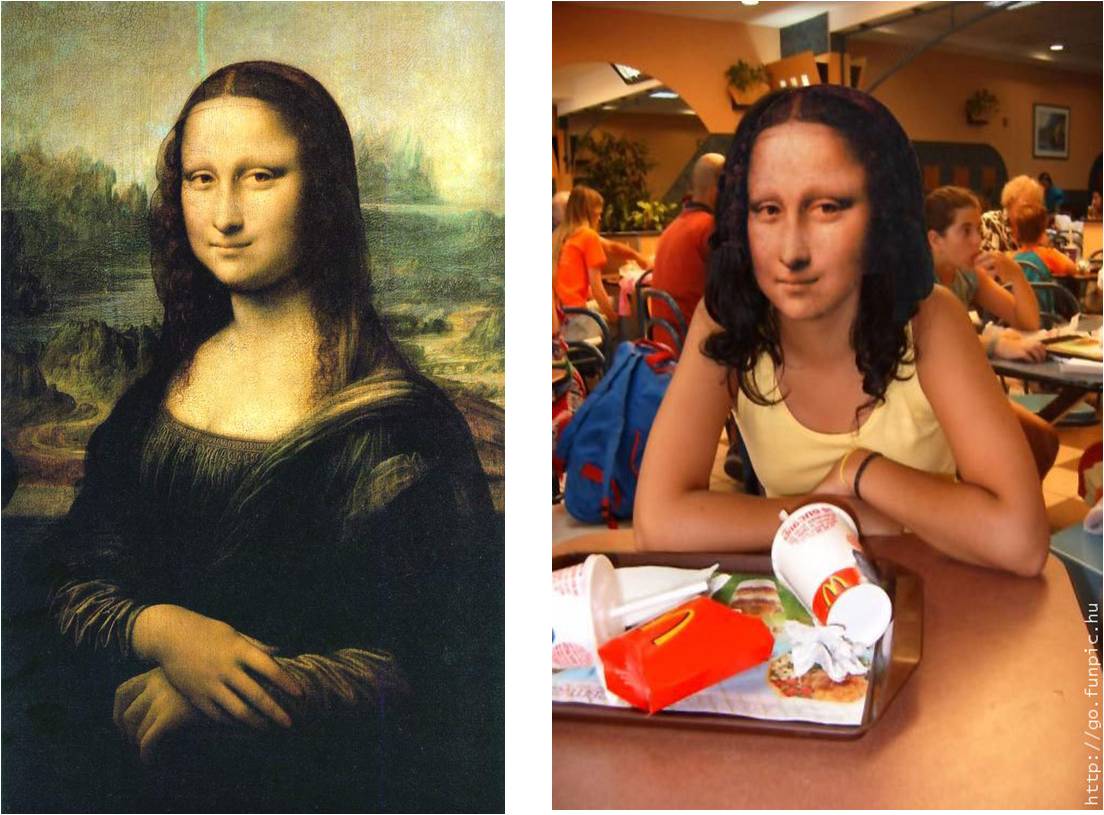
Teach English, Speak English, Why? The Importance of Conversations on Choutari

Dr  Shyam Sharma
Stony Brook University, New York

Choutari is now in the hands of a brilliant new group of NELTA scholars, and I am excited about that. The old and new teams who are working hard to make this conversation under the shade of this forum even better went through a somewhat difficult time during the month of January—it’s a story that may be worth someday, perhaps years from now, and it’s a good one—but we had a wonderful opportunity to further realize the tremendous value of promoting professional conversation in this great community. With the talent and enthusiasm of the new team, I am sure that we are going to see in the years to come great strides in the work of welcoming, encouraging, urging, prodding us to give back in the form of ideas and inspiration to our society. This work is extremely important to us as educators in a struggling nation right now and it will be, for different reasons, for generations to come.

Among the reasons we started this blog, we wanted to make our professional conversations serve as useful resource. We wanted to make our conversations open and more far reaching in space and time. And that’s what I want to write about in this reflection today.

Since I promised the editor of this month, my friend Bal Ram Adhikari, that and entry for the issue, I’ve been trying to write about something that has kept me professionally “awake” so to say since I started teaching in a primary school in Butwal, continued to ask when I taught for the next six years at the school level, and also continued to ask when I started teaching at TU and when I decided to switch from English to Writing Studies. And that something is a whole range of questions, which used to often discourage me while I taught at home: Why am I teaching what I am teaching? Does teaching grammar help students learn language? Why are we asking students to speak in English only? The teaching of literature seems to contribute to their personal development quite a bit, but how far does it contribute to their social and professional lives and the society at large? Why do we do little more than giving lecture in the name of “covering” the content of the course and helping students prepare for the exam—and what if there are better ways to achieve these goals and also make education more worthwhile? What do we mean by “English education”? When we started Choutari, I was happy because I was now able to ask questions like these within a meaningful professional conversation among hundreds of other scholars and teachers who may have similar questions, different perspectives, and better answers. In this post, I want to build on a recent conversation that took place (and at this time is still ongoing) inside the Yahoo mailing list that many of us are subscribed to. I responded briefly there, as it fit the medium, and I want to delve the issue further here, from broader educational, professional, and social perspectives. I request you to share your thoughts in the comments section below.

A fellow NELTA member, Umesh Shrestha, asked in the mailing list recently whether we should require/encourage our students and ourselves to communicate in English beyond the classroom and school. This was a very thought-provoking question (and among other colleagues, Suman Laudari has responded with some great ideas on the list). Let me get into the relaxing mood of Choutari and share some thoughts—for the beauty and fresh air of early spring is returning to the hillsides and I am truly excited by the arrival of a whole group of gaunles under the shady tree.

The question of whether we, even teachers of English, should speak English everywhere, as well as ask our students to do the same is an old one. And I happen to have strong views not only about whether even our students (forget about us) must be made to speak English at all times in school (if not beyond it!) but also about whether we should use English as a medium of instruction and for what purposes, if at all.

Let me take a step back and ask a more basic question: “Why” is it that English is the increasingly dominant, increasingly popular, increasingly unquestioned medium of instruction in Nepal? Is there a straightforward “ELT” answer to this question? Does the use of English as “the” medium of instruction raise the standard of our education overall? Does it make classroom teaching and classroom learning more effective?

First, if the answer to questions like the above is more of a “no” than “yes,” then should we make it our professional lives’ priority to make the answer “yes”? Or, should we instead pause and think why the answer is “no”? That is, if using English rather than Nepali and/or other languages of instruction—at least in certain subjects, grade levels, regions, etc—does not have an “ELT” answer (which I presume it doesn’t), then why are we insisting that “English Only” must be the medium of instruction? If imposing English as the only medium of instruction does not raise the standard of our students’ education, then how have we come to embrace the delusion (sorry, but that’s what I think it largely is) that English “is” education (as in the phrase “English education”)? Is there, in the world of reality, such a thing as English education– or have we just created a feel good phrase to describe “English language education/learning” by dropping the key word in the middle?

To stay on the yes/no questions I asked above, no, there is absolutely no doubt that IF requiring only English as the medium of instruction, communication, and just plain being in school had ZERO SIDE EFFECTS, then the benefits are so many, so significant, so long term, so attractive… that we wouldn’t need to have this conversation. I’m not joking about this, but IF our students were to come out of high school speaking fluent English while ALSO writing effectively (whether that’s in English or not, please note), demonstrating critical thinking skills at par with their peers in other nations, being able to pursue and generate new ideas on their own, excelling in math and science and technology, etc, and IF the “medium” of English was a significant reason for the students’ elevated standards in all the above areas, then YES we would not have this conversation either. But that’s not the case. We know for fact—and we have been in denial for a few decades now—that the English medium that we have imposed in the name of improving the “quality” of education VISIBLY affects the effectiveness of just too many teachers’ teaching, thereby their students’ learning, the learning of math and science and social studies and economics and environmental studies and agriculture and you name it. The English medium is only justified for teaching the English language—although I have a hard time understanding why we teach it for 12-16 years and still don’t have students use the language at the proficiency level of my Christian missionary friend who has been in Nepal for eleven months—and it is in this context that we as English teachers should be having the curricular, pedagogical, and educational discussions. But where do we, English teachers, get this idea that we are entitled to tell our colleagues teaching social studies and math and physics and chemistry and their students who are solving algebra problems or playing khopi or eating samosa in the canteen that they must use English because— oh, wait, I forgot what I was about to say! English, you know, English, and like English education. Like globalized world.Opportunities.The internet. Facebook…. I can’t think anymore. Let me tell you a story.

I have a Chinese student in my “intermediate college writing” class (in the State University of New York) named Bao). During the first class meeting in a one-month long intensive writing workshop, while I was describing one of the assignments, a “rhetorical analysis” of a text that students chose, Bao raised his hand, with his face looking like he was terrified of something, “Professor, I don’t have the ‘professionalism’ to criticize the author’s writing style….” Bao’s English language “speaking” proficiency was so low that I couldn’t help thinking how many of the international students (15 out of 20, from 6 different countries, with different lengths of exposure to “native” English speaking communities) are going to pass. But Bao’s case was special: he not only struggled to express himself, as a student who had just come from a sociocultural background that doesn’t value “challenging” or even “analyzing” the ideas and expressions of established writers and scholars, he was saying that he neither could nor would like to “criticize” how a scholarly article was written. I gave a short answer and invited Bao to my office for further discussion. The first discussion started with Bao “confusing” his language proficiency with the lack of “knowledge” about what “rhetorical analysis” means, so I gave him a text (an excerpt from Martin Luther King’s “I Have a Dream” speech), a sample rhetorical analysis he and I found online, and a long list of questions that broke down the assignment and served as supplement to the assignment for the class. Long story short, the rhetorical analysis that Bao wrote within the first week of class (before the class moved to another project) was in many ways better than the writing of most other students in class, including the native English speaking students (some of whom, by the way, implemented what they had already learned in high school and turned in their papers, and their papers showed little new learning).

So, it was not the “medium” but the “powerful ideas and the ways that they were so powerfully expressed” that Bao was able to recognize and describe and assess in the text—things that he was not only already somewhat capable of doing but also capable of learning much faster—than learning new expressions and syntaxes, which it seemed could on catch up rather slowly—as he imitated and echoed and adapted and ventriloquized sentence structures and phrases and worlds from the samples that he gathered from all kinds of sources—it was the ideas and how they were expressed that became the basis of Bao’s incredible one-week long learning journey. When I read Bao’s final draft, I was amazed. I questioned many of the conventional teaching wisdom that only rare situations like this can so powerfully blow up in the air, making me rethink my teaching once again.

Reading the question about how great it might be if we too were speaking English all the time, I was almost depressed to think about the state of our education—I mean about the learning part, the part where the nature and content of education matters, the part where our students are being prepared (or not) to become intellectually and professional capable of navigating (and indeed competing in) the complex, connected, global world that they live in and need to be even better prepared for.

Let’s think about the larger question of education, not just English language, for the larger purpose of teaching English is—or should be—that large framework within which what we do, the questions we ask, and the answers we seek, must make sense.

And to connect that to what I was saying about the importance of joining and promoting such conversations like this in Choutaris like this, I have the same old, humble request for you. Dear colleagues, after you read a post, or two, maybe all, please do not forget to add a line, or two, or many lines, sharing your idea, experience, feedback… as encouragement to the writers and good example for other readers.

Teach English, Speak English, Why? The Importance of Conversations on Choutari

Dr. Shyam Sharma
Stony Brook University, New York

Choutari is now in the hands of a brilliant new group of NELTA scholars, and I am excited about that. The old and new teams who were working together for a while in order to make this conversation under the shade of this forum even better had to go through a somewhat difficult time during the month of January—it’s a story that may be worth telling someday, perhaps years from now, and it’s a good one—but we also had a wonderful opportunity to further realize the tremendous value of promoting professional conversation in this great community. With the talent and enthusiasm of the new team, I am sure that we are going to see in the years to come great strides in the work of welcoming, encouraging, urging, prodding us to give back in the form of ideas and inspiration to our society. This work of building our scholarship from the ground up is extremely important to us as educators in a struggling nation right now and it will be, for different reasons, for generations to come.

Among the reasons we started this blog, one was to make our professional conversations serve as useful resource by making them open and accessible. And that’s what I want to write about in this reflection today.

Since I promised the editor of this month, my friend Bal Ram Adhikari, that I would contribute an entry for the issue, I’ve been trying to write about something that has kept me professionally “awake,” so to say, since I started teaching in a primary school in Butwal almost 20 years ago, something that I continued to ask for the next 12 years in grade schools and eventually at TU and then when I decided to switch from English to Writing Studies. And that something is a whole range of questions, which used to often discourage me while I taught at home: Why am I teaching what I am teaching? Does teaching grammar help students learn language? Why are we asking students to speak in English only? The teaching of literature seems to contribute to students’ personal development quite a bit, but how far does it contribute to their social and professional lives and the society at large? Why do we do little more than giving lecture in the name of “covering” the content of the course and helping students prepare for the exam—and what if there are better ways to achieve these same goals and also make education more worthwhile? What do we mean by “English education”?

When we started Choutari, I was happy because this platform allowed us to ask questions like the above as part of a broader professional conversation among hundreds of other scholars and teachers who may have similar questions, different perspectives, better answers. In this post, I want to build on a recent conversation that took place (and at the time of this writing is still ongoing) inside NELTA’s Yahoo mailing list that many of us are subscribed to. I responded briefly there, as it fit that medium, and I want to explore the issue further here, from broader educational, professional, and social perspectives. I request you, dear colleagues, to share your thoughts in the comments section below.

A fellow NELTA member, Umesh Shrestha, asked in the mailing list recently whether we, as English teachers, should communicate in English beyond the classroom and school (because, the writer seemed to imply, we don’t practice what we preach). This was a very thought-provoking question (and among other colleagues, Suman Laudari has responded with some great ideas on the list). Let me get into the relaxing mood of choutari and share some thoughts—for the beauty and fresh air of early spring is returning to the hillsides and I am truly excited by the arrival of a whole group of gaunles under the shady tree.

The question of whether we, even teachers of English, should speak English everywhere, as well as require our students to do so in school and encourage to do so outside is not new. And I happen to have strong views not only about whether even our students (forget about us) must be required to speak English at all times in school (if not beyond it!) but also about whether we should use English as a medium of instruction and for what purposes, if at all.

Let me take a step back and ask a more basic question: “Why” is it that English is the increasingly dominant, increasingly popular, increasingly unquestioned medium of instruction in Nepal? Is there a straightforward “ELT” answer to this question? Does the use of English as “the” medium of instruction raise the standard of our education overall? Does it make classroom teaching and classroom learning more effective?

First, if the answer to questions like the above is more of a “no” than “yes,” then should we make it our professional lives’ priority to make the answer “yes”? Or, should we instead pause and think why the answer is “no”? That is, if using English rather than Nepali and/or other languages of instruction—at least in certain subjects, grade levels, regions, etc—does not have an “ELT” answer (which I presume it doesn’t), then why are we insisting that “English Only” must be the medium of instruction? If imposing English as the only medium of instruction does not raise the standard of our students’ education, then how have we come to embrace the delusion (sorry, but that’s what I think it largely is) that English “is” education (as in the phrase “English education”)? Is there, in the world of reality, such a thing as “English” education (one that is of a different order of intellectual significance than education acquired “in”? another language?)– or have we just created a feel good phrase to describe “English language education/learning” by dropping the key word in the middle?

To stay on the yes/no questions above, I would readily say NO, there is absolutely no doubt that IF requiring only English as the medium of instruction, communication, and jus being in school had ZERO SIDE EFFECTS, then the benefits are so many, so significant, so long term, so attractive… that we wouldn’t need to have this conversation. I would whole-heartedly support the use of English as the “only” medium in/throughout school. I’m not joking about this, but IF our students were to come out of high school speaking fluent English while ALSO writing effectively (whether that’s in English or not, please note), demonstrating critical thinking skills at par with their peers in other nations, being able to pursue and generate new ideas on their own, excelling in math and science and technology, etc, and IF the “medium” of English was a significant reason for our students’ elevated standards in all the above areas, then NO we would not have this conversation either. We would just call the adoption of English as the “only” medium of instruction as a straightforward, non-political, purely pedagogical decision. But that’s not the case. We know for fact—and we have been in denial for a few decades now—that the English medium that we have imposed in the name of improving the “quality” of education has VISIBLY affected the effectiveness of just too many teachers’ teaching, thereby their students’ learning, the teaching and learning of math and science and social studies and economics and environmental studies and agriculture and you name it. The English medium is certainly justified for teaching the English language—although even in this case, I have a hard time understanding why we teach it for 12-16 years and our students’ English is not as good as the Nepali proficiency of my Christian missionary friend who has been in Nepal for less than a year. Yes, our students’ English proficiency—and indeed our own as English teachers—may be too low. And it is for us as teachers (plus scholars) to develop solutions by having serious curricular, pedagogical, and educational discussions. But our good intentions to solve a problem don’t justify just “any” means. For instance, it would be terribly absurd for us as English teachers to tell our colleagues teaching social studies and math and physics and chemistry and their students who are solving algebra problems or playing khopi or eating samosa in the canteen that they must use English because— oh, wait, I forgot what I was about to say! English, you know, English, and like English education. Like globalized world. Opportunities. The internet. Facebook…. Okay, I can’t think anymore. Let me do something different. Let me tell you a story.

I have a nonnative English speaking (Chinese) student named Bao in my “intermediate college writing” class (here at the State University of New York). During the first class meeting in a one month long intensive writing workshop, while I was describing one of the assignments, a “rhetorical analysis” of a text that students would choose, Bao raised his hand, with his face looking like he was terrified of something, and said: “Professor, I don’t have the ‘professionalism’ to criticize the author’s writing style….” Bao’s English language “speaking” proficiency was so low that I couldn’t help thinking how many of the international students (15 out of 20, from 6 different countries, with different extents of exposure to “native” English speaking communities) were going to pass. Bao’s case was particularly striking: he not only struggled to express himself in English, as a student who had just come from a sociocultural background that doesn’t value “challenging” or even “analyzing” the ideas and expressions of established writers and scholars, he was saying that he neither could nor would like to “criticize” how a scholarly article was written. I gave a short answer and invited Bao to my office for further discussion. During the first discussion I realized that Bao was “confusing” his low proficiency in English with his lack of “knowledge” about what “rhetorical analysis” means; so I gave him a text (an excerpt from Martin Luther King’s “I Have a Dream” speech), a sample rhetorical analysis that he and I found online, and a long list of questions with which I broke down the assignment (as supplement to the assignment description). Long story short, the rhetorical analysis that Bao wrote within the first week of class (before the class moved to another project) was in many ways better than the writing of most other students in class, including the native English speaking students (some of whom, by the way, implemented what they had already learned in high school and turned in their papers, and their papers showed little new learning). One of the things that Bao had done was to copy, adapt, and echo the rhetorical analysis “moves” made by other writers in the many samples that he had gone on to find: he deliberately avoided looking at rhetorical analyses of the text he was analyzing so he was not plagiarizing. When he submitted the finalized analysis, I had to start by asking whether and to what extent someone else had helped him write the paper and/or he had copied from another writer’s analysis of the same text. He had not, as I found out that he had done what I just described.

So, it was not because Bao mastered the “medium” (indeed, it was “in spite of” the medium that still lagged significantly) but because he was engaged with ideas (a highly thought-provoking text), because he had an unyielding commitment, because he learned how to learn, because of his commitment and motivation that Bao was able to do what seemed so impossible. Even as he imitated and echoed and adapted and ventriloquized sentence structures and phrases and worlds from the samples that he gathered from all kinds of sources, Bao learned a whole new “discourse,” indeed a new language, in his incredible one-week long learning journey, thereby tremendously improving his overall English language skills (including skills for critical thinking, analytical reading, and composition). When I read Bao’s final draft, I questioned some of the conventional teaching wisdom that only rare situations like this make me ask, only situations like this can so beautifully blow up in the air.

Reading the question about how great it might be if we too were speaking English all the time, I was almost depressed to think about the state of our education—I mean about the learning part, the part where the nature and content of education matters, the part where our students are being prepared (or not) to become intellectually and professional capable of navigating (and indeed competing in) the complex, connected, global world that they live in and need to be even better prepared for.

Let us (of course) develop practical solutions for practical problems. But let us do so without being so naive as to think that we can be more effective at doing so by eschewing the larger context of education–motivation, rationale, fairness, etc–in the name of being practical. Let us not allow the politics of denial (or the claim that one is not being political in order to stay above the discussion when the issue is politically significant) to justify an active forgetting and overlooking of the larger purpose of teaching English, or social studies or science for that matter. It is only within the larger social context that our problem-solving of any ELT issues—the questions we ask, the answers we seek—will make sense.

And to connect that to what I was saying about the importance of joining and promoting such conversations like this in choutaris like this, I have the same old, humble request for you. Dear colleague, after you read a post, or two, maybe all, please do not forget to add a line, or two, or many lines, sharing your idea, experience, feedback… as encouragement to the writers and good example for other readers.

Teaching Grammar: Exploring Past and Present Realities

Renuka Dhakal, KU

renudhakal@gmail.com

 Celce- Murcia and Hilles (1988) define language as “a type of rule-governed behavior and it is a subset of those rules which govern the configuration that the morphology and syntax of a language assume”. It is obvious that grammar is the clusters of rules which govern and which shape the language. It is well known to all that grammar is one element that gives a shape to language. In this article, I am reflecting on the strategies that I used while learning grammar in school and current pedagogical practice I adopt as an EFL teacher. It expresses my understanding of grammar teaching and learning from my school days to the present professional life as a teacher and a university student.

Teaching grammar communicatively in the EFL setting like ours is an interesting topic. I would like to reflect on it as it is associated with my academic and professional endeavor.  Learning grammar struck me from my school days. In school I couldn’t perform well in grammar in Nepali and English both. I, therefore, would hesitate to speak and write in English. Even after so many years when I as a teacher look at my students’ performance there has been little improvement in this area.

In school grammar teaching was based on rote learning: drilling and memorization. My teacher taught us grammar through the use of the deductive method. He would write a set of rules on the blackboard and we were expected to memorize all patterns at all cost. Let’s imagine how horrible it might have been! Despite being able to produce almost all grammatical rules, I was unable to produce sentences. When I compare the way we were taught with the way we are trained to teach these days, I feel that this practice of imitation, repetition and memorization has become outdated, especially in this globalized context where learning English for communication has got the top priority .

It is still fresh in my memory how puzzled and confused I was when I could not produce meaningful sentences out of the practiced structures. My teacher once asked all the students to make sentences using the present perfect tense.  I came up with a sentence like, “I have writing a letter”. It was one of the common mistakes other friends also made. Later I realized that students pick up the progressive form more quickly than the perfect form. The errors like this can also be attributed to the lack of adequate exposure, and practice and production opportunities.

The question can be raised, “Why students often have the habit of using the progressive form where the perfect is required?”  As my understanding says, the progressive form is easier to make since it implies +-ing and more flexible than the perfect form. The perfect tense involves more complex grammatical operation. I think our teaching should be informed by the most commonly committed errors like this.  Only correcting them on the surface level without reaching the root cause fails to yield any fruitful result.

I am teaching English to lower secondary students.  I have been facing the same problems on the part of my students too. Recently I spent 10 days to teach the different forms of tense and its use in sentences. I found that my students were making the errors similar to those I would make in school. They could produce correct structures but when it came to their use in speaking and writing, their sentences were replete with errors. The insights that I have got from this is that the problem lies in our traditional concept of teaching grammar, that is, teaching grammar means to have students learn the rules rather than use them in their speech and writing. If we use the same methods, problems are never solved. Teachers and students both should realize the fact that grammar is more than a set of formal rules. It is inseparable from meaning, function and context.

No doubt, there are different ways of teaching and learning grammar. Among them the communicative way can be the best one. Therefore, these days my main concern is how the communicative method can be best employed to teach and learn grammar. I find the similar concern in Master and Liu (2003) who conclude that the need to teach grammar has not really been a question for most teacher educators, how to teach grammar has been a great challenge due to the complexities of the subject matter and the difficulties in approaching it. As an English language teacher, I also feel that grammar teaching is a daunting task because I was taught grammar through traditional way but I have been studying that it should be taught through the approaches such as Communicative Approach and Task Based Approach.

In the EFL setting like ours, grammar should be taught for and through communication. As a result, learners can develop all components of communicative competence in a balanced way.   Grammar teaching should value the role of games, songs, stories and dialogs,  realia, problem-solving activities, and communicative techniques such as role-play, simulation, and strip stories and so on. While doing so, such resources and techniques provide learners with opportunities to integrate grammar with vocabulary and all language skills.


REFERENCES

Master, P. & Liu, D.(2003). Grammar teaching in teacher education.

Murcia. And Hills, S. (1988). Techniques and resources in teaching grammar. China: oxford university press.