The impacts of the earthquake on education: Contemplation of an EFL teacher

Dinesh Thapa dtathapa@gmail.com

Reminiscing the day!

A large circle of Early Childhood Development (ECD) teachers–mostly female teachers–are joining their hands. Two facilitators in the hall, one inside the circle and the other at the corner, are observing the activity. Saturday, after the morning meal of 12th Baishakh 2072 (April 25, 2015), the second teacher training session of the day was in progress. The teachers were preparing for an introductory language game which requires them to perform a chant by clapping hands. Sometimes they needed to walk back and forth. Everybody was engrossed in how to perform game the best; they were excited with the easy tips and activities to teach the ECD kids in a better way. They were attending to every bit of the sound, the rhythm and the art of performing a circle-time activity in ECD classes. Then the facilitator in the center began instructing the participants for the refined repetition of the activity. When the participants had just started moving in the circle, the entire building trembled, and the whole earth shook so badly. Nobody could stand upright. Everybody started stumbling to the main gate of the hall. Earthquake! Earthquake! They cried. Soon, a pool of people from all around the vicinity arrived at the open ground in front of the hall, gasping up and trembling. They were praying for safety, for themselves, for their relatives and for their houses and property. In a minute, the exuberance of the training was converted into a formidable catastrophe and a deep serenity resided compelling people to give up all their arts and skills for the sake of life and bodily safety. It was indeed a mega earthquake disaster that had wiped out all the beautiful dreams instantly. Everybody attempted desperately to connect to their families; the entire atmosphere was then terror- driven by an unimagined might of the mother earth. In a minute, news reports about the fall of the Dharahara and many other heritage places were broadcast. TVs showed the damage of lives and buildings; soon, the whole country was mourning in the loss of dearest ones. Hospitals were crumbled, and there was a crowd of the injured outside hospitals. Scores of schools that cheered with the aspirations of the millions of future citizens were damaged; several public and private structures were flattened onto the ground. In a minute, most of the central part of Nepal was deserted. The Kathmandu valley lost several world heritages; the beautiful tourist destinations in Gorkha and the business hubs in Tatopani were completely damaged. People feared the most what they long forever- the hard earned resident buildings. Indeed there was a complete standstill of normal activities. This terror continued for over a month; it still haunts all those who were directly and indirectly affected. The country is thus under a dreadful situation hardest-hit by the earthquake.

Disaster situation in Nepal

Nepal is one of the most disaster prone countries in the world. Some of the disasters such as floods, landslides, cold waves, fire, and lightings are a common occurrence in Nepal. Every year, Nepalis are facing the problem of flood, landslide and fire particularly in the hot and summer season. It is reported that Nepal stands at the 11th and 30th position in terms of earthquake and water induced disasters respectively in the world. The vulnerability to disaster also continues to increase annually, particularly as a result of rapid population growth together with the unplanned and poorly regulated urban planning. The people of Nepal face a variety of life-threatening hazards. The recent earthquake of 7.8 magnitude and thousands of aftershocks have caused an insurmountable devastation in different parts of the country.  Although the actual data about the human casualty and injuries and physical and economic damages are yet to be confirmed, the Ministry of Home Affairs has declared over 8500 casualties, and about 21,000 human injuries.  The government has declared 11 districts as the most afflicted areas in terms of human and non- human damages. Informal observations and inquiries suggest that hundreds of human settlements (including houses and property) have been completely or partially destroyed. The roads, water supplies and electricity have been interrupted. Basic service centers such as schools and health centers and police posts have been dismantled. In a sense, a vast segment of population in the earthquake hit regions is living in a complete middle-aged-like-darkness at present.

Sample statistics about the impact of the disaster

Immediately after the devastating earthquake, the entire nation and several international organizations began their rescue and relief operations in Nepal. The government, charities and donors from different parts of the world joined hands to immediately help Nepal and its people to recover from the devastation. Inspired with the spirit of humanitarian assistance, I also worked with a non-governmental organization (Friends Service Council Nepal) in order to support the earthquake survivors in Lalitpur and Bhaktapur districts. We reached out to different earthquake affected communities with relief materials on the third of April 25 disaster. We were also accompanied by a team of volunteers that attempted to document human casualties and physical property in eight different communities. Among the 2900 supported families, 1192 were involved for a detailed survey. The survey shows a preliminary picture of the earthquake damage as follows.

Figure 1: Respondent’s VDC/Municiplity
Frequency Percent Valid Percent Cumulative Percent
Valid Jharuwarasi Lalitpur 182 15.3 15.3 15.3
Bishankhu Lalitpur 92 7.7 7.7 23.0
Ikudol Lallitpur 121 10.2 10.2 33.1
Shankhu Lalitpur 191 16.0 16.0 49.2
Chapagaun Lalitpur 71 6.0 6.0 55.1
Lamatar Lalitpur 141 11.8 11.8 66.9
Dalchoki Lalitpur 129 10.8 10.8 77.8
Maha Manjushree Bhaktapur 265 22.2 22.2 100.0
Total 1192 100.0 100.0


The sample communities have different characteristics in terms of the topography and development features. Two villages, Ikudol and Shankhu in Lalitpur, are located in a remote hilly area whereas Bishankhunarayan and Jharuwarashi are semi-urban settlements, near the city. Likewise, Chapagaun represents the community of the marginalized people (Dalit community) whereas Lamatar and Mahamanhusree represent to an averagely developed communities. These communities are chosen as to understand how the disaster acts upon differently built-up communities, though it has affected all Nepalis. The following table shows the present status of the respondents.

Figure 2: Respondent’s present shelter status
Frequency Percent Valid Percent Cumulative Percent
Valid Living under open sky 413 34.6 34.6 34.6
Living in tents outside 666 55.9 55.9 90.5
Living in community places 32 2.7 2.7 93.2
Living on rented homes 41 3.4 3.4 96.6
Living in own home 40 3.4 3.4 100.0
Total 1192 100.0 100.0


Home is the source of aspiration and physical-emotional wellbeing for human beings. When there is a threat to our home, all the hopes turn into a painful agony and frustrations. A home is the emblem of emotional attachment; it doesn’t matter whether it is a cemented or just a thatched one. Education, prosperity and futurity become mere dreams when there is an instant threat to survival. We cannot even imagine how dreadful it is to live under the open sky. It was not an adventure for them; they were compelled by the unlucky fate. It was found that more than 90 percent of the sampled families had their houses either completely damaged or unfit for living. I cannot describe the pathetic situation of the children and the elderly. It is hard to describe the shattered dreams of the adults and how the damaged souls take on for the future. Buildings can be reconstructed, but it is very difficult to regain the shattered emotions and passion attached to them. The chart below displays the condition of damage houses and property in the sampled communities.

 Figure 3: Damage of house and indoor property
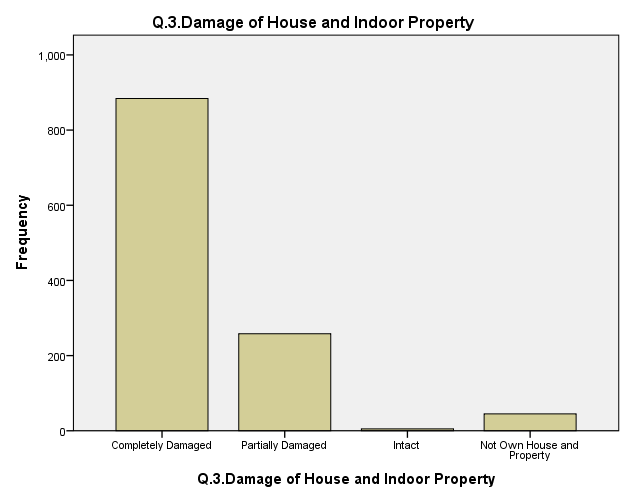
damage of house & property

Along with private property, the earthquake also caused an insurmountable damage to the hard made public property. Local school is just an example. The Nepali society has a very short history of public education. Indeed, school represents the single most development indicator in many rural parts of the country. As of now, there are many places where no market places or health centers are built yet, but there are public schools to educate the children who could contribute to the national development in the future. Public schools are the only places that show the presence of the government and serve the poor and the disadvantaged. In the sampled communities the public school buildings are also flattened down; the children of these schools cannot takes classes in the past buildings. The new academic session had just started when their schools were crumbled. Reconstruction of these public school buildings is really a challenging work in the present context of Nepal, in which the private educational establishments are seemingly drawing the sympathy of the middle and upper classes of the society. These already peripheralized public schools may take a decade for their complete reconstruction. By then, millions of children might have been passing their formative lives yearning for a good school building. The condition of local public schools is presented below.

Figure 4: Damage of local public school
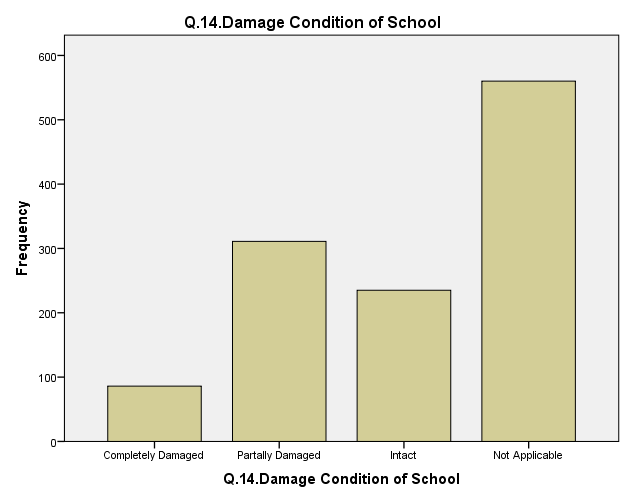
damage of public school

The post- disaster context in education

It is often observed that the emergency response to disasters such as flooding and earthquake focuses mostly on food, shelter, and water. Restoring the dignity and identity of the people become a less priority in the time of crisis. Education, which comes only after the survival needs is, therefore, affected for a longer time in the disaster-hit contexts. The relief and reconstruction initiatives in the present context of Nepal also observe a similar trend. Schools in the most disaster-affected areas had remained closed for over a month. During this long span of terror, a lot of upheavals could be seen in the everyday lives of the people. The quake took away the lives of 64 teachers and over 1,000 students and damaged 25 thousands classrooms. The entire community of teachers and students were also at a complete break-off from the teaching-learning activities. This situation shows an educational crisis in Nepal.

Even after the resumption of schools, a deep sense of fear lingered due to incessant aftershocks occurring day and night. The safe schools buildings had cracks due to aftershocks. A sense of terror was further exacerbated by the danger signals that hung at the entrance of the damaged buildings. Only a few schools had buildings which were safe educational activities. In such a situation, panic stricken teachers and students came to the school ground and involved mostly in psycho-socio trauma soothing activities. The reopening of schools created a space where teachers-students can get rid of the long held trauma. The trauma in the tender minds had to be released through non-content engagement rather than through involvement in instructional activities.

The deeper impacts of the disaster

The field of English language education in Nepal’s post-earthquake context is also no more appalling than other sectors. The primary indicator for this can be traced back to the psychological fear that has been lingering in the minds of students, teachers, parents and the general public. It is indeed a survival threat; a challenge to livelihood and safety of property. Be the cause the loss of relatives or acquaintances; be it the damage of houses and property, all the stakeholders of education, including the forefront agents (students, teachers and parents) are reeling the disaster with a terror and anguish. Neuropsychologists have researched in depth into how the differently specialized functions located in the different parts of the brain are affected by the survival threat of the organism; especially in relation to the role of Amygdala in the temporal lobes of the brain. It is, however, apt to note here that where there are fear and stress intrusions overpowering the normal functioning of the brain, there will hardly be any learning taking place. The brain is then sensitive to respond only against the threat to the ‘life’; it is focused to the ‘here and now’. The brain then spends most of its directional resources only to accumulate the energy spread across the body so that the collected energy can be used to save the life. This safety mechanism, so, responds in such behavioral forms as running away of the life-organism from the spot, sweating, uncontrolled urination, clenching of fists and teeth, and so on. We can argue that this is the state of a complete ‘distraction’ and ‘firewall’ of the normal academic practices required for learning, including English language learning. This phenomenon is similar to what Krashen argues in his Monitor Model of language acquisition (1977, 1988). In the context of disaster induced anxiety and fear, the monitor is already heightened (though not necessarily for filtering for the correctness) barring any perception and processing of the language input.

Another area of impact lies on the learners’ external social-material dimensions of education. It is evident that hundreds of school buildings have collapsed and become inhabitable for teaching-learning activities. All the classrooms, ‘facilities’, and ‘affordances’ are gone. The cosmic gloom that grows while observing the damaged school infrastructures can never be substituted with any other tragic feelings.  But with better hopes some ‘Temporary Learning Centers’ have been built to help students engage in educational activities. Teachers are worrying about how long this situation persists. There is not a staff room intact. With this mega-scale disaster, people throughout the country have a very slim optimism for the speedy resettlement of the school facilities. Not only students have their textbooks and other stationeries buried or lost, but they have also lost the educative-entertaining community of hope in the pre-disaster days. Informal talks now are confined mostly to ‘where and of what scale of magnitude of the after- shocks’, and people are primarily concerned with ‘how to get relief materials. However, much attention has not been paid to reconstruction of schools and support to children. Indeed, the school atmosphere created the feeling of ‘unbelievable loss’ of the gambler, who cannot easily accept that the wallet has become completely empty just because of the single unlucky event. Every activity, and of course, everything in school and at home are strange now; there are strange classrooms and toilets; there are strange needs and responses of the students and the teachers. Occasional visits of the authorities and relief material providers further constrict the already shattered ego to the level of a pitiable infant-dependent. That the classrooms are damaged; that the library is collapsed; that the laboratory equipments are damaged; and that other basic school supplies are halted imply that school is shrinking down rather than flourishing. Therefore, the days ahead are going to be more challenging for EFL teachers to create conducive learning environment for the earthquake affected children.  Again, when there is a threat to one’s livelihood, education and its quality, and a quality learning of English will surely be negatively affected.

—-

Mr. Dinesh Kumar Thapa, a life member of NELTA, is currently a Faculty of English at Kitini College Lalitpur Nepal. He has been teaching English at different levels for over 10 years. He is also involved in EL teacher training. He has published on issues related to ELT in different local and national journals. He is one of the editors of NELTA ELT Forum (neltaeltforum.wordpress.com).

I survived and have a story to tell

11355_890310407676270_9087755239145792858_n
Praveen Kumar Yadav

The college I work for had resumed after one and a half months following the devastating April 25 earthquake. I teach World Literature for Bachelor of Business Administration (BBA) 2nd semester at King’s College, Kathmandu.

The classes after the destructive earthquake are quite difficult for both teachers and students as the disastrous incidents are still fresh in their minds. The fun-related activities such as games, drawing and dance can be taught to younger students for the first or few days after the schools resume. Such activities give comfort for both teachers and students. Although I had learned many ways to teach the quake-affected students while I was still writing education related stories on behalf of the district based correspondents for Republica, I myself was puzzled about my lesson plan for the first class.

During the review process of syllabus and the course of study for World Literature, an idea struck my mind. I decided to teach a story related to the recent earthquake to my students. It was not only relevant as per the course I teach, but it was appropriate in the present context of Nepal too. In this blog, I share my experience teaching the first day when the new semester began following the earthquake. I also incorporate other teachers’ experiences about their first classes before I draw my conclusion.

First class after earthquake

Aftershocks are still on; many students have turned up to the college on the first day. Indeed it was a reunion for everyone. I felt that my students were a warrior who came back home after fighting a battle. Their faces looked curious; they were curious to talk to each other. Before they got a chance to talk with their colleagues, I had an ice-breaker activity.

“We are survivors, aren’t we,” I asked.
They shouted, “Yes.”
“Thank God. Everyone survived. So, everyone has a story of survival,” I added.
I told them to tell their stories. I could see they were hesitant to share their stories. Then one of them asked me to tell my story first and so did the rest of students. I told them my story as follows:

I had two different experiences in the last two deadly earthquakes: one in my living room and another at workplace, one escaping from the ground floor of three-storied building and another from the second floor of seven-storied building. Though both magnitude and duration of the second earthquake (7.4) was less compared to the first one (7.8), I felt more scared in the second one.

April 25. 

All of a sudden, all electronic gadgets in my room were automatically turned off Saturday noon. I had been working on my laptop at the time. At that inauspicious time when the clock showed 11:56, my bed started to shake and the TV set almost jumped at me.

I rushed to the door and stood between the pillars from where I could see and hear other people in my neighborhood yelling and running helter-skelter. I shouted at them not to run but stay inside safely till things were settled.

Nobody listened to me, and I was scared. The earthquake continued for more than a minute, and nobody was inside. I had never experienced continuous tremors and it made me lose hope. I was at wit’s end.

I came out in the open after it stopped. Hundreds of people had already gathered outside. I saw parts of some buildings and boundary walls nearby collapse. I tried to contact my family, friends and colleagues, but in vain. I browsed the net, which was luckily available. I tweeted about the earthquake and also posted a status on Facebook.

Immediately after the first quake, no Nepali media covered the news, except Radio Nepal. But I could read Facebook posts and tweets about earthquake from different parts of the country. Though there were reports about damage and loss of properties and lives in Kathmandu alone, at first, nationwide reports soon followed.

Through social media, I could learn that Saturday’s devastating earthquake measured 7.9 on the Richter scale with its epicenter in Gorkha district. Thereafter, international media was not only quick but also active in reporting the incident. Nepali media became active only after news spread through international media.

May 12
First, I thought it was an aftershock and decided to stay inside. But the intensity got noticeably higher. Then I managed to escape from the tall building that had started to swing and later developed cracks as well. Thank God, both the powerful earthquakes occurred during daytime.

Had they occurred during the night, or on workdays, human casualty, especially school and college students and structural damages would have been immense.

So far the death toll from May 12 quake with epicenter in Sunakhani of Dolakha has crossed 100. Likewise, the toll from the first quake with epicenter at Barpak in Gorkha is around 9,000 and twice many are injured, according to Nepal Police. Of 14 affected districts, Sindhupalchowk is the hardest hit. Over 3,000 people have been killed there.

All Nepalis, both in and out of the country, have stood by the victims in these difficult times. They have lent their helping hands with what they can. Although Nepalis had earlier been divided along political, gender, ethnicity and geographical lines, they are united now. Such a bonding was not possible in any other way.

Then the students started sharing with each other their stories. I could observe some of the important points they were making while listening to their stories. Some of the students were good at narrating the story, while others became hesitant as they could not fully narrate stories in English. Even I allowed few hesitant students to tell their stories in the Nepali language. The presentation of the stories by individual students varied. Some presented in details and interesting away, but others told very short story skipping the details. This is because of individual differences and diversity of students. I found that even the students who failed to stand up and speak out earlier told the story. There was an overwhelming response from students.

At the end of the class, I briefly introduced different genres of literature – fiction prose, poetry, drama and non-fiction. The story they shared is an examples of non-fiction, I told the class.

To conclude, I have also interviewed some of my colleagues about their first classes after the disasters. I found out that some of them began their classes with something related to the earthquake. For instance, an environment science faculty member held a discussion on how disaster brought environment problems in Nepal. As economics faculty provided shared his thoughts on how the earthquake affected the country’s economy.
The next day, I assessed the students’ interests, but many of them were no longer interested to talk about the earthquake. They argued that they were bothered by listening to their parents or neighbors and the other people, who always talked about the earthquake.

As aftershocks are still on, some precautionary measures are a must to save our lives from the future disasters. I facilitated a discussion on how to take precautions, and went back to a normal situation of taking classes. The college also organized some events like treasure hunt, which I believe helped students recover from the quake trauma.

‘The photography project’: Pictures in EFL teaching

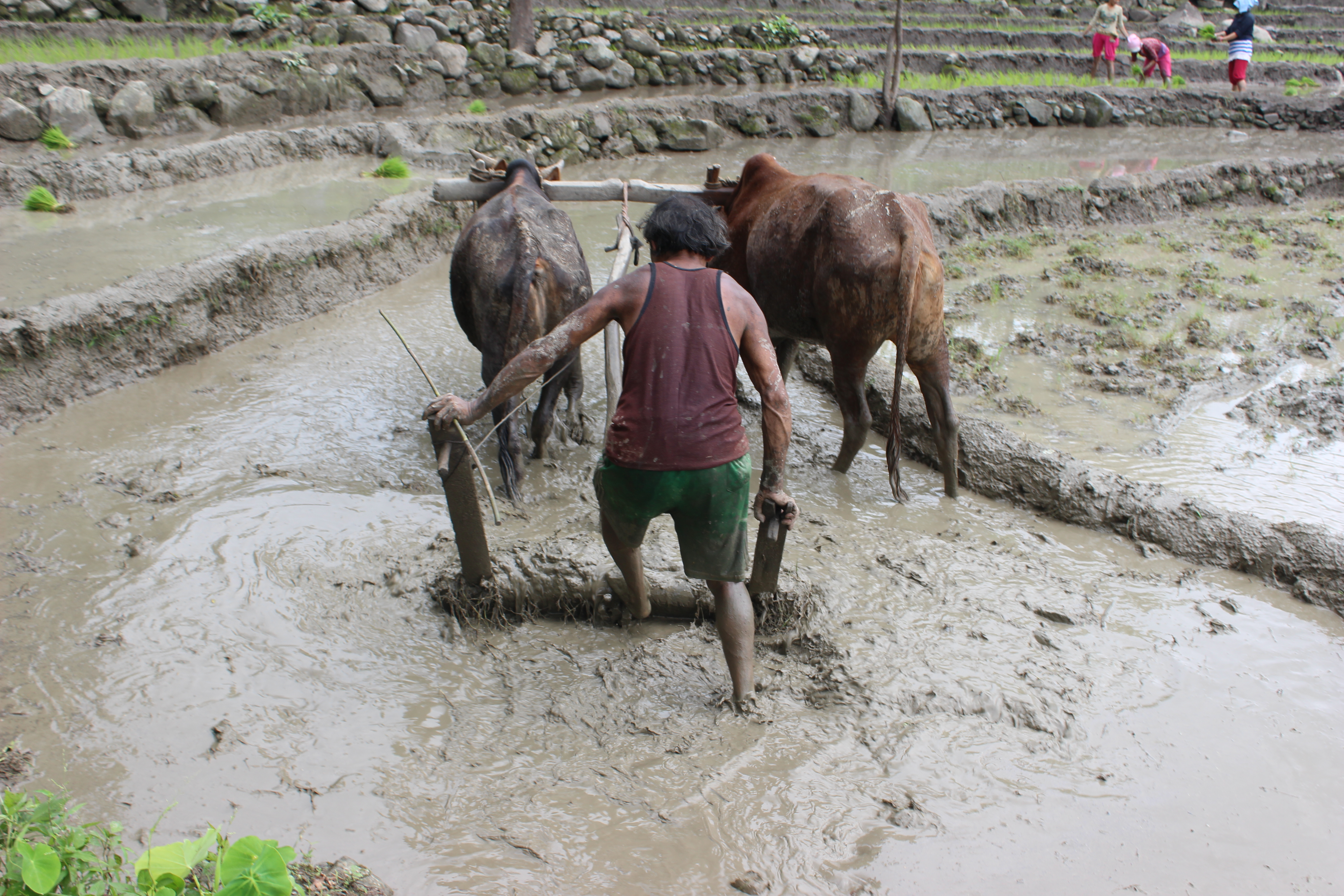
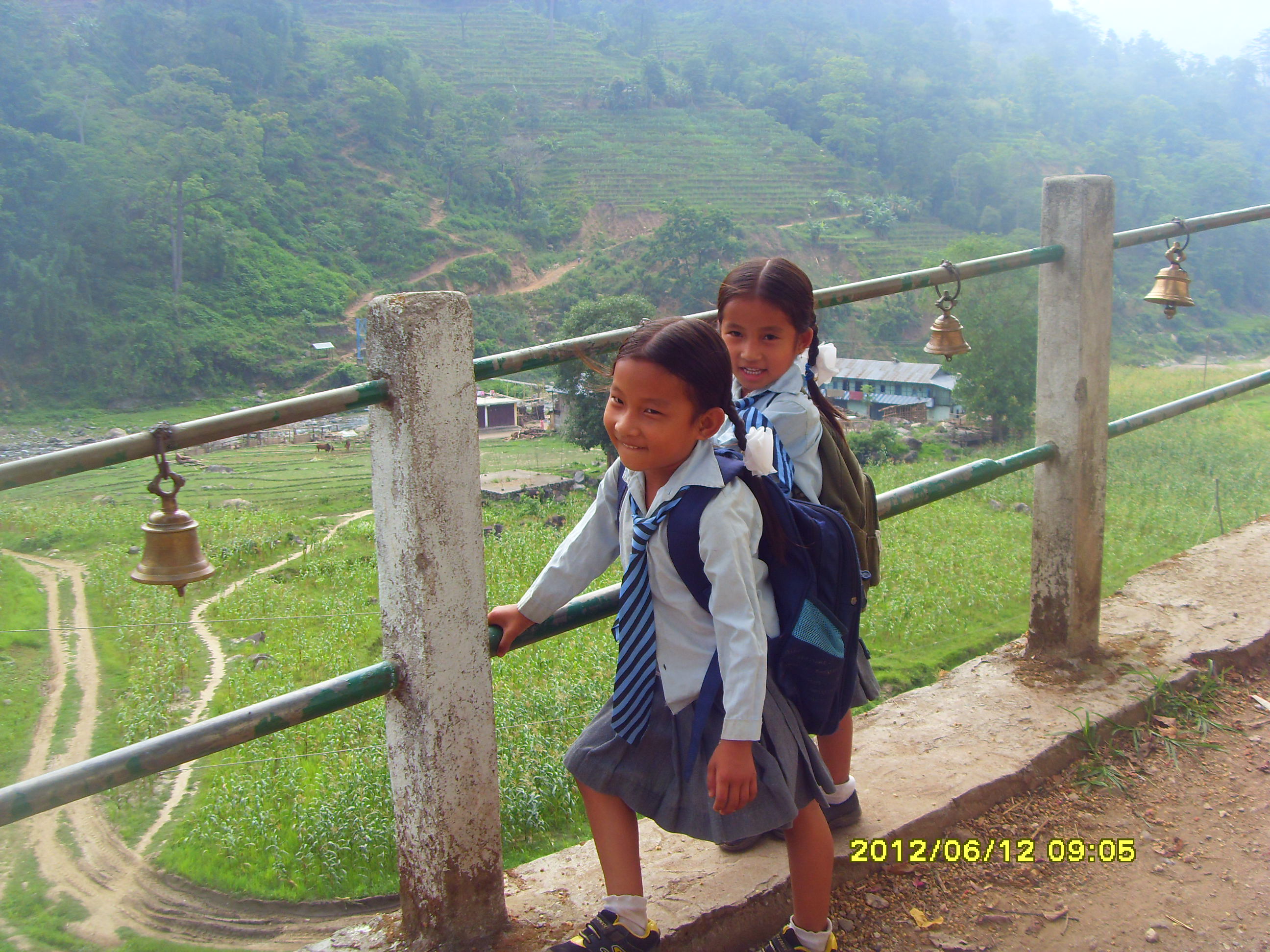
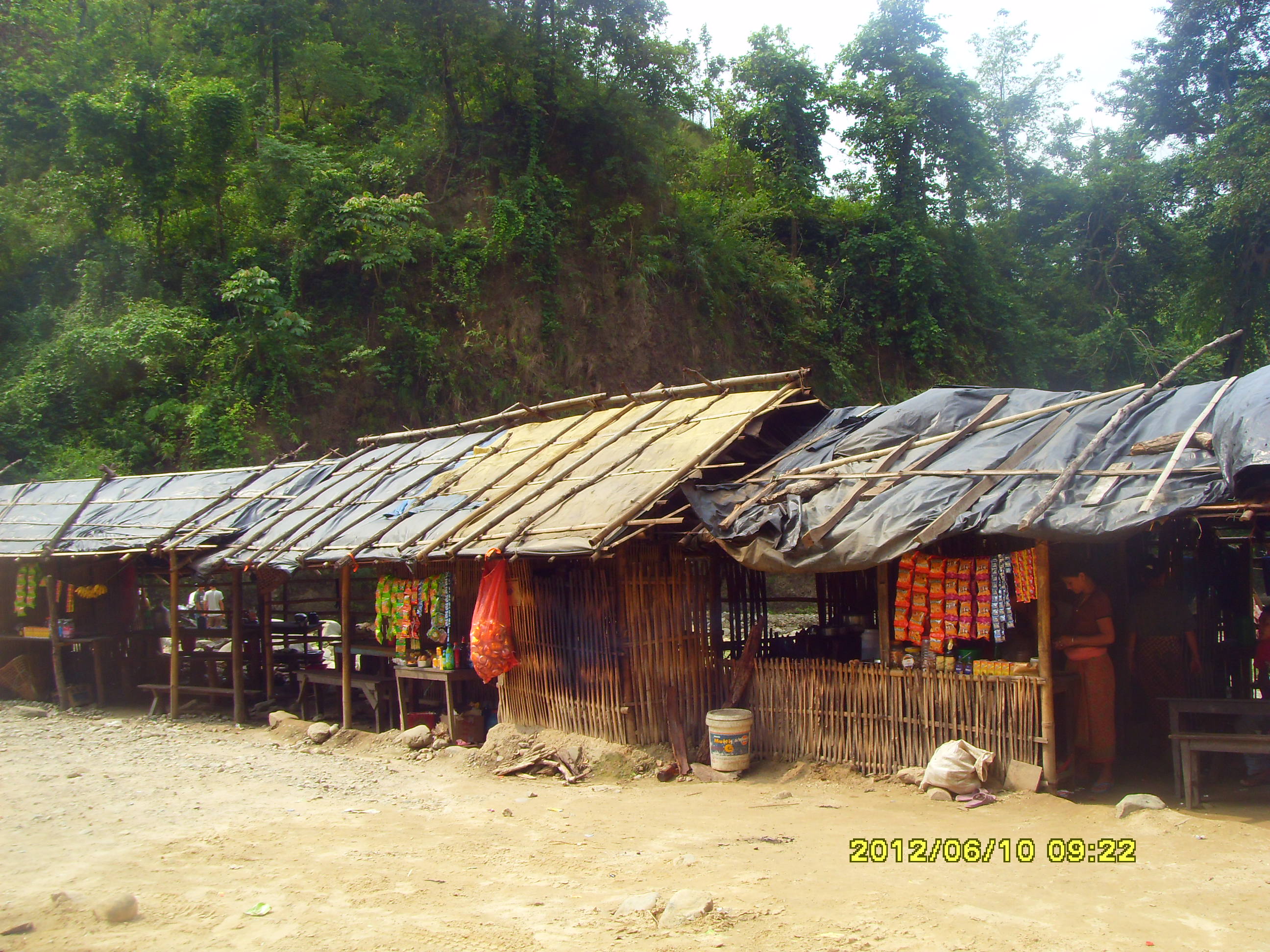
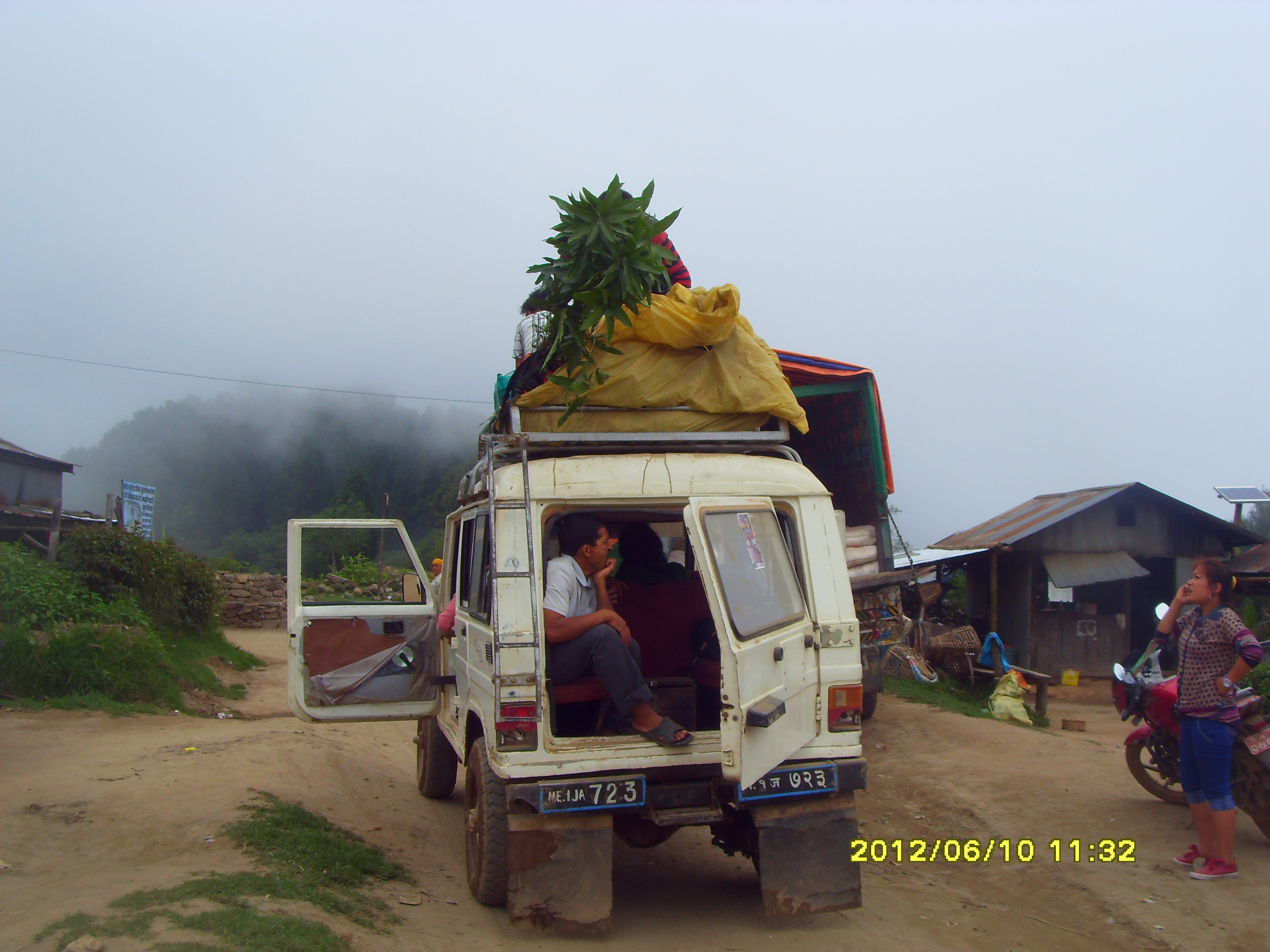
The Choutari team has initiated a new ‘photography project’. The aim of the project is to promote the use of photography/pictures in EFL teaching. In this project, the Choutari team members share with the larger ELT community a variety of photos they take in different times and places. We do not create our own stories out of these pictures, rather we leave it open for multiple uses (e.g., essay writing, story writing/telling, critical pedagogy, group work, participatory research)as per the need of EFL teachers . In acknowledging the importance of photos/pictures in EFL teaching, this project is influenced by the “Critical Photography Theory” (Wells, 2015) and the “Critical Art Pedagogy” (Cary, 2011). We encourage our fellow colleagues all over the world to use these pictures (of course, acknowledgement is appreciated) for the classroom purposes and participate in the discussion on various issues concerning the use of photography in EFL teaching.

To begin, we share the photos taken by Prem Phyak, our past editor, in different locations and times in Nepal.

IMG_0671

IMG_2730

SDC15681

SDC15533SDC15545

IMG_3322SDC15962

Welcome to the June Issue: Education in Emergencies

Education is children’s basic human right; we need to ensure it even in  emergencies.

The ‘April 25’, the day of 7.9 magnitude earthquake, which can be marked a black day for Nepalese people, has not only caused loss of thousands of lives, but also pushed the country years behind in terms of development. This has, no doubt, affected every sector, including education. Schools across the nation have resumed now, but are the children already out of the trauma? This is something that the primary attention of concerned stakeholders have to be paid for.  The traumatic reminders may still bring on distressing physical and mental reactions among children. It, therefore, challenges teachers for dealing with students’ psychology, safety measures, classroom management, and continuing the syllabus at the same time.

Children can be more reactive than adults owing to their less ability to anticipate danger and to voice how they feel. It is consequently important to assure that the children are orientated against false assumptions. They need emotional support and bereavement briefings-dealing with death experience.  This requires teachers- they may have however been traumatized- to be strong and bring in positive activities in their lessons, for example telling a story of positive recovery after disasters rather than telling about the loss. Parents should also have a significant part to play while letting their children recover from this trauma. They should try keeping the children away from horrific exposures, primarily from the sad news stories on mass media.

ELT Chautari has accordingly come up with a special issue that focuses on education in the aftermath of the earthquake.

The first post by Rojita Adhikari’, a multimedia journalist, is a feature story of an undergraduate student who lost her house and the only source of income, shop, in the April 25 earthquake. Adhikari narrates how quake survivor Sarita chose teaching to heal her pains and the pains of survivor children.

In the second post, Ms Charlotte Benham, a former Fulbright English Teaching Assistant in Nepal, has put her ideas forward on ‘Lessons in Language: What EFL Teachers Can Learn from Earthquake Relief Efforts’. This article accounts for enabling students to communicate in the post-earthquake world and integrating social issues, that have been explored during relief and rebuilding process, into language lessons.

Prem Phyak, one of the founders of Choutari, in his article ‘language matters in the post-disaster discourses’ arguably advocates that the use of certain terms in the post-disaster discourse in Nepal are disempowering earthquake survivors. His analysis implies that teachers should refrain from using the terms that disempower the survivors while talking about the disaster in classroom and school.

Anuradha Sharma through her post shares her experience and efforts to helping the quake survivor children overcome their psychosocial problems.

Ms Neha Shah, a grade teacher from Ideal Model School, Kathmandu has produced encouraging ideas how she managed to cope up with small kids while taking the syllabus further. She has carefully noted the psychology of her children, and acted accordingly. Her article entails the strategies the schools outlined and how they were implemented successfully.

Mr Chetan K Timilsina, an English language teacher from Kathmandu, has shared a story of his classroom experience with traumatized children of different age groups.His account for planning lessons and putting into effect in accordance to the psychology of the children is worth reading.

In the last post by Jeevan Karki, one of the Choutari editors and a teacher trainer with REED Nepal, shares his perspective to what and how to teach students at post earthquake situations.

Here is the list of hyperlinked write ups included for June Issue.

  1. Teaching helps forget quake victim Sarita’s pains, by Rojita Adhikari
  2. Lessons in Language: What EFL Teachers Can Learn from Earthquake Relief Efforts, by Charlotte Benham
  3. Language matters in post-disaster discourses, by Prem Phyak
  4. Helping children overcome quake trauma, by Anuradha Sharma
  5. Facilitating School Children at Post Earthquake Classroom, by Neha Shah
  6. Teacher’s Anecdote: Teaching Children at Post Earthquake Situation, by Chetan K Timilsina
  7. Rethinking what to teach in the aftermath of disaster, by Jeevan Karki

Last but not the least, I would like to thank our valued readers and contributors for their continued support and urge them to join the conversation through comments on the blog entries and sharing on social media (facebook, twitter, etc.).


Pramod K Sah
Editor
June Issue

Teaching helps forget quake victim Sarita’s pains

And then there was teaching which she chose to forget her pains, and resolve her psycho-social problem. “While I was idle, thoughts of damaged house, shop, studies, mother and brothers always used to come into my mind. Such thoughts adversely affected my health as well,” she recalled. “Wherever I looked at, I found similar plight of many people. Then I decided to deviate my mind to something that would help me forget my troubles. Finally, I decided to teach children.

Rojita 1
Rojita Adhikari, Journalist

This is the translated story, that was originally written in Nepali language and published in Kosheli edition of Kantipur Daily.  Click here to read the Nepali story in Kantipur. 

After the monstrous earthquake of April 25 left them devastated, Sarita’s four-member family is now forced to live in a temporary shelter at Tundikhel of Chautara in Sindhupalchowk district. Although five persons can comfortably live in a tarp provided by a foreign aid agency, twenty persons from four families, including hers, are to live together under the tarp awkwardly. Anyone visiting them can easily figure out hardship of their life in a small tent.

Sarita wakes up early in the morning, cooks for her family at a corner of the tent, and leaves for another temporary shelter nearby with a bag of copies and pen at around 9:30 am. By the time she reaches a temporary learning space created by Save Our Soul (SOS), children of quake-hit families from Chautara are already there waiting for her.

Over a hundred children of displaced families living in temporary shelters at Chautara and Tundikhel attend the learning center. Though it is an emergency class, it starts formally with the national anthem ‘Sayaun Thunga Phoolka Hami Eutai Mala Nepali’ from 10 am and ends at 5 pm.  Four volunteer teachers engage children of grades ranging from nursery to five in fun activities like drawing and games. Sarita is one of them.

Sarita is neither a teacher by her profession nor had she wished to be a teacher someday. The student, pursuing her Bachelor of Arts (BA), used to run a grocery before the earthquake. However, the earthquakes of April 25 and May 12 have changed her daily lives.

Following the death of her father some years ago, Sarita, the eldest child in the family, had to bear the responsibility of managing home. Even her mother, after her husband’s death, had to struggle to raise a daughter and two sons and educate them. They possessed the only property ‘house’, where they had starting a shop. The family used to live on a handful income generated from the shop. They lived a simple life and their lives were gradually improving, but the earthquake ruined them all of a sudden.

“The sudden quake left us back to the poor life of early days,” said Sarita, whose eyes filled with tears. She could not utter any word for a while. The only property was a house, while the shop was the only source of income for the family. The earthquake destroyed them.

“Where to go? What to do? How to manage fees for my education and also of my brothers? How to rebuild our houses. Worried over all these problems, my mother fell sick,” she further said. “We could not even brought out the valuables and goods from the shop before our house reduced to rubble in the earthquake.” With the deteriorating health of her mother thereafter, she was also worried over how to cope with the situation. “Later I also felt like a sick person,” she added.

And then there was teaching which she chose to forget her pains, and resolve her psycho-social problem. “While I was idle, thoughts of damaged house, shop, studies, mother and brothers always used to come into my mind. Such thoughts adversely affected my health as well,” she recalled. “Wherever I looked at, I found similar plight of many people. Then I decided to deviate my mind to something that would help me forget my troubles. Finally, I decided to teach children.

She has been teaching quake-affected children since the fourth day of the April 25 earthquake. For her, teaching was not a difficult task because her love for children, she told me.

By the time I was talking to her, the clock had already struck at the noon. Then I saw three of children, approaching to Sarita, told her, “Sarita Miss, Sarita Miss, give us drawing papers.” She handed over a paper and pen to each child. It was the time to draw.

“Miss, which picture should I draw?” said one of the girl children.   Sarita was quick to respond her, “Draw a picture of a house.” Sitting nearby her teacher, she started drawing. First she drew a house that stood intact, then another damaged house. After that, he wrote ‘before’, on the top of the first house, and she wrote ‘after’ on the top of the second. Finally, she showed the pictures to Sarita. The pictures that her student drew and showed to her once again reflected her damaged house in her mind.

Sarita-talking-wtih-kalking-with-kids-at-temporary-class-in-Sindhupalchok_20150530101208
Sarita is teaching school children at a temporary learning center in Sindhupalchowk district following the earthquake

According to her, most of children from Sindhupalchowk have similar feeling after the earthquake. “If it is difficult for a 25-year old girl like me to forget such catastrophe, how much has the quake terror traumatized children?,” she questioned.

She complained about the government’s apathy to address the psychosocial impact on children even after a month of the earthquake.

When and how can children in trauma after the earthquake can overcome them?, she questioned, urging the government to understand the need of psychosocial counselling before their classes resumed.

Now she enjoys a new experience of her hobby that has changed due to the earthquake. “I want to pursue my interests in teaching quake-affected children for some time,” she said. “However, there is no destination of our life now. No place to live and go further.”

“I rushed out of home in a pair of clothes at the time of earthquake. I do not have additional dresses to change. I wear the same dirty clothes and go to teach children,” she further said.

She says, whenever she goes near the children, she forgets her dirty clothes that she is wearing and the destroyed house.

I wonder how many generous people like Sarita could be in our society, who devoted herself to teach quake affected children even after losing all her properties in the earthquake.

The author is an investigative multimedia journalist. For the investigative reporting in Nepal, she was awarded an investigative reporting prize by International Center for Journalists (ICFJ) in 2014. Currently, she is reporting on investigative reports and news stories with focus on migration or foreign employment of Nepalis, violence against women, and good governance in Nepal to be published in different media.

Recently, she has completed my assignment of producing and presenting radio magazine Nikash for Equal Access Nepal which was focused on transitional justice. Before that, she worked as producer and presenter of Sarangiko Bhalakusari for the BBC Media Action. Sarangiko Bhalakusari is a Nepali radio magazine produced by BBC Media Action.

Lessons in Language: What EFL Teachers Can Learn from Earthquake Relief Efforts

Charlotte
Charlotte Benham

I am an ESL/EFL teacher with four years of experience teaching in various contexts in Nepal, but these days I am also an academic observing the online organization of earthquake relief efforts. After several weeks of reading, posting, sharing, messaging, and tweeting, I believe that the relief and rebuilding process has uncovered social issues and brought about changes that EFL teachers can play a role in exploring with their students and school communities. As Phyak wrote in a recently published op-ed, “This disaster is no longer just a ‘natural’ phenomenon; it has deep socio-political, cultural, and economic meanings.” (2015) The meanings that he refers to have their source and are reflected in language in ways that can shape what we teach in the post-earthquake classroom. Here, I cite some examples of language choice to highlight what is being said and being left unsaid in order to contextualize some practical pedagogical goals that can be integrated into the EFL curriculum.

Be concerned if someone doesn’t ask your name: Whilst conducting voluntary relief work in Gorkha, a British tourism company owner took a picture of an older gentleman wearing a hardhat sorting rubble into usable and unusable material. She later posted it on Facebook, not indicating the place or the man’s name. One of her contacts asked her if she had been there to take the picture and knew where she had taken it, to which she replied “Yes.” The contact then explained that he was from that village and knew the man in the picture. The company owner could have made the choice to ask the man’s name, and thus give him credit for his work. Instead, her only comment was that “He is a strong man.”

As teachers, we should be aware that this type of carefully selected anonymity allows others to label and define our communities, schools, and students (and even ourselves when fulfilling the public role of “teacher”). What if the photographer had asked the gentleman at least for his name, if not about his own perception about his work of separating out the rubble? The richness and complexity of his life and experience during the earthquake would add value to the photo and appreciation for the individual in it. What we should take away from this is that instead of permitting the photographer telling their story, we can prepare students to tell their own.

Working through the storytelling process with students in EFL classrooms has both pedagogical and social benefits. On the broadest level, integrating storytelling into second language instruction fits in nicely with other components of communicative language teaching and reinforces the premise of this method of instruction – that it brings in authentic language and increases personal motivation. Within the sphere of authentic language, the stories that students develop can be used to engage all four language skills of reading, writing, listening, and speaking. (Atta-Alla, 2012)  For example, when simultaneously read out loud and contextualized by illustrations and props, storytelling can help with word recall and be followed-up with further activities to support reading skill development. (Huang, 2006, p. 53) These extra components of the story are all things that students can create in preparation for telling them. Indeed, students are already being prepared for this kind of work through the programs designed to address students’ mental health needs. What occurs during playing, drawing, singing, and dancing now can be revisited with a pedagogical purpose over the coming weeks.

Storytelling also goes beyond simple personal motivation to enabling students to develop an identity within English as their foreign language by giving them to opportunity to communicate with a social purpose. Conversely, students can be made aware of how English can be used to describe their social lives outside of textbooks, exams, and classrooms. There are initiatives already working on eliciting and publishing personal stories, such as Stories of Nepal (www.storiesofnepal.com) and the Book Bus, which is sponsored by the American Embassy. These efforts can serve as a way to publicize selected individual’s stories, yet again the content of what is selected as important is put in the hands of the outside observer. They cannot bring communities together to develop a “whole” story and offer relevant reflection. This type of work can only be done in locally-based social institutions, such as schools.

There are many forms of knowledge: Two recent posts from one of the most vocal Nepali online organizers of volunteer relief efforts have highlighted the further divisions that those providing relief make when deciding what to offer those in need. In one post, he commented that “villagers” are only concerned with food because that is “all they know,” and as such, made the recommendation that volunteer groups should limit the amount of food they provide and instead focus on household, hygiene, and rebuilding supplies. In the second post, which was in reference to the status in Gorkha, Sindhupalchok, Dolakha, and Dhading, the writer reiterated his belief that food supplies should be restricted, this time insisting that only psychological, medical, and educational relief should be provided under the threat that he would take personal action against those who did not follow his advice.

The foundation on which he built his argument was the idea that “local villagers” are those who are uneducated and are thus unreliable sources of information. “Educated people are updating me that local people are being more dependent on to the aid and not doing regular activities like making shelter, agriculture, handicrafts, etc… Note: we are going to develop our country not making rich in slum-dog areas.” The perspective from which these comments come again seeks to lump those in need into one anonymous category – this time, as those with little education. The writer equates this lack of formal education with limited knowledge of survival and planning skills. It is also underpinned by biases against low-income communities who may not have previously been living in conventional housing by labelling them as “slum-dog areas” and implying that they are undeveloped eyesores.

Teachers in any educational context cannot avoid being aware of their students’ lives outside the school gates, even if they do not live in the same locality. After all, we are social creatures interacting in a social institution. We should not, however, allow others to put us in the position of speaking for our students or community members simply because we are affiliated with the field of education, which in turn is affiliated with the notion of being “developed”. If we work in a school in a city where most of the students’ families run businesses or a school in a rural village where everyone is involved in agriculture, we see that schooling is only one form knowledge. It does not give us the experience to know who to hire for a position or how to take care of a pregnant buffalo. Just as we hope to have every student speak up in class, we should hope to create the space for every community member to also speak. Similarly, we are driven by the desire to have every student take in the material that we teach and are disappointed when we don’t reach this goal. Within the community, we should also maintain this type of persistence.

What we say reflects what we believe: The story above highlights the importance of being aware of the words we teach to our students and their meaning. Similarly, another post on Facebook from a young Nepali woman in Kathmandu reported her volunteer trip to a marginalized community. She did not give the exact location, but focused readers’ attention on the social status of the community by commenting, “I don’t know why people call […] people uncivilized. I found they behave so nicely, better than [list of different castes]. They are true Nepalese.” (paraphrased and edited) Personally, it is my sincere hope that the writer could only express her beliefs in this way because of her EFL skills, and not because this is how her worldview has been shaped.

In order to address situations like these, we can explore the suitability of the target language in different social contexts when using English as a Foreign Language in addition to teaching meaning and form (Nagy, p. 8). We can engage students in projects to map out synonyms and antonyms based not only on the target language’s definition, but also their correlating contexts. This can facilitate clearer communication in storytelling and also broaden students’ emotional expressiveness in English. They can be empowered to create language that is not only factual, but also reflects their underlying beliefs.

Two Nepali academics have published op-eds related to language choice in media and public discourse with regards to post-earthquake Nepal. Tamang warns that by describing Nepali citizens as “resilient,” the onus is put on volunteers and those in need to rebuild. This leaves the government unaccountable for its part in relief efforts (Tamang, 2015) Phyak, a NELTA member, highlights the socio-cultural and political effects that words like “victim,” “poor,” and “helpless” can have, cutting those who are in need down into “beggars.” (Phyak, 2015). Just as we can conscious about when we speak and who we speak for, we can also model for our students various choices in what to speak.

A recent post from a friend described how when he was a student, he learned about the unification of Nepal, the geography of the country, and its natural resources. What was missing from his textbook was the history of earthquakes in the country. Similarly, students have not been prepared to talk to INGO workers, volunteers, engineering assessors, or local government officials. Just as social science classes will integrate the history of Nepal’s earthquakes, science classes will discuss tectonic plates. Health classes will reaffirm the need to run or drop, hide, and hold. To do our part as ELF teachers, we must prepare our students to communicate in the post-earthquake world.

Charlotte ‘Sangita’ Benham recently received her M.S.Ed. in TESOL from the University of Pennsylvania. Prior to her graduate-level work, she taught Academic English and essay writing to high school and graduate students in Kathmandu, Nepal for three years. She also served as a Fulbright English Teaching Assistant in Nepal, working with local English teachers to provide EFL lessons at a rural, government-funded secondary school in Kavre District. Charlotte received her B.A. in History from Brandeis University in 2007 after writing her thesis on the historical roots of the political ideology of the Maoist insurgency in Nepal. She grew up in Massachusetts and is now based in Philadelphia

References

Atta-Alla, M. (2012). Integrating Language Skills through Storytelling. English Language Teaching, 5(12).

Huang, H. (2006). The Effects of Storytelling on EFL Young Learners’ Reading Comprehension and Word Recall. English Teaching & Learning, 30(3), 51-74.

Nagy, W. (1995). On the Role of Context in First- and Second-Language Vocabulary Learning. Champaign, Illinois: Center for the Study of Reading, University of Illinois at Urbana-Champaign.

Phyak, P. (4 June, 2015). Survivors, not victims. The Kathmandu Post. Retrieved on 7 June, 2015 from: http://www.ekantipur.com/the-kathmandu-post/2015/06/04/oped/survivors-not-victims/276991.html.

Tamang, S. (25 May, 2015) Dangers of Resilience. eKantipur.com. Retrieved on 7 June, 2015 from: http://www.ekantipur.com/2015/05/25/oped/dangers-of-resilience/405651.html.

Language matters in the post-disaster discourses

  • The use of certain terms in the post-disaster discourse seems to be disempowering earthquake survivors

This write up was originally published in The Kathmandu Post. Click here to see the source or read it below.

Prem Phyak
Prem Phyak

The recent 7.9 magnitude earthquake and its over 200 aftershocks, not only took the lives of about 9000 people and destroyed thousands of houses, including major world heritage sites, but also generated some fresh discourses on nationalism, politics, and nation-building. This disaster is no longer just a ‘natural’ phenomenon; it has deep socio-political, cultural, and economic meanings. This disaster is reflective of Nepal’s stratified social structure in which rural people, farmers, women, indigenous nationalities and Dalits lack access to economic and political resources.

As a result, criticism of the government’s uncoordinated rescue, relief and recovery efforts has already dominated the public sphere. The role of the government is no doubt central to nation-rebuilding process. Even so, every individual, including the media, has to maintain some ethical considerations in the recovery and rebuilding processes.

Language matters

Language is not only key to effective communication, but also a sociocultural construct that indicates our perspectives and views towards others. It creates discourses that reproduce particular worldviews about people, society, and the ways of doing things. Language includes the selection of particular words/phrases and tones, and gesture (body language).

The language we use has the ability to empower or disempower the people. In all the stages of disaster—rescue, relief, recovery and rebuilding—it is necessary to embrace the use of local languages to reach out to and effectively communicate with the local communities. For example, the use of Tamang in Sindhupalchok/Rasuwa, Thangmi in Dolakha, and Gurung in Gorkha should not be ignored by all the individuals and organisations that work with these communities. People in these communities cannot effectively communicate in Nepali, and forcing them to speak Nepali may not be the best way of represent their needs and concerns.

Language also creates categories that might be disempowering. Here I cite a few examples based on my close observation of media discourses. The disempowering ways in which language is used include the way both the local and global media are describing the earthquake ‘survivors’ as ‘victims’ (pidit in Nepali). Here are some examples: ‘Nepal earthquake: Victims treated on hospital floor’ (BBC), ‘Nepal earthquake victims overwhelm’ (CNN), ‘Admire Nepal to help earthquake victims’ (TKP), and ‘Global effort to help Nepal earthquake victims intensifies’ (Republica). Social media platforms such as Twitter, Facebook and YouTube constantly reproduce this term. And most importantly, NGOs/INGos and volunteer groups raising funds to support the recovery and relief operations further highlight this term. While the word, in simple terms, refers to the people who are suffering from the disaster, it represents survivors as ‘passive’ and  ‘helpless’. The term ‘victim’ ignores the lessons we can learn from these survivors. We should not forget the fact that they have witnessed and experienced a massive disaster, and their stories can serve as a resource for rebuilding the country.

Another troubling discourse that is being reproduced on social media is that of poverty. For example, in the headline ‘Nepal earthquake: what the thousands of victims share is that they are poor’, the survivors are simultaneously labelled as ‘victims’ and ‘poor’. The discourses on poverty in Nepal and in other Third World contexts are largely shaped by the Western ideology of market-based economy, which largely makes invisible  the economic activities of women, farmers, indigenous communities, and Dalits. The current recovery and rebuilding discourses are reproducing the same ideology. For example, the government has recently decided to provide Rs 15-25 lakhs loan to the survivors. The decision was based upon the assumption that people who live in cities are rich and the value of their houses is higher than that of the villagers’. This kind of language is very discriminatory and disempowering for the people in Langtang, for example, who have lost their hotels in a major tourist destination. Such categorisation of people in terms of their geographical background creates a hierarchy among survivors and devalues the contribution of rural farmers, among others, to the nation’s economy.

Likewise, the term ‘donor’ has also become very popular these days. The government has recently unveiled plans to organise a donor’s meeting in Kathmandu to seek more support from the international community. The term valorises the power and role of the international community and diminishes Nepal’s own role, ability, and resources to rebuild the country.

Not beggars

Now let me discuss some other scenarios that can be observed on social media. There are many people, particularly those belonging to volunteer groups, who are working really hard and helping survivors. Some of them don’t care about the documentation, dissemination, and recognition of their works, so they don’t even make their efforts public. On the other hand, we get to see the so-called ‘generous supporters’ collecting some boxes of Wai-Wai, mineral water bottles and chiura and driving  their vehicles loaded with the supplies till where they can travel to. There, they gather and line up some survivors (mainly women, the elderly and children), take pictures and distribute their ‘relief’ goods. The scene, as circulated on social media, projects survivors as ‘beggars’ and volunteers as erstwhile ‘landlords’. It is quite ridiculous to observe some so-called relief providers carrying fancy cameras on one hand while handing out a tarp to survivors with the another.

New ways

The use of certain terms in the post-disaster discourse seems to be disempowering earthquake survivors. While both the government and non-governmental organisations are busy making plans and policies to rebuild the country, the engagement of survivors in this process has not received adequate attention. International experience shows that the participation of disaster survivors during the planning phase not only empowers them, but also ensures their ownership in the recovery and rebuilding process. This disaster has given us an opportunity to develop and implement an inclusive, empowering and bottom-up approach to nation-building. We just need to reframe our use of languages/discourses and policies from the ‘what-we-have’ perspective and not ‘what-we-do-not-have’. We should embrace the non-negotiable principle that survivors are not beggars; they are key agents in recovery and rebuilding processes.

—-

Phyak is a PhD candidate at the Department of Second Language Studies, University of Hawaii, the US

Helping children overcome quake trauma

I was worried about the thousands of children who no longer have the protection of their parents and comfort of life after the historic disaster. And as someone who has been advocating for increasing opportunities for Nepalese children to read, I was now left with an almost debilitating set of questions: read what? read how? read when and where? When food and shelter, pain and fear, and the care and perhaps presence of parents have disappeared for so many children across the country, how can I talk about reading and writing? And to add to the misery, we hear cases of rape, sexual harassment and theft. I may only be able to add a drop in the bucket, but I wanted to add that drop. I could not stay in my tent while it shook and return to my house when it stopped. I wanted to go where homes had collapsed, lives were shattered, children’s tender minds were shaken.

Anuradha
Anuradha Sharma

‘Finish your food, or I will call the police,” said a mother in our neighborhood to her four-year-old son on the first night in the shelter after the first earthquake. In the next couple of days, the traditional bogeyman of police, ghost, and teacher would be replaced by ‘earthquake’!

While my knowledge of child psychology is only based on experience and interest, I could see a contradiction in this situation. We were faced with the most traumatizing situation of our lifetime, but our society doesn’t seem to have a culture, tradition, of profession for dealing with psychological trauma and stress. What if we have a generation of psychologically impacted children? How is the disaster going to affect the education and careers of the next generation? What are the local resources and practices that we can build upon in order to mitigate trauma in children? How can we turn the disaster into a turning point, to recover and rebuild, and to inspire this traumatized generation to do great things?

I was worried about the thousands of children who no longer have the protection of their parents and comfort of life after the historic disaster. And as someone who has been advocating for increasing opportunities for Nepalese children to read, I was now left with an almost debilitating set of questions: read what? read how? read when and where? When food and shelter, pain and fear, and the care and perhaps presence of parents have disappeared for so many children across the country, how can I talk about reading and writing? And to add to the misery, we hear cases of rape, sexual harassment and theft. I may only be able to add a drop in the bucket, but I wanted to add that drop. I could not stay in my tent while it shook and return to my house when it stopped. I wanted to go where homes had collapsed, lives were shattered, children’s tender minds were shaken.

So, as soon as I had access to the internet and after informing friends and families about my safety, I set about researching material on what I believed was a blind spot in my society, the Post Traumatic Stress Disorder (PTSD). Meanwhile, I also wrote to friends in my close network, and shared some preliminary ideas for a possible project. I spent the first week finding out what organizations, experts and resources are available and who I could partner with. Also, with the help of my teacher/ friend/ mentor Shyam Sharma, who is currently a professor at an American university, I started a Facebook page named Saarathi (connotation: friend, from Sanskrit “charioteer”). Saarathi was able to successfully raise close to $1500 (our current goal is $2000) in less than a week!

After the Nepal government announced that all schools should resume from the first week of June, the schools were anxious about how to deal with students once they come back to school and how to deal with the questions that the students are likely to ask. Over 16,000 schools have been impacted. Save the Children estimates that 90% of schools have been flattened to the ground in Gorkha (the epicenter of the quake). The Government of Nepal mandated that schools reopen on May 30, 2015. There was an immediate need to train teachers and provide them with earthquake focused lesson plans to address the trauma that teachers and students carry into the classrooms before regular lessons resume. Therefore, Naulo Margha prepared a package of lesson plans that help schools ease students back into regular activities even as they resource them to cope with the inevitable trauma resulting from the earthquake. Around 100 trainers were trained to train another 2400 teachers in Kathmandu valley in just a week. Under the project, ‘Post Earthquake Relief Through Education: Training of Teachers’, we were then able to provide one day training to teachers and equip them with a five days’ lesson plan that they could use in their classes. It is wonderful to see many of the schools around Nepal have resumed and children are going to school even though they have to sit under tents all day since the school buildings no more exist.

This is challenging work but I feel very strongly that it must be done — children deserve to be brought back to normal routine life and they must be protected.

I am hopeful. I am already smiling with the children day after day.

—-

About the Author:

Anuradha Sharma, a graduate from the University of Central Lancashire, UK in Intercultural Business Communications, is a children’s story writer, and is currently working towards helping mitigate psychological trauma in children.

Facilitating School Children at Post Earthquake Classroom

I had to deal with small kids and it was comparatively easy in some ways. I played the music, gave them sports equipment, asked them to sing and tell jokes. They enjoyed, and did not make any mention of earthquakes meanwhile. So, that’s all we focused in initial days of school reopening. It diverted the minds of the students who cried while coming to school, and had smiles on their faces while returning back home. Slowly the number of students coming school started to increase.

Neha Shah
Neha Shah

Earthquakes and their effects

Earthquakes are movements of the earth’s surface, often as a result of a fault or fracture in the crust that can be violent enough to destroy major buildings and kill thousands of people. The severity of the shaking can range from barely felt to violent enough to toss people around. They happen more often in some parts of the world than others.

Literally, earthquakes and its devastating effects on the people is very complicated. Most people are affected by it and fear it yet there are few who are not at all sacred. The recent earthquake in Nepal has also killed thousands of people, and has resulted in psychological effects on people- perhaps more on children. If we consider the children of the age group (5-8), they also have different thoughts towards earthquakes. They actually do not know what exactly earthquake is and what all differences does it bring to one’s life. Therefore, they are more likely to make false assumptions and eventually bring more fear in themselves.

What I experienced in my classroom  

Being a teacher of this age group, I was initially much tensed how I would be handling the students after this massive earthquake and how I was going to deal with my students. At the same time, I was curious as what all questions my students might raise to me. This had triggered a lot of interrogations in my head, and, as a result, I prepared a set of answers to the possible questions in my mind if I was asked.  But to my surprise, my students didn’t even raise a single question. On the contrary, they were very much pleased and happy to meet their friends and teachers after a long gap. They had pleasing smiles on their faces. Yet, there were few who wear crying and scared when their parents dropped them to the school. It might have happened because of two reasons, either reporting to the school after a long time, or they had an awful experience during earthquakes. Generic assumptions can therefore not be made about the way children may respond to such disasters. It is very much individual situations. This has suggested me exploring and understanding each child in my classroom that is very challenging, but demanding.

Parents, in addition, can play a significant part in handling kids especially after such calamities. If parents keep themselves calm and strong- with shaken heart however- and handle situation wisely then children can also act accordingly. The stronger the parents are the more mentally stronger children become.  Eventually because of those parents who handled their kids wisely we, teachers, didn’t face much difficulty in dealing with the children.

Yes- nevertheless, there are few children who are badly traumatized. The aftershocks, cracks in the wall, rumbling noises, destroyed buildings, smell of fire and smoke, the places where they experienced the earthquakes, seeing people with disabilities, funerals can get them traumatized again. These kind of students can be given time for  counselling  from the ones they get along with, from the ones they feel comfortable to talk to or love spending time with or the ones who can be a better counsellor.

While conversing with my students, I asked them a simple question what an earthquake is. One of them simply answered that moving of the ground is an earthquake, during which buildings come down, people die, we live outside our home, etc.  Then, I asked a next question, “What should we do when an earthquake takes place? Almost everyone answered this question since they had been told by their parents about the earthquake and what one is meant to do while it occurs. This is an example of children from the capital city where the majority of parents are well educated. However, I would wonder this might be a different case in remote locations where parents are themselves not aware of the all these ideas. It would therefore require different concerned agencies to look at this issue.

What the school planned

Before the school actually started, we were called for a meeting where we discussed what we intended to do as far as classroom activities were concerned in terms of abating children’s fear and bring them to normal learning environment. We also focused on safety measures in order to keep the students outside on the ground level to avoid any accidents in case of any aftershocks. We were advised not to talk about earthquakes and not to ask experiences of students what they had. This was thought for building positive environment it, therefore children can get out of the trauma.

I had to deal with small kids and it was comparatively easy in some ways. I played the music, gave them sports equipment, asked them to sing and tell jokes. They enjoyed, and did not make any mention of earthquakes meanwhile. So, that’s all we focused in initial days of school reopening. It diverted the minds of the students who cried while coming to school, and had smiles on their faces while returning back home. Slowly the number of students coming school started to increase.

Conclusion

Finally, resuming the school after the earthquake was a very good decision; it was boon for the student as well as parents. We should, by no means, shop children from learning. We should rather create opportunities to continue learning even in emergencies, as stated, however with precautions. It was difficult for the parents to leave their kids at school but when they saw the children’s happy faces at home time, they thought of sending them to school is a wise decision. It is still challenging, but we are strong and careful for our lovely kids.


The author, a graduate in Business Studies, teaches in Ideal Model Higher Secondary School, Kathmandu.

Teacher’s Anecdote: Teaching Children at Post Earthquake Situation

We tried our best to convince the students to share their personal experiences with us. We teachers involved in group activities and students stayed as audience. Some of us shared our bitter realities of the existing world such as moral disaster, earthquake, landslide, flood and their effects, the rest of the teachers shared our morality. We shared them that the earthquake treats millionaire and the beggar equally and they are on the equal status at the disaster. Hence, we told them to love people and feel pride to be a human being. We also made them aware of what should be done if the disaster re-occurs.

Chetan-Kumar-Timilsena
Chetan Kumar Timilsena

Following the devastating earthquake, it is challenging to resume schools and continue usual teaching in the affected areas like Kathmandu. People who survived in the earthquake feel that they have been granted with their rebirth. The recent earthquake has made thousands of people homeless, and they lost their family and relatives and properties. Thousands of public and private schools were collapsed and damaged. A large number of children became orphans, homeless and also schoolless. The earthquake has brought not only disastrous effects, but it also created many opportunities for us to rebuild better and quake resilient Nepal. We teachers, students, and concerned people have to actively involve in rebuilding process.

The school I teach ‘Shree Ratna Rajya Higher Secondary School, located at Mid-Baneshwor’, one of large public schools of Kathmandu valley has been heavily damaged in the earthquake and subsequent aftershocks. Consequently, teaching students in the damage structure has been unsafe. However, the meeting of school management committee held on May 24 decided to follow the decisions of the government of Nepal and Ministry of Education. Thereafter, another meeting of the teachers and staff that was held immediately on May 26, discussed on different issues in terms of reopening the schools and continuing teaching. Following the meeting, some teachers of the school attended workshop on counseling classes for school children jointly organized by the Ministry of Education and the District Education Office, Kathmandu. Then, the teachers and staffs again held discussions on how to deal the quake affected students at post earthquake situation.

Finally, around one month and a half, schools were resumed from May 31. However, many challenges before us included how to start the classes, how to manage the classrooms, how to get rid of fear of the students, how to deal with the psychological aspects of the students, and so on. Both the teachers and the students seemed to be in a dilemma. They both were still in psychological trauma of the earthquake and aftershocks. Despite challenges, it was important for the teachers to seek solutions and strengthen themselves for continuing their daily routines. I planned to deal with the students by sharing some of my experiences and creating some fun and friendly situations. For this, I planned the activities as my habitual actions.

The first day, the school seemed to be a junction. Students were present in the school with their guardians. The teachers were in a dilemma, what to do in that situation,  and how to deal with the students. The temporary classroom building process was continued. There were not enough classrooms to manage the students. There was a silence, but the crowd. I was feeling that the place and the situation was for meditation. One big building with 27 rooms had already cracked so that red sticker was placed in it. It was quite challenging job to manage all the classes from nursery to higher secondary level.

After a long silence and confusion, as an icebreaker, our teacher staffs were engaged in placing the students. First, we started from staff rooms. We placed all the chairs and tables of two rooms. Then we separated one class to one room by merging each four sections of each class. Out of 1500 students almost 400 students were present that day. We encouraged the students to share their experiences about the mega earthquake. At the very moment, almost all the students were so sad that they were not from the fear of such a natural disaster. Some of the students were not interested to share their panic experiences. Fortunately, we had no bad news of our school family. There was again a silence. To break the silence, we teachers shared our feelings and experiences with some motivating ideas. I also shared some of my experiences during rescue and relief process. I had involved in rescuing people in different places of Kathmandu valley such as at Madhyapur Thimi, Bhimsen tower, Gongabu bus park area, etc. After we shared our experiences, the students started sharing their experiences. The reason behind it could be the similarity between teacher and students’ experiences. However, they were sad that they were about to cry frequently.

We did not teach the students’ course books and nor did we talk about them. But we engaged the students in different activities such as telling stories, jokes, reciting poems, singing songs and different games. They were happier after these activities. We also conducted group teachings. Students were happier that multiple teachers were teaching in the same class at the same time. We ended our classes at 1 PM. Then, we had a staff meeting. We shared our experiences. We had a discussion on how to deal with the students the next day in such a panic situation. We decided to take classes with games and jokes being optimistic.

Second day, one of our main focuses was music. It was played for 10/12 minutes before school assembly. Some students added in the classes. The students were happier than the first day. Newcomers, after getting enrollment, were increasing. We involved the students not only in sharing their experiences, but we had asked them to write about it in a few sentences. We divided the classes into different groups engaged them in group activities. Newcomers, from the other different public and private schools, were more active than those of the same schools. That day, we could manage two/two sections to each classroom. We could also manage other classrooms. The lower classes were taught as a Multigrade teaching. The tents were hung so that we could manage Nursery, KG and class one together. We sat together with the students and involved in different group work activities which gave us much satisfaction and pleasure. That day, we found that the students were happier than the day before. With better preparation, we took classes with new ideas and experiences about how to face unforeseen problems. We also encouraged the students to share their new ideas and experiences; we encouraged them to participate in a game with much more entertainment.

We tried our best to convince the students to share their personal experiences with us. We teachers involved in group activities and students stayed as audience. Some of us shared our bitter realities of the existing world such as moral disaster, earthquake, landslide, flood and their effects, the rest of the teachers shared our morality. We shared them that the earthquake treats millionaire and the beggar equally and they are on the equal status at the disaster. Hence, we told them to love people and feel pride to be a human being. We also made them aware of what should be done if the disaster re-occurs.

We needed to know our students personally as they were traumatized by the disaster. We tried our best to know psychological effects on students and treat them accordingly as we found some students were still not feeling safe and comfortable. We involved them in personal counseling. As a positive response, upper classes, especially class 8, 9 and 10 were curious about their new courses in the very beginning of the academic session. We ended our classes at 2 pm. We had also a staff meeting that day. After sharing the new experiences, we discussed about new ideas regarding how to prepare students in the teaching-learning process psychologically. We did not have enough space to have school assembly and morning prayer. The temporary classrooms covered the ground. Then we made a decision to give short break time thrice, a 10 minute break after 2 each period. The long break was cut off then. We also decided to run class routine wise next day. However, teachers should have to teach with their own plans indirectly based on the curriculum.

The third day was happier and much more comfortable than the previous two classes. Most students were in a happy mood. We took classes routine wise. I had better planning and preparation about how to deal with the students in English language teaching practices. I had already planned to teach strip story. Therefore, I prepared the strips of papers and wrote something that needs to be done in the classroom. The class started with the national anthem and Morning Prayer. The school administration had better preparation for managing the classrooms. I had two classrooms when our sections were merged into two. Therefore, we two teachers took the 1st period. First, we started the class with a language game based on yes/no question. Then we engaged them in learning strip story. The activity was continued until the period ended.

Finally, I would like to conclude this blog entry sharing effects on school children following the earthquake and some suggestions to overcome the effects. Negative effects on school children include loss of concentration power, short sleep, fear of different objects, frequent change of mood, headache, lack of interests in sharing anything and studies, anger and short temperedness and feeling of loneliness. Likewise, following the earthquake, children have developed sense of help and cooperation with each other, curiosity to know about the natural calamities, awareness of the environment, natural disaster and its effects in daily lives, and frankly sharing their experiences.

We can help and facilitate the quake affected children in the following ways based on what we practiced at our school. I personally believe that these activities can play significant roles in healing the pain of the students affected by the earthquake.

  •         Proper psycho-social counseling and motivation classes should be provided at a regular basis.
  •         Teacher talking time should be short and simple while dealing with the problems.
  •         Teachers should play the role of a good listener. A good listener can be a good counselor.
  •         More demonstrative and participative activities should be prepared.
  •         Encouragement to every classroom activities should be provided to the students.
  •         Share real life experiences and contextualize it so that students can better learn the behavioural aspects.
  •         Temporary classrooms should be managed as far as possible.

—-

The author teaches in Shree Ratna Rajya H. S. School, situated at Baneshwor, Kathmandu.

Rethinking our pedagogy in the aftermath of disaster

The monstrous earthquake has taught us many lessons and one of them could be to incorporate disaster education in our curriculum. However, instant revision of the curriculum may not be practical and possible. Therefore, teachers need to bring adjustment of the disaster in the existing content. In this emergency situation, we cannot expect our practices in a structured way. Therefore, we need to make adjustment in teaching methods and techniques too. We may not have sufficient classrooms and materials. In that context, we can go for multi-grade teaching.

invert me
Jeevan Karki


The recent earthquake in Nepal has claimed over  8,500 lives and caused damage of infrastructures and properties worth billions. It has brought effects in different aspects of our lives i.e. physical aspect, psychological aspect and socio-economical aspect. The education sector could not remain apart from it. Educational institutions remained closed for more than one month. In 44 quake-affected districts, 5,429 schools, 14,752 classrooms, 1,809 toilets and 1,058 drinking water facilities have been damaged badly, shows the data updated by the Department of Education (DoE) till May 11. The final statistics is yet to arrive and authorities expect the figures to go up. The disaster has directly or indirectly affected the lives of many students and teachers. Our teaching learning environment has been completely disturbed. Students are psychologically disturbed and hence not ready to learn.

In this backdrop, it is very challenging to resume our educational institutions. However, we should not continue to close them. One of the best ways to handle this traumatic situation for the students is to resume schools and help them to cope with the existing psycho-social disturbances and provide education in emergencies.

We are now in the post disaster situation, and it is obvious that it may take several years to recover the loss. Now we need to focus to bring the situation under normalcy with our resources and capacities of availability. As the school buildings have been destroyed and damaged, we can start teaching the students at our Temporary Learning Center (TLC). After we set up TLC, we need to adjust our content and methods to teach the quake affected children.

The monstrous earthquake has taught us many lessons and one of them could be to incorporate disaster education in our curriculum. However, instant revision of the curriculum may not be practical and possible. Therefore, teachers need to bring adjustment of the disaster in the existing content. In this emergency situation, we cannot expect our practices in a structured way. Therefore, we need to make adjustment in teaching methods and techniques too. We may not have sufficient classrooms and materials. In that context, we can go for multigrade teaching.

Similarly, we can use thematic approach in our classroom. Earthquake can be a theme to teach multiple subjects like science, social, language, mathematics and so on. In the same way, we can maximize the use of co-curricular activities like quiz contest, debates, oratory, poetry, essays, drawing and paintings, music, games etc. linking with the curricular objectives. Curriculum is a compass for teachers. Based on the objectives of the curriculum, teachers can design any activities relevant to the present situation. It is not the time only to stick to the contents of the textbooks. Textbooks should not be considered as holy books or crutch. We can make necessary adjustment in them. We can assign pair work and teamwork now, which can promote teamwork in students. Project works and presentation can be assigned. Similarly, plays, panel discussion, interaction, debates can be organized to promote disaster education.

The disaster has led the usual life to unusual. Our day-to-day lifestyle has been changed. Students are compelled to live under tarps/tents. Living in such shelters has been challenging for them and they may be vulnerable to disease, risk and insecurity. Therefore, it is equally important to provide education on safety, security and sanitation as well.  Instead of focusing on the existing contents, we, the teachers, need to stretch out the contents to relevant and practical in the post disaster context.

In the context of Nepal, disasters such as earthquake, flood, landslides, lightning and fire, are usual natural calamities. We cannot prevent them but we can take precautions to save our lives. Hence, our children should be given education about the precautions and preventive measures for escaping from the disasters. Preparedness, rescue, relief and rehabilitation before, during and after the disasters should be introduced in the curriculum, that can be useful for the children to save their lives. Such contents can be including in ELT as well. Language is said to be taught contextually and the contents related to the disaster can fantastically create context to use and practice language in classroom. These contents basically serve two functions: they help us to create context to use and practice language and the content knowledge itself is relevant and useful for our students.

Our teaching learning practices need to be flexible in this scenario. We should not have high expectations from students. As we are in the transition, we need to focus on the activities that can heal trauma of students. Therapists suggest using Creative Expression Therapy (CET) in our classroom in order to manage post traumatic stress in students. The CET uses creative process of making art as a safe way to represent the inner experiences and pain of the traumatized people, which helps to develop awareness and support personal change. It is not necessary to be a therapist to use this technique in our classroom. We can use different activities like painting, drawing, poetry, songs/rhymes, music, stories, role plays, plays etc in our classrooms in order to help students express creatively. Students freely choose any category they like and express their feeling, experiences and pain through these activities.

To conclude,  our efforts to give continuity to teach students by conducting classes even in temporary shelters can help them cope with difficulties and stress, and speed up the process of the recovery from trauma. Our curriculum should include disaster education to prepare and prevent from natural disasters. On the other hand, we need to rethink and revise our educational methods and practices to address the issues related to disaster.

The author is a teacher trainer of English with REED Nepal, and one of the Choutari editors. 

May Special Editorial: Re-envisioning ELT/Choutari in the Aftermath of Great Earthquake

Dear Readers and Contributors,

We apologize for the hiatus in May — as you know, the entire nation was stunned by the major earthquakes that took the lives of thousands and affected those of millions of others in Nepal.

As we start gathering and rebuilding hope, energy, and enthusiasm as educators and citizens, and as members of the profession across national borders, we realize the need to ask new questions. Our questions must be situated in the new context of rebuilding the nation, as well as reforming education.

English Language Teaching (ELT) has always been a means for achieving social goals, and not an end. This is the time to think about what that end, that purpose of ELT and of education at large is. This is the time to reconnect ELT and education at large with challenges, changes, and opportunities in life and society. This is the time to embrace new ideas and perspectives, methods and technologies, people and cultures.

ELT is a means to prepare students for society, professions, and successful lives. We must now reframe the teaching of English language and literature (and all the knowledge and people that they connect to) within the vision of a new Nepal. A Nepal that rises from the rubble. A Nepal that took a disaster and turned into a new journey.

At times, it feels as if work that like this only serves to reinforce the inequity in the society, that it best serves the already privileged. Those of us who run this blog are teachers and scholars mostly living in cities; we use technological platforms that are not available for the majority; and we focus on a foreign language that, for many, is only taught and learned to pass exams (which are deeply discouraging and can drive many away from future careers in learning altogether). This feels like we are driving little scooters around a few cities in a country where doing so will only reach a quarter of the population; half of the nation is only reachable by buses and tractors, and the other quarter is unreached by any vehicle so far. Who are we doing all this for? Are fellow teachers across the country able to join conversations like this, conversations that are framed on the terms of those whom they cannot relate to? How far can technologies go in engaging teachers in vastly different contexts and situations across the country? And, most significantly, what is the new vision for the relatively few connected scholars/teachers after the national crisis, this rising from the dust? How can we leave behind our old modes of thinking and develop new visions, new alliances, new strategies?

ELT is one of our links to the rest of the world. It is also a link between many disciplines in our education. And it is a link between education and many professions in the world. English as a lingua franca links our young generations to bodies of knowledge and other nations/cultures, and to professions like diplomacy and development, business and journalism in the broader/global context. But English has also created bottlenecks in opportunities, hope, and confidence for generations of communities that are already disenfranchised in other ways.

So, especially in the aftermath of this national disaster, how can we expand the scope of opportunities above while disrupting the bottlenecks? How can we pause to think about the many ugly realities of inequality, marginalization, and irresponsibility of the privileged that the disaster has exposed–and how can we start using education (including ELT) to start addressing the problems and building on the opportunities?

At a more practical level, because Nepal is prone to different types of disasters (including earthquake, floods, and landslide, which take thousands of lives every year), how can we re-envision ELT curricula, pedagogy, and resources in order to help prevent damage of infrastructure and loss of life in the future. It is not enough to stand akimbo and say that these are issues that the engineers will take care for the society. No doubt, we cannot prevent them; but the community must be aware of three R’s of disasters — readiness, response and recovery — before, during, and after natural calamities.    In this sense, everyone can and should be partner-engineers of social vision, of thinking and communicating new ideas, of forging a new future.

Incidentally, it was saturday when schools and colleges were closed when the first earthquake jolted the nation. Even the second earthquake occurred during daytime at a time closure of educational institutes were already announced in the aftermath of the disaster. Otherwise, casualties, especially students and teachers might have been worse. It is high time for teachers, practitioners and education experts, including ELT communities, to contribute to raise awareness among children and youths in schools and colleges about disaster management. Education is the most effective means to disseminate such knowledge and skills in the community.

We hope to raise broader issues of education in the days to come. We invite you to contribute your blog posts to this venue, encouraging you to write about a broader range of issues, including classroom practice and the emerging issues of the day. During the month, please consider joining ongoing conversations on our Facebook page.

Let us envision rebuilding our society, and education an ELT can be important tools. You can be an important agent. Let us rise from the dust and leave a legacy of resourcefulness and resilience for future generations.

Thank you.

Praveen Kumar  Yadav and ELT Choutari Team

(with contributions from former editor Shyam Sharma)

Welcome to April Issue of Choutari

Editorial 

Needless to mention, sharing the practitioners’ views on various issues related to particularly English Language Teaching (ELT), and language and education in general is part and parcel of publishing Choutari with a view to trigger further discussion inviting our audience to join the conversation every month. Once again, we have come up with another set of ELT khurak for April issue.

The April Issue deals with different areas of  ELT that covers author identity in academic writing and research, grammar, authentic source for language teaching, spoken English, medium of instruction and Massive Open Online Course (MOOC). 

Author identity in academic writing and research among others has remained an everlasting issue that the trainers, mentors, and ELT practitioners have brought into the forefront in our context since very long ago. Acknowledging the authors and researchers is a well agreed intellectual honesty that everyone who makes use of them should consider wisely. But the well accepted referencing systems throughout the world have still left space for the argument on whether the systems we are following have honestly respected author identity. Especially, abbreviating the initial and the middle names of the authors and researchers in the reference list alone has raised the issue in the academia to the discussion. Emerging authors and researchers do not have to mention the initial and the middle names of the authors in the text during in-text citation, especially in American Psychological Association (APA) for example. When abbreviating publisher’s names is discouraged, how does it seem plausible to abbreviate the initial and the middle names of the authors has haunted the authors, researchers and potential audiences. Those standing for the argument opine that, abbreviated initial and middle names of the original authors may lead to many other names except the authors. It not genuinely addresses author identity, nor does it keep the honest readers at comfortable zone to identify the true authors.

Similarly, English as Medium of Instruction (EMI) that has been raised as an issue of discussion has evoked a couple of questions in front of teachers, trainers, instructors, and education analysts. In the context of problematic situation of teaching English language itself in English medium, how it can help learners to achieve the desired learning outcomes when the medium of instruction alone is shifted from learners’ mother tongue to the international language- English. Learners may understand the content better through their own mother tongues rather than from English medium, the so called driving tool for quality education. If the cognition of the subject matter itself cannot be assured by any other language medium as much as by the learners’ mother tongue why the government and NCED have started for this venture, has not made the issue crystal clear. Further, the English medium private schools nearby may have been densely populated and government aided public schools thinly populated in terms of number of students not only because of the medium of instruction alone but also by administrative chain of command and professional loyalty, punctuality, and effort of the teachers. Parents also visit the English medium private schools frequently because they have to pay a large amount of fee every month but many of them do not visit even twice an academic year because they do not feel it compulsory. Government aided schools should own the confidentiality of the parents in child caring and safety needs, their disciplinary needs, punctuality, and regular classes.

Here is the list of blog posts we have included for April issue;

  1. Sharing Experiences Enhances Teaching and learning: An Interview with Bishnu Hari Timilsina
  2. Call for Respecting Author Identity in Academic Writing and Research, by Binod Luitel
  3. Is Grammar a Liberating Force or an Obstacle for Communication?, by Ramesh Prasad Ghimire
  4. Literary Texts: Authentic Resources for English Language Learning, by Resham Bahadur Bist
  5. English Medium Education: Hearsay and Reality, by Bishnu Kumar Khadka
  6. Spoken English: Challenge for college students and graduates, by Durga Bahadur Pun
  7. A teacher’s Anecdote, by Chandra Acharya
  8. Attending an Online Course: My Experience, by Rajan Kumar Kandel

Finally, I would like to urge our valued readers and contributors to join the conversation through comments on the blog entries and sharing on social media (facebook, twitter, etc.).

Wish you a very Happy New Year 2072 in advance !

Happy readings!

Rajan Kumar Kandel
Rajan Kumar Kandel Editor, April Issue


Sharing Experiences Enhances Teaching and Learning: Bishnu Hari Timilsina

Nepalese ELT field has owned many dedicated trainers, supervisors, and teachers helping hundreds of thousands of students, growing professionally and helping others grow professionally. They have been serving the nation by teaching English and contributing through the institutions they have been involved in.

Associate Professor, TU Prithvi Narayan Campus Pokhara
Associate Professor, TU
Prithvi Narayan Campus Pokhara

One of such personalities is Mr. Bishnu Hari Timilsina, Associate Professor of English Education at Prithvi Narayan Campus Pokhara, a constituent campus of Tribhuvan University. He has been teaching English for more than three and a half decades. He also served as Secondary School Supervisor for about seven years before he began his teaching career at the university. Rajan Kumar Kandel, Choutari editor and coordinator for April Issue had an interview with him regarding his professional journey and experiences in the field of ELT.

Please go through the interview and leave comments on the issues raised. Your words may provide a sense of gratitude to the dedicated teachers who have devoted their whole lives in the field of English language teaching and encourage the novice and potential professionals.

Rajan: Welcome to the April issue of ELT Choutari, Sir! First of all, I would like to ask you to highlight your ELT journey and your experiences of teaching English from school to college level.

Mr. Timilsina: Thank you Rajan Jee and the Choutari team for inviting me to the interview of ELT Choutari to share my experiences in EFL classroom. I am very happy to express my ideas through your popular web magazine. I taught in secondary schools for about 15 years and I have been teaching in campus level for more than 20 years.

You are the founding Chair of NELTA Surkhet and could you please share with us about your recent involvement with NELTA and such other ELT related professional organizations?  

Yes, I was the founding chair of NELTA Surkhet in 1996. We tried our best to organize English teachers of Surkhet and develop them professionally during our tenure.  I’m the Life Member of NELTA, and involved in NELTA activities here in Pokhara. I’m not holding any leading role of NELTA recently.

How do you evaluate the condition of English language teaching in Nepal now and then?

Now, the ELT situation has improved in Nepal. New approaches, methods, and techniques of language teaching have been developed and practiced. We can see its reflection in Nepalese ELT as well. As a whole, it is not frustrating though we have to improve many things.

Do you think that teaching and learning English are still not encouraged very much in Nepal?

No. I don’t think so. However, there are places in Nepal where learners are not getting enough opportunities. Most of the schools in Nepal are still not informed of the new teaching methods because of many problems. They are not equipped with ELT resources including sufficient and trained English teachers. The situation should be improved.

How could an experienced English teacher contribute empowering novice ELT practitioners throughout the country?

Obviously, experienced English teachers can contribute empowering novice ELT practitioners by bringing them into exposure through such professional networks. We can do it by integrative and intrinsic motivation and strategic investment to the novice learners. We can just show them to the vast storehouse of knowledge for professional development. They do rest of the things themselves.

Choutari team has used approaches, platforms, and talents of its members and ELT experts in pursuing professional development of ELT practitioners. Do you think such volunteer initiatives can contribute cooperative learning and sharing among ELT professionals? 

Sure. Volunteer initiatives can contribute professional development and cooperative learning. We can share experiences and enhance our teaching and learning with the help of such platforms. ELT Choutari has contributed a lot to its readers to search the sources of knowledge and get acquainted with the activities, studies, and practices of the practitioners in the field.

What would you like to tell the readers of Choutari about how they can support this or similar volunteer initiative to develop oneself and let others develop professionally?

I think the learners should be active to develop their professionalism. They should initiate their journey of learning themselves. If we are doing something new, we should know what the other people are doing/saying on it. In this regard, Choutari can be a good platform on it.

Which Choutari article or interview that you have read in the past six years did you like most and why?

I like most of them as they had many interesting ideas and experiences. Mostly, I like those that have explored the current issues of ELT. So, I cannot be very much specific to select one or two. Many of them are useful to the ELT practitioners.

Please suggest any areas of professional conversation that Choutari is yet to pay attention to. 

In spite of the fact that it is difficult to prepare a matter that fits to all, we can provide creative, learners friendly and academic subject matter in it. Choutari can also include the materials that are equally helpful to the teachers teaching the beginners as well as the advanced learners.

Finally, would you like to convey any message to Choutari readers? 

Teaching and learning are give and take processes. So, give your experiences to Choutari and take some from it. Sharing experiences enhances both teaching and learning. Sharing is important in the field of English language teaching too. Platforms like Choutari can also be used for building rapport among the ELT practitioners experienced and novice, and home and abroad. It can build a professional network.

Call for Respecting Author Identity in Academic Writing and Research

Dr. Binod Luitel Associate Professor, CERID, TU
Dr. Binod Luitel
Associate Professor, CERID, TU

It has been well experienced that academic writers can rarely be “self-dependent” in discussing or explaining ideas in the course of developing some thesis in any field of inquiry. Instead, ideas or insights are generated and developed by making reference to the works (including research finding, theoretical proposition, or any sort of written description, etc.) of previous authors. In this connection, one can summarize the points stated by the previous author and carry out critical analysis, synthesize the propositions of some authors, identify the lacking/gaps therein, and then refine the proposition/s by adding new insights. Or, one can even come out with a different perspective to look into the existing phenomena so that new propositions are established.

While doing so, acknowledging the previously done works and the respective authors who had contributed therein is one of the common minimum academic cultures that everybody should maintain in doing research as well as writing academic papers. Accordingly, this tradition has been established in the world more or less everywhere – for academic as well as professional practices in universities and publication houses.

However, some differences are found in the style of reference citation in the written text and the way of writing the authors’ names in the reference list that is usually placed at the end of the text. In this post, I am particularly raising the issue of crisis in author identity that has been created as a consequence of a particular ‘style’ of work listing in the ‘reference’ section of academic papers, research articles, books and dissertations.

When someone writes and publishes any material with his/her name, we need to understand that the very name that appears in the paper is his/her identity. Needless to say, the author has the willingness to be identified publicly with the name as appeared in the print; and it is a matter of honesty on the part of the subsequent writer/s to regard the previous authors by their respective names and surnames without any sort of intention to misinform the readers and without causing injustice against the author to the extent of losing his/her identity.

In this connection, I would like to draw the attention of the respected audience towards a question which should be considered a genuine one in the academic world, which is: How can the authors’ identity be properly respected while recording their works in the subsequent academic writings (when the previously produced source is consulted for reference purpose)? We must answer this question before deciding the style of making a list of works cited in the text, because some of the formats that are in widespread use in the ‘academic market’ have not been able to do justice in favour of authors as regards their identity.

Usually, the key information about any work to be listed in the ‘Reference’ section of a research paper includes: author, year of publication, work title (book, article, journal, dissertation, or any other document), the place of publication and publisher. We can be in a very comfortable position to say that there should not be a problem in any of the styles followed in making the reference list if the list contains these key things in the entry. Despite this, it would be relevant to raise serious reservations regarding the ‘style’ which deliberately reduces (and thus disregards or even undermines) the identity of previous authors by ‘abbreviating’ their first (and middle) names – which is an unwanted action for the original authors, and even objectionable from the point of view of their identity.

In the past, when I prepared academic articles, my reference list had duly honoured the authors whose works were cited in the text by entering the words carrying their identity as appeared in the respective sources (i.e. full names and surnames if the author mentioned so, and ‘abbreviated’ names only if the source itself contained the author’s identity like that). After the articles were submitted for publication in different forums (journals in particular), many of them have been published without reducing the previous authors’ identity. But, in some of them, the editorial team has taken the ‘action’ of identity reduction by abbreviating the initial and middle names – in the name of following the APA format and maintaining uniformity in the style of all writers in the journal.

A reference entry of this kind, in addition to doing injustice against the identity of authors discussed above, has also caused confusion among the mass of readers in properly recognizing the author. For instance, when someone quotes a sentence or phrase from an article written by Ram Ashish Giri and writes ‘Giri, R. A.’ in the reference entry, there is no point to ensure that his/her readers will, without confusion, understand that ‘R. A.’ stands for ‘Ram Ashish’! Instead, ‘R. A.’ can be understood by readers as any name beginning with R and A in the case of the first and middle names respectively (e.g. Raj Ashish, Ram Anish, Raj Avatar, and so on). Such a style, in this way, has not only reduced the authors’ identity but also misguided the readers more or less intentionally.

Interestingly, although such a style (which is in widespread use) does not allow the authors’ full recognition in the reference list; it has clearly instructed the writers to mention the complete name of the publisher. In this connection, the attempt of giving full recognition to the publisher should be well appreciated, but there is no point in disallowing authors’ full recognition. And, there can be no reason why authors’ identity should always be hidden on one hand and the curious readers should be left in confusion on the other!

The essence underlying the discussion so far is that we must have author acknowledging and reader friendly attitude; otherwise we cannot create an encouraging environment for academic and professional prosperity, growth and development. In absence of the willingness to make correction in style (with the aim of preserving author identity), the culture of intellectual exploitation can sustain forever under the banner of academic works such as publication and research. The academia throughout the globe needs to be aware of such a practice – which is not simply a matter of style but essentially a sort of academic offence against intellectuals. Steps need to be taken towards stopping such wrong practices so that the environment of academic honour can prosper towards right direction.

Is Grammar a Liberating Force or an Obstacle for Communication?

Instructor of English Educational Training Center, Surkhet
Ramesh Prasad Ghimire Instructor of English,
Educational Training Center, Surkhet


Initiation

In recent years some government schools of Nepal are slowly moving towards English medium instruction (EMI). Some schools have started teaching all the subjects except Nepali in English. This is happening mainly at primary level (grade 1 to 5). National Center for Educational Development (NCED) has made a decision to provide training for the school teachers who are interested in using English as a medium of instruction. NCED has made MOU (Memorandum of Understanding) with British Council (BC) for conduction training for the school teachers.

The project has been given a name National Initiative to Improve Teaching in English (NIITE). It is a three years project. The project focuses on training the primary level teachers (grade 1 to 5) but the main focus of the training according to Jovan Illic, the head of Programmes at British Council, is on the teachers who are teaching in grade three, four and five.

The target area of the project is all the seventy five districts of Nepal. However, the three districts of Nepal Surkhet, Nawalparasi, and Jhapa have been selected as the piloting district for conducting training for this year. These districts have been selected as piloting districts because the demand of the teachers was high from these districts. In the first year, it is aimed at training 7000 primary level teachers.

My experience

As an English trainer, I was always worried about our primary level teachers’ English. Last year I conducted EMI training in ETC Surkhet for 50 primary level teachers.  Most of the teachers’ English proficiency was very poor and my focus was on improving their English rather than equipping them with some skills and teaching techniques. I was so worried about their English. I was thinking how they could conduct English medium classes without having some proficiency in English. I even carried out an action research focusing on developing their English proficiency. I was not free from my worry throughout the year. This year too I have to train 150 primary level teachers in Educational Training Center (ETC), Surkhet.  The tormenting question that strikes me all the time is “How can a teacher teach in English without being able to use some English for general communication?”. And I hope majority of the teachers who are using English as a medium of instruction at the basic level might be worried about their own language ability.

Fortunately, I attained EMI training this year. It was master training of trainers (MTOT) jointly organized by NCED and BC in Nepalgunj from 14 to 18 March. One of the key message that I got from the training is grammar is not a thing to be worried about in communication. Grammar is, in fact, not a liberating force but an obstacle in effective communication. If you know nouns and verbs you can communicate. For example, if you are thirsty and want to drink water, you can say “Give water.” instead of “Can I have a glass of water, please?” I already had got this idea in University but it was, I think, in my subconscious level of mind.

Some of you may be worried about grammar especially with written English. But one thing that we should not forget here is that in EMI classes, grammar is less important than fluency and communication of meaning. If you are able to communicate your intended message to your reader or listener then your language is okay even if it is grammatically incorrect. Grammar develops itself in course of time if language is used for communication. This is the key of current communicative approaches to language teaching as well. If you look at how children learn their first language, you will find that they use single word or simply two words for communication and their message is perfectly intelligible for the adults. Their grammatical system develops much later in life. But it is important to have a good store of vocabulary. The lexical approach to language teaching also focuses on the prime role of vocabulary in learning a language and communication. Some other lessons that I learned from this training are:

  • First fluency then accuracy
  • Make your instruction as short as possible
  • Use very few words and much demonstration
  • Do not speak much in the classroom, encourage students to speak much in which they use whatever language they can
  • Teaching is very easy; just go into the classroom and give students something to do so that they forget that they are in the classroom.
  • Use a lot of visual aids and actions for communication of meaning

My instance

I am not happy with this government policy, however. I do not think that teaching in English guarantees quality in education.  In the name of using English in the classroom, the students should not be deprived from the basic understanding of the subject matter. Before making any new policy we need to look at our local ground realities and contexts. I personally think that we still need some years to make a jump to EMI in this county. I have observed some of the EMI classes in Surkhet and have some discussion with the teachers as well as students. I suggest dear teachers to use some Nepali or other mother tongues of the students to some extent in EMI classes. But one thing that impressed me was that the students said that they loved English classes much and they were more active smart and confident than the students who were in Nepali medium classes.

My plan

Now I am convinced that my trainee teachers who are participating in EMI training in ETC, Surkhet can handle EMI classes even if their language proficiency is not so advanced. My first action in this training will be to make my participants feel that English is not difficult and grammar is not so important in communication in this context. I am planning to make them feel this not by telling but by demonstrating.

Literary Texts: Authentic Resources for English Language Learning

Lecturer, Mid- Western University Surkhet
Resham Bahadur Bist Lecturer, Mid- Western University Surkhet, Nepal

In this post I discuss about the teaching and learning of English language and literature in higher education in Nepal, how it has been changed, and significance of English literature in English language teaching in my understanding.

Background

In the past, some ELT practitioners thought that there is no relation between English literature and English language teaching. They discovered no roles of literary texts for the comprehension of English language. They taught their students about language ignoring the literary texts in the language-teaching classrooms. On the other hand, facilitators of teaching literature thought that English education is only limited in how to teach English in classroom. They never looked for the syntactical and semantic significance of language used in the literary texts like poetry, essay, play, and story. There was a hot debate between them regarding the issues of language and literature in the canteen of colleges. They had had their own interpretation and understanding about the English literature and English education. Their main concern was to highlight their own subjects. There was a situation of rivalry between them.

I think the dichotomy between English education and English literature has created by the west that creates two hostile camps between its practitioners in our country. The tendency of western intellectual world regarding the issue of literature and linguistic made us to involve in the quarrel. The separate texts composed by the western intellectuals regarding the linguistic and literature that are prescribed in our syllabus are taught in our classroom as a different discipline. This kind of practices had been functioning in our universities regarding teaching literature and language. The department of language and linguistics never smelled the literary texts in their syllabus. Our curriculum designers were also influenced by the western tendency. So, they designed the curriculum of English language and literature separately. They never tried for meaning and harmonious combination in the curriculum for teaching language and literature hand in hand. Then, the practitioners of teaching language and literature moved ahead parallel like the two sides of a river learning the English language itself from the two extremes.

The ELT practitioners thought that the language of literature is not exactly appropriate for language teaching because it is idealized and figurative. They only focused on significance of linguistic norms which creates the proficiency in the language and important for language teaching. Their concern was in the linguistic norms and values.  Moreover, they never thought the value of literature for teaching language. Its significance to provide the real situation how people can communicate the idea was ignored. It was not realized that literary texts are also made with the certain structure of linguistic phenomena that is supportive for teaching language. This idea was introduced by scholars in designing syllabus of language teaching classroom. Linguistics became like a hard rock with its own certain structure and values. The curriculum of our subject made us rigid in our area.

Present scenario

The tendency of teaching the English language in Nepal has been changed now. Literature is no more untouchable in a language classroom. The curriculum of language teaching has selected some of the literary texts in English language classroom. Some of the texts of linguistics and literature have mismatched with each other; the curriculum of both subjects has been merged somewhere a little bit. The time has changed; new generation has known this reality better than the past. The curriculum of ELT has used literature and literary texts in its syllabuses. The usefulness of the style of language used in literary texts has been focused on the English language teaching classrooms. Likewise, the classroom of literature teaching has also acknowledged the value of linguistics and language teaching to teach the literary texts. The teachers and students are familiar with language and literature in their classrooms either it be literature or language teaching classroom.

Now, the curriculums of English language and literature have created friendly environment between ELT practitioners and English literature facilitators. People think that linguistics and literature are not two separate subjects, and there is inseparable relationship between them in term of learning language. The distance, which was created by them, has been reduced. The practitioners of language and literature are not rivals at all now. There is the situation of drinking water at each other’s cup between teachers of English literature and ELT practitioners unlike in the past. Literature has also entered into the language classrooms. The literary texts have also been placed in the syllabus of linguistics classroom, and the study of language is also included in the syllabus of literature. The current practices of universities of Nepal have changed the old scenario of English teaching programs. What is the relationship between language and literature? What is the role of literary texts to learn the English language in EFL classroom? Regarding these questions, I try to write up of my experiences about the effective relationship between literature and linguistics to learn the language.

My English teaching experience to students of different colleges also reveals that literary texts are fruitful for teaching English language. Works of literature are studied worldwide, mostly for pleasure. However, for last couple of decades, it has been realized that literary texts are playing significant role in language teaching and are considered great source of authentic materials.  Literary texts have become the most important source of materials in English language teaching classroom. Now the literary texts are also incorporated in their syllabus of language teaching program as they offer valuable authentic sources. In this regard, Collie and Slater (2009, pp. 3-4) mention that literature is used in language class because it is valuable authentic material; it enhances cultural and language enrichment, and it fosters personal involvement. So, it can be said that literature is an important source in language teaching because it offers varieties of texts along with culture aligned to it, that are useful in language teaching.

Different genres of literature can be useful in language teaching classroom. A poet composes a poem with the use of cohesion and coherence, which can be used in the texture of the linguistic analysis. The devices of language such as simile, metaphor, metonymy, pun, etc. are used in the poem, which can be useful tools to study of language teaching classroom. The demonstration and recitation of extract of beautiful verse of poem can create interest and develop comprehension about the language of poetry among the learners. It can help them develop their pronunciation. Therefore, the poem can be a good source for learning language. Short stories are also very useful to the English language learners as they are interesting, motivating, and amazing. In this regard, Wright (2000) mentions that making and responding to stories is only way of being creative. Stories offer new language, making it meaningful and memorable, which is a distinctive manifestation of cultural values and perceptions. It requires reflection on values and culture. He further argues that making and telling stories require the students to organize information into cohesive and coherent whole in order to communicate to other people. He also mentions that listening to the stories can develop listening skills whereas studying and learning stories contextualize language diversity in dialect and register of language, and narrative and description of speech.

Therefore, short stories are useful to learn four basic skills of language; listening, speaking, reading, and writing. They are also equally helpful to learn grammar, vocabulary, and language functions. They promote the imaginative skills and creativity as well through fun and creative activities of classroom. Teaching stories in the language-learning classroom engages and motivates learners creatively. The elements of short stories can be guidelines for creative writing. The learners can write their own stories using those elements.

Similarly, the play can be useful to promote the language skills of learners. Play is composed with use of contextual dialogue in a certain setting of it. The learner knows the contextual meaning of language after reading the play. Therefore, it is beneficial to learn the pragmatic and semantic meaning of the sentences used in the play because the dialogues are used in the conversation among the characters in the certain settings. The play is a representational art of literature, and it has a theatrical performance. The students can involve in the theatrical performance of the play. They can perform the actions and events of the play by using the dialogues. They can promote their speaking skill through the theatrical performance of play and achieve self-confidence in speaking English in front of the audience. They can develop their presentation skills and develop an understanding of cultural practices of other people through the play. They can be aware about the body language and contextual use of language. They develop their language skills watching and listening plays in the classroom.

Likewise, the essays are also beneficial for the language learners. Essays are written in different forms like persuasive, narrative, descriptive, etc. The language learner learns different forms of language and structure of sentence pattern through the essays. They get pleasure reading such essays and develop their reading habit that promotes their reading language skill.

Long fictional texts like novels also can be useful to promote the reading habit of learner with pleasure of reading. The rhetorical style of such long text can be beneficial to know the way of expression, style of writing and structure of sentences.

Conclusion

The role of literature in the ELT classroom has been reassessed. Now, English teachers and ELT practitioners view that literary texts provide rich linguistic input and effective stimuli for students to express themselves and a potential source of learner motivation. Those literary texts also provide an opportunity for multi-sensorial classroom experiences and can appeal to learners with different learning style. The students can develop their creativity in writing poetry, dialogues and descriptive writing after reading the masterpieces of literary texts. Likewise, literary texts engage the learners arouse interest to observe how to use figurative language, such as metaphor, metonymy, simile, pun, alliteration, assonance, hyperbole, etc. The literary texts make the learners to be aware of the pattern of sounds in language such as rhyme, rhythm, and repetition. Therefore, English language teachers and facilitators can use the literary texts for developing learners’ English language proficiency as authentic sources.

References

Collie, J., & Slater, S. (2009). Literature in the language Classroom. Combridge: Cambridge University Press.

Wright, P. (2011). Stories and their importance in language teaching. In Humanizing Language Teaching, Year 2; Issue 5.

English Medium Education: Hearsay and Reality

Chair, NELTA Surkhet Lecturer, Mid-Western University Surkhet, Nepal
Bishnu Kumar Khadka Chair, NELTA Surkhet
Lecturer, Mid-Western University Surkhet, Nepal

The context

Teaching and learning English has been a matter of an invisible ghost among the teachers and learners in most of the government aided community schools of Nepal. On the other hand, English has been a matter of identity and pride of private boarding schools of Nepal. Since English has been a key to the attraction of parents in the private boarding schools. It is also claimed that quality in education is also achieved through English medium education. On the basis of such hearsay most of the parents are highly motivated to admit their children in the English medium boarding schools pursuing quality education. Because of English medium education in private boarding schools nearby, the flow of students seems to be increased in those schools. Consequently, it has reduced the number of students in government aided community schools. Realizing the fact, some of the government aided community schools of Nepal have started English medium instruction in order to compete with privately owned boarding schools in terms of student number and learning achievement.

It is really a matter of quest that whether English medium education is a cause of access and quality in education or not. It is also a matter of curiosity that whether English medium education can ensure the  access of the students from the linguistic minority groups and sustain their high learning achievement or not. Does English mean quality? Does English medium Education really equate with quality education? Are private boarding schools really English medium schools? Are private schools really providing quality education? Can government aided community schools also provide English medium education? Is it reasonable and justifiable to provide English medium education from the basic level? Is it possible to transform Nepali medium government funded community schools into English medium? Will there be a large number of students and high learning achievement in the community schools where the number of students are said to be decreasing due to the medium of instruction if there is provision of English medium of education?  There are so many such issues related to English medium education and the issue of access and quality in education.

My experience

To me, English is amazing thing when I got first exposure in one of the government funded primary schools of my village of mid-western hilly part of Nepal for the first time after upgrading in grade four. As I remember the first class of my English period, the teacher appeared suddenly in the classroom and said ‘Good morning students’. We were unknown about what our teacher really said and what should we reply. Then he said in Nepali language say ‘Good morning teacher’ when the teacher enters into the classroom in English period. Then our first class of English period started with the very good morning. After that, our teachers asked us to turn the first page of English textbook in our hand but we did not know what was written there because none of us were English alphabet literate. They were very odd and difficult to copy for us. We started our journey of learning English alphabets first with capital letters and then with small letters and then learned the spelling of ‘Good’, ‘Morning’, ‘Sir’, etc. The teacher wrote the spelling of ‘Good’ means ‘ramro’ ‘Morning’ means ‘bihan’, ‘Sir’ means ‘guru’. The holistic meaning of ‘gurulaai bihanko namaste’. I was really confused about the individual word meaning of the word and how the phrase ‘Good morning sir’ meant so. I thought English is not easy and straight as our teacher translated and interpreted the text.

The journey of learning English as the compulsory subject in each grade continued as a matter of undesirable burden with frightening ghost in each examination with uncertain guessing marks up to SLC examination.  I was really the don in English among my classmates because I obtained high score in English than others from the hillside school of Dailekh. I was skilful enough to obtain marks in the examination because I could memorize and digest the answers of the questions and vomit on the examination papers which made me the don in English among other competitors.

Fortunately, I crossed the Lohore stream of SLC and my journey of learning English climbed up towards the Saatsalli straight uphill about three hours continuous on foot walk and reached to Surkhet valley within a whole day walking from 5 am to 10 pm. After crossing the small entrance creek of Surkhet Campus (Education) I appeared as a valid student of English Education of Tribhuvan University. My god! English classed ended there without using a single word in Nepali on that very first day of my college life. English teachers spoke only English during their whole periods. I was amazed of their English and their nonstop speaking in English. I was nearly hopeless at English and my donship stepped down on the spot. The English medium in English period among English students was hundred percent English.  I crossed the Bheri river of PCL too and the journey of learning English migrated from Surkhet valley to Kathmandu valley towards the gate of Mahendra Ratna Campus, Tahchal, Kathmandu. I thought it is the place where English is taught and learnt. English was English there too. Much more English! Again, I migrated towards Kirtipur where Gurus of Guru Jees were there who could speak English not only in class but also outside the classroom and everywhere. English was teasing me and I was just wondering the glory of English upon my fate.

After that I started my new journey of teaching English. I started teaching English from primary level to university level and from private boarding school to government aided community schools. What I have realized while teaching English as the medium of education in private English medium schools where other subjects are also taught in English is that there is a craze and compulsion for learning and sharing in English not only of the students but also of the teachers. On the other hand, English is taught as the subject in government funded public schools where students just take as the burden in learning and the phobia of being failed always hunt them. Teaching learning activities are found to be dominated by Nepali langauge even in the English class too. The students want to learn the content of the text in English and teachers also want to teach the content of the text simplifying and supplying support from their mother tongue. English has been taught as a subject rather than a language.

My journey of learning and teaching English, described in a couple of paragraph above, clearly displays a huge gap between teaching English at schools and at the universities. The context now may have changed or modified a little, but English alone has not even been taught in English medium, especially in school level. In such context, hoe logical does it seem to imagine English medium instruction in schools? The question has to be raised not only in terms of the difficulties faced by the students but also the potential challenges that (non-English) teachers have to face in using fluent and comprehensible English to their students when many of them are not proficient in English. Taking English medium instruction and quality education synonymously leads to hundreds of such challenges.

Mother tongue education versus English medium education

Language not only helps to promote equality and empower its users but also is a key factor for the social inclusion in multilingual communities. The children with mother tongues other than Nepali cannot compete with Nepali-speaking children who have acquired it as their mother tongue in our context. Naturally, they feel inferior, isolated, or incompetent and are forced to remain as a disadvantaged group in our school situation. Many studies have already revealed that teaching in mother tongue in the early grades enhances children’s ability to learn better than in second or foreign languages. It has also been reported that if children are taught in languages which are different from their home language, they drop-out from school, have low learning achievement, and repeat classes.

Unaware of the fact that mother tongue education means teaching of and through the mother tongue and providing children with cognitive and linguistic benefits, parents think that it means simply teaching the children their mother tongue, which they can learn in their own home, and thus it is a waste of time to send their children to such schools. They want their children to learn languages which can get them a job and access to higher education. They think that education in the mother tongue will not help them attain their goal but would rather restrict their children to a limited area. They have rather a positive attitude about Nepali, the official language of the country and English the international language and lingua franca accepted globally.

These days, most of the government schools have started teaching in the English medium and made it a rule that students should come to school in the assigned dress with a tie around their neck and a  bag on their back in order to compete with  English boarding schools to attract students for enrolment. These schools give priority to those who want to learn English rather than to those who want to learn the mother tongue as an optional subject. It naturally makes the mother tongue learners feel humiliated. As a result, they opt for English instead of their mother tongue.

Conclusion

As Nepali and English have grown more dominant in Nepali societies they have started to replace other languages. Despite increasingly overwhelming evidence of the value and benefits of early education in mother-tongue, few countries invest in it. Designing policies to incorporate these findings should be central to addressing the low quality of education in the developing world. It also goes to the heart of making education more inclusive and ensuring the right to education for all. Our education system favours using national or ‘global’ languages instead of mother-tongue teaching. This needs to be brought under discussion.

The issue of English medium education is also related with the issue of mother tongue based multilingual education as the linguistic right to get education in their mother tongues. The linguists and educationists claim that the access and quality in education is only possible if the education is provided in the mother tongue of the learners in the multilingual speech communities. It is reported from many studies and researches that access of linguistic minority groups learners can be ensured in education and they can achieve high learning achievement through mother tongue based multilingual education.  Nepal is a multilingual country where the multilingual education is piloted in some of the pilot schools of Nepal expecting to increase the access and quality in education especially of the linguistic minority community schools. Similarly, there are a few of the pilot districts projected as the English medium education as well with the aim of achieving the quality in education. The medium, either mother tongue medium education or English medium education ensures the access and quality in education is really one of the major issues in education circle among the educationist.

Spoken English: Challenge for College Students

– Durga Bahadur Pun

Needless to say, the importance of English is surprisingly increasing day by day. People all over the world are investing a lot of money and efforts to English Language. However, college students in Nepal, who have already invested money, time and efforts, for learning English, are yet to succeed. Migrant Nepalis working abroad, who hold academic degrees, cannot speak even simple sentences in English. As a result, they have become the subject of mockery. In this blog post, I will make an attempt to discuss on spoken English as challenge for college students.

Let me share with you an anecdote. One day one of the students came to me and asked, “I can write grammatically correct sentences in English. But why can’t I speak?”

The student is the representative of many others who frequently asks me the similar questions. I did not have any ready-made answers for the curious students’ question that time, however, I discussed with them citing some reasons for lack of proficiency in spoken English.

Some time later, I pondered over the issue. I came up with a very simple and amazing answer. Having grammar in spoken English is useless. Non-native speakers of English facing the problem for speaking English is just due to grammar. This is the fact shown by researches as well. As educated persons or college level students, they always want to use grammar properly, they never can speak English.

Importantly, we can make brief statement, questions and answers in spoken English. For instance, to make the question, auxiliary verbs and WH words are used at the beginning of the interrogative/question sentences as per grammar. Such a complexity to form question or interrogative sentences makes students unable to ask any questions to the teacher or anyone.

Here, one question may arise in your mind, what type of shortcut English is there without grammar? English without grammar can be said to be shortcut or real English. No doubt, there is no language without grammar in the world. Grammar is a science of language. Even if grammar is missing, it is hidden in spoken English.

We mostly use shortcut sentences and we simply prefer to call it “Spoken English”. According to grammarian, I. Jaykaran, who published the book “Master your English Grammar”, we make several shortcut sentences during conversation. It is not a grammatical mistake, but an accepted shortcut.(page 414)

Let’s consider how we speak our Nepali language. As you know, a baby and our grandfather or grandmother do speak Nepali so well without Nepali grammar even they have not learnt in the school. We, educated persons or students, never use Nepali grammar while talking with people. Can’t this be similar case in English. It is vivid that speaking a language does not necessarily use proper grammar, right?

Practical or Real English is informal language. It is also called spoken English. In our daily conversation, we simply use this language in family, with friends, relatives and other people. In Real English, we do not care grammatical rules which frustrate the beginners to speak English.

On the other hand, grammatical (proper) English is formal Language. It is standard and specific language used in academic organization, official purposes and formal programs. We mostly use proper grammar while talking to seniors or strangers too.

STRUCTURE OF SPOKEN ENGLISH

There are two parts in spoken English;missing words and speaking words.

In case of missing words, it is not good to speak frequently the same words or matter in talking, which is already known or spoken out. That is to say, we don’t need to speak again which is clear and can be understood easily.

See the examples below;

 Are you watching the TV? (Grammar)
1. You watching the TV? (Spoken)
2. Wathing the TV? (Spoken)
We have to stop the car here. (Grammar)
3. Have to stop here. (Spoken)
4. Stop here. (Spoken)

In example 1 and 2 above, are and you are missing, in example 3 and 4 we and the car, and we have to and the car are missing . It is, of course, considered best in spoken English.

According to grammar, In above example (4), ‘stop here’ is the imperative sentence. But in spoken, it makes a same meaning like other two utterances.

Speaking Words – We simply talk about a person or a thing in normal conversation. To make it short and sweet, we need to speak as Spoken English which is the best way of speaking in every language.

Above example (2), (3) and (4) are  as Practical English without subject and object as the grammatical sentences.

The words are missing in Spoken English in such a way. So if we do not know the situation or circumstances, sometimes it becomes unclear or gets different meaning.

To conclude my opinion, I would like to urge the college students to once try to follow the above mentioned way if they really want to speak English fluently. I hope this will help them get success very soon. I am teaching spoken English in such a way mentioned above. I have found the fruitful result. Most of the students are wonderfully satisfied with my teaching.

—————-

The author teaches English language in Kathmandu valley.

Attend Online: The 49th Annual International IATEFL Conference being held in Manchester, UK

Dear Valued Readers,

We are more than happy to announce that ELT Choutari, invited by the British Council, is one of the Manchester Online Registered Bloggers, for reporting on this year’s IATEFL Conference.The 49th Annual International IATEFL Conference and Exhibition is being held in Manchester, UK. 

For our readers to attend the IATEFL conference online, please follow the event online by clicking here or Iatefl Online.  

banner-social-media-info-630x354

These links will take you to access video coverage broadcast live from the venue. You’ll be able to follow all the latest news and updates on Iatefl Online. As well as our live coverage, you’ll be able to watch video sessions and workshops. There’ll also be interviews with presenters and conference delegates as well as session reports. Iatefl Online will provide teacher audiences worldwide with an opportunity to share ideas with colleagues before, during and after the conference

Thank you

ELT CHOUTARI Team