Category Archives: ELT Resource

Writing thesis or academic papers? Read this…

Evaluating Online Resources

-Bal Krishna Sharma

Students doing research work (esp. master’s thesis) often ask whether it is “okay” to quote/cite sources from the Internet. The answer to that question is very complex, because the Internet is a whole university that contains the most scholarly materials (e.g., online databases of academic journals) as well as the least authentic sources (including completely false facts, scam businesses, vulgarity, and random web pages posted by people who either know little on the subject or just copy text from other places). But that doesn’t mean that websites outside of academic databases don’t contain authentic material: it means that students must be able to analyze and distinguish authentic from inauthentic material.

In this brief essay, first I will discuss the need for evaluating online resources for academic purposes, reflecting on my experience with “academic writing” as a university teacher in Nepal, instructor of academic English in a university in the US, and an editor of a refereed ELT journal published from Nepal. And then I move to offer some tips on how to evaluate academic resources available online for students of academic writing (e.g. thesis, dissertation, term papers, article manusripts, etc.). I conclude the essay with some useful links and their brief annotations for further reading on evaluating resources online.

When I was teaching M. Ed. students at Tribhuvan University and supervising their theses, I found that students plagiarized language as well as content of their theses from open sources like Internet. Using questionnaire and interview, I carried out a study on why and how students plagiarized academic works when they were writing their theses. Findings revealed that students lacked their evaluative skills on judging the authenticity of online resources, among other reasons. From 2008, I have been teaching academic reading and writing courses to international graduate students  in the University of Hawaii at Manoa. I have found my students having hard time to evaluate relevance as well as authenticity of online resources in their areas, in addition to struggling to deal with plagiarism issues. As one of the editors of the Journal of NELTA, our editorial team has had to deal with issues of plagiarism as well as authenticity of our authors’ manuscripts in using online resources while preparing manuscripts. One of the major reasons of manuscript rejection is the author’s inappropriate use of unreliable web resources.  Based on this experience, I realized that offering some tips would be helpful for students of academic writing (e.g. theses, dissertation, articles, term papers, etc.) as well as any individuals involved in the business of academic English. Also as Coordinator of “Resource Building/Collection” section of NELTA Networking team, I have provided hyperlinks for academic journals available for free in applied linguistics/ELT accessible in this link: http://neltachoutari.wordpress.com/downloads-and-links/. Journal of NELTA’s previous issues have been achieved in Nepal Journal’s collecction website. http://www.nepjol.info/index.php/NELTA/issue/archive
Readers can use the criteria below in order to assess those web resources. The present essay will complement this endeavour of mine.

The World Wide Web offers immense amount of information and data from all over the wold in multiple languages. Because so much information is available, it is necessary to develop skills to evaluate what is useful and relevant for your purpose. For example, if you type “learner autonomy” in Google search, finding hit reaches  to 1,71000 in 0.4 seconds. What will you do then? Do you cite everything that you find? Or do you use the first 10 or so findings for your purpose? It is difficult to answer this question. It is not a big problem for printed resources like books, chapters or journal articles because such resources have been evaluated before by reviewers or scholars in the field. However, because anyone can publish on the web, you need to evaluate the materials in terms of their authenticity, relevance as well as their reliability. Scholars have offered a number of criteria to evaluate such resources. I  briefly discuss their summary below.

Criteria for Evaluating Online Resources

Authorship
Who wrote the page?

It is necessary to find out who wrote the material/text that you are reading. Find out the name of the author as well as his/her affiliation to the institution. You can also see the home page of the author by googling. Then ask a question: Does the author seem to be qualified to write on the topic? You can see the list of publications by the author in order to assess the author’s expertise. If you find some resources particularly useful to you but cannot access for free online, you can request the resource by emailing to them. Though this is not guaranteed, I have used this strategy when my library does not have the copy I want. If you are convinced that the author “knows” what s/he is writing, then you can use that resource.

Publisher
Who is the publisher?
You can access resources from multiple locations: personal websites, official websites, blogs, etc, but all of them are not equally useful for your research purpose. For example, if the resource is published by a university press (e.g. Cambridge University Press, Oxford University Press, etc.), it is likely to be authentic and reliable for you scholarly purpose. Academic journals are published by different university presses as well as publishing houses. Read the submission guidelines of the journals and find out if they are peer reviewed, refereed journals. Articles published by refereed journals are reviewed and evaluated by usually two other reviewers to ensure quality. Journals that accept contributions without review can be poor in their scholarly quality. If you locate the material in websites, blogs or Wikipedias, they can be useful, but they are usually not scholarly. Google search, for example, often leads you to Wikipedia pages, and while information there is useful for review, it might not be too appropriate for your academic work.

Intended audience
For whom was the information written?

Remember that every information is not written for academic purposes– for example to help you write thesis or term papers. The publication could be aimed to general audience (e.g. magazine readers) or specific audience (e.g. students/researchers of applied linguistics). Therefore, the source can be very superficial lacking depth, or too technical accessible only to the experts on the topic or just right for your needs and purpose. Therefore, different resources design their content to fit their audience’s interests in terms of format, style, complexity of ideas and amount of details. Make sure that the resource you are using is for the audience like you and for the work that you are pursuing.

Currency
When was the work published?

Journal articles published online are dated and they are identified with volumes and issues. You need to use recent works as much as possible. Because knowledge changes every day, older publications can be less useful and sometimes misleading. For example, if you have an article on “second language acquisition”  published in 1987, you need to question its relevance in 2011. You might want to look for an article that has been written pretty recently, for example in 2010. Because authors usually tend to provide their list of publications in their home pages, you can access recent publications from their personal websites as well. For using information from web pages, you can see when the work was last updated. If the web page was written in 2001 and has never been updated, information there can be obsolete.

Fact or Opinion
Is the information fact or opinion?

Any information included in publication is rarely neutral. In addition, it is necessary to first verify if the content contains author’s opinions or proven facts on the topic being written about. Authors usually tend to take a position in their writing and they believe in their opinions. Therefore, it does not mean that you also agree with that opinion. Even the so-called facts are used “selectively” to support the author’s opinions. While evaluating resources, it is important to examine “who” is providing the information you are reading and what could be their point of view or bias. Because the Internet provides larger space for publication, people find it as a perfect venue for commercial or political agendas. Even the facts included in the information can be incorrect or misleading. Just to give you an example, David Crystal in 2008 assumes that 15 million people in Nepal can speak English. This is a statistical assumption from one of the most well known linguists. However, you can ask a critical question: Can 15 million people in Nepal speak English where literacy rate is only 48 percent and total population is about 27 million? What happens if you present Crystal’s assumption as a fact in your thesis? In order to avoid any risk that results from biased opinions or selective facts, you need to collect other sources and compare and contrast them against each other.

Coverage
Does the author give diverse opinions on the topic and list references and further readings?

Academic topics are hardly non-disputable. There usually is more than one opinion on the topic you are writing. Then you need to make sure that the author is presenting more than one opinion or previous literature on the topic and then only taking his/her position. When you read different approaches or perspectives on a topic and find controversies and differences, it is difficult to decide which source is accurate or reliable. In such a situation, you need to locate more resources and do more readings. Good academic sources mostly provide reference lists and further readings. You can also judge the reliability of the information on the basis of those reference and reading lists. If they are directly relevant to the topic and are current in their publication, then the resource you are using is likely to be authentic and reliable for your purpose.

Annotated Bibliography/Further Readings

1. University of Maryland Library for Evaluating Web Resources (http://www.umuc.edu/library/guides/web.shtml#Evaluate) : This website provides five separate criteria for evaluation of web resources for research purposes– particularly presenting a series of questions to determine if a web resource is of high quality.

2. Cornell University Library (http://olinuris.library.cornell.edu/ref/research/skill26.htm): This website offers critical tips on evaluating print as well as web sources before writing any academic paper. It addresses three main components: author, title, and publication information. It also offers how a website can be evaluated by examining home pages.

3. Johns Hopkins University Webpage: (http://www.library.jhu.edu/researchhelp/general/evaluating/index.html)
Information provided in this webpage presents a set of criteria that can be used to evaluate print as well as web content to assess information.

4. Duke University Library (http://library.duke.edu/services/instruction/libraryguide/evaluating.html)

This webpage provides you some basic principles on evaluating resources while writing research papers. By posing a series of questions, readers and researchers can determine the quality and reliability of resoruces before using them.

5. University of Albany Library (http://library.albany.edu/usered/eval/evalweb/EvaluatingWebContent.pdf)
This document offers tips for evaluating the quality and reliability of web content for academic purposes. It comprehensive discussion of web-content from sources like web pages, blogs, wikis, social networking sites, free research sevices and mulitmedia types is helpful for the students to figure out which content is trustworthy for academic purposes. The following link is helful to access those useful tips.

You can also download full article by clicking here: Evaluating Online Resources

(back to editorial/contents)

Parenting, Nepalese Private (Boarding) Schools, English, and Child-friendliness

— Kashi Raj Pandey

Yes, teaching English in Nepal for more than a decade, from primary, secondary, and now in a university has compelled me to reflect myself with different hats; basically every day, now a days, I have been wearing two hats: first, a professional hat; second of a “good” parent. A born, dedicated teacher and a very finicky parent, as teaching professionals are the most difficult clients for “boarding schools” too.

Last weekend, with sufficient activities and monitoring at Kathmandu University’s Undergraduate classrooms, I returned home, tired. Good that our elder boy was already there with the small one and their mother waiting: I was the last to reach home that relieved me from worrying about others’ arrival as we all absent ourselves day time; one a hosteller, another day-scholar, and the couple both working in different sweat shops.

Our meeting was followed by a homely Dinner; and during dinner time, we talked as usual. My wife was an initiator. She said, “Look, I have something to say today”. I, with curiosity, gave my response, “Yes. Go ahead”. Then she proceeded, “Our children are doing good in studies. They score good marks. But, the bigger one had a request whether we could speak English in home so that he can confidently speak in English with his teachers”. He is a nine grader studying in one of the “finest” boarding schools. In Nepal, we love to make judgment about the standard of schools on the basis of the money they collect from parents; like how much, how often, and how early. This school is “good” because of the amount they charge, frequency of events they advocate for extra money, and reason they find for collection. From this year they claimed that they have also improved their quality by rescheduling the mid-term exam as early as possible. They said it is good because the children can have their result before Dashain (the major festival in Nepal with a long holiday), but I know the reason, and so do you, all intelligent readers.

By now you all can guess, as a teacher of English, one thing with intention, I failed was this – not speaking English at home. And, I kept quiet waiting to continue that issue in the next session. I nodded – “Yes, the dinner is delicious and how nice eating together after a week’s hard work!”

Next session continued, as very often we do this. Parents sitting together with children for sometimes, may be just talking and talking even with no issues, we believe strengthens compassion among. And, that time we had an issue. I asked the boy to tell me about him. He said, “Everything is good”. But my boy needed further counseling, I could imagine.  As we kept talking, many things started to unfold. I even remembered and recited the first stanza of a poem by W. B. Yeats, “Among School Children” with them:

“I walk through the long schoolroom questioning;
A kind old nun in a white hood replies;
The children learn to cipher and to sing,
To study reading-books and histories,
To cut and sew, be neat in everything
In the best modern way – the children’s eyes
In momentary wonder stare upon
A sixty-year-old smiling public man.” (ll 1-8)

Yes, after some moment, he revealed that if we spoke “English” in home, he could have excelled in everything and among everybody in the school. Then, I realized the problem, but I never took “English” and “only speaking English” that way.  That made me little emotional and thoughtful. I have seen many “good English speakers” not doing anything even in the Americas, seen a village-wo/man with a great heart doing a lot; s/he may be poor, unfortunate to attend so called “boarding schools” but also NOT devoid of humanity. I know more on what I have to make them unlearn than what they are learning in school.

Children are learning that they need to pay fee for the admit card so that they can sit down for the exam and go for unhealthy competition. I am saying this because I saw an innocent little girl crying in one of the good private schools on her result day because she could not hold the FIRST position among some 600 students while the “Block Incharge” was trying hard to convince the child and her parents saying, “You should try next time”. My goodness, isn’t scoring the SECOND position in this huge mass a fabulous job? I think yes, and for me it is always a “WELL DONE!” Do these schools worry about giving prizes in the same way as they are curious to collect fees before exams? Children (ALL) I have always seen happier coming home with the envelope (a receipt inside) than their exam results.

We make children to be disciplined. And they are disciplined in such a way that even at their Undergraduate levels, when we ask them to contribute in some way or express their views, first thing they do is “standing up”. It has become their habit; most of them do not worry on the issue but ask to repeat again after they stand up; they have become habitual this way. We are giving them the “wrong” message that only educated people are comfortable to survive in this world and the toppers are always “respected”. I agree, but what about the other parts? Don’t we have to enjoy life with children? Is our home NOT different than schools? Aren’t we also paying high to imprison their childhood?  Honestly, I have sent my boys to these private schools not because I really wanted them to but just to make ourselves “socially” comfortable and put myself under this “veiled prestige and power relationship”. Now, I do remember the lines from Daniel Goleman’s essay where he has inserted a dying patient’s reflection, he mourns past losses and wrongs he has committed, “he regretted that when his daughter was small and needed him, he was on the road making money to provide a good home. Now, that he was dying, but she was grown and had her own way of life”. He felt it was too late to play, talk, and even share a lot of things that were possible earlier and, most of the times, I find hard to see myself differently.

How have we motivated the children? John Holt says we still claim children go to school to learn as if learning is different than living and that the child hadn’t been learning before.  They are learning to hide the home works. They are learning countless strategies for prying “right” answers out of the teacher, for conning her/him into thinking s/he knows what s/he does not know. Children when suggested to change certain things that were not right, they fear whether they could write that way in exams too. Many parents also fear a good amount of project works during holidays. I have seen them working actively in many student projects, that to be submitted to teachers, for the sake of children’s happiness. At this point, I worry whether children go to school to learn for themselves or for others?

Next, is “ENGLISH” terror. As I have seen fine slogans painted or posted in many private school walls like; ENGLISH IS COMPULSORY. PAY Rs. 5 Or 10 FOR EVERY TIME YOU SPEAK NEPALI. Why do we advertise this way? Can’t we simply speak English in the schools, a “correct” English I mean which may come from different sources, may that be watching TV, reading novel or anything. Parents in Nepal would love to see their wards speaking English, no doubt. But, don’t we also have to cultivate reading habit or don’t we have to give our children the knowledge about the life style, culture, feast and festivals of the target language? Can’t we also take our children to several events like Cultural Programs, Book Exhibitions, or other Educational Fairs? Keeping these all in mind, I was comfortable when my boy agreed with me as we are doing all other activities at the maximum possibility, though English was not compulsory in HOME. And this is the beauty that children find a home more homely, different than “Boarding” schools in Nepal.

I worry who has time to look into these issues with due priority for these children’s childhood has been imprisoned unknowingly deceiving them in the name of discipline, competition, success, or what not.

A Reading Lesson Plan

— Eak Prasad Duwadi

One day when a friend of mine complained, “We discussed big issues, but till now none has published a lesson plan which is useful for an English teacher of Nepal”, I felt guilty then, but promised to do something. Coincidentally, several months later I underwent an intensive training for a month when not only I made dozens of ELT lesson plans (reading, writing, listening, speaking, grammaring, etc.), but also did teach several classes at different institutions. This is one of the ‘Reading Lesson Plans” that I made and executed successfully in front of my peers and trainers during that period. Although this is based on Hopkins et al.’s (2009) Smooth Moves, I chose a passage “Unseen heroes” by Shakya (2008, P. 5) in Nepali context. Moreover, both processes and timing were tested in the fields. Students had to construct their ideas instead of getting them directly from the teacher.

As Shin (2007) says that “[m]ore detailed lesson plans must be designed for each day of instruction” (p.3-8), I also believe that entering the class with lesson plans and materials is like going to the battlefield with guns and ammunitions ready.  Although how a teacher presents himself/herself in the class matters, teaching according to the plan works. Even to deviate is easy as there has been a framework in advance as Hopkins et al. (2009, p. 151-152) claim “usually good classes don’t just happen. They were planned to happen, and carried out successfully.” This format (lesson plan) provides a concrete task that will focus the teacher on the planning process and give wonderful ELT class.

FULL ARTICLE

Teachering: The Profession of my Original Dream

Kashiraj Pandey
Since childhood, I understood that a teacher’s job is a well respected and most secured one. There were the days when a teacher’s verdict would be the final one in Nepalese villages in settling some disputes too. A teacher was a representative to make a deal, and even a negotiator when someone from outside appeared with any reason, be it a political, social, or anything. People even invited the village teacher to read out the letters that were sent by their sons or daughters from their far-off work stations. Therefore, a teacher was everything for the people and one day, I also, being no exception, wanted to become the one when I grew up.
The teacher as a “guru”, who I believed knew everything. Teachers, I still find hard “not to understand”, are the only source of knowledge. Those days, children from a remote village like mine, the northern Dhading, whoever could afford the school used to dance according to the tune and timing of the teachers, and whenever were questioned about their future quests, almost all, I remember, wanted to pass SLC and become a teacher in a nearby primary school.
That was sufficient for me to motivate myself until grade 10, but to better prepare myself for the SLC, the “iron gate”, I left for the district headquarters in search of good teachers who would give me tutorials to complete my incomplete English course. To my dismay in making a deal with locally available “chief” tutors at Dhading Besi, It became a compulsion for me to make an odyssey to Kathmandu, the all-the-time welcoming boulevard, from where I could decide upon my future life. In Kathmandu, I joined the coaching class run by a team at Shanti Vidhya Griha, Lainchour. That was a welcome relief as the teachers helped to complete all the un-finished subjects including English. After a two month stay in the capital, I returned to my home district, Dhading. I appeared the exam, passed with comparatively good marks.
Being an SLC graduate, I became a potential candidate for the job, the job of a school-teacher. I was invited by a school next to my village. But, I more preferred the one in my own village which I did not get. That was an interesting moment as I recall now, and that was the time I had to make a decision in planning for my future. I rather decided to leave the village and pursue further education in the subject that had bigger market – English. Realizing this, I took English as a major, only thinking to improve the language competence, not worrying in knowledge at first. Yes, English was responsible in sending me from Village to Dhading Besi, the district headquarters and to Kathmandu from Dhading Besi while preparing myself for the SLC.
I enjoyed various turns and twists of life once I left my home, family, village, and the home district first time, for such a long period of time. After I passed Intermediate level, I started looking for a job- of course, the teaching job. It was the late 80s, when Nepal was heading for a revolutionary political upheaval. In Kathmandu, there were not many private schools that time and the existing few would not announce vacancies in the media. I did apply whenever I became aware on them, but there would be no responses every time. This led me to take other jobs but teaching, and that provided me with ample opportunity to learn other things which proved to be beneficial in life later.
However, I also started giving classes voluntarily in any school around during my free times. I used to walk in the schools and then to the classrooms where the teachers were absent or whenever they were nice to offer their periods that I could use by discussing some topics from literature, the English literature. I took that as a good opportunity to struggle with self and with the existing social, political settings. By this time, I also realized that studying the subject, “English” was not only for the sake of language, but also to broaden the horizon of knowledge.
English has become the medium to access information related to history, culture, the human existence, about me, and what-not. English has been a faithful companion of every moment in life which was filled with a strong feeling and urgency to update myself in any matter. English the “one time terror” of my life became the deciding factor to embrace teaching as a profession, a university teacher. This has led me to be with “good” human beings, my gifted students and colleagues around me everyday, and thus reuniting me with the original dream of my life.

Ten Years at KU: Pondering over Meanings

Ten years! They have slipped like seconds. My first day at KU is afresh as if it were yesterday — the confusion, the compunction, the curiosity, and what not. Only when I see the changed part of its surroundings and the new establishments, and only when I count the number of school-going children from KU quarters with my own son along, I begin to ponder over the days, months and years I have spent here.

I am trying to trace my transitions and transformations  in reminiscences, in my diaries, and sometimes in the grey hairs of my friends and colleagues. I can’t be more organized now while the flashback comes like a hillside stream during a heavy rainfall.

Continue reading Ten Years at KU: Pondering over Meanings

Schools and teachers: Motivate children

–Kamal Poudel

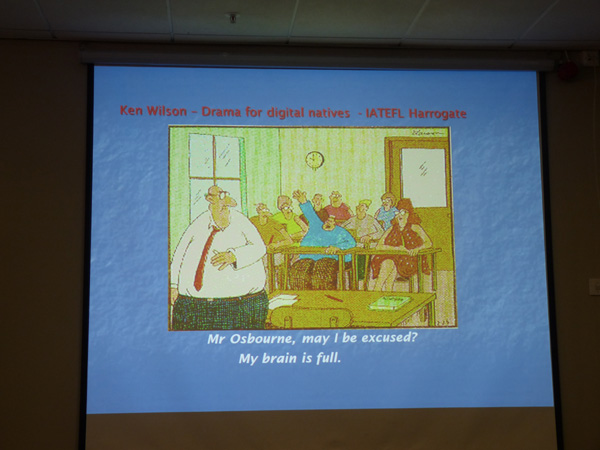
The older the people grow the more curious and inquisitive they become about the childhood days especially of their own. In many instances, they try to remember the events and activities that they were involved in. They still love those activities in which they were actively involved. Most of the adults of all ages in the societies like ours consider the activities in which children are involved in on their own as the ‘unschool’ activities. They can, as the societies believe, harm the growing children’s lives. To make it conspicuous, the children generally love the unschool events and activities which in general encompass playing locally available games and sports, listening to the music, watching movies, joining clubs to meet friends, visiting unfrequented places and so on. In my case, I never realized that those things were bad or would have some adverse effect on my personality. Interestingly what my society considered the ‘adverse’ was favourable to me, which always encouraged me to create a certain distance between myself and school, although I was always at school literally. Perhaps I had a kind urge that somebody would come up to me and ask whether I liked school where I was required to do the ‘school’ activities, which always meant ‘do your home assignment, come to the school in proper uniform, follow the school instructions strictly, do not make noise in the class, do not miss the class and listen to your teachers as long as they teach you’ and so on… In the meantime most of the children’s heads would feel the way students feel in the following picture presented by Ken Wilson at the IATEFL Conference Harrogate in 2010.

In our ELT or more generally educational scenario, thousands of people jump into the field of teaching without any plan and remain as teachers throughout their lives perhaps hardly understanding the urge of the students. This case may not apply to all schools, teachers and children. However, by and large, the students are always forced to follow the footsteps that their teachers create in the course of teaching. The students’ lives are always at stake as we train them to follow us and become like us. We claim that we are the role models for the students, so they need to follow us. I may not agree with this because following this principle, we are creating followers and not the creators. In many cases, I encounter a lot of problems and it is quite difficult to find the ways or solutions, perhaps there still remain the residuals of being a follower of my tutors. This might have forced me to become more dependent on the tutors, and interestingly the society has made us believe that the teachers and indeed in some cases seniors (in terms of age) are permanent guru for us. Mr Shyam Sharma argues against this idea in article which posted along with this. At this point, I would like to link this with TS Eliot’s expression and claim that teachers are simply catalyst and they should not attempt to leave the footprints of their personality into the personality of the students. Obviously, students can be impressed by their teachers’ personalities, but they should not bear in the mind that imitating or mimicking the teachers can make up the students. Unfortunately, knowingly and unknowingly we have created such situation that our students are forced to believe that what the teachers have said are the school things and what the students do or bring up are the unschool things, this is why we tend to think that ‘playing locally available games and sports, listening to the music, watching movies, joining clubs to meet friends, visiting frequented and unfrequented places and so on’ are the unschool things. We are preoccupied with the idea that just reading books (in our cases parroting the pages) is the school activity or say education activity.

The footprint following principle never allows people to become creative and develop the sense of self esteem. People without self esteem tend to be afraid of their teachers. In general the teachers and fathers in our societies are fear factors. Also they hold the position of godlike personalities in the society. Although the oriental philosophy advocates that the children over sixteen should be treated as friends, the practice is quite opposite. We hardly treat them as our friends, let alone celebrating the friendship day. Where mind cannot work without fear, there is little possibility of creation. The more relationship is informal the more likelihood of sharing feelings and knowledge. The passion and hope that we find among the people accelerate the increase of knowledge. Teaching students creating fear and translating oneself into a fear factor mean dehumanizing the learners, and making the mockery of teaching. How can the children consider that they are dealt with democratically? While ironically they are told that their societies are practicing democratic norms and values. I believe these students get confused with the meanings of democracy. These situations lead the children to feel that the institutions where they go in search of knowledge are actually ‘prison’. Citing Daniel T. Willingham the writer of Why Don’t Students Like School?, Peter Gray deliberates, ‘Everyone who has ever been to school knows that school is prison, but almost nobody says it. It’s not polite to say it. We all tiptoe around this truth that school is prison, because telling the truth makes us all seem so mean. How could all these nice people be sending their children to prison for a good share of the first 18 years of their lives? How could our democratic government, which is founded on principles of freedom and self-determination, make laws requiring children and adolescents to spend a good portion of their days in prison?’ In prison, you are not allowed to violate any established rules. You need to follow the footprints of the rules exactly the way you are asked to do. No logic, no reasoning, no arguments will be allowed. The schools treat the children in the same way. The prisoner is perhaps not allowed to look into the eyes of the jailor. Are the children practically allowed to speak to their teacher looking into the eyes with the cheerful face? I would say no. The question of how naïve you are, how gentle you are and how argumentative you are will not be of any concern. In the present context of the mushrooming of private schools, these facts speak more loudly and vehemently too. For example, ‘Dear students, you are not allowed to speak in Nepali or your mother tongue in the school premises, and if you speak, you will be fined, understand? Speak in English, English and English only … you know?’ What crime have they committed that they are not allowed to speak in their tongue when they are with their friend chatting over a cup of tea? And English for them is an alien. How can you be with the alien if you do not get any assurance, suggestions or problem solving skills? We know and should know, ‘Children don’t like school because they love freedom’. When you learnt/acquired your tongue, you were with your people at home and there was no fear. Now you are in fear. A frightened hunter or hunting dog cannot hunt the deer, rather the hunter gets hunted. The schools are becoming more and more prisonlike places. It’s relevant to read a few lines by Gray which describe the difference between the school and prison. He argues ‘The only difference I can think of is that to get into prison you have to commit a crime, but they put you in school just because of your age. In other respects school and prison are the same. In both places you are stripped of your freedom and dignity. You are told exactly what you must do, and you are punished for failing to comply. Actually, in school you must spend more time doing exactly what you are told to do than is true in adult prisons, so in that sense school is worse than prison.’ Modern teachers must be trained how to reduce the level of fear of teachers in students. Also speaking in one’s language is not a crime. The knowledge needs to be increased, for which there must be favorable situation for the receiver. There is no harm in using the native tongue even while you are in the English language teaching situation. This idea has been highlighted more conspicuously with illustrations and examples by P Baker in her article ‘Jumping the barrier: the fifth skill’ which is attached along with this writing.

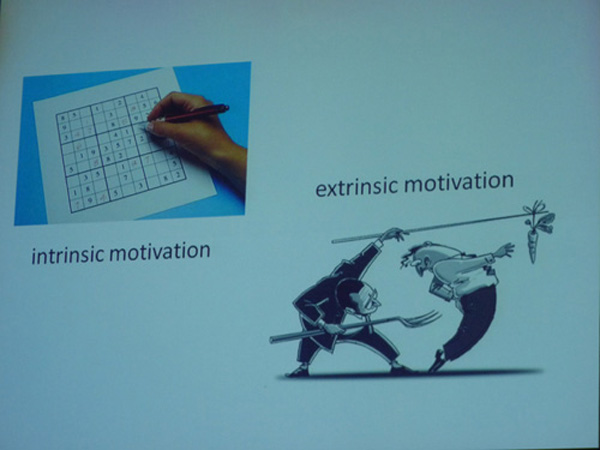
The aforementioned unschool activities are the incredible sources for creating deep sense of motivation in students. The activities themselves can be the source of teaching. If good parents think of ‘likes’ of their offspring, it’s the job of teachers to think of the likes of their students instead of thinking that their students are unteachable. To take an example, if the students like the sports and other similar activities, we can increase their understanding of L2 by means of bringing the aspects of those sports and activities. We can increase the vocabulary items for example. Similarly, we can create the texts which deliberate the issues of the items that the students like. This can easily activate the learning motor of the students. If we speak against the likes of students, it can easily have the adverse effect upon the psychology of growing children. In many cases the false learners terminate their school. I have already mentioned that they feel dehumanized. To speak in a straightforward way, no human has rights to dehumanize another human. To change the students in a positive way the motivation always matters. In order to motivate the students, the so-called unschool things need to be brought into the educational lives of the children in a positive way, for example. In this context, we need to understand deeply that motivation matters; indeed both extrinsic and intrinsic. The extrinsic motivation is also equally important but if we are able to increase the intrinsic motivation, the students can effectively be changed and developed in a nice way. While creating the extrinsic motivation, the teachers should never bear the idea of fear factor which can be seen in the following picture that was presented at the IATEFL conference in Harrogate.

Dear readers, have you ever experienced the situation represented in the picture on the right here, or have you practiced that way while teaching? I do not know your case. But many teachers have had both experiences. At the same time let me ask you seriously do you really want to dehumanize the children? I know your answer will be ‘no’. If so, let’s remember our childhood days and honestly say together loudly ‘Schools are the second home for the children. Dear students, let’s cross the mountain together. Let’s have harmony among us. Let’s learn from each other. Knowledge for all is what we want.’

Please come up with your arguments and constructive ideas that we share with other fellow teachers.

Cheers.

“Teacher, how do I improve my vocabulary?”

— Laxman Gnawali

“How many English words do you know?” I ask participants of a short-term English teacher training programme. There are smiles, squeezed foreheads, I-have-no-idea expressions. I ask a further question, “Do you know at least two thousand words?” Again there is no clear response. “I think I do,” one of the participants says. Then, I announce a test to decide whether they know at least two thousand words. Everyone seems excited but not without some sense of self suspicion. I have brought a list of “Most Frequently Used First Two Thousand Words in English” which I found on the Internet with the help of Google search. These are words which are most frequently used in written English and the list was developed after an exhaustive survey with the help of a computer software. I announce that the participants will have to go through the list and underline if they come across a word which they do not know. Heads start rising after ten minutes and I go to those who have finished and try to find out what words they have underlined. When all have finished, I ask individuals to share which words they found new or difficult. Actually, they did not have many. Only a few words such as forbade, molten, cast, sawn have challenged them. I ask, “Do you know two thousand English words?” Everyone goes loud, “YES!” This experience has boosted their morale that they know at least two thousand words. I promise to bring “Most Frequently Used First Three/Four/Five Thousand Words in English” when I come next. They are excited.

As an English teacher, we are often approached by students with a usual expression, “I am not good at words. How do I improve my vocabulary?” Definitely, they are in need of proper guidance. As teachers, we try to give them meanings thinking that that is what helps. We do that with good intentions. But, if we do not use proper scaffolding, our efforts go in vain. So, in this article, I try to share with you how we can help students to learn new vocabulary as well as retain them for use as and when required.

There are three important things we need to be doing in teaching vocabulary: raising awareness, presenting new vocabulary and consolidating the vocabulary students have learnt once. Let me explain them briefly.

a. Raising awareness

Learners need to be aware of possible ways of learning new vocabulary on their own. This is what is called study skills: how can I learn new vocabulary? What is my style of learning vocabulary? What resources are available for me? In raising awareness, we can train students to use of dictionaries, provide information about local libraries, radio programmes, cassettes and CD’s, and if possible connect students with students of the same level in English speaking countries. Once they follow any of these, students will realize that they can improve their vocabulary on their own and start undertaking their own initiatives. This will ease our burden as teachers. In the experience I mention in the beginning of this article, I have tried to raise awareness about a few things: helping teachers to know how much they know, we need to learn the most useful words and the Internet can provide a lot of information. For the teachers and learners who have no access, I would do something else.

b. Presenting new vocabulary

This is actually what we do most in the classrooms. If we can present the words in a proper way, students can learn them and add them to their repertoire. Usually, we focus on the meaning and leave out the aspects like their usage and etymology. We may not know etymology of all words we are teaching, but if we present the etymology of those we know, it is easier for learners to remember. The word boycott means to stay away from. In the 18th century, there was a Navy Admiral, Mr. Boycott, who was very unsociable and unfriendly. No one wanted to be with him, and as a result, he was never invited to social gatherings. The word boycott was used with the meaning we know after his name. Together with the meaning, if we can tell this etymology, students will easily remember this word. For this, we need to have a dictionary that gives etymology of words. In presenting the meaning, we need to use a variety of techniques not just explanations such as these: draw pictures, miming, giving synonyms and antonyms, demonstrating, using a model, bringing the real thing into the classroom, giving a context and letting students guess, and if nothing else works, translate into the local language. We need to decide wisely what works with which words.

c. Consolidating

It is not always possible to remember all words we have learnt once. We need to use them again and again, play with them and hear them in context. Then, only they go in to the repertoire. Creating situations in which the words learnt once have to come in use, we can help students to be better familiar with the words. In the classroom setting, we can get students to form sentences with the words, to find antonyms and synonyms by themselves, to unscramble the words, or to write a composition in which these are practically required. Spelling contest are very useful for learners to remember the shapes of the words. The other way particularly for the school level is to use language games. There are a variety of games we can choose from: Bingo, Hangman, Tell-me-the-meaning, etc. When we use games we need to make sure that they not only become fun but also help us in moving on with the syllabus and the textbook.

I would like to share with you an activity which I have been using in my English language classes with success. I have chosen this activity as it serves all three purposes discussed above.

Realia in the bag

I have used this vocabulary activity several times with students of different ages. Every time I use it, I see that all types of students have similar fun in learning new words when the learning involves some suspense. Adults are usually surprised that they do not know the names of the objects they always use or see.

Preparation

Find a cloth bag. It should be as big as a school bag and made from normal cloth, not hardened. Collect at least 20 different objects. They can be anything that you can find around you: chalk, duster, stapler, box of staples, match box, ruler, keys, small bottle, shoe brush, tooth brush, paperweight, magnet, board marker, potato, onion, spoon, fork, lime, paper clips, perfume bottle, kettle lid, wooden block, bottle opener, can opener, corkscrew, tin opener, ladle, etc. You can choose items that you want to teach about. Put all of them in the bag and button it up.

Procedure

Tell your students that they are going to find out what objects there are in the bag without looking. They will feel the items from outside and name them. When they feel and decide what the item is, they have to say:
It’s thin and long, so it must be a ruler.
It’s heavy; it’s round, so it must be a paperweight.
Whenever we do an activity, we need try to integrate different aspects so the learning is rich. Here, if we can get students to use a particular structure in naming the objects, they not only learn vocabulary but also consolidate the structures.
OR
It’s thin and long, so it is a ruler.
It’s heavy; it’s round, so it is a paperweight.
OR
I have found a ruler.
I have found a paperweight.

If you are using this article with lower classes, you can ask them simply to name the item they think there is. The difficulty level of the structures of the sentences can be raised depending upon the level of the students.

Get one student to name three to five items only so that many students get a chance. As they name the objects, list the names on the board. When most items have been named, display all items one by one and get the class to name them aloud and spell the words. If the students have named any items wrongly, correct the list on the board.
Depending upon the level of students, you can either ask them to make sentences using the words, to copy them in their exercise books or to draw some items.

Useful books for teaching and learning vocabulary
Carter, R. & McCarty, M. (1988). Vocabulary and language teaching. Harlow: Longman.
Flower, J. & Berman, M. (1989). Build your vocabulary. Hove: Language Teaching Publications.
Gairns, R. & Redman, S. (1986). Working with words. Cambridge: Cambridge University Press.
McCarthy,  M. (1996). Vocabulary. Oxford: Oxford University Press.
Morgan, J. & Rivolucri, M. (1986). Vocabulary. Oxford: Oxford University Press.
Taylor, L. (1992). Vocabulary in action. Hemel Hempstead: Prentice Hall.
Wallace, M. (1987). Teaching vocabulary. 3rd ed. London: Heinemann.
Watcyn-Jones, P. (1993). Vocabulary games and activities for teachers. London: Penguin.
Willis, D. (1990). The lexical syllabus. London: Collins.

[First published in the Shikshak Magazine, April-May 2010]

Reminiscing the B.Ed. fiasco 

— Hem Raj Kafle

Long back high school teachers from my part of the country (eastern Nepal) used to travel up to Janakpur to take the one-year B.Ed. examinations.  On their return they used to narrate their fortnight-long absence  with such zeal as if the examinations alone had reinvigorated them into becoming better teachers.  We students only used to revel at those rather embellished stories of their ‘picnicking’ and ‘tourism.’

“Was it really worth more than a mere certificate – only the proof that you had one because you were asked to?” I sometimes asked my English teacher and some other recipients of this One-year degree when I was old enough to question the worth of this one time venture. The answer: just smile or a shrug.   But the question always troubled me, especially when people began to demand it from me since I decided to become a teacher. What was the meaning of the compulsion (or fashion?) of obtaining one more certificate? Would it prove anything but a license to claim that you could become a teacher irrespective of how many teacherly qualities were absent in you?

I came to Kirtipur after completing Bachelor of Arts at Urlabari, Morang. I looked for a teaching job before joining  TU central campus for my Masters studies. Boarding schools were the immediate destinations. I dropped applications at places. I took written ‘qualifying’ tests at some schools, and faced interviews at others. In all interviews, among many questions one confused me most: “(Why) haven’t you done B.Ed.?” This would come to me as if I had been useless without B.Ed. despite my satisfactory B.A. and four years’ teaching experience. But, I would end up saying, “Well, it’s too early for me to be a B. Ed. I’ve just completed B.A. There’s time.  But do you think it is mandatory to have a degree in education to become a good teacher?”

I decided to try One year B.Ed. only when I started my M. A. Thesis. It was simply for owning one extra degree never really caring whether it would help in the future.

During the entrance test I was amazed to see the likes of me. I had a consolation that mine was not an odd time. I decided to take the admission also. On the admission day, I had to meet a professor at the Central Department of English Education for some sort of recommendation/signature. When she saw my papers, she asked, “What do you do?”

“I am doing my M.A. Thesis,” I said.

“Why do you need be a B.Ed. now?” She questioned with a smile. I only smiled in response and left her office.

Yes, why would I need it? By now, I was all set to start teaching in a university/college and was planning teach courses in literature/literary studies. I had only joined a crowd never knowing their purpose of joining, nor mine.

In my interview at Kathmandu University in August 2000, a professor asked me what I was doing in addition to looking for a job. “I’m doing one year B.Ed.” I responded with little more zeal than I had because this was at least something to say in an interview. But this ‘something’ did not make any impression. One of the interviewers retorted, “Why are you trailing backwards? You must be thinking of higher studies now. You know KU even doesn’t employ an M.Ed. to teach English in the Intermediate level.”

But I registered for the final examinations, again after the crowd. I even sat to write one or two papers in the Kiritipur center. What appalled me then was the way my inmates took their exams. You could have a truck-load of guess-papers and guides only from that room. B.Ed., which was a license for being a better teacher, was a mockery in this center. I would not think it was any different elsewhere.

By now B. Ed. had lost the little value I had upheld earlier.

Meanwhile, I was invited to Mahendra Ratna Campus, Tahachal, to teach Teaching English Literature in B. Ed. final year. I was already qualified to teach a university course. Why keep carrying the school level hangover now? I decided to forget that I had once thought of owning a B.Ed. certificate.

I sometimes recall this fiasco, but without regret. How different would I have become if I had forced myself to pass the B.Ed. examinations?

Teacher Training in ELT: Where does it Go Wrong?

By Laxman Gnawali

Senior Vice President, NELTA

Whenever the issue of teacher training comes up, I start visualizing an event which I witnessed as a student in 1976 when I was a student at Grade VI. This event left an indelible question in my mind. As an inquisitive student I used to listen to what my teachers said and observe what they did to find a correlation between their words and deeds. Once our English teacher told us in class that he was going to Kathmandu for a three month training course; there he would gain knowledge. He returned after three months and resumed his work. Intuitively, I had developed an expectation that when he came back, he would teach us in a different way. I did not expect a better way as I had no idea of what good teaching was, but I expected some difference in his activities in his classroom teaching. To my disappointment, he started with the same method of translating the texts, giving us grammar exercises and asking us the Nepali equivalents of English terms. There was no difference in him and his practice. A question struck me: what had he been doing for three months? I thought training meant learning new things. What had he learnt then? For years the question lingered: What difference did the training make to my teacher?

In 2000 I went to the College of St Mark and St John Plymouth (now, University College Plymouth St Mark St John)  to a Master’s course in Teacher Development, the interactions with my tutors and other professionals, professional literature, visits to different institutes and conferences answered the question that haunted me for years. Then I realised that any training that does not relate to the real classroom world, examination system, local context, and trainees’ mental constructs, their needs and expectations cannot achieve the desired goals. Training that takes place away from the school environment without monitored school-based practice or follow–up cannot be transferred to the classroom. Training contents based on trainees’ needs and participant-centred experiential learning approach in the training can make a difference in teacher learning. For teachers to develop in the job, they need to constantly reflect on their practice. As Burns (1999:12) says

‘reflective analysis of one’s own teaching develops a greater understanding of the dynamics of classroom practice and leads to curriculum change and that enhances learning outcomes for students’.

Appropriate ways to structure the reflection are classroom observation and collaborative action research. Justifying the role of classroom investigation for professional growth Burns (1999:12) writes,

‘researching one’s own classrooms and teaching contexts is something which can, and should, be considered by language teachers, as a realistic extension of professional practice’.

Now I understood why my teacher did not show any difference in his classroom practice.

In the dissertation I submitted to the College, I tried to justify my view on the role of classroom observation and classroom action research for teacher development. I also discussed my belief that in-service training can be an important step to guide teachers towards their self-directed developmental activities. Based on these discussions, I proposed a course which incorporated training-centre-based activities and school-based practice.

Since my return, I have invested all my energy to implement what I proposed in the dissertation through the MED and PGDE programmes at Kathmandu University and NELTA-led in-service training and the results have been positive. However, as there is so much to be done in this area, I keep reciting Robert Frost’s lines:

The woods are lovely, dark, and deep,
But I have promises to keep,
And miles to go before I sleep,
And miles to go before I sleep.

(Modified excerpt from the Introduction to my dissertation Investigating Classroom Practices: A Proposal for Teacher Development for the Secondary School: Teachers of English in Nepal submitted to the College of St mark and St John, Plymouth, UK, 2001)

Bubbles are bound to burst

Eak Prasad Duwadi

Kathmandu University

Be it students or administrators, everyone used to praise me for engaging learners satisfactorily in the class; and I was very self-motivated. In fact, I was started imagining myself to be one of the best teachers in the world. Was I a snob?

Well, I have been teaching English as Foreign Language at reputed schools and colleges in Nepal for more than five years. Besides having degrees, I possess dozens of ELT workshops certificates. Whichever class I go to, learners see me off with broad smiles. Not only they produced what I asked in class but also did every assignment promptly. So I used to feel proud and maintain my learner-friendly status.

However, some time back I had gone for a month long rigorous training along with four other trainees. Besides, theoretical perspectives and language games, we were required to go to real schools along with lesson plans and materials.

It was my first teaching practice of that training. It was also an opportune time to prove one’s worth as a teacher. The instructor and peers would observe the class so as to give feedbacks later. I was so confident that I thought I was the best teacher in the world. I entered the classroom of Grade 10, and started my lesson that had to do with grammar (direct/indirect questions).

As a warm up, I drew some pictures for context setting, and displayed a chart. To my surprise, before I had finished half of the lesson plan, the bell rang, and it was time to wrap up. I felt so guilty that I nearly burst into tears. My ego got dismantled as fragile pane. What I realized was that I was having a vicious circle of self scorn. I was not a perfect teacher as I still had to learn hundreds of methods and countless exposures. It laid bare the threads the fabric of superiority that I had cultivated. Above all I had never thought about timing which is very important. Returning to school, my peers and instructor reflected on my strengths and weaknesses.

I found the first was insignificant in comparison to the second. Obviously, the trainer asked for ‘Repetition’. Although very bitter, I accepted their remarks and promised to do better from another day. It was but another lesson learnt: learning and familiarisation continues all throughout life; and no one is perfect.

Teacher Anecdote: Ekku Maya Pun

Teaching just fell into my lap and I took it up as a profession some eighteen years ago. Whether I had natural flair for it or not, whether I needed to take training for it or not, whether I could be a good or/and successful teacher never crossed my mind. So, a couple of weeks ago, when my colleague Hem Raj Kafle requested me to write something on teaching experience, my initial reaction (to be honest) was of total loss. My head crowded with questions like: What to write? Can I produce a piece worth reading? Do I have something inspirational or beneficial to share with a large audience?

As I started to grope for answers, I was bound to retrospect the years that had slipped without my realizing what they made me. I simply wanted to judge myself as a teacher. I had never done this before and it was a daunting task.  What I have realized after such retrospection is this: I have managed to come so far without even once thinking seriously of changing the profession; I don’t recall any noteworthy complaint from the students and my administrators about my teaching (If any which I am unaware of, then let me continue to be in bliss of ignorance!); so, I can regard myself as a fairly successful teacher.

I am not an exceptional teacher to stand out in the teaching community, exceptional in the sense that some students would pick me up as the type ‘who changed my life’. I go about my job quietly. I perform my responsibilities as sincerely as possible. I believe in simplicity, so I try to keep things plain and accessible. Common and basic values of punctuality, regularity, honesty figure in my conduct of class and treatment for students.

However, now at least two episodes keep flashing across my mind like films clips. The first concerns the beginning stage of my career. It was during the lunch-break in a conference. I was with some of my old classmates and professors. We were zealously narrating our experiences of being teachers, pointing out our students’ general apathy towards studies and their failure to meet our expectations. Hearing our ‘hue and cry,’ one of our gurus remarked, “Fresh out of the university, filled with all the isms of great philosophers and scholars, you young lot are too idealistic. Do not expect things to come perfect as in the books. There is a vast gap between the world of books, university classrooms and the real world outside.” I was a little taken aback to hear this. I thought: “Is it wrong to expect perfection, expect the students to do exactly what I want them to, and how I want them to? I know whatever I am imparting to them is right and useful to be competent and successful in life. I do so because I have only the best interest for them in my heart.”

The second episode relates a student. I came to know about this through a colleague during a gossip about our past students. At one point he casually told me that ‘this student’ had said I was little too unfair with him. He had said I used to pick on him even for a small mistake all the time; I had sent him out or humiliated him by making him stand in the class throughout the period, etc. etc. It made me uncomfortable. I kept quiet in acceptance of what the student had complained. I wished I had known this while I was still teaching him.

These episodes, I accept even now, led to the change in my approach and attitude towards teaching and dealing with students as my journey progressed. Growing up under the strong influence of a strict and disciplinarian soldier father, I sometimes tend to show streak of sternness and demand discipline from students. This is what I realize now, but take these qualities as the gifts from a parent. I may have demanded discipline and perfection in my pupils, but, I am sure, these qualities are prerequisites for addressing the demands of genuine learners.

Furthermore, these two episodes have made me realize these: first, to be idealist and to seek perfection is desirable but not practical. One has to firmly plant the feet in reality and accept it, desirable or not. If the effort you put in to make the reality desirable yields otherwise results, the effort is more meaningful. What we read and find in the books are the products of best minds. They are developed in supposition of ideal conditions where all the pieces fit with one another in harmony.

Second, as a teacher, your aim has to be to motivate students towards finding their own voice, their potentiality for creativity and self-exploration. By this, they will find what they are good at and will feel good about themselves. They will realize their worth, which will provide a solid foundation for their growth and success in life. To achieve this goal the teacher has to less emphasize on rules, discipline (mind you not to forget them altogether). And, sometimes you should reasonably bend the rules if it helps. You should allow them to feel free to be themselves to work constructively. They need to feel respected for their effort and contribution. Then the instructions, textual knowledge, and good results will follow suit.

I do not know how far I am successful in implementing what I have realized. We all know preaching is easy compared to practicing what one preaches. I love to remain ignorant about how much impact I have made in this profession. I just want to value being able to help young people grow,  and continue the profession with the best of my sensibility and diligence.

Teacher Anecdote – Hem Raj Kafle

“Ay, sir. You must be punctual.”

“I’m sorry, I was stuck on the way. A public bus is sometimes ridiculous, you know. And I come from Kirtipur.”

“No, you can’t have excuses! See, everyone here comes by a local bus from somewhere as far as that.”

“But, not everyone comes as early and regularly as I do, do they?”

“No, you must be responsible. I have the right to say this. If you can’t be punctual, you can go.”

“Oh, so you want me to leave? Do you think I will stick to teaching such imprudent and uncompromising people as you?”

This was a dispute between a B. Ed. third year student and myself in Mahendra Ratna Campus (MRC), Tahachal. The day was 14 November 2000.

I was invited to teach Teaching English Literature at MRC immediately after my appointment at Kathmandu University (KU). It was my choice to be in two university systems simultaneously. Besides, how would I miss the chance to teach a higher level course in literature while, as a full-timer in KU, I was teaching general English at the Intermediate level only?

In MRC I would begin the class with about a dozen students but end it with more than a hundred. So, there always was a flow of them coming in almost every twenty seconds.  Mine was the first period at 6 a.m. The class was unforgettable – for everything ranging from the poor doors and windows, dusty floor, dirty blackboard to the influx of those unfamiliar faces, and the noise inside and outside. I wouldn’t mind a thing assured that minding barely made any difference. I was interested, and excited, because the general response of the majority audience was positive. I was not unwelcome to teach literature though many would still have loved to mention that I was a pure “Arts” guy teaching “Education” students.

On this particular November morning I happened to enter the class a few minutes later than 6 a.m. but apparently much earlier than a majority. That student, whom I had never seen before, interfered as soon as I had stood on the dusty podium. As he dared even to tell me ‘you can go’, my teacherly self saw it futile to stay in. After all, I neither needed to stake my dignity nor would expect any sympathy from anyone.  But I tried to calm myself for a while, waiting for a general response. Other students were silent, perhaps confused, because everything was so sudden.

“I did not expect this. Pity you’re going to be a teacher!” I said this and walked out of the class.

I could fight and still continue because my few minutes’ delay was insignificant compared to the general delays and absences our government colleges are known for. I was in fact disturbed not because of this new comer’s imprudence, but because the rest did not respond. I had an instant feeling that I had failed to teach well, otherwise someone would intervene.

I decided to walk out of the main gate and never return.  But, contrary to my earlier impression, a number of students came running after me, requesting not to leave. They knew I would not only leave the class for the day, but forever. They knew I taught in KU, and MRC was only a part-time place that I could comfortably forfeit. They knew I had not gone there but was invited to handle the course someone had mishandled before me.

“Sir, you should take that some people can be crooks. But wise ones have to be even wiser at such times,” one frowned.

“There’s a motive behind this. Someone wants to replace you. He’s only a pawn. You know it happens in government colleges,” claimed other.

“No, there’s none behind. He’s only trying to impress us for the upcoming Union election,” some others remarked.

I was in dilemma. There was a commotion of a sort. Students were divided in groups, furiously discussing, god knows what. I said to the ones who were requesting to stay, “It is shameful to continue if he doesn’t apologize.”

“But, he’ll regret. Anyway, sir, don’t you think our request is more significant than his apology?  And, he may not come from tomorrow. Such people only come sometimes, just to disturb.”

A group of students had already caught hold of and chided him. He might have apologized with the classmates. He came to me with a sullen face and said he had joined my class for the first time and that he didn’t know me.

Unlike what was expected, he did not miss any class afterwards. He was curious, eloquent, critical and creative — the type of student that helps make a class on literature productive.

It is nearly a decade since. I recently read my diary page and came to know that I had been very angry that day. But if I had reached the class on time that day, my brief service at MRC would have been less meaningful. The student first to stop me from walking out of the gate wrote a text book as soon as he had taken the third year examinations. He acknowledged me as his first source of inspiration and guidance.

I have lost touch with all of my students but this one, the boy who had a row with me.  The truth is: I had begun to like him from the following day.

Teacher Anecdote – Lekhnath Sharma Pathak

When the table turns on you

I was teaching English to the BBA first year students of Tribhuvan University in a private college in Kathmandu. As part of their assessment, I had given them a short presentation task. The textbook had some texts against the watching of television as how it destroys family and reading culture and creative thinking and all that stuff. After having discussed those texts I asked my students to make a two-minute individual presentation on either supporting the watching of television, or opposing it or balancing both the view points.

Many of the students made very good presentations and I was evaluating their performance on the spot and giving them their grades. When the student presentation session finished one very smart boy, Lobsang, raised his hand from his seat and challenged me, “Ok sir, now let’s hear from you, how do you fare yourself on the same kind of presentation. Let’s see a good example of presentation from you now.” My God! I was caught unawares at the middle of it. This was something which had never happened to me before. My students had never dared or challenged me. I thought for a while, as how to deal with this unexpected situation. A teacher in our situation is an absolute authority in the class. I could easily dismiss the challenge saying, “It’s your test, not mine. So just shut up.” But I didn’t do that and didn’t feel like doing that as well. I thought of the repercussion it will have, if I did that. It would be letting the students down, not respecting their voice. Giving a message “I don’t give a damn about you”. And since I am in the teaching profession out of choice, not out of any compulsion and I always hold my students above anything else, even above the authority of the college, I couldn’t dismiss the voice that had come from among them. So I thought for a while and decided to comply what they had said. And in a couple of seconds, I thought of how to do it, in my mind. I decided that I will take a balanced view about TV watching. Within a minute, I had taken my stand and then I smiled, with the whole class smiling with me but they smiling for a different reason and me for a different reason. And I said, “Ok, I am game. I will do it for you. You count the time and warn me ten seconds before as I had done with you. The same rules apply to me. I will take a balanced view of TV watching.” The class was quite excited. The whole class was my judge now. And I had to prove myself before them. It was totally a different test from whatever I had faced so far. I took a deep breath. And quickly organized my talk in my mind. I began by the days of radio, how you could listen and imagine the event yourself, which could have been better than shown, how when you watch a TV you can’t use your imagination as the visuals control your thought, how TV creates a falsified world and manipulates your thoughts and perception but at the same time had somebody taken the entire film of how Neil Armstrong landed on the moon and came back, how Hillary and Norgay reached the top of the Mt. Everest our knowledge would have become richer, if we had no access to the live telecast of important national and international events we wouldn’t know how things actually happen. So there are equal pros and cons of watching TV and we need to use our discretion. By the time, I was about to finish my talk I saw a student at the back writing a big 10 on an A4 paper and lifting it with his both hands above his head and pointing it to me. When I had finished I got a good applause. And Lobsang was very impressed and he said, “I could never think of the points you touched within those two minutes.” I felt very happy, obviously. And the class was never the same again. I had gained their respect and confidence.

Class control

An Interesting Teaching Anecdote

Lekh Nath Sharma Pathak

This happened when I was teaching at Buddha Bhanu Saraswati College in Shillong, India, a college initiated and established by Nepali Community there. I was teaching a class of over 200 students in what was then called Pre-University level. When I finished taking attendance and was about to start the topic, the class was booming with murmur. 200 students whispering and murmuring produces noise sufficient to make teaching impossible. So, I thought of a way to get the class quiet so that they would listen to me and I could start the class. I knew that if I simply announced, “Now, class, keep quiet so that I can start teaching,” it would not work. I had to do something more effective. For a while, I paced back and forth on the ‘stage’ – a raised platform for the teachers so that the students could see the teacher. The whole class was watching me doing this. Then, I suddenly turned to the students and yelled like a military commander, “Stop!” with the index finger pointed up in the air. And the next thing I said, quietly, was, “Just look at the tip of this finger” and the whole class went silent and really looked at the tip of the index finger. They found this quite amusing and some of them were about to smile and say something, but I intervened: “Now don’t speak anything and listen.” And the class quickly came under control and the rest of the hour went on smoothly, with the students talking when they were expected to do so.

ELT Resource Development

From the very first issue of NeltaChoutari, we have been emphasizing that we as English teachers in Nepal are not only consuming knowledge and skills, we are also committed to produce teaching and training resources that are appropriate for our local contexts. We have also been arguing that in this fluidly changing global world, we cannot create a demarcation between global vs. local or national vs. international because we are connected to the global world via several mediums of information and communication. In such a changing global-local context, we can also see what is going around the world, what pedagogic practices have been successful or challenging and whether we can ‘appropriate’ them according to our own context. Similarly, if we produce some innovative or useful teaching practice or tips from our unique classroom context, we can share that with a larger audience both within and outside the nation.

As has already been explained in the main page of this Choutari issue, one of the goals of “NeltaNetworking”  mission is to collect, build and develop ELT resources that are useful to our local context. The NeltaNetworking will be devoted to assemble resources that are useful to the English teachers in Nepal, provide links information of useful applied linguistics and English pedagogy websites, organizations, academic journals and blogs, and also encourage the Nepalese teachers to create, upload and share their teaching resources to a larger audience. This will largely be done via NELTA’s website and NeltaChoutari blog’s pages.

As an initiation to provide links to resources to our university researchers and ELT practitioners, I have created a separate page on the NeltaChoutari’s homepage. Please click the link (http://neltachoutari.wordpress.com/downloads-and-links/), find the resources and enjoy the premium access.

And please remember to leave a comment on this post, telling us what kinds of resources would be most useful for you (as well as what resources you know of). Thank you.

February ’10 Fun Stuff

a. Serious Fun: here is an extremely inspiring video of a talk given to the online video archive of inspiring speakers of the world at ted.com. The speaker is an Indian scholar and politician, Shashi Tharoor, who explains how soft power–the power of culture, education and technology, and the image a society builds of itself in the world–is going to determine which society leads the world in the new century. This made me think that Nepal must and can also redefine its identity from being the country of tourist guides and imprisoned child goddess to the country of intellectuals who influence the global knowledge market. video opens in a new window.

b. Fun for English Teacher website: if you are a tired teacher who wants to take a break on the web, or a teacher who needs some fun stuff for class, this site has a collection of funny things about the English language. Happy fun English browsing!

c. Meaning depends on context: How many of the humorous signs listed on this web page do you understand–well, do you have to think twice or carefully before you laugh or smile?

d. Finally, here’s an interesting (actually serious) YouTube video if your internet speed is okay. It’s about a dying teacher who inspired many people.

An Interview with NELTA President Mr. Ganga Ram Gautam

Choutari: How does our effort for promoting professional communication relate to NELTA’s goals and how might we be able to enhance them?

Mr. Gautam: First of all, I would like to appreciate the efforts of our young colleagues Shyam, Bal, Prem and Sajan for taking initiative to begin the NELTA Choutari forum which has offered a professional platform for the NELTA members to share their ideas, arguments, views and their observations. This effort is directly related to the NELTA goals. As mentioned in the NELTA constitution, the two key objectives (among five objectives) of NELTA are: (2) To provide a forum for individuals, institutions and associations having similar goals and (3) To foster the exchange of ideas, resources, information and experience among people associated with ELT and for the last one year you have been trying to enhance the professional communication among the members through this forum. This is indeed a big achievement and we need to continue this in the future. However, the readership network of this forum is still limited and we need to discuss how we can expand the readers’ network and make sure that they read and contribute to the discussion.

C: How do you think we can increase engagement/contribution to networked discussions by NELTA members who have access?

G: This is indeed a key concern for all of us and we need to work collectively on this issue. One of the strategies could be to use the quick communication channels such as facebook/twitters etc. to publicise about this forum and motivate people to read and contribute. For example, if someone posts a quick note on the facebook that s/he read the article posted in NELTA Choutari and make a very brief comment on this on the facebook and link the site on it so that people get motivated to read and contribute. Similarly, we can also put the notice in the NELTA newsletter and make announcement in the NELTA conference. Also, we could have a brief presentation on this in the forthcoming NELTA conference. We shall be happy to have a brief webinar on this if you would like to make a short presentation on this.

C: Do you have any suggestions for conducting networked discussions in better ways so that branches and members can contribute better?

G: Friends, this has been a great challenge for us and we need to find ways to engage the branch members in the professional discussion. I think we need to find a contact person in each branch who has internet/email access and work through that person. Some branch members have already started doing so on individual basis now we need to institutionalize this in all the branches. One of the strategies to promote this could be through the regional network that we plan to establish. Birgunj has already started the regional conference and Surkhet is holding the next. Similarly, we could have other branches from different regions to initiate this kind of activities and the lead branch that organizes the regional event could work as a satellite to disseminate this information. We have proposed this modality for the next English Language Fellow (ELF) when we submitted the proposal to the US embassy. (I have attached the proposal for your reference to give you detail picture of what this is about). These regional centers can be mobilized to promote communication among the branches. Perhaps we can start this on pilot basis.

C: Do you have any practical suggestions for us to collaborate with NELTA in its efforts at increasing professional communication on and off line?

G: Some of you have been very generous to offer your time for the NELTA journal. On behalf of the NELTA committee, I would like to thank you very much for your contribution and I can see that there are a lot of places where we can work for NELTA breaking the distance barrier. Some of the things that I can talk about now are:

a)  Our members include teachers, trainers, researchers and various ELT practitioners. A large number of our members are also trainee teachers who at some point carry out research in various aspects of ELT. In order to support them with the resources, can we set up a site on NELTA Web page, or Yahoogroups or NELTA Choutari or maybe in all of them where we can hyperlink the academic research sites and also upload the articles from the US for our students so that they can have access to the materials? We can also include these materials in the discussion forums.

b)  We would like to put all the Master’s Thesis Titles and Ph.D. thesis titles on the NELTA web so that students can see what has been researched so far.  It would be nice if you could also find the link from other universities where our students can see what kind of Master’s thesis are produced in other parts of the world.

c)  As I and Shyam talked on the phone, we could assign someone from NELTA to liaise the NELTA committee and groups like NELTA Choutari or individuals who contribute to NELTA on the Web. This will make the communication much easier and quicker.

Finally, I once again thank the team that has managed NELTA Choutari very professionally and I also take this opportunity to say Happy New Year 2010.

——

to leave a comment, click here (editor: Bal Sharma, Shyam Sharma)