Category Archives: ELT Resource

What experienced teachers tend to do with ‘silent’, ‘dominant’ and ‘off-task’ students


Bal Krishna Sharma

“I had one person who was always working and two people were just sitting there and watching.”

“At the beginning of the semester I had two very talkative students, and they were sitting in opposite sides of the classroom; and all the time it is them talking.”

“I have had several students who frequently bring topics that are unrelated to the teaching agenda.”

These are some of the quotes I took from my colleagues teaching academic writing at the University of Hawaii. My teaching experience, and perhaps yours as well, shows that students show different learning dynamics and engagement patterns in language classrooms. For example, you may encounter students who are quiet and shy and do not make verbal contributions to whole class or group tasks. You may also find some students who are overtly dominant; that is, they tend to take most of the talk time as well as task time in class as well as in collaborative projects. Still another dynamics: you may find your students engaging in talk and discussions but they may quite frequently drive your teaching agenda to different directions and lead you to off-task situations where you and your learners may not achieve the stated lesson goals. These are some of the learner dynamics I have recently been interested in.

Three years ago, I video recorded five lessons my own class where I was teaching academic writing to international graduate students. When I repeatedly watched the video for a reflection, I noticed that my class included all three types of students described above. As I had just moved from a relatively teacher-centered pedagogic context (Nepal) to a more learner-centered teaching context (the US), I was metacognitively more aware of the belief that ‘Now I have to do a more learner-centered teaching’. As a result, after watching the video, I noticed that I was unnecessarily giving more autonomy to my students. That is, I was not making as much interventions in student activities, particularly in group work, as I now realize I should have.

Then I was curious what other teachers were doing with similar students. I took this issue as a research topic for a Task-Based Language Teaching seminar that Dr. John Norris was teaching. As a next step for my own professional development, I prepared three video clips, each of which contained examples of ‘silence’, ‘dominance’ and ‘off-task’ behaviors of my students. Then I showed those videos to eight writing teachers who were from the same language institute I was part of. As you might know, success of a task depends on all its variables: the nature of the task itself, the learners and the teacher. Based on this principle, I interviewed those eight teachers regarding how they address ‘silence’, ‘dominance’ and ‘off-task’ behaviors of their students. Their responses showed that a teacher has to be well-trained in designing and implementing the tasks in all three stages: pre-task design, task design, and task implementation. Following table gives a summary of these teachers’ suggestions:

Pre-task design Task design Implementation
• Know learners by collecting background information, e.g. use of literacy autobiography assignment, learner style survey, background survey questionnaire, etc.• Use awareness raising tasks, e.g. show videos to illustrate ‘good vs. bad’ group participation patterns; explicitly discuss issues with learners, with a reflection from their own classroom, if possible • Choose familiar topic for the task• Make task guidelines and task goal explicit• Give planning time

• Give worksheet/ handout for preparation

• Designate different roles (e.g. reporter, recorder, time keeper, etc.) in the task itself.

• Do the task first by yourself in order to experience its pros and cons

• Arrange the learners in groups in terms of their demonstrated task engagement patterns•Keep changing group composition unless there is a reason not to do so• Assign learner roles in group

• Keep eyes on what learners are doing

• Make an informed intervention and remind the learners of task goal and allocated time

•Motivate the students

Let us have a look what these teachers say:

“I used to have a video of Cambridge task; it was like about 2 minutes for the task. And one student was dominating the other student. I asked them like how they would rate them. Everyone said that they did not like the student talk too much. And I asked what advice would you give to the one who talks too much or the one who talked too little? So I recommend this to others.”

“Each time I give them a task, I want to engage myself like how much time it should take, its difficulty level like that. And also who is this task for, does it really work? When am I going to put it in class? Am I going to use it in the beginning or end? After I analyzed all of that then I think okay I am going to pair them up or put them in groups. I’m not going to give my students a blind task.”

“I don’t interrupt immediately. I feel it’s kinna rude. And then I indicate ‘okay that’s great, but how about this reading?’ I do expect them to talk about the reading but I am also glad if they are getting fluency practiced. I also feel that it is important to let them talk about social things and make friends.”

“When I see a student talking a lot, I would say something that would go against his or her opinion and then ask the other students which opinion they would agree or disagree with. So, that way quiet students get space between talkative students and they can state their opinions and get involved in discussions.”

“Some students finish tasks before others. Sometimes I go around groups and ask additional questions”.

“If I see that students move to some off-topic talk, I also try to see a reason why they did so. I go next to them and try to restate the task so that they understand what they are supposed to do.”

“Try to let the student do the task independently as much as possible but intervene when it is necessary.”

Concluding remarks: After these two stages of reflection (video watching and interview), I have had more insights on how to deal with diverse students. I have used many of the suggested ideas in my recent teaching. For example, in the beginning of the semester, I always collect student background information through short questionnaire. Frequently, I designate different roles to different students in a group so that each student has a visible contribution to make.

With the incorporation of such ideas, I have had more balanced contributions from my students. Please respond to this if you find the ideas useful to you.

Challenges in Assessing Learners’ Written Skills in Nepal

– Eak Prasad Duwadi

Being a non-native English as Foreign Language teacher, I have faced innumerable challenges in assessing my learners’ written skills. Out of those, learners’ disliking writing tasks is the most common one. I have seen more than a half of a class often has blank syndromes (causes temporary speechless). Moreover, there are many EFL practitioners and teachers who give marks according to the faces rather than the texts their students have produced.  I think we need some remedies to correct these challenges. Hence, if the teachers are committed and well-trained, many of these difficulties will be addressed.

Some students (mainly from elite and foreign institutions) can answer some questions based on their previous knowledge of extensive reading and exposures, but the capability of  students who come from the schools of rural areas where even medium of instruction of English is not English is quite low. Consequently, what they are able to produce is sentences with wrong spellings, structures and coherence. The courses that I have to teach mainly include the development of macro skills. In assessment tests, they are asked to write reports, proposals, formal letters and academic articles though it is almost impossible to fulfill in a single semester.  Another challenge is that most of teachers do not use analytical rubrics: in my university, for example, there are staffs in controller’s office who has pure sciences background.

I have gained many insights on assessment in this session. Agreeing with Linville (2011), I prefer analytical scoring to either holistic or primary trait scoring. It perhaps is more valid as learners’ performance is not only assessed by a particular aspect but also be evaluated with integrated aspects. I have also learnt from Cohen (1994) who presents a series of reading assessing strategies, their advantages as well as drawbacks says that reading involves a series of abilities: language proficiency, attitudes, motivation and background knowledge amongst others.

Therefore, reading is the must for writing activity too. Be it course books, or reference materials, if learners read it, then only they can reflect or create something new. It is up to us to start trying some or a combination of them in order to find the most suitable for our students and for teachers too. Reading relevant literatures about writing and taking part in the discussion, I have made several assumptions.

First, my foremost duty is to promote students’ achievement in writing. I often do this by carefully designing rubrics, giving clear instructions, monitoring students’ writing to appraise strengths and weaknesses, teaching specific skills and strategies in response to student needs, and giving careful way forward that, I believe, will underpin newly learned skills.

Second, my liability is to provide opportunities for writing and encourage the students who attempt to write. In my own experiences, that is possible only when I also do writing with them instead of just asking them to do so.

Third, I ought to evaluate the writing products according to fluency, contents, conventions, syntax, and vocabulary. Now I believe that designing assessments that confirm to all the five basic principles of assessment (practicality, reliability, validity, authenticity and washback) is no longer an impossible thing for me.

Fourth, before designing writing examination, I should think about what and why to assess although both are very tough questions. For writing, I also ought to select items according to my learners’ needs, levels and objectives of the assessment.

Fifth, because “Each genre of written text has its own set of governing rules and conventions” (Brown & Abeywickrama, 2010, p.225), I should assess not more than one or two variables at a time since assessing too many variables together may violet the principles of assessment by focusing on either micro or macro skills for that moment.

Sixth, I should shun non-relevant amendments but allow to peers’ correction i.e. correcting the mistakes all by students themselves to convey positive backwash. I ought to provide positive feedback rather than merely giving them grades to improve and motivate energetically.

Other trainee friends also have expressed similar challenges that I mentioned in the beginning, whilst communicating online.  I, of course, would like to share some ideas that will help them take new directions so as to assess their learners’ writing.

Assigning them varieties of tasks as Brown (2004) has suggested like imitative, intensive (controlled), responsive (connecting sentences into paragraph), extensive (implies all processes and strategies of writing) and adopting “analytical scoring, we have to facilitate them rather than dictating or dominating. As the axiom goes “like teacher like students”, we teachers have to be role models, first of all. Next thing is that they need to have wider exposures of reading, writing, traveling, etc. Moreover, we must love them unconditionally.

When we involve ourselves with them in writing, we indirectly provide the learners extrinsic motivation and engorgement. Later we first can read out our own, and ask them to comment on it. Gradually, even the shy ones turn up enthusiastically. Ultimately, teachers will be able to shun the situations shown in the beginning of unit 5: Assessing Reading and Writing page.

In Nepal writing is the skill which we (teachers) assess mostly. I think what we must remember is: Why are we assessing? and what are we assessing? I here agree with Brown (2004) while considering about students’ writing ability, we need to be clear about, “What is you want to test: handwriting ability? correct spelling? writing sentences that are grammatically correct? paragraph construction? logical development of main idea? All of these, and more are possible objectives” (p. 218). Writing, therefore, is not only a peculiar element. Actually, it is an integrated form of many other aspects.


References

Brown, H.D. (2004). Assessing writing. In Language assessment: principles and classroom practices. White Plains, NY: Longman.

Brown, H.D. and Abeywickrama, P. (2010).  Language Assessment: Principles and Classroom Practices (2nd ed.).  White Plains, NY:  Pearson Education.

Cohen, A. (1994). Assessing reading comprehension. In Assessing language ability in the classroom. Boston, MA: Heinle & Heinle.

Linville, H. (2011). Assessing Reading and Writing. [PowerPoint slides]. Retrieved from http://blackboard.umbc.edu

The Training and Trainees!


Suresh Shrestha

Executive Member

NELTA Birgunj

Training!!! There are two inter-related ways of defining it. One – “What is training?” and the other – “What do you mean by training?” The answer to the first question is widely explored, rigorously developed with a broader coverage, so it is supposed to be authentic unless and until something related but a newer one is unearthed in the same way. And, the answer to the second question is self-centered, self-experienced and self-explained, so it may differ from person to person based on the individual insight. And, what is worth-emphasizing is that the second case has much higher practicality that directly affects the upshot of training which evaluates training itself. As a simple example, some training is given to some targeted group with a view to causing some expected change, but as a baffling surprise, the result may not be what may have been expected to happen – just opposite! Why so? Trainees’ perception may act as a pivot to rotate the training to the desired effect. The training might be of great importance and trainers might hold great expertise, yet the result may be poor. It is crystal clear that it is all because of how trainees mean training, i.e. the way of getting leave granted, enjoying some gossip and receiving some allowance – that’s it! But, it may not occur so in each case because the trainees’ perception may not remain the same all the time. Yes, I had the same experience in the second week of April.

It was on the 8th  and 9th of April that US Embassy Regional English Language Office (RELO) and Nepal English Language Teachers’ Association (NELTA) jointly organized a two-day training for +2 English teachers in the premises of Birgunj Public College in Birgunj with the theme “English Language Enhancement for Teacher Professional Development”. It was facilitated by Ms. Jocelyn White, holding the outstanding 32-year experience of teaching in the United States and around the world, being engaged in the fields of international education systems and intercultural education environments and Dr. Meg E. Infiorati, a multifaceted personality, working as a facilitator of various seminars in organizational teamwork, disaster management, personality types, leadership styles, program management and conflict management, and as a teacher at several local colleges as well. It was a part of nearly one-month training schedule across the country. Luckily or unluckily, I was assigned to co-ordinate the program. I felt lucky because it was a good opportunity for me to grasp and learn a lot. But, on the other hand, I felt unlucky since it was the first time I had had such a responsibility and those who had already had the experience of co-ordination were not physically present for instant support and suggestion. Several times I asked myself what was going to come about. And I consoled myself recollecting someone saying whatever was to happen would turn fair at the cost of our ‘true attempts’, and brushed off all the anxieties. There is a wise saying: a problem appears with its solution following behind. So was the case in that regard. In spite of being away from Birgunj, Sajan Sir initiated the co-ordination by letting us know about the program and giving due guidance about what to do and how to. To be frank, I was reluctant to holding the program owing to mainly two factors: first, most of the executive members were so busy with their own jobs that it felt me quite odd and alone; second, it was time to publish the exam results at several schools so it was a big challenge to collect enough participants even from secondary and +2 levels, whereas the training was mainly focused on +2 level. Anyway, I must congratulate myself on receiving warm support from Kedar Sir, Praveen, Kamalesh, Jyoti and Preksha. We managed to have over thirty participants. It was in fact a good indication of positive attitude towards such training of professional enhancement. Enthusiastic participants from Rautahat, Bara and Parsa turned up to mark the training with a good success.

In the inaugural session on the first day of the program presided by Mr. Kedar Prasad Sah, Chair of NELTA, Birgunj, as our token of love and honor, we offered ‘Gamchha’, the invaluable cultural recognition of Tarai dwellers, to the Chief Guest Mr. Yugalkishor Prasad Sah, Academic Director of Birgunj Public College, the Guest of Honor, trainer duo, Ms. Jocelyn White and Dr. Meg E. Infiorati, and the Distinguished Guest Mrs Shobha Benargee, retired Reader of English of TU. And, the session was closed with the vote of thanks by Mr. Prveen Kumar Yadav, executive member of NELTA, Birgunj.

The first-day sessions included reading, personality types and graphic organizers. I understood reading as something interactive to gain energy that fuels the continuity of our action. Reading doesn’t mean merely reading some written stuff, but also trying to decipher some drawings and some facial expressions in different situations. So it refers to reading something else. Introverts are supposed to energize themselves by means of their thoughts that they gain by reading different matters, whereas extroverts gain energy from the environment, i.e. by ‘reading’ the surroundings. ‘If so, are you an introvert or extrovert?’ The question may really put anyone into a dilemma. But, what about the answer ‘Both’? One may explain ‘When I am alone in my room I am an introvert, and when I am in a gathering, I am an extrovert!’ Such a clever answer had no space there when we took a test to chalk out what personality type we had. There were sixteen types of personality based on eight factors: E – Extraversion, I – Introversion, S – Sensing Perception, N – Intuitive Perception, T – Thinking Judgment, F – Feeling Judgment, J – Judging and P – Perceiving. It helped us to find out what type of personality we have. I was interestingly useful to judge ourselves psychologically and act and improve ourselves accordingly. The next one – graphic organizers – was focused on the way we may explain what we perceive through reading. It was indeed implemental in our teaching field. It was all about how we make a graphical presentation of what we have read and understood. Selecting several chapters from the books “The Magic of Words” and “The Heritage of Words” and offering different graphic organizers namely Web, Tree, Flowchart, Fishbone Map and Venn Diagram, the participants in different groups were made to select the organizer that might suit the particular chapter chosen and to simplify the complex information into different small easy-to-understand bits of information. It laid emphasis on the various ways of learning learners may adopt according to their different perspectives. It was of course of great use for teachers to conduct a big class by dividing the students into different groups, engaging them in interaction on certain reading, and reflecting their understanding logically.

On the second and last day, the program was to begin at 8:30 A.M. Although it was delayed by about one hour, almost all the participants attended it with good spirit. From teaching view-point, many more found the session effective. It was all about the different levels of knowledge in Bloom’s Taxonomy: Remember Understand, Apply, Analyze, Evaluate and Create, arranged from the basic level to the advanced one. They were explained how to apply to form right questions from easy ones for the students’ comprehension to challenging ones for their analysis and creativity. Each pair of participants selected a new topic, read it, made several related questions according to the levels of knowledge and arranged main pieces of information on cardboard paper using a suitable graphic organizer. All observed each other’s and interacted how clear and consistent the presentations were. It gave lots of space for us to put our logics, dispel doubts and mark the shifts in understanding having discussions with each other and with the trainers directly. Since we had to wrap up the program by 1 pm or so, we had to shorten it; yet we could grasp the gist of each and every presentation. Had we had more time, we could have enjoyed broader workshop practice. The facilitators-cum-trainers were so amicable and conscious about our moves and inclination to the learning. Personally, Meg asked me how long we could run the program. Had we been allowed to hold the program two weeks later, each of us would have had enough time to enjoy the training in its full length with much better arrangement and Meg and Jocelyn would have been much happier by benefiting us much more. But, sorrowfully, they were scheduled to fly back to the capital so we could not make any instant decision to extend the program. Anyway, it was so wonderful, fascinating enough for the participants to realize the genuine aspect of the workshop training.

One thing that has been sensed noteworthy is that the concept of training among young energetic people seems to have had its own impression. They seem to have understood the value of such trainings and seminars. Previously there were some bitter experiences of trainings and their implications. They were the sources of income and opportunities to have leaves granted. So the outcomes of such trainings used to have several shortcomings. But, nowadays, especially young teachers or would-be teachers are getting ahead to spend money willingly in participating in trainings, since I am optimistic that they are now more serious about their professional step-up through all-around talent. They seem to have realized that degrees and jobs might be secured but the talent is something they must hunt rigorously. I can’t help thanking them for the rise in their perception, those dedicated trainers-cum-facilitators-mentors, and all the contributors!

Could I hope for the same helpful hands from you all on the pedagogical journey ahead?

Thank you all so much!

Teacher as a ‘verb’

Prem Phyak

We know that ‘teacher’ is defined as a ‘noun’ in dictionary. We have a belief that a teacher is a ‘knowledgeable person’ having degrees and sufficient skills to perform. But what is that ‘knowledge’ we have? Is it fixed or dynamic? Is it one-off or on-going? Is it co-constructed or received? These are some general questions we, teachers of English (ToE), should consider to critically assess our own role to facilitate students’ learning. In a more reflective and subjective fashion, in this brief post, I discuss how language teacher is a ‘verb’ not a ‘noun’. I will nuance this issue by framing my ideas under major themes associated with reflection on my own language teaching.

A brief narrative

When I started teaching at primary level, some 10 years ago, I believed that I would be the best teacher if I could make students listen to me. I tried my best to learn the meaning of words (all literal) from dictionary and write them on the textbook itself. I remember that my books were full of word meanings. Sometimes I could not get the meaning of the words in dictionary  which made me feel diffident in teaching. Honestly, it was really hard time for me to understand some stories and I could not really explain well to my students. I still remember that it ruined my sleeps and leisurely times.  I had no idea what I was doing. I did not even know whether or not my students were learning. It was really a dreadful experience.  My students never talked to me.  I  was not confident to engage them in classroom interactions. But I was happy that they did not make any noise in the classroom. I could feel that they did not make noise because they were not making sense of what I was teaching and they were overwhelmed with the word meanings I gave them.  I was curious to know why my students were so silent and whether or not they understood the stories. But I was reluctant to ask my students’ feedback.

I was able to perform in class but I was never sure whether or not I was helping my students in ‘meaning-making’ process. I never thought that students could learn better if they were given chance to personalize and relate the stories in their situations. I never knew that they could learn words by allowing them to use those words in their own sentences. I never provided them with feedback on their home assignments rather I used to simply identify what errors them made. I could not help them learn from their own mistakes rather I grilled them why they made those silly mistake. As I was imposing my ‘teacher’s authority’, my students were scared of asking questions even if they did not understand what I was teaching.

Many things changed! (I am not describing all those changes to save space). Informed by new courses, readings, trainings, seminars, workshops and continuous teaching, I could do a critical analysis of what I did in the past and learn from those experiences. Although I cannot explain my entire professional trajectories, I can draw following major themes which can be issues for my further professionalism.

1. Co-construction of knowledge: I could say that I did not know that students had rich ‘capital’ or resources (linguistic, cultural, and social) that I could use in the classroom. Now I realize that the knowledge construction process in the classroom is not a ‘one-way’ process rather it is a mutual meaning-making process in which students bring their own worldviews and use them as a basis for negotiating with others in the classroom. This indicates that teachers should consider themselves only as ‘a member’ in the entire language teaching-learning process.  It does not happen when teachers simply say that ‘now I am going to co-construct knowledge with you’ but it works only when teachers corroborate students’ views and beliefs as an integral part of learning process.

2. Addressing students’ agency:  Every individual has ‘agency’. This means they can decide their goals and strategies to achieve those goals. And they can use their existing knowledge and experience to learn new ideas. When I go back to my own narrative mentioned above, I now realize that there were stories or plots in them which students could easily relate to their life and society if I had asked them. But I never did so. What I am trying to argue is that our beliefs about the role of students as a ‘passive-consumer-like-recipient’ of knowledge may be a detrimental for students’ learning. Working with students’ own personal experiences and socio-cultural capital as a starting point may help us promote more equitable and sustainable learning.

3. Transmission vs. transformation of knowledge: Any kind of teaching including language teaching is related to the production of knowledge. There are different ways to produce knowledge. Traditionally, though still dominant belief, we believe in the transmission of knowledge i.e. we consider ourselves as a repository of knowledge and transmit to students usually through lectures and dictations. Guided with this assumption, we consider knowledge as a fixed and a one-off artifact. But is the knowledge we learned some 20 or 10 or 5 or 2 years ago still relevant to address students’ needs and complex soci0-cultural changes? Does the taken-for-granted knowledge fit into all socio-cultural contexts? These questions imply that we need to rethink about how to generate or transform (not transmit) knowledge in the classroom. This works when students all given opportunity to transform the knowledge discussed in the classroom to their own personal and social contexts. One of the ways of doing this, as I think, is to engage students in exploring and discussing locally situated issues which they are familiar with and can talk about. This process will not only help students learn language but also make them aware of their society and culture, eventually contributing to the transformation of society.

We see that language teachers  have challenging responsibilities ranging from promoting students’ individual agencies to contributing to the transformation of society. This requires a lot of transformations in our own deeds, especially belief system. In this sense, teachers are an ‘agency’ and ‘actor’ but they are not simply a performer of what they know. As we do a lot of contested, conflicting and ideological activities, as a professional to promote students’ learning, we teachers are not a noun we are, in fact, a ‘verb’.


Teaching Language Functions as a Broader Concept

Mandira Adhikari

As a student, I learned English largely through Grammar Translation method, but when I studied the subject “ELT Theories and Methods” in the university, I became aware of much better methods for teaching English. As a result, when I started teaching, I was able to teach my students by using communicative and other methods. I used language functions as a key concept to teach communicative skills, and I found teaching language function very much helpful to develop the other language skills of my students and after a short period of time they were able to speak in English. However, when I studied advanced ELT Methods in Kathmandu University, I began to wonder if role play is sufficient for teaching language functions? Are there other alternative methods for it? How can I develop other skills with the help of language functions?

What are language functions?

In order to do anything with and through language, we take help of the certain exponents of language. The purpose of language use is called language function. As Blundell, Higgens & Middlemiss (2010) state, we only speak or write with a purpose in mind: to help someone to see our point of view, perhaps or to ask their advice or to reach agreement with them.  The functional use of language is not only based on certain language structure or grammatical rules, it is how we understand the context and use the language in order to fulfill those purposes. For example, sentences in the imperative form may perform a variety of different functions:

Give me your book. (Order)
Pass the pen, please. (Request)
Turn right to the corner. (Suggestion)
Come to visit us on Saturday. (Invitation)

The above exponents are used by the speaker of language in different situations. Thus, language function refers to the purpose for which an utterance for which a form of language is used as a means of communication.

Stages of teaching language functions

Teaching language function is very similar with teaching grammar. There are three stages of it. The three stages are described below:

Presentation

This is the first stage of teaching language function. In this stage, the teacher presents a language function either in a dialogue form or by creating context. S/he holds discussion with the students regarding the possible exponents for the language function to be taught. This stage can also be taken as a pr- communicative activity as it is a pre-step to develop communicative activity. Some of these activities are; Contextualization, Description of the social settings of the language use, Motivation and preparation, Identification of the participants, Setting, Acting emotion, determining purpose etc. Doff, Jones & Mitchell (1997) says “This stage is concerned with controlled practice of a new language. It ranges from simple manipulation of structures to more imaginative practice in which students use language in real life situation” (p. 9)

Thus, in pre- communicative activity, the teacher creates the context and provides description on where to use such language function or in which situation.

Practice

At this stage, the students are given opportunity to practice language function presented. For this purpose, they may be involved in pairs to conduct mini – dialogues. They practice the language function by means of mechanical, manipulative or communicative drills. In this stage, they mainly memorize as well as learn how to use different exponents and realize their meaning.

Production

This is the last stage of teaching a language function which focuses on using the new language function, in free or real life situation. Richards (2006) says that students practice using the new structures and in different context often using their own content or information in order to develop fluency with the new patterns. Thus, this stage focuses more on the fluency of the language rather than accuracy. Thus, this stage is also known as communicative stage. In this stage, students can be asked to work in pairs or a small group to share the ideas. Some of the activities of this stage are; mini- exchange, role plays, oral games, guessing games, interviews etc. (Note: An example of teaching language function for class nine students using these three steps are presented in appendix).

Some other activities for teaching the language functions

Though the P-P-P model is very popular in teaching language function, it is criticized for being limited in certain functions. (Skehan (1996), as cited in Richards (2006) says “The underlying theory for a P-P-P has now discredited. The belief that a precise focus on a particular form leads to learning and automatization”. Thus, only the three stages of presentation practice and production is not sufficient for teaching language function.  Role play is very popular activity to develop language function. More than role play, there are other activities which are very helpful to teach language function. As it is very similar with teaching grammar, we can utilize the techniques of teaching grammar for teaching language function. Ur. (2003) has presented different types of grammar practice such as: awareness, controlled drills, meaningful drills, guided or meaningful practice, discourse composition and free discourse. Among these activities, drills, discourse composition and free discourse are really helpful to teach language function because while writing the discourse students should use different language functions that are used in our daily life. Highlighting the focus on meaning and situation of language used, Doff (2010) says that there is a way to show meaning through a situation i.e. to think of a situation from outside the class, in which the structure could naturally be used which may be real or imaginary. So, a teacher can create a context and ask students to use different language functions in those contexts which also can be a technique of teaching language function. Moreover, some other techniques of teaching grammar are presented below:

Information gap activities

It is an activity in which a learner knows the information but other does not know.  It is necessary for communication to occur so that the listener actively decodes and reacts. Then the listener speaks becoming the informants for a while. Some of the information gap activities are; discovering missing information, discovering secrets, the role of customer and shopkeeper.

Pair work or group work

The teacher can provide a situation and language function and ask students to discuss that situation and develop dialogues according to the context and present it in front of the class.

Strip story

Strip story is a technique of presenting a story part- wise in a small slips of paper called strips. This activity is also helpful to develop communicative activity among the students because students need to discuss in pairs where there can be interaction, thinking and sharing. While sharing the ideas they need to use different language function such as describing, negotiating meaning etc. students also develop problem- solving activity from this technique.

Communicative drill

This is also a technique which is very helpful in teaching language function. It is a type of drill in which the type of response is controlled but the students provides his or her own content of information. For example:

Teacher                                                                                    Student

What did you do after breakfast?                                           I —————

Say how you greet to your teacher in the morning.                    ————————–

Thus, this type of drill is also very useful to develop communicative skill of the students and can be used as a technique to teach language function.

Problem Solving

The teacher can provide a problem in groups so that they should have to do lots of interaction and while interacting with their friends they should use different language functions. For e.g.; requesting, description, questioning, refusing etc. thus, this is also a helpful technique to teach different language functions.

Communicative Games

Communication games are designed to provoke communicative activity among the learners. For e.g. oral games, guessing games, solving the puzzles etc. they are very helpful to teach language function as well as to motivate learners towards learning.

Oral Speech (telling stories or experiences)

While sharing experience or the story among the students, they need to use different types of language function which is more helpful to develop the use of language function. Thus, it is also a technique to develop communicative skill of the language with the help of language function.

Developing other language skills

Teaching language functions is very helpful to develop other language such as: listening, speaking, reading and writing.  When we are teaching a language function we can develop other language skills as well and it is the most important aspect of language to develop other language skills.

The main aim of language teaching is for communication and communication of language can be developed when we learn to use language in different context and language function is the way to develop communication among the learners. My experience as I have presented above also shows that teaching language function can help developing speaking skill of the learners. Similarly, above mentioned methods not only help in developing speaking skill but the other skills as well. For e.g. when we are using strip story technique students should speak in order to communicate with their friends as well as they should develop a story based on the strips so that they will use different language functions while writing. They should listen the response of their friends as well as it may be necessary sometimes to read in order to complete the task.

Conclusion

The basic model of teaching language function can be the P-P-P model as in grammar teaching which means presentation, practice and production. Any language function can be taught being based on this model in an effective way. Regarding the techniques of teaching language function, role play is a very popular technique however; there are other techniques such as: strip story, communication games, communicative drill, oral speeches, information gap activities, pair work or group work etc. We can use these methods to teach language function to our learners. Moreover, while teaching language function to our learners we can develop other language skills as well.

References

Doff, A. (2010). Teach English. New York: Cambridge University Press.

Doff, A., Jones, C., Mitchell, K. (1997). Meanings into words (teacher’s book). New York: Cambridge University Press.

Richards, J.C. (2006). Communicative language teaching today. New York: Cambridge University Press.

Ur, P. (2010). A course in language teaching. New York: Cambridge University Press.


Research for Tertiary Level Presenters

Hem Raj Kafle

This article presents basic ideas of research based on my experiences of teaching a tertiary level course in English communication skills. The purpose is to outline some down-to-earth steps to address the presentation needs of students with moderate competence and performance.

What is research?

To start with the relatively obvious, research is as simple as trying to find a little more than what removes confusion.  It is the attempt to know things to the extent of being able to claim ownership and originality. The teacher can make it a point that presenters must know much more than they present. So, the only basic value to emphasize would be what Booth, Colomb and Williams (2003) postulate about research as the attempt to “free yourselves from ignorance, prejudice, misunderstanding and the half-baked ideas that so many charlatans try to impose on us,” and to “improve not the whole world, but at least your corner of it.” This at least would not sound idealistic given that the tertiary level orients a considerable portion of curriculum to research-based projects, and that the students are already prepared to face a professional work environment ahead.

I propose that the teacher encourage students to work on three main factors in the form of a research activity – knowing the audience, finding and organizing the contents and determining right strategies.

Knowing the audience

Research starts with the care for the audience. A presenter should work with the awareness and recognition of audience in view of their interests, orientation and competence on the subject being presented. Siddons (2008) contends, “Not knowing your audience is lethal. How can you engage people if you don’t have a clue what really interests them?” Knowing the audience requires a process of listener analysis, which according to Careers Skills Library (2004) involves the following considerations:

Ask yourself the following questions: What do my listeners want to know? If you don’t provide information that interests them, you’ll put them to sleep. Find out what they care about and cover this material in your talk. … How much do they already know? They may be experts or they may know almost nothing about your topic. You don’t want to “talk down” to your listeners. But you also don’t want to speak over their heads. Determine what your audience knows and pitch your talk to your audience’s level of understanding. Where do they stand? Your listeners may be likely to agree with what you’re saying, or they may need a lot of convincing. Find out their attitudes; then determine what to say to persuade them of your point of view. [emphasis added]

Search for contents

In addition to the knowledge of the nature and needs of the audience, research entails a thorough search into the content itself. The following three steps would help develop the contents of a presentation.

Somewhere to go:

Research should involve movement, both physical and mental. Even while you are surfing the internet you are moving, or navigating. In addition, you may travel to search for facts and figures, to take samples and to gather data. Going to library from your residence, going to the study from the living room – all comprise the action of going, the bottom-line for research. When you go out, you use your senses to perceive the world outside. You see, hear, touch, smell and probably taste things. Activation of senses helps you get the fuller picture of the phenomena you are exploring. The result is you experience your subject well, and will later present it with great involvement and positive attitude thereby activating your thoughts and polishing language competence.

Someone to talk with:

Research involves interaction with people. The basic purpose of such interaction is to include people’s minds in your venture for finding more knowledge.  This can be done both formally and informally. Talking formally refers to interviews or (focused) group discussions. Informally, it is more than structured interaction. What about asking people where a certain place is, whether such and such book is available or even whether there is someone who knows the subject more? And it does take into account the queries to the instructor or anyone she refers to. Even the SMSs, chats and emails may have substances. Meeting and knowing people both opens up the avenues of new resources and offers opportunities for building a professional connections.

Something to read:

Reading sounds simplistic; anyone at the tertiary level does read. But do students read enough in order to build competence in communication and learn new things beyond the curriculum? Most student presenters start in complete ignorance of what to do. A few get ready with very personal subjects like their most favourite (place/celebrities/idols) and the most unforgettable (events/days/experiences) which may not involve further study.  But the teacher should set a bottom line. In the beginning, the teacher must solicit the presentation all the way from the choice of a topic to final delivery. Thus reading should be compulsory so that it will involve learning. It should teach new ideas as well as ideas of oral communication.

Reading can include multiple types of texts: guidelines for presentation skills (preparation and delivery), handouts on a topic for students who have already got topics, list of possible topics for those who have not fixed them, interesting texts to get ideas on a possible topic, and even a list of things to do before ending up with an idea – visit library, talk with someone, see samples of earlier presentations, among others.  The texts can be of any length and genre: anything that one comes across once the ‘unrest’ and curiosity about a topic starts. It can be a piece of newspaper article, texts on a hoarding board, an advertisement slogan, writings on a new brand T-shirt and so on.

Beyond content

Researching through physical mobility, interaction with people and reading of relevant materials enables presenters to internalize the contents of presentation. But research must involve more work beyond the content.  Because it is a tertiary level class and students are already conscious of building professional attributes, they should be asked to develop certain strategies of organization and delivery. What would be the most appropriate beginning given the nature of the content and audience? What would be the degree of formality/informality both in demeanor and language use? What aids (handouts, chart papers, multimedia) are relevant to facilitate the presentation and audience involvement? What jokes, anecdotes and facts would embellish the content as well as trigger the audience’s positive attitude?

Research is inevitable for developing original content, for competence in knowledge and confidence in delivery. It helps build up credibility in the presenters by according them sincerity and diligence.

 References

  •  Booth, Wayne C., Colomb, Gregory G., & Williams, Joseph M. 2003. The craft ofresearch. 2nd ed. Chicago: University of Chicago Press.
  • Careers Skills Library. (2004). Communication skills. 2nd ed. New York: FergusonPublishing Company.
  • Siddons, Suzy. (2008). The complete presentation skills handbook. London: Kogan Page Limited.

Strange Noise


Parmeshwor Baral

In our schools and colleges we want our students to pay full attention to us during lecture and full attention to their work during other activities in class. So when we hear any noise other than what we expect, we rush to the judgment that they are developing a bad habit and disrupting the normal functioning of teaching and learning in the classroom. But the reality might be something different than what we expect from our students. It is hard for us to see any other reasons for students to make noise in the class, other than a lack of attention, not understating our accent or ideas, lack of motivation, or just lacking the discipline in themselves or respect for teachers. I learned something else the hard way.

When I was teaching compulsory English in a class in Pokhara some years ago, I could not understand why three of my students, who I knew were academically successful students, constantly made noise. I wondered if my teaching and the classwork that I gave them was not interesting enough for them. I felt offended because it seemed that they were trying to undermine my authority in the classroom because I was a newly appointed teacher in the college after a teacher left in the middle of the year. Day after day I changed my strategy and teaching technique, and yet they were busy in making noise. Not that they interrupted the entire class, but they were still very distracting to me.

I consulted senior colleagues about the problem and no one was able to explain without being in the class. Someone said that they could be inattentive because they were sons of affluent families in town and they might have private tutors to teach them the content of my course afterwards in the day. That made me wonder why they would come to class in the first place, because if they didn’t want to I had no ways to oblige them.

After a while, I got a few opportunities to meet with those boys, when I asked them why they made noise during class. At first they tried to evade the question and then pretend to not know about the noise I was referring to. But one of them, Sasanka, apologized for the problem without telling me the reason for the noise. These students asked for some advice about the chapter that they were studying, and I responded to their needs.

When I came home that evening, I started thinking about how to integrate these students with the rest of the class and how to encourage them to be attentive in class. I kept trying my best, using different ways to make the class interesting and engaging for all students. One of the things that I did to engage this group of students was to give them specific activities after inviting the whole class to join the conversation, form discussion groups, or share ideas with the whole class. For instance, I told them to write a summary of a reading or respond to comprehension questions at the end of the chapter. Interestingly, the noise suddenly went away.

This incident made me realize that students not only make noise for all the bad reasons that we tend to think about. They may make noise in the attempt to be more engaged about what is going on in the class, the activity that we have given them—or for that matter that we have not given. Some groups bond well, and they engage themselves in critical discussions of the topic at hand. They need to be intellectually challenged. Yes, students may also start making noise when they don’t understand what they are being taught, like they may stop doing the activity they’re asked to do and start doing something unproductive if they don’t understand the given task well. These days, when I hear noise coming from any part of the classroom, I start thinking about positive causes of the noise, or positive things that I can do about the noise by challenging students to be “in class” intellectually and emotionally.

An incident that changed my attitude: Remember to check homework

-Madhu Neupane

If we are asked to list some of the things that learners should do to improve their learning, I think we would not miss to say that they should do homework regularly. Though we teachers have our own assumptions and attitudes about different things, we have positive attitude about giving homework in one form or the other.

We are aware of the advantages of homework. We know that it promotes the practice of independent learning; helps students to reinforce basic skills learnt during school days; allows them for the use of resources and materials not available in the schools; provides parents with information about the progress of their children; provides appropriate opportunities for long term research; provides opportunities for teachers to differentiate work for children.

These benefits can be categorized into immediate benefits (better retention and understanding of information, development of critical thinking and concept formation, and improvement in processing information) and long term benefits (encouragement to learning, improved attitude towards schools, and better study habits and skills). Furthermore, homework is supposed to have long term non academic benefits such as greater self direction and self discipline which we want to inculcate in our learners.

Giving homework is not sufficient. Equally important is the checking of the homework. It is necessary to check homework to reassure learners that what they have understood is right; to provide repeated exposure to aid acquisition; to provide them with a record of correct language for future reference; to encourage thinking about why an answer is correct or how they have reached a particular answer; to provide support for different levels of learners; to provide them with a sense of satisfaction from discussing and sharing something they have spent doing; and to allow learners to play an active role throughout the learning process by encouraging learner independence.

What impact does it have if you give homework but do not check it? Even a single event or incident may bring a great change in our life. The same thing applies to teachers as well. I want to relate this to one of the incidents that changed my attitude towards homework checking. For this reason I want to call it a success story. This has been a great lesson for me who used to sometimes not check homework because of lack of time or other thing.

One day I was teaching in my bachelor first year class. The learners in that class came from very diverse backgrounds. Especially they were from the government schools in rural areas so we can mostly imagine their level of English. Some of them were really good. I encouraged them to take homework every day and do whatever they can at home. One day I gave them a homework that was solving exercises given in the book and said that if any one of them did not do homework I would proceed without doing the lesson for it was also their duty to do some reading themselves. Next day I checked the homework and found some of them not doing the homework. I told them to do the same task again by convincing them that it did not matter if their answers were wrong. What mattered was their attempt. They seemed to have been convinced.

The next day I had to attend a meeting with the head of the department about terminal exam so I went to the class a bit late and started the lesson. That was a reading lesson. I did not care about the work that I had given to the learners. While I was about to leave the class one of the learners stood up and said, “Madam I stayed up to 11 O, clock to do the homework. There was load shedding (power cut) so I did my homework with the help of candle. I had to prepare for the class test of other subject but I felt so strongly about the work that I did it even putting the task aside. But unfortunately you did not check the homework today. I would not do homework next time”. He said this with tears in his eyes. I felt so guilty that I put my things on the table again and put my hand on his head.  I said “Sorry Rabindra, I just thought that I would check your homework next time. Take out your homework. I would check it now”.  He took his homework out of his bag and I checked that. He had done it very well. However, he was not happy because he realized that I just did this because he had said so. I left the class with a feeling of guilty.

In spite of giving me a sense of guilty, this incident had really positive impact on my attitude towards homework. So, I want to recall it as one of the success stories in my teaching experience. It taught me the lesson that checking homework is very important.  From that day onward I have felt so strongly about the work that give that I never miss to ask whether the learners have done the work that I gave them and give some positive comments on that. It does not take me much time. Sometimes, I just have a look on their work going from front to back. If I think some learners have done it really well I read it for the whole class and if most of them have got it wrong I provide possible answers on the board.

I have found that going through learners work very quickly if we do not have time to go thoroughly can have surprisingly good impact on learners. It gives them a sense of achievement. That is, I think, greater learning experience than anything else. Since the success is the accumulation of small steps we should not forget that “small things matter”. Checking homework may just be a small thing in leading learners towards a greater success.

=====================================================================================

Ms. Madhu Neupane (Bastola), Lecturer, has been teaching at the Central Department of English Education, Tribhuvan University, for 6 years. She completed Master’s Degree in English Education in 2003 and Master’s Degree in English Literature in 2008. She has published some articles and books and presented papers in different conferences. She has experience of teaching English from Primary Level to Master’s Degree. She has conducted some research in the area of ELT. At present she is an executive member as well as life member of NELTA. Her interests include teaching and conducting research in ELT.

For contact:

Phone Number:           01-4332867 (Res) 9841738920 (Mobile)

Email:                           madhukneupane@gmail.com

Skype:                          madhu.neupane2

Local needs and local resources in teaching English

 Asharam Shah

Janjyoti Higher Secondary School,

Chandranigahpur, Rautahat 

Indeed, teaching is a noble profession. It has been carried out variously since the earliest times. It was conducted, facilitated, administrated and accomplished by ancient Hindu Gurus like Vishwamitra, Bashistha, Dornacharya, Kripacharya. The continuation of teaching and learning activities has been spreading widely all over the world. Considering the above circumstances, I involved myself in the field of teaching at the age of 17.

I was a typical young and shameful teenager when I started teaching. I started my teaching career since I joined a private English boarding school. My hearts and emotions were filled with a great enthusiasm. There’s one thing I detest; it’s the people who make comment on getting myself transferred from one school to another. I didn’t stand still at a single school or institution for all times. It is because I wanted to improve my academic career as well as economic status smoothly. During my teaching career, I have taught in more than seven schools and gained various teaching experiences. After completing my graduation degree, I became competent and eligible to be a secondary level English Language Teacher as per the legal provision in Nepal. I filled up my forms, faced the competition through both written and spoken modes. What I found is raw fruits in my palm that I could not taste. I was depressed by the policies and controversial arguments made among school management committee and the concerned authorities of selection committee. However, I didn’t lose my patience.

Later a new inspiration blended my performance in teaching at newly established Mid Regional Police Boarding School Jingadiya, Rautahat. I wished I could teach in that new institution. I competed for the teacher and fortunately, I succeeded among other teacher colleagues. The success really made me so delightful that I could not sleep that night. I conveyed the message of my academic victory to all my friends and relatives. My happiness knew no bounds.

The most memorable teaching event that I have experienced during my teaching career is my involvement in “listening tape script designing.” We all English teachers worked together under the department of ELT. We conducted several workshops regarding ELT issues, and picked out some new trends in listening skills. This led us to design “Tape script” ourselves. For this, we followed the following procedures and conducted task.

I.        Organizing workshop

II.        Interaction/ Discussion among EL teacher

III.        Identification of ELT issues

IV.        Making hypothesis

V.        Finding out the solution.

While designing the tape script, all English language teachers had participated. They prepared the tape scripts for each class ranging from lower to higher levels. They were prepared on the basis of their curriculum, textbooks and their needs. After the rehearsal was conducted, it was recorded on tape. When this original (self prepared) cassette was played in the concerned class, the students were fully motivated and they could understand most of the utterances naturally. Later, they were examined on the paper.

This process mentioned above was the most memorable for me. It gave a good opportunity to develop cassettes and we distributed some of the cassettes to other school teachers who also used the cassettes. Not only this, we provided some roles to our students whose voices were clear and tuned with correct pronunciation. This had encouraged them as well to design the tape scripts. Small children were also encouraged to records rhymes in chorus. When the recorded tape was played and provided them feedback as well. All these activities added enthusiasm among all English language teachers. We were highly benefited to develop listening competency among students.

Pedagogical Implications

 Several government-aided-schools, private boarding schools and even institutional schools are lacking such activities, which can be followed by English teachers and personnel.

Recently I have collected the needs from teachers working in government schools regarding teaching English in Rautahat district of Nepal. The arguments of the teachers show the changing trends in ELT regarding the use of listening clips. What I found is that they do not like to hire the cassettes produced by the native speakers but they like to get the cassettes produced by Nepalese English teachers or they would like to produce the hire cassettes in collaboration with competent speakers. It is because the teachers could not understand the utterance spoken in the script. For the beginners, self prepared cassettes are very essential. Some hired cassettes can only be played until they have mastered over the listening competence. This is why, designing and preparing cassettes by the teachers themselves for teaching listening is a must.

 Recommendations

There are some recommendations to be taken into mind before producing listening cassettes for your school and children.

  • Teachers should be trained enough to handle such tasks.
  • The school administration should support the teachers financially.
  • The teachers should be creative, innovative and co-operative while carrying out the task.
  • There should be proper use of some supra-segmental features like tempo, stress and tone intonation while recording sounds.
  • Some recorded clips of sweet music, pause, rings and other catchy sounds, should be recorded along with original tape-script as background sound.
  • Correct pronunciation of the words and the sentences with specific stylistic features should be maintained.
  • For participants, male and female teachers, children and other concerned fellows can collaborate to complete the task effectively.

This can help English language teachers addressing present pedagogical issues regarding the listening competency in ELT and it can be scaled up and replicated in different school in Nepal.

The Process-Genre Approach: Some Ideas for Teaching Writing in Nepal

Madhav Raj Belbase

Are you teaching a writing course in a college of university in Nepal? If you are teaching in a school, is writing an important component of your language curriculum? Do you help your students write multiple drafts of a text or do you just ask them to submit final versions? Do you only provide a final score on students’ writing or do you provide feedback during different phases of their writing? Do you pay attention to the type of writing genre you are preparing your students for (e.g. emails, letters, websites, creative writing pieces like poems or essays, newspaper editorials, etc) or do you just focus on grammar, vocabulary and spelling? While the curricular mandates, time constraints, and availability of resources will largely determine what you can and cannot do, as teachers we also have a certain level of control over how we want to teach our students how to write and to facilitate their growth as writers.

Here is my proposal for teaching writing in our context—the process genre approach. In my experience, English teachers in the Nepalese context face unique challenges in teaching writing: while teacher education courses expose pre-service teachers with theories and ideas of teaching writing developed in the West, our teachings are mostly motivared by exam-driven product-based writing assignments that encourage students to reproduce what they learned in the classroom. Despite such tensions, “efficient teachers” can implement their “hidden” curricula where they can adopt an eclectic approach to teach writing and prepare students for the global world making them able to write a range of tasks, instead of just memorization and reproduction in exams.  In order to build expertise in such a pedagogic skill, teachers need to be familiar with a range of teaching pedagogy options available to them. Here I try to present a model of an approach called the process genre approach that blends two approaches – the process approach and the genre approach. This approach takes account of different steps, for instance, preparation, modeling, planning, joint constructing, independent constructing, and revising and editing. However, before that I present some major shortcomings of product approach to writing which is dominant in the Nepalese context at present.

The product approach

In the product approach, according to Brown (1994), teachers focus on what a final piece of writing will look like and measure it against the criteria of vocabulary use, grammatical use, and mechanical considerations such as spelling and punctuation, as well as the content and organization. The normal procedure is to assign a piece of writing, collect it, and then return it for further revision with the errors either corrected or marked for the student to do the corrections. This approach has received much criticism because it ignores the actual processes used by students, or any writers, to produce a piece of writing. Yan (2005) claims that it focuses on imitation and churning out a perfect product, even though very few people can create a perfect product on the first draft. Another criticism is that this approach requires constant error correction, and that affects students’ motivation and self-esteem. The product approach does not effectively prepare students for the real world or teach them to be the best writers. I encourage the English teachers in Nepal to critically reflect on their approaches to teaching writing and think about making necessary changes.

The process approach

The process writing originated in the first language (L1) classroom, where it was developed in reaction to traditional types of teaching writing. This approach, for Caudery (1997), assumes that writing normally takes place through the making of series of multiple drafts of text. The process approach identifies four stages in writing- prewriting, drafting/composing, revising, and editing. These stages are recursive, taking place many times over in the course of composing. This approach emphasizes revision, and also feedback from others, so students may produce many drafts with much crossing out of sentences and moving around paragraphs. The correction of spelling and punctuation is not of central importance at the early stages. Caudery (1997) points out that the process approach is in many instances potentially extremely motivating and, to teachers and students alike. Most often it involves students in new and stimulating learning experiences. Peer feedback, for instance, is which students show each other their writing and obtain comments on it.

The genre approach

The genre approach to the teaching of writing developed as an approach inAustraliain the 1970s which is now gaining recognition throughout the world. By investigating different genres such as essays, editorials, and business letters students can perceive the differences in structure and form and apply what they learn to their own writing. Following Cope and Kalantzis (1993), the genre approach to writing consists of three phases: (1) the target genre is modeled for the students; (2) a text is jointly constructed by the teacher and students; and (3) a text is independently constructed by each student. Badger and White (2000) support that the approach acknowledges that writing takes place in a social situation and reflects a particular purpose and that learning can happen consciously through imitation and analysis, which facilitates explicit instruction. This approach seems more capable in showing students how different discourses require different structures. In addition, introducing authentic texts enhances students’ involvement and brings relevance to the writing process.

The process-genre approach

Today many ESL researchers have recognized that the teachers should not rigidly adopt just one approach all the time in the writing classroom. I also encourage English teachers in the Nepalese context to reconsider their own current practices and welcome insights from this model of teaching writing. Combining of approaches results in a new way of thinking about writing. One example is synthesis of the process and genre approaches, which Badger and White (2000) have termed the process genre approach. This approach allows students to study the relationship between purpose and form for a particular genre as they use the recursive processes of prewriting, drafting, revision, and editing. Using these steps develops students’ awareness of different text types and of the composing process. The different activities included in this approach ensure that grammatical and vocabulary items are taught not in isolation, but in meaningful, interactive situations and derived from the particular genre.

According to Badger and White (2000), the teaching procedure for the process genre approach is divided into the following six steps: (1) preparation, (2) modeling, (3) planning, (4) joint constructing, (5) independent constructing, and (6) revising. Figure 2 illustrates how these six steps interact in a recursive way with themselves and with other writing skills.

A short description of what occurs during the six steps will also illustrate how elements of the process and genre approaches work in unity.

Preparation

The teacher begins preparing the students to write by defining a situation that will require a written text and placing it within a specific genre, such as a persuasive essay arguing for or against an issue of current interest. This activates the schemata and allows students to anticipate the structural features of the genre.

Modeling

During this step the teacher introduces a model of the genre and lets students consider the purpose of the text. For example, the purpose of an argumentative essay is to persuade the reader to act on something. Next, the teacher discusses how the text is structured and how its organization develops to accomplish its purpose.

Planning

This step includes many meaningful activities that activate the students’ schemata about the topic, including brainstorming, discussing, and reading associated material. The aim is to help the students develop an interest in the topic by relating it to their experience. Since they have to participate and contribute in the classroom, learners will find the activities interesting and entertaining.

Joint constructing

In this step, the teacher and students work together as a beginning of writing a text. While doing so, the teacher uses the writing processes of brainstorming, drafting, and revising. The students contribute information and ideas, and the teacher writes the generated text on the black/white board. The final draft provides a model for students to refer to when they work on their individual compositions. It fosters collaborative writing. This step can be boosted by providing a very caring and sharing environment by the teacher. This step will provide students with a chance to write in a group and to prepare them for individual work.

Independent constructing

By this time students will have examined model texts and have jointly constructed a text in the genre. They now undertake the task of composing their own texts on a related topic. Class time can be set aside for students to compose independently so that the teacher is available to help, clarify, or consult about the process. The writing task can also be continued as a homework assignment. The teacher has to clarify what students should do for writing homework.

Revising and editing

Students lastly will have a draft that will undergo final revision and editing. This does not necessarily mean that teachers have to collect all the papers and mark them one by one. Students may check, discuss, and evaluate their work with fellow students, as the teacher again guides and facilitates. The teacher may make an effort to publish the students’ work, which will impart a sense of achievement and motivate the students to become better writers. Their final achievement will foster self-esteem among learners as they have produced something.

Final Thoughts

Things are easier said than done. Learning to write in a foreign language is a demanding task that can easily leave learners unmotivated. It can be more discouraging when students are evaluated on the basis of their writing products only, as we now observe in the Nepalese context. To combat this problem, teachers have to play more agentive role in order to empower the learners with their ability to perform real world writing tasks. We are not preparing our students just for exams, but for the global world that may require an unpredictable set of writing skills. We language teachers are the change agents even if our curricula are constrained. Use of the process-genre approach to writing allows teachers to help students recognize the steps they go through to create a written text which should lead to less stressful and motivated writing. The fact that learners are encouraged to discuss, asses, and analyze their own writing made them feel more confident and less threatened. Theoretical ideas can be confusing and conflicting at times; it is the teacher who is responsible for translating abstract ideas into a classroom practice. Further the practice to produce optimal learning benefits, teachers should constantly and systematically record, contemplate, and analyze what they have done in the classroom, and use their reflective experience as a basis for improving their instructional practice.


Works Cited

Badger, R. G. & G. White. 2000. A process genre approach to teaching writing. ELT Journal 54(2): 153-60.

Brown, H.D. 1994. Teaching by principles: An interactive approach to language pedagogy.Eaglewood Cliffs,NJ: Prentice Hall Regents.

Cope, B. & M. Kalantzis. (eds). 1993. The powers of literacy: A genre approach to teaching writing.Pittsburgh,PA:University ofPittsburg Press.

Coudery, T. 1997. Process writing. In Glenn, F. (ed). Writing in the English Language Classroom. Hertfordshire: Prentice HallEurope ELT.

Teacher training: for money or for professionalism?

                       -Ram Abadhesh Ray

      In this piece of writing, I hope to discuss English teaching profession. Teaching, professionally, is a very precarious and sturdy job. In the context of Nepal, teaching has become inferior or substandard one due to politicization on it. Because of unstable government system and its fragile education policy, the teaching career has become in miserable condition. The government of Nepal trained almost all the teachers but the teachers are still ‘literate but not educated’ , following Sajan Karn’s argument. I think most of the teachers are trained but they are resourcefully untrained because they are still facing lots of problems for effective teaching and for bringing drastic progress in the students. This article also begins with the current teaching trend of the government schools teachers’ i.e. Old Fashioned Method of teaching. Then it also mentions some solutions to the problems that are faced by the teachers.

                          Under School Improvement Program (SIP), the Educational Manpower Development Centre has prepared various instructional materials, scientific and innovative technique to make the teaching livelier in order to develop the teacher’s capability in effective teaching.  The Conceptual Framework has been prepared on the basis of the received feedbacks from national and international level workshops. At first, so many ideas and experiences were gathered from almost one hundred and fifty teachers from different seven districts. Not only this but also from the trainers of these centers, from the DEOs (District Education Officers) and from professors of related field, the ideas and experiences has been accumulated for the preparation of this TPD.

                          Due to fragile and ineffective accomplishment of teaching policies of Nepal, there has not been found more achievements in the field of training system of TPD. Though it has commenced all over Nepal, it is not in its entire height. One of the main cause of its being letdown is also due to lack of wakefulness in teachers of Nepal. Most of the teachers of remote and semi urban areas are still surviving with their old weapons of teaching in the class room for just passing the time anyway for the sake of the government’s obligation and for the sake of their earning. Generally, teachers in the context of Nepal especially in far remote areas have been junked due to lack of innovative teaching technique and due to lack of their activeness to learn something worthy for their professional development. The same means of teaching i.e. after five or ten minutes of ringing the bell of first period, they with attendance register and a stout stick go to class room as they are forcefully being sent to the class. As soon they enter the class, they as usual do the attendance and instruct the students read themselves and they instead of teaching the students with their daily lesson plan, sit on the chair outside the gate comfortably thinking and waiting for the next period. They don’t want to change themselves into modern era of teaching. They look as if they have been worried and seriously ill. Actually the system of providing training in the context of Nepal is not an apt. Here, instead of providing training the teachers are given a very handsome allowance that becomes their additional income. Their salary is not deducted from the government side so they get double benefit. It has become a sort of tendency for the government schools’ teachers to get allowance and then participate in any sort of training. When there is less allowance in any training then the teachers don’t seem even talk about such training. By this, we can assume that such teachers can never transform themselves for learning in any sort of training if it is even giving a large sum of allowance to them. They always have intension to be present in the training and after the break, they go for shopping and again next day same thing happen.

I can still remember the very first NELTA training held in the then SEDU and now ETC by Dr. Bal Mukund Bhandari, the then treasurer of NELTA, Center when I was in  M. ED. First year. Almost 60 English teachers participated in the training session. Dr. Bhandari inaugurated the session and his facilitator was Mr. Sajan Kumar Karn, the then teaching assistant of English M.ED. Program of Thakur Ram Multiple Campus, Birganj and secretary of NELTA, Birganj. The program was successfully commenced and all the teachers were very much curious to listen the speech by Dr. Bhandari. As soon as Dr. Bhandari announced that the training was without allowance, the faces of the reputed teachers of the government school were to see. They started feeling disappointment and as there was break for half an hour and then after break no government teachers were seen in training session and Dr. Bhandari was amazed and we too. Just after a year, I got another opportunity to be participated in a workshop provided by the Examination Control Office, Sanothimi, Bhaktpur at the same venue and there was a large gathering of the government school teachers but there were limited seats for participants. Everyone was wishing to be the participants and I was stunned to see that and thought it a very good workshop. But the reality was something else, I felt myself very fortunate to be one of the participant. I at that time was in Mount Edmund English Secondary School, Birganj and I was sent to participate in the training. The workshop was run for three days and on the last day, one of the head teachers said forcefully to the trainers to stop training and distribute the allowance. The trainers also agreed and within some minutes training program was postponed and then the time of receiving allowance came and asked whether I would also get something. One of the teacher asked if I was new fellow to go there and I agreed. My name was also called and I went to receive the allowance. I couldn’t believe myself that how all teachers were very much curious to take participate in training. It was all for the allowance not for learning point of view.

Now you can easily conclude that where there is allowance the teachers go there and where there is no such facilities the teachers won’t go. Since then I deduced that teachers participated in training only for earning, not for learning. Among such teachers, some bad concepts have emerged about training that government is compelled to train them and then why should they care for such training. They always ask about the facilities i.e. lodging and dining a very common term in training and then only they are ready for participating. Sometimes the teachers surprise me by asking the questions if the training is going to take place in any grand hotel or not. If it is so they are ok and vice versa. The tendency of providing allowance to the teachers by government has created lots of problems for NELTA fellows to conduct any sort of conference in local level for the teachers here demand the same too.

                            In the context of Nepal the teaching doesn’t take place as it is shown in the model  in  every nook and the corner of the nation but in some part of urban areas of Nepal, there is such teaching which is very expensive and the common people are not going to bear that. However, we can make our teaching effective by our entire effort and honesty with the help of the teaching aids which are locally available. But most of the teachers of our country have been fossilized from very beginning in the traditional way of teaching. For them the teaching aids are stout stick and ruthless sound in the classroom while teaching. Look and just imagine how the teachers in the European countries are teaching their students with great fun, scientific equipment and hovering around the students with great love and affection.

The entire teacher should be like a professional teacher and enjoy his/her work every now and then and then after there will be something new changes in the field of effective teaching. A teacher should go in training not for allowances rather for learning and being refreshed for removing their junk old traditional method of teaching. If one has to be a professional then he/she has to revolutionize his/her attitude towards scientific teaching from that of traditional one. They must understand their responsibility being honest in their teaching.

Conclusively, I can state that some of the old fashioned teachers and even some new who have been habituated to act in their teaching learning activities are to change themselves for their satisfaction in teaching. For that very purpose, the government should also take any massive action against such dead habits of teachers by improving in the education policy according to the change in pace of time. Then only something worth can be expected in the field of scientific and innovative teaching. Unless there is drastic modification in the trend and attitude of such teachers, the government, education policy maker cannot bring change in them and in their profession.

 ——————————————————

The author is an English Teacher at Shree Nepal National Higher Secondary School, Kalaiya, Bara, Secretary, NELTA, Birganj Branch  

What-like what-like English?

Parmeshwar Baral

We have boarding schools now, imparting ‘education’ in English medium. Teachers use classroom routines in English, teach lessons in English, probably not paying attention to whether the learners understand them or not. Following are some funny Nepali-English expessions you might encounter in English medium schools in Nepal. I leave up to the Choutari readers to make their  interpretations in relation to what this means to our society, identity, and role of English in the Nepalese context.

1. There is no wind in the football.

2. I talk, he talk, why you middle talk?

3. You rotate the ground 4 times.

4. You did no homework? You go and under stand the tree with one leg and catch your ears.

5. I’ll give clap on your face.

6. Bring your parents with your mother and father.

7. Why haircut not cut?

8. Why are you looking outside at monkeys when I am in class?

9. Throw paper in dustbin or I’ll throw myself.

Knowing your role as a teacher: The teaching metaphor project

Bal Krishna Sharma

There are several ways of learning and development for language teachers. For example, you can read articles/chapters and research reports published in journals and books, critically understand the ideas there, and import them to your classroom teaching. You adopt and adapt the textbook ideas rather than picking them up and trying to implement them wholesale. You can also talk to your peer teachers, share teaching stories and experiences, or observe each other’s class and borrow some ideas from there. A third way, which I have recently been relying heavily on is a reflection of my own teaching, critically assessing what worked and what did not in my class, and focus on improving my teaching and tasks next semester.

I taught an academic reading course to international students last year. In order to train myself in teaching reading lessons effectively, I took a second language reading course from a professor at the University of Hawaii at Manoa. This class had several mini-assignments that proved instrumental in bridging my academic knowledge with my teaching experience in Nepal. I will explain to you one of those mini-assignments here, which was called a ‘reading metaphor project’.

Around the beginning of the semester, my professor asked all the students to think of a metaphor that would represent our role as a reading teacher. Many of us chose such metaphors as ‘mid-wife’, ‘football coach’, ‘driver’, and so on. Then the professor asked us to think about refining the metaphor and its meaning, or shifting to a more appropriate metaphor by the time we finish the course at the end of the semester. Following is a description of my metaphor:

I chose two metaphors during this semester. Metaphors are a useful way to compare the teacher’s roles and duties in a reading class. First, I compared a reading teacher with a tour guide. A tour guide shows ways to the tourists who otherwise would have a hard time to travel on their own. A guide shows ways to the visitors, takes to new places, explains the history and importance of those places, and also suggests other places to visit or stay. Then I thought this metaphor is too simplistic. Comparing a reading teacher with a tourist guide is very straightforward and gives more power to the teacher. When I believe in student-centered teaching, I thought I would need to find a metaphor that would minimize the role of the teacher. Then I compared a reading teacher with a ‘walking stick’. I remembered my childhood days and I remembered the tourists from different countries visiting our places inNepal. Everybody had a walking stick with them. Then I also remembered my reading class taught by my teacher. I also reflected on how I taught reading to my students. Obviously, there were differences in my and my teacher’s teaching styles and roles. However, a common thread I could think of was the role of a ‘facilitator’ or a ‘supporter’. A walking stick thus is a support; it does not walk in itself. Second language readers can take the support of the stick. Learning to read is a long journey. I compared reading journey with a trekking of several days. While trekking inNepalone has to climb up the hills through small trails and rarely through steps. There come plain and flat places as well. In case of those straight ways, the role of the walking stick is minimized or sometimes neutralized. Learners of reading are also similar. When there are difficult texts and words, there is a teacher to help the learners in some way: direct explanation of the meaning or teaching the students the reading strategies, for example. But when there are easier texts, the students can read on their own, teacher’s role is minimized.

So what?

Writers in NeltaChoutari have discussed the need to be careful against lifting pedagogical ideas that have been proven effective in different contexts than our own without necessary appropriation, so the concept has floated here as well quite often. I hope that you will find this concrete activity valuable towards implementing the idea into practice. Such reflective practice is useful whether we are novice or experienced because reflection and critical assessment are important for any efficient language teacher. If you are a teacher educator, or a teacher trainer, please try this out in practice and respond to this post with your thoughts so the rest of will learn from actual practice. I am always eager to hear more.


Ignorance is Bliss


Reminiscing My Childhood Days

Govinda Raj Bhattarai 

A man translates himself into a child asking for all there in a language he has barely mastered. Yes, I am asking someone, may be Time, to return my childhood days and translate the happiness of innocence back. Leonard Cohen reminded me of this– Canadian poet, singer and song writer. Cohen had once prayed for childhood and so he said prayer is translation. I am praying at this moment. But life seems to be unidirectional translation; one cannot translate the other way. I feel shocked when I feel my dreams translated into a harsh reality.

I have quoted Cohen when I am struggling to establish a theory of translation. Today I am praying for my childhood too. I have quoted Cohen when I am aware of the fact that translation involves at least two languages; it operates on the knowledge of two languages at minimum. But it seems I had lost all pleasures and innocence before I contracted this disease long back, some half a century ago when my father admitted me to Sri Hari Middle School. Since then I started the journey to bilingualism that has led me to a great void today.

It happened on a fine morning I still remember vividly. I just followed my father down the hill to the confluence where the blue Iwan (इवाँ ) and raging Miwan (मीवाँ)  met. He held my hand while crossing the long suspension bridge over the swirling Miwan. It pushed along large boulders and they dashed against larger rocks. I walked on and on along the road. It was full of sharp pebbles, but I was curious to reach Gadi bazaar, on the way to my school, where I could see sweets, and people of my age wearing shoes, and toys and new clothes, sugar bags and many more. How happy are the shopkeepers! They are the owners of precious things in life.

On the way a neighbor met my father– a figure very strong and well-built, very tall with a dark moustache, white shining teeth, round plump cheeks and a beautiful streak of white chandan on his broad forehead.  Not a single hair of his had turned grey till then. He was just 38, I calculate today. The neighbor asked him “Why pundit, where with little Saila (साइला) ?”

My father spoke, “To admit him to school. He is a bit mischievous at home.” I faintly remember he must have said so but my father’s heart was filled with love for us; he never imagined us being mischievous so I knew he had spoken to satisfy the silly villager. We went on and on; during the month of July; having finished all farming field work, perhaps I had nothing to do at home. An eight year old with a thin body, very rickety, whose mother’s womb was nurturing another unknown guest. We were already five siblings.

The school was a strange place. A different world where my father talked to the Head Sir and may be Second Sir, both from Darjeeling, paid Rupee one or perhaps two towards registration, handed me over to them and returned home. It was almost midday, in a hot summer month.

I did not know then that language was power. Today I know the maxim Language is power but they made me feel that my language is not power, theirs is. I am wielding power holding their language, I can pray and sing and boast in their language whereas mine is on the deathbed. I feel like I am always a parasite. I did not know then that any powerful language like English existed on this earth. I did not know that it was going to swallow my own. I was innocent and very happy without any. My mother tongue was enough. I did not know translation worlds.  I was the first child to join any English school as both my brothers had joined Sanskrit. My father and his father and his father too had learnt Sanskrit. So nobody at our home knew about the rules of a school– how you behave when the bell rings, how you maintain time, what the teachers expect of you, which books you are supposed to study…  Nobody knew about a pencil and a rubber, and the uniform that a modern school demanded. No wooden planks on which you spread soil powder and write with a small bamboo twig on it.

It took many days for me to get used to the regulations  of the school– by what time you reach there, how you stand during prayer, what is your body position, how your cleanliness is inspected,  how you behave on the  ground, in the classroom, during school hours and back home. What is homework, what the teachers expect from you and how your home environment never matches with that of the school.

It was grade one. Half yearly exams were just over. Dashain and Tihar festivals were round the corner and we expected new dresses to arrive. The Gadi School was a completely new world for me. I felt a stranger, everything looked and smelled curious.

I had two neighboring friends– Thule and Sane. There were Balram, Ganga and Tulsi (all boys) too but they came from a different world though all of us were first generation children to get admitted to an English school. In true sense it was not any English [medium] school but the very term ‘school’ itself had brought us the connotation of being quite foreign; they pronounced it an iskool and contrasted it with a Pathsala. A Pathsala is a very native, traditional, Brahmanic tradition of learning, a Gurukul where Sanskrit was taught both as content and medium, sometimes through translation and numerical, simple calculation, and some letters and application etc. in the vernacular.

An iskool gave a different image of foreignness; something strange to the land and tradition. Every household used to have a Thulo Varnamala, the book of big letters of alphabet. We had one too. The Varnamala’s first lesson started with Devnagari letters of alphabet, vowels and consonants, then numerical and names of seven days and 12 months including general knowledge in the society. The Varnamala has a wide selection of materials from alphabets to slokas in Sanskrit, from Roman alphabets to simple sentences. I had learned Devnegari scripts perfectly before I joined the school. I had a scanty knowledge of Roman alphabet ei, bi, si, di … z,  I could tell by heart. But I didn’t know how to write.

The teachers would wonder how a little Brahmin boy could read even difficult conjunct letters and words. But his writing, in fact copying, was poor.

It was for the first time that my father bought me a pencil, an eraser, a notebook and an old or a secondhand Arithmetic book perhaps. The Second Sir was great ‘master’ of English and song, a perfect music teacher always sitting by a harmonium.

He used to write cursive A  B  C D  and a  b  c  d  on blackboard. He drew those fine lines with the help of a long wooden scale on the middle of the board and he would write one by one artistically the junge a b c d, that is, a  b  c  d ‘s with moustache, very perfectly.

I tried to copy them; it was very difficult, even imitation of imitation was impossible. The notebook had limited paper and the pencil lead too brittle. I did not have a sharpener or maybe it was not invented till then. I would thrust a couple of books, a couple of notebooks, a broken pencil, a few scraps in the bag and run back home.  Home was almost two miles up the hill and down across the raging Miwan and a dark forest of chestnut trees. Sometimes monkeys swinging from the branches in the sky would chase us. We were so hungry; I feel my hunger is still unabated. There was no Tiffin hour, no break, and no pocket money, nothing to eat. In season you could steal fruits from someone else’s garden though every tree used to be guarded by Oscar Wilde’s big giant. Or we could go to the forest beyond the river for some wild fruits like aiselu, jamun,  kafal  etc. The 20 minute break meant going to ‘the jungle’ by which we meant open toilet in the bush. Girls would wait for their turn until they were sure the last boy had returned.   Or we could go to a spring to drink clean water.

Father would often be far away, in some paradesh, meaning a foreign land, though not literally, mother would be around with little ones. After some khaja I would sit in the sikuwa with my books and pencil. Maldaju would sit close by me and ask, “What did the masters do to you today Saila? Did they beat you? Did they check your nails and dirty neck and knees again today? Who was punished today, how? Let’s have a look at your works– how your masters have written in your note book. Have they written in red? Ah, you don’t have a fountain pen and ink like theirs”.

And I would open my paper. I remember now– the broken pencil needed sharpening, he would bring me a karda knife or chulesi, Mother would shout: don’t use the chulesi, Maila! It will go blunt and cutting vegetables will be a problem for me. Use your father’s karda. I would show him the dark paper, all rubbed sometimes with a rubber, very often with a nail scratched or rubbed using spit and made unusable and dirty. Maldai knew nothing about the iskool culture; mother knew nothing about the iskool culture and my father’s Pathsaalas long way back were completely different Gurukuls with a different culture.

So I was very important, I pretended to know many things that Maldai and Mother never knew. Sitting close to me, he would ask, “Where do you sit in the iskool Saila? Does Thule also sit along with you? What do you sing in the prayer? What happens if you are late? Do the teachers beat if you do not satisfy them with a good answer? How do they teach you Nepali and Mathematics? Do you have an English book? Let’s see your books today.” He would smile, his lips would half open and dark eyes would ask me without any language. He was so eager, so curious about the intervention of a new culture in our family. The gesture was full of love and curiosity and I pretended to know: Angreziko junge akchher masterko jastai lekhnu parchha, natra marchan maldaju. (Oh my dear Maldaju, my second eldest brother, the mustached letters of English should be copied perfectly like those of the teachers or they will kill you).

Copying  junge a b c d took me many days but I could recognize them by reading the Thulo Varnamala where there were Nepali pronunciation of each alphabet such A P  B aL  C ;L.D 8L etc. They were not A for Apple days. We could never even dream of such things.

Three months later came the annual exams. I don’t know what questions were given, the masters gave us carbon copies and some white sheets to write. I don’t know what I wrote but remember I was promoted to grade II.  We were some 20 students including four or five girls, already marriageable as the society thought.  Now I knew or learned from my company, knew the iskool rules perfectly, was aware of dirty hands and feet, teeth, nails and neck, was aware of homework, aware of the fight that took place among the hungriest of us on the way home or the swimming over the deep pond by the Miwa river sometimes barely saving oneself from sinking into it for ever. One of our little friends Gore lost his life in one rainy month. He didn’t know the river was flooded. I still remember how his hands fidgeted in the deep waters before he was finally swept away by the bluish currents down the big boulders.

In grade II we still could not use fountain pens, and there were no ball pens invented I think. There were color pencils but we could not use them, only teachers.

We did without any textbooks in grade I and II. But the teachers managed to teach us a few words– Sunday, Monday; January, February, One, Two, Three, Four etc. from their own books. Many of us became perfect writers of the junge a b c d but we had no books. Sometimes I would read the Thulo Varnamala and satisfy myself.

I got a double promotion to grade IV. I was delighted and excited. My Maldai was happier than me though we didn’t know the meaning of it. I brought some chocolates and some other prizes home. In grade IV we got a set of textbooks; my mother bought them for me at a ‘second hand price’ from a neighbor who was selling her son’s books. She paid her some ghee, some bananas and may be 4 to 8 annas. Nothing has ever brought me such happiness. Father was away that winter, I remember.

On Saturdays too I used to go to the garden, climb a tree and turn the pages of the books, especially English and Nepali. Maldai would sit by me and turn his pages; his was a different book of Sanskrit usually. But the Devnagari was quite inferior to English. Maldai was truly surprised and asked, “Saila, how do you read the English book? Will you read some lines for me? His heart was full of such longings. I sometimes would boast “Since you know nothing it’s no use wasting time, the master would kill me. But he would come closer and look at me with very innocent, dark eyes, seemed to smile from the corner of his lips and imploring eyes, silently, mysteriously, and lovingly. How dear he was.  And still he is so for me.

Dumbfounded, Maldai would stare at my face, my lips and moving eyes. Perhaps I was straining very much to decipher the strange, meaningless things from my English textbook. I would read; my brother tried to guess the meaning and failed. I failed too. Yet I pretended to know something wonderful my teacher had taught and would sing, swinging my head specially for my Maldai:

Hyallow Marsing, How do you ?

Hyallow Gopal, How do you do?

The teacher had taught us that way so without knowing anything, we just imitated and pronounced Hyallo Marsing How do you do? It sounded English but a sheer meaningless thing it was. Today I remember the teacher had taught us Mr. Sing as Marsing because Mr. could not be pronounced otherwise, as it is lacking a vowel. He had rightly invented the Marsing pronunciation. He would give stress on the word Hyallow though it was simply Hello. We learnt the meaningless rhyme by heart Hyallow Marsing, How do you?  I didn’t know the meaning of how do you do until I did my bachelors degree in Kirtipur some 35 years ago.

Maldai and I were childhood friends and shared the same bed for many years. We would study together in the warm glow of firewood and sometimes in a kerosene lamp nearby. But it was more expensive than medicine. Mother would just watch us in case we got sleepy so early. Sometimes I got angry and thought, why is this illiterate woman forcing me to read since she knows nothing? I know English… When it was late and piles of firewood exhausted and all our body was full of ashes, we would jump to our bed. Mother knew it was enough. We used to keep our books or bags close to our pillow or used it as one.

One night I had a very bad dream. I woke up frightened. Some giant or ghost was chasing me and I was trying to catch hold of my mother. Terrified, I told the dream to her and said– we don’t like to sleep in that corner. It’s a horrible place so would like to change. Mother consoled me– I will cure everything, I know the medicine, don’t worry my sons. Then she brought some ashes in a scoop from the glowing hearth and sprayed it around our bed: Now keep the Gita book under the pillow, and no bad dream will chase you she said.  In the meanwhile Maldai spoke: I keep the Gita and Chandee books under my pillow, and a small Khukuri too, but Saila puts his bag.

“Oh I see, I got the point saila, do you keep that English book there too? Gods will be angry and they will chase you in dreams,” said my mother.

My heart was filled with a sense of guilt and remorse since Mother reminded us: Saila-Maila, since both of you are quite old and since bratabandha rites are performed,   you have to change your life patterns.  First, get up early every morning, go to the spring, wash and bathe, fetch some pure water in those copper pitchers each and flowers and wild leaves and do a pooja in the god’s place. You should not eat before you worship. You should always don a sacred janai thread, you have to wear a dhoti while eating or doing a pooja, put a tika chandan on your forehead, and offer gods some flowers, chandan and acchheta; if you eat without this ritual you will be punished in heaven. Do recite some slokas that your father does. Saila, do not read that English book until the Morning Prayer is done. A good Brahmin son will have prayer two times morning and evening; if you cannot do that, then you have to do at least once. And do not read that angrezi book before you have touched the Gita or other holy books.”

This reminder was a serious warning.  I faintly thought: I am not following the proper moral path of my parents; not doing a good thing, that angrezi has led me astray a bit. One day another neighbor of ours asked my father: guru, hamra saila nanilai iskulmai padhaune? bigrane hun ki ? Oh Punditji will you continue educating our saila at this English school? Won’t this spoil him? I don’t know what reply my father gave, but he felt quite uneasy to know they did not approve of the English education. Two of my elder brothers were safe– in Sanskrit education system. They were even appreciated as the followers of great tradition.

I removed the bag with the English book from my pillow and I guess the Gita and Chandi books replaced it. They gave me sound sleep, happiness and deep solace.

I gradually began to feel there were two worlds– home and school, the home never matched with school. How would they match? You have different books, manners, timing and a culture very slowly encroaching your world. In those days there was not a single English book in our home. Nobody could pronounce a word. I was undertaking a great venture by entering into an unknown world.

After 50 years I can see I have destroyed my ancient home. I have allowed termites to eat it. So   almost all of my books are English, hardly some Nepali and few Sanskrit. On his death bed my father expressed deep worries: Who will now use this property of mine, my Sankrit books, I collected throughout my life, this worries me a lot my sons. But we had chosen the way to ruin.

How everything has been subverted and how a great tradition is being erased, like fertile land being turned into a desert. Why I read or was taught English, I don’t know. There was no explanation, no interpretation, no scope was clear. But my parents must have visualized that the iskool will educate our Saila and he will learn new things. Why did my father, himself a great Pundit, have so deep a desire for changing my direction? I am just wondering today.

One day mother asked me to read the English book for her. There were other relatives sitting around. I read (It was in Grade V) the story of a Thirsty Crow and a Pitcher. I read it haltingly, after some time she spoke: janne bhaichhas Saila tara kyai bujhiyena. Oh Saila, you are quite a learned boy now but I could not understand anything.

How we were forcing a wedge into our own culture.

One day one of my phupas came to our place with his son Omnath, junior to me at the iskool. After meal in the evening, phupa asked his son to sit close by me in front of a flickering kerosene lamp and said, Oh my son why don’t you learn from Govinda saila the way he reads English. Then all family members gathered together and I began to read the English book. I began doing a meaningless thing, but they were proud to hear that Pundit’s son saila can read English. I began my performance. I could pronounce only half of the words correctly but nobody could tell even if I knew none at all. I could pretend now. Phupaju would look at my face. Sometimes blinking his eyes and sometimes nodding his head and changing his lips in shapes like mine and sometimes looking at each others’ faces with a sense of see what a great master has our saila become! He will be a glory in our family. He was very happy and surprised to see me doing a great magic. And he scolded his son  “Why don’t you learn to pronounce clearly like your brother. Then Om Nath also obediently bent his head and tried to do haltingly, letter by letter, word by word, after me slowly the krau was thrusty, After long hours of trial my Phupa was so happy and so was Om Nath. My mother said: It’s good and enough, go to bed. But I knew Phupa   was hardly literate in his mother tongue, Nepali.

What a strange thing was happening! I was entering into a different world, deviating from all the centuries old values.

One morning, Have you had any other bad dreams?  Mother asked.

No, since then they are ever good ones, mother, I said.

English sounded an alien or a foreign thing. We thought we were becoming modern by learning more English.  My mother was doubtful of its use; I half heartedly was lured and attracted to learn more of it. Every bit of things looked strange. My teacher Ganga sir was interested to teach me all the English he knew.  I still remember one answer he wrote for us from a story: The disease to whom bitten by a mad dog is called hydrophobia. People will judge this kind of English but we were fed with love and affection. The words, their meanings and their sentences made up of them. The method we were taught was D O G -8Uf –    s’s’/, we would repeat hundred times and learn by heart. But I didn’t know that the D O G in English, C O W in English, C A T in English were the same animals in my home. Why on earth were these new names given?

In grade V, we had a textbook called My English Book, maybe prepared by a Nepali writer of Kathmandu. There was a rhyming poem.

The day is gone

and the sun is set.

We would sing it in chorus. But there was a friend, already a boy of 18, though one of our class friends. He was Kadariya. On his left temple there was a large spot of burn. We would call him …88]Ú (burnt one) when angry. He would chase us and beat us mercilessly when he heard the song.

The day is gone 

And the sun is set

because ‘The Day’ was pronounced like …88]Ú a single word in Nepali.

We didn’t know there was a grammar, we never knew a book like Dictionary would exist. We knew English books, the teachers teaching us. When both the Darjeeling teachers left our school, some local teachers were appointed. They were very much learned. We regarded them as scholars. Obviously they both had passed School Leaving Certificate Exams, that is, grade X equivalent national exams.

I grew more eager to learn English– by reading books many times, by learning word meanings by heart, by writing as beautifully as possible. There was no spoken class, no use of speaking. We were ashamed of speaking a foreign language.

My mother wanted us to follow the path of my father and kakas and grandpa. No woman was an ideal, worth following. They had wishes and dreams but those were quite inferior. All were illiterate, lacking in knowledge and wisdom. When I read Pahadjasto Batojasto Ma of Manjul Dai, a famed Nepali poet, I feel pity for my mother, for all the mothers of those days. They were deprived of all opportunities and were simply imitators of their mothers, followers of their husbands, and the traditional social norms and values.

My father used to take us both, me and maldai, to some jagges, when Brahmins would perform some religious rituals like pooja, homadi, reciting of some religious texts, or small apprenticeship to a major pundit. We would sit close by father and imitate taking a bath, putting chandan and observing fast in a dhoti– there are many things a Brahmin boy follows and observes. At the end of the day we would earn some four or eight anas, some gifts, presents, offerings and lot of honor. To be worshipped as a bahunnani or guruputra or the son of a Brahmin was a great honor, incomparable.

I did help my father, follow him and Maldai; my mother was happy; English had not much spoiled my mind, or culture. One day my mother went to an astrologer and asked him: Daju, what will our Saila be in future ?

The astrologer read my horoscope for long and said, Bainee, Saila will be a Pundit or a Dhami, that is, witch doctor. No third choice.

Satisfied, my mother brought me back home.

Then I began to imagine being a Dhami and beating a dhyangro, I did it secretly thinking of how my kaka used to do the same.

The Pundits and Dhamis were much honored in those days.

I was very good at English. Having passed grade VII, I descended to the plains, after some six days’ journey from the hills of Panchthar, eastern Nepal. There was no high school education facility. So Father brought me there.

In the plain lands I saw a concrete building for the first time. I touched a transistor radio for the first time with my own hand. I could see a bicycle, I could ride a bullock cart for the first time. I could see markets and bazaars, even a town with land rovers and trucks. I landed in a different strange world.

I began to live in a hostel with other boys.

At the age of 13, I was admitted in grade VIII. As one of the brilliant boys, there I had no rival in English. The teachers loved me so much. They taught us in new style; there were even two volunteers: Tim and Peter. I started talking with them too.

I was so proud, happy and distinguished– I thought.

We were some 20 boys in the hostel. We cooked our own food. I was considered too rustic and uncivilized as I hailed from the ignored hills. I had not seen the world, not known manners. I was not modern.

One day they proposed that one should eat eggs to gain stamina, Health Books also said eggs have high quantity of vitamins. You will be weak and cannot study away from home suggested one of uncles there. I had no courage to touch one. But they used to boil and deep fry the local eggs in oil and spices until they turned brownish red. Each had a share of two. Whether one ate or not one had to pay his share. So I was also attracted and lured and tempted to the road of hell.

For a whole year my heart was filled with remorse and guilt. But I could not undo it, because my temptation had spoiled me. How could I tell my parents I ate eggs?

Not only this, there were other similar roads. I walked them too.

One day I got my hair cut by a barber instead of getting it shaved. A Brahmin boy began to spoil himself further. I came home from the Hostel after six months completely a different boy.

Having seen my head father asked me to shave instead. I did it.

Every evening before food he would gather us together and sing prayers–

अनेक मद् भुतम् प्रियम

निरीह मिश्वरम् विभूम्

जगत गुरुम्च साश्वतम्

तुरीह मेन केवलम् ।

Every evening he would lead us to sing a prayer from the Bhagwad Gita, Brahmanand Bhajan Mala or some other great works. We would follow him– mothers, brothers, sisters, uncle or guests if any, for some 30 minutes or so. Father had taught Mother how to read, but her voice was so sweet and she would love to sing with father– a sharp melodious tone would pervade.

Father contemplated a spiritual world, meditated in great Sanskrit but I felt quite irritated, though I could not express it. I thought he was in a worthless world compared to mine.

One day father asked me to follow him to a pooja where I could recite any book as part of ritual where he would do the major part.

I said yes in the morning and father left but when it was time for me to go I just pretended I had a stomach pain. I went to bed instead, spent the whole day writhing in it. My mother was worried that some spirit had caught me.

Since then I never followed my father, I never obeyed his requests to do the religious things he did. He knew perhaps I had no respect for the tradition and never insisted.

I then took the ways of Willy Chandran– a character of VS Naupal’s in his Half a Life. I was capable of ignoring my own parents and their ways of life. I thought ‘English’ had taught me new truths. I thought it was far better than my father’s. I learnt more and more English without any purpose in mind.

Hundreds of centuries had made my father’s heart. He was saturated with Oriental knowledge, spiritualism, humbleness and God’s ways. But gradually I moved to another direction– I bore a heart void of past and sans spirituality, it was a sheer materialistic education, so called scientific, that forced everything into disconnected fragmentation. My parents had the ancient Gods with them, how strong was their belief and faith. Had they known I would turn such a hopeless materialist, they would never have bought me a pair of expensive Western spectacles. They now began to believe they had exchanged gems and rubies for a fake trinket.

Today I wear the fake gem and dance happily.

I feel, half century of my English has successfully tuned me into a rootless man. A man without his past because English does not bring or preserve my past memories. It promises me a wonderland where I find no root, no origin of mine. My parents are disconnected now.

English had brought us new values, new cultures, new facts and truths. It has replaced mine and buried them deep into oblivion. A race without past is like a kite cut off and disconnected. English brought us many things– their literature, their history, geography values and glory. It buried ours gradually. Now it seems intolerable. But we cannot go back.

Let me just quote Frederic von Schlegel, the great German writer critic and philosopher, the most prominent founder of German Romanticism—The ancient Indians possessed a knowledge of the true God, conceived and expressed in noble, clear and grand language… Even the loftiest philosophy of the Europeans, the idealization of reason, as set forth by the Greeks, appears in comparison with the abundant light and vigor of oriental idealism, like a feeble spark in the full flood of the noonday sun.

I have enough time to repent that I am dancing around the feeble sparks today. But I have no time to unlearn this artificial knowledge and regain my lost paradise.

This knowledge I got through English however.

About the Author

Govinda Raj  Bhattarai is a highly multifarious academician. A Professor of English, Dr. Bhattarai is editor, translator, novelist, essayist, columnist, linguist and one of the most popular critics in Nepali literature. To his credit, he has got more than a dozen of books and hundreds of articles published in newspapers, journals etc.  He has widely traveled and presented papers on different linguistic, ELT and literary issues such as post modernism, diaspora etc. He has led NELTA  and Linguistic Society of Nepal twice in the capacity of President.  His efforts to promote Nepali literature has ascended him to a great height. A well-known postmodernist, Professor Bhattarai ever writes from his heart and aspires to change the troubled Nepalese literary/academic landscape. 
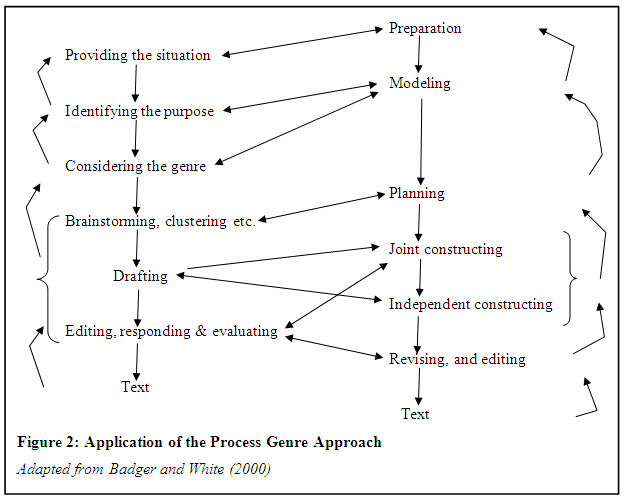
The Power and Potential of the Classroom Collective: A New Approach to Class Participation and Behavior Management


Archana Shrestha &  Sarah Chevallier

In any classroom, there is a constant struggle to balance the needs of the individual against those of the collective. This struggle is visibly manifested in the push and pull between class participation and classroom management, particularly within the context of teaching English as a foreign language in Nepal.

Many Nepalese classrooms are dominated by two equal and opposing forces: the highest and the lowest performing students. Spurred by a system of individual praise, top students dominate class discussion and participation. Conversely, the lowest-performing students, who frequently have no confidence in their ability to answer questions correctly, seek attention (albeit negative) through misbehavior and disruptive tendencies.

The obvious losers in these classrooms are those students in the middle, cowed into silence by the raucous behavior of the lowest-performing, and scorned into shyness by their domineering higher-performing peers. These students rarely volunteer to participate in class activities, exhibit sometimes spectacular reticence to speak when called upon (due to the fact that their errors are frequently mocked by both ends of the performance spectrum, as these dominating forces seek to re-secure attention), and generally display a lack of confidence in spoken abilities, preferring instead to focus their energy on the lower-pressure context of written homework. These middle students form an impenetrably meek and mute collective, unmotivated by the lure of individual reward, given the potential for individual rejection and ridicule.

In our own English classroom, we have decided to address this imbalance through the implementation of team activities to encourage in-class participation, and collective rewards for homework completion. In this way, we hoped not only to address individual needs and behaviors, but also to render the collective mastery of material more effective and class time more productive, as the students would take on the responsibility for participation and behavior management.

Practical Effects of Collective Reward and Punishment

We have found that this method of regularly combining students at various performance levels into teams for group activities and games has proved immensely valuable in our classroom. First, it has served to create a sense of unity and equality, as it impresses upon them that they all have an equal role to play in their team’s success or defeat and by extension in their own individual reward. Students’ immediate focus is transferred from the individual response to team performance – the highest-performing students are no longer able to simply answer every question; the lowest-performing students’ energy is harnessed, directed, and motivated by the promise of reward; and those in the middle (given more opportunities to perform) are inherently more likely to perform well, and their efforts are thereby positively reinforced and more likely to be repeated.

Beyond the innate merit of this team dynamic, however, it has become even more effective through a consistent implementation as a system of reward and punishment. In our classroom, this has taken the form of tracking teams’ wins and losses, rewarding the first team to win a total of five games. After this reward, both teams start again at zero. We have also expanded this concept of teamwork to apply to homework – when all the students have completed five consecutive homework assignments, they are rewarded. If one student does not do his or her homework, the class tally is returned to zero. In this way, homework becomes more than an easily avoided classroom formality – it becomes a class-wide team effort in which their opponent is their own lack of motivation. In this way, students learn the value of consistent and cumulative effort.

Finally, an unintended but certainly welcome effect of this system has been the transferring of responsibility for class behavior onto the students themselves. When misbehavior disrupts a game, or results in the withholding of a game entirely, students become incredibly apt to police one another’s behaviors, attention, and participation. If one student does not complete his or her homework, he or she then suffers the consequences of letting down their classmates. If one student’s disruptive behavior results in the class copying silently from the book rather than playing a game with the hope of eventual reward, that student will hear about it from his or her classmates.

In this way, the collective’s interest polices the actions of the individual, and the classroom dynamic shifts from an individual struggle to a team effort to master English.

Beginning Teaching in an EFL Class: a Novice Teacher’s Experience

-By Ed Saul

The United kingdom

So, what’s the big secret behind Teaching English? The short answer: there is none. English, like any other subject, is completely open to the learner with an open mind and a strong will. Granted, it’s not the easiest subject to grasp though no one knows which the easiest actually is – but it is, on the bright side, one of the most rewarding.

Why exactly was it that you decided to become a TEFL teacher in the first place? It’s likely that your interest stems in a general interest in teaching, in a need to help others, in a need to broaden your horizons and see other places, and/or a need to have a steady, accessible job. You’ve made the right decision! However, all of these things come about through a steady and admittedly rough schedule of hard work. Most of it is enjoyable, luckily, so you shouldn’t have too much trouble!

What is English if not one of the most convoluted and constantly changing languages in the history of the Globe? English is rooted in Ancient Greek and Latin, and over the years it has spread through thousands of Nations across the world, from Ireland to the USA to Australia, and absorbed words from many other languages and dialects, such as French, Hebrew and Greek. Why is it that this Frankenstein’s-Monster language has survived all this time? No reason, other than simply because it’s so childishly easy to learn, and therefore just as easy to teach.

Granted, the Grammar and Pronunciation of English are no picnic for anyone to learn – take it from a bewildered native speaker – but they grow easier through constant practice and through learning to associate them with the innate knowledge already lodged within your own mind. Learning, for instance, the Phonetic Alphabet can be achieved in a matter of two or three steady afternoons of copying, reading out and writing practice sentences if the learner is able to properly assign the symbols to the sounds and letters which they have remembered since childhood. This is made especially simple by the fact that many of the consonant symbols of this alphabet (F, T, C, etc.) are basically the same as their regular English equivalents.

Grammar is similar though it may seem odd to think of words in terms of ‘Prepositions’, ‘Conjunctions’, ‘Complements’ and ‘Adverbials’, these are simply terms that the quick-minded learner can grow used to over time and become comfortable with in terms of their definitions; for instance, a Conjunction seems far less daunting when you are reminded that it simply means a word which connects two sentences, such as ‘And’, ‘Or’, ‘So’, ‘Then’. Eventually these difficulties become second nature, just as the more basic elements such as Nouns, Verbs and Adjectives are to a speaker of English.

But Teaching English as a Foreign Language, or alternatively, Teaching English to Speakers of other Languages, is not merely about the terminology or the work on paper. Over the course of your learning and teaching career, you’ll find that simple practice does a world of good towards improving upon even the most advanced skills as a language instructor. Your skills are only as good as the amount of times you’ve been able to use them, to test them out and improve upon them for lessons in future. So, don’t be afraid to go into a lesson and make mistakes! The worst that can happen is that you’ll learn something, and the best is that the students will learn something else.

What about the students themselves? This is your chance to make a genuine difference in their lives. Teaching English in a foreign country – or even in your own country of origin – can open up its learners to a world of possibilities that might otherwise be denied to them. By enabling them to converse in this simplistic tongue, one which, to reiterate, is spoken all over the world and used as a bridge between individuals from all the different cultures, races, and walks of life that you can think of, you are at the same time enabling them to seize a promising future for themselves and reach out towards a stable career.

For this reason, you’ll find that many of your students can and will be responsive and enthusiastic during your first few sessions of teaching. You can’t expect 100% performance from every class, and if you make allowance for the standards of teaching and school resources in some areas of your chosen field, you’ll find that at times either you or your students may be poorly equipped or badly prepared to carry out a lesson to your satisfaction. This is bound to happen for a number of reasons, not least the fact that certain schools are better funded than others.

But you cannot allow this to discourage you. Even during the most disastrous lesson (which isn’t usually all that disastrous – more like slightly different than as planned), students usually are attempting to try their best and to participate. A small amount of gentle encouragement, accompanied by fun games and warmers such as ‘Hangman’ or ‘Chinese Whispers’ to break the ice, will help them to come out of their shell and help you to gain their trust as a teacher.

Depending on the locale, your overall experience in becoming a qualified teacher may place you up against a cultural barrier, so that you find that many words, concepts and/or practices that are part of your everyday life are alien to your students – and vice-versa, particularly in stringent, tightly-run schools or institutions set up and managed by a church, such as Islam or Catholicism. This, too, need not be a great difficulty as long as you keep an open mind.

Alienation and a lack of communication between teachers and students are easily solved when the teacher focuses their methods on approaching from an equal footing – introducing English through universal, simplistic concepts (such as ‘Rain’, ‘Lion’, ‘House’) and building on that foundation towards more complex sentence structures (“The frightened Lion ran into the Three-Storey House to get out of the sudden rainstorm”).

Ultimately, becoming a teacher, especially a teacher of English is a task which enriches one’s own mind while additionally bringing about the opportunity to constantly enrich the minds of others. As long as you keep your determination, feel ready to face the challenges given to you, and remember to have fun with the subject, you’ll be guaranteed success in this, your chosen career. Smile, put your best foot forward, and be prepared to be professional.

Good luck!

Teacher Development, its Nature and Classroom Observation as a Tool

-By Thakur Prasad Bhusal
SOS Hermann Gmeiner School, Kavre

Teacher development can be taken as a process of becoming “the best kind of teacher and it starts from the very beginning and continues until the retirement professionally and until the deathbed personally. Generally, we as teachers, learn a lot from our own experience of teaching and being acquainted with new ideas and development through personal reading, formal training, conference, net working sharing, following the guidelines from course book, experimenting the new curriculum, taking a new role, changing the course books, collaboration in teaching like team teaching, joint work, peer observation, supervision and so on. This paper mainly talks about teacher development, its nature and about classroom observation as a strategy of teacher development.

Teacher Development, as its name suggests, means change and growth of teachers in terms of his/her professionalism during his/her profession. In this sense Teacher Development is the ongoing process of keeping on learning, always to keep alive a sense of challenge and adventure in his/her career and to avoid getting into rut (Underhill, 1988 as cited in Head and Taylor, 1997, p.7). It intends to increase the skills, knowledge or understanding of teachers and their effectiveness in schools. It also maintains a certain level of professionalism and it has positive impact on teachers’ belief and practices. For this, although, we can benefit from being trained by people with more experience or expertise, we have to be innovative in terms of motivation, planning, decision making, research, focus, implementation, updating ourselves .So, it is the process of becoming “the best kind of teacher that one personally can be with changing context regarding curriculum design, materials selection, teaching methodology as well as testing and evaluation (Underhill, 1986, as cited in Head & Taylor, 1997, p.1). This definition mainly focuses teacher development as to refer to the teachers’ own inner respire for change. In other words, it is mainly centered on personal awareness of the possibility for change. Here, it is better to link the idea of Underhill (1986, as cited in Head & Taylor, 1997) that teacher development is a continuous process of transforming human potential into human performance, a process that is never finished (p.12). This transformation is a lifelong process. So, teacher development starts from the very beginning and continues until the retirement professionally and until the deathbed personally (Gnawali, 2008).
Gnawali, (2008) states that teacher needs to be update themselves as a part of their development to adjust themselves in the new kinds of issues and challenges coming by and new ideas and concepts coming up in the disciplines and also to act accordingly with the changing needs and desires of the learners with time and economic, social and technological change. He says without teacher development, the profession will be monotonous, tedious, slow and uninspiring.
We, as a teacher, ourselves are responsible for our own development. Wanjnryb (1992) is of the opinion that teacher development is voluntary and it comes from the individual teacher or the group and that nobody can force teachers to develop. Supporting this idea Gnawali (2008) argues that development is voluntary and they can not be forced but they can be helped to develop because not every teacher will be able to diagnose their problems and areas of weaknesses and be able to find appropriate solutions. Many teachers knowingly or unknowingly develop themselves learning from their own experience, working with and learning from the experience of others and becoming more active in their own continuous process. However, there are some common strategies a majority of teachers adopt to develop in their professional development.
Many teachers in our context think that when they start teaching after having certain degree, they have attained their own personal best and have nothing more to learn. Some decide to go on to a further course of academic study such as master degree or some kind of in-service training so that they can and should advance in their professional experience and knowledge throughout their career. However, adult development is voluntary; no one can force a person to learn and grow (Wajnryb, 1992) and also each teacher is unique in important ways. Thus, it is impossible to create single centrally administered and planned strategy of professional development that meets everyone’s needs and desires. Generally, we as a teacher, learn a lot from our own experience of teaching and being acquainted with new ideas and development through personal reading, formal training, conference, net working sharing and our own classroom research. Sharing and discussion among the colleagues is another important strategy for teacher development. James (2001) says …. “teacher can best learn through their own experience, following the guidelines from course book, experimenting the new curriculum, taking a new role, changing the course books and trying out different ideas in classroom practice”. He also says that collaboration in teaching like team teaching, joint work, peer observation, supervision, support, discussion plays an important role in teacher development. Similarly, according to him innovation and research help in developing professionalism in teaching (p. 161). It is difficult to discuss about all these strategies in a single paper. So, I discuss about classroom observation as a strategy of teacher development in this paper.
Classroom Observation
Wajnryb (1992) defines observation as a focused activity to work on while observing a lesson in progress which focuses on one or a small number of aspects of teaching or learning and requires the observer to collect data or information from the actual lesson ( p.7). It is done with some aim, goals so a teacher and the observant may have pre-conference, post conference as Gaies & Bowers (2010) presents the three stages of observation like pre- observation consultation, observation itself and post observation analysis and discussion which they call clinical supervision; a process by which teaching performance is systematically observed, analyzed and evaluated (p.167). Regarding the purpose of observation, Maingay (2010) presents the four purposes of observation like for training, for development, for assessment and for observer development where as Sheal (1989) presents three types: diagnostic, formative and summative. It can be done as SOI (supervision of instruction) by administrator or coach or senior teachers, in fact to observe and to suggest. In fact, in broader sense, Peer Observation is very useful to learn from each other’s idea in terms of methodology, teaching materials design, preparation, selection and their effective use, studentsteachers interaction and so on. .Highlighting the significance of observation, Maaggioli( 2003, p. 7) writes:
“….. through observation, teacher can explore the effectiveness of their own practice or incorporate new methods and techniques into their teaching. Similarly, expert coaching is ideally suited for marginal plateau and collaborative coaching can become a mutually beneficial process”.
But as Sheal (1989) highlights the common trend of not using the observation tool as development but as evaluation, specially, and says many observations have been conducted by administrator, are seen as, judgmental observers use themselves as a standard impressionistic and are used as teacher evaluation purpose and the feedback from observers is often subjective, impressionistic, evaluate and teachers tend to react in defensive ways (p.242-47). In fact, this kind of trend in observation doesn’t help in teacher development. In this regard, Wajnryb (1992) states that one needs to remember that the observation experience has to be meaningful, rewarding and non-threatening to all involved: teacher, observer, learners, colleagues, tutors etc. Thus, observation’s focus needs to shift more towards colleagues working together and toward teacher development rather than teacher evaluation.

References:
Bartlett, L. (1990). Teacher development through reflective teaching. In Gnawali, L. (2010). A course pack on teacher development in ELT. Kathmandu: KU.
Ellis, R. (1985). Activities and procedures for teacher training. In Gnawali, L. (2010). A course pack on teacher development in ELT. Kathmandu: KU.
Gnawali, L.(Commpiler, 2010). A course Pack on Teacher Development in ELT.
Kathmandu: Kathmandu University.
Head, K. and P. Taylor (1997). Readings in Teacher Development. Oxford: Heinemann.
Maggioli, G.D. (2003). Options for Teacher Professional Development. English
Teaching Forum. April, 2003.
Wajnryb, R. (1992).Class room observation tasks: Cambridge: Cambridge University
Press.
Gaies, S. & Bowers, R. (2010).Clinical Supervision of Language Teaching: the supervisor as trainer and educator. In Gnawali, L.(2010). A course pack on teacher development in ELT. Kathmandu: KU.
Gnawali, L. (2008). Teacher development: what is it and who is responsible? Bodhi: An interdisciplinary Journal. P.219-220, 2(1).
Maingay, P. (2010). Observation for training, development or Assessment? In Gnawali, L. (2010). A course pack on teacher development in ELT. Kathmandu: KU.
Sheal, P. (1989). Training classroom Observers. ELT journal. 43(2). April, Oxford: Oxford University Press.

Teacher Development through Reflective Practice

-BY TARU BUDHA

Generally, the term development refers to general growth or change. The concept of teacher development is thus a process of becoming better as it seeks to facilitate the growth of teachers, understanding of teaching and of themselves as teachers or individual persons. Development means a continuous process i.e. dynamic that involves the making sense and interpretation of one’s selves and experiences. Thus, education or learning is an ingredient for the teacher development. It is an ongoing learning about how to teach and to help the learners’ learning. The teacher needs to have an extensive repertoire of classroom skills and the judgmental skills to implement in the real classroom situation as required.
Pennington (1990, cited in Gnawali 2008, p. 219) states that every teacher needs professional growth throughout his or her career. So, the teacher development is necessary for dealing with the different new pedagogy or theories and practices that exist in the teaching system. Without learning, there is no possibility of professional growth of the teachers, and will lack the latest practices and principles of teaching. When the professional growth or changes stops the teacher will not be able to deal and tackle with the new practices and theories. Similarly, Underhill (1988) says that it is to keep learning always to keep alive a sense of challenge and adventure in one’s career, and to avoid getting into rut (p. 4). From this, we can understand that the teacher development brings changes in the teacher and this will enable the teachers to impart the knowledge better in the learners and also the teacher will learn himself or herself better. When the teacher stops growing or learning he or she will not be in position to sustain the career further and unable to help the learners learn in the teaching field. Therefore, the teacher needs to face challenges and it can help them in developing an understanding of different styles of teaching and teaching pedagogy and determine the learner’s perception of classroom activities of learning. It is a teacher who has to understand his roles according to the type of the learners he or she is teaching since demand of teaching way varies according to the context.
Change is inevitable in the life of the teachers as the adapting of changes or developmental outlook will help the teachers to deal better with the problems or changes they are facing within and around their work environment and enhance the capacity to deal with new techniques or strategies and enable the learners learn effectively according to demand of time and situation. Therefore, the aim of education is to enable the learners understand themselves where they are and what they are now. Until a teacher tries equipping herself or himself with such skills the goal cannot be achieved. For teacher development, there are many different ways or strategies that teacher can use for himself or herself. Among various strategies of teacher development, Reflective Practice is one.
Reflection means flash back of the teachers’ own daily classroom activities, practices and experiences for his/her professional growth. Ur (1999) says that the first and most important basis for professional progress is simply the teachers’ own reflection on daily classroom events. So, she gives emphasis on the personal progress through reflecting on own activities and practices that happened in the class and think when talking about personal reflection which will certainly lead towards change and growth in the teacher. According to Whitton et al (2004), “Reflection is a threefold process comprising direct experience analysis of our beliefs, values or knowledge about that experience, and consideration of the options which should lead to action as a result of the analysis”. This statement clearly states that the teacher’s professional growth is possible only if they reflect and analysis their actions and that will enable them to find other options for better teaching styles or behaviors. Supporting the idea of Whitton, Walkington (2005) further states, “Reflection is one’s own perception, beliefs, experiences and practices is a core activity for all the teachers pre-service and in-service, in schools and universities” (p.59). Therefore, personal growth is pre-requisite for either pre-service teacher or in-service teacher in order to teach effectively according to the demand of time and change of principles or theories so that one can survive and impart the ideas or knowledge by motivating the learners. Through reflecting, the teacher can not only teach and impart the knowledge but can interact with the learners and with their needs in learning process. When the teachers use reflective practice in their professional development they can improve their own teaching by reflecting on their own teaching experiences and daily activities in the classroom since the teachers can use the data gathered from the systematic reflection. Thus, teachers will make meaningful change in their profession. When the teachers try to reflect on the situation that he or she faced and ask themselves what needs to be done and are able to find the new way to deal with the situation and certainly brings changes.
Similarly Pennington (1992) relates development of the teacher to reflection where he views reflection as the input for development while also reflective as output of teacher development. So from this, we can clearly understand that when the teacher reflects it instills lots of input in the teacher for professional growth, and if the teacher practices that in the action gives output of the teacher’s growth and becomes able to instill good input in the learners as well. Therefore, the use of reflective practice enables, as a teacher is not only to experience but also to the new teachers to make his or her class effective which enhances the further development of the teachers. It enhances the discussion and evaluate their own practices as well as implication of different strategies or theoretical perspectives in the teaching learning process so that they can have deeper understanding of their own teaching style and techniques and finally greater effectiveness as a teacher to impart knowledge into the learners part and own self development. Practitioners engage in continuous cycle of self-observation and self-evaluation in order to understand their own actions and the reactions they prompt in themselves and in learners in reflective practice (Brook Field, 1995, Theiel 1999 cited in Cunningham, p. 17). In order to bring changes in one’s practice one has to do self-observation and self-evaluation which is essential for finding one’s weakness in the teaching learning and innovate new ideas to apply in the action. Without self observation and evaluation the teacher won’t understand how he or she acts or teaches in the class and understand the impact on the learners. Therefore, when they are curious or interest for changes or their personal growth the teachers certainly involve in observation and evaluation to think about his or her way of teaching and actions and to understand its impact on the learners so that he can think about other alternative ways to do teaching differently and effectively and interact with the learners in different way than he used to do in previous classes or days. If teachers don’t try to do instead of growth will lead into rut. Furthermore, Reflective practice occurs when teachers consciously take on the role of reflective practitioners, subject their own beliefs about teaching their own beliefs about teaching and learning to critical analysis, take full responsibility for their action in the classroom, and continue to improve their teaching practice (Farrel, 2007; Jay & Johnson, 2002; Valli 1997). Further, Dewey talks about the responsibility of the teacher (as mentioned in Pollard & Triggers, 1997). He said, “Responsibility means to consider the consequences of a project step; it means to be willing to adopt these consequences when they follow reasonably. Intellectual responsibility secures integrity”(p.13). Further Pollar and Triggs(1997) said that the Reflective teaching requires attitude of open-mindness, responsibility and whole heartedness(p.9). Therefore, every teacher has a responsibility to extend the boundaries of professional knowledge through reflective practice and systematic engagement in continues professional development from the very beginning to the end of their career to instill and impart the knowledge in the learners. Every teacher should do rigorous reflection which will enable them to discover their strength and weakness. So the teacher should be always open and whole hearted to take the responsibility. When they take on personal responsibilities for their own development, the teachers will be able to achieve better personal and perspective growth just like learners appear to make better progress while making their own learning decision. Further, Dewey talks about the responsibility of the teacher (as mentioned in Pollard & Triggers, 1997). He said, “Responsibility means to consider the consequences of a project step; it means to be willing to adopt these consequences when they follow reasonably. Intellectual responsibility secures integrity” (p.13). Further Pollar and Triggs(1997) said that the Reflective teaching requires attitude of open-mindness, responsibility and whole heartedness(p.9). Therefore, every teacher has a responsibility to extend the boundaries of professional knowledge through reflective practice and systematic engagement in continues professional development from the very beginning to the end of their career to instill and impart the knowledge in the learners. Every teacher should do rigorous reflection which will enable them to discover their strength and weakness. The teacher needs to be always open and whole hearted to take the responsibility. When they take on personal responsibilities for their own development, the teachers will be able to achieve better personal and perspective growth just like learners appear to make better progress while making their own learning decision. Valli (1997) further says that the teacher can look back on events, make judgments about them, and alter their teaching behavior in light of craft, research and ethical knowledge (p. 70). Because of reflection, the teachers will know how to monitor their own practices or activities in the classroom. They will be conscious of exploring and doing research on their practices and beliefs for a personal growth as a teacher.
So to understand herself or himself her/his teaching practice and other people, s/he needs a rigorous reflective practice. The teachers need to look back on their teaching behaviors and actions. According to Gnawali (2005), “Through reflection teacher can explore their selves and that of others. When teachers carry out systematic enquiry into themselves they will understand themselves, their practices and their learners (p.69)”. It’s true that the teachers and learner will be able to achieve their goal as well as adopt the changes for n their development if they carry out the systematic self inquiry. Similarly, Claxton stated (as cited in Bell & Gillbert,1996) that teachers must look outwards, to gain insight into the dynamic of their own stress; and they must look outwards, to understand better social forces that surrounds them(p.39). So for the development the teachers needs to see or understand not only within but also outside so that it will be easy for him or her to understand himself or herself and the learners as well. As the teachers need to be able to relate the classroom world to the outside world while learning and helping learners learning. Ruddock (as cited in Gnawali, 2008) on professional development stated “Not to examine one’s practice is irresponsible; to regard teaching as an experiment and to monitor one’s performance is a responsible act (p. 70)”.
Prabhu (1987, as quoted in Gnawali 2008, p. 70) conceptualizes the idea of professional responsibility as “equipping” which means providing teachers with pedagogical knowledge and skills for immediate use, and ‘enabling’ meaning helping teachers to develop ability to independently handle professional affairs. Training can ‘equip’ teachers with low inference skills but to ‘enable’ them with high inference skills teachers need to be involved in reflective practice”. Thus, the teacher needs to develop and equip with the new skills, theories and competences according to its new roles and time demand. It is most necessary to have quality education and a systematic process of continuous professional development to keep the teachers up-to-date with the new skills and strategies required in the teaching society. Without updating self the teachers will not be able to survive.
As Day (1999) states that professional development consists of all natural learning experiences and those conscious and planned activities which are intended to be direct or indirect benefit to the individual group or schools and which contribute to the quality of education in the classroom (p.4).Thus professional development cater both for the individual needs of teachers and for the institutional needs of the whole school (Bell, 1991). So through reflective practice the teacher herself or himself, the learners, and the schools will benefit from such a process of professional development or changes.
Reflective teaching is the teachers’ thinking about what happens in the classroom lessons and thinking about alternative means of achieving goals or aims; he sees it as a means to provide students with an opportunity to consider the teaching even thoughtfully, analytically and objectively (Cruickshank & Applegate, 1981; as cited in Bartlet, p. 171). It clearly states that the development of teaching techniques is the most important means to enable the teachers in improving their practice. Larsen-freeman (1983) said that awareness is the first step toward being able to change out teaching practice. Through reflecting on their own practice the teachers will be able to learn and bring certain level of awareness. Nunan & Lamb (1996) further states that “reflecting on one’s teaching and in the process, developing knowledge and theories of teaching, is essential component” in the lifelong process of professional growth. They further added that teachers “are capable of monitoring, critiquing and defending their actions in planning, implementing and evaluating language programs (p.120).we can understand from the that reflection provides teachers with knowledge and skills necessary for a lifetime of teaching. For professional development, the teachers need to learn new skills and knowledge and also to develop them continuously. The professional development of the teachers is a lifelong task and it should be therefore structured and resourced accordingly. Ur (1999) also talks about the awareness of the teacher. He said development doesn’t just happen with time, it happens with awareness. So there should be an awareness of a need to change. This means that awareness is a tool of change and improvement for the teachers. Gnawali(2008) said, “Reflection is the key to raising focused awareness and a pre-requisite for any altering of personal construct”(p. 70).
Richards (1990) see reflection as key components of teacher development. He says that self-inquiry and critical thinking can help teachers move from a level where they be guided largely by impulse, institution or routine to a level where their actions are guided by reflection and critical thinking. Similarly in an interview with Farrell (1995) Richards said that critical reflection is a response to a past experience and involves conscious recall and examination of the experience as a basis for evaluation and decision making and as a source for planning action. Reflection is thus a key component that enables to bring changes and growth of the teachers and in their teaching learning theories and practices in the classroom. Similarly, Ur(1999, p. 318) states that the teacher teaches or observes lessons and recalls past experiences then reflects, alone or in discussion with others in order to work out theories about teaching; then tries these out again in practice. Such cycle aims for continuous improvement and the development of personal theories of action. When teacher makes a self inquiry to understand the process that’s going around her/his and tries to keep himself or herself into consideration as objective; the teachers development will take place which will certainly help the learners in learning process. Therefore, it will encourage the teachers to innovate or produce and share their theories of teaching. Barlett(1990) in Farreell(1998) says that in order for teachers to become critically reflective, they have to “transcend the technicalities of teaching and think beyond the need to improve their instructional techniques”. The teachers can improve their teaching practices and change the techniques or ways of teaching styles if s/he does critical reflection of his/her work every day. Only then, the teacher will be able to deal according to the social and cultural context of teaching practices and principles. Thus for further skill development and personal growth the teachers needs to adopt any approaches in the teaching as through reflective practice.
Kelley talks about personal construct psychology. Each person constructs a representational model of the world composed of series of interrelated personal constructs, or tentative hypotheses about the world, with which past experiences is described and explained and future events are forecast. One can construe or understand another person’s construct system”(1969, cited in Bell & Gilbert, 1996, p. 46). As said above each person tries to make or construct his/her own sense of understanding and interpreting of himself/herself, about the learners and events on the basis of personal psychology. So they act according to their own sense and understanding and adopt the new changes in their teaching profession. Whereas Bartlet says, “A teacher’s action are influenced by intentions in the social setting and by the beliefs and chains of reasoning that are held before and after the occurrence of the action”(p.173). So teaching through reflective inquiry requires deliberation and analysis of our own ideas about teaching as a form of action based on the basis of our changed understanding. This doesn’t mean that externally imposed directions bring changes in the behavior. Hence teachers need to reflect to explore their potential of acting or teaching according to their own beliefs and experiences in the classroom. Therefore, reflection is in fact an important part of the effective and meaningful teaching as it motivates the teachers in being more aware of their views or theories and tries to analysis them and restructures or generates new ideas or styles if possible to do. So the teachers will be able to deal with new and various problems that might occur in classroom situation if they engage themselves in learning for their development and familiarize themselves with the new innovative techniques and strategies. According Head and Taylor (1997) said, “Teacher development is a reflective way of approaching whatever it is that we are doing as teachers and at whatever level of experience we are doing it”(p12). Therefore, being a teacher one needs to reflect on the experiences or activities what they are doing for their growth.
In short, by developing knowledge and understanding the setting practice and the ability to identify and react to the problems the teacher can become effective teacher. Teachers can deal with needs and different issues of the learners and demand of time if he reflects his daily teaching learning activities for his professional growth. To deal and survive in their professional filed the teachers need to grow and bring changes in their behavior and style. Reflection is flash back that the teachers need to mediate for their development.

References
Bailey, K.M. (1997). Reflective Teaching Situating our Stories. Asian Journal of English
Language Teaching, 71-19
Bartlett, Leo. 1990. Teacher development through reflective teaching. In J.C. Richards and D.
Nunan (Eds), Second Language Teacher Education (pp. 2002-214). New
York: Cambridge University Press

Bell, B. & Gilbert, J. (1996). Teacher Development: A model from science education. London:
The Flamer Press.
Day, C. (1999). Researching teaching through reflective practice. In J.J. Loughram (Ed.),
Researching teaching methodologies and practices for understanding Pedagogy.
London: Falmer.
Daiz-Maggain, G.A. (2003). Options for teacher professional Development. English Teaching
Forum.
Dewey, J. (1938). Educational Experience. New York: Collier Macmillan.
Gnawali, L. (2004). In-service training for EFL teachers in Nepal. Journal of NELTA, 9(1,2).
Gnawali, L. (2005). Reflective practice: A Way to Teachers in Nepal. Journal of NELTA, 10.
Gnawali, L. (2008). Teacher Development: What is it and Who is Responsible?. BODHI: AN
INTERDISCIPLINARY JOURNAL. 2(1).
Head, K. & Taylor, P. (1997). Reading in teacher development. Oxford: Heinemann.
James, P. (2001). Teachers in Action. Cambridge: Cambridge University Press
Kelly, G.(1995). The psychology of personal constructs: A theory of personality. New York:
Nortin.
Nunan, D. & Lamb, C. (1996). The self-directed teacher: Managing the learning process.
Cambridge: Cambridge University Press.
Pollard, A. & Triggs, P. (1997).Reflective Teaching in Secondary Education. London: Andrew
Pollard.
Richards, J.C. (1990). The teachers as self-observer. In Jack C. Richards, The Langauge
Teaching Matrix. New York: Cambridge University Press.
Walkington, J. (2005). Becoming a encouraging development of teacher identity through
reflection practice. Asia-Pacific Journal of Teacher Education. 33(1), 53-64
Whitton, D., Sinclair, C., Barker, K., Nanlohy, P., & Nosworthy, M.(2004). Learning for
teaching: Teaching for learning. Southbank, Victoria: Thanson Learning.
Underhill, A. (1988). Training, development and education. Teacher Development Newsletter, 9.
Valli, L. (1997). Listening to other voices: A description of teacher reflection in the United
States. Peabody Journal Education, &2(1), 67-88.
A course Pack Teacher development in ELT. School of Education: Kathmandu University.
Farrell, T.S.C. (1999). Reflective practice in an EFL development group. System 27, 157-
172.

Reflection on Monthly Talk on Professionalism and a Professional Organization

By Praveen Kumar

Dear Valued Readers,
Are you a professional? If yes, do you know who a professional is? What are the characteristics of professions? If you are a professional or live in a professional society or involve in a professional organization, you must have some ethics or ethical principles. Do you know what they are? Have you ever marked what the stages of development of a professional are? Have you prepared an action plan to achieve professionalism? Dear ELT professionals, where do you fall in the professions grading if a survey is carried out in our society, the country and the world?
I was not familiar with the answer of the questions stated above and so are many of us although we have been talking about professionals and professionalism time and again. I have recently attended the talk by Respected Associate Professor Ganga Ram Gautam, (the Immediate Past President of NELTA) on “Professionalism and a Professional Organization” that opens the door of the answers of the above questions, which have left a clear imprint on me and guided me to walk on the way of professionalism. Respected Ganga Sir had a talk on the theme on September 10, 2011 at NELTA office, Kamaladi, Kathmandu, which brought together 25 NELTA members from NELTA central and branches. I would like to share in this brief post a few thoughts and reflection on his talk ‘professionalism and a professional organization’.
The word ‘profession’ comes from the Latin word ‘professio’, which means ‘to acknowledge’, ‘ to confirm’ and ‘to promise’. Oxford English Dictionary offers the following definitions of professions;
– The occupation which one professes to be skilled in and to follow.
– A vocation in which a professed knowledge of some department of learning or science is used in its application to the affairs of others. Applied specifically to the three learned professions of divinity, law and medicine.
– Any calling or occupation by which a person habitually earns his living (now usually applied to an occupation considered to be socially superior to a trade or handicraft).
He further talked about the history of professions. By medieval times, (500 CE-1500 CE.) all the classic professions (medicine, law, education and clergy) began to come near the modern conception of professions. Around the end of the 19th century and the beginning of the 20th century, middle-class occupations such as dentistry, architecture and engineering began to professionalize, seeking to achieve the gentlemanly status of the classic, learned professions.
The talk moved on with the presentation on perception and characteristics of professions. He referred ‘The Encyclopedia of Sociology’ to say that Professions are groups which declare in a public way that their members will act in certain ways and that the group and society may discipline those who fail to do so. The profession presents itself to society as a social benefit and society accepts the profession, expecting it to serve some important social goals.
On the perception of professions, he presented that George Bernard Shaw declared in the Doctor’s Dilemma, first staged in 1906: “All professions are conspiracies against the laity.” Similarly, Talcott Parsons defines that professionals are ideal citizens of an ideal state and are holding society together. He shared Magali Sarfatti Larson’s three dimensions of the ideal profession: cognitive, normative and evaluative dimension.
In the talk, I came to know about popular notions of professionalism and I think we must consider and follow them as they are quite inspiring for a professional individual and professional organization (here, NELTA as a professional organization and its members as professional individuals). They are

  •  “High level of knowledge and morality”
  •  “Integrity and occupational pride”
  •  “Having the ability to do what one claims to have”
  •  “To be good at what you do”

To support the notions, N. Roscoe Pound, Former Dean of Harvard Law School opines that professionals find fulfillment, self worth and true happiness in contributing to their society and improving the human condition. Your first duty is to do good.

Then he continued his talk with professional ethics. Ethics can be defined by a set up of moral principles or values. Each of us has such a set of values. We may or may not have considered them explicitly. TESOL-association of American educators claims that professional ethics express what a professional society is about. A code expresses who the professionals are, what they do, and show how this profession functions or the good of all.

Christiphor J. Cowton, Dean of Business School, University of Huddersfield puts his views, profession can defer in degree to which they serve the public interest by being ethical.

Of course, we need to be ethical in order to be professionals. There are certain ethical principles that one has to follow. NELTA, being a professional organization, its members should think of the ethical principles;
1. Responsibility: Professionals should exercise sensitive and moral judgments in all their activities.
2. Public interest: Members should accept the obligation to act in a way that will serve and honour the public.
3. Integrity: Members should perform all responsibilities with integrity to maintain public confidence.
4. Objectivity and Independence: Members should be objective, independent and free of conflict of interest.
5. Due Care: Members should observe the profession’s standards and strive to improve competence.
6. Scope and Nature of Services: A member in public practice should observe the Code of Professional Conflict.

The presentation and talk further included the Code of Ethics of the Leadership in a Professional Organization like NELTA. They are Commitment to its Members and Commitment to the Organizational Values and Missions. When the organization makes commitments to its members and the organizational values and missions, NELTA will, no doubt, have professional development.
Now I am familiar with six characteristics of professional styles: altruistic, ethical, responsible, theoretical, committed and intellectual style. There are certain stages of development of a professional shared in the talk according to Meszaros and Braun (1980).
Once we have understood about the concept, characteristics, styles and stages of professional, we can set action plan to achieve professionalism for ourselves and our organizations as well. While preparing action plans, we should keep these things in mind
– What have I learned that I can put to immediate use?
– What do I want to do in the future to improve my professional style?
-Notice your own actions and those of others that exhibit that elements of, or lack of, professionalism
– Carefully evaluate your own actions and how they relate to your internal beliefs and assumptions.
– Challenge whether the belief or assumption is valid.
– Create an action plan to work on bringing more coherence between actions and beliefs, creating greater integrity and authenticity.

Finally he talked about professional grading, for which, rating of a survey carried out of 21 professions in America was presented, wherein nurses are found highly professional.
Source: GALLUP /http://www.gallup.com/poll/1654/Honesty-Ethics-Professions.aspx
Such surveys can be carried out in the context of Nepal as well and the participants explored its opportunities in the session.
In conclusion, it can be said that ELT has not yet acquired professionalism. To support, Ur (2010) puts her views, “English language teaching has not yet reached the level of professionalism (p. 390). That is to say, English Language Teaching (ELT) is in the process of professional development in the world including Nepal. Besides, the talk proved an exposure to my M. ED. Research which I am currently carrying out on the topic ‘Professional Development in Nepalese ELT through blogs: A Case of NeltaChoutari’.
Dear NELTA members- Let’s promote professionalism in us and in NELTA both. The more NELTA becomes professional organization, the more its members become professional.

THE USE OF INTERNET IN LANGUAGE CLASSROOM

Ushakiran Wagle

Abstract

According to conventional wisdom the Internet consists of written materials. Therefore, it is suitable for teaching reading. Reading, in turn, has traditionally been associated with outdated grammar translation method in which foreign language was taught to enable students to read. However, in recent decades the emphasis has been put on communicative competence. Language is to be taught to enable communication. In fact, the Internet contains teaching materials which make it possible to teach every language skill. Here I’m going to write a paper on the same topic and mainly I’m going to relate it in Nepali context. At first I tried to set the scene which is related to my experience toward internet. Secondly it tries to show the things that internet is offering for the ESL classes. Then I move toward the possibility of using internet in Nepali context. While dealing with this particular topic I include something about a person; named Mahabir Pun. In fourth part of this paper I write about the things that a teacher should remember while using internet in language classes. And finally I write something about my feeling which conclude this writing.

Introduction

I did my bachelor’s degree from one of the colleges in the eastern part of Nepal. Though I lived in a municipality, I didn’t get internet access there. As the trends go, I studied all subjects through the lectures of my tutors or with the help of book written by Nepali writers. I was even not aware of using the book written by foreign writers. The use of internet for me was just checking the e-mails nothing more than that.

I finished my bachelor course and arrived in Kathmandu for my further study. I decided to join KU for my Master’s Degree. I still remember the day when I got confusion. One of our tutors asked us to write reflection and I sent that to him through mail. I was aware of writing reflection and I wrote the reflection and went to the lab. I then I switched the computer on and logged in my email but after that I was confused what to do. I was ashamed and I just looked around the lab; luckily I saw one friend near me. I approached her and asked her how to attach file. She guided me.

My first experience toward internet was only related to the means of communication, but from that particular day my feelings completely changed. Now I’m in the place where I’m using internet each and every time for my each and every work. My feelings towards internet changed gradually from the means of communication towards the tools of teaching learning. With the help of these particular experiences I collected within a short span of time of one year, and with the help of other materials and evidences, I reached at the phase where I decided to prepare one article related to the use of internet particularly in ESL classes.

The internet nowadays is really widely used device. “The internet often abbreviated to NET, has often been described as the biggest communication revolution….” (Dudeney: 2000). The internet is being mainly a free recourse and it is increasingly being used in TESOL, and the expo. However, realizing the potential of this exciting and constantly expanding medium places new pressures on the layman TESOL teacher, who very often has had no pre-service or past in-service training on how to use the Internet in an ICT language lab (http://www.englishlab.intercol.edu/papers/pdf/chris%20alexander%20jan%2019.pdf). With the advent of the Internet, language teachers now have at their disposal various learning Websites with interactive contents that can be argued to offer certain advantages over conventional teaching methods (http://jpl.e-contentmanagement.com/archives/vol/5/issue/2/article/3462/internetbased-grammar-instruction-in-the-esl). Though it is mainly being used in language classes, it might be fruitful to talk about the use of internet in ESL classes and possibility of using it. I want to discuss the possibility of using internet in Nepalese institution.

What the internet offers for English language learners

The Internet provides a wide range of reading materials which can be used in teaching reading lessons. The Internet is sometimes called the library of the poor as the information is easily accessible for all people connected to the Net. According to Ewa Czubocha, as of April 1998 there were more than 320 million pages on the Internet. This huge virtual library offers an endless range of topics to choose from. The information available is updated on regular basis. The number of Internet sites offering ELT materials has been growing. All course books are written for a given audience. Therefore, many topics may be irrelevant or uninteresting for the class. As a result, teachers may need alternative texts or topics which can be found on the Internet. There are a lot of sites from where we can collect the ideas and information on how to teach and learn in EFL/ ESL classes. Here I’m going to describe some of  the websites which are useful for the teachers and learners of EFL:

  1. www.net.language.com
  2. www.its-online.com
  3. www.englishnow.co.uk
  4. www.eslcafe.com
  5. www.stuff.co.uk
  6. www.englishtown.com
  7. www.esllab.com
  8. www.englishlistening.com
  9. www.teachingenglish.org.uk

Most of the websites I explain above are useful; I can say these websites are useful because I made the use of this website while teaching and learning. Though I didn’t get the access to the internet at first, now I can make proper use of it while teaching. Among the websites written above I’m going to elaborate the last one. I want to include the things that are being offered from www.teachingenglish.org.uk. Basically when we heard the name of the website (teachingenglish) we can guess, what might be the purpose of this particular website. Normally it provides the tips which can be useful for the ESL teachers. Not only for the teachers has it equally focused on the learning of the kids.

            There are different games which are funny and interesting to help student practice their English and others. The main slogans of those games are play- enjoy and learn. These exercises are included in the part of the teaching English because the language used in these games is quite harder and students will not understand the instruction. As we know if we get opportunity to learn something while playing then that will be permanent and we can get ideas properly without any hesitation and difficulties.

This website also offers the grammar games and exercises. In grammar and word part we can learn and practice grammar and vocabulary through explanation, activities, and games.  These grammar games and exercises can be used by the teachers while teaching grammar lessons to their students. As we know learning English as second language is quite difficult task, especially for Nepali student, learning the grammar of English is quite difficult because the grammar of Nepali is completely different from the grammar of English. But if they get opportunity to learn grammar through the games they will not think that they are learning something but they will be happy that they are playing something and they will understand much more things.

There is another button and in that button listen and watch is written. In this particular part we can listen and watch the things in our computer and we can also download video and audio files too. These audio and visual materials are related to language practice activities, that we can do on our computer. As a teacher we can download those things and we can ask our students to do the same task in classroom. The things which are downloaded can be played inside the class and students can work on that.

There is another particular place where the things are uploaded specially for the students. There are different games and exercises. In the similar way there are lots of stories, songs and many more. These tasks uploaded in this part are simple and students themselves can understand the instruction and do the task. There are different texts related to the geography of the world and at one corner there are questions related to the same test and students should tick them. If they tick in correct then the next question will come and if not the correct answer will blink. In this way they will play with the computer and learn many more things. All these things are offered by this websites and especially these things are offered for English language learners.

Possibility of using internet in Nepal

Basically using internet in Nepal is really very hard. If we consider Kathmandu city and other main cities like Biratnagar, Pokhara, and so on, it may not be hard to make use of internet. Both teacher and students can make use of internet. But Nepal is not limited within those cities; there are a lot of remote areas where it is really harder to make use of internet. How can I expect there will be access to the internet when there are places where electricity is not introduced to date ?  Though there are many exceptions I would like to introduce possibility of using internet in Nepali context. Using internet and using different activities that internet particularly offers for English language classroom are really helpful for the teachers. The teachers themselves are the users of English as second language and pronouncing the words in a proper way might be harder for them. The problem not only lies in the pronunciation part; instead there are lots of places. Producing relevant and authentic materials and activities to conduct the task is also difficult for the teacher. But if they get the access to the internet then they can make use of different websites and can download different materials and activities which will be interesting and equally beneficial for both teachers and students. If we talk about the main cities of the Nepal both teachers and students can make use of internet because they can get access to it, and in case of other remote areas, in some places teacher can get access to and it might be harder to provide the access to all students. In those type of cases teacher can browse something interesting and helpful for teaching English and can apply those things in their class. If the condition is not appropriate for using internet neither of teachers and nor for students in those places using internet in really very difficult and the possibility of using internet is Zero.

While I was talking about Zero possibility of using internet I remember one great person of Nepal; named Mahabir pun. He did really great job that he introduced internet in remote area of Nepal. The possibility of using internet for English language teaching can be a bit easier if the project of Mahabir Pun has became successful. After receiving his master’s Degree in Education at the University of Nebraska at Kearney, Mahabir Pun returned to his native village, Nangi, and founded the Himanchal Education Foundation, and now he is currently at work establishing wireless networks in rural Nepal. His project is really helpful to introduce internet in rural areas. Though at first stage it might be used as the means of communication latter on we can made use of internet as a means of reading materials.

What a teacher should remember before designing the internet activities based course

            Before designing an internet based activities it is necessary to think over many issues. The teacher should start with looking through his or her course book and pinpoint the activities that are not suitable for the class as they are not challenging or interesting enough Warschauer (1997). They are general guidelines that can also be used in an EFL context:

1.    ‘Consider carefully your goals’: It must be clear to the teacher why this tool would be more successful than a traditional one. Reasons for using the Internet range from increased motivation to learning computer skills, but we should not ask students to do something on the computer that a book could do just as well.

2.    ‘Think integration’: Simply asking students to have a computer pen pal will not ensure a significant educational outcome. Teachers must be more involved in the activities and integrate them into the overall design and goals of the course.

3.    ‘Don’t underestimate the complexity’: A number of students may lack basic prerequisites for using the Internet, and it might be very time consuming to train these students. Apart from this, technical practicalities such as having computers available, hardware and software malfunction and excessively long waiting time to access web pages., may all hinder the use of the Internet in class.

4.    ‘Provide necessary support’: We should not stop trying to use the Internet due to the problems we mentioned above, but provide support in the form of hand-outs, training sessions, set up simple log-on procedures, encourage students to work in pairs or groups and help each other, and being available to help students when they are carrying out their Internet tasks.

5.    ‘Involve students in decisions’: Because of the complexities and difficulties mentioned, the teacher must be aware of the impact of these activities, consulting them through class discussions and surveys. This does not mean a passive role for the teacher, who should co-ordinate activities, focus students’ attention on linguistic aspects of texts and assist students in developing learning strategies.

Conclusion

            I’m the example of these things whether it is important or not. If somebody came near to me and asked me whether Internet is useful or not for me (ESL student), I will definitely say that yes it is helpful, useful and important for me. As I described all my experience towards the internet and its use, with the help of this experience I can say that internet is the best way of teaching and learning English as a Second language.  When I came here I became the member of teachingenglish.org.uk and I got better ideas and knowledge about the teaching learning process that can be used while teaching and learning English. If the teacher and students became habituated to use authentic internet sources for their practice learning and teaching will not be harder. The Internet is a tool which offers unprecedented possibilities in the field of English Language Teaching (ELT). Internet assisted ELT can enhance teacher’s effectiveness and facilitates his or her work. It also increases students’ independence, motivation and provides a real information gap. Provided links lead to multimedia support material and additional information which allows expanding activities in the direction of students’ interest. Provided links enable communication. Students use the Internet to communicate sending e-mail messages and participating in news boards, discussion groups and keeping in touch with newspaper editors and so on. That’s why in Nepal also we can make use of internet while conducting the ELT class.

Reference

Singhal, M. (1997). ‘The Internet and foreign language education: benefits and challenges’. The Internet TESL Journal 3/6.

Skinner, B. & Austin, R. (1999). ‘Computer conferencing – does it motivate EFL students ?’. ELT Journal 53/4: 270-279.

Dudeney, G (2000) ‘The Internet and the Language classroom’ Cape town, Cambridge University Press 2000.

Ewa Czubocha (2007) Internet assisted English Language Teaching,(PDF)

(Ms Ushakiran Wagle, B.Ed from Dhankuta Multiple campus Dhankuta and M Ed in ELT from Kathmandu University Nepal is new comer at educational field. For her research paper in her Masters studies, she carried out an action research on developing coherence in student’s writing in Secondary level which resulted in very positive findings. She has also shown her sense of leadership by managing events at the International Conferences of NELTA (Nepal English Language Teachers’ Association) of which she is a life member. She is resourceful and methodical and trying to establish herself as good teacher. )
