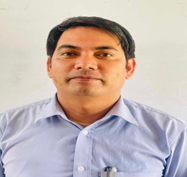
I came from a small village to pursue an M.Phil. degree at a well-known university in Nepal. This journey has profoundly transformed my life. It has been marked by numerous challenges, an enduring quest for knowledge, and the courage to embrace opportunities that once seemed beyond my reach. My story is not merely about academic achievement; it is also a reflection of perseverance, personal growth, and a deep sense of purpose that has shaped my identity as a lifelong learner.
The Humble Beginnings
I was born in a remote village in Nepal, where access to schools and other essential services was limited due to the distance from major settlements. When I was a kid, a lot of families in our town did not think school was important. There were few schools, and the streets were filthy. Almost all children, particularly girls, were expected to toil in the fields or around the house rather than going to school. My parents, however, never went to school themselves, but they knew how important it was to learn, and always told me to study. My parents always pushed education but did not have much money or options. And my farmer father used to keep saying, “there is an entire world outside our village”. Learning will help you. These are the words that sustained me in the beginning. I didn’t have a lot of options or friends who leaned into my hopes for education, so my own resolve was my closest friend.
The Struggle and Spark of Early Education
The schools in my village were far from ideal. They faced persistent challenges, including a lack of qualified teachers, overcrowded classrooms, and outdated teaching materials. Despite these limitations, my desire to learn remained strong and motivated me to pursue education with determination. I sometimes had trouble understanding ideas that seemed hard at first, especially since I did not have a focused academic environment that would encourage me to ask questions and learn more. I stayed focused on my schoolwork even though these things were hard. In fourth grade, I learned new ways to learn from a teacher who had just started at the school. For example, she encouraged me to ask questions and think for myself. At this point, I wanted to know more. I began to view school not as a tedious obligation, but as an opportunity to transform my life. Even though a lot of my friends dropped out of school to help their families, this new excitement kept me going on my path to study more. I discovered during these critical years that school was not only about getting good grades but also learning to change both my life and other people’s. After that, I thought about school differently, and although it was a long way off, I knew if I wanted to get out of my neighbourhood, then I was going to have to work harder than everyone else.
A Turning Point in Secondary Education
When I moved up to high school, it was a big deal. My family did not have enough money to send me to a high school in the nearby town, so I had to go to school by myself. I had to walk for kilometres every day to get there. At that point, I started realizing how difficult it was for so many kids in rural Nepal to pull themselves out of their circumstances because of the social and economic obstacles they faced. Yet I did well in school and got good enough grades to allow me to apply for scholarships. When I received a scholarship to attend a school that was actually good and nearby, it felt like such a huge step in the right direction for me. For the first time, I was in a room with other students who wanted to learn the same things as I did, and it was a better place to be educated. Better teachers, more subjects, higher standards – it is hard but inspiring. I just really loved the environment of research and learning. At that time, I did a lot of academic competitions, science fairs and debates. They helped me get better at thinking critically, talking to people, and solving problems. These things I did outside of school not only helped me do better in school, but they also helped me become a better leader, which was important for my future studies.
University Life: The Beginning of a Scholar
I moved to the capital city after high school to go to college. I grew up in a village that did not have libraries, journals, or seminars, so this was a big change for me. The change was scary because it meant moving from the country to the city, which was a big change in culture and school. It was hard for me to get used to the city because it was so big, the pace of life was so fast, and the schools were so good. I got used to it quickly, and the university gave me more than I could have ever hoped for. This is when my love of research really started to grow. I pushed myself to the limit with the hard work of college life, but I liked the challenge. I learned that education isn’t just about memorizing facts; it is also about coming up with new ideas, testing what you already know, and helping to make discoveries. While I was in college, I took classes in the humanities, social sciences, and how to do research methods. These classes helped me understand how society changes and how education is a part of that. These years helped me figure out what I wanted to do with my M.Phil. because I became more and more interested in going back to school and doing research in the academic world.
The M. Phil. Journey: Getting Good Grades in School
The decision to pursue an M.Phil. stemmed from years of diligent effort, introspection, and a profound aspiration to effect change through research. M. Phil. has been a blend of scholastic hurdles, personal development and career progression. Amid the city’s clamour, a riot of noises fills the air, many of them clashing like squabbling musicians. Giant skyscrapers lit up with fluorescent neon light sparkle, stabbing into the night sky and casting long winter shadows. This bizarre glow blankets the city below them. A numbing crowd for pedestrian movement. In firecracker-like succession, the smell of grilling food on the street side mixes with the fumes of gaseous states. This is all a sort of overdose from the saffron aroma that lingers for plenty long time afterwards. For all this mayhem, there’s an unmistakable vitality that flows through the city. It’s a relentless heartbeat that pushes things into the night.
Thinking about the Past and the Future
I can see how far I’ve come since I went to a small village school that didn’t have many resources. I am now an M.Phil. student at a well-known school. My story demonstrates that education can change lives and the importance of continuing to push forward when things are tough. I am proud I have come this far, but I also recognize that this is not the end of the road. I will endeavour to apply what I learn from my country and community as I work through more studies. I also want to inspire others, who may be people of colour, to follow their dreams and complete their education. There are many stories like mine about students from rural Nepal who work hard and stay focused to get to the top. I am the living evidence that knowledge is power and holds the key to a brighter future. I am not even close to the end of my journey, and every new thing I learn and can do makes me feel like the quest for knowledge is an infinite process that I will continue as long as possible and it’s worth all of the struggles I encounter along the way.
Author’s Bio: Mr Arjun Jung Rayamajhi is an MPhil scholar in English Language Education at Kathmandu University. He is a secondary-level English language teacher at a community school in Nepal, where he has been actively engaged in classroom teaching, academic mentorship, workshops, and training. His research areas are ICT and ICT-based teaching. He can be reached at arayamajhi16@gmail.com.

Such an inspiring story. I hope it will encourage other students to find and reach their potential. The importance of education and perseverance is crucial, and every way we can help another student along the path really matters.
Congratulations and best wishes for your future.