Category Archives: Teacher’s Experience/anecdotes

Encouraging Creative Production

Luke Lindemann

 During my ten-month stint teaching English in a public secondary school in Lalitpur district, my greatest difficulty was in encouraging creative production to my students. The students found it very difficult to create spontaneous speech acts, to speak and write in an unprompted and unscripted way.

With regards to reading and writing, I found that most of my students had a good command of English vocabulary and could answer questions as long as they were not open-ended. They were very good at answering fill-in-the-gap questions, in which they must find a particular name or action in the passage and write it down as the answer to a question. But they had enormous difficulty when asked to summarize a passage or write down their own emotional response to a passage. The students were having difficulty with creative production.

As to speaking, I found that my students were used to being called upon individually to answer a specific question from the text. These questions were typically close-ended: there was only one correct answer. If they did not know the correct answer, they would look for a fellow student to answer for them, they would claim ignorance and quickly sit down, or they would stand in silent discomfort. Aside from one or two confident students in every class, the majority of students stood up to answer questions with a look of mild dread, and then answered as simply, quickly, and quietly as possible.

I believe that one solution to this problem is to give students many opportunities to practice speaking English without being put on the spot. This means creating activities in which students work in pairs or in small groups to practice dialogues, write and perform their own dramas, or play simple question-and-answer games. Students who are too shy to answer direct questions during a lecture are much more willing to speak English to their friends during group activities.

It is also necessary to foster the ability to give spontaneous answers. For this it is crucial that students learn to say the same thing in multiple ways (“How are you?”, “How is it going?”, “How are you doing?”, “What’s up?”, “What’s new?”, “Are you well?”, etc.). Speaking practice should not be about carefully translating the one correct answer from Nepali into English without any flaws in grammar or pronunciation. It should be about developing the ability to communicate.

As a student learning the German language, my teacher introduced me to the German word umschreiben. Whenever I was speaking in class and I was stumped by my inability to remember the German word for something, instead of giving me the vocabulary word I needed she would tell me that I must umschreiben. This means to paraphrase, to circle around the elusive word, to use all of the words in German that I did know to describe the word that I did not. This is a very valuable skill because it develops creative production and the ability to communicate even when knowledge of vocabulary fails.

One way to encourage spontaneous speech in a class where students have little speaking practice is to play language games that require students to quickly think of something to say. For example, with many classes I played a collaborative story game. The first student in the first row would yell out the first word of a sentence, the next student would yell out another word that adds upon the sentence, and so on down the line until the sentence is complete and a student yells out, “Full stop!” These sentences can be remarkably creative and are frequently hilarious.

Turning briefly to reading and writing skills, I found that my students needed a lot of practice to produce completely novel sentences on their own. I lead some projects in story writing, letter writing, and cartooning, in which each student was required to put his or her own thoughts on the page. We would brainstorm topics and structures as a class, and then each student would have to write their own stories or letters or cartoons.

The goal of all of these exercises is for students to learn to do more than just rearrange the words and concepts that are given to them, or that they have memorized as a sequence of simple scripts. They must learn to use English to express their own ideas and concepts, to go beyond simple reaction to creation.

If we can foster that ability, examination scores will be much higher and students will have more confidence in speaking and writing. Creative production is essential if we wish our students to learn English as an actual language, a useful tool for communication and business, and not as a mere academic exercise.


Luke Lindemann was a 2010-2011 Fulbright English Teaching Assistant in Shree Udaya Kharka Secondary School in Chapagaon VDC, Lalitpur. Before receiving this grant, he worked as an English teacher for Bhutanese refugees in the United States. He holds a Bachelor of Arts in Linguistics from Pomona College, and his primary interests are language issues and education.


Review article: Shall We Separate Boys from Girls?

Uttam Gaulee

 “How can I sit on the girls’ bench?”his eyes staring at me, as if I had forced him to do something very objectionable. All the students in the classroom burst into laughter. This was a sixth grade boy at an English medium school I was teaching in West Nepal a dozen years ago. I showed the only available seat for him to sit.This boy had arrived late in the class, and afterperforming a customary “May I come in sir?” at the door, had entered the class. I expected him to take the only available seat but he wouldn’t sit down. I felt obliged to show him the only available space for him to sit and I encouraged him to sit there. The bench was shared by four other students–all girls! He would rather stand up for the entire period rather than condescend to sit on the bench with theother sex.Why would he? Wouldn’t he be insulted by all other friends afterwards? Anyway, I smiled to myself, feeling proud as his English teacher, because he spoke out his feeling so nicely in English.

We are all familiar with the typical Nepali high school classroom: girls flocked together at one side of the class in a couple of benches, and boys taking up all the rest of the available seats. Girls are often a minority and they feel secure when together with other girls. How do you arrange boys and girls in your classroom? Boys and girls alternatively, or all the girls together at one side and all the boys at the other? Or do you teach only boys and/or girls in the “boys-only” or “girls-only” schools? We do have some Kanya schools in Kathmandu such as Ishwari Kanya and Balkumari Kanya Vidhayalaya. Why did St. Xavier’s switch to co-ed at the turn of the century after serving as the “boys-only” school for half a century?Are there schools still in place where only boys are taught, perhaps in some Sanskrit or army schools? What is the rationale behind single sex education? How do these schools compete with their co-ed counterparts?Do boys learn differently than girls? Do boys and girls distract each other in learning process? Shall we rather separate boys and girls in schools or even have entirely different schools for boys and girls, so that they learn better? In this piece, I review an interesting article and present an interview that I conducted with one student as a way of testing the article’s arguments. I would be glad to hear what fellow Nepali teachers think about the issue of gender in education in general and teaching English in specific.

In Single-Sex Classrooms Are Succeeding,”[1] Michael Gurian, Kathy Stevens, and Peggy Daniels say “yes” to the questions I asked above. The authors argue that their institute, the Gurian Institute, has trained thousands of teachers from a wide range of schools from fifteen countries, including more than two thousand schools and districts of the USA. Hence, they claim that having worked with all kinds of schools; they have seen “what is working and what is not working around the globe.”  As strong advocates of single-sex education, the authors have been able to argue very convincingly that single-sex classrooms are succeeding and that the phenomenon has been gaining popularity again. This popularity is happening despite many legal and attitudinal barriers over the past decade, particularly after the announcement of a change of regulation by the US Department of Education in October 2006.

One of the main reasons cited for promoting single-sex instruction is that boys and girls have both brain and learning differences. Putting forward their argument of single-sex instruction, the authors state that such instruction “offers specific gender friendly opportunities”  for expediting learning by the use of their resources and techniques, which many schools featured in the article have found helpful in setting up and maintaining successful single-sex programs. The article features a series of stories about single-sex education piloted by many different schools in the United States that have utilized the single-sex program model and verified its success. Also, they have experimentally verified the results in different modalitiesranging from whole single-sex academies to single-sex core programs andoptional single-sex classes.

There have been widespread successes in single-sex classrooms throughout USA. After single-sex programs were implemented, usually by teachers of the same gender as their students, but not always, achievement on state assessment tests greatly improved, causing some schools like Roosevelt Middle School in Oklahoma, to be taken off the “at risk” list. Some schools, like B.E.S.T Academy, focused on reading instruction for boys and technology instruction for girls. Moreover, a public high school in Arkansas specifically worked with struggling boys who were failing in various subjects and having problems with the transition to high school. Within two years, the high school found that very few of the boys failed. But not only this, discipline referrals also went down by one third. An independent college preparatory school in North Carolina implemented single-sex instruction and found many advantages in four years’ time, such as stronger mentoring relationships, more trust and feelings of attachment between the students and teachers, more stress reduction, anda greater production of new energy for the teaching and learning environment.

Success testimonials from principals, teachers, students, parents and even counselors all chime in to the wonderful achievement stories of the new initiative. One of the counselors writes to the authors, “There is something incredible taking place …a contagious excitement in the air that goes down to our students. It’s not just me – I am hearing it across divisions – I’m glad to be a part of it too.” While the authors cited many glowing examples of schools implementing and finding success in single-sex programs demonstrating that teachers and students found that the classroom environment and academic achievement improved, very few details were given about how boys and girls learn differently. Also missing from the article were instructional strategies teachers could use to better teach these genders.

I interviewed a person who had had some experience of both single-sex and co-ed schooling and interestingly, she is herself a part-time teacher currently teaching boys and girls in 6th grade. She went to an all-girl Catholic high school for grades 9-12, but she was in a co-ed elementary school for grades up to the 8th grade. I think she can be another testimonial for the authors.  Reflecting on her experiences, she remembers in 7th and 8th grade at a co-ed Catholic elementary school she was “a lot more interested in boys.”  However, “…at the high school, I could focus more on learning and was not afraid to participate in class.” She did take Honors Physics and A.P Physics, as well as Calculus for college credit, due to the suggestion of her Chemistry teacher, who was a male. She doesn’t remember favoring female teachers over male teachers, though. “Actually my History and Chemistry teachers (both male) were my favorite teachers because of their kindness, ability to make the class interesting, and their positive feedback.” Her physics teacher, also male, was not her favorite teacher but she did enjoy the challenging work and high standards for organized notes and classwork that he expected.

When I asked if she would have advanced in the math and sciences if Oakland Catholic would have had boys too, she answers, “Hard to say, I might have been more self-conscious and less focused, but truly hard to say.” She believes that in those years where she was forming her identity, she needed to not be distracted by the opposite sex and concentrate on growing academically, and even taking leadership roles at the Catholic religious retreat, “Kairos.”

As a current six grade teacher, she is very surprised to read of a gender achievement gap. She had worked for four years at a predominantly African American school where the racial achievement gap was discussed and shown in presentations.Asked for her thoughts on the reduction in the disciplinary referral for boys, she also wonders if teachers who only taught one gender were fairer if their student population shared their gender. Were female teachers fairer with girls and male teachers fairer with boys? Would co-ed classes show that male teachers disciplined girls differently and female teachers discipline boys differently? “Are we more open-minded with students who are more like us because we understand them?” She wants to learn more about it too.

While she thought more of brain and gender differences in terms of boys being more active and less willing to sit and study than girls are, as well as the stereotypes of boys being more interested in Math and Science while girls prefer Language Arts, she never really heard much thought about other ways they could be different. She is definitely interested in learning more about these differences now. “I briefly looked at an article about gender learning differences, and while I didn’t understand the Math concept, as it was higher Math, I could see how the teachers tapped more into the boys’ interests by just diving right into the material, while with the girls, their emotions were tapped into in regards to their curiosity about the mathematician, stories that surrounded the concept, real-life application, where they brought flowers and other objects in to use for the lesson.” The article for that suggested using “story problems” for girls because they want more of the real-life application than boys do.

She is intrigued by the section of the article that points out that due to single-sex education, the classroom environment improved, where teachers and students felt more connected to each other, and there was a greater sense of trust. Continuing this thought, my subject wondered when teachers “start from scratch” and not stick to the same routine and classroom set-up, if that helps them be creative and enthusiastic, and the students, sensing that, are more motivated to learn as a result.

The article sounds like a promotion of the authors’ institute in the beginning for a couple of reasons. First,  the authors own the institute themselves. Second, they have made a lot of claims bolstered by lots of evidences and testimonials. As much as they seems to be set out to sell their products in describing how their professional development plan for the teachers have been highly effective, they do have compelling elements in in the article.

After the discussion with my subject, another skeptical thought came to my mind. Every new idea comes with a promise and enthusiasm, such as a newly released film, and the charm wanes gradually with time.Did the teachers become more creative and/or students more motivated simply because it was just another “new idea?”  This notion of ephemeral fascination cannot be generalized to all innovations though, as there are someeducational reform movements like B.F. Skinner’s behaviorism, that have perpetual influence in the educational field, even after losing dominance for a long time.

There aretwo most compelling argumentsin the article: (1) the brains of girls and boys develop along different trajectories, and (2) thefactor of being conscious towards the opposite sex during the onset of puberty causes underachievement. However, details regarding these statements are not discussed much in the article. The interview with my subject also prompted me to reflect my own high school days. Boys and girls never sat on the same bench. Actually, all the girls flocked together in a couple of benches set to one side of the classroom while boys were on different rows. In spite of this arrangement of seating, we boys used to be very conscious about the girls’ presence in the class. It was a big distracting factor for most of us, not only in high school, but also in elementary school often times. Most of the boys were hesitant to speak out their thoughts in class because they feared the embarrassment that would entail in front of the girls if what they said was not accepted by the teacher—and the chance of rejection was always high as the teachers were too much obsessed with right or wrong and little did they care about accepting different thoughts.

While this reappearance of single-sex education has attracted the attention of educators, policymakers and parents, Dr. Leonard places a caveat on the possible global acceptance of single-sex education, though she doesn’t say anything about the success in school, per se. Her findings have ‘fuelled claims from teachers’ leaders and education psychologists that boys brought up in a single-sex environment are less able to relate to the opposite sex than those taught in a co-educational school. There is no such effect on the girls as “Girls seem to learn what the nature of the beast is if they have been to single sex schools whereas boys taught on their own seem to find girls more puzzling.” [2] This leads me to conclude that although co-education has a promise to foster natural human development, and that there are a host of other factors such as motivation contributing to the success of education, the modality of single sex classrooms does seem to have many advantages to consider and their book, I am sure, has a lot to offer for the teachers while opening an important issue for further research in different contexts.

I would like to hear what fellow Choutari readers think about this issue in the case of Nepal. Where are we in terms of single sex and co-ed discussion? Do we need to have it?

 Notes:

[1] The article that the author is reviewing in this work can be viewd at: http://www.eric.ed.gov/PDFS/EJ849022.pdf

[2] Professor Diana Leonard, from the Institute of Education, University of London at a conference at the Perse School for Girls in Cambridge.

[ 3] See http://www.singlesexschools.org/research-learning.htm for single sex issue
 

So Many Textbooks, So Little Time

So Many Textbooks, So Little Time:
Selection of English Curricula in the Public Nepali School System

Kent Grosh,  Fulbright Teaching Assistant *


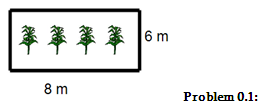
Though we are discussing English education, let us imagine for a moment we are with a primary school teacher teaching math at Grade 4.  The students are presented with this problem:

figure of a math problem

The basic approach to solving this problem, the one we would assume that the class 4 teacher would present, might be similar to this:

But perhaps some of the students are still having trouble understanding this problem.  They might not understand the formula, or perhaps they never learned their multiplication tables well and can’t remember what 6 times 8 is.  We would expect that the teacher goes through each step until every student understands how to get the answer.

But imagine that the school, in response to poor student performance in math, decided that teaching advanced math would help the students learn more.  The fourth grade math teacher is provided with an advanced math textbook, perhaps a calculus textbook, and asked to teach it to their students in order to help them improve faster.  In that case, the the solution to Problem 0.1 that the primary level teacher would present might end up looking like this:

Someone with a background in math would recognize that this approach is just as correct, mathematically, as the first solution, but it is not nearly as appropriate to the audience.  What good would teaching calculus to students in class four do, even if the math is right and we get the right answer?  Would the teacher expect this to improve the students performance, or would this perhaps confuse them even further, and distract them from the fundamentals that prevented them from understanding the question to begin with?  If the students have trouble with this simple problem, teaching them to solve it with calculus would likely result in hopelessly confused students who do not understand how to find the answer at all.

This scenario may sound absurd, but it is unfortunately more or less the approach that many public schools have taken to improving student’s English.  Most public schools, whether English medium or not, teach two English periods per day.  One period often uses the government text, but the other uses a supplemental text, examples of which are Headway English, New Nepali Reader, Lotus English, or Harmony.  Private schools, whose students are generally ahead of their public school peers in English, use similar texts, and the understanding among those who choose and write the textbooks seem to be that using similar curricula and materials to that of the private schools will create similar results.  Thus, the texts at use at least half the time in public schools are frequently much more advanced than the corresponding government text.  There seems to be a general consensus among public schools that the more advanced the material presented, the more students will learn.

Unfortunately, creating unrealistic expectations for students does not improve the quality of their education. There are a variety of reasons that factor into the gap between the performance of students in private schools and those in public schools, but attempting to correct poor English by increasing the difficulty of the textbook is analogous to correcting poor math performance in class four  by teaching them calculus. Frequently, these textbooks are so advanced that the majority of the material are too far above the level of the students’ understanding for anything useful to be learned.  Rather than improving their English, the students gain nothing from the material presented, wasting the time that should be spent on creating a good, foundational understanding of English basics and fundamentals.

This is a writing sample I received from one of my class six students.  I present this not for criticism but simply for the purpose of comparison:

Ones upon a time there live in tiger and deer.  one day tiger was very hungry tigers look his lift side deer is going to drink and tiger eat that Deer.

In my experience, this sample is representative of a standard class six ability in English, and while it isn’t bad it is also clear there are still errors in basic grammar and spelling that need to be addressed; it seems that the simple past tense is not understood by the students, nor is punctuation.  By comparison, here is a sample from the textbook being taught in this class, this unit featuring a poem:

I saw a boy with eager eyes,/  Open a book upon a stall,/ And read, as he’d devour it all;
Which when the stall man did espy,/    Soon to the boy I heard him call,
“You, Sir, you never buy a book,/ Therefore in one you shall not look.”
The boy pass slowly on, and with a sigh,/ He wished he had never been taught to read,
That of the old churl’s books he should/ have no need.

            ~Mary Lamb, in Foning and Panlook, Headway English Book 6, pg. 123

Imagine the student who wrote the first writing sample reading this poem.  Look at some of the words used, such as stall, devour, espy, churl.  Not only are these words advanced and infrequently used in conversational English, but in the case of espy and churl the student might never encounter these words again until a Ph.D. program.  So what is being taught here, aside from obscure vocabulary?  There is no basic grammar construction being focused on, in fact much of the grammar is incorrect due to the flexible grammatical rules of poetry.  As a teacher, there is no lesson to teach here, little to be practiced or taught that students will find useful, and nothing to engage them.  There is little option for the teacher but to simply translate the poem into Nepali and have the students memorize the required vocabulary for the exam, all of which they are will likely to forget afterward; it is unlikely they will encounter, or they will have opportunity to use, any of these words again anytime soon.

Unfortunately, this example is representative of many, if not most, of the supplemental texts at use in public school classrooms.  Not only does this approach to learning actually result in students learning much less than they would with a simpler textbook, but there are a number of other more subtle, but equally damaging consequences.  As most Nepali teachers will be able to tell you, Nepali students frequently find speaking English extremely difficult.  It is not unusual to come across class ten students who, having studied English for six or seven years and who can read and even write proficiently, find it difficult to have a simple conversation in English.  In part, this is a result of the student never having learned fundamentals properly.  While their vocabulary is impressive, students are often never properly taught the basic grammar necessary for simple speech.  Speaking in another language is difficult, even terrifying, for a language learner, and without confidence in simple structures and grammar students will never have confidence in speaking.  When will class six students ever use espy or churl in a sentence when they need to communicate something?  And why should they, when simple past tense and correct punctuation are still a struggle for them?

But perhaps the most unfortunate result of these texts is that it removes the potential for fun from the classroom.  Students do not and cannot enjoy learning material that they cannot understand, and when the text being taught is incomprehensible to them, how will they be able to take any interest in it, even if the story or passage has good content?  Overly difficult material eliminates the possibility of games, activities, or creativity that engages the students, resulting in boring, dry lessons and a rote-learning approach in order to do well on the examinations.  A good teacher will always be able to engage students with material that they already understand, but even a good teacher will struggle to make the incredibly advanced textbooks presented in the public school classroom interesting or fun.  A good teacher can always make simple material challenging to the students by incorporating creative activities, more difficult vocabulary, or language production like writing and speaking, which are things teachers should be doing anyway.  But it is much, much harder for a good teacher to make anything useful of the difficult and irrelevant content provided as textbooks in the public school classroom.

It is true that public school students are often behind their private school peers, but there are many positive aspects to public school English education, not the least of which are fantastic government textbooks for class six, seven, and eight.  If public school are serious about increasing the quality of education that their students receive, work needs to be put into making sure that students have a solid foundation in the fundamentals, especially at the lower secondary level.  Only then will they be ready for more advanced materials.  Without that, attempting to increase student’s English with the use of textbooks above their level is like teaching calculus to class four students who have trouble finding the area of a rectangle.

————-

From the Author: My name is Kent Grosh, and I have been teaching here in Nepal in a public school for about nine months.  It has been a wonderful experience; the students are enthusiastic and hard working, the teaching staff is dedicated and friendly, and there are many positive and encouraging things happening in the Nepali public school system that are often overlooked while lamenting the challenges at hand.  However, in this article I’ve chosen to highlight one common approach in public school English educational curricula that I believe is in need of change, with the hope this article might inspire some teachers and school administrators to assess their schools textbooks and ask whether they are appropriate to the abilities of their students.      

Speaking a Foreign Language Makes You Less Intelligent

 Luke Lindemann*

Speaking a foreign language makes you less intelligent. This is a fundamental truth about speaking a foreign language, but it is often forgotten. And forgetting this truth can have profoundly negative consequences for the classroom.

I do not mean that the practice of learning a language is harmful to intelligence. What I mean is that when we express ourselves in a language that is not our mother tongue, we must simplify our thoughts. To give a personal example, I have been conversationally fluent in Nepali for almost two years, but even today when I speak Nepali I feel less intelligent. I know fewer vocabulary  and the words I do know are simpler than those of my Nepali friends. It takes me longer to parse sentences and longer to respond. I forget words and mix others up and am often laughed at for some amusing mistake (my students were quite confused when I told them that their homework assignment was due ‘pharsi’ – I had meant ‘parsi’). For me, thinking in Nepali is just harder to do. It takes longer and it is exhausting.

When our students speak or write to us in the English language, they are the same students as when they speak Nepali to us outside of class, but the outward manifestation of their personalities can be very different. They may be bolder or they may be more shy, depending upon how they face the challenge and potential humiliation of being forced to express themselves in a less intelligent (and oftentimes laughably simplistic) way. This is the discomfort and terror of learning a language, and also its exhilarating challenge.

As teachers who have long since mastered the English language, we sometimes forget this. We teach language as if it were a simple skill like long division, and not a fundamental means of expressing ourselves. We scold our students for not speaking out in class, for being timid and quiet when their names are called and they must stand up and speak out in front of their friends. But when we do this, we are forgetting the terror and frustration that we experienced when we were students. We are inhibiting their learning.

By teaching only in this way, we make speaking English a terrifying ordeal for the less confident students. And it is almost impossible to develop communicative competence, in which students are able to hold a spontaneous conversation. Without communicative competence, the students may be able to pass the SLC but they will never be able to speak English fluently.

We must also take language into account when considering the medium of instruction for other classroom subjects like science and social studies. Most of the students where I worked spoke Tamang as a first language, Nepali as a second language, and English as a third language. The decision for medium of instruction is a very important decision in a country like Nepal that has such vibrant language diversity. In choosing to include instruction in the medium of English, Nepali, or a regional language, a school must respond to the desires of the community, the pressures of competition with other schools private and public, the resources available, and the strengths and limitations of the government curricula and examinations.

Ideally, students should be given the opportunity to learn in the language with which they are most comfortable. Speaking a foreign language makes you less intelligent. When students learn history or science in a language that is not their own, their grasp of the subject matter is unavoidably simpler. The depth of their questions and their creative capacity are diminished. They do not learn as well.

Unfortunately, in many places throughout Nepal today this is something of a necessary evil. A good command of the English language is considered one of the most useful skills, and English medium instruction is held to be one of the best ways to develop that skill. Schools must compete with each other by offering quality instruction in the areas that foster high SLC scores and attract students. Schools in poorer areas can also be hampered by a lack of materials and staff.

But regardless of resources or medium of instruction, in every single classroom in Nepal there needs to be the realization that language study is less about memorizing words and more about learning to communicate. Language study is difficult, often scary, and (when mastered) extremely satisfying and valuable. Speaking a foreign language will make you feel less intelligent, especially at first, but mastering a foreign language will make you brilliant.

————– 

Luke Lindemann was a 2010-2011 Fulbright English Teaching Assistant in Shree Udaya Kharka Secondary School in Chapagaon VDC, Lalitpur. Before receiving this grant, he worked as an English teacher for Bhutanese refugees in the United States. He holds a Bachelor of Arts in Linguistics from Pomona College, and his primary interests are language issues and education. 

Teacher Travelogue: A Journey to ELT@I Conference in Vellore, India

 Praveen Kumar Yadav, Ram Abadhesh Ray, Ashok Kumar, Kamlesh Kumar Raut, members of NELTA Birgunj

Our trip to Vellore* was not an easy one, with no train tickets available at one point, the train we somehow got to board being late, and so on. But once we reached the venue, we had a great time. We were able to attend nine of the 147 concurrent sessions, which ran in 19 rooms where eight papers were presented during 2 hours (so each presenter only had about 15 minutes). During tea breaks, we were able to meet participants from India and other countries and shared what NELTA is doing for the professional development of English teachers in Nepal. When we informed them about the forthcoming international conference to be held in February, 2012, many teachers said they’d like to come and  participate in our conference in Nepal. We shared our email addresses and went back to more sessions. We then attended the plenary sessions which consisted of two facilitations on ‘Materials Design: From the back of an Envelope to Full-fledged Unit’ by Prof. Numa Markee and ‘Teacher Power’ by Raja Govindasamy from India.

Prof. Markee argued that as Prabhu (1987) demonstrated in the ground breaking Banglore project that was implemented in Southern India from 1979 to 1984, good materials design is fundamentally grounded in classroom experimentation by teachers. Prof. Markee illustrated this position by showing how a task based module he had presented at the 16th International conference of NELTA recently held in Kathmandu, started out life in 1990 as a demonstration lesson of task based language teaching for teachers in training at the University of Illinois originally, the hospital drawing task shown here consisted of a hastily drawn pictures and a few scribbled notes on the back of an envelope. Over time, he had the opportunity to refine these ideas into “real” materials as he repeated this demonstrated many times. In addition, he was able over time to incorporate various improvements based on evidence from video recordings of some of the early demonstration lessons. Prof. Markee concluded his talk by suggesting ways in Indian Teachers of English can adopt these ideas to their teaching situations.

The plenary session had another presentation ‘Teacher Power’ by Raja Govindasamy from India. Teacher power simply means the influence of teacher exerts on students by virtue of his/her commitment and competence. Such a quality ensures leadership status to the teacher. Then a teacher enjoys power in five ways as appropriated from J. R. B. French and B. Raven’s book, The Bases of Social Power (1959). The first power is legitimate power by virtue of designation on the basis of qualification. The second is reward power which enables the teacher to assess and appreciate student performance. The third is coercive power which empowers the teachers to nudge and pressurize the students to move away from ignorance, indifference and inhibition to interest, intelligence and improvement. The fourth is expert power, the most imp0rtant power by which the teacher establishes his/her stature as a mastermind/specialist. The fifth is referent power, a sequel to the fourth, which means that the teacher is referred to as a role model for the students to emulate his/her. The powers make a teacher a mentor.

A reflection of our trip to Vellore wouldn’t be complete if we don’t mention the typical south Indian food that was provided by the conference organizers. Almost all the food items contained coconut in them!

After lunch, we attended the special lecture given via online technology by Mrs. Claire Bradin Siskin, director of Excelsior University, USA, in the Anna Auditorium Hall which is equipped with advanced technology. The sound at the hall was so clear that it looked as if the presenter was behind the curtain. At the end, through text message and microphone/voice chat, questions were asked to her and she answered them. It was an innovative and creative presentation we have ever attended. In the same hall, three authors Mrs. Usha Jesudasan, Dr. K. Srilata from IIT Madras and Mrs. Subhasree Krishnaswamy jointly presented their paper on creative writing. They started with how creative writing begins, continued with how creativity can be promoted, and ended with encouragement to write creatively.

After a valedictory session and speeches by various dignitaries, prizes were given for the school toppers in English for Standard X and XII. Prizes were also distributed for three Best Paper Presenters of the Conference. The programme concluded with the vote of thanks by the Director of the School of Languages, VIT, Dr. C. Annadurai.

The Conference was indeed a confluence which brought together over eight hundred delegates. The ‘connection’ the meeting has given to, many hoped, would be long lasting.

When compared to NELTA conference, the gathering was not as much as we had in our 16th international conference. The number of presenters was more in comparison of NELTA Conference, but ELT@I had fewer delegates from foreign countries. About 90 percent from India.  We also learned that ELT@I organizes more national conferences than the international ones, and that may be something that we need to start doing in Nepal. If we hold more national conferences around the country, more teachers would get the opportunity to attend them.  Among the finer details, 15 minutes only was allotted for one presentation during concurrent sessions, which seemed too short to us was that rapporteurs were highly active: they introduced the presenters at the beginning and they summed up the key messages of the presentation at the end.

Our journey to Vellore was very fruitful because we learnt a lot of things related to English language teaching in India. We got the opportunity to compare the conference with ours and learn new things from their, we saw new ways of presenting papers, and we heard about new perspectives in ELT. Our visit strengthened the relationship between NELTA and ELT@I. And we had a good interaction with the secretary of ELT@I who said that ELT@I is looking forward to collaborating with NELTA in coming days.


Acknowledgments 

We would like to express our sincere gratitude to the Consulate General of India (CGI) Birgunj for providing the opportunity and supporting us to attend the conference. We could not have been able to take part in the mega event of India without support of Chairperson Hemant Raj Dahal of NELTA Central and Kedar Prasad Sah and Sajan Kumar Karn of NELTA Birgunj.

—–

* This was the Sixth International and Forty-Second  ELT@I Conference, held in Vellore Institute of Technology (VIT) University, Vellore. It was organized by the English Language Teachers’ Association of India (ELT@I).

A Brief Reflection of my Humphrey Fellowship Program at Boston University


Ganga Ram Gautam*

Dear Valued NELTA colleagues and Choutari readers,

In this brief reflective note, I would like to share with you how this year has been professionally rich for me and how I was able to expand the network for NELTA. I expect that this reflection will be useful information for those who are looking for similar experience.

I felt both honored and privileged to participate in the Hubert Humphrey Fellowship in the year 2010/11. This is a highly prestigious program that brings mid-career professionals to the US and offers professional opportunities to foster mutual exchange among educational leaders working in the US and other countries. This year there were 217 fellows from 93 countries based in 17 different universities in the US. The fellowship year has been a rich professional experience for me. I feel that I have been able to expand my network with scholars here in the US and the world. Expansion of professional network, meeting people and sharing information about NELTA activities were my top priorities. I attended some courses in the School of Education at BU. I also observed some of the English language classes at the Center for English Language Orientation Program (CELOP).

Let me begin with the course experience at BU. Among the courses that I attended, TESOL Seminar and TESOL Field Observation were the ones that I would like to particularly talk about. TESOL Seminar is a course in which students are guided through the steps of curriculum design and writing a book. The professor introduced us to the concept of Tri-dimensional Syllabus that combines the Topics (Themes), Language Functions, and Grammar. By combining these three elements we can really address the topical interest of the learners, expose the learners to the desired language functions and provide them with the type of grammar they need. In addition to this, we also analyzed some of the textbooks and curricula in line with the class discussion on curriculum and materials design.

Another course that I found very useful was TESOL Field Observation. In this particular course, we observed the student teachers in class and shared our experiences. The students were assigned to observe at least three classes per week. We had to take notes of how the class began, how the learning goals were communicated to the students, how the learning activities were organized in class, what the types of errors the students committed were, how those errors were detected and addressed by the teacher, whether or not the students learned from the errors they committed, how the classroom dynamics were managed and so on. At the end of the week we would come to the class at the university, share our experiences and plan for the next week’s observations.

In addition to this, I also designed a Google that I plan to use with my students back in Nepal. In this website, I have tried to include the wonderful online resources that English teachers can use in their class. Also I have hyperlinked a lot professional development resources. I will regularly update the page and please do feel free to browse the page and use the resources available there. Also, please do send me your feedback and comments so that I can make it more reader-friendly and user-friendly.

The website address is: https://sites.google.com/site/gangasprofessionaldevelopment/

Nepal is now going through a shift and English language is going to be one of the key languages in the Nepalese education system. One of the things that I wanted to learn here in the US was how English is taught in multi-lingual and multi-cultural contexts so that I can share my experience with my colleagues in Nepal in order to address the linguistic and cultural diversities in Nepal. I observed English language classes both in university and schools here and talked to the teachers. I found that the teachers use these cultural and linguistic diversities as resources in their class. They encourage the students to share their cultural practices in relevant lessons and compare the linguistic elements among different languages.

During the fellowship year, I attended a Leadership Seminar Series by Prof. Jack McCarthy from the School of Management, BU. The leadership seminar was one of the highlights of the fellowship year. Prof. McCarthy helped us carry out the Leadership Survey through which I was able to see my leadership qualities from the perspectives of the people I was working with back home. One of the things that I would like to share from this experience is ‘leadership is not what you think about you but what other people think about you’. If one wants to become a successful leader, s/he has to develop a mechanism to get regular feedback from the colleagues, co-workers, sub-ordinates and the wider audience. This is the key to a successful leadership.

I was lucky enough to participate in the mega ESL event i.e. TESOL conference in New Orleans. The conference was a great learning experience which not only connected me to the global ESL/EFL community from around the world but also updated me with trends in ESL/EFL scholarship. About 5300 teachers from around the world presented and participated in the conference.

During the same conference I attended a Leadership Course organized by TESOL for TESOL members and the leadership workshops that I attended gave me the confidence to volunteer myself to lead the professional organization at the regional and global levels.

I have established a great network in the conference and I have volunteered to one of the global forums to develop the key performance of the English language teachers of all levels of education.

I also did a series of presentations in different forums and I highlighted the role that NELTA has been playing to promote and enhance English language teaching in Nepal.

These are some of the activities that I did in the last ten months and I am now looking forward to sharing these experiences in Nepal and contributing to the professional growth of NELTA and its members.

I encourage NELTA colleagues to apply for this kind of fellowship and be a part of such great experience.


Ganga Ram Gautam, Humphrey Fellow 2010/11

Immediate Past President, NELTA

The world is one big choutari–but…

Shyam Sharma

The world is one big choutari.

Yesterday I received a few emails from fellow editors and a revised article from a contributor for Choutari July issue, which I am assigned to put together, with support from my colleague Sajan Karn. My bus was leaving for Boston at 4pm, so I replied to the emails and left New York. On my way to Boston–where Ganga Sir is wrapping up his one year visit as a Humphrey scholar and where I am joining him and Hemanta Sir, who happens to be here at this time, for dinner–I was able to return the article with some minor editorial comments with a 24 hour turnaround time. On my way, I was also able to read about the  training in Majuwa, Gulmi (which is my old home town) that Gopal Sir gave and also shared the update with us via Yahoo mailing list. It’s just amazing how much communication technologies have advanced around the world. But–

But when I write about the connection that some of us happen to have among the Nepalese ELT community at home and abroad, some of us more reliably and permanently than others, I think about the colleagues across Nepal who do not have (reliable) connection for joining the professional networking that others do. As I write this, I imagine that I could have been one of those teachers in Majuwa who requested Gopal Sir to please return for another training. It could be years from now when we hear from or about Majuwa. Or–

Or, it could be not that long, if we make the best of use of what is available, if those of us who are connected help make more connections . Choutari editors have talked about this. In our attempt to promote professional networking through online forums like this, we might sound to some readers that we are oblivious of the reality on the ground. We are not. We just want to make platforms, practices, and resources available to our colleagues who are increasingly able to connect to the web AS AND WHEN they are able to do so. We don’t want to wait until everybody is connected. Therefore–

Therefore, our request to you as someone who has already some level of access is this: please do one small thing to increase access, participation, contribution for or by a colleague or two. Please print an article that you like and provide it to someone who doesn’t have the access. Please collect something from someone who doesn’t have access and type it up and email it to us. Even for those who are already connected, please “share” entries here on your Facebook, please “like” articles, please “subscribe” to the blog as a whole (link on right), and please write and send a longer, independent entry/article for the coming months. If you need some guidelines, please either see this page or email us at neltachoutari @gmail.com.

Thank you for reading this issue of Nelta Choutari!

—-
Shyam Sharma, University Doctoral Fellow
English Department, University of Louisville,
Louisville, Kentucky, USA

Teacher’s Travelogue: A Journey to Bangladesh

Kashiraj Pandey

[What follows is a section of a travelogue by Mr. Kashiraj Pandey, NELTA executive member. Please click HERE  for the full text.]

….

Seeing Myself in Dhaka

I did not have fixed plans and no one was worried about my arrival. For me, to experience everyday in which almost nothing seemed so familiar was the pride of travelling that way. I reached Dhaka around 10 am, the 19th May, 2011. As I was told to meet BELTA colleagues at 4 pm, that 10 to 4 worked so well that I explored many parts of Dhaka on the first day that delegates other parts of than Bangladesh and a colleague Ganesh from Nepal, another representative from NELTA, who took a flight to Dhaka the same day with grants from the British Council, was surprised to see me steering him towards many corners of Dhaka during our stay there.

Meeting Sudebjee from English in Action and Sonia from BELTA at the BIAM at 5 pm, the conference venue made me realize that a journey is best measured in friends, rather than miles. As soon As I met them one let me use his computer and the next offered to join for the snacks.

At the Conference

As announced, the conference started on time. At 8.30 am, the volunteers were ready, waiting for the participants and delegates to register. Most of the presenters had registered the previous day. During 9.00 to  9.45 , I could see all participants, presenters and delegates inside the dining hall each holding a cup, exchanging greetings and talking, every one busy, what a fine opportunity for networking!

And I was busy too, talking to everybody, if not as many people as I could find who loved listening others, not many actually. But, I did my best to make me heard, and they were amazed to see me and the way I reached there (you know in 40 degree Dhaka city, a man arrives by bus, all wet from every corner of his body and sweating, with fairly grubby clothes, never taken shower for three whole days and nights) and how I travelled all the way to Bangladesh by bus, and my unplanned journey by road– no seats in a scheduled bus with all hopes to eat and stay in  readily available local hotels… and more, all fun when things went well, and that’s how I was there, very excited.

Then I saw all going towards the hall by 10.00 for inauguration, so quiet, so curious we all were.

Then at 11.00 the plenary started with David Graddol for an hour, where he highlighted how the global trends are affecting in reshaping the world of ELT.

Before the concurrent sessions started at 12, I could see all the presenters working on their slides to shorten them so as to fit within the 25 minute time bound which was not very normal for anyone, and I was no exception either, for presentation in such huge gathering meant for an hour in general. The volunteers in different  rooms were so alert, and time sensitive. After 20 minutes, they would show a placard saying 5 MINUTES, which was a good signal for the smart presenters to conclude and switch into Q/A session. And in next 5 minutes, STOP!.

Some big names like Fife MacDuff , Jeremy Harmer enjoyed the opportunity to present at the auditorium for an hour each where other presenters like me had to compromise with a normal hall for 25 minutes time limit, and mine to be more specific was in the fourth floor. Yes, I also had my session on the first day with a topic, Journaling for Teacher Development: An Autoethnographic Approach. I could see all participants very enthusiastic, excited for the topic; for the technique of journaling, for an autoethnographic approach they wanted to know what it was and of course some were little skeptic on how would I deal the topic, very curious, very inquisitive, and involving.

After I gave my session, a bunch of BELTA members, the young faculties from universities in Dhaka encircled me, nice to see them falling in love with autoethnographic approach, I know who does not love to talk about their own feelings and emotions, and more than that, about what Creswell (2002) claims as “a reflective self examination by an individual set within his or her cultural context” (p. 438). When people have their own creation and feeling, they look for their own space within creativity, while autoethnography gives a space to display our multiple layers of consciousness, connecting the personal to the cultures around and that was reason they loved to hold me back. Revealing my days for the past three years that once I started to work in this domain, I have found people around me valuing and celebrating my efforts, kept me update and fresh all the times. I have never found anyone coming out to harm my creation, when I believe in “heart to heart communication” in writing. My teachers, colleagues, students, family members, readers, and participants in any workshops have given energy to save me ahead.

A professor from Eastern University did not delay to invite me to her university to talk about my attempt in using reflective journals to garner students’ and teachers’ creativity as well.

I readily accepted where pleasure was all mine to meet the young budding writers, the faculties of English Department at the Eastern.

At the Eastern

It was already four and the CNG auto took us at the University’s building in Dhanmundi. The professors, especially those who were writers too, were waiting for us. I had Mr. Ganesh Gnawali, my colleague from Nepal, with me. Yes, I shared my experience as a writer, the contents we readily get in this part of the world. I talked about some best pieces of Literature that I have read from around the world. I was more lenient towards the one that best represented life, society, and cultures of course, starting with what we already know. People have their own style  of creation and feeling, very unique but universal. Those dynamic participants promised they would keep in touch, let see how we could keep the promises further, may be by exchanging the ideas, writing and publishing more books of creativity, documenting the moments of pain and pleasure, ups and downs as what was done by other writers, their influencing texts. To name a few texts like King Lear, Malini, Kabuliwala, The Great Railway Bazaar, The Kite Runner, Swan Song, The Necklace, The Lunatic, Munamadan, and Gauri are some works that the world cannot forget even someone is indifferent to, and all of them somehow were able to capture the moment that reflected the social-cultural, or personal-political experiences based on their own spacio-temporal context/s, and reading, such creation of other writers, works as burning fuel to all writers on the rise when we all are the butterfly of a same garden with multiple sets of flowers blooming within.  That’s what I shared in the workshop at the Eastern based on my ongoing research area, reflective practices (Journaling) for overall transformation in teaching- learning. Thank you Professor Iffat Majid, for you gave this wonderful opportunity to meet all these creative galaxy.

At the TA Meeting

Mr. Ganesh Gnawali and I attended a meeting with the leaders of teacher associations from the region; from Bangladesh, from Pakistan, from Afghanistan, and from India. I was glad to observe that the regional Teacher associations are taking NELTA as a model association. We are also the one with branches all around the country who have active life members, more than 2000 by 2011.  While other TAs were advocating to encourage young and new members, we had already had Mr. Ganesh Gnawali, an aspiring and promising young man, the proof, whom the committee recommended to avail the BC grant while myself, though representing the central committee, so happily attended the conference on my own.

I shared how we are smoothly working with the government and the partners while it is still a challenge for other TAs from neighboring countries. Our members’ active participation, specially the new ones who wholeheartedly volunteer during the conference or throughout the years was another asset we shared with them. Agreeing on the need of frequent exchange programs, support in training and material development, and regional cooperation etc. the meeting concluded hoping to meet again soon.

Finally,

As Aldous Huxley  remarks, to travel is to discover that everyone is wrong about other countries, I was really worried whether I would be sold on the way even before reaching Bangladesh (Dhaka), but no one tried to hurt me in any cultural (sensitive) matters. However, as a tourist I could sense how easily things were sorted out when we spent money. Had the money changer not arranged the easy escape, I would have returned Kakarvitta instead of heading towards Dhaka from Burimari. And I had a good cause for this. At Burimari, but I should confess, I was so happy to see the humans in uniform accepting any amount of money from anyone with great confidence, confidence counts, doesn’t it?

….

An Interview with Mr Hemanta Raj Dahal, President of NELTA

NELTA Choutari had an interview with Mr Hemanta Raj Dahal, newly elected president of NELTA for the tenure 2011-2013. In the interview, he has addressed a number of questions that are directly related to institutional and professional development of NELTA, English Language teaching in Nepal, Choutari’s role in promoting ELT activities and its support to NELTA, present challenges and opportunities and many other issues. Please go through the interview, and leave your comments which can be instrumental in giving right directions to NELTA in the future. Your voice matters to shape the ways of NELTA. Please, come up with innovative ideas after reading the interview with Mr Dahal.

1. Choutari: You have been serving NELTA for long. How the organization has been instrumental in enhancing the professional skills of the teachers in Nepal? What challenges have you foreseen as it is a volunteer orgaisation and there is always a substantial expectation from the people. Also, what are the opportunities? To address this situation, what are your plans and visions so that NELTA will be able to achieve the goals?

Mr. Dahal: NELTA has been providing a platform to the ELT professionals which could be instrumental to learn and let learn. The core of our modality is the exchanges of knowledge and skills on English language pedagogy not only limiting ourselves within the domestic periphery but beyond. As regards to the challenges, NELTA has grown so big and it is still growing in terms of its size and the scope. All the members are expected to contribute voluntarily. Naturally, every member has aspirations. One of the opportunities is to be able to contribute NELTA voluntarily because there are set examples that the NETLA volunteers have been better recognized by national and international institutions professionally and socially. However, what has been getting tougher is to convince the roles of the members without expecting any special individual gains. I have a strong feeling of a need to decentralize NELTA programs and activities so that every member will own the institution. Consequently, the members will explore opportunities to better qualify and meet their expectations while the institution will support their mission.

2. Choutari: What are your plans for the institutional growth of NELTA in order that it meets its goal? Institutionally, how are you planning to work with NELTA partners? To what extent the partnership has been successful for NELTA?

Mr. Dahal: NELTA has envisioned to contribute for quality education in Nepal through English language as a powerful tool. Though the institution has been distinctly standing amidst the crowd of professionals and the other key stakeholders – national and international both, we have yet to build up a rapport so that NELTA will enhance not only social and moral recognition but also institutional one. It reminds me when I presented the General Secretary’s report in the Annual General Meeting (AGM) at the 16th international conference venue on 19th February 2011 when one of my key concerns for future direction of NELTA was to institutionalize it. Our partnership with other key stakeholders in ELT has been successful in the institutional level to some extent where we have been chiefly collaborating with Ministry of Education, the US Embassy, British Council and private and boarding school associations. However, we have yet to convince these communities regarding our professional expertise and the contribution NELTA can make to this country. Our institution is being expanded from Sankhuwasabha, the far eastern part to Baitadi, the far western part of Nepal where NELTA has been working through its branches. Now is the time to enhance quality within ourselves first. Our members by now have already become very receptive. Therefore, we do not have to wait for long to achieve this goal.

3. Choutari: What are your plans to develop NELTA as a consultant for the government so that education in general and English teaching in particular will be more effective and meaningful?

Mr. Dahal: The 21st century has become extremely competitive in every discipline. NELTA has been working for last 17 years without any full time human resources but taking time of those professional members who have been generous, stealing some of their times either from their academic pursuit or from their jobs for subsistence, not leaving any moment for their family. Of course, this modality has one significant advantage that every member would like to look for some opportunities how he or she could support NELTA. However, we have yet to prove with our concerted effort that we are the appropriate entity so that the government will be ready to buy our expertise. NELTA has discovered that only a few of its members have been involved in research, developing manuals and materials and doing project reviews and monitoring. Moreover, we have yet to create atmosphere to bring them in a boat so that instead of working on individual basis they can join hands with the institution. We should be proud that the editorial team of NELTA journal  has undergone a considerable transformation in its working modality. As a result, the journal has been peer reviewed which is worthier than ever before. However, our publications are very limited and they are mostly circulated among our members only. Therefore, the government should have very little knowledge about the strength and quality of NELTA. I would therefore encourage the NELTA family to adopt special strategies that help develop our strengths, recognition and network. As a president, I look into the opportunities how I could contribute towards this direction.

4. Choutari: How does our effort for promoting professional communication relate to NELTA’s goals and how might we be able to enhance them?

Mr. Dahal: We should first establish the norms of professional communication. Communication is the most powerful tool to help break the digitally divided world. Consequently, quality of education will not be superseded by the notion of its access. To me, the professional communication has two-prongs. One is for the network and another is for sharing of the culture of developing capacity and the best practices. The more efficient is the communication, the faster is the global recognition of the institution. Again, our performance and commitments should be reflected in each and every communication. One of the ways of promoting our professional communication is learning from other organisations of similar nature, for instance, IATEFL, TESOL and Asia-TEFL. I am sure my colleagues in the central committee have better ideas in this area.

5. Choutari: Do you have any suggestions for conducting networked discussions in better ways so that branches and members can contribute better? Where do you see the present strength (academic and institutional) of NELTA to help teachers enhance their professionalism?

Mr. Dahal: Despite unbearable power cut hours in Nepal, many English language professionals including the learners have started using the medium of IT. If you ask which one is odd man out in  rice, vegetable, computer, lentil, yogurt, I am sure the answer will not be ‘computer’. Therefore, Wiki can be the easiest and effective means for such network. Mr Prem Phyak, the Secretary of NELTA has already initiated the design of Wiki. In my experience, many ELT professionals mainly outside the Kathmandu valley would like something specific that how to teach particular content from their courses. Our Wiki modality then should address the expectations of the ELT community looking for resources so that the benefit of our effort will go to the real learners of English.

6. Choutari: Choutari is a volunteer mission that works as per the core missions of NELTA, for which it is cost and labor free; but Choutari’s organizers would greatly benefit if NELTA could help us promote the forum through its existing communication mechanisms. What could be, for example, one significant way in which NELTA can help us in increasing our reach, readership, and involvement where there is more limited access or recognition of professional conversation?

Mr. Dahal: I am sure the Choutari involves a lot of cost if we convert our colleagues’ valuable time and use of their brain. It is free only because they have sponsored it. This is one of the most striking issues at the moment. I would recommend to motivate more and more contributors to the NELTA Choutari mission and also to disseminate it more widely. Some of the modalities I could suggest are to link Choutari to the NELTA website and also request the  British Council, the US Embassy, TESOL and IATEFL to link to their websites as well. Moreover, it would be very exciting to publish it as a booklet  or bulletin form either on regular basis or occasionally as an special issue. We can then receive feedback from the readers. Consequently, we will have better opportunity to learn what our readers want.

7. Choutari: We have got good support from NELTA in the past. How do you plan and intend to support Choutari as NELTA’s new President? Do you have any new ideas as per your presidential vision as our new leader?

Mr. Dahal: I have a feeling whether we did a proper justice to NELTA Choutari in the past. I am always aware that Bal Krishna Sharma and Shyam Sharma in the US and Prem Phyak, Kamal Poudel, Hem Raj Kafle and Sajan Karn in Nepal have been rigorously contributing to bring it out. They deserve special recognition from NELTA. Now is the time NELTA has to disseminate the core value of the Choutari mode of professional development. I would like to support the Choutari team to make this noble work more visible among the ELT communities and heighten the level of ownership of NELTA members. I would expect the Choutari materials to be combination of some theoretical notions  with more practical tips, professional reflections of the members and the guest contributors and the best practices in ELT. I can see the opportunity to forge partnership and collaboration with other similar sort of network and agencies so that quality of this e-platform can be enhanced.

Outrunning the Unknown

— Hem Raj Kafle

During the early days of teaching in a private boarding school one gets to come across diversity of odd but exciting moments. The time is full of tests and cross-examinations. People around you — founders, administrators, colleagues, staffs, students, and students’ parents — try to know your knack in their own ways. Or, at least, you appear after a time to consider the need of ensuring such multifaceted satisfaction as the only secret of becoming a teacher. This is my understanding, which, I admit, need not resemble anyone’s. Experiences vary.

My actual, substantial teaching career began in a private Boarding School at Urlabari, Morang. The entry was interesting. I went to ask if there was a vacancy (In fact, I had had a hint that there was or would be one). The principal, J.B. Rai as I recall now, told me to drop an application. When I did, they asked me to prepare for a short demonstration class. I did it, and taught in grade three for about ten minutes. This was the first time I had spoken English to students to my satisfaction.  Then they took a sort of interview –  if I could join instantly as a an assistant hostel warden cum teacher. I said yes. I got the appointment letter after a brief meeting with the founder the following day.

I was only an I. A. with English major, and had nine months teaching experience in a primary school. Everything was so fast and more than expected for me. I knew later that people had taken it to be really fast and more than I deserved.

When people keep watch on you in a workplace, you must also watch how they try to crisscross the lines of responsibilities.  You must first be clear about your line(s), and see where they go closer to and farther from others’. One morning I was teaching English in the same grade three, which was next to the staff room in the old tin-roofed block. I was only half-way with the new teacher’s vigour when a man (a colleague, of course) who had happened (or pretended/wanted) to hear the fun we were making, came to the door, excused himself (in English) and began to scold the students for making noise. Then he again excused himself, called me out and began to counsel me on how to handle small kids. I was a bit puzzled because I had never seen him. “Maybe he is someone with such responsibilities — to watch on a newcomer.” “Who knows what boarding schools do to keep things straight!”

Some colleagues had seen this from the adjacent staff room. I knew from them that he was junior to me in qualification and equal in designation. They said he used to do so with almost all newcomers. One of them even remarked, in his absence, of course,  “I would thrash that snob. But you are new and humble. Check from next time.”

I thought if I had known him well, I would have spoken more fluent and better English to the hearing of everyone around. But I had just listened to and thanked him ‘for his valuable words’.

This little thing spread like a wild-fire and reached the Vice Principal, my one-time English teacher. He called me to say, “He knows you were my student. Some other teachers know it, too. You can expect a few more such tests. And next time, with him or anyone else, argue strongly and with the best English you have. Make sure you know more and speak better than your juniors and equals here.”

Working in this school gave me the best opportunity to test my self-confidence.  It was a big place for my age and qualification but had swift chance of promotion. And promotion was ensured in working hard and emulating others. It was a time when a locally educated lad like me was brought face to face with Darjiling-born ‘experts’ highly sought-after in English boarding schools. I was an alternative to one of them to start with, and made swift progresses in the probation year. People tested me time and again. The Hostel warden, whose assistant I was, tested me half a dozen times with queerest of orders and admonitions, the hostellers tested me for my anger and patience, the cooks and peons did that to check my capability to exercise authority. Colleagues who spoke and taught English kept on evaluating my English. I remember one English teacher coming to the hostel tutorial time in the evening just to check how well I wrote and spoke. He gave a question to answer as if I were a student. I wrote and explained. He confessed he wanted to see how  the Vice Principal’s disciple would actually fare in his proficiency parameters.

I had started as an assistant hostel warden, which demanded a lot of going around and quarreling with kids, which some people satirically called an ‘opportunity’ for twenty four hour English speaking. I hated this after a time because it overtook my study, and snatched me off the friends’ circle.  At the end of the session I requested the founder to set me free from the hostel. He agreed to let me stay out, but said I had to continue as a primary level teacher with the earlier salary. This meant I was not going to get a promotion to the lower secondary though there was a vacancy and I was eligible. For me leaving the quarrelsome kids was a better reward than a promotion for that time.

A year passed. I ‘topped’ my batch in the Bachelor first year exams. My young colleagues advised me to reveal this fact in the upcoming start-of-the-session staff meeting. We bought some kilos of oranges and distributed at the end of the meeting. The friends disclosed the reason for this humble treat.  I did not really bother how it worked. But friends said my success was a lesson to my competitors. The Vice Principal later reminded me the optimism of the myth of  “a needle-like entry for a ploughshare’s exit.” This success added to my image. But I had to prove that I could top the second year also, which I did. There was no celebration for this since I left the school along with the results.

During a short farewell gathering on my last day in the school, the Principal and Mr. Regmi, both respectable old teachers, enumerated the phases of my growth in those two years and four months. For the first time I realized the accuracy and weight of the judgment of experienced people. They said they were happy for my beginning ahead though the school would welcome my longer stay. They only expected me to acknowledge how the school had prepared me to explore new opportunities in Kathmandu. It is during this farewell moment that I first heard the principle of “forgiving and forgetting” unpleasant encounters of the past at the start of a new journey ahead.

Thus, with B.A. and confidence, I left Urlabari the winter of 1997.  I have always made it a rule to visit the school whenever I go home. When I reach there, I get a feeling of being around all these fourteen years though a lot of things have changed. I will cherish those 28 months for the rest of my life.

And, I continue to value the early tests and cross-examinations. If similar cases occur today also, I just take them as the new editions/reprints of those valuable old books.  Working there, I learned this simple maxim for life: Professional life is a race. Whether you like or not, there always is a pressure to run faster. You may not know others’ speed, but must constantly try to outrun them without tresspassing their trails. When you win, the person who deserves both thanks and congratulations is you yourself.

Parenting, Nepalese Private (Boarding) Schools, English, and Child-friendliness

— Kashi Raj Pandey

Yes, teaching English in Nepal for more than a decade, from primary, secondary, and now in a university has compelled me to reflect myself with different hats; basically every day, now a days, I have been wearing two hats: first, a professional hat; second of a “good” parent. A born, dedicated teacher and a very finicky parent, as teaching professionals are the most difficult clients for “boarding schools” too.

Last weekend, with sufficient activities and monitoring at Kathmandu University’s Undergraduate classrooms, I returned home, tired. Good that our elder boy was already there with the small one and their mother waiting: I was the last to reach home that relieved me from worrying about others’ arrival as we all absent ourselves day time; one a hosteller, another day-scholar, and the couple both working in different sweat shops.

Our meeting was followed by a homely Dinner; and during dinner time, we talked as usual. My wife was an initiator. She said, “Look, I have something to say today”. I, with curiosity, gave my response, “Yes. Go ahead”. Then she proceeded, “Our children are doing good in studies. They score good marks. But, the bigger one had a request whether we could speak English in home so that he can confidently speak in English with his teachers”. He is a nine grader studying in one of the “finest” boarding schools. In Nepal, we love to make judgment about the standard of schools on the basis of the money they collect from parents; like how much, how often, and how early. This school is “good” because of the amount they charge, frequency of events they advocate for extra money, and reason they find for collection. From this year they claimed that they have also improved their quality by rescheduling the mid-term exam as early as possible. They said it is good because the children can have their result before Dashain (the major festival in Nepal with a long holiday), but I know the reason, and so do you, all intelligent readers.

By now you all can guess, as a teacher of English, one thing with intention, I failed was this – not speaking English at home. And, I kept quiet waiting to continue that issue in the next session. I nodded – “Yes, the dinner is delicious and how nice eating together after a week’s hard work!”

Next session continued, as very often we do this. Parents sitting together with children for sometimes, may be just talking and talking even with no issues, we believe strengthens compassion among. And, that time we had an issue. I asked the boy to tell me about him. He said, “Everything is good”. But my boy needed further counseling, I could imagine.  As we kept talking, many things started to unfold. I even remembered and recited the first stanza of a poem by W. B. Yeats, “Among School Children” with them:

“I walk through the long schoolroom questioning;
A kind old nun in a white hood replies;
The children learn to cipher and to sing,
To study reading-books and histories,
To cut and sew, be neat in everything
In the best modern way – the children’s eyes
In momentary wonder stare upon
A sixty-year-old smiling public man.” (ll 1-8)

Yes, after some moment, he revealed that if we spoke “English” in home, he could have excelled in everything and among everybody in the school. Then, I realized the problem, but I never took “English” and “only speaking English” that way.  That made me little emotional and thoughtful. I have seen many “good English speakers” not doing anything even in the Americas, seen a village-wo/man with a great heart doing a lot; s/he may be poor, unfortunate to attend so called “boarding schools” but also NOT devoid of humanity. I know more on what I have to make them unlearn than what they are learning in school.

Children are learning that they need to pay fee for the admit card so that they can sit down for the exam and go for unhealthy competition. I am saying this because I saw an innocent little girl crying in one of the good private schools on her result day because she could not hold the FIRST position among some 600 students while the “Block Incharge” was trying hard to convince the child and her parents saying, “You should try next time”. My goodness, isn’t scoring the SECOND position in this huge mass a fabulous job? I think yes, and for me it is always a “WELL DONE!” Do these schools worry about giving prizes in the same way as they are curious to collect fees before exams? Children (ALL) I have always seen happier coming home with the envelope (a receipt inside) than their exam results.

We make children to be disciplined. And they are disciplined in such a way that even at their Undergraduate levels, when we ask them to contribute in some way or express their views, first thing they do is “standing up”. It has become their habit; most of them do not worry on the issue but ask to repeat again after they stand up; they have become habitual this way. We are giving them the “wrong” message that only educated people are comfortable to survive in this world and the toppers are always “respected”. I agree, but what about the other parts? Don’t we have to enjoy life with children? Is our home NOT different than schools? Aren’t we also paying high to imprison their childhood?  Honestly, I have sent my boys to these private schools not because I really wanted them to but just to make ourselves “socially” comfortable and put myself under this “veiled prestige and power relationship”. Now, I do remember the lines from Daniel Goleman’s essay where he has inserted a dying patient’s reflection, he mourns past losses and wrongs he has committed, “he regretted that when his daughter was small and needed him, he was on the road making money to provide a good home. Now, that he was dying, but she was grown and had her own way of life”. He felt it was too late to play, talk, and even share a lot of things that were possible earlier and, most of the times, I find hard to see myself differently.

How have we motivated the children? John Holt says we still claim children go to school to learn as if learning is different than living and that the child hadn’t been learning before.  They are learning to hide the home works. They are learning countless strategies for prying “right” answers out of the teacher, for conning her/him into thinking s/he knows what s/he does not know. Children when suggested to change certain things that were not right, they fear whether they could write that way in exams too. Many parents also fear a good amount of project works during holidays. I have seen them working actively in many student projects, that to be submitted to teachers, for the sake of children’s happiness. At this point, I worry whether children go to school to learn for themselves or for others?

Next, is “ENGLISH” terror. As I have seen fine slogans painted or posted in many private school walls like; ENGLISH IS COMPULSORY. PAY Rs. 5 Or 10 FOR EVERY TIME YOU SPEAK NEPALI. Why do we advertise this way? Can’t we simply speak English in the schools, a “correct” English I mean which may come from different sources, may that be watching TV, reading novel or anything. Parents in Nepal would love to see their wards speaking English, no doubt. But, don’t we also have to cultivate reading habit or don’t we have to give our children the knowledge about the life style, culture, feast and festivals of the target language? Can’t we also take our children to several events like Cultural Programs, Book Exhibitions, or other Educational Fairs? Keeping these all in mind, I was comfortable when my boy agreed with me as we are doing all other activities at the maximum possibility, though English was not compulsory in HOME. And this is the beauty that children find a home more homely, different than “Boarding” schools in Nepal.

I worry who has time to look into these issues with due priority for these children’s childhood has been imprisoned unknowingly deceiving them in the name of discipline, competition, success, or what not.

Teachering: The Profession of my Original Dream

Kashiraj Pandey
Since childhood, I understood that a teacher’s job is a well respected and most secured one. There were the days when a teacher’s verdict would be the final one in Nepalese villages in settling some disputes too. A teacher was a representative to make a deal, and even a negotiator when someone from outside appeared with any reason, be it a political, social, or anything. People even invited the village teacher to read out the letters that were sent by their sons or daughters from their far-off work stations. Therefore, a teacher was everything for the people and one day, I also, being no exception, wanted to become the one when I grew up.
The teacher as a “guru”, who I believed knew everything. Teachers, I still find hard “not to understand”, are the only source of knowledge. Those days, children from a remote village like mine, the northern Dhading, whoever could afford the school used to dance according to the tune and timing of the teachers, and whenever were questioned about their future quests, almost all, I remember, wanted to pass SLC and become a teacher in a nearby primary school.
That was sufficient for me to motivate myself until grade 10, but to better prepare myself for the SLC, the “iron gate”, I left for the district headquarters in search of good teachers who would give me tutorials to complete my incomplete English course. To my dismay in making a deal with locally available “chief” tutors at Dhading Besi, It became a compulsion for me to make an odyssey to Kathmandu, the all-the-time welcoming boulevard, from where I could decide upon my future life. In Kathmandu, I joined the coaching class run by a team at Shanti Vidhya Griha, Lainchour. That was a welcome relief as the teachers helped to complete all the un-finished subjects including English. After a two month stay in the capital, I returned to my home district, Dhading. I appeared the exam, passed with comparatively good marks.
Being an SLC graduate, I became a potential candidate for the job, the job of a school-teacher. I was invited by a school next to my village. But, I more preferred the one in my own village which I did not get. That was an interesting moment as I recall now, and that was the time I had to make a decision in planning for my future. I rather decided to leave the village and pursue further education in the subject that had bigger market – English. Realizing this, I took English as a major, only thinking to improve the language competence, not worrying in knowledge at first. Yes, English was responsible in sending me from Village to Dhading Besi, the district headquarters and to Kathmandu from Dhading Besi while preparing myself for the SLC.
I enjoyed various turns and twists of life once I left my home, family, village, and the home district first time, for such a long period of time. After I passed Intermediate level, I started looking for a job- of course, the teaching job. It was the late 80s, when Nepal was heading for a revolutionary political upheaval. In Kathmandu, there were not many private schools that time and the existing few would not announce vacancies in the media. I did apply whenever I became aware on them, but there would be no responses every time. This led me to take other jobs but teaching, and that provided me with ample opportunity to learn other things which proved to be beneficial in life later.
However, I also started giving classes voluntarily in any school around during my free times. I used to walk in the schools and then to the classrooms where the teachers were absent or whenever they were nice to offer their periods that I could use by discussing some topics from literature, the English literature. I took that as a good opportunity to struggle with self and with the existing social, political settings. By this time, I also realized that studying the subject, “English” was not only for the sake of language, but also to broaden the horizon of knowledge.
English has become the medium to access information related to history, culture, the human existence, about me, and what-not. English has been a faithful companion of every moment in life which was filled with a strong feeling and urgency to update myself in any matter. English the “one time terror” of my life became the deciding factor to embrace teaching as a profession, a university teacher. This has led me to be with “good” human beings, my gifted students and colleagues around me everyday, and thus reuniting me with the original dream of my life.

Ten Years at KU: Pondering over Meanings

Ten years! They have slipped like seconds. My first day at KU is afresh as if it were yesterday — the confusion, the compunction, the curiosity, and what not. Only when I see the changed part of its surroundings and the new establishments, and only when I count the number of school-going children from KU quarters with my own son along, I begin to ponder over the days, months and years I have spent here.

I am trying to trace my transitions and transformations  in reminiscences, in my diaries, and sometimes in the grey hairs of my friends and colleagues. I can’t be more organized now while the flashback comes like a hillside stream during a heavy rainfall.

Continue reading Ten Years at KU: Pondering over Meanings

Reminiscing the B.Ed. fiasco 

— Hem Raj Kafle

Long back high school teachers from my part of the country (eastern Nepal) used to travel up to Janakpur to take the one-year B.Ed. examinations.  On their return they used to narrate their fortnight-long absence  with such zeal as if the examinations alone had reinvigorated them into becoming better teachers.  We students only used to revel at those rather embellished stories of their ‘picnicking’ and ‘tourism.’

“Was it really worth more than a mere certificate – only the proof that you had one because you were asked to?” I sometimes asked my English teacher and some other recipients of this One-year degree when I was old enough to question the worth of this one time venture. The answer: just smile or a shrug.   But the question always troubled me, especially when people began to demand it from me since I decided to become a teacher. What was the meaning of the compulsion (or fashion?) of obtaining one more certificate? Would it prove anything but a license to claim that you could become a teacher irrespective of how many teacherly qualities were absent in you?

I came to Kirtipur after completing Bachelor of Arts at Urlabari, Morang. I looked for a teaching job before joining  TU central campus for my Masters studies. Boarding schools were the immediate destinations. I dropped applications at places. I took written ‘qualifying’ tests at some schools, and faced interviews at others. In all interviews, among many questions one confused me most: “(Why) haven’t you done B.Ed.?” This would come to me as if I had been useless without B.Ed. despite my satisfactory B.A. and four years’ teaching experience. But, I would end up saying, “Well, it’s too early for me to be a B. Ed. I’ve just completed B.A. There’s time.  But do you think it is mandatory to have a degree in education to become a good teacher?”

I decided to try One year B.Ed. only when I started my M. A. Thesis. It was simply for owning one extra degree never really caring whether it would help in the future.

During the entrance test I was amazed to see the likes of me. I had a consolation that mine was not an odd time. I decided to take the admission also. On the admission day, I had to meet a professor at the Central Department of English Education for some sort of recommendation/signature. When she saw my papers, she asked, “What do you do?”

“I am doing my M.A. Thesis,” I said.

“Why do you need be a B.Ed. now?” She questioned with a smile. I only smiled in response and left her office.

Yes, why would I need it? By now, I was all set to start teaching in a university/college and was planning teach courses in literature/literary studies. I had only joined a crowd never knowing their purpose of joining, nor mine.

In my interview at Kathmandu University in August 2000, a professor asked me what I was doing in addition to looking for a job. “I’m doing one year B.Ed.” I responded with little more zeal than I had because this was at least something to say in an interview. But this ‘something’ did not make any impression. One of the interviewers retorted, “Why are you trailing backwards? You must be thinking of higher studies now. You know KU even doesn’t employ an M.Ed. to teach English in the Intermediate level.”

But I registered for the final examinations, again after the crowd. I even sat to write one or two papers in the Kiritipur center. What appalled me then was the way my inmates took their exams. You could have a truck-load of guess-papers and guides only from that room. B.Ed., which was a license for being a better teacher, was a mockery in this center. I would not think it was any different elsewhere.

By now B. Ed. had lost the little value I had upheld earlier.

Meanwhile, I was invited to Mahendra Ratna Campus, Tahachal, to teach Teaching English Literature in B. Ed. final year. I was already qualified to teach a university course. Why keep carrying the school level hangover now? I decided to forget that I had once thought of owning a B.Ed. certificate.

I sometimes recall this fiasco, but without regret. How different would I have become if I had forced myself to pass the B.Ed. examinations?

Teacher Training in ELT: Where does it Go Wrong?

By Laxman Gnawali

Senior Vice President, NELTA

Whenever the issue of teacher training comes up, I start visualizing an event which I witnessed as a student in 1976 when I was a student at Grade VI. This event left an indelible question in my mind. As an inquisitive student I used to listen to what my teachers said and observe what they did to find a correlation between their words and deeds. Once our English teacher told us in class that he was going to Kathmandu for a three month training course; there he would gain knowledge. He returned after three months and resumed his work. Intuitively, I had developed an expectation that when he came back, he would teach us in a different way. I did not expect a better way as I had no idea of what good teaching was, but I expected some difference in his activities in his classroom teaching. To my disappointment, he started with the same method of translating the texts, giving us grammar exercises and asking us the Nepali equivalents of English terms. There was no difference in him and his practice. A question struck me: what had he been doing for three months? I thought training meant learning new things. What had he learnt then? For years the question lingered: What difference did the training make to my teacher?

In 2000 I went to the College of St Mark and St John Plymouth (now, University College Plymouth St Mark St John)  to a Master’s course in Teacher Development, the interactions with my tutors and other professionals, professional literature, visits to different institutes and conferences answered the question that haunted me for years. Then I realised that any training that does not relate to the real classroom world, examination system, local context, and trainees’ mental constructs, their needs and expectations cannot achieve the desired goals. Training that takes place away from the school environment without monitored school-based practice or follow–up cannot be transferred to the classroom. Training contents based on trainees’ needs and participant-centred experiential learning approach in the training can make a difference in teacher learning. For teachers to develop in the job, they need to constantly reflect on their practice. As Burns (1999:12) says

‘reflective analysis of one’s own teaching develops a greater understanding of the dynamics of classroom practice and leads to curriculum change and that enhances learning outcomes for students’.

Appropriate ways to structure the reflection are classroom observation and collaborative action research. Justifying the role of classroom investigation for professional growth Burns (1999:12) writes,

‘researching one’s own classrooms and teaching contexts is something which can, and should, be considered by language teachers, as a realistic extension of professional practice’.

Now I understood why my teacher did not show any difference in his classroom practice.

In the dissertation I submitted to the College, I tried to justify my view on the role of classroom observation and classroom action research for teacher development. I also discussed my belief that in-service training can be an important step to guide teachers towards their self-directed developmental activities. Based on these discussions, I proposed a course which incorporated training-centre-based activities and school-based practice.

Since my return, I have invested all my energy to implement what I proposed in the dissertation through the MED and PGDE programmes at Kathmandu University and NELTA-led in-service training and the results have been positive. However, as there is so much to be done in this area, I keep reciting Robert Frost’s lines:

The woods are lovely, dark, and deep,
But I have promises to keep,
And miles to go before I sleep,
And miles to go before I sleep.

(Modified excerpt from the Introduction to my dissertation Investigating Classroom Practices: A Proposal for Teacher Development for the Secondary School: Teachers of English in Nepal submitted to the College of St mark and St John, Plymouth, UK, 2001)

Bubbles are bound to burst

Eak Prasad Duwadi

Kathmandu University

Be it students or administrators, everyone used to praise me for engaging learners satisfactorily in the class; and I was very self-motivated. In fact, I was started imagining myself to be one of the best teachers in the world. Was I a snob?

Well, I have been teaching English as Foreign Language at reputed schools and colleges in Nepal for more than five years. Besides having degrees, I possess dozens of ELT workshops certificates. Whichever class I go to, learners see me off with broad smiles. Not only they produced what I asked in class but also did every assignment promptly. So I used to feel proud and maintain my learner-friendly status.

However, some time back I had gone for a month long rigorous training along with four other trainees. Besides, theoretical perspectives and language games, we were required to go to real schools along with lesson plans and materials.

It was my first teaching practice of that training. It was also an opportune time to prove one’s worth as a teacher. The instructor and peers would observe the class so as to give feedbacks later. I was so confident that I thought I was the best teacher in the world. I entered the classroom of Grade 10, and started my lesson that had to do with grammar (direct/indirect questions).

As a warm up, I drew some pictures for context setting, and displayed a chart. To my surprise, before I had finished half of the lesson plan, the bell rang, and it was time to wrap up. I felt so guilty that I nearly burst into tears. My ego got dismantled as fragile pane. What I realized was that I was having a vicious circle of self scorn. I was not a perfect teacher as I still had to learn hundreds of methods and countless exposures. It laid bare the threads the fabric of superiority that I had cultivated. Above all I had never thought about timing which is very important. Returning to school, my peers and instructor reflected on my strengths and weaknesses.

I found the first was insignificant in comparison to the second. Obviously, the trainer asked for ‘Repetition’. Although very bitter, I accepted their remarks and promised to do better from another day. It was but another lesson learnt: learning and familiarisation continues all throughout life; and no one is perfect.

Teacher Anecdote: Ekku Maya Pun

Teaching just fell into my lap and I took it up as a profession some eighteen years ago. Whether I had natural flair for it or not, whether I needed to take training for it or not, whether I could be a good or/and successful teacher never crossed my mind. So, a couple of weeks ago, when my colleague Hem Raj Kafle requested me to write something on teaching experience, my initial reaction (to be honest) was of total loss. My head crowded with questions like: What to write? Can I produce a piece worth reading? Do I have something inspirational or beneficial to share with a large audience?

As I started to grope for answers, I was bound to retrospect the years that had slipped without my realizing what they made me. I simply wanted to judge myself as a teacher. I had never done this before and it was a daunting task.  What I have realized after such retrospection is this: I have managed to come so far without even once thinking seriously of changing the profession; I don’t recall any noteworthy complaint from the students and my administrators about my teaching (If any which I am unaware of, then let me continue to be in bliss of ignorance!); so, I can regard myself as a fairly successful teacher.

I am not an exceptional teacher to stand out in the teaching community, exceptional in the sense that some students would pick me up as the type ‘who changed my life’. I go about my job quietly. I perform my responsibilities as sincerely as possible. I believe in simplicity, so I try to keep things plain and accessible. Common and basic values of punctuality, regularity, honesty figure in my conduct of class and treatment for students.

However, now at least two episodes keep flashing across my mind like films clips. The first concerns the beginning stage of my career. It was during the lunch-break in a conference. I was with some of my old classmates and professors. We were zealously narrating our experiences of being teachers, pointing out our students’ general apathy towards studies and their failure to meet our expectations. Hearing our ‘hue and cry,’ one of our gurus remarked, “Fresh out of the university, filled with all the isms of great philosophers and scholars, you young lot are too idealistic. Do not expect things to come perfect as in the books. There is a vast gap between the world of books, university classrooms and the real world outside.” I was a little taken aback to hear this. I thought: “Is it wrong to expect perfection, expect the students to do exactly what I want them to, and how I want them to? I know whatever I am imparting to them is right and useful to be competent and successful in life. I do so because I have only the best interest for them in my heart.”

The second episode relates a student. I came to know about this through a colleague during a gossip about our past students. At one point he casually told me that ‘this student’ had said I was little too unfair with him. He had said I used to pick on him even for a small mistake all the time; I had sent him out or humiliated him by making him stand in the class throughout the period, etc. etc. It made me uncomfortable. I kept quiet in acceptance of what the student had complained. I wished I had known this while I was still teaching him.

These episodes, I accept even now, led to the change in my approach and attitude towards teaching and dealing with students as my journey progressed. Growing up under the strong influence of a strict and disciplinarian soldier father, I sometimes tend to show streak of sternness and demand discipline from students. This is what I realize now, but take these qualities as the gifts from a parent. I may have demanded discipline and perfection in my pupils, but, I am sure, these qualities are prerequisites for addressing the demands of genuine learners.

Furthermore, these two episodes have made me realize these: first, to be idealist and to seek perfection is desirable but not practical. One has to firmly plant the feet in reality and accept it, desirable or not. If the effort you put in to make the reality desirable yields otherwise results, the effort is more meaningful. What we read and find in the books are the products of best minds. They are developed in supposition of ideal conditions where all the pieces fit with one another in harmony.

Second, as a teacher, your aim has to be to motivate students towards finding their own voice, their potentiality for creativity and self-exploration. By this, they will find what they are good at and will feel good about themselves. They will realize their worth, which will provide a solid foundation for their growth and success in life. To achieve this goal the teacher has to less emphasize on rules, discipline (mind you not to forget them altogether). And, sometimes you should reasonably bend the rules if it helps. You should allow them to feel free to be themselves to work constructively. They need to feel respected for their effort and contribution. Then the instructions, textual knowledge, and good results will follow suit.

I do not know how far I am successful in implementing what I have realized. We all know preaching is easy compared to practicing what one preaches. I love to remain ignorant about how much impact I have made in this profession. I just want to value being able to help young people grow,  and continue the profession with the best of my sensibility and diligence.

Teacher Anecdote – Hem Raj Kafle

“Ay, sir. You must be punctual.”

“I’m sorry, I was stuck on the way. A public bus is sometimes ridiculous, you know. And I come from Kirtipur.”

“No, you can’t have excuses! See, everyone here comes by a local bus from somewhere as far as that.”

“But, not everyone comes as early and regularly as I do, do they?”

“No, you must be responsible. I have the right to say this. If you can’t be punctual, you can go.”

“Oh, so you want me to leave? Do you think I will stick to teaching such imprudent and uncompromising people as you?”

This was a dispute between a B. Ed. third year student and myself in Mahendra Ratna Campus (MRC), Tahachal. The day was 14 November 2000.

I was invited to teach Teaching English Literature at MRC immediately after my appointment at Kathmandu University (KU). It was my choice to be in two university systems simultaneously. Besides, how would I miss the chance to teach a higher level course in literature while, as a full-timer in KU, I was teaching general English at the Intermediate level only?

In MRC I would begin the class with about a dozen students but end it with more than a hundred. So, there always was a flow of them coming in almost every twenty seconds.  Mine was the first period at 6 a.m. The class was unforgettable – for everything ranging from the poor doors and windows, dusty floor, dirty blackboard to the influx of those unfamiliar faces, and the noise inside and outside. I wouldn’t mind a thing assured that minding barely made any difference. I was interested, and excited, because the general response of the majority audience was positive. I was not unwelcome to teach literature though many would still have loved to mention that I was a pure “Arts” guy teaching “Education” students.

On this particular November morning I happened to enter the class a few minutes later than 6 a.m. but apparently much earlier than a majority. That student, whom I had never seen before, interfered as soon as I had stood on the dusty podium. As he dared even to tell me ‘you can go’, my teacherly self saw it futile to stay in. After all, I neither needed to stake my dignity nor would expect any sympathy from anyone.  But I tried to calm myself for a while, waiting for a general response. Other students were silent, perhaps confused, because everything was so sudden.

“I did not expect this. Pity you’re going to be a teacher!” I said this and walked out of the class.

I could fight and still continue because my few minutes’ delay was insignificant compared to the general delays and absences our government colleges are known for. I was in fact disturbed not because of this new comer’s imprudence, but because the rest did not respond. I had an instant feeling that I had failed to teach well, otherwise someone would intervene.

I decided to walk out of the main gate and never return.  But, contrary to my earlier impression, a number of students came running after me, requesting not to leave. They knew I would not only leave the class for the day, but forever. They knew I taught in KU, and MRC was only a part-time place that I could comfortably forfeit. They knew I had not gone there but was invited to handle the course someone had mishandled before me.

“Sir, you should take that some people can be crooks. But wise ones have to be even wiser at such times,” one frowned.

“There’s a motive behind this. Someone wants to replace you. He’s only a pawn. You know it happens in government colleges,” claimed other.

“No, there’s none behind. He’s only trying to impress us for the upcoming Union election,” some others remarked.

I was in dilemma. There was a commotion of a sort. Students were divided in groups, furiously discussing, god knows what. I said to the ones who were requesting to stay, “It is shameful to continue if he doesn’t apologize.”

“But, he’ll regret. Anyway, sir, don’t you think our request is more significant than his apology?  And, he may not come from tomorrow. Such people only come sometimes, just to disturb.”

A group of students had already caught hold of and chided him. He might have apologized with the classmates. He came to me with a sullen face and said he had joined my class for the first time and that he didn’t know me.

Unlike what was expected, he did not miss any class afterwards. He was curious, eloquent, critical and creative — the type of student that helps make a class on literature productive.

It is nearly a decade since. I recently read my diary page and came to know that I had been very angry that day. But if I had reached the class on time that day, my brief service at MRC would have been less meaningful. The student first to stop me from walking out of the gate wrote a text book as soon as he had taken the third year examinations. He acknowledged me as his first source of inspiration and guidance.

I have lost touch with all of my students but this one, the boy who had a row with me.  The truth is: I had begun to like him from the following day.

Teacher Anecdote – Lekhnath Sharma Pathak

When the table turns on you

I was teaching English to the BBA first year students of Tribhuvan University in a private college in Kathmandu. As part of their assessment, I had given them a short presentation task. The textbook had some texts against the watching of television as how it destroys family and reading culture and creative thinking and all that stuff. After having discussed those texts I asked my students to make a two-minute individual presentation on either supporting the watching of television, or opposing it or balancing both the view points.

Many of the students made very good presentations and I was evaluating their performance on the spot and giving them their grades. When the student presentation session finished one very smart boy, Lobsang, raised his hand from his seat and challenged me, “Ok sir, now let’s hear from you, how do you fare yourself on the same kind of presentation. Let’s see a good example of presentation from you now.” My God! I was caught unawares at the middle of it. This was something which had never happened to me before. My students had never dared or challenged me. I thought for a while, as how to deal with this unexpected situation. A teacher in our situation is an absolute authority in the class. I could easily dismiss the challenge saying, “It’s your test, not mine. So just shut up.” But I didn’t do that and didn’t feel like doing that as well. I thought of the repercussion it will have, if I did that. It would be letting the students down, not respecting their voice. Giving a message “I don’t give a damn about you”. And since I am in the teaching profession out of choice, not out of any compulsion and I always hold my students above anything else, even above the authority of the college, I couldn’t dismiss the voice that had come from among them. So I thought for a while and decided to comply what they had said. And in a couple of seconds, I thought of how to do it, in my mind. I decided that I will take a balanced view about TV watching. Within a minute, I had taken my stand and then I smiled, with the whole class smiling with me but they smiling for a different reason and me for a different reason. And I said, “Ok, I am game. I will do it for you. You count the time and warn me ten seconds before as I had done with you. The same rules apply to me. I will take a balanced view of TV watching.” The class was quite excited. The whole class was my judge now. And I had to prove myself before them. It was totally a different test from whatever I had faced so far. I took a deep breath. And quickly organized my talk in my mind. I began by the days of radio, how you could listen and imagine the event yourself, which could have been better than shown, how when you watch a TV you can’t use your imagination as the visuals control your thought, how TV creates a falsified world and manipulates your thoughts and perception but at the same time had somebody taken the entire film of how Neil Armstrong landed on the moon and came back, how Hillary and Norgay reached the top of the Mt. Everest our knowledge would have become richer, if we had no access to the live telecast of important national and international events we wouldn’t know how things actually happen. So there are equal pros and cons of watching TV and we need to use our discretion. By the time, I was about to finish my talk I saw a student at the back writing a big 10 on an A4 paper and lifting it with his both hands above his head and pointing it to me. When I had finished I got a good applause. And Lobsang was very impressed and he said, “I could never think of the points you touched within those two minutes.” I felt very happy, obviously. And the class was never the same again. I had gained their respect and confidence.

Class control

An Interesting Teaching Anecdote

Lekh Nath Sharma Pathak

This happened when I was teaching at Buddha Bhanu Saraswati College in Shillong, India, a college initiated and established by Nepali Community there. I was teaching a class of over 200 students in what was then called Pre-University level. When I finished taking attendance and was about to start the topic, the class was booming with murmur. 200 students whispering and murmuring produces noise sufficient to make teaching impossible. So, I thought of a way to get the class quiet so that they would listen to me and I could start the class. I knew that if I simply announced, “Now, class, keep quiet so that I can start teaching,” it would not work. I had to do something more effective. For a while, I paced back and forth on the ‘stage’ – a raised platform for the teachers so that the students could see the teacher. The whole class was watching me doing this. Then, I suddenly turned to the students and yelled like a military commander, “Stop!” with the index finger pointed up in the air. And the next thing I said, quietly, was, “Just look at the tip of this finger” and the whole class went silent and really looked at the tip of the index finger. They found this quite amusing and some of them were about to smile and say something, but I intervened: “Now don’t speak anything and listen.” And the class quickly came under control and the rest of the hour went on smoothly, with the students talking when they were expected to do so.
