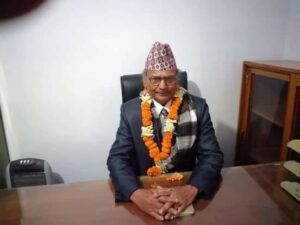
 Prof. Dr. Yogendra P. Yadava is a distinguished Nepalese linguist and Professor Emeritus at Tribhuvan University’s Central Department of Linguistics in Kirtipur, Kathmandu. He earned his PhD in Linguistics from the Central Institute of English and Foreign Languages (CIEFL) in Hyderabad, India, in 1984. A prominent advocate for multilingual education, Professor Yadava has made significant contributions to Mother Tongue-Based Multilingual Education (MTB-MLE) in Nepal. He has worked extensively on promoting linguistic inclusivity by supporting the use of indigenous languages in education and helping to bridge gaps in learning for marginalized communities.
Out Choutari editor, Dr. Jnanu Raj Paudel, has interviewed to Prof. Yadava on the issues on Nepal’s MTB-MLE policies, the relevance of the Government’s current policy on MTB-MLE and its implementation.
How can Mother Tongue-Based Multilingual Education (MTB-MLE) policies effectively address the cognitive, pedagogical, and linguistic challenges in a multilingual nation like Nepal?
Various studies on cognitive development and second language learning also provide evidence in support of MTB MLE. There exist sufficient amount of studies which argue that minority children’s academic success significantly depends on how much their language and culture are incorporated into the school program (Campos & Keatinge, 1984; Cummins, 1983a, 2002; Rosier & Holm, 1980).
Multilingual education (MLE) involves use of two or more languages for teaching and it seeks to develop high levels of multilingualism and multiliteracy (Mohanty, Panda, Phillipson and Skutnabb-Kangas, 2009). Psychological and neurological evidence show that general cognitive and intellectual performance of bilingual and multilingual individuals is better than those who are relatively more monolingual. Psycholinguistic principles of bi- or multi-lingual education (Cummins, 2009) suggest that positive transfer to a second language occurs when cognitive and academic proficiency in the mother tongue is well developed. Therefore, early support for development of mother tongue through schooling is necessary. International experience with MLE (Heugh & Skutnabb-Kangas, 2010) shows that quality education for high levels of academic achievement and development of multilingual proficiency must begin with development of proficiency in MT used as the language of teaching for at least 6-8 years of schooling and gradually develop other languages through their systematic use as language subjects and language of teaching. Research on interdependence theory has shown that many of the skills learned in the native language can be transferred easily to the second language later, thereby helping children in learning L2 through the previous acquisition of L1. To sum up, MTB MLE is ‘additive’ and contributes to the empowerment of children to succeed in school education. It would be apt to refer to the following citation from Cummins (2001: 661):
Students who are empowered by their school experiences develop the ability, confidence, and motivation to succeed academically. They participate competently in instruction as a result of having developed a confident cultural identity as well as appropriate school-based knowledge and interactional structures (Cummins, 1983b; Tikunoff, 1983). Students who are disempowered or “disabled” by their school experiences do not develop this type of cognitive/academic and social/emotional foundation. Thus, student empowerment is regarded both as a mediating construct influencing academic performance and as an outcome variable itself.
In addition, some recent studies have shown that knowledge of multiple language contributes to accelerating human intelligence. Some empirical studies (especially Malone 2004, Skutnabb-Kangas 2009, Skutnabb-Kangas-Kangas and Mohanty 2009, Ball 2010, Jones 2012, Meiers 2013 and Seel et al 2015) carried out internationally and also nationally have clearly shown that MTB MLE schools had better educational achievement than Nepali medium schools. MT regulates child’s thought (links her to family, community, nature & culture) (Mohanty 2009).
- Teaching in mother tongue is most effective in academic achievement and cognitive development of the child (Moges 2010).
- The interdependence hypothesis asserts that there is a certain degree of dependence between L1 and L2 in the development of the cognitive skills of the individual child.
- The proficiency in L2 is at least partially dependent on the level to which L1 has been developed.
- Alternatively, greater proficiency in L1 leads to better learning of L2 (e.g. Nepali, English, etc.)
- Other advantages include:
- Better scores in mathematics, environmental science, reading comprehension, grammar and usage.
- More intelligent
- Creative
- Cognitively better developed
There have been put forward a number of arguments in support of MTB MLE. Some of the major arguments have been explained below (Yadava 2014).
To achieve quality education
- “The choice of the language…is a recurrent challenge in the development of quality education… Speakers of mother tongues, which are not the same as the national…language, are often at a considerable disadvantage in the educational system…” (UNESCO, 2003).
- By the time children begin school, they have begun gaining confidence in their ability to communicate meaningfully in their mother tongue. They have built a foundation of knowledge and experience through observing and interacting with peers and adults in their community.
The language, knowledge and experience that children bring to school form an important foundation for their learning in the classroom (Malone 2007).
- Their familiar linguistic and cultural background helps them to understand, communicate, engage in the classroom in a better way, and actively participate in learning activities through their greater proficiency in their mother tongues, leading to quality education.
- But if they start schooling in L2 they are not familiar with the language and its culture. As a result, they remain passive in learning activities and may also have ‘psychological shock’ (UNESCO 1951) and develop negative attitude towards education.
Consequences
- Loss of confidence in themselves as learners
“…when students’ language, culture and experiences are ignored or excluded in classroom interactions, students are immediately starting from a disadvantage. Everything they have learned about life and the world up to this point is being dismissed as irrelevant to school learning; there are few points of connection to curriculum materials or instruction and so students are expected to learn in an experiential vacuum” (Cummins, 2009).
- Use of a second/foreign language as medium of instruction in early education may give rise to high repetition and drop-out rates.
- Fifty percent of the world’s out-of-school children live in communities where the language of schooling is rarely, if ever, used at home. This underscores the biggest challenge to achieving Education for All (EFA): a legacy of nonproductive practices that lead to low levels of learning and high levels of dropout and repetition.
- Various reports have pointed out massive ‘push-out’ (‘drop-out’?) rate at school level. One of the major factors may be the fact that most of them have their mother tongues other than Nepali (and English?).
- Use of a second/foreign language as medium of instruction in early education may alienate children from heritage language and culture, from parents and community.
- The children who go to the primary schools are often teased by other students for using their MT in the classroom when they talk to their counterparts. Teachers advise them to use L2 instead of their MT. Parents are asked not to use MT at home in order to make the children fluent in the L2. All these things have led to a negative attitude towards their language in the minds of the parents and children… (Malone 2007).
MTB MLE also contributes to the development and preservation of mother tongue in the form of additional bonus. The implementation of a multilingual education system based on the mother tongue naturally leads to the creation of various aspects of the recording of the respective language (vocabulary, grammar, literature, etc.) that are used as textual material for learners. Therefore, the development, continuity, and preservation of that language can continue with the involvement of mother speakers of different ages.
Specifically, how can these policies bridge the gap between linguistic diversity and academic achievement while ensuring equitable and inclusive learning opportunities for all students?
To bridge this gap in Seel at al. (2017), we have recommended the policy of transitional mother tongue-based multilingual education whereby we suggest to use learners’ mother tongues as medium of instruction at primary level, Nepali and/or other state languages as medium of instruction at grades 5-8 level and eventually and an international language such as English as MoI at secondary level.
If the mother tongue is the medium of instruction in school, children can achieve the following accomplishments: easy to understand and learn, faster cognitive and intellectual development, higher educational success rates, ease of learning a new language, and the development and preservation of the mother tongue as an added benefit. Learning Nepali language can provide easy access to government jobs, government work, information transmission and communication at the national level. In most countries of the world, technical terminology is only available in English. Due to economic, political, educational and other reasons, international migration is increasing rapidly. In such a situation, knowledge of English language has become necessary to establish contact between speakers of different languages and facilitate global interaction. Books, magazines, etc. available in the library are basically available in English medium to get information in different genres. That is, the English language is called the ‘language of the library’. Of the languages used on 10 million main websites, English is the most common language (more than 60%). On the basis of this language, English language has the highest number of Internet users in the world. This means that only those who are proficient in English can understand the textbooks available on the website.
How well do you think the government’s policy of prioritizing mother tongue instruction in the early years of education aligns with its practical implementation in schools? Are the policy provisions and actual practices in harmony, or do you see significant gaps?
The 2015 Constitution includes the policy provisions for implementing mother tongues as medium of instruction in the early grades of basic education as a fundamental right:
Every Nepalese community residing in Nepal shall have the right to get education in its mother tongue and, for that purpose, to open and operate schools and educational institutes, in accordance with law. Article 31.5)
The 2015 Constitution also makes a provision for using sign language and braille for citizens with impaired hearing or sight (Article 31.4). Thus, there is no dearth of policy pronouncements for using mother tongue as medium and subject of instruction in early grade formal and non-formal education. However, they suffer from various gaps. For example, there are no comprehensive legal provisions to introduce mother-based education to children. Similarly, CDC has wrongly introduced the use of MT textbooks as subject (instead of medium) of instruction. Besides, there exist contradictions between the spirit of Article 31.5 and a recently introduced Act Relating to Compulsory and Free Education (2018). Clause 26.1 of this relatively new Act asserts:
The medium of instruction to be provided by the schools shall be the Nepali language, English language or both the languages or mother tongue of the Nepali community concerned.
In this regard Awasthi et al. (2023: 553) observe:
While the Act recognises the mother tongue as a medium of instruction, it collapses Nepali and English with mother tongues, marking an important shift away from the constitutional provision of fundamental linguistic human rights (LHRs) as human rights towards a neoliberal model dominated by market forces. The transactional power of English and the regional influence of Nepali will never allow mother tongues to flourish as the medium of instruction in Nepal (see Awasthi 2004, p. 271). While the 2015 Constitution does not recognize English as an alternative language of instruction, the Act may have introduced it to serve the interest of Nepal’s Anglophile elites (ibid).
Based on your rich experience of both policy and practice levels, what do you think are the key issues creating obstacles in materializing the inclusive and equitable policy to empower the learning.
To my knowledge and experiences, the following can be suggested as key issues in this regard:
- An explicitly detailed articulation of implementing MTB MLE policy in Nepal.
- Provision of adequate financial resources to be made available for the implementation of MLE (esp. for materials production, mother tongue teachers’ deployment, training, etc.).
- Materials to be locally developed and supplied in different mother tongues.
- Mother tongue teachers to be redeployed and appointed and provided adequate training.
- Language communities to be made aware of the importance of mother tongue based multilingual education (MLE) through advocacy.
- Languages without script to be equipped with their appropriate writing systems.
- Languages as well as their related dialects spoken in Nepal to be identified to introduce them in MLE.
- School mapping to be conducted in collaboration with DoE and other related agencies and also to explore the possibility for integrating the survey with the GIS database that exists in Nepal
- Supervision, monitoring and evaluation of the programs/activities to be carried out on a regular basis and their feedbacks should be exploited for updating the MLE program
- Periodical research to be carried out on MLE.
- Partnerships with other institutions working with language policy, MLE and linguistic human rights to be promoted, both nationally and internationally.
- An MLE Resource Center to be set up to consolidate and strengthen the activities, strategies and implementation arrangements related to MLE.
References
Awasthi, L. D., Phyak, P. B., Rai, M., & Rai, I. P. (2023). Linguistic human rights and education in Nepal: Policy, practice, and paradoxes. In R. B. Baldauf Jr. & R. B. Kaplan (Eds.), Language planning and policy in Nepal, Bhutan, and Afghanistan (pp. 551–573). Multilingual Matters.
Awasthi, L. D. (2004). Exploring monolingual school practices in multilingual Nepal. International Journal of Multilingualism, 1(4), 271–285.
Ball, J. (2010). Enhancing learning of children from diverse language backgrounds: Mother tongue-based bilingual or multilingual education in the early years. UNESCO.
Campos, D., & Keatinge, R. (1984). Language and cultural influences on school achievement. Bilingual Research Journal, 8(1), 1–17.
Cummins, J. (1983a). Heritage language education: A literature review. Canadian Modern Language Review, 39(1), 16–32.
Cummins, J. (1983b). Language proficiency, bilingualism, and academic achievement. In J. W. Oller Jr. (Ed.), Issues in language testing research (pp. 108–127). Newbury House.
Cummins, J. (2001). Empowering minority students: A framework for intervention. Harvard Educational Review, 71(4), 656–675.
Cummins, J. (2002). Language, power, and pedagogy: Bilingual children in the crossfire. Multilingual Matters.
Cummins, J. (2009). Bilingual and immersion programs. In M. H. Long & C. J. Doughty (Eds.), The handbook of language teaching (pp. 161–181). Blackwell.
Heugh, K., & Skutnabb-Kangas, T. (2010). Multilingual education works: From the periphery to the center. Orient Blackswan.
Jones, T. (2012). Multilingual education: Policies, practices, and outcomes. Journal of Multilingual Education Research, 3(1), 45–62.
Malone, S. (2004). Manual for developing literacy and education programs in minority language communities. SIL International.
Malone, S. (2007). Mother tongue-based multilingual education: Implications for education policy. Language and Education, 21(3), 192–205.
Meiers, M. (2013). Bilingualism and cognitive development: A review of recent studies. Educational Review, 65(2), 123–138.
Moges, M. (2010). The effectiveness of mother tongue instruction in primary education. Ethiopian Journal of Education and Science, 6(1), 23–40.
Mohanty, A. K. (2009). Multilingual education in India: Myths and realities. Language and Education, 23(2), 122–134.
Mohanty, A. K., Panda, M., Phillipson, R., & Skutnabb-Kangas, T. (2009). Multilingual education for social justice: Globalising the local. Orient Blackswan.
Rosier, P., & Holm, A. (1980). The Rock Point experience: A longitudinal study of a Navajo school program. Bilingual Research Journal, 4(1), 81–91.
Seel, N. M., Lehmann, T., Blumschein, P., & Podolskiy, O. A. (2015). Instructional design for learning: Theoretical foundations. Springer.
Seel, N. M., Lehmann, T., Blumschein, P., & Podolskiy, O. A. (2017). Bridging the gap between linguistic diversity and academic achievement: A policy recommendation. International Journal of Multilingualism, 14(3), 243–258.
Skutnabb-Kangas, T. (2009). Linguistic genocide in education–or worldwide diversity and human rights? Routledge.
Skutnabb-Kangas, T., & Mohanty, A. K. (2009). Policy and practice in multilingual education: A global perspective. In T. Skutnabb-Kangas, R. Phillipson, A. K. Mohanty, & M. Panda (Eds.), Social justice through multilingual education (pp. 1–20). Multilingual Matters.
Tikunnof, W. (1983). Successful schools for young second-language learners: The case of immersion programs. Educational Leadership, 40(3), 46–50.
UNESCO. (1951). The use of vernacular languages in education. UNESCO.
UNESCO. (2003). Education in a multilingual world. UNESCO.
Yadava, Y. P. (2014). The linguistic scenario of Nepal: Mother tongue education in a multilingual setting. Nepalese Linguistics, 29, 1–15.
