Category Archives: Critical Thinking

2014: A year of crash for Nepali universities

NIRJANA SHARMA

This may not be a coincidence that the highest number of Nepali students went abroad on student visa for higher education this year, while countries four of the universities came under the scanner of the Commission for the Investigation of Abuse of Authority (CIAA) on serious corruption charges.

The year 2014 painted a bleak picture on the credibility of the country’s oldest and reputed universities, keeping students in dilemma whether to pursue higher education in these universities.

After the CIAA sped up its investigation over various complaints of irregularities against the top most officials of the Purbanchal University, Mid-Western University (MWU) and Pokhara University, most of the accusations were backed up by the strong evidences. The anti-graft body had to recommend suspending dozens of senior officials after the investigation.

While the CIAA action was inevitable to expose the uprooted corruption. But the reveal of the names emptied the posts at the varsities.

In April, when the anti-graft body began investigation in Purbanchal University, involvement of around two dozen officials including the Vice Chancellor (VC), Registrar, Exam Controller and Faculty Dean was prior to their arrest later.

Again in August, officials’ suspension followed by their arrest of including the executive head of the autonomous varsity- VC, Rector and Registrar panicked around 1500 students of MWU, who had high hope from the regional varsity established in their own place in Surkhet. Later in October, 22 officials from Pokhara University were arrested.

Contrary to the students’ hope to achieve higher education from the university for the establishment of which they had struggled at MWU, the students starting moving to the Tribhuvan University (TU) affiliated colleges again.

In the wake of the exposure of corruption by officials at theMWU, dozens of students discontinued their courses and started searching for alternatives.

Quitting of the university by students in droves was sparked by the exposure of corruption and subsequent suspensions at MWU. Although the newly appointed VC and registrar have expressed their commitment to improving things, the students appear not to be reassured. Around 150 students have already left the varsity till November, said the MWU-based student unions.

Purbanchal was not an exception. And neither the Pokhara University. The Purbanchal, that failed to follow thr calander in many of the faculties, a positive impact upon the administrative and academic work is yet to be visible in the ongoing service of the VC and other officials appointed for interim state.

A popular saying made on lighter node, give a worrisome message about the Purbanchal instead. “One student left his management course in mid-session, went to India, completed a degree there and came back to teach PU students who were of his own batch there,” said Pashupati Nepal, Eastern Region In-charge of the All Nepal National Independent Student Union – Revolutionary.

With the CIAA being aggressive in its scrutiny of university, and absence of another mechanism to oversee the activities of the varsities, the future is mote worrisome, experts say.

Universities being the autonomous body, it is hard to interfere in their daily activities, whereas frequent reports of corruption in many universities does not portend well for students enrolled there.

The University Grant Commission (UGCC) cannot seize documents and take any other strict actions, which allow the universities to skirt accountability, says Bhola Pokhrel, Member Secretary of the UGC.

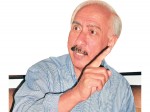
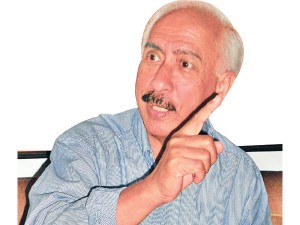
Former vice-chancellor of the TU, Kedar Bhakta Mathema, said that there is no mechanism within the education system to take the situation under control if the top-level varsities themselves engage in corruption.

“In order to avert crisis in the education sector, it is high time that the concept of high powered commission that can oversee the activities of universities be discussed seriously,” he said.

Can the CIAA’s action raise question over the accountability of the UGC itself? Pokhrel said that the universities do not cooperate with the commission, so its job remains limited to allocating funds.

Politicization is the real culprit, states Former VC of Tribhuvan University Kedar Bhakta Mathema. He believes that the government failed to realize the importance of making these academic institutions, like most other institutions, free of political intervention.

“Until or unless the provisions of political appointments at universities are not scrapped, Nepal´s higher education will remain weaker and may eventually collapse,” he warns.

“Picking the VC, Rector and Registrar from parties, is meant to work in favor of institution, rather they will serve their political interest”, he added.

The author is an education journalist.

Welcome to October Issue of Choutari

Critical Thinking Special

EDITORIAL

Whether or not we should include critical thinking in English language teaching (ELT) is still a matter of debates and discussions among pedagogues and cognitive psychologists. Those standing for the argument opine that, like in other subjects such as science, social studies, economics, business studies engineering, medicine, etc., learners should develop their critical thinking abilities, because while learning language, they do not only learn through interactions among speakers, but also through reading various kinds of texts. Therefore, they can hone their critical thinking abilities in course of reading those texts. Another reason they put forward is that learning language means being very creative as well as critical. For example, while learning language, learners derive a certain set of rules involving themselves in series of analysis and synthesis activities. Once they have formed the rules of their own based on the input they have received, they start to use the rules they have consciously formed. Not only do they form the rules, they also verify whether their rules are correct listening to the other people speak. Also, they believe that learning language can be accelerated if learners are involved in critical thinking activities.

On the other hand, those who are against the inclusion of critical thinking in ELT counter argue that learners can have double difficulties if we wish to foster critical thinking in foreign or second language learning. They believe that students will have burden of learning and enhancing critical thinking skills simultaneously, for instance, the students who do not have good proficiency over the English language cannot be involved in pro-critical thinking activities such as debate, discussion, argument, counter argument, etc., let alone understanding the implied meaning of a discourse.  These people believe that it can be best done in the disciplines that are taught in students’ native language, because they just need to think of gathering ideas. It is because they do not need to worry about the words and structures required for expressing those ideas.

In order to shed lights on this issue, Choutari of this month has included posts on various aspects of critical thinking. It includes six entries altogether. The first entry is an interview with professor Kedar Bhakta Mathema in which he maintains that teaching and learning activities carried out in our schools to universities do not seem to be sufficient for enhancing critical thinking skills, because they are mostly limited to developing students’ abilities to recall and understand only. Furthermore, learners have become just the passive recipients of knowledge; because they are rarely provided with opportunities to think independently and carry out certain tasks on their own. In addition, he very strongly argues that the concept of critical thinking can be introduced in ELT as well. The reason that he gives is that learning language does not necessarily mean knowing words and structures only, but also using those words and structures creatively.

In the second entry titled Why to Be Critical Thinker, Ramesh Khatri shares his own experience of using critical thinking while making a decision in a difficult circumstance. Having shared his experience, he presents some of the theoretical aspects of critical thinking such as standards of critical thinking, fundamental critical thinking skills, characteristics of a critical thinker; and advantages of becoming a critical thinker.

Yadu Prasad Gyawali in the third blog post Critical Thinking from Theory to Practice discusses different tools such as Bloom’s taxonomy, Socrates’ questioning techniques, etc. that teachers can use for stimulating ideas, which is essential for the development of higher order to thinking in learners.  Also, he presents his experience of using critical thinking strategies for both secondary level students and university level students and argues that the incorporation of critical thinking strategies in EFL classrooms can be very beneficial for the development language and thought.

 In the fourth blog Critical Thinking Strategies for Resolving Challenges in ELT, Rajan Kumar Kandel overviews the ELT situation of Nepal and enumerates a number of challenges that are likely to be found in our schools and colleges. He thinks that all those challenges can be resolved if we implement the steps and strategies that are followed while teaching English focusing for the enhancement of critical thinking skills in learners.

Bishnu Kurmar Khadka’s reflective blog Let Learners Think Critically in fifth entry presents his experience of handling the course New Directions: Reading, Writing and Critical Thinking designed for the B. Ed. first year major English students. As the title suggests, he puts forward his idea that teachers should follow student-centered method of teaching so that they can help their learners to foster critical thinking in them. Furthermore, he claims that due to the traditional way of teaching in which students focus on examination; rather than real learning, he was forced to give notes to his students.

Finally, Lal Bahadur Rana in his blog post titled Teaching Reading Texts through Critical Thinking Perspective remarks that many students of the public schools have very low proficiency over English, as they have too limited exposure. He believes that the amount of exposure in English can be remarkably increased with the implementation of critical thinking strategies in those classes. Most important of all, using these strategies in our classrooms, we can make students independent learners.

 Here is the list of articles we have included for October Issue, especially focused on critical thinking in ELT.

  1. Critical Thinking for Good Citizenry: An Interview with Kedar Bhakta Mathema
  2. Why to be critical thinkers?, by Ramesh Khatri
  3. Critical Thinking from Theory to Practice, by Yadu Prasady Gyawali
  4. Critical Thinking for Resolving Challenges in ELT, by Rajan Kumar Kandel
  5. Let Learners Think Critically, by Bishnu Kumar Khadka
  6. Teaching Reading Texts  through Critical Thinking Perspective, by Lal Bahadur Rana

Now I, on the behalf of Choutari, would like to take this opportunity to extend our sincere thanks to all the contributors and also urge our valued readers and contributors to please share these articles among your social network and leave comments.

Enjoy readings!

Finally, we wish you all a very happy, prosperous and creative Dashain, Tihar and Chhath 2071 B. S.

images
Lal Bahadur Rana   Editor,  October Issue

Critical Thinking for Good Citizenry: Prof. Kedar Bhakta Mathema

Undoubtedly, we all agree that critical thinking is one of the life skills in the 21st century. However, there are debates and discussions on how this very skill should be included in education system so that students, from the very beginning of their schooling, learn this skill subconsciously and become rationale citizens. Also, there are controversies whether or not we can promote this skill in second or foreign language teaching and learning, for example, learning English in the context of Nepal. With a view to shedding lights on these issues,  Lal Bahadur Rana, ELT Choutari coordinator for October issue, had a chit-chat with Prof.  Kedar Bhakta Mathema, who is the forerunner of introducing the concept of critical thinking in Nepalese academia. Here is the excerpt : 

Lal: Welcome to the October Issue of ELT Choutari. This special issue, we have focused on how critical thinking can be used in ELT. As the forerunner for the implementation of critical thinking in the context of Nepal, could you please tell us the how you conceived of it?

kedar-sir_20140321091819Mathema: Well, thank you very much. It’s my pleasure to be interviewed for the special issue. Critical thinking is something important in an education system. I think for the past several years, since beginning, I would say, we have been putting emphasis on lower level of thinking such as recollection of facts. We never encouraged students to think independently and creatively. Similarly, we never encouraged students to synthesize or analyze anything. As far as English teaching is concerned, I remember my days at the university while teaching to the student in the faculty of education, I used to bring extracts from the newspapers such as Herald Tribune and New York Times and teach those texts to the students. Although these texts were very difficult for the learners, I would make them read. At first, very general questions such as What is the text all about?  were asked.  Later on, I would ask them difficult questions in the second, third, fourth or fifth reading, especially implied questions. When I was the Vice-chancellor of Tribhuvan University, I came to realize that our education system right form schools to university focused lower level of thinking. Then I thought of introducing critical thinking in the university. But, unfortunately, I somehow could not introduce there.


Lal: You said that you tried to implement critical thinking pedagogy at TU. What factors caused you to try to implement at T. U.; not to other institutions? Continue reading Critical Thinking for Good Citizenry: Prof. Kedar Bhakta Mathema

Why to be Critical Thinkers?

New Picture
Ramesh Khatri    Lecturer in English Mid-Western University Surkhet, Nepal

Two years back I was offered to facilitate a course titled ‘Critical Thinking and Analysis in Management’ at Masters of Business Administration (MBA) in the Faculty of Management Studies, Mid-western University, Surkhet. In the beginning, I did not accept the offer since the subject seemed to be quite new. Later, despite a number of challenges I dared to teach the course to the MBA students at the University. As I started teaching, I had a hard time in preparing and delivering the contents relating it to management. I was about to discontinue my teaching after two weeks. Nevertheless, I thought critically over my teaching career, faced the challenges, and turned it into an opportunity. My critical thinking helped me survive in my profession. Since then when I am faced with any problem, I think over the case critically, make an informed decision, and implement it into practice. It helps me a lot to select the best alternative and make an informed decision in life. So it has become a “life skill” for me.

Before we discuss what critical thinking is and why to be a critical thinker, let’s read the following brainteaser.

AT THE BUS STOP Continue reading Why to be Critical Thinkers?

Critical Thinking from Theory to Practice

Yadu Prasad Gyawali
Yadu Prasad Gyawali


This post discusses critical thinking as a conceptual fruit for practice of several activities in planning a course. It simply deals with traits, questioning modes, practices, and critical sketches of general ideas for generating the real flavor of learning.


 Introduction

Critical thinking is a part of creativity and variety creations on any thematic ideas, especially the thoughts of varieties. It is an essential component of personal and professional development. To me, it leads to the creations of thoughts on the basis of perception and reflection. It surely denotes the concept of multiple realities because it is the concept of seeing the same thing through different perspectives and making rationale decision. So critical thinking is the collection of ideas in each perception of doings and happenings. In my opinion, it anticipates, collaborates and browses similarities and differences on bringing out the ideas. Continue reading Critical Thinking from Theory to Practice

Critical Thinking Strategies for Resolving Challenges in ELT

Rajan Kumar Kandel
Rajan Kumar Kandel


This is a short narrative write-up in which I attempt to explore some challenges emerged in the Nepalese ELT context based on my experiences and observations of more than a decade. Here, I reflect on how critical thinking strategies proved very useful for helping my students learn English. In addition, I have included a lesson plan along with the materials. 


 Background

Teaching English in Nepal was started during Ranarchy from Darbar High School hiring English teachers. It was further expanded during post-democracy era when schools mushroomed in Nepal. Then, English was taken as a stimulating vehicle of an ideal culture and development. It was formally introduced in schools and colleges after the recommendation of National Education System Plan (NESP) 1971. At that time, it was taught as a subject; rather than a language for communication. Neither language skills nor aspects were focused; but the content was solely focused. The trend exists even today after more than two scores of years.

Nowadays, English is being introduced as a medium of instruction form primary schools to universities in Nepal. Thus we can say that there has been paradigm shift in English language teaching in Nepal, because it has become a means to achieve certain ends. Nevertheless, whether or not we should use it as a medium of instruction has already become a matter of debate and discussion. To comply with the new tradition, new methods and pedagogies have been searched; and courses have been prepared with a view to preparing learners compete globally. However, teachers who handle those courses have still hangovers of their experiences, which is why they encounter many challenges in their classes. These challenges have caused students’ poor performance in English. Continue reading Critical Thinking Strategies for Resolving Challenges in ELT

Let Learners Think Critically

Bishnu Kumar Khadka
Bishnu Kumar Khadka

Exploring the context
As being a facilitator of English course not only of school level learners but also of university level learners, I did not find myself in the position of creating opportunities to think critically on various subject matters; but in the position of preaching the content without letting learners think even a single minute during my time frame of teaching.

When I was a student of both my school level and university level, I wished my teachers provided me opportunities to share something on the subject matters they were imparting to us. At that time, I would think that I could contribute something participating in different activities. However, our teachers used to come in the class with empty hands, ask for the textbooks from us; and start the lesson directly without consulting their learners. We used to listen and watch the teachers’ activities during the class period. After sometime, they used to ask some questions and if there were no accurate answers from us, we had to be ready for the punishment decided as per their whims.
After completing my school life, I got an opportunity to be a university student. Though a regular student of my class, I was hardly introduced with my teachers; and got chances to share something among a large number of classmates. When I got an opportunity to be a university level student of teacher education, I got the exposure of various dimensions of learners, learning strategies, teaching principles and strategies, current trends of teaching learning practices and findings of researches and experiments.

As soon as I graduated from the university, I got an opportunity to teach in Surkhet Campus (Education), a constituent campus of Tribhuvan University, as a part-time teacher where I was assigned to teach the course entitled Reading, Writing and Critical Thinking in B.Ed. first year. This is the course studied by the students, who are specializing in English Education. As its name suggests, this course is highly based on the reading, writing and critical thinking activities with active participation of the students. Before I began to teach the course, I thought of going through the course thoroughly; and then plan and present the lessons so that I could present overview of the course; and make them feel that I could teach them well. I did as I had thought and prepared my first lesson and then went for the presentation. Here, I am going to share with you all how I presented my first lesson on the course. Continue reading Let Learners Think Critically

Teaching Reading Texts through Critical Thinking Perspective

images
Lal Bahadur Rana


In this blog post, I discuss how the core principles of critical thinking such as open-mindedness, ability to see any phenomenon through multiple perspectives, etc. can be exploited in EFL classes with a view to increasing learner-centeredness in our EFL classes and enhance learners’ critico-creative thinking.


Context for teaching and learning English
Despite the strong desire of getting mastery over English, many Nepali learners of English do not have sufficient level of English mainly because of the amount of exposure. Let me give an example of the time teacher and students spend using English throughout a year. Most of the government-aided schools in Nepal have the classes of forty minutes and six classes a week. Thus, there are spending (40 x 6) = 240 minutes in a week (240 x 4) = 960 minutes a month and (960 x 10) = 9600 minutes a year. If we change this amount of time into hours, they study 160 hours. To count in days, they study just 6.67 days a year. Hardly a week! If we deduct the time such as the use of the Nepali language, the time spent on coming and going to class, bandh days, etc. I am afraid, students might be studying in some minus days. Continue reading Teaching Reading Texts through Critical Thinking Perspective