Prologue: In this reflective note, I have attempted to explore three key themes: how I learned English for communication, how I have grown as an English teacher, and how the teaching paradigm has shifted from chalkboards to clicks. The evolution from chalk to clicks has reshaped my teaching style and my perspective on both learning and teaching English. My journey with English teaching began as a tool for communication, guided by the inspiration of great teachers. As I stepped into teaching, I realised that it was not just about transferring knowledge—it was/is about connecting with students and understanding their needs. This personal growth mirrors the broader shift in education, where traditional chalkboards are now complemented (and usually replaced) by digital tools. The shift from chalk to clicks has not just changed the way I teach; it’s transformed how I view teaching and learning itself.
My Journey of Learning English: From Mud Plates to Meaningful Conversations
Reflecting on my journey of learning English feels like flipping through the pages of a long, extraordinary story. I was born and brought up in the remote hills of far-western Nepal—so remote, they say, even the sun only comes to set in the west. As I was raised in a modest middle-class family, I lived the life of a part-time student and a full-time farmer, herding animals, toiling in fields, and sneaking into classrooms whenever work at home allowed.
My earliest memories of schooling were far from the polished preschool classrooms of today. There were no “nursery,” “LKG,” or “UKG” classes. Instead, I learned ka, kha, ga by tracing letters with my fingers in soil spread across wooden plates (pati), then graduated to slates made of stone. School was a privilege—an hour’s uphill walk to a place where memorisation was education, and Nepali language and mathematics were the core of our educational world. In our peasant-class village, most parents were clueless about the curriculum and pedagogy. Formal Nepali was itself a second language for most of us, learned only after starting school. Home languages were local dialects, i.e., Dotyali; media exposure was not available and prohibited (children should not be exposed to media, i.e., radio). Television was unnoticed by all of us. Computers and other smart devices/phones are the property of only Gen Z and later. Standard Nepali and, even more so, English, were alien tongues. Thus, I began my educational journey in a landscape strangely distant from the languages I was expected to master.
When I passed Grade 3, I moved to a “bigger” school—nearly two hours away at the top of a mountain. Ironically, it was a school where no student had ever passed the School Leaving Certificate (SLC) exams. It was here that I first stumbled upon the English alphabet: a, b, c, d… not on the wings of curiosity, but under the shadow of fear—fear of slaps and sticks for failing to memorise the sequence. I did not notice the English alphabet before grade four. The English teacher taught us this alphabet, which was meaningless until formal instruction began. The real ordeal began when I actually had to learn English—an utterly foreign, disconnected language.
My experience of English was rote memorisation. My initial strategy was avoidance—memorising answers without understanding them to avoid failure and the stick from the teachers. Exposure to English was not found, and classroom time was spent mostly copying or memorising the text. Literacy was taught conventionally and mechanically without real comprehension. Very interesting, English was taught in Nepali (it is still popular in Nepal); it was a subject to pass, not a language to live.
Our first and only encounter with an English speaker, a Peace Corps volunteer from the USA, was both exciting and humbling. My attempt to ask her about the population of her country—the question straight out of our textbook—was met with confusion and a polite “Pardon?” (due to my unaspirated /p/ pronunciation). Despite trying several times with different tones, I failed. Only after showing her the question from the textbook, she understood my question and laugh kindly. It was my first real attempt at communication—and my first big failure.
In those years, “learning English” meant memorising English words, grammar rules, and entire paragraphs or texts without understanding or speaking a word of it. English classrooms were silent spaces filled only with choral reading and rote learning. In our school, teachers of difficult subjects (English, Science, and Mathematics) were imported from India. They were brought to “improve” our results for SLC (School Leaving Certificate, now SEE), teaching English through Hindi translation. Oddly enough, I picked up Hindi during the English teaching and became more fluent in Hindi along with my community language, Dotyali. Sometimes, we get punished without knowing the reason. I still remember one incident:
During one leisure period, most of my friends were outside the classroom—some getting water, resting under a tree, or wandering around the playground. One of my friends, however, peeked through the window of another class, where our English teacher from India was teaching/ translating an English text into Hindi. Suddenly, the teacher noticed him, stepped outside, and harshly punished him with a wooden stick, asking, “Khidkise jhakta hei?” (Do you watch through the window?). In a matter of seconds, my friend was marked by several blows from the stick, though he couldn’t understand why he had been punished. The entire situation baffled us, until one of our teachers kindly translated “Khidkise jhakta hei” into Nepali as, “Jhyaalbat herne ho?” (Why did you watch through the window?).
It was a moment and usual for all from parents to teachers, students to communities perhaps because our education system was deeply shaped by a culture of corporal punishment—a legacy from ancient philosophies like Chanakya’s and behavioristic theories like Skinner’s—where mistakes were “sins” that had to be punished out of children. Five sticks for a mistake in mathematics was a common rule. Wooden sticks for not memorising English texts. Such harshness disciplined us, but also suppressed our creativity, curiosity, and confidence. Despite this, I was the first boy in my school, not just in my class, but the hope for the school and the community. Passing the SLC exam was crucial for me for the school’s funding, and I was the hope for them. Furthermore, I, as a top student, supported my classmates, helping them along the way. In a way, this was the beginning of my journey into teaching, rooted in a sense of responsibility and a desire to lift others. It was the first step that unintentionally laid the foundation for my future in the teaching profession.
When I reflect deeper, my learning process remained mechanical even during my higher studies. In school and then at I.Com. (Intermediate in Commerce/Management), English learning was still all about teachers giving notes and students memorising them. Our approach to exams was simple—study half the book and attempt half the questions, since we had to attempt only five questions (i.e., 50 per cent) out of ten questions in the final examinations (no other examinations and assessments during the class). There was no focus on understanding, communication, or critical thinking.
However, during my I.Com., I witnessed a new possibility: my English teacher sometimes spoke English instead of just reading texts. Hearing him speak sparked a realisation in me—English wasn’t just a written code; it was a living, breathing language. This realisation planted a deep desire in me to learn English, not just for exams, but for expression.
This desire led me to practice English. I tried to build my skills further by joining a local language institute where we drilled English structures and practised speaking, but it lasted only three weeks before the institute shut down. Yet, even that brief experience showed me that English could be learned through communication, not just memorisation. Around the same time, I realised another truth—studying management felt hollow when I was calculating millions without even a single rupee in my pocket. It was a clear sign that my heart—and future—belonged elsewhere.
After I.Com., I switched streams and joined B.Ed. Specialising in English major, fueled by my growing passion to master the English language. Even in B.Ed., the methods didn’t change much—lecture, note-taking, and memorisation—but exposure to English-speaking teachers increased. Slowly, English began to move from my memory to my mouth, from textbooks to tentative conversations. Yet, truthfully, I wasn’t charting a career path or chasing a dream; I was simply moving forward, carving a rough road with bare hands, facing whatever life placed before me. There was no mentor to guide me, no strength to chase distant dreams—poverty kept my feet on the ground and my hands busy with survival. Plans grow where there is food on the table and clothes on the body; for me, survival came first, and dreams had to wait. I did not shape my life out of choice but out of sheer necessity.
From Survival to Service: My Journey of Learning to Teach English
Hailing from a humble, lower-middle-class farming family in Ganeshpur, Dadeldhura, I never imagined myself standing in front of classrooms, teaching English to university students. Education was not a priority where I grew up — earning a living was. Most families, including mine, believed that the surest path to a better life was not higher education, but increasing the property, i.e., land, and accumulating wealth via even labouring in India. Yet, somewhere deep within, a stubborn flame of learning burned.
Initially, teaching was not a dream I pursued; it was a necessity for survival. As a top student in school, I often found myself helping friends untangle English grammar rules and solve math equations. Later, as an intermediate student (I.Com.) in Kailali, I lived with a family who, in return for food and shelter, asked me to help their children academically. It was here, in small rooms with flickering lamps, that I first discovered the seeds of teaching — supporting them with homework, solving their mathematical problems, and explaining concepts I had only just mastered myself. Yet, necessity is often the mother of invention.
During my B.Ed. studies, I took up home tuition at an elite family in Kathmandu, struggling with economic hardship, social insecurity, and a fragile command of English. Every evening, I had to visit their home to teach their children with a lot of uncertainty and discomfort, as my modest appearance, pastoral background, and shaky English often made me feel out of place. Yet, that hour each day, spent guiding young minds, solving their small problems, and enjoying a rare, hearty tiffin, became a lifeline. It covered my expenses and gave me a quiet dignity in a bustling city. During the final year of my B.Ed. classes, I found myself stepping into private school classrooms. In the beginning, I was more of a survivalist than a teacher, struggling to speak English fluently, clinging to textbooks, and painstakingly translating/ paraphrasing line by line. Every new word was a small battlefield; every grammar rule, a mountain to climb. Paradoxically, it was my students who became my greatest teachers—their innocent questions challenged me, their elite accents helped me improve my pastoral pronunciation, and their curiosity lit a fire that pushed me to learn deeper, teach better, and dream bigger.
Teaching, I realised, was the best way to learn. Students can teach the teacher.
My journey was not linear. After attempting my B.Ed. exams, I returned home for Dashain and had to wait there for my results. During this uncertain pause, my friend, Dr. Tara Datta Joshi, requested me to go to Aalital, Dadeldhura, to teach English since he wanted to quit the teaching profession and engage in political activities. I was assigned to teach grades six to ten under the position of a lower secondary-level English teacher. However, fate took a sharp turn—the chairman of the school management committee was seriously injured in a bus accident and taken to India for treatment. Without his presence, I couldn’t obtain an official appointment letter and found myself working voluntarily for nearly three months.
During this time, I experienced the true nature of English teaching in rural Nepal. One incident I still remember is that English was taught in Nepali at that time, and the grammar translation method was the only pedagogical option available. I had to teach topics like sentence transformation, reported speech, and many others of similar types. I explained that when there is a third-person singular subject in a simple present sentence, it requires ‘doesn’t’ to form the negative, and the sentence starts with ‘Does’ to create an interrogative. The next day, I asked students to change “Ram plays volleyball” into the negative, and most students who even wrote the correct responses but pronounced ‘does’ as [du:s]’ (perhaps due to the ‘do [du]- does [du:s] and [s] instead of [z] due to /s/ in ‘works’. During these days, what I found most interesting was that many students who appeared quiet (in English) in the classroom became talkative and expressive when speaking to Dotyali outside the class. I also noticed that several students seemed to forget what had been taught (in English) as soon as they left the classroom. It shows a disconnect between classroom learning and their everyday communication. Life there was simple but strange. I shared a common room with Dr. Joshi and the chairman of the village development committee. One night, alone in the room, I had a haunting experience that shook me. When I hesitantly spoke about it at a local teashop the next morning, the villagers’ reactions confirmed my fears. Though it sounds surreal now, the fear, combined with the uncertainty of a volunteer job, drove me away from the hills to seek opportunities elsewhere.
Opportunity soon came knocking in Tikapur, where I was appointed as the Principal of a primary school. Drawing from my meagre six months’ experience of private schooling in Kathmandu, I brought sweeping changes: enforcing an English-speaking zone, instituting neat uniforms, and instilling discipline. Watching the students adapt and thrive gave me immense satisfaction — proof that even small efforts could yield visible transformation.
Yet the desire for further study remained fierce. After the result of my B. Ed, I moved back to Kathmandu to pursue an M.Ed. I got admission and waited for classes. During this time, I was looking for a job that would help me continue my studies in Kathmandu. I got an opportunity for a Resource Person (RP) for the Kailali district. I got confused, but went there since it was just before the Dashain. I thought I would earn some money during the college vacation, i.e. Dashain-Tihar and would quit the job and resume my class after Tihar if my transfer was not made near Kathmandu. I bought the books according to the prescribed book list and went to Kailali, near my home in the terrain. As I went through the books, I could not understand anything and got confused about the books that I had bought. I again checked the syllabus and found the books were okay. The syllabus was not designed from the titles of the course contents, but from the contents inside the books. It was the most difficult time for me. The government was changed, and all Resource Persons appointed by the previous government had been terminated. The set of district education offices was changed. Expressing my apathy towards such realities, I came to Kathmandu for my studies. As I worked for nearly three months, I witnessed the schools’ realities, students’ level, teachers’ activities, communities’ expectations, and bureaucratic hurdles and ineptitude.
When I first arrived in Kathmandu to pursue my studies, my journey took an unexpected turn. Owing to a prolonged absence while serving as a Resource Person (RP) in the remote schools of Kailali, the Department of Education, first and last time in its history, cancelled long-time-absentees’ enrollment, including mine. It was a bitter pill to swallow. Yet, after a few months, I could get my name re-registered after continuous endeavour. Determined not to waste a moment, I threw myself into full-time study, from dawn till dusk.
One day, during a course on Learning Theories, our teacher assigned a group presentation. I hadn’t prepared much, thinking the others would take the lead. But when the time came, no one from my group stepped forward. The teacher called me up alone. Thankfully, I had scribbled some rough notes—just in case. When other friends from the group refused to present, I delivered my presentation swiftly, drawing on my strength in Nepali. Afterwards, the teacher chuckled and asked, “Is your train about to leave?” I smiled and said, “No, sir.” Then, he again asked: “Why so fast?” I was dumb. He appreciated my spirit and even thanked me, while critiquing others for their lack of preparation or just presenting in points.
That moment opened unexpected doors. Friends began sharing their books with me, asking me to read and summarise them. In return, I gained access to resources I could not afford. Later, after completing my M.Ed. first year, Basant and Kishor from TU Photocopy Centre asked for my notes on phonetics and phonology. They later published it as a textbook, A Course in Phonetics and Phonology, giving me the identity of a textbook writer while still a student. Despite setbacks, I kept finding hidden paths forward—summarising, teaching, writing, and growing. What started as a struggle for survival slowly transformed into a journey of mastery, brick by brick, book by book.
After earning my M.Ed., I returned to classroom teaching in Kathmandu, stepping into a reputed high school where I taught English across various levels—pre-primary, primary, lower secondary, secondary and university. Each level brought its own set of challenges, from the excitement of teaching tiny hands their first English words to the complexity of helping adolescents grasp intricate grammar and communication skills. As I navigated these different levels, I continuously adapted my methods, refined my craft, and deepened my understanding of pedagogy.
In the early days, my teaching felt mechanical—read, translate, paraphrase, explain. Over time, it transformed into something much more relational—understand, engage, inspire. My students became my greatest teachers, helping me grasp child psychology, learning theories, and the true essence of communicative language teaching, which had once been a theoretical concept for me in university. I still remember I once moved from reading Nepali newspapers to immersing myself in English journals and news (to develop my proficiency in English), fully embracing the language I had once struggled to speak. Stupidly, I promised my friends not to speak in Nepali with me so that I can speak English with them and learn it to communicate. Reflecting on my journey, it’s clear that it wasn’t one of smooth paths or grand plans. It was a story of persistence, hard work, and constant learning. I didn’t just learn to teach English; I taught myself to become an English teacher. Most of the teachers of my time and before might have the same stories.
Today, if someone asks me how to truly learn English, I tell them: Teach. Teaching is, without a doubt, the most powerful form of learning. This realisation didn’t come from textbooks or lectures. It emerged from my own winding, rugged journey with English—a path filled with challenges, failures, and fleeting moments of inspiration. Along the way, I learned that education thrives not on uniformity, but on variety, localisation, and personalisation. I discovered that teaching must evolve as a dynamic, organic response to students’ needs, aspirations, and realities.
Of course, it wasn’t always easy. We had to make mistakes—face struggles, humiliations, and setbacks—before arriving where we are today. In this sense, my learning journey with English wasn’t a smooth one. It was a rough trail of soil, stone slates, rote memorisation, translations, and precious moments of clarity. But these hardships have become vital layers of understanding. The rigid, rote-driven practices, the lack of soft skills in the education system, and the harsh discipline I endured didn’t break me—they shaped my sensitivity toward what true education should be. They instilled in me a lifelong commitment to promoting an education that values communication, creativity, empathy, and critical thinking—the very skills I once lacked.
Now, as a teacher educator, textbook writer and researcher, I carry these lessons not as burdens but as beacons. They guide me toward a more humane path for others, where learning English—or any subject—is about living it, not just memorising it. Teaching is not just a profession for me; it is a passionate, often painful calling. The challenges embedded within the teaching profession are multifaceted, and both new and experienced teachers often find themselves caught in dilemmas over the right pedagogy. For me, teaching is nothing, just beautiful communication—effective communication on the topic. In Nepal, these struggles are compounded by limited resources, rote-centred traditions, and large, diverse classrooms. These challenges resonate deeply with my journey, one that began not with clear intent but with the struggles of a rural, middle-class upbringing in a society on the cusp of modernity.
One of the greatest challenges in education today is how previous generations (Gen X or Y) teach and train newer generations (Gen Z, Alpha, or even Beta), each of which comes with distinct psychology, learning attitudes, personalities, lifestyles, and evolving needs. For example, how did the Silent Generation (1928-1945), Baby Boomers (1946-1964), and Generation X (1965-1980) impart knowledge to Millennials (1980-1996), Generation Z (1997-2012), and the upcoming Generation Alpha (2013-2025)? And what about the future, with Generation Beta (2025-?) on the horizon? The way these different generations learn, interact with technology, and perceive the world around them presents a unique mystery in educational pedagogy. As each new generation brings with it a fresh set of demands and expectations, the question becomes: how can we adapt our teaching methods to ensure relevance, engagement, and effectiveness across these shifting landscapes? This ongoing paradigm shift in education challenges us to rethink traditional practices and develop more dynamic, responsive, and innovative approaches that align with the needs of future learners.
In the later stages of my career, I realised that teaching, at its core, is not about delivering information, but about effectively communicating the essence of a topic—communicating in the language that resonates with our students. The key is meeting them at their level, speaking their language, and guiding them to elevate their communication skills. It’s about creating a space where learning, unlearning, and relearning can flourish. As educators, our role is to facilitate this process, ensuring that our students don’t just absorb knowledge but actively engage, grow, and connect with the world around them in meaningful ways.
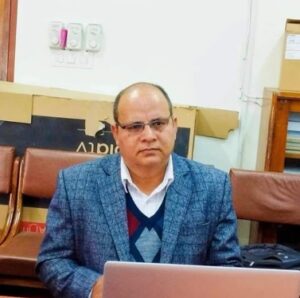
Author’s Bio: Narendra Raj Paneru, PhD, is the Head of the Department of English Education at Sanothimi Campus, Tribhuvan University (TU), and an Assistant Professor at the Faculty of Education, TU, Nepal. With over two decades of experience in English language education, he holds a Ph.D. in the use of soft skills in ELT and an M.Phil. in educational leadership. Dr. Paneru serves as a member of the Subject Committee for English and Other Foreign Languages (FOE, TU) and contributes extensively to curriculum design, teacher development, and academic research. He has published widely on soft skills, phonetics, globalisation, and language pedagogy, and actively engages as a resource person and academic advisor in the education field and syllabus development initiatives.
